JBRA Assisted Reproduction
ORIGINAL ARTICLE
doi: 10.5935/1518-0557.20130063
Infertility and emotional configurations identified by psychological diagnosis
A infertilidade e configurações emocionais identificadas pelo diagnóstico psicológico
a Fertility – Centro de Fertilização Assistida
Accredited Redlara centre
Av. Brigadeiro Luis Antonio, 4545.
São Paulo – SP, Brazil. Zip: 01401-002
b Instituto Sapientiae – Centro de Estudos e Pesquisa em Reprodução Humana Assistida
Rua Vieira Maciel, 62
São Paulo – SP, Brazil. Zip: 04503-040
ABSTRACT
Objective: To determine if the graphic projective technique, associated with psychological interview, can be used as a facilitator for the effective expression of emotional difficulties related to the diagnosis of infertility.
Methods: The study included patients with a diagnosis of infertility who started assisted reproductive treatments between July 2010 and April 2011. In the first stage, a semi-directed psychological interview was performed. In the second stage, the patients were asked to draw a human figure and a family. In the third stage of the study, we performed tabulation and evaluation of the collected data. Using psychoanalysis, we conducted a qualitative analysis and sought to understand the complex emotional phenomena related to a diagnosis of infertility.
Results: The study included 27 men and 35 women. Twenty-nine patients (46.8%) were undergoing an additional assisted reproductive attempt, and 33 (53.2%) were undergoing their first treatment attempt. The average age of the women was 32.9 years, and the average age of the men was 38.1 years. We noticed that the men rarely sought help from a mental health professional when the source of the infertility diagnosis was the female. However, considering the combined factors involved in infertility, a balance between identifying factors from both genders that may interfere with successful assisted reproductive treatment must be sought. We also observed that most women drew a family with four members; men diagnosed with azoospermia represent the human figure only by a face and repeat the model of feminine expression to represent the family, while the other male participants produced a family drawing with three members.
Conclusions: Treatment by mental health professionals is indicated for patients who are undergoing assisted reproductive treatment from the use of projective graphs, as the design captured plastic representations of emotional experiences and facts and enabled the expression of the emotional difficulties associated with this process, facilitating the diagnosis and providing elements for therapeutic work.
Keywords: Assisted human reproduction, psychology, drawing.
RESUMO
Objetivo: Verificar se a técnica projetiva gráfica associada à entrevista psicológica pode ser facilitadora para expressar as dificuldades emocionais relacionadas ao diagnóstico de infertilidade.
Métodos: Foram incluídos pacientes com infertilidade, iniciando tratamento de reprodução assistida entre Julho de 2010 e Abril de 2011. Na primeira etapa foi realizada uma entrevista psicológica semi-dirigida. Na segunda solicitou-se o desenho da figura humana e posteriormente o desenho da família. Na terceira etapa realizamos a tabulação e a avaliação dos dados coletados.
Resultados: Participaram 27 homens e 35 mulheres. Vinte e nove pacientes (46.8%) estavam se submetendo a uma nova tentativa de tratamento e 33 (53.2%) estavam se submetendo a sua primeira tentativa. A idade média das mulheres foi de 32.9 anos e dos homens foi de 38.1 anos. Constatamos que o homem dificilmente procura ajuda do profissional de saúde mental quando o fator de infertilidade é feminino. Entretanto, diante do fator de infertilidade combinado há equilíbrio na busca do entendimento de fatores que possam interferir no sucesso. A maioria das mulheres desenhou família com quatro membros; homens com azoospermia representam a figura humana só por um rosto e repetem o modelo de expressão feminina para a família, enquanto os outros homens produziram desenho de família com três membros.
Conclusões: O trabalho do profissional de saúde mental com pacientes em tratamento de reprodução assistida, é favorecido com a utilização de testes projetivos gráficos como facilitador para a expressão das dificuldades emocionais, favorecendo o diagnóstico e fornecendo elementos para o trabalho psicoterapêutico.
Palavras-chave: reprodução humana assistida, psicologia, desenho.
INTRODUCTION
Fertility in almost all cultures is seen as a milestone in human development; its absence demands a medical, psychological and social redefinition of a couple’s identity. It can be a traumatic experience for patients. It is a disease that triggers negative feelings because it transcends the limits of the organic, and its presence implies the interruption of involved persons’ life plan (Straube, 2007).
Depending on cultural norms, a couple’s infertility has long been attributed to the woman, who was blamed for the absence of children and the suffering that the infertility process engendered. Today, we see that both men and women can have difficulties dealing with the feelings mobilized by infertility and that this suffering is not only the burden of women. Tamanini (2003) refers to the creation of the category “infertile couple” by medical professionals, indicating that it is a term that interweaves hybrid technology and culture, to which the reproductive capability is returned for remodeling. In addition, it is said that such a category was only created when medicine began to become interested in male sterility.
The World Health Organization recognizes infertility as a disease and a public health problem, which affects 8% to 12% of couples worldwide. Although the woman is the main focus of typical workups and social “guilt,” especially in developing countries, the man contributes equally to its related causes (Souza et al., 2008). In recent decades, a higher rate of male infertility has been recorded. To Chilik (2000), this phenomenon is due to factors such as stress, smoking and especially environmental contamination with pesticides and substances with estrogen, as well as a considerable increase in sexually transmitted diseases that can cause sterility as a consequence.
The presented facts point to what is recommended by Borges (2000): that the man should be investigated in the first visit, regardless of the time of infertility, because the male factor in conjugal infertility is significant, and it therefore should be examined carefully by all professionals involved in human reproduction, including the psychologist. Clinical experience with infertile men suggests that these patients have difficulty in identifying and expressing the feelings or psychological factors that are altered during the diagnosis and treatment of infertility.
Some hypotheses are linked to the state described, for example, the association between infertility and impotence, and traditionally the man was only concerned about the physical effect of assisted reproduction procedures on their wives, thereby hiding their feelings and presenting themselves as a source of support for their wives. However, in general, the inability to have children spontaneously generates enormous social pressure, with feelings of being “defective” or having “less value,” with a significant loss of self-esteem and social isolation (Martuch et al., 2003).
We agree, therefore, with Seger-Jacob (2000), who states that the experience of infertility corresponds to the experience of stigmatization, isolation and alienation. To Staube (2007), stigma is constructed as an explanatory theory of inferiority and its dangers, which discriminate, devalueand dehumanize. The problem of low self-esteem and social isolation is compounded when it is “observed that men, patients, husbands, fathers and lovers are absent, and relatives are poor, even though they may be physically present” (Chatel, 1995). It would therefore be inappropriate to keep a man on the sidelines of assisted reproductive treatment or render them unable to express their feelings.
With the diagnosis of infertility, responses and attitudes differ between men and women. Women usually have more space to talk about their pain, suffering and need for continence. From the man, in turn, a rational response to support the needs of his wife is expected.
This study started from the premise postulated by Grassano (2012) that “different transmission qualities of verbal tests, is a plastic representation of experiences and emotional factors.” We took into account the premise that “the blank sheet serves the purpose of representing the stage in which the emotional states of the patient will be expressed” (Silva et al., 2010).
Thus, we implemented and evaluated a graphic projective technique, associated with psychological interviewing, and we aimed to determine whether this instrument can be used as a facilitator for the expression of the emotional difficulties, psychological conflicts, and associated fantasies and anxieties related to a current diagnosis of infertility and the use of assisted reproductive treatment.
MATERIALS AND METHODS
The study included patients with a previous diagnosis of infertility who started assisted reproductive treatment between July 2010 and April 2011. All participants received information about the objectives of this study. To achieve the proposed objectives, this research was developed in three stages.
In the first stage, a semi-directed psychological interview was performed to obtain information for the patients’ identification profiles: age, profession, education, clinical diagnosis and the existence of previous pregnancies. As its scope, the interview had only the data collection necessary for the establishment of guidelines for the conduct of the case because it contributed to the organization of knowledge about the biological, intra-psychic and social life of the patients.
The second step was performed with both members of the dyad that presented with the clinical diagnosis of infertility. The patients were asked to draw a human figure and a family figure. At this stage, we used an interview guide that was intended to obtain new associations. The simple procedure was conducted as follows. A blank sheet of paper was placed vertically in front of the participant. The participant was not given any explicit instructions about changing the position of the sheet, and we requested that the participant draw a human figure. After completion of the first draft, the patient was asked to complete a second drawing, this time of a family. When the patient had completed the second drawing, we asked the patient to tell us who the characters in the drawing were and why they were chosen as representatives of the family. The survey was intended to facilitate greater understanding and interpretation of the collected material.
In the third stage of the study, we analyzed the responses and graphic materials obtained from the frequency observed under psychoanalysis. We intended to develop an understanding “of the complex and multifaceted phenomena that confront us in this area” (Osis, 2005).
RESULTS
The study included 27 men and 35 women, for a total of 62 patients with a diagnosis of infertility who were starting assisted reproductive treatment. Twenty-nine patients (46.8%) were undergoing a new treatment trial and 33 (53.2%) were undergoing their first attempt. The average age of the women was 32.9 years, and the average ageof the men was 38.1 years. The causes of infertility are illustrated in Figure 1.
From the data presented in the graph above, we can see that the man typically did not seek help from a mental health professional if the cause of the infertility was the female. However, considering the combined causes of infertility, we sought a balance between the genders when seeking to understand factors that may interfere with the success of assisted reproductive treatment.
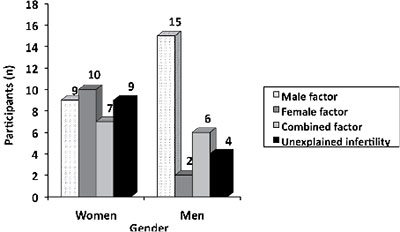
Figure 1. Participants’ causes of infertility.
Drawings made by male patients:
- Three patients did not draw a human figure.
- Two patients with non-obstructive azoospermia drew an incomplete human figure, represented by the face only (Figure 3a). When asked draw a family, the member of the family appeared complete, represented by both a face and body, and the family was composed of four members. These patients underwent surgical sperm retrieval, unsuccessfully, necessitating the use ofa sperm bank to continue their pregnancy attempts.
A patient with non-obstructive azoospermia, which was reversed with medication, could not draw the human figure, and this patient got visibly annoyed about the request. He eventually drew a family with three members.
Drawings made by female patients:
- One of the patients, who produced a much-regressed drawing, did not undergo embryo transfer, claiming, “... I do not want to have children with him. “
- A woman who drew only the face of the human figure claimed to be afraid to stop working, because she was the older daughter and financially helped her family. She seemed afraid to get in touch with her emotions, especially regarding the negative aspects of her family.
The number of family elements drawn is shown in Figure 2.
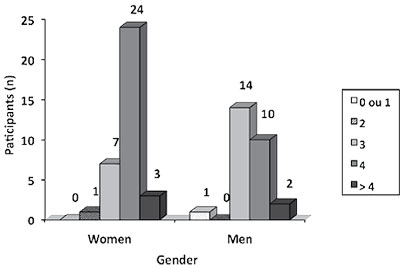
Figure 2. Number of elements in the family drawn by men and women.
Observations and comments on the drawing of the family:
- A man who drew a family with four elements reported, “The boy is drawn to represent a stillborn child. I could not forget to draw him here.” We believe, therefore, that the expectation regarding treatment is that it results in the birth of a boy.
- A man drew a family represented by nature without human elements and reported, “This is family to me” (Figure 3b). This man was unemployed and engaged in a relationship in which the woman was authoritarian and delegitimized his worth as a professional.
- A man drew a family with more than four elements. He was the only participant who included children from other marriages together with the present family.
- Two azoospermic men (usinga sperm bank) drew their families with four elements.
- A woman who drew a family with four elements said, “This is my family: my older sister, me, and my younger brother whom I helped raise, so he could also be my son.” When asked about the family she desires to create she added, “I think my husband is having an affair with the mother of his children ...”
- A woman who drew a family with three elements (a couple and a boy) reported, “This is my son who already is seven years old.” When asked about a desire to have more children she said, “They are inside my belly ...” There was, however, an indication that the patient did not seem to advocate egg donation.
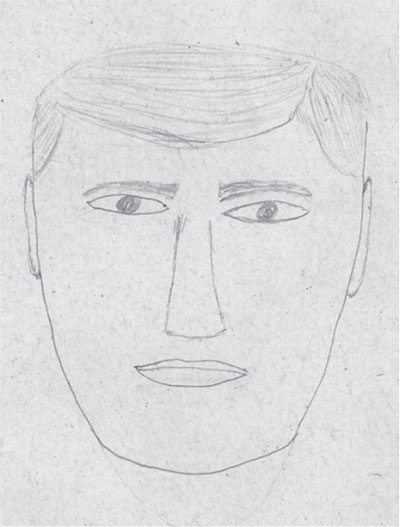
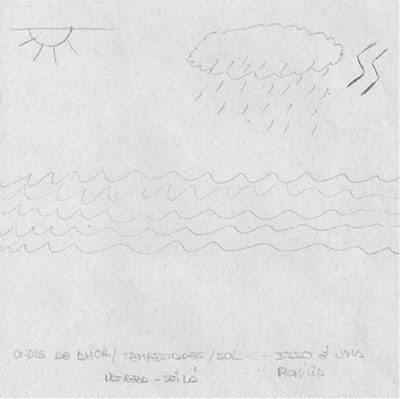
Figure 3. Participants’ drawings:
a) A non-obstructive azoospermic patient draws an incomplete human figure, i.e., only the face.
b) A patient draws a family represented by nature, with no human elements.
DISCUSSION
A psychological evaluation may present “in order of appearance: identification of the phenomenon being evaluated (that being the object of evaluation), identification of testing to be used and the assessment itself, with its methods and techniques inherent (Silva et al., 2010).”
Verification of the patients’ not manifested questions is performed via a psychological evaluation. “At the same time it helps in checking more complex problems, enabling the prioritization of therapeutic goals” (Werlang & Oliveira, 2006).
We found that the response patterns of patients with a diagnosis of infertility undergoing assisted reproductive treatments underwent stigmatizing experiences from being infertile that, according to Straube (2007), are multiple and include a search for the accuracy of the stigma’s origin, either by different medical and technological resources, specialized therapies, and a search for ways to overcome limitations through personal effort.
Although we know that both the process of internalization and externalization are constructive and constitutive of the subject’s individuality, each individual constructs his identity and presents it to others in a unique manner, with subjective meaning, individually and differentiated (Vasconcelos, 1998). We seek to integrate the results with an intention that is “more interpretive and not aggregating as in quantitative research” (Amaro, 2005).
There is evidence of some repetitive patterns that drew our attention, such as the fact that most women represented the family with four elements. Given the results, according to Osório (2002), it seems inescapable that the sense of ownership poisons human relations and is rooted in the archaic narcissistic core of the human condition.
Thus, we could suggest that the relevance, for most women, of having a child of each gender is linked to the idea that one of the parents was assigned functions related to their biopsychosocial formation. This dynamic does not invalidate the process of affective interactions.
For 54% of men, the graphic expression of the family had three members. For the man, the desire to procreate is associated with the transmission of “sonship” (Ribeiro, 2004). The drawings of the men who represented the human figure by the head only, all patients with a primary diagnosis of azoospermia, leads us to the claim of Grassano (2012)that “the constancy of traces in the graphic production of people that suffer from the same kind of psychosomatic illness allows to characterize the manner how they report the drawing”. In addition, the same authors affirm the “the graphs refer nodular life experiences of personal history and indicate facts that left marks and affected in a traumatic or beneficial manner the structuring of the ego.” The beneficial form emerges before the request to represent the family, and it seems to restore the previous condition, wherein we find an alleged denial of affect, through rationalization, emerging as the future possibility of resolving the malaise caused by the absence of sperm in their ejaculate.
The diagnosis of infertility by itself causes negative feelings in the subject, as has been noted by different authors, and when it is associated with azoospermia it can generate conflicts, as well as specific types of pressure and impulses. We are referring in such cases to an emotional state or condition of displeasure. As noted by Avelar (2009), this emotional state exists at a given moment and with a particular level of intensity, being characterized as subjective feelings of tension, apprehension, nervousness and by the activation of the autonomous nervous system.
From the dynamic point of view in psychology, Laplanche and Pontalis (1992) suggest that “Human behavior seeks to increase pleasure and decrease displeasure”. We also postulate that there is a basic repertoire of adaptive responses to certain external or internal stimuli, which are accompanied by pleasure. Through experience, learning and memory, anticipations and expectations are associated with symbolically elaborated equivalents and build a system of motivation, channeling the behavior in accordance with the principle of pleasure - displeasure. When asked for a family drawing, participants who previously drew an incomplete human figure included the body in the elements of graphic production. The individual could reveal their conflicts and conscious efforts, prior to the abandonment of conscious representations, on the “authorization” of the mental health professional / psychologist.
Several authors were discussed by Silva et al.(2010) in their literature review, and these authors declared that the graphic representation of the human figure is a tool that serves as a supplemental method of assessment and is therefore a useful resource for the expression of the emotional processes triggered in the current situation (infertility / assisted reproductive treatment) and provides elements for psychotherapeutic work.
CONCLUSION
The thematic expression of reproduction brings to light interwoven aspects of different domains (biological, social and cultural). We note that in addition to supporting the diagnosis of infertility and the expressed desire to build a family through the birth of a biological child, drawing as a research tool (for emotional aspects) projects a body image that, when associated with psychological interviews, usually comprises a range of projections related to one’s self-concept, i.e., the ideal image of the self or attitudes toward others (Trinca, 1972). This instrument can be considered a form of representation of the relationships present in the emotional world (Ferro, 1995) and thus “conveys both dominant models of objectal link as the current or past physical configuration data, traumatic events suffered in the body”(Grassano, 2012).
Therefore, the work of the mental health professional with patients who are undergoing assisted reproductive treatment may be advocated based on the results of these semi-directed interviews and the application (and qualitative assessment) of these graphic projective tests (human figure and family) as facilitators for the expression of emotional difficulties, psychological conflicts, and associated fantasies and anxieties related to the current diagnosis of infertility, which provide elements for psychotherapeutic work.
Laplanche J, Pontalis J, 1992. Vocabulário da Psicanálise, Martins Fontes, São Paulo.
Osório L, 2002. Casais e Famílias uma visão contemporânea, Artmed Porto Alegre.
Werlang B, Oliveira M, 2006. Temas em psicologia clinica, Casa do psicólogo, São Paulo.