JBRA Assist. Reprod. 2014; 18 (4):144-147
ORIGINAL ARTICLE
doi: 10.5935/1518-0557.20140021
The knowledge of the increased risk of complications in multiple pregnancies does not affect the desire to transfer more than one embryo in in vitro fertilisation treatment
1Fertility - São Paulo/SP, Brazil
CONFLICT OF INTERESTS
The authors declare that they have no conflict of interest.
ABSTRACT
Objetive: One of the main complications in in vitro fertilisation (IVF) is multiple pregnancies. This study was designed to investigate how many embryos subjects participating in an online survey would want to transfer in their IVF cycles.
Methods: This study was conducted in a Brazilian private assisted fertilisation centre. Individuals who accessed the centre’s website were asked to participate in the survey. The survey was based on important information concerning multiple gestations, followed by a single multiple choice question, as follows: ‘Knowing that the transfer of one embryo reduces the chance of pregnancy, and that the transfer of more than one embryo could result in multiple pregnancies, which comes with risks to the mother and the babies, answer: how many embryos would you transfer in your IVF cycle?’. There were three available answers: one, two or three embryos.
Results: A total of 1,049 subjects participated in the survey: 109 males and 940 females. The majority of the participants answered that they would like to have two embryos transferred (53.7%); followed by three embryos (35.0%), and one embryo (11.3%).
Conclusion: Men and women tend to underestimate the risks of complications associated with multiple embryo transfers and multiple gestations. It is the physician’s responsibility to consider single embryo transfer (SET) as the method of choice and perform double or triple embryo transfers only in special circumstances.
Keywords: Embryo transfer, in vitro fertilisation, multiple pregnancy, pregnancy, survey.
INTRODUCTION
Over the past few decades the use of assisted reproductive technologies (ART) has significantly increased and made gestation possible for many infertile couples. ART are initiated with a controlled ovarian stimulation, which results in the retrieval of many oocytes, leading to the transfer of multiple embryos in order to maximise pregnancy rates. As a consequence, ART has been associated with a 30-fold increase in multiple pregnancies, when compared to spontaneous pregnancies (ACOG, 2005).
Multiple pregnancies are associated with many negative consequences for the mother and the foetuses. The odds of pregnancy-induced hypertension, pre-eclampsia, gestational diabetes, postpartum hemorrhage and postpartum depression are the most frequent complications for the mother (Ontario, 2006). Babies from multiple pregnancies are at significantly higher risk of early death, premature birth, low birth weight, and mental and physical disabilities related to prematurity (Ontario, 2006).
Increasing awareness of maternal and foetal complications has led to a reduction in the number of embryos transferred in in vitro fertilisation clinics, but the frequency of twin pregnancies is still high (Maheshwari et al., 2011). A reduction in the number of embryos transferred might, however, contradict the patient’s desire to achieve a successful outcome and thereby increase the necessity for further IVF attempts.
Several studies have investigated patient preferences for embryo transfer policy and for outcomes of IVF treatment (Gleicher et al., 1995, Grobman et al., 2001, Kalra et al., 2003, Pinborg et al., 2003, Child et al., 2004, Murray et al., 2004, Ryan et al., 2004, Blennborn et al., 2005, Hojgaard et al., 2007, Newton et al., 2007, Ryan et al., 2007, Twisk et al., 2007, Hope and Rombauts, 2010, Fiddelers et al., 2011, Newton et al., 2013). The majority of studies focusing on patient attitudes have shown that patients generally have a preference for double over SET (Murray et al., 2004, Hojgaard et al., 2007, Newton et al., 2007, Ryan et al., 2007, Twisk et al., 2007). In addition, patients tend to prefer twins over a single baby (Gleicher et al., 1995, Grobman et al., 2001, Pinborg et al., 2003, Hojgaard et al., 2007).
The provision of relevant information about the risks has been reported to decrease the preference for multiple embryo transfers among IVF patients (Newton et al., 2007, Hope and Rombauts, 2010). As patients are actively involved in clinical decision-making, understanding patient desires and knowledge about multiple gestations is important. This study was designed to investigate how many embryos would subjects participating in an online survey want to transfer in their IVF cycle, after being informed about the risks associated with multiple embryo transfer.
MATERIAL AND METHODS
This study was conducted in a Brazilian private assisted fertilisation centre. Individuals who accessed the centre’s website from September 2013 to May 2014 were asked to participate in the survey. The survey provided two important pieces of evidence, followed by a single multiple choice question, as follows: ‘Knowing that the transfer of one embryo reduces the chance of pregnancy, and that the transfer of more than one embryo could result in multiple pregnancies, which brings risks to the mother and babies, answer: how many embryos would you transfer in your IVF cycle?’. There were three available answers: (i) one embryo, (ii) two embryos, and (iii) three embryos. In addition, participants were asked to enter their age, gender and profession (Figure 1).
Data are expressed as mean ± standard deviation. Data analysis was conducted using MINITAB 16 Software.
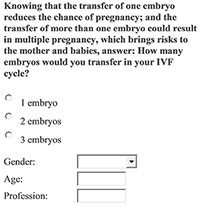
Figure 1. Illustration of the survey
RESULTS
A total of 1,049 subjects participated in the survey: 109 males (10.4%) and 940 females (89.6%). The mean age was 34.2 ± 5.1 years. The mean female age was 35.7 ± 5.8 (range: 17–52) and the mean male age was 36.0 ± 8.2 years (range: 16–66) (Figure 2). Regarding professions, a total of 642 (61.2%) participants were related to human sciences, 203 (19.3%) to biological sciences, 113 (10.8%) to exact sciences and 91 (8.7%) were unemployed, retired or students (Figure 3). The result of the survey is shown in Figures 4 and 5. The majority of the participants answered that they would like to have two embryos transferred (n=563; female=501, male=62; 53.7%); followed by three embryos (n=367; female=341, male=26; 35.0%), and one embryo (n=119, female=98, male=21; 11.3%).
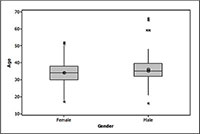
Figure 2. Box plot of female and male participants’ age
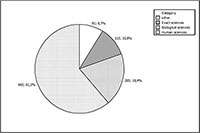
Figure 3. Participants’ professional áreas
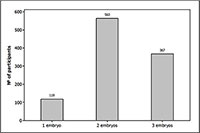
Figure 4. Result of survey
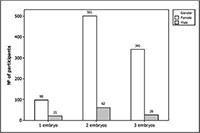
Figure 5. Result of survey by gender
DISCUSSION
The aim of this survey was to investigate how many embryos the subjects participating in an online survey would want to transfer in their IVF cycle. Despite the provision of risk information regarding multiple pregnancies, the majority of subjects participating in this survey preferred to have two embryos transferred, followed by three embryos and one embryo, respectively.
Several survey-based studies have investigated patient opinion regarding embryo transfer policy and pregnancy outcomes. Our findings corroborate those from similar studies, suggesting that patients generally have a preference for double over SET (Murray et al., 2004, Hojgaard et al., 2007, Newton et al., 2007, Ryan et al., 2007, Twisk et al., 2007). The embryo transfer decision seems to be influenced by an understanding of the risks associated with multiple pregnancies, estimates of the likelihood of single and multiple pregnancy, and demographic factors (Newton et al., 2007, Van Peperstraten et al., 2008).
There is also evidence that emotional state can influence decision-making and the process of risk assessment (Fiddelers et al., 2011, Newton et al., 2013). Moreover, it has been proposed that the supposed risk of not achieving a pregnancy might supersede medical concerns and, therefore, the patient makes what seems to them to be a safer decision to transfer more embryos (Newton et al., 2007; Newton et al., 2013).
In addition, patients do not always share physician concerns regarding multiple pregnancies, and show some resistance to SET (Ryan et al., 2004). Gleicher et al. (1995) found that fear of multiple pregnancies was rejected by 64% of surveyed patients and that up to 90% of couples desired the conception of twins. Primary reasons for preferring twins are desire for siblings, a positive attitude towards twins, a wish to minimise physical and psychological stress through having as few IVF treatments as possible (Hojgaard et al., 2007), nulliparity, lower family income, younger patient age, prior evaluation for infertility, longer duration of infertility, and lack of knowledge regarding risks of multiple gestations (Ryan et al., 2004).
In Brazil, a recent resolution from the Federal Medicine Council (CFM) on IVF treatments defined that: (i) for patients under the age of 35, no more than two embryos should be transferred; (ii) for patients between 36–39 years of age, no more than three embryos should be transferred; (iii) for patients between 40–50 years of age, no more than four embryos should be transferred.
However, these recommendations do not take into consideration the patients’ prognosis and/or previous failed IVF cycles, nor the stage at which the embryo is transferred; cleavage-stage or blastocyst (CFM 2013).
Meanwhile, in the United States of America, the following guidelines, provided by the American Society for Reproductive Medicine and the Society for Assisted Reproductive Technology are recommended: (i) patients under the age of 35 with a favourable prognosis should be offered a SET and no more than two embryos (cleavage-stage or blastocyst) should be transferred; (ii) for patients between 35–37 years of age with a favourable prognosis, no more than two cleavage-stage embryos should be transferred. All others in this age group should have no more than three cleavage-stage embryos or two blastocysts transferred; (iii) for patients between 38–40 years of age with a favourable prognosis, no more than three cleavage stage embryos or two blastocysts should be transferred. All others in this age group should not have more than four cleavage-stage embryos or three blastocysts transferred; (iv) for patients between 41–42 years of age, no more than five cleavage-stage embryos or three blastocysts should be transferred. In every age group cited above, for patients with two or more previously failed fresh IVF cycles or a less favourable prognosis, one additional embryo may be transferred according to individual circumstances.
There are insufficient data to recommend a limit on the number of embryos to transfer in women over 43 years of age (Practice Committee of American Society for Reproductive and Practice Committee of Society for Assisted Reproductive, 2013).
Most societies have issued guidelines to aid the decrease in the number of embryos transferred in IVF cycles and, consequently, the risk of multiple pregnancies. Although there is sufficient evidence demonstrating that elective SET may eliminate multiple pregnancies without compromising the cumulative live birth rate, many physicians are reluctant to adopt SET. In fact, in a previous study performed by our group, the ART professionals’ attitudes towards their own IVF cycles were investigated (Bonetti et al., 2008).
It was observed that the transfer of a higher number of embryos and the associated multiple pregnancy risks were seen as acceptable, illustrating that these professionals have similar attitudes and perceptions to those in the lay population and the participants of the present survey.
It is important to emphasise that a survey of this kind is subject to certain methodological limitations.
The results may have been influenced by patient self-selection because (a) not everyone is connected; (b) even if connected, not all potential participants are equally computer literate; (c) a participant might have answered the questionnaire twice or more; (d) the vast majority of participants are female; (e) the fertility potential of the participants is unknown, and (f) participants were not informed of the pregnancy rates when one, two or three embryos are transferred.
The conclusion of this study is that men and women are not sufficiently aware of, or tend to underestimate the risks of complications associated with multiple embryo transfers and multiple gestations. The provision of risk information did not influence the acceptance of SET. The physician has to give necessary and qualified information to the couple to help them with the decision-making process regarding the number of embryos to be transferred.
Nonetheless, it is the physician’s responsibility to consider SET as the method of choice and perform double or triple embryo transfers only in special circumstances.
REFERENCES
Brazil – Law No. 9.263 of January 12, 1996 (Law on Family ACOG. ACOG Committee Opinion #324: Perinatal risks associated with assisted reproductive technology. Obstet Gynecol. 2005;106:1143-6.
Medline
Blennborn M, Nilsson S, Hillervik C, Hellberg D. The couple’s decision-making in IVF: one or two embryos at transfer? Hum Reprod. 2005;20:1292-7.
Medline Crossref
Bonetti TC, Melamed RM, Braga DP, Madaschi C, Iaconelli A, Jr., Pasqualotto FF, Borges E, Jr. Assisted reproduction professionals’ awareness and attitudes towards their own IVF cycles. Hum Fertil (Camb). 2008;11:254-8.
Medline Crossref
Child TJ, Henderson AM, Tan SL. The desire for multiple pregnancy in male and female infertility patients. Hum Reprod. 2004;19:558-61.
Medline Crossref
Fiddelers AA, Nieman FH, Dumoulin JC, van Montfoort AP, Land JA, Evers JL, Severens JL, Dirksen CD. During IVF treatment patient preference shifts from singletons towards twins but only a few patients show an actual reversal of preference. Hum Reprod. 2011;26:2092-100.
Medline Crossref
Gleicher N, Campbell DP, Chan CL, Karande V, Rao R, Balin M, Pratt D. The desire for multiple births in couples with infertility problems contradicts present practice patterns. Hum Reprod. 1995;10:1079-84.
Medline
Grobman WA, Milad MP, Stout J, Klock SC. Patient perceptions of multiple gestations: an assessment of knowledge and risk aversion. Am J Obstet Gynecol. 2001;185:920-4.
Medline Crossref
Hojgaard A, Ottosen LD, Kesmodel U, Ingerslev HJ. Patient attitudes towards twin pregnancies and single embryo transfer - a questionnaire study. Hum Reprod. 2007;22:2673-8.
Medline Crossref
Hope N, Rombauts L. Can an educational DVD improve the acceptability of elective single embryo transfer? A randomized controlled study. Fertil Steril. 2010;94:489-95.
Medline Crossref
Kalra SK, Milad MP, Klock SC, Grobman WA. Infertility patients and their partners: differences in the desire for twin gestations. Obstet Gynecol. 2003;102:152-5.
Medline Crossref
Maheshwari A, Griffiths S, Bhattacharya S. Global variations in the uptake of single embryo transfer. Hum Reprod Update. 2011;17:107-20.
Medline Crossref
Murray S, Shetty A, Rattray A, Taylor V, Bhattacharya S. A randomized comparison of alternative methods of information provision on the acceptability of elective single embryo transfer. Hum Reprod. 2004;19:911-6.
Medline Crossref
Newton C, Feyles V, Asgary-Eden V. Effect of mood states and infertility stress on patients’ attitudes toward embryo transfer and multiple pregnancy. Fertil Steril. 2013;100:530-7.
Medline Crossref
Newton CR, McBride J, Feyles V, Tekpetey F, Power S. Factors affecting patients’ attitudes toward single- and multiple-embryo transfer. Fertil Steril. 2007;87:269-78.
Medline Crossref
Ontario HQ. In vitro fertilization and multiple pregnancies: an evidence-based analysis. Ont Health Technol Assess Ser. 2006;6:1-63.
Medline
Pinborg A, Loft A, Schmidt L, Andersen AN. Attitudes of IVF/ICSI-twin mothers towards twins and single embryo transfer. Hum Reprod. 2003;18:621-7.
Medline Crossref
Practice Committee of American Society for Reproductive M, Practice Committee of Society for Assisted Reproductive T. Criteria for number of embryos to transfer: a committee opinion. Fertil Steril. 2013;99:44-6.
Medline Crossref
Ryan GL, Sparks AE, Sipe CS, Syrop CH, Dokras A, Van Voorhis BJ. A mandatory single blastocyst transfer policy with educational campaign in a United States IVF program reduces multiple gestation rates without sacrificing pregnancy rates. Fertil Steril. 2007;88:354-60.
Medline Crossref
Ryan GL, Zhang SH, Dokras A, Syrop CH, Van Voorhis BJ. The desire of infertile patients for multiple births. Fertil Steril. 2004;81:500-4.
Medline Crossref
Twisk M, van der Veen F, Repping S, Heineman MJ, Korevaar JC, Bossuyt PM. Preferences of subfertile women regarding elective single embryo transfer: additional in vitro fertilization cycles are acceptable, lower pregnancy rates are not. Fertil Steril. 2007;88:1006-9.
Medline Crossref
Van Peperstraten AM, Kreuwel IA, Hermens RP, Nelen WL, Van Dop PA, Grol RP, Kremer JA. Determinants of the choice for single or double embryo transfer in twin prone couples. Acta Obstet Gynecol Scand. 2008;87:226-31.
Medline Crossref