JBRA Assist. Reprod. 2016;20 (1):8-12
ORIGINAL ARTICLE
doi: 10.5935/1518-0557.20160003
Strategies for the management of OHSS: Results from freezing-all cycles
1Fertility – Medical Group - Sao Paulo – Brazil
2Sapientiae Institute – Centro de Estudos e Pesquisa em Reprodução Assistida
3Disciplina de Urologia, Área de Reprodução Humana, Departamento de Cirurgia, Universidade Federal de São Paulo
CONFLICT OF INTERESTS
No conflict of interest have been declared.
ABSTRACT
Objective:
To compare the use of GnRH agonist (GnRHa) or hCG trigger in potential
OHSS patients undergoing freeze-all programs. We also compared the
clinical outcomes when fresh versus freeze-thawed embryo transfers were
performed in cycles with a high number of retrieved oocytes.
Methods:
The study included potential OHSS patients who received GnRHa (n=74) or
hCG (n=49) trigger. The protocols were compared with respect to the
clinical outcomes. We also compared the clinical outcomes of cycles in
which hCG trigger was used and more than 20 MII oocytes were retrieved
when: fresh embryo transfer protocol (n=153) or freeze-all protocol
(n=123) were performed.
Results: A decreased
serum estradiol level, a decreased number of retrieved oocytes, an
increased MII retrieved rate, and decreased fertilization rate was
observed in the hCG when compared with the GnRHa group. No significant
differences were noted concerning clinical outcomes. When fresh cycles
were compared with frozen-thawed cycles, the estradiol serum level and
the number of cryopreserved embryos were higher in the frozen-thawed
cycles. The clinical pregnancy rate was higher among freeze-all cycles,
as well as the implantation and cumulative pregnancy rates, when
compared with fresh embryo transfer cycles.
Conclusion:
The use of GnRHa trigger may be a good alternative to prevent the OHSS
in patients presenting an extreme ovarian response to COS, leading to
similar clinical outcomes, when compared with the traditional hCG
trigger. Moreover, our findings demonstrated that the strategy of
freezing-all embryos not only decreases the risk of OHSS but also leads
to a better pregnancy rate.
Keywords: OHSS, Freezing, Thawing, hCG, GnRHa, Trigger
INTRODUCTION
Ovarian hyperstimulation syndrome (OHSS) is the dreadful complication
of the controlled ovarian stimulation (COS), in which pharmacological
doses of gonadotropins, create a supra-physiological hormonal
environment, and promotes the growth of follicles, that under natural
conditions would become atretic and regress (Setti et al., 2011).
The syndrome is characterized by cystic enlargement of the ovaries and
a fluid shift from the intravascular to the third space due to
increased capillary permeability and ovarian neoangiogenesis (Kumar et al., 2011).
The incidence of moderate OHSS is estimated to be between 3% and 6%,
and it has been recognized in two forms: the early form of OHSS,
(within days after the ovulation triggering injection of hCG) although
caused by hCG, it is related to an exaggerated ovarian response to COS,
whereas the late form (10 days after hCG) (Abramov et al., 1999),
is mainly related to the secretion of placental hCG. Those cases which
constitute an early form followed by pregnancy are serious and long
lasting (Golan et al., 1989).
Ovarian
hyperstimulation syndrome results from an increase in vascular
permeability. The hCG used to trigger oocyte maturation appears to play
an integral part in the etiology of the condition and indeed,
subsequent trophoblast-derived hCG dramatically worsens and prolongs
the symptoms of severe OHSS (Whelan and Vlahos 2000; Aboulghar, 2009). Therefore, an important OHSS risk-reducing strategy has been to cancel the embryo transfer and freeze-all the embryos (Evans et al., 2014).
The cryopreservation of all embryos can prevent pregnancy-induced late
OHSS; however, it cannot prevent early OHSS if hCG is used to trigger
oocyte maturation (Endo et al., 2002)
The use of gonadotropin-releasing hormone agonist (GnRHa) as a trigger
for final oocyte maturation in antagonist in vitro fertilization (IVF)
cycles has been proposed as a method for preventing ovarian OHSS (Cerrillo et al., 2011; Humaidan et al., 2011).
From a clinical point of view, the most significant benefit of GnRHa
trigger is its ability to induce a quick and reversible luteolysis and
thus reduce the risk of OHSS development. Recently, it was demonstrated
that gonadotropin and steroid levels differ significantly during the
luteal phase between patients triggered for final oocyte maturation
with a GnRHa or with hCG (Fatemi et al., 2013).
To date, there is no consensus in the literature on the use of GnRH to
prevent the development of OHSS. Moreover, not much is known about
clinical outcomes when GnRH agonist or hCG are used to trigger
ovulation in freeze-all IVF cycles. Therefore, the goal for the present
study was to compare the use of either GnRHa or hCG to trigger the
final follicular maturation in freeze-all programs. We also aimed to
compare the clinical outcomes when fresh versus freeze-thawed embryo
transfers were performed in cycles with a high number of retrieved
oocytes.
MATERIALS AND METHODS
Experimental Design
This is case-control study analyzing potential OHSS patients (>20
retrieved MII) undergoing freeze-all cycles. The cycles were split into
those receiving the GnRHa (n=74) or the hCG (n=49) trigger. The
protocols were compared with respect to the clinical outcomes. We also
compared the clinical outcomes of cycles in which hCG trigger was
performed when the fresh embryo transfer protocol (n=153) or (ii) the
freeze-all protocol (n=123) was performed.
The clinical parameters evaluated were: (i) pregnancy rate, (ii) single
pregnancy rate, (iii) multiple pregnancy rate, (iv) implantation rate,
(v) miscarriage rate and (vi) cumulative pregnancy rate.
The pregnancy test was performed 12 days after embryo transfer. All
women with a positive test were submitted to a transvaginal ultrasound
scan 2 weeks after the positive test. A clinical pregnancy was
diagnosed when the fetal heartbeat was detected. Pregnancy rates were
calculated per transfer. Miscarriage was defined as pregnancy loss
before 20 weeks.
A written informed consent, in which patients agreed to share the
outcomes of their cycles for research purposes was obtained, and the
study was approved by the local institutional review board.
Controlled Ovarian Stimulation and Oocyte Retrieval
Controlled ovarian stimulation was achieved by using recombinant FSH
(Gonal-F; Serono, Geneva, Switzerland), at a daily dose, starting on
day three of the cycle. Pituitary blockage was performed using a GnRH
antagonist (Cetrotide, Serono, Geneva, Switzerland), starting when at
least one follicle ≥14 mm was visualized.
Follicular growth was monitored using transvaginal ultrasound
examination starting on day four of gonadotropin administration.
Recombinant hCG (Ovidrel, Serono, Geneva, Switzerland) or GnRHa
(Leuprolide acetate, Lupron; TAP Pharmaceuticals, Lake Forest, USA) was
administered to trigger the final follicular maturation. The oocytes
were collected 35 hours after follicular maturation trigger through
transvaginal ultrasound ovum pick-up.
Preparation of oocytes and Morphology assessment
Retrieved oocytes were maintained in culture medium (Global® for
Fertilization, LifeGlobal, Connecticut, USA) supplemented with 10%
Human Synthetic Albumin (HSA, Irvine Scientific, Santa Ana, USA),
covered with mineral oil (Ovoil™ - Vitrolife, Kungsbacka, Sweden) at
37°C and 6% CO2 for 5 hours. Surrounding cumulus cells were removed
with exposure to a HEPES buffered-medium containing hyaluronidase (80
IU/mL, Irvine Scientific, Santa Ana, USA). The remaining cumulus cells
were then mechanically removed by gentle pipetting with a hand-drawn
Pasteur pipette (Humagen Fertility Diagnostics, Charlottesville,
Virginia, USA). The oocytes were checked for oocyte maturation and
those which have released the first polar body (metaphase II oocytes –
MII) were considered mature and used for ICSI.
Intracytoplasmic Sperm Injection
Intracytoplasmic Sperm Injection was performed on all MII oocytes using the technique described by Palermo et al. (1992).
The oocytes were individually placed in 4-µL droplets of buffered
medium (Global® w/HEPES, LifeGlobal, Connecticut, USA), and sperm was
placed in a central 4-µL droplet of polyvinylpyrrolidone solution (PVP,
Irvine Scientific, Santa Ana, USA) in a 50 X 40-mm glass culture dish
(WillCo-dish®, New Jersey, USA) covered with warm mineral oil (Ovoil™,
Vitrolife, Kungsbacka, Sweden), on a heated stage (37.0 ± 0.5°C) of an
inverted microscope.
Assessment of Fertilization and Embryo Quality
After the ICSI procedure, the presumptive embryos were individually
maintained in a 50-µL drop of culture medium (Global®, LifeGlobal,
Connecticut, USA) supplemented with 10% human serum albumin (HAS) and
covered with mineral oil in a humidified atmosphere with 6% CO2 at 37°C until transfer, which occurred on the fifty day of development.
Approximately 18h after ICSI, fertilization was confirmed by the
presence of two pronuclei and the extrusion of the second polar body.
Subsequently, embryos were transferred to new drops of culture medium
to be individually cultured for 48 hours. The quality of the embryos
was evaluated under an inverted microscope.
Embryo freezing or embryo transfer
For
freeze-all cycles, on day three, embryos were vitrified and
cryo-stored. Both vitrification and the warming procedure were
performed using the Cryotop method, described elsewhere (Quaas et al., 2013). On day five, for both fresh and freeze-all protocols, one or two embryos were transferred.
Statistical analyses
The cycle characteristics, clinical outcomes and laboratory outcomes
were compared between the groups using Chi squared and student t-test
for categorical and continuous variables, respectively. Continuous
variables are expressed as the mean ± the standard deviation, and
percentages were used for categorical variables
All results considered 5% to be significant at the critical level (P < 0.05). Data analysis was carried out using the Minitab (version 14) Statistical Program.
RESULTS
When demographic variables, stimulation characteristics and response to
COS were compared between cycles in which the trigger was performed by
hCG or GnRHa, a decreased serum estradiol level, a decreased number of
retrieved oocytes, an increased MII retrieved rate, and decreased
fertilization rate were observed in the hCG group. No significant
difference was noted for the other evaluated parameters (Table 1).
No significant difference was observed in the clinical outcomes when the trigger was performed by either hCG or GnRHa (Table 2).
When fresh cycles were compared with frozen-thawed cycles, the
estradiol serum level on the trigger day and the number of
cryopreserved embryos were higher in the frozen-thawed cycles. The
other demographic variables, stimulation characteristics and response
to COS variables did not differ between the groups (Table 3).
The clinical pregnancy rate was higher among freeze-all cycles, as well
as the implantation and cumulative pregnancy rate, when compared with
fresh embryo transfer cycles (Table 4).
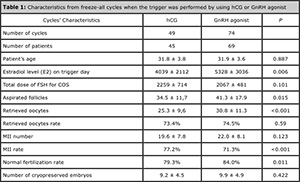
Table 1: Characteristics from freeze-all cycles when the trigger was performed by using hCG or GnRH agonist
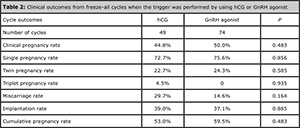
Table 2: Clinical outcomes from freeze-all cycles when the trigger was performed by using hCG or GnRH agonist
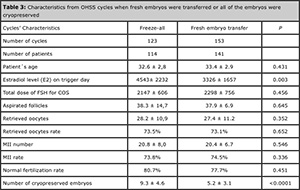
Table 3: Characteristics from OHSS cycles when fresh embryos were transferred or all of the embryos were cryopreserved
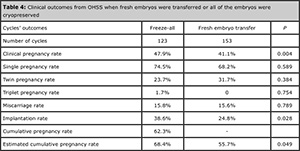
Table 4: Clinical outcomes from OHSS when fresh embryos were transferred or all of the embryos were cryopreserved
DISCUSSION
GnRHa can be used as an alternative trigger to hCG in cycles that have
been suppressed with a GnRH antagonist. Prior studies of GnRHa
triggering have reported complete prevention of severe early OHSS and
good pregnancy rates following fresh embryo transfer even in high-risk
patients (Humaidan 2009; Humaidan et al., 2009; Radesic & Tremellen, 2011). Nevertheless, in a very elegant previous study (Iliodromiti et al., 2013)
it was reported that in women undergoing ovarian stimulation and who
develop an excessive ovarian response, the use of a GnRHa trigger
combined can provide the opportunity to proceed to fresh embryo
transfer with adequate clinical pregnancy rates. However, this
procedure will not completely eliminate the risk of OHSS; therefore, in
cases of extreme ovarian response, the GnRHa trigger followed by a
freeze-all policy to completely avoid OHSS is recommended.
For the
present study, the used of GnRHa trigger was compared with the hCG
trigger in freeze-all protocols, and no differences were found for any
evaluated parameter, with exception of fertilization and number of MII
- which was increased and the MII retrieved rate, which was decreased
in the GnRHa group.
The lower MII retrieved rate observed when GnRHa was used may be
explained by the fact that differences exist between the GnRHa-induced
surge and that of the natural cycle or the traditional hCG trigger. The
LH surge of the natural cycle is characterized by three phases, with a
total duration of 48 h (Hoff et al., 1983), whereas the GnRHa-induced surge of gonadotropins consists of two phases only, with a duration of 24–36 h (Itskovitz et al., 1991).
This leads to a significantly reduced total amount of gonadotropins
being released from the pituitary when GnRHa is used. Conversely, the
traditional hCG trigger continues to stimulate ovarian steroid hormone
production for up to 5 days. For the GnRHa trigger, these differences
may have an effect on oocyte maturation. The higher fertilization rate
observed in this group may also be due to the “more physiological”
environment for oocyte development, that is created when the GnRHa
triggers follicular maturation.
When fresh and freeze-all
protocols, following hCG trigger were compared, a significantly
increased pregnancy rate was seen. In agreement with these findings,
there is growing evidence in the literature suggesting that the
supraphysiologic hormonal environment created by COS may decrease
endometrial receptivity and embryo implantation (Devroey et al., 2004; Shapiro et al., 2014).
In fact, it has been suggested that the freeze-all policy has emerged
as an alternative to fresh embryo transfer to improve cycle outcomes (Roque et al., 2013; Roque et al., 2015).
In our study, the whole cohort of embryos were cryopreserved, and the
embryo transfer was performed later in a most receptive and
well-prepared endometria. The potential advantage of this method is
that it provides a more physiologic hormonal milieu in which embryo
transfers take place (Barnhart, 2014).
Barnhart et al. (2014)
reported that ovarian stimulation may have unintended consequences. As
many aspects of IVF have become optimized, other aspects, such as
possible alterations in endometrial development, early embryo
development, implantation, early placentation, and OHSS risk have
become the focus of modifiable factors that may further enhance safety
and success.
When comparing the cycles’ characteristics of
freeze-all and fresh embryo transfer cycles, as expected, the estradiol
serum level on the trigger day and the number of cryopreserved embryos
were higher in the frozen-thawed cycles. Indeed the estradiol level is
one of the main parameters in the decision to freeze the whole cohort
of embryos in women undergoing ovarian stimulation and who develop an
excessive ovarian response.
In conclusion, our findings suggest that the GnRHa trigger may be a
good alternative to prevent OHSS in patients presenting an extreme
ovarian response to COS, leading to similar clinical outcomes when
compared with the traditional hCG trigger. Moreover, our findings
demonstrated that the strategy of freezing all embryos not only
decreases the risk of OHSS but it also leads to a better pregnancy
rate.
REFERENCES
Aboulghar M. Symposium: Update on prediction and management of OHSS. Prevention of OHSS. Reprod Biomed Online. 2009; 19: 33-42.
Medline Crossref
Abramov Y, Elchalal U, Schenker J G. Severe OHSS: An
‘epidemic’ of severe OHSS: a price we have to pay? Hum Reprod. (1999);
14: 2181-3.
Medline Crossref
Barnhart KT. Introduction: are we ready to eliminate
the transfer of fresh embryos in in vitro fertilization? Fertil Steril.
2014; 102:1-2.
Medline Crossref
Cerrillo M, Pacheco A, Rodriguez S, Gomez R, Delgado
F, Pellicer A, Garcia-Velasco J A. Effect of GnRH agonist and hCG
treatment on VEGF, angiopoietin-2, and VE-cadherin: trying to explain
the link to ovarian hyperstimulation syndrome. Fertil Steril. 2011; 95:
2517-9.
Medline Crossref
Devroey P, Bourgain C, Macklon NS, Fauser BC.
Reproductive biology and IVF: ovarian stimulation and endometrial
receptivity. Trends Endocrinol Metab. 2004;15:84-90.
Medline Crossref
Endo T, Honnma H, Hayashi T, Chida M, Yamazaki K,
Kitajima Y, Azumaguchi A, Kamiya H, Kudo R. Continuation of GnRH
agonist administration for 1 week, after hCG injection, prevents
ovarian hyperstimulation syndrome following elective cryopreservation
of all pronucleate embryos. Hum Reprod. 2002; 17: 2548-51.
Medline Crossref
Evans J, Hannan N J, Edgell T A, Vollenhoven B J,
Lutjen P J, Osianlis T, Salamonsen L A, Rombauts L J. Fresh versus
frozen embryo transfer: backing clinical decisions with scientific and
clinical evidence. Hum Reprod Update. 2014; 20: 808-21.
Medline Crossref
Fatemi H M, Polyzos N P, van Vaerenbergh I, Bourgain
C, Blockeel C, Alsbjerg B, Papanikolaou E G, Humaidan P. Early luteal
phase endocrine profile is affected by the mode of triggering final
oocyte maturation and the luteal phase support used in recombinant
follicle-stimulating hormone-gonadotropin-releasing hormone antagonist
in vitro fertilization cycles. Fertil Steril. 2013; 100: 742-7.
Medline Crossref
Golan A, Ron-el R, Herman A, Soffer Y, Weinraub Z,
Caspi E. Ovarian hyperstimulation syndrome: an update review. Obstet
Gynecol Surv. 1989; 44: 430-40.
Medline
Hoff JD, Quigley ME, Yen SS. Hormonal dynamics at midcycle: a reevaluation. J Clin Endocrinol Metab. 1983; 57:792-6.
Medline Crossref
Humaidan P. Luteal phase rescue in high-risk OHSS
patients by GnRHa triggering in combination with low-dose HCG: a pilot
study. Reprod Biomed Online. 2009; 18: 630-4.
Medline Crossref
Humaidan P, Kol S, Papanikolaou EG; Copenhagen GnRH
Agonist Triggering Workshop Group; GnRH agonist for triggering of final
oocyte maturation: time for a change of practice? Hum Reprod Update.
2011; 17: 510-24.
Medline Crossref
Humaidan P, Papanikolaou EG, Tarlatzis BC. GnRHa to
trigger final oocyte maturation: a time to reconsider. Hum Reprod.
2009; 24: 2389-94.
Medline Crossref
Iliodromiti S, Blockeel C, Tremellen KP, Fleming R,
Tournaye H, Humaidan P, Nelson S M. Consistent high clinical pregnancy
rates and low ovarian hyperstimulation syndrome rates in high-risk
patients after GnRH agonist triggering and modified luteal support: a
retrospective multicentre study. Hum Reprod. 2003; 28:2529-36.
Medline Crossref
Itskovitz J, Boldes R, Levron J, Erlik Y, Kahana L,
Brandes JM. Induction of preovulatory luteinizing hormone surge and
prevention of ovarian hyperstimulation syndrome by
gonadotropin-releasing hormone agonist. Fertil Steril. 1991; 56: 213-20.
Medline
Kumar P, Sait SF, Sharma A, Kumar M. Ovarian hyperstimulation syndrome. J Hum Reprod Sci. 2011;4: 70-5.
Medline Crossref
Palermo G, Joris H, Devroey P, Van Steirteghem AC.
Pregnancies after intracytoplasmic injection of single spermatozoon
into an oocyte. Lancet. 1992; 340: 17-8.
Medline Crossref
Quaas AM, Melamed A, Chung K, Bendikson KA, Paulson
RJ. Egg banking in the United States: current status of commercially
available cryopreserved oocytes. Fertil Steril 2013; 99: 827-31.
Medline Crossref
Radesic B, Tremellen K. Oocyte maturation employing
a GnRH agonist in combination with low-dose hCG luteal rescue minimizes
the severity of ovarian hyperstimulation syndrome while maintaining
excellent pregnancy rates. Hum Reprod. 2011; 26: 3437-42.
Medline Crossref
Roque M, Lattes K, Serra S, Sola I, Geber S,
Carreras R, Checa MA. Fresh embryo transfer versus frozen embryo
transfer in in vitro fertilization cycles: a systematic review and
meta-analysis. Fertil Steril. 2013; 99:156-62.
Medline Crossref
Roque M, Valle M, Guimaraes F, Sampaio M, Geber S.
Freeze-all policy: fresh vs. frozen-thawed embryo transfer. Fertil
Steril. 2015; 103: 1190-3.
Medline Crossref
Setti AS, Figueira RC, Braga DP, Colturato SS,
Iaconelli Jr A, Borges Jr. E. Relationship between oocyte abnormal
morphology and intracytoplasmic sperm injection outcomes: a
meta-analysis. Eur J Obstet Gynecol Reprod Biol. 2011; 159: 364-70.
Medline Crossref
Shapiro BS, Daneshmand ST, Garner FC, Aguirre M,
Hudson C. Clinical rationale for cryopreservation of entire embryo
cohorts in lieu of fresh transfer. Fertil Steril. 2014; 102: 3-9.
Medline Crossref
Whelan JG 3rd, Vlahos NF. The ovarian hyperstimulation syndrome. Fertil Steril. 2000; 73: 883-96.
Medline Crossref