JBRA Assist. Reprod. 2020;24(4):436-441
ORIGINAL ARTICLE
doi: 10.5935/1518-0557.20200033
Evaluation of the safety and efficacy of corifollitropin alfa combined with GnRH agonist triggering in oocyte donation cycles. A prospective longitudinal study
1 3rd Department Ob-Gyn, Aristotle University of Thessaloniki, Thessaloniki, Greece
2 Assisting Nature, Center of Reproduction & Genetics, Thessaloniki, Greece
3 Hacetepe University, Ankara, Turkey
The authors have no conflict of interest to declare.
ABSTRACT
Objective: In order to help make the dream of parenthood come true for oocyte acceptors,
it is essential that the procedure is not dangerous or unpleasant for oocyte
donors. The aim of this study was to identify differences in safety,
efficacy and patient acceptability between a traditional stimulation
antagonist protocol with recombinant-FSH (rFSH) with hCG-triggering,
compared with an innovative antagonist protocol with corifollitropin alfa
(Elonva®) plus GnRH agonist triggering in oocyte
donors.
Methods: A prospective longitudinal study was conducted at an in
vitro fertilization center in Greece. The same eighty donors
underwent two consecutive antagonist stimulation schemes. Primary outcomes
were patient satisfaction (scored by a questionnaire) and delivery rate per
donor. Secondary outcomes were mean number of cumulus-oocyte-complexes,
metaphase II (MII) oocytes and ovarian hyperstimulation syndrome (OHSS)
rate.
Results: Donors reported better adherence and less discomfort with the corifollitropin
alpha + GnRH agonist-triggering protocol (p<0.001). No
significant differences were identified in the clinical pregnancy rate per
donor (p=0.13), the delivery rates, the number of oocytes
(p=0.35), the number of MII oocytes
(p=0.50) and the number of transferred embryos, between the
two protocols. However, the luteal phase duration was significantly shorter
(p<0.001) in the corifollitropin alpha + GnRH
agonist-triggering protocol. Moreover, three cases of moderate OHSS (3.75%)
were identified after hCG triggering, whereas no case of OHSS occurred after
GnRH agonist ovulation induction (p=0.25).
Conclusion: The use of corifollitropin alpha combined with a GnRH agonist for triggering
is a safe, effective and acceptable protocol for oocyte donors.
Keywords: corifollitropin alfa, GnRH agonist triggering, donor, IVF, oocyte donation
INTRODUCTION
Women’s reproductive fecundity is biologically age-limited and due to recent cultural
shifts towards delayed childbearing, age-related infertility is the major reason
underlying oocyte donation (Lutjen et
al., 1984). Apart from advanced maternal age, oocyte
donation is a well-established mode of therapy for other infertility causes
including: diminished ovarian reserve, repeated in vitro fertilization (IVF)
failures, post-cancer infertility or maternally inherited genetic abnormalities
(Sauer & Paulson, 1995).
In oocyte donation cycles, instead of the recipients, the oocyte donors undergo
ovarian stimulation with gonadotropins to achieve multifollicular growth; therefore,
issues of safety, treatment adherence and acceptability are of major importance.
Taking into account that oocyte donors are selected from a young population with a
high ovarian reserve, and although it is unusual to use high gonadotropin doses for
stimulation, still there is an increased risk of ovarian hyperstimulation syndrome
(OHSS) (Jayaprakasan et al.,
2007). This carries certain associated morbidity risks and sometimes
leads to cycle cancellation, not to mention the increased risk of OHSS for the
donor, which is both unpleasant and potentially dangerous (Hernández et al., 2009). The GnRH antagonist
protocol was a first evolution toward this goal. It is well documented that the risk
of OHSS is almost two times lower when an antagonist is used compared with a
long-agonist protocol (Al-Inany et
al., 2016).
Another innovation toward improving patient adherence with a more convenient IVF is
the use of the long-acting FSH, corifollitropin alfa (Elonva®).
Corifollitropin alfa is a recombinant glycoprotein with prolonged
follicle-stimulating activity, where a single subcutaneous injection can initiate
and sustain the growth of multiple follicles for the first 7 days of ovarian
stimulation, reducing the number of injections required over the IVF cycle (Fauser et al., 2011). This new
FSH analogue has the same α-subunit as FSH, but its β-subunit has been
extended by a carboxyterminal peptide of the hCG β-subunit. This results in
the slower absorption and longer elimination half-life (65 hours) of corifollitropin
alfa, contributing to its sustained duration of activity (Corifollitropin Alfa
Dose-Finding Study Group, 2008). Moreover, corifollitropin alfa has the same
pharmacodynamic effect as purified FSH as it only interacts with the FSH-receptor
and lacks LH activity (Fauser et al., 2011). However, only limited
data exist regarding the use of corifollitropin alfa in donor cycles (Requena et al., 2013).
The current study was designed to identify whether there are efficacy, safety and
convenience advantages using long-acting FSH and GnRH agonist triggering in a
population of oocyte donors.
MATERIALS AND METHODS
Population characteristics
This prospective longitudinal study including oocyte donation cycles was
conducted between January 2014 to April 2019, at the Assisting Nature fertility
center. The same eighty donors (n=80) underwent two consecutive antagonist
stimulation schemes, involving 160 stimulation cycles; eighty cycles used the
gold standard antagonist protocol of recombinant FSH (rFSH) plus hCG triggering
and within 12 months, an additional eighty cycles with the new, more convenient
protocol with long-acting FSH and GnRH agonist for triggering final oocyte
maturation. The age of oocyte donors was between 23 and 33 years. They had a
body mass index below 30 kg/m2, regular menstrual cycles, adequate
ovarian reserve and no exclusionary medical history. A transvaginal scan was
performed on all donors to exclude cases with polycystic ovaries, endometriosis
or other pathological gynecological conditions. Hormonal evaluation including
thyroid function, karyotype, testing for cystic fibrosis, full blood count,
vaginal and cervical swabs. Screening for previous viral infections, including
hepatitis B and C, human immunodeficiency virus, cytomegalovirus and syphilis
was also done. All women included in the study provided informed consent for
their participation. The Institutional Review Board reviewed the study protocol
and approved the study procedure.
Donor stimulation protocols
In donors following the first stimulation regimen, after a vaginal ultrasound
examination and the confirmation of baseline FSH, LH and estradiol, stimulation
commenced in the afternoon of Day 2 of the menstrual cycle with rFSH
(200-300IU). The rFSH dose remained fixed until Day 6 of stimulation.
Thereafter, the dose was adjusted according to the ovarian response. Daily GnRH
antagonist co-treatment (Orgalutran® 0.25 mg) was introduced from the
morning of Day 6 of stimulation (Pacchiarotti et al., 2016). Transvaginal ultrasound and blood
sampling were performed on Day 6 of stimulation and thereafter as necessary
until the day of triggering. Final oocyte maturation was induced with 250
µg recombinant hCG (r-HCG - Ovitrelle®), as soon as ≥3
follicles of ≥18 mm were present (Farrag et al., 2008).
In the second stimulation scheme, one injection of a long-acting (7 days) FSH
(Elonva®) was performed in the afternoon of Day 2 of the menstrual cycle.
From Day 8 of stimulation until the day of triggering, FSH (Puregon®) was
added according to ovarian response (Croxtall
& McKeage, 2011). Daily GnRH antagonist co-treatment
(Orgalutran® 0.25 mg) was also administered from the morning of Day 6 of
stimulation. After regular transvaginal ultrasound scans, final oocyte
maturation was induced with the GnRH agonist Triptorelin (Arvecap®) 0.3
mg, as soon as ≥3 follicles of ≥18 mm were present (Croxtall &
McKeage, 2011). Oocyte retrieval was carried out 36 h later, with aspiration of
all follicles.
In both protocols, transvaginal ultrasound-guided oocyte pick-up was performed
under intravenous sedation and local anesthesia, 36h after final oocyte
maturation with r-hCG or GnRH agonist, followed by IVF or intracytoplasmic sperm
injection (ICSI).
All donors answered a questionnaire with graded responses on a scale from 1 to 5
addressing four basic questions: (a) assessing their experience/discomfort
during the follicular phase with each protocol, (b) their experience during the
luteal phase, (c) whether they would repeat the treatment and (d) which protocol
they would choose if they were allowed to do so. Each donor was asked to
complete the questionnaire during the first menstruation after completing each
scheme, thus two questionnaires were completed by each donor (Table 1).
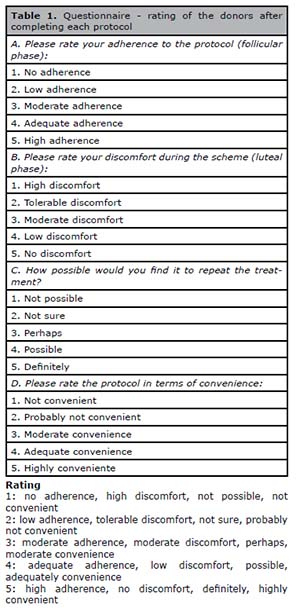
Table 1. Questionnaire - rating of the donors after completing each
protocol
Recipient estrogen replacement protocols
In recipients who were amenorrheic after contraceptive pill discontinuation,
bleeding was induced by receiving the estrogen replacement scheme as described
below. In recipients who were still cycling, an estrogen replacement scheme was
utilized starting during the 3rd day of follicular phase (only a few
downregulated since the 21st day of the previous menstrual cycle
using an intramuscular GnRH agonist). The estrogen replacement protocol was: on
the 3rd day of their period, the recipient was advised to start
taking an estradiol regimen of estradiol valerate 2 mg with a gradually
increasing dosing scheme (4 mg for 3 days, then 6 mg for 3 days and then 8 mg
for the rest of the cycle) in order to mimic estradiol levels of the natural
menstrual cycle. Estradiol was used until the pregnancy test, and if positive,
until the 10th week of pregnancy. Micronized progesterone was added
after a minimum 10 days of estradiol pre-treatment and once the endometrium was
thicker than 7 mm. In case of D3 embryo transfer, 200 mg progesterone
(Utrogestan®) was administered to the recipient 4 days before embryo
transfer. In case of D5 embryo transfer, 200 mg progesterone
(Utrogestan®) was administered 6 days before blastocyst transfer.
Progesterone was given intravaginally and was continued at 200 mg three times a
day until the pregnancy test, and if positive, until the 10th week of
pregnancy. Methylprednisolone 8 mg and aspirin 100 mg were also co-administered
in cases of proven thrombophilia or a background of autoimmune disease.
Endometrial thickness was measured by ultrasound scan and it was considered
mature above 7 mm. The pregnancy test was performed 14 days after initiation of
progesterone.
Outcomes
The primary outcomes were patient satisfaction (as scored by the questionnaire)
and delivery rate per donor. Secondary outcomes were mean number of
cumulus-oocyte-complexes, metaphase II (MII) oocytes and ovarian
hyperstimulation syndrome (OHSS) rate.
Statistical analysis
A sample size of 74 donors in each group was required to decrease the incidence
of moderate and severe OHSS from 15% (already reported in the literature for IVF
cases) with the classical antagonist with HCG triggering, to 1% with the
proposed antagonist protocol with long-acting FSH and agonist triggering with an
alpha value of 0.05 and a power of 90%.
Absolute (n) and relative (%) frequencies were calculated for categorical
variables, while continuous variables were represented as mean ± standard
deviation (SD). The statistical analysis for the comparison of the collected
data was performed using McNemar’s test for categorical variables and Paired
samples t-test for continuous variables. Statistical significance was defined as p<0.05. The analysis was performed using SPSS software
v.25.0.
RESULTS
In total, 80 oocyte donors performed 160 stimulation cycles, triggered in the initial
cycle with r-hCG and in the second cycle with a GnRH agonist. In terms of donor
experiences, donors rated the follicular phase adherence as 3.0 versus 1.1 (p<0.001) and the luteal phase
discomfort as 3.1 versus 1.2 (p<0.001), in
favor of the more convenient protocol (corifollitropin alpha+GnRH agonist
triggering) compared with the conventional protocol (rFSH + hCG triggering).
Moreover, donors rated themselves as being more inclined to repeat and to recommend
the corifollitropin alpha + GnRH agonist triggering protocol than the conventional
protocol (3.5 versus 1.5; p<0.001 and 3.4 versus 1.4; p<0.001, respectively) (1- high
discomfort/not recommend to 5- low discomfort/strongly recommend) (Table 2).
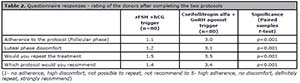
Table 2. Questionnaire responses - rating of the donors after completing the two
protocols
Delivery rates were the same at 60.0% (48/80) in both groups. The clinical pregnancy rate per donor was comparable between the two groups, with 75.0% (60/80) after hCG-triggering, compared with 70.0% (56/80) after GnRH agonist triggering, p=0.13. Similarly, no significant differences were identified in the miscarriage rates (20.0% after hCG-triggering versus 14.3% after GnRH agonist triggering; p=0.14) (Table 3).
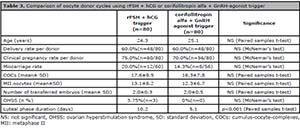
Table 3. Comparison of oocyte donor cycles using rFSH + hCG or corifollitropin
alfa + GnRH-agonist trigger
Regarding the secondary outcomes, no difference was identified between the two protocols in the number of oocytes (17.6±9.5 with rFSH+hCG triggering versus 16.3±7.8 with corifollitropin alfa + GnRH agonist triggering, p=0.35), the number of MII oocytes (13.1±8.2 with rFSH+hCG triggering versus 12.3±6.7 with corifollitropin alfa + GnRH agonist triggering, p=0.50) and the number of transferred embryos (2.0±0.3 with rFSH + hCG versus 2.0±0.5 with corifollitropin alfa + GnRH agonist). Three cases of moderate OHSS (3.75%) were identified after hCG triggering, but no case of OHSS occurred after GnRH agonist triggering (p=0.25). None of the donors developed severe OHSS requiring hospitalization. Nevertheless, the duration of the luteal phase was significantly shorter after GnRH agonist (5.1 days) compared to hCG triggering (10.2 days), p<0.001 (Table 3).
DISCUSSION
This prospective longitudinal study was carried out in 80 donors who underwent two
consecutive antagonist stimulation schemes; one using the classical antagonist
protocol with rFSH plus hCG for triggering and a subsequent one with an innovative
antagonist protocol combining the use of corifollitropin alfa with a GnRH agonist
for triggering. The latter protocol proved equally effective in terms of oocyte
yield, transferrable blastocysts produced and eventually pregnancy outcomes in
oocyte acceptors, and, in addition to the excellent acceptability for donors,
achieved a high degree of adherence with a very low degree of discomfort. All these
aspects suggest that corifollitropin alfa and GnRH agonist for triggering is a more
acceptable IVF protocol for donors, combining safety, efficacy and simplicity.
Regarding corifollitropin alfa, a single injection of this long-acting FSH on the
first day of stimulation can replace the first seven daily injections of rFSH,
simplifying treatment and making assisted reproduction more acceptable of patients;
which for donors can be of particular importance, especially during a first
treatment when they may be nervous or afraid as they have had no previous experience
of the procedure. In fact, when donors were asked to choose which treatment they
preferred, the results clearly showed a positive trend favoring corifollitropin
alfa, suggesting that this new protocol may reduce the treatment burden and increase
donor adherence. This finding is in accordance with evidence from other studies,
confirming donors’ preferences (Requena et
al., 2013).
In terms of the efficacy of corifollitropin alfa, in the present study the
replacement of daily rFSH with a single injection of corifollitropin alpha in the
subsequent cycle had no impact either on embryological or pregnancy outcomes, as the
new acceptors had identical pregnancy rates as the first acceptors who had taken
blastocysts produced with 9-12 daily injections of rFSH. Similarly, three randomized
control trials of women undergoing ovarian stimulation with either corifollitropin
alfa or rFSH showed that the use of a single injection of corifollitropin alfa for
the first seven days of ovarian stimulation was either equivalent or non-inferior to
daily injections of rFSH in terms of the number of oocytes retrieved, and in terms
of pregnancy and live-birth rates. Moreover, there were no significant differences
in the incidences of OHSS between corifollitropin alfa and rFSH in these three
trials (Devroey et al., 2009;
Corifollitropin Alfa Ensure Study Group, 2010; Boostanfar et al., 2015).
Regarding pregnancy outcomes, the first meta-analysis in a normal IVF population
showed a lower likelihood of achieving a clinical pregnancy with GnRH agonist
triggering in a GnRH antagonist protocol with standard luteal phase support with
estrogen and progesterone (Griesinger et
al., 2006). Conversely, despite the fact that a
meta-analysis by Humaidan et al.
(2011) showed no difference in the delivery rates if intense luteal
support is administered, the fresh embryo transfer policy after agonist triggering
is not widely used for the normal IVF population as the freeze-all strategy has
subsequently emerged and has eliminated the need for intense luteal support.
However, these cautions do not affect the current study’s population, namely of
oocyte donors. In fact, in the present study, the delivery rates were equal in both
groups.
In order to exclude the possible negative impact of the corpus luteum and endometrium
in a GnRH triggered cycle, Acevedo et
al. (2006) examined this mode of oocyte maturation in a
donor programme evaluating the number of retrieved oocytes, MII oocytes,
fertilization, pregnancy and implantation rates. The results were equivalent
compared with hCG triggered donor cycles, suggesting that embryo quality is not
affected by GnRH agonist triggering (Acevedo et al., 2006).
Moreover, similarly to the results of the present study, significant differences in
luteal phase length (4.16±0.70 days versus 13.63±2.12
days) and in OHSS (0/30 versus 5/30) were observed between donors
receiving a GnRH agonist compared with those receiving hCG (Acevedo et
al., 2006).
Importantly, the emergence of OHSS was eliminated with the GnRH agonist triggering
scheme compared with the use of hCG-triggering. Naturally this is a significant
benefit in an IVF cycle, especially in young, healthy, altruistic oocyte donors. The
need for a low-risk OHSS protocol necessitated the implementation of GnRH antagonist
protocols, which subsequently paved the way for the introduction of a GnRH agonist
for triggering oocyte maturation (Humaidan et al., 2011). The GnRH agonist as a trigger module
has a shorter half-life and elicits a more physiological flare-up of gonadotropins,
thus it appears to be an appropriate first-line regimen for final oocyte maturation
in donor stimulation cycles (Youssef et
al., 2015). In the initial studies, a GnRH agonist was also
proposed as an alternative triggering agent for women at increased risk of OHSS,
such as oocyte donors (Shapiro et
al., 2007). In the study of Bodri et al. (2009), in 2,077 donor cycles the
triggering agent was selected according to the follicular number on the day of
triggering and the pregnancy outcomes were not statistically significantly
different, with data also supporting the use of GnRH in order to reduce the risk of
OHSS. In another randomized trial including 212 oocyte donors, half of whom received
oocyte triggering with hCG and half with GnRH agonist, fertilization rates were
similar but the incidence of OHSS in the second group was considerably reduced
(Galindo et al.,
2009).
As mentioned previously, the duration of the luteal phase was significantly shorter
after GnRH agonist triggering compared with hCG triggering, thus donors following
this mode of oocyte maturation triggering, can more easily re-establish their
regular menstrual cycle and experience less pelvic discomfort, increasing the
likelihood of participation in future donation cycles. This shorter duration of the
luteal phase is also indirect evidence of impaired luteal function induced by GnRH
agonist triggering (Humaidan et
al., 2012; Fatemi et
al., 2013); however this has no negative effects on
oocyte-acceptor cycles when the recipient’s endometrium is appropriately
prepared.
The major strength of this study was that two consecutive stimulation schemes were
evaluated in the same donors, minimizing potential selection bias. Additionally, to
the best of our knowledge, this is the first study using a long-acting FSH combined
universally in an oocyte donor population compared head-to-head with the classical
antagonist and rFSH plus hCG triggering protocol.
However, the study was limited to a population of European donors. In addition, the
study was conducted at a single center, so the results may not be generalizable to a
wider population. Moreover, the use of methylprednisolone or aspirin could work as a
confounder. However, only one patient received methylprednisolone and two patients
received aspirin due to proven antiphospholipid syndrome; this effect may be
insignificant as the pregnancy rates were equivalent between study groups. Finally,
using oocyte donors as study participants may result in a less diverse study
population, making baseline characteristics less prominent than they would be in an
infertile population undergoing IVF.
The antagonist protocol with long-acting FSH and agonist triggering appeared to meet
the requirements for safety, efficacy and simplicity; each of which is essential for
the oocyte-donor population. In donor cycles, the absence of pregnancy in donors may
exclude the possibility of late OHSS; however, as the enrolled women were younger
and with good reproductive potential, there is an increased risk of early OHSS. The
present study emphasises the need in oocyte donors to use - as the safest
reproductive treatment - the combination of antagonist downregulation, long-acting
FSH for follicular stimulation and agonist triggering. This strategy has now been
shown to not only achieve a desirable oocyte yield, but also to minimize the risk of
OHSS and to reduce the recovery time from an IVF-stimulated cycle.
CONCLUSION
In order to help make the dream of parenthood come true for oocyte-acceptors, it is
essential that the treatment that oocyte donors undergo is as safe, effective and
convenient as possible. The antagonist protocol with long-acting FSH and agonist
triggering is both more acceptable and safer for oocyte donors and appears to be an
appropriate approach for first-line treatment in oocyte-donation programs.
REFERENCES
Acevedo B, Gomez-Palomares JL, Ricciarelli E, Hernandez ER.
Triggering ovulation with gonadotropin-releasing hormone agonists does not
compromise embryo implantation rates. Fertil Steril. 2006;86:1682-7. PMID:
17074344 DOI: 10.1016/j.fertnstert.2006.05.049
Medline Crossref
Al-Inany HG, Youssef MA, Ayeleke RO, Brown J, Lam WS, Broekmans FJ.
Gonadotrophin-releasing hormone antagonists for assisted reproductive
technology. Cochrane Database Syst Rev. 2016;4:CD001750. PMID: 27126581 DOI:
10.1002/14651858.CD001750.pub4
Medline Crossref
Bodri D, Guillén JJ, Galindo A, Mataró D, Pujol A, Coll O.
Triggering with human chorionic gonadotropin or a gonadotropin-releasing hormone
agonist in gonadotropin-releasing hormone antagonist-treated oocyte donor
cycles: findings of a large retrospective cohort study. Fertil Steril.
2009;91:365-71. PMID: 18367175 DOI:
10.1016/j.fertnstert.2007.11.049
Medline Crossref
Boostanfar R, Shapiro B, Levy M, Rosenwaks Z, Witjes H, Stegmann BJ,
Elbers J, Gordon K, Mannaerts B; Pursue investigators. Large, comparative,
randomized double-blind trial confirming noninferiority of pregnancy rates for
corifollitropin alfa compared with recombinant follicle-stimulating hormone in a
gonadotropin-releasing hormone antagonist controlled ovarian stimulation
protocol in older patients undergoing in vitro fertilization. Fertil Steril.
2015;104:94-103.e1. PMID: 26003273 DOI:
10.1016/j.fertnstert.2015.04.018
Medline Crossref
Corifollitropin Alfa Dose-finding Study Group. A randomized
dose-response trial of a single injection of corifollitropin alfa to sustain
multifollicular growth during controlled ovarian stimulation. Hum Reprod.
2008;23:2484-92. PMID: 18684735 DOI: 10.1093/humrep/den288
Medline Crossref
Corifollitropin alfa Ensure Study Group. Corifollitropin alfa for
ovarian stimulation in IVF: a randomized trial in lower-body-weight women.
Reprod Biomed Online. 2010;21:66-76. PMID: 20483664 DOI:
10.1016/j.rbmo.2010.03.019
Medline Crossref
Croxtall JD, Mckeage K. Corifollitropin alfa: a review of its use in
controlled ovarian stimulation for assisted reproduction. BioDrugs.
2011;25:243-54. PMID: 21815699 DOI:
10.2165/11206890-000000000-00000
Medline Crossref
Devroey P, Boostanfar R, Koper NP, Mannaerts BM, Ijzerman-Boon PC,
Fauser BC; ENGAGE Investigators. A double-blind, non-inferiority RCT comparing
corifollitropin alfa and recombinant FSH during the first seven days of ovarian
stimulation using a GnRH antagonist protocol. Hum Reprod. 2009;24:3063-72. PMID:
19684043 DOI: 10.1093/humrep/dep291
Medline Crossref
Farrag A, Costantini A, Manna C, Grimaldi G. Recombinant HCG for
triggering ovulation increases the rate of mature oocytes in women treated for
ICSI. J Assist Reprod Genet. 2008;25:461-6. PMID: 18925430 DOI:
10.1007/s10815-008-9262-x
Medline Crossref
Fatemi HM, Polyzos NP, van Vaerenbergh I, Bourgain C, Blockeel C,
Alsbjerg B, Papanikolaou EG, Humaidan P. Early luteal phase endocrine profile is
affected by the mode of triggering final oocyte maturation and the luteal phase
support used in recombinant follicle-stimulating hormone-gonadotropin-releasing
hormone antagonist in vitro fertilization cycles. Fertil Steril. 2013;100:742-7.
PMID: 23806846 DOI: 10.1016/j.fertnstert.2013.05.028
Medline Crossref
Fauser BC, Alper MM, Ledger W, Schoolcraft WB, Zandvliet A,
Mannaerts BM; Engage Investigators. Pharmacokinetics and follicular dynamics of
corifollitropin alfa versus recombinant FSH during ovarian stimulation for IVF.
Reprod Biomed Online. 2011;22:S23-31. PMID: 21575846 DOI:
10.1016/S1472-6483(11)60006-0
Medline Crossref
Galindo A, Bodri D, Guillen JJ, Colodron M, Vernaeve V, Coll O.
Triggering with HCG or GnRH agonist in GnRH antagonist treated oocyte donation
cycles: a randomised clinical trial. Gynecol Endocrinol. 2009;25:60-6. PMID:
19165664 DOI: 10.1080/09513590802404013
Medline Crossref
Griesinger G, Diedrich K, Devroey P, Kolibianakis EM. GnRH agonist
for triggering final oocyte maturation in the GnRH antagonist ovarian
hyperstimulation protocol: a systematic review and meta-analysis. Hum Reprod
Update. 2006;12:159-68. PMID: 16254001 DOI:
10.1093/humupd/dmi045
Medline Crossref
Hernández ER, Gómez-Palomares JL, Ricciarelli E. No room for
cancellation, coasting, or ovarian hyperstimulation syndrome in oocyte donation
cycles. Fertil Steril. 2009;91:1358-61. PMID: 18555236 DOI:
10.1016/j.fertnstert.2008.03.077
Medline Crossref
Humaidan P, Kol S, Papanikolaou EG; Copenhagen GnRH Agonist
Triggering Workshop Group. GnRH agonist for triggering of final oocyte
maturation: time for a change of practice? Hum Reprod Update. 2011;17:510-24.
PMID: 21450755 DOI: 10.1093/humupd/dmr008
Medline Crossref
Humaidan P, Papanikolaou EG, Kyrou D, Alsbjerg B, Polyzos NP,
Devroey P, Fatemi HM. The luteal phase after GnRH-agonist triggering of
ovulation: present and future perspectives. Reprod Biomed Online.
2012;24:134-41. PMID: 22197130 DOI: 10.1016/j.rbmo.2011.11.001
Medline Crossref
Jayaprakasan K, Herbert M, Moody E, Stewart JA, Murdoch AP.
Estimating the risks of ovarian hyperstimulation syndrome (OHSS): implications
for egg donation for research. Hum Fertil (Camb). 2007;10:183-7. PMID: 17786651
DOI: 10.1080/14647270601021743
Medline Crossref
Lutjen P, Trounson A, Leeton J, Findlay J, Wood C, Renou P. The
establishment and maintenance of pregnancy using in vitro fertilization and
embryo donation in a patient with primary ovarian failure. Nature.
1984;307:174-5. PMID: 6690997 DOI: 10.1038/307174a0
Medline Crossref
Pacchiarotti A, Selman H, Valeri C, Napoletano S, Sbracia M,
Antonini G, Biagiotti G, Pacchiarotti A. Ovarian Stimulation Protocol in IVF: An
Up-to-Date Review of the Literature. Curr Pharm Biotechnol. 2016;17:303-15.
PMID: 26775651 DOI: 10.2174/1389201017666160118103147
Medline Crossref
Requena A, Cruz M, Collado D, Izquierdo A, Ballesteros A, Munoz M,
Garcia-Velasco JA. Evaluation of the degree of satisfaction in oocyte donors
using sustained-release FSH corifollitropin α. Reprod Biomed Online.
2013;26:253-9. PMID: 23352098 DOI: 10.1016/j.rbmo.2012.11.015
Medline Crossref
Sauer MV, Paulson RJ. Oocyte and embryo donation. Curr Opin Obstet
Gynecol. 1995;7:193-8. PMID: 7647271 DOI:
10.1097/00001703-199506000-00007
Medline Crossref
Shapiro BS, Daneshmand ST, Garner FC, Aguirre M, Ross R. Comparison
of human chorionic gonadotropin and gonadotropin-releasing hormone agonist for
final oocyte maturation in oocyte donor cycles. Fertil Steril. 2007;88:237-9.
PMID: 17296193 DOI: 10.1016/j.fertnstert.2006.11.069
Medline Crossref
Youssef MA, Abdelmoty HI, Ahmed MA, Elmohamady M. GnRH agonist for
final oocyte maturation in GnRH antagonist co-treated IVF/ICSI treatment cycles:
Systematic review and meta-analysis. J Adv Res. 2015;6:341-9. PMID: 26257931
DOI: 10.1016/j.jare.2015.01.005
Medline Crossref