JBRA Assist. Reprod. 2020;24(4):466-469
ORIGINAL ARTICLE
doi: 10.5935/1518-0557.20200037
Fertility-Sparing Treatment in Young Women with Atypical Endometrial Hyperplasia and Low-Grade Endometrial Cancer: A Tertiary Center Experience
1Oman Medical Specialty Board, Muscat, Oman
2Sultan Qaboos University Hospital, Muscat, Oman
3Royal hospital Oman, Muscat, Oman
The authors declare no conflict of interest.
ABSTRACT
Objectives: To evaluate the oncologic and reproductive outcomes of patients with atypical
endometrial hyperplasia and low grade stage 1 endometrial cancer who
received medical treatment.
Methods: We carried out a retrospective study on all patients aged 20-42 years with
complex, atypical endometrial hyperplasia, and low-grade stage 1 endometrial
cancer, who wished to preserve fertility and were treated at the Royal
Hospital. We held this study between January 2006 and December 2016. The
patients received oral megestrol acetate with or without a levonorgestrel
intrauterine system. We assessed their response to progestin treatment in
terms of treatment duration, time to response, pregnancy, time of surgery,
and oncological outcome. We performed the statistical analysis using the
SPSS 20.0 software.
Results: Twenty patients met the inclusion criteria, and among them 90% had complete
remission. Among these 90%, 55% had complete remission within six months of
treatment. The recurrence rate was recorded in 11 patients (55%) and it was
more frequent in obese patients with body mass index (BMI) ≥30
(p=0.001), who had complete response in > 6 months
of hormonal treatment. About 15% of the patients required hysterectomy, and
12 (60%) patients conceived after full treatment.
Conclusions: Fertility-sparing treatment of atypical endometrial hyperplasia and grade 1
stage 1 endometrial cancer in reproductive-age women is feasible. However,
obese patients (BMI ≥ 30) had a higher recurrence rate.
Keywords: Endometrial hyperplasia, endometrial cancer, fertility, progestogens
INTRODUCTION
Endometrial cancer (EC) may develop from precursor lesions, mainly endometrial
hyperplasia (EH). Twenty-nine percent of untreated atypical hyperplasia may progress
to cancer (Zaino et al.,
2006). Both of them (EC and EH) histologically share the same risk
factors of unopposed estrogen therapy, obesity, diabetes, nulliparity, early
menarche, and late menopause, which are all related to excess estrogen, compared to
progesterone (Aoki, 2014; Soliman et al., 2005). The
definitive treatment for atypical hyperplasia and endometrial cancer in young women
is surgery, which consists of hysterectomy with or without removing the ovaries
(Soliman et al., 2005; Kaaks et al., 2002).
However, most of the times this type of treatment is not a choice for young women,
particularly the nulliparous ones, wishing to preserve fertility.
Endometrial hyperplasia and endometrial cancer are estrogen-dependent, and hence
progestins are often used to induce their regression. When arising in young women,
endometrial cancer usually presents with favorable prognostic features that is, a
focal, well-differentiated lesion, with minimal or absent myometrial invasion. For
these women, hormone therapy (generally progestins) has been used as a conservative
treatment in many countries. (Inoue et
al., 2016).
Growing evidence shows that fertility-preserving treatment can be used for young
women with atypical hyperplasia and early-stage, low-grade endometrial carcinoma.
However, there is no local published data on long-term outcomes and prognostic
factors.
The goal of this study was to evaluate the oncologic and reproductive outcomes of
reproductive-age patients with atypical endometrial hyperplasia and low grade
endometrial cancer who were managed conservatively, using medical treatment between
2006 to 2016 in the Royal hospital, Sultanate of Oman. This study was conducted
because there is no national published data or studies that investigated the
outcomes of medical treatment of atypical endometrial hyperplasia and low grade
endometrial cancer in this population.
MATERIALS AND METHODS
We ran a retrospective study using data from patients with atypical hyperplasia and
early endometrioid endometrial cancer in a reproductive-age group of women treated
with oral progestins, levonorgestrel-releasing intrauterine system (LNG-IUS) or
combination as fertility-sparing treatment between January 1, 2006, and December 31,
2016, Royal Hospital, Oman. The inclusion criteria for selecting the patients were:
age of 20-45 years who desired to preserve their fertility and had stage 1A, grade 1
endometriod endometrial cancer, diagnosed by histopathology and on the basis of the
staging system from the International Federation of Gynecology and Obstetrics. The
study was approved by the Center of Studies and Research of the hospital. The body
mass index (BMI) was calculated as weight in kilograms divided by the square of
height in meters), and the cut-off point was set at 30 according to the current
international classification of the World Health Organization for obesity.
Treatment and evaluation of response
The progestin therapy consisted of either oral megestrol acetate (MA) at a dose
of 160 mg/day or levonorgestrel-releasing intrauterine system (LNG-IUS) or a
combination of megestrol acetate and levonorgestrel-releasing intrauterine
system (MA + LNG-IUS).
Response to progestin treatment was assessed histologically using specimens
obtained via hysteroscopic biopsies or out-patient biopsies with a pipelle
curette. The histological evaluation was performed every 6 monthly. A complete
remission was defined as the absence of hyperplasia or malignancy. Once patients
achieved a complete remission, a maintenance therapy was given for 3-6 months in
case of atypical hyperplasia, and 12 months in cases of endometrial cancer. The
recurrence rate was defined as the time (in months), from full treatment to the
date of relapse.
Statistical Analysis
The frequency distributions of the baseline characteristics were compared using
the Fisher exact tests when the expected frequency was less than five, and the
Pearson χ2 test was used when the expected frequency was higher than
five. We used the SPSS 20.0 software to perform the statistical analysis. p<0.05 was considered significant.
RESULTS
A total of 20 patients met the inclusion criteria and were included in the study. Out
of these twenty patients, 19 had atypical hyperplasia and one had endometrial
cancer. Their median age at diagnosis was 31 years. The BMI was higher than
30kg/m2 in 60% of the women with a mean BMI of 33.1kg/m2.
Eleven patients (55%) were diagnosed during fertility investigations. Nineteen
patients (95%) complained of abnormal menstruation and 70% of the patients were
diagnosed with polycystic ovarian syndrome (Table
1).
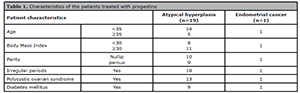
Table 1. Characteristics of the patients treated with progestins
Of the 20 patients, 11 (55%) received MA alone. The LNG-IUS was placed in one (5%) patient and 8 (40%) received a combination of MA and LNG-IUS (Table 2). The mean duration of progestin treatment for all patients was 6.35 months.
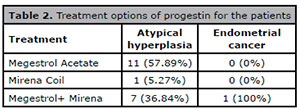
Table 2. Treatment options of progestin for the patients
Eighteen women had complete disease remission, and two (10%) did not have full remission. Of these two, one had atypical hyperplasia and one had endometrial cancer. Of these 18 women, 55% patients had complete remission upon 6 months from starting treatment. There was no relation between complete response to the treatment and age, BMI, previous pregnancy, PCOS, initial endometrium histopathology, or progestin treatment type (Table 3).
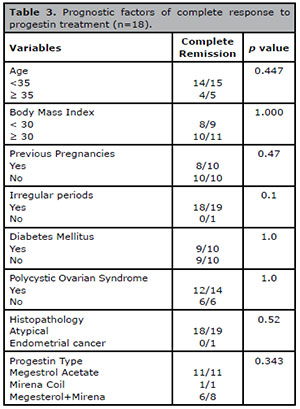
Table 3. Prognostic factors of complete response to progestin treatment (n=18).
The mean follow-up period after complete remission was 8 months (range 6-24). Of the 20, 55% of the patients had a relapse (Table 4). The median time to recurrence was 18 months. Ten out of 11 patients received a second cycle of progestin, and one patient progressed to endometrial cancer, but she refused surgery. A total of 3 patients (15%) underwent hysterectomy. Those who experienced recurrence had a BMI ≥ 30 (p=0.001) and had treatment for over 6 months till complete response (p=0.010) (Table 4).
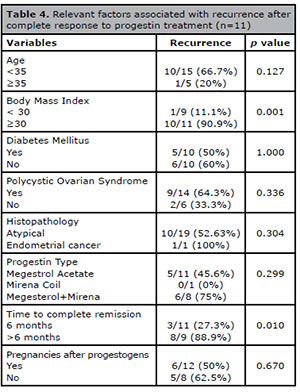
Table 4. Relevant factors associated with recurrence after complete response to
progestin treatment (n=11)
Twelve (60%) patients conceived after full treatment, with a total of 12 pregnancies.
(10 live-births and 2 miscarriages). Ten pregnancies (71.4%) were achieved thanks to
assisted reproductive technology and ovulation induction therapies
The average time to conception was 7.4 months. Five women were submitted to in vitro fertilization and eight women had ovulation induction.
However, the recurrence rate of hyperplasia was almost equal in both groups (about
40%). Four women had cesarean section but there was no pregnancy with placenta
previa or accrete.
DISCUSSION
There have been many reports on conservative managements on atypical endometrial
hyperplasia and low grade, early stage of endometrioid endometrial cancer. This
study also has indicated that progestin treatment (Megestrol acetate and LNG-IUS) is
one method of treatment for patients with atypical hyperplasia or grade 1
endometrial cancer, with high complete remission rate (90%). Ushijima et al. (2007) reported in a
prospective multicentre study a very high response rate both in atypical complex
hyperplasia and in endometrial cancer (100 and 87%, respectively. In another report
by Yamazawa et al. (2007) found a response rate of 50-100%.
Progestin treatment is not the curative therapy for atypical hyperplasia and
endometrial cancer, and there is risk of disease progression with the therapy with
recurrence rate of 55% in present study. Patients with endometrial cancer have been
reported to have a lower response rate than do those with atypical hyperplasia (55% vs. 82%; Ushijima et
al., 2007) and (48% vs. 66%; Gunderson et al., 2012). So
patients, especially with endometrial cancer, should understand the possibility of
disease progression during progestin treatment and should not choose medical
management if they desire to conceive.
The results also suggest that obese patients (BMI ≥30) have an increased risk
of recurrence. Many studies reported that obesity was the main factor that
associated with failure to achieve complete response to the treatment. Chen et al. (2016) found that a
BMI of at least 30 was the only significant factor associated with failure to achieve
a complete remission and also was associated with a higher risk of recurrence.
Patients with atypical hyperplasia, or endometrial cancer had history of infertility,
anovulation and abnormal menstrual bleeding, PCOS and obesity, which all can reduce
their chance of pregnancy even after full treatment. Therefore, responders to the
treatment should be referred to a fertility treatment. In the present study, the
pregnancy rate was 60% which is higher than the previously reported rates of 23%
(Ushijima et al., 2007),
52% (Gunderson et al., 2012)
and 32% (Koskas et al.,
2014).
The limitations of this study it is retrospective character and the fact that it was
carried out in one single center.
CONCLUSION
Fertility-sparing strategies for treatment of endometrial hyperplasia and endometrial
cancer in reproductive-age women are effective. Patients with high BMI (BMI ≥
30) had high recurrence rates. Therefore, the attending physician should also focus
on weight reduction for these patients.
Progestin therapy is not the definitive treatment for atypical hyperplasia and
endometrial cancer, and only specific patients should be given the choice of this
treatment after extensive counseling about the risks.
REFERENCES
Aoki D. Annual report of Gynecologic Oncology Committee, Japan
Society of Obstetrics and Gynecology, 2013. J Obstet Gynaecol Res.
2014;40:338-48. PMID: 24472052 DOI: 10.1111/jog.12360
Medline Crossref
Chen M, Jin Y, Li Y, Bi Y, Shan Y, Pan L. Oncologic and reproductive
outcomes after fertility-sparing management with oral progestin for women with
complex endometrial hyperplasia and endometrial cancer. Int J Gynaecol Obstet.
2016;132:34-8. PMID: 26493012 DOI: 10.1016/j.ijgo.2015.06.046
Medline Crossref
Gunderson CC, Fader AN, Carson KA, Bristow RE. Oncologic and
reproductive outcomes with progestin therapy in women with endometrial
hyperplasia and grade 1 adenocarcinoma: a systematic review. Gynecol Oncol.
2012;125:477-82. PMID: 22245711 DOI:
10.1016/j.ygyno.2012.01.003
Medline Crossref
Inoue O, Hamatani T, Susumu N, Yamagami W, Ogawa S, Takemoto T,
Hirasawa A, Banno K, Kuji N, Tanaka M, Aoki D. Factors affecting pregnancy
outcomes in young women treated with fertility-preserving therapy for
well-differentiated endometrial cancer or atypical endometrial hyperplasia.
Reprod Biol Endocrinol. 2016;14:2. PMID: 26769300 DOI:
10.1186/s12958-015-0136-7
Medline Crossref
Kaaks R, Lukanova A, Kurzer MS. Obesity, endogenous hormones, and
endometrial cancer risk: a synthetic review. Cancer Epidemiol Biomarkers Prev.
2002;11:1531-43. PMID: 12496040
Medline
Koskas M, Uzan J, Luton D, Rouzier R, Daraï E. Prognostic factors of
oncologic and reproductive outcomes in fertility-sparing management of
endometrial atypical hyperplasia and adenocarcinoma: systematic review and
meta-analysis. Fertil Steril. 2014;101:785-94. PMID: 24388202 DOI:
10.1016/j.fertnstert.2013.11.028
Medline Crossref
Soliman PT, Oh JC, Schmeler KM, Sun CC, Slomovitz BM, Gershenson DM,
Burke TW, Lu KH. Risk factors for young premenopausal women with endometrial
cancer. Obstet Gynecol. 2005;105:575-80. PMID: 15738027 DOI:
10.1097/01.AOG.0000154151.14516.f7
Medline Crossref
Ushijima K, Yahata H, Yoshikawa H, Konishi I, Yasugi T, Saito T,
Nakanishi T, Sasaki H, Saji F, Iwasaka T, Hatae M, Kodama S, Saito T, Terakawa
N, Yaegashi N, Hiura M, Sakamoto A, Tsuda H, Fukunaga M, Kamura T. Multicenter
phase II study of fertility-sparing treatment with medroxyprogesterone acetate
for endometrial carcinoma and atypical hyperplasia in young women. J Clin Oncol.
2007;25:2798-803. PMID: 17602085 DOI: 10.1200/JCO.2006.08.8344
Medline Crossref
Yamazawa K, Hirai M, Fujito A, Nishi H, Terauchi F, Ishikura H,
Shozu M, Isaka K. Fertility-preserving treatment with progestin, and
pathological criteria to predict responses, in young women with endometrial
cancer. Hum Reprod. 2007;22:1953-8. PMID: 17449880 DOI:
10.1093/humrep/dem088
Medline Crossref
Zaino RJ, Kauderer J, Trimble CL, Silverberg SG, Curtin JP, Lim
PC,Gallup DG. Reproducibility of the diagnosis of atypical endometrial
hyperplasia: a Gynecologic Oncology Group study. Cancer. 2006;106:804-11. PMID:
16400640 DOI: 10.1002/cncr.21649
Medline Crossref