JBRA Assist. Reprod. 2021;25(1):168-170
CASE REPORT
doi: 10.5935/1518-0557.20200052
Monozygotic dichorionic-diamniotic twin pregnancy after single embryo transfer at blastocyst stage: a case report
1Faculdade de Medicina da Universidade Federal Fluminense. Niterói, RJ, Brazil
2Clínica Primordia Medicina Reprodutiva. Rio de Janeiro, RJ, Brazil
3Clínica Fert Rio. Rio de Janeiro, RJ, Brazil
CONFLICT OF INTERESTS
The authors declare that there are no conflicts of interest.
ABSTRACT
Single embryo transfer is highly encouraged on in vitro fertilization due to its lower rates of multiple pregnancy. Nevertheless, the
likelihood of multiple pregnancy is higher when using assisted reproductive
technology, probably because of embryo handling. Timing is crucial in the
post-fertilization division of a single embryo to establish the amniocity and
chorionicity of the gestation. In the case reported a 38 year-old woman,
nulligravid, had a single blastocyst implanted, which resulted in monozygotic
dichorionic-diamniotic twins. Despite being rare, there are reports of similar
cases questioning the current knowledge on time of embryo division and the
impact of assisted reproduction.
Keywords: ICSI, SET, dichorionic, diamniotic, monozygotic twin
INTRODUCTION
Assisted reproduction technology (ART) enabled many infertile couples to fulfill
their desire to become parents. Consequently, to using these techniques, there was
an increase in twin pregnancies, mainly dizygotic, due to the implantation of more
than one embryo. However, there is also the rare occurrence of monozygotic twins
(MZT), by mechanisms that we still do not understand fully (Knopman et al., 2014; Sundaram et al., 2018; Vitthala et al., 2009). In general, the
prognosis of a multiple pregnancy presents worse maternal and neonatal outcomes;
thus, it is essential to determine and identify the risk factors to create
strategies and reduce the occurrence of these events (Knopman et al., 2014).
The incidence of monozygotic twins in natural pregnancies is approximately 0.4%, this
rate after in vitro fertilization (IVF) ranges from 0.2 to 12%.
However, the least commonly found event after IVF is the occurrence of MZT
multifetal dichorionic-diamniotic (DC-DA) gestation, with a rate ranging from 0.04
to 5.5% (Sundaram et al.,
2018; Vitthala et al.,
2009). This case report is about another MZT DC-DA pregnancy after a
single blastocyst transfer.
CASE REPORT
A 38-year-old female, nulligravid, and her 39-year-old husband came to us to
investigate their infertility condition. She stopped using combined oral
contraceptives five years ago, performed timed intercourse twice four years ago
without therapeutic success and three years ago performed infertility investigation.
Their test results showed: anti-Mullerian hormone: 1 ng/mL; 7 antral follicle count
in the ultrasound; and an endometrial polyp in her video hysteroscopy. The
spermogram was normal as for the WHO parameters. Hysterosalpingography was positive
with cotte bilaterally, but with fixed tubes. Another semen analysis performed
showed 2% Kruger morphology. The hormonal tests performed by both were normal.
Therefore, we concluded that their infertility condition had male factor and tubal
factor. We decide to perform intracytoplasmic sperm injection (ICSI).
We performed controlled ovarian stimulation, for FIV, with 1950 UI of follitropin
alfa/lutroprin alfa (Pergoveris®) and 1050 UI of menopause
gonadotropin (Merional®) during 10 days, and we administered
GnRH-antagonist (Cetrotide®) from the 6th day to the trigger. On
day 11, there were 10 follicles, ranging from nine to 23mm in diameter. On day 11,
we injected 250µg of choriogonadotropin (Ovidrel®). After
36 hours, we collected eight eggs, five of them were mature (MII) and injected.
Five mature oocytes were fertilized by ICSI and after 130 hours one of them reached
blastocyst stage, morphologically classified as B3AA, according to the
classification adapted from Gardner et al.
(2000) for the protocols of the FIV Primordia lab, on day 5. We vitrified
the embryos in CRYOTOP® with vitrification medium, both from
Kitazato. We also used the Kitazato medium for thawing , following the
manufacturer’s instructions and standard technique of the Primordia laboratory.
After thawing, we checked the surviving embryo in an inverted microscope; performed
1/3 assisted hatching of the blastocyst and maintained it in culture for 4 hours.
The embryo transfer occurred guided by ultrasound and using a sterile embryo
transfer catheter (Guardia TM-handle), in the estrogen plus progesterone cycle
(Figure 1). We scheduled the single embryo
transfer (SET) when the ultrasound demonstrated a trilaminar endometrium measuring
8.5 mm and no follicles in both ovaries. The transfer was uneventful and there was
no blood in the catheter. We had a positive pregnancy test (209,4 mUI/mL) 10 days
after the transfer. Five weeks later we performed an ultrasound scan, which showed
two gestational sacs (Figure 2).
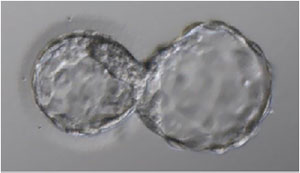
Figure 1. Embryo expansion after hatching in an image obtained using an optical
microscope just before embryo transfer
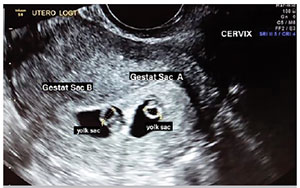
Figure 2. USG performed 5 weeks after single embryo transfer, showing two
gestational sacs
DISCUSSION
Whenever possible, recommendations today are for a single embryo transfer (SET),
considering that multiple pregnancies have higher rates of maternal and neonatal
morbidity and mortality (McLernon et
al., 2010). However, even following the guidelines and
choosing SET, there is still the possibility of multiple monozygotic pregnancies by
embryo splitting and dizygotic pregnancy (Ikemoto et al., 2018).
Our case is another report of conjugal infertility treated with ICSI and SET that
resulted in MZT, DC-DA pregnancy. When we performed the transfer, the couple had no
sexual intercourse and the USG before embryo transfer showed no follicles, allowing
us to discard a dizygotic pregnancy.
Some of the known risk factors associated with MZT pregnancy after SET are: mother's
age < 35y, blastocyst transfer, ICSI, assisted hatching and freeze-warming
cycles, while there has been no difference concerning ovarian stimulation method
(Ikemoto et al., 2018; Busnelli et al., 2019).
Mechanisms that may explain this phenomenon are being studied, such as, for example,
blastomere herniation hypothesis, depressed calcium levels in the early embryo,
delayed implantation, cell repulsion theory, cell-to-cell adhesion impairment, and
the existence of a codominant axis (Knopman et al., 2014).
A systematic review published by Busnelli et
al. (2019) analyzed 40 studies and reported that blastocyst
transfer and female age <35 years were associated with a statistically
significant increase in MZT rates after IVF. When they compared conventional IVF
with ICSI and assisted hatching, they were associated with an increased risk of MZT
pregnancy; while embryo biopsy, cryopreservation, and oocytes donation were not
(Busnelli et al., 2019).
In a Japanese retrospective study published by Ikemoto et al. (2018) with almost 1 million single
embryonic transfer cycles, the prevalence of multiple pregnancies with zygotic
splitting was 1.36% of the 276 934 clinical pregnancies after SET. Frozen-warmed
embryonic transfer cycles, blastocyst culture, assisted hatching and cycles with
cleavage embryos had greater odds of MZT (Ikemoto et al., 2018).
There are controversies concerning when after fertilization a single embryo splits in
two to form a dichorionic-diamniotic (DC-DA) pregnancy. Classical dogma states that
if the embryo divides in the first 3 days post-fertilization, it results in DC-DA
pregnancy, embryo division between days 4 and 8 post-fertilization produces
monochorionic-diamniotic (MC-DA) twins and division between 9 and 12 days
post-fertilization results in monochorionic-monoamniotic (MC-MA) pregnancy. However,
in case-report studies the majority of DC-DA occurred at the blastocyst stage (Sundaram et al., 2018; Kyono, 2013).
Of the aforementioned risk factors, our case presents ICSI fertilization,
frozen-warmed cycles, blastocyst transfer and assisted hatching. In accordance with
other reports, we present another DC-DA MZT transferred at the blastocyst stage. The
mechanisms behind these events are still unclear, with some theories reported by Busnelli et al. (2019).
Since it is a rare event, case reports are fundamental to enlarge the sample, enable
better associations between risk factors, and improve our understanding of the
underlying mechanisms behind MZT DC-DA pregnancies.
REFERENCES
Busnelli A, Dallagiovanna C, Reschini M, Paffoni A, Fedele L,
Somigliana E. Risk factors for monozygotic twinning after in vitro
fertilization: a systematic review and meta-analysis. Fertil Steril.
2019;111:302-17.
Medline Crossref
Ikemoto Y, Kuroda K, Ochiai O, Yamashita S, Ikuma S, Nojiri S,
Itakura A, Takeda S. Prevalence and risk factors of zygotic splitting after 937
848 single embryo transfer cycles. Hum Reprod. 2018;33:1984-91.
Medline Crossref
Knopman JM, Krey LC, Oh C, Lee J, McCaffrey C, Noyes N. What makes
them split? Identifying risk factors that lead to monozygotic twins after in
vitro fertilization. Fertil Steril. 2014;102:82-9.
Crossref
Kyono K. The precise timing of embryo splitting for monozygotic
dichorionic diamniotic twins: when does embryo splitting for monozygotic
dichorionic diamniotic twins occur? Evidence for splitting at the
morula/blastocyst stage from studies of in vitro fertilization. Twin Res Hum
Genet. 2013;16:827-32.
Medline Crossref
McLernon DJ, Harrild K, Bergh C, Davies MJ, de Neubourg D, Dumoulin
JC, Gerris J, Kremer JA, Martikainen H, Mol BW, Norman RJ, Thurin-Kjellberg A,
Tiitinen A, van Montfoort AP, van Peperstraten AM, Van Royen E, Bhattacharya S.
Clinical effectiveness of elective single versus double embryo transfer:
meta-analysis of individual patient data from randomised trials. Version 2. BMJ.
2010;341:c6945.
Medline Crossref
Sundaram V, Ribeiro S, Noel M. Multi-chorionic pregnancies following
single embryo transfer at the blastocyst stage: a case series and review of the
literature. J Assist Reprod Genet. 2018;35:2109-17.
Medline Crossref
Vitthala S, Gelbaya TA, Brison DR, Fitzgerald CT, Nardo LG. The risk
of monozygotic twins after assisted reproductive technology: a systematic review
and meta-analysis. Hum Reprod Update. 2009;15:45-55.
Medline Crossref