JBRA Assisted Reproduction 2021;25(2):215-222
ORIGINAL ARTICLE
doi: 10.5935/1518-0557.20200070
Increased de novo glutathione production enhances sexual dysfunctions in rats subjected to paradoxical sleep deprivation
1Department of Anatomy, Faculty of Basic Medical Sciences, College of Medicine, University of Lagos, Idi-Araba,
Lagos, Nigeria
2Department of Anatomy, Faculty of Basic Medical Sciences, Gregory University, Uturu, Anabra State, Nigeria
3Department of Physiology, Faculty of Basic Medical Sciences, College of Medicine, University of Lagos, Idi-Araba, Lagos, Nigeria
We have no conflicts of interest to disclose.
ABSTRACT
Objective: Poor quality of sexual life has been reported secondary to poor sleep or
sleep deprivation. Paradoxical sleep is an integral part of the
sleep-wakefulness physiology and prolonged paradoxical sleep deprivation
(PSD) may even be fatal. The objective of this investigation was to
determine if D-ribose-L-cysteine (RibCys) and zinc (Zn) administration can
attenuate the effect of PSD on the sexual function of male rats.
Methods: Following acclimatization, 25 male rats were randomly distributed into five
groups of 5 rats each. The PSD, PSD+RibCys, PSD+Zn, PSD+RibCys+Zn, and
Control groups were sleep-deprived only, sleep-deprived and given 100mg/kg
body-weight of pure RibCys, sleep-deprived and given 10mg/kg body weight Zn,
sleep-deprived and given a combination of 100mg/kg of RibCys and 10mg/kg of
Zn, and given distilled water without sleep deprivation, respectively. PSD
lasted for 20 hours per day for 14 days. Subsequently, the sexual behavioral
study was carried out and the animals were sacrificed for biochemical
assays.
Results: Analyses of results show that for animals treated with RibCys or Zn, all
sexual parameters such as mount frequency and latency, intromission
frequency and latency and ejaculation frequency and latency were
significantly improved compared with animals subjected to PSD only. This
improvement correlates strongly with serum glutathione (GHS) levels.
Conclusion: In summary, riboceine increases circulating GHS, which leads to improved
sexual function during sleep deprivation.
Keywords: sleep deprivation, sexual behavior, glutathione
INTRODUCTION
Sleep deprivation is one stressful experience, and it is potentially disruptive to
mammalian physical, mental, and emotional coping capacity. Consequently, stress is a
physical, mental or emotional demand that is disruptive to natural coping capacity
and internal homeostasis of an organism (Mello et al., 2003). Stress reactivity is mediated by
physiologically connected distinct anatomical structures, commonly referred to as
the hypothalamic-pituitary-adrenal (HPA) Axis (Smith
& Vale, 2006). Glucocorticoid levels under the regulation of
adrenocorticotrophic hormone (ACTH) is generally accepted as a marker of the
intensity of stress reactivity (Burford et
al., 2017). Thus, the release of ACTH and corticoids into
the bloodstream because of the activation of the HPA axis is a reliable marker of
the stress response (Graeff & Zangrossi Junior,
2010). Studies have shown that paradoxical sleep deprivation in rats
leads to elevated levels of corticosterone (Andersen et al., 2009; Calegare et al., 2010; Wu et al., 2011; Abd
El-Aziz & Mostafa, 2012; Choi et al., 2016).
Male rat’s sexual behavior include penile erection, sexual motivation and mating
behavior, and all can be studied while observing the mating behavior of a male rat
in direct interaction with a receptive female (Olivier et al., 2011). Typically, a male rat first
investigates the female’s face and anogenital region and then approaches the female
from the rear, mounts and gives several rapid shallow thrusts and then springs
backwards rapidly, and grooms his genitals. They display several mounts and
intromissions before ejaculation, which occurs recurrently in a way that a male can
achieve several ejaculatory events in a single sexual encounter (Hernandez et al., 2007). After
several ejaculations, the male attains sexual satiety and stops mating with the
female. Based on this observation, quantification of sexual behaviour normally
includes mount frequency, latency, intromission frequency, latency, ejaculation
frequency, and post-ejaculatory interval (Olivier et al., 2006).
Male sexual behaviour is partially regulated by the hypothalamic-pituitary-gonadal
(HPG) Axis and in virtually all vertebrate species, dependent on testosterone
secreted by Leydig cells of the testis (Nyby,
2008). The pattern of testosterone secretion in males is tonic; males are
sexually receptive as long as testosterone levels are high (McGinnis & Pfaff, 2012) and there is a reduction in the
level of sexual interest during testosterone withdrawal, which is consistent with
testosterone being necessary for normal level of sexual interest (Bancroft, 2005).
Circulating testosterone levels are known to increase during sleep and gonadal and
sexual functions become impaired secondary to decreased testosterone levels (Abd El-Aziz & Mostafa, 2012). Various
studies have shown PSD decrease testosterone levels (Oh et al., 2012; Wu et al., 2011; Arjadi et al., 2014; Alvarenga et al., 2015; Choi et al., 2016). Wu et al., (2011) suggested that the decreased serum
testosterone levels observed in PSD rats may be the result of 5-HT-related
inhibition of testosterone production and decreased testicular expression of STAR
protein while, Alvarenga et al.
(2015) stated that PSD significantly decrease testosterone levels
affecting spermatic function in part by interfering in the testicular nitric oxide
pathway. It is possible that the two and other mechanisms are involved in testicular
steroidogenic dysfunction secondary to sleep deprivation.
Glutathione (GSH) is often referred to as the body’s ‘master antioxidant’ as it is
manufactured by the body, but can be increased with certain supplements and dietary
modifications. D-Ribose-L-Cysteine (Ribose-Cysteine) is a cysteine analogue
developed as a prodrug to support the synthesis of Glutathione (Kader et al., 2014). Zinc is
an important trace mineral in male fertility and it is an antioxidant factor that
has a profound effect on the level of oxidative stress experienced by the testis
(Bao et al., 2010).
Increasing zinc levels in males have been shown to boost sperm levels and decrease
male infertility while zinc deficiency contributes to the pathogenesis of male
reproductive dysfunction (Rajeswari &
Swaminathan, 2015).
Oxidative stress is an imbalance between the production of free radicals and the
ability of the body to counteract their harmful effects through antioxidants (Mathangi et al., 2012), and
sleep is a restorative process known to ameliorates oxidative stress and remove
oxidants produced during waking (Reimund,
1994). Poor quality of sexual life has been reported secondary to poor
sleep or sleep deprivation. Sleep deprivation can cause an irresistible drive to
sleep and it is a common type of stress that can have harmful physiological
consequences, possibly leading to death in experimental animals (Tufik et al., 2009).
Paradoxical sleep is an integral part of the sleep-wakefulness physiology, and
prolonged paradoxical sleep deprivation (PSD) may be fatal (Mathangi et al., 2012).
Although studies have shown the effects of zinc therapy on the sexual behaviour of
normal rats (Dissanayake et al.,
2009; Allouh et al.,
2015), no study to the best of our knowledge has been done on paradoxical
sleep-deprived rats. Therefore, this study was done to investigate the effects of
Zinc and D-ribose-L-cysteine on the sexual behavioral pattern of paradoxical
sleep-deprived male rats, with the goal of establishing the relationship between
sexual behaviour and redox status in such animals.
MATERIALS AND METHODS
Animals
In this study, we used Male and female Sprague-Dawley rats aged 12 weeks weighing
about 200±20g. The rats were procured from Jide’s Farm Enterprise, Lagos
state and housed at the Animal House of the Department of Anatomy, College of
Medicine of the University of Lagos. The animals were allowed to acclimatize for
2 weeks in standard cages, under room temperature, with ratio 1:1 light-dark
cycle. Food and water were provided ad libitum throughout the
study.
Study Design
At the end of acclimatization, the animals were randomly distributed into 5
groups of 5 rats in each group. The PSD group was subjected to PSD without
treatment, while PSD+RibCys, PSD+Zn and PSD+RibCys+Zn groups were, in addition
to sleep deprivation, given RibCys, Zn and RibCys plus Zn, respectively. The
animals in the control group were kept in their cages and had normal sleep
patterns. Zn as zinc sulphate (Bistol Pharmacy Ikeja, Lagos, Nigeria) was given
at a dose of 10mg/kg per body weight, while RibCys (Max International, USA) was
given at a dose of 100mg/kg per body weight. The drugs were dissolved in 1 mL of
normal saline, immediately before oral administration.
Sleep Deprivation
Sleep deprivation was performed by a modified multiple platform method, a potent
method of sleep deprivation (Machado et
al., 2004). Briefly, experimental male rats were placed
in a custom-made tank containing 6 round platforms of about 6 cm in diameter.
The tank was filled with water to about 1 cm below the platform surface. The
rats could move around by leaping from one platform to another. The animals were
submitted to PSD for 20 hours per day for 14 days, after which the animals were
returned to their cages and allowed to sleep for 4 hours. Experimental drugs
were administered prior to the sleep deprivation, daily for 14 days.
Sexual Behaviour Study
The sexual behavioral study was carried out on the 15th day after the
sleep deprivation period. Female rats were smeared and the smear was observed
under a light microscope, and we used females in their oestrus cycle in the
study. Observations were performed under dim red light during the dark phase of
the day cycle. Male rats were first placed individually in transparent
observation cages for 10 mins, to adapt to the environment. A receptive female
was then introduced to each male, by gently dropping him in the cage. Each
observation lasted for 30 minutes. We observed and recorded mount frequency and
latency, intromission frequency and latency, and ejaculation frequency and
latency.
Blood sampling for hormone measurements
Following slaughter, blood samples were collected by cardiac puncture into plain
sample bottles, centrifuged for 15 minutes at 3,000 rpm and the serum was
decanted and refrigerated at -20ºC, until assayed for testosterone and
corticosterone. Testosterone and cortisol levels were measured by the ELISA
method, using the commercial kit (testosterone: Monobind Inc., Lake Forest, CA,
USA).
Statistical Analysis
All parametric values were expressed as means ± standard error of mean
(SEM). To determine the difference among various treatment groups, one-way
variance analysis was done using Graph Pad Prism 5 (Graphpad Prism Software,
Inc., San Diego, CA, USA). Multiple comparisons among various treatment groups
were determined by using Bonferroni post hoc comparison test. A p-value of<0.05 was considered statistically
significant.
As shown in Figure 1A, mount latency and intromission latency of the PSD only and PSD + RibCys groups were significantly higher, and the Mount and Intromission frequencies of the PSD only and PSD + RibCys groups were significantly lower when compared with the control group. In panel D, rats in the PSD group showed a statistically significant difference in ejaculation number when compared with the control animals, and although PSD+RibCys is significantly higher than PSD, it is also significantly lower than PSD+Zn, PSD+RibCys+Zn, and control. There was no significant difference in ejaculation latency between the experimental groups.

Figure 1. Rat sexual behavioral pattern following sleep deprivation and treatment
with RibCys and/or Zn. At a p<0.05 level, a
indicates significant difference from PSD+RibCys, PSD+Zn, PSD+RibCys+Zn
and Control while b indicates a significant difference from PSD+Zn,
PSD+RibCys+Zn and Control. c indicates a significant difference from
PSD+RibCys+Zn and Control. c while d indicates a significant difference
from Controls. PSD=Paradoxical sleep deprivation, RibCys=Riboceine,
Zn=Zinc
Figure 2 shows that the serum corticosterone (Figure 2A) level in the PSD, PSD+RibCys, PSD+Zn & PSD+RibCys+Zn groups was significantly higher when compared with the control group. However, there was no significant difference between the treatment groups when compared with the PSD group. In Figure 2B, LH concentration significantly dropped in the PSD group compared with the other groups. No statistical significant differences were observed between the treated groups and their control counterparts. In Figure 2C, serum TT level fell significantly (p<0.05) following sleep deprivation compared with either control or treatment groups. However, TT concentration in PSD=RibCys+Zn was significantly lower when compared with the Control group. The level of serum E2 rose significantly in the PSD group, compared with any other group as shown in Figure 2D.

Figure 2. Concentration of serum corticosterone following sleep deprivation and
treatment with RibCys and/or Zn.At p<0.05 level, a
indicates significant differences from PSD, PSD+RibCys, PSD+Zn,
PSD+RibCys+Zn and Control while d indicates a significant difference
from Control. PSD=Paradoxical sleep deprivation, RibCys=Riboceine,
Zn=Zinc.
A shown in Figure 3A, Zn concentration levels in PSD and PSD+RibCys were significantly lower compared with PSD+Zn and PSD+RibCys+Zn but not significantly different from the level in Control groups. In Figure 3B, testicular concentration of Zn is significantly lower in PSD compared with PSD+RibCys group, which is not significantly different from that of Control. Both PSD+Zn and PSD+RibCys+Zn had significantly higher Zn concentration compared with any other group.
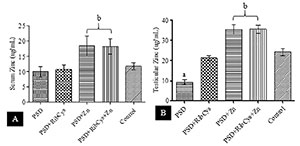
Figure 3. Serum and Testicular Zn concentrations following sleep deprivation and
treatment with RibCys and/or Zn.At p<0.05 level, a
indicates significant differences compared with PSD, PSD+RibCys, PSD+Zn,
PSD+RibCys+Zn and Control while b indicates a significant difference
from Control. PSD=Paradoxical sleep deprivation, RibCys=Riboceine,
Zn=Zinc.
As shown in Figure 4, the MDA level rose significantly in the PSD group compared with the other groups (Figure 4C & D), while CAT and GSH was significantly decreased in the PSD group, compared with the other groups (Figure 4C & D). In Figure 4B, SOD was significantly elevated in all groups compared with controls.

Figure 4. Testicular Redox Status following sleep deprivation and treatment with
RibCys and/or Zn. At p<0.05 level, a indicates
significant differences from PSD+RibCys, PSD+Zn, PSD+RibCys+Zn and
Control while b indicates a significant difference from Controls.
PSD=Paradoxical sleep deprivation, RibCys=Riboceine, Zn=Zinc
DISCUSSION
This study was carried out to assess the effects of oral administration of Zn and
RibCys on the sexual behaviour of rats that were sleep-deprived for 20 hours per day
for a period of 14 consecutive days. Our results indicate a significant increase in
mount and intromission latencies, and decrease in mount and intromission frequencies
in rats that were subjected to PSD without treatment with the supplements. These
findings are consistent with the reports of Alvarenga et al. (2009) and Velazquez-Moctezuma et al. (1996) but disagree with the
results from Ferraz et al.
(2001). The increase in mount and intromission latencies and decrease in
mount and intromission frequencies reflects the low motivation to initiate
copulation due to high levels of stress as indicated by elevated glucocorticoid in
sleep-deprived rats. This suggests that PSD is stressful enough to cause
dysfunctional sexual behaviour. Earlier studies have demonstrated that virtually all
stress modalities can significantly interfere with sexual performance (D'Aquila et al., 1994; Retana-Marquez et al.,
1996)
It has been shown that the treatment improves sexual competence (Dissanayake et al., 2009). The
result of this study showed a non-significant difference in the mount and
intromission latencies and mount and intromission frequencies in the PSD group
treated with Zinc, at a dose of 10mg/kg of body weight and in the PSD group treated
with the combination of Zinc at the stated dose and Riboceine at a dose of 100mg/kg
of body weight when compared with the control group, and it also revealed that when
compared to the group that was sleep-deprived without any supplementations, the
group that was treated with Zinc and the group that was given a combination of both
Zinc and Riboceine showed a significant reduction in mount and intromission
latencies, and a significant increase in mount and intromission frequencies. This
result indicates that the administration of Zinc at 10mg/kg of bodyweight alone or
in combination with RibCysat 100mg/kg of body weight, reverses to an extent, the
stress caused by PSD on sexual motivation and copulation. However, the group treated
with RibCys at 100mg/kg body weight only showed a significant difference in mount
and intromission latencies when compared with control and a non-significant
difference in mount and intromission latencies when compared with the group that was
sleep deprived, only suggesting that Riboceine, at the stated dose, may not be able
to reverse the effects of sleep deprivation in sexual performance.
The release of adrenocorticotrophic hormone (ACTH) and corticosterone into the
bloodstream, as a result of the activation of the HPA axis is known to be the most
characteristic stress response in rodents (Graeff
& Zangrossi Junior, 2010). The result in Figure1 showed that all the treatment groups exhibited a
significant increase in the level of serum corticosterone regardless of the
administration of supplements. This agrees with results from several studies (Andersen et al., 2009; Calegare et al., 2010; Wu et al., 2011; Abd El-Aziz & Mostafa, 2012; Choi et al., 2016).
CRH-mediated glucocorticoid secretion during stress is known to inhibit reproductive
function (Mello et al.,
2003), as evidenced by the increase in mount and intromission latencies, and
decrease in the number of mounts and intromissions in the group that was sleep
deprived only. However, the administration of Zinc and RibCys was able to counteract
the effect of the elevated glucocorticoid on rat sexual performance.
PSD causes changes in the male reproductive system, as it reduces circulating
androgens in healthy males, including testosterone (Maia et al., 2011). The result in Figure 2 showed that the PSD group had a significant reduction
in the level of serum testosterone when compared with that of the control group, as
it has been reported by several studies (Oh et al., 2012; Wu et al., 2011; Arjadi et al., 2014; Alvarenga et al., 2015; Choi et al., 2016). However, Zinc supplementation
activates the secretion and action of testosterone (Egwurugwu et al., 2013), as the administration of Zn
alone or in combination with RibCys during stress was shown to reverse the drop in
testosterone levels as seen by the non-significant difference in the levels of
testosterone in the PSD+Zn and PSD+RibCys+Zn groups, when compared with the control
group. The PSD group treated with RibCys alone also showed an increase in
testosterone levels.
Sexual behaviour in male rats is dependent on testosterone release from the testes,
regulated by the hypothalamic-pituitary-gonadal axis, and the pattern of its
secretion in males is tonic as males are sexually receptive, as long as testosterone
levels are high (McGinnis & Pfaff, 2012).
The result from this study agrees with the previous statement that the
sleep-deprived group showed a decrease in serum testosterone levels when compared
with controls resulted in decreased sexual motivation as evident by the increased
mount and intromission latencies.
CONCLUSION
This investigation reveals that sleep deprivation alters sexual behavior, and reduces
male rats’ sexual performance. However, treatment with either RibCyst or Zn or a
combination of both attenuates the effects of sleep deprivation on sexual
performance through mechanisms that involved lowering testicular oxidative stress
level, which in turn protects against PSD-induced suppression of testosterone
secretion and/or excessive conversion to estradiol.
REFERENCES
Allouh MZ, Daradka HM, Abu Ghaida JH. Influence of Cyperus
esculentus tubers (tiger nut) on male rat copulatory behavior. BMC Complement
Altern Med. 2015;15:331. PMID: 26400055 DOI:
10.1186/s12906-015-0851-9
Medline Crossref
Alvarenga TA, Andersen ML, Velázquez-Moctezuma J, Tufik S. Food
restriction or sleep deprivation: which exerts a greater influence on the sexual
behaviour of male rats? Behav Brain Res. 2009;202:266-71. PMID: 19463711 DOI:
10.1016/j.bbr.2009.04.002
Medline Crossref
Alvarenga TA, Hirotsu C, Mazaro-Costa R, Tufik S, Andersen ML.
Impairment of male reproductive function after sleep deprivation. Fertil Steril.
2015;103:1355-62.e1. PMID: 25747127 DOI:
10.1016/j.fertnstert.2015.02.002
Medline Crossref
Andersen ML, Alvarenga TA, Guindalini C, Perry JC, Silva A, Zager A,
Tufik S. Paradoxical sleep deprivation influences sexual behavior in female
rats. J Sex Med. 2009;6:2162-72. DOI:
10.1111/j.1743-6109.2009.01339.x
Crossref
Bancroft J. The endocrinology of sexual arousal. J Endocrinol.
2005;186:411-27. PMID: 16135662 DOI: 10.1677/joe.1.06233
Medline Crossref
Bao B, Prasad AS, Beck FW, Fitzgerald JT, Snell D, Bao GW, Singh T,
Cardozo LJ. Zinc decreases C-reactive protein, lipid peroxidation, and
inflammatory cytokines in elderly subjects: a potential implication of zinc as
an atheroprotective agent. Am J Clin Nutr. 2010;91:1634-41. PMID: 20427734 DOI:
10.3945/ajcn.2009.28836
Medline Crossref
Burford NG, Webster NA, Cruz-Topete D.
Hypothalamic-Pituitary-Adrenal Axis Modulation of Glucocorticoids in the
Cardiovascular System. Int J Mol Sci. 2017;18:2150. PMID: 29035323 DOI:
10.3390/ijms18102150
Medline Crossref
Calegare BF, Fernandes L, Tufik S, D'Almeida V. Biochemical,
biometrical and behavioral changes in male offspring of sleep-deprived mice.
Psychoneuroendocrinology. 2010;35:775-84. PMID: 19962833 DOI:
10.1016/j.psyneuen.2009.11.004
Medline Crossref
Choi JH, Lee SH, Bae JH, Shim JS, Park HS, Kim YS, Shin C. Effect of
Sleep Deprivation on the Male Reproductive System in Rats. J Korean Med Sci.
2016;31:1624-30. PMID: 27550492 DOI:
10.3346/jkms.2016.31.10.1624
Medline Crossref
D'Aquila PS, Brain P, Willner P. Effects of chronic mild stress on
performance in behavioural tests relevant to anxiety and depression. Physiol
Behav. 1994;56:861-7. PMID: 7824585 DOI:
10.1016/0031-9384(94)90316-6
Medline Crossref
Dissanayake D, Wijesinghe PS, Ratnasooriya WD, Wimalasena S. Effects
of zinc supplementation on sexual behavior of male rats. J Hum Reprod Sci.
2009;2:57-61. PMID: 19881149 DOI: 10.4103/0974-1208.57223
Medline Crossref
Egwurugwu JN, Ifedi CV, Uchefuna RC, Ezeokafor EN, Alagwu EA. Effect
of zinc on male sex hormones and semen quality. Niger J Physiol Sci.
2013;28:17-22. PMID: 23955401
Medline
Ferraz MR, Ferraz MM, Santos R. How REM sleep deprivation and
amantadine affects male rat sexual behavior. Pharmacol Biochem Behav.
2001;69:325-32. PMID: 11509188 DOI:
10.1016/S0091-3057(01)00508-1
Medline Crossref
Graeff FG, Zangrossi Junior H. The Hypothalamic-pituitary-adrenal
axis in anxiety and panic. Psychol Neurosci. 2010;3:3-8. DOI:
10.3922/j.psns.2010.1.002
Crossref
Hernandez ME, Soto-Cid A, Aranda-Abreu GE, Díaz R, Rojas F, Garcia
LI, Toledo R, Manzo J. A study of the prostate, androgens and sexual activity of
male rats. Reprod Biol Endocrinol. 2007;5:11. PMID: 17367532 DOI:
10.1186/1477-7827-5-11
Medline Crossref
Kader T, Porteous CM, Williams MJ, Gieseg SP, McCormick SP.
Ribose-cysteine increases glutathione-based antioxidant status and reduces LDL
in human lipoprotein(a) mice. Atherosclerosis. 2014;237:725-33. PMID: 25463112
DOI: 10.1016/j.atherosclerosis.2014.10.101
Medline Crossref
Machado RB, Hipólide DC, Benedito-Silva AA, Tufik S. Sleep
deprivation induced by the modified multiple platform technique: quantification
of sleep loss and recovery. Brain Res. 2004;1004:45-51. PMID: 15033418 DOI:
10.1016/j.brainres.2004.01.019
Medline Crossref
Maia LO, Júnior WD, Carvalho LS, Jesus LR, Paiva GD, Araujo P, Costa
MF, Andersen ML, Tufik S, Mazaro-Costa R. Association of methamidophos and sleep
loss on reproductive toxicity of male mice. Environ Toxicol Pharmacol.
2011;32:155-61. PMID: 21843794 DOI: 10.1016/j.etap.2011.04.007
Medline Crossref
Mathangi DC, Shyamala R, Subhashini AS. Effect of REM sleep
deprivation on the antioxidant status in the brain of Wistar rats. Ann Neurosci.
2012;19:161-4. PMID: 25205991 DOI: 10.5214/ans.0972.7531.190405
Medline Crossref
Mello AF, Mello MF, Carpenter LL, Price LH. Update on stress and
depression: the role of the hypothalamic-pituitary-adrenal (HPA) axis. Braz J
Psychiatry. 2003;25:231-8. PMID: 15328550 DOI:
10.1590/S1516-44462003000400010
Medline Crossref
Nyby JG. Reflexive testosterone release: a model system for studying
the nongenomic effects of testosterone upon male behavior. Front
Neuroendocrinol. 2008;29:199-210. PMID: 17976710 DOI:
10.1016/j.yfrne.2007.09.001
Medline Crossref
Oh MM, Kim JW, Jin MH, Kim JJ, Moon DG. Influence of paradoxical
sleep deprivation and sleep recovery on testosterone level in rats of different
ages. Asian J Androl. 2012;14:330-4. PMID: 22157981 DOI:
10.1038/aja.2011.153
Medline Crossref
Olivier B, Chan JS, Pattij T, de Jong TR, Oosting RS, Veening JG,
Waldinger MD. Psychopharmacology of male rat sexual behavior: modeling human
sexual dysfunctions? Int J Impot Res. 2006;18:S14-23. PMID: 15843803 DOI:
10.1038/sj.ijir.3901330
Medline Crossref
Olivier B, Chan JS, Snoeren EM, Olivier JD, Veening JG, Vinkers CH,
Waldinger MD, Oosting RS. Differences in sexual behaviour in male and female
rodents: role of serotonin. Curr Top Behav Neurosci. 2011;8:15-36. PMID:
21374021 DOI: 10.1007/7854_2010_116
Medline Crossref
Rajeswari S, Swaminathan S. Role of zinc and copper in infertility:
an update. Int J Multidiscip Curr Res. 2015;3:607-12. PMID: 31315178 DOI:
10.3390/nu11071609
Medline Crossref
Reimund E. The free radical flux theory of sleep. Med Hypotheses.
1994;43:231-3. PMID: 7838006 DOI: 10.1016/0306-9877(94)90071-X
Medline Crossref
Retana-Marquez S, Salazar ED, Velazquez-Moctezuma J. Effect of acute
and chronic stress on masculine sexual behavior in the rat.
Psychoneuroendocrinology. 1996;21:39-50. PMID: 8778903 DOI:
10.1016/0306-4530(95)00029-1
Medline Crossref
Smith SM, Vale WW. The role of the hypothalamic-pituitary-adrenal
axis in neuroendocrine responses to stress. Dialogues Clin Neurosci.
2006;8:383-95. PMID: 17290797
Medline
Tufik S, Andersen ML, Bittencourt LR, Mello MT. Paradoxical sleep
deprivation: neurochemical, hormonal and behavioral alterations. Evidence from
30 years of research. An Acad Bras Cienc. 2009;81:521-38. PMID: 19722021 DOI:
10.1590/S0001-37652009000300016
Medline Crossref
Velazquez-Moctezuma J, Salazar ED, Retana-Marquez S. Effects of
short- and long-term REM sleep deprivation on sexual behavior in male rats.
Physiol Behav. 1996;59:277-81. PMID: 8838606 DOI:
10.1016/0031-9384(95)02127-2
Medline Crossref
Wu JL, Wu RS, Yang JG, Huang CC, Chen KB, Fang KH, Tsai HD. Effects
of sleep deprivation on serum testosterone concentrations in the rat. Neurosci
Lett. 2011;494:124-9. PMID: 21376782 DOI:
10.1016/j.neulet.2011.02.073
Medline Crossref