JBRA Assist. Reprod. 2022;26(3):407-411
ORIGINAL ARTICLE
doi: 10.5935/1518-0557.20210080
Patients undergoing elective and oncofertility preservation respond similarly to controlled ovarian stimulation for fertility preservation
1Fertilitat - Reproductive Medicine Center, Porto Alegre, Brazil
2School of Medicine, Pontifical Catholic University of Rio Grande do Sul, PUCRS
The authors declare no conflict of interest.
ABSTRACT
Objective: Outcome data for oocyte vitrification for fertility preservation are still scarce despite the scientific and technological advances. Studies suggest that patients with cancer have worse outcomes regarding mature vitrified oocytes when compared to healthy patients. Thus, the objective of this study was to evaluate and compare the oocyte vitrification response in patients undergoing elective and oncofertility preservation.
Methods: The ovarian stimulation response was verified by a cross-sectional and observational study, analyzing data from 367 patients between 2009 and 2018, which were divided into elective group (EG; n=327) and oncofertility group (OFG; n=40). The number of follicles, oocytes, mature oocytes, and duration of the cycle was evaluated, which were compared with clinical and ovarian stimulus data between groups.
Results: A significant difference in women's age (31.3±5.8 vs. 37.0±2.9 years; p<0.01) and basal values of Follicle Stimulating Hormone (FSH), (4.0 [3.3 - 6.2] vs. 9.0 [5.4 - 9.9] mIU/mL; p<0.01) were observed. When adjusting data for age, FSH and Gonadotropin-releasing Hormone protocols, no significant difference in the number of vitrified mature oocytes between the two groups were observed (6.0 [3.0-11.0] vs. 7.0 [3.0-12.0]; p=0.11).
Conclusions: Thus, patients undergoing elective and oncofertility preservation seem to respond similarly to controlled ovarian stimulation for fertility preservation. Breast cancer was the most frequent in the OFG (67%).
Keywords: cryopreservation, fertility preservation, oncofertility, ovarian stimulation, neoplasms
INTRODUCTION
Fertility preservation
There have been many advances in the strategies for fertility preservation to ensure higher chances of conceiving. However, despite all scientific and technological advances, age persists as the factor with the most significant impact on the prognosis of female fertility. It is well established that the quantity and quality of oocytes decrease throughout a woman's lifespan, especially from the age of 35, being expressed through the progressive reduction in the ovarian reserve (Stoop et al., 2014). Age is also related to lower chances of conceiving naturally, higher rates of spontaneous abortions, more embryonic chromosomal abnormalities, and lower success rate in assisted reproduction treatment (González-Foruria et al., 2016; Frederiksen et al., 2018).
Ovarian reserve
The ovarian reserve can also be seriously threatened by surgical, radiotherapy or chemotherapy procedures, which, due to the action of cytotoxic agents and hormonal suppressants, lead to temporary or permanent infertility (Loren et al., 2013; Muñoz et al., 2016). Thus, maternity delay and the increased incidence of malignant diseases are the most jeopardizing conditions for reproductive potential in women (Cobo et al., 2018).
Elective and oncofertility oocyte preservation
Despite the growing number of publications, studies are conflicting about oocyte freezing results in patients with and without cancer. Some studies suggest worse outcomes in patients with cancer regarding the number of mature vitrified oocytes when compared to healthy patients (Friedler et al., 2012; Domingo et al., 2012; Pal et al., 1998) while others show a similar response to the ovarian stimulation for fertility preservation in both groups, once the number of vitrified oocytes was similar (Moraes et al., 2019). Thus, the objective of this study was to evaluate and compare the oocyte vitrification response in patients undergoing elective and oncofertility preservation, in a southern Brazilian population. The results will not only contribute to the improvement of the technique but also help in the optimization of counseling for this population.
MATERIAL AND METHODS
Study Design
Observational, cross-sectional, and historical study.
Patient sample, study period and location
Patient sample, study period and location Patients who underwent oocyte vitrification between 2009 and 2018 at a Reproductive Medicine Center in Porto Alegre, Brazil. Patients with complete medical records were included and divided into an elective group (EG; n=327) and a oncofertility group (OFG; n=40), totalizing 367 patients.
The study was approved by the Research Ethics Committee of the Pontifical Catholic University of Rio Grande do Sul, PUCRS (Protocol 2.828.376).
Study variables
The main clinical and demographic characteristics, ovarian stimulation characteristics, number of follicles, mature oocytes, and duration of treatment were compared between groups.
Controlled-ovarian stimulation
For the controlled-ovarian stimulation, recombinant Follicle-Stimulating Hormone (FSH-r), Human Menopausal Gonadotropin or Clomiphene Citrate were prescribed.Letrozole was added for some breast cancer patients to avoid the hyperestrogenism state caused by the multi follicular growth. The final oocyte maturation was triggered with GnRH agonist or Human Chorionic Gonadotropin (hCG). The oocyte retrieval was performed after 35h of hCG triggering. Both groups underwent treatment with agonist or antagonist Gonadotropin-releasing Hormone (GnRH) protocol, according to medical indication.
Statistical Analysis
The analysis was performed using the SPSS version 21.0 program. Quantitative variables were described as mean and standard deviation (SD) or median and interquartile range (IQR), while categorical variables were expressed as absolute and relative frequencies. The Chi-square test was used to compare proportions. Comparisons of means between groups were performed using Student's t-test, or Mann-Whitney test in case of asymmetry. Generalized linear models were used to control confounding factors. Data were adjusted by women's age, FSH, and GnRH protocol.The null hypothesis was rejected when p<0.05.
RESULTS
Clinical and laboratory characteristics
The main clinical and laboratory characteristics are described in Table 1. The women's age in OFG was significantly lower compared to EC (31.3±5.8 vs. 37.0±2.9 years; p<0.01) as well as the baseline FSH measurement (4.0 [3.3 - 6.2] vs. 9.0 (5.4 - 9.9) mIU/mL; p<0.01). The presence of a partner was significantly higher in OFG (25 [62.5%] vs. 65 [19.9%]; p<0.001).
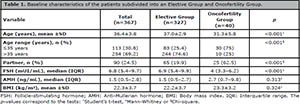
Table 1. Baseline characteristics of the patients subdivided into an Elective Group and Oncofertility Group.
There was no statistically significant difference between the groups regarding the GnRH protocol, choice of gonadotropin, trigger, or stimulus duration. The GnRH antagonist protocol was the most used in both groups (80.1%), and FSH-r was used in 80.4% of cycles, as described in Table 2. Letrozole was added for 20 breast cancer patients (74%).
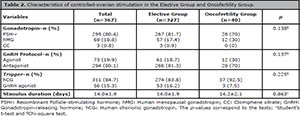
Table 2. Characteristics of controlled-ovarian stimulation in the Elective Group and Oncofertility Group.
There was not statistically difference between the two groups when comparing the number of aspirated follicles, the number of oocytes obtained, the number of mature oocytes even after adjusting for confounding factors using a generalized linear model for age, baseline FSH and GnRH protocol. When evaluating the percentage of matured oocytes (MII) obtained in the groups (total number of MII/total number of oocytes), there was a higher proportion of MII for the EC with significance after adjustment for age, FSH and GnRH protocol. However, when considering the results according to the age group, there was no longer a significant difference between groups.
Ovarian follicular aspiration
The main results of ovarian follicular aspiration in the EC and OFG are described in Table 3.
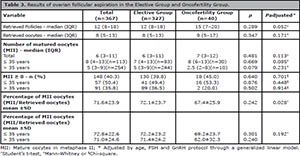
Table 3. Results of ovarian follicular aspiration in the Elective Group and Oncofertility Group.
Types of cancer in Oncofertility group
Breast cancer was the most frequent (67%), followed by cervical cancer (12%) and ovarian cancer (7%). The other subtypes were 14% and included lymphoma, colon, melanoma, neuroendocrine tumor, and astrocytoma. The age of patients with breast tumors proved to be significantly higher when compared to the age of patients with other cancer subtypes (33.7 vs. 26.2 years, p<0.01). However, no statistically significant differences in the number of mature eggs were observed between the groups (Table 4).

Table 4. Mature oocytes vitrified results according to age and cancer subtype.
DISCUSSION
The presented study aimed to evaluate and compare the oocyte vitrification response in patients undergoing elective and oncofertility preservation, in a southern Brazilian population. As the main result it was observed that both groups of patients responded similarly to controlled ovarian stimulation for fertility preservation.
Fertility preservation and age-related fertility
The concern with age-related fertility decline and the diagnosis of cancer are the primary motivation for fertility preservation, which explains the difference observed in women's age (Cobo et al., 2018; Friedler et al., 2012; Moraes et al., 2019). The extensive number of cycles performed for EG in contrast to OFG reflects the trending demand for fertility preservation related to social reasons. It also leads to a reflection on the discreet number of patients who are still not referred for reproductive counseling after a cancer diagnosis. The proportion of cancer patients in this study was 10.9%.
Clinical and laboratory variables
Women's age
The justification for the age difference leads to questions about the motivation for freezing. The presence of a partner was significantly lower for the EC. The profile outlined by this study points out that most cancer patients had never been pregnant or even thought about the intended family design before diagnosis, and the presence or absence of a partner did not seem to interfere with the decision. Nevertheless, the EG motivation is mainly due to aging, the absence of a partner, and the desire to not interrupt professional development or academic titles (Moraes et al., 2019; Kim et al., 2018; Hammarberg et al., 2017; Baldwin et al., 2019). Rarely these patients look for fertility preservation before the age of 35 years, after that, there is a known decrease in the ovarian reserve and pregnancy results inherent to advanced age. In contrast, a cancer patient, after being diagnosed, is promptly referred for reproductive counseling with little or no delay in starting the cryopreservation process.
Baseline FSH and AMH levels
The serum FSH was significantly lower in the OFG, while AMH was higher in this group, with no statistical significance. This information corroborates the findings in the literature and has a direct correspondence with the age of the patients, which was lower in the OFG (Cobo et al., 2018; Moraes et al., 2019; Cardozo et al., 2015).
GnRH protocol
In agreement with other studies, there was no significant difference between groups regarding the GnRH protocol, choice of gonadotropin, trigger, or stimulus duration (Cobo et al., 2018; Friedler et al., 2012; Cardozo et al., 2015).
Controlled-ovarian stimulation
When the number of aspirated follicles was compared, the number of oocytes obtained and the number of mature oocytes in MII, even after being adjusted by women's age, baseline FSH and GnRH protocol, showed no significant difference between groups. Similar findings have been observed in previous studies (Cobo et al., 2018; Moraes et al., 2019; Cardozo et al., 2015; Quinn et al., 2017). However, when considering the percentage of mature oocytes over the number of total oocytes retrieved, a higher proportion of vitrified mature oocytes was noted in the EC after adjustment. The significance was lost after the 35 years old cut off was set. Some considerations must be noted to explain these results. The number of women in the OFG is much lower than the EC and can be considered a limitation, although the study included all patients attending the clinic. These data can raise questions about whether the number of cancer patients is insufficient to support these findings strongly.
Demand for cancer cryopreservation
The demand for cancer cryopreservation is still notably more discreet when compared to elective freezing, even when considering the progressively higher incidence of malignancies in women of reproductive age. Although the effectiveness of the technique has already been well demonstrated, the number of patients who effectively preserve their reproductive potential could be more significant.
In a recent publication by a European group, the proportion of patients who have frozen eggs due to oncological reasons has remained stable in recent years, corresponding to only 2% of the total number of procedures (Cobo et al., 2018). In contrast, the number of elective procedures has seen a dramatic increase year after year. This fact has been witnessed by several other countries and even in the reproductive medicine center where this research was carried out.
The main justifications for this phenomenon would be, first, because the number of cancer diagnoses is much lower than the number of healthy women who delay motherhood. Second is that the oncologist and the gynecologist have a central role in this phenomenon as many professionals have little or no knowledge of the technique. They either fear the delay in starting cancer treatment or the worsening of tumor staging, consider the procedure financially unfeasible, or do not even think about the possibility. Healthcare professionals must also know about the technique safety, the non-delay in starting antineoplastic treatment, and that the number of mature oocytes obtained in cancer patients seems to have no difference when compared to women without cancer (Cobo et al., 2018; Cardozo et al., 2015; Akel et al., 2020). There is an urgent need to demystify the issue so that more women can benefit from consistent information and preserve their oocyte heritage.
Types of tumors
The OFG was composed of different types of tumors in different locations and stages. It was not possible to individually analyze the different cancer subtypes, gene mutations, or staging, basically due to the small number of patients who froze until the end of the study and owing to the urgency to start antineoplastic treatment. Immunohistochemical, molecular analysis, or the complete characterization of staging were not fully concluded until the patient's arrival for reproductive counseling. Thus, it can be questioned whether any patient with a more aggressive tumor might have had a negative impact on the results.
CONCLUSION
The results presented by this study showed that healthy patients and patients with cancer seem to respond similarly to ovarian stimulation for fertility preservation. These findings support the maintenance of the cryopreservation recommendation for these patients. The patients who seek this alternative treatment, wish to preserve, above all, their autonomy and their future perspectives, and this intention is invaluable. The importance of exploring cryopreservation, especially in oncofertility is to provide answers that can improve the technique to its maximum capacity. Thus, these findings contribute to enable well-founded counseling and help ensure patients the best possible treatment within the limitations of the technique.
ACKNOWLEDGEMENTS
The authors gratefully thank all the professors, gynecologists, and embryologists involved in our fertility preservation program and the patients who participate in this study.
Support
MRH and VDT were supported by government scholarships (Coordenação de Aperfeiçoamento de Pessoal de Nivel Superior - CAPES and Conselho Nacional de Desenvolvimento de Científico e Tecnológico - CNPq - Brazil)
REFERENCES
Akel RA, Guo XM, Moravek MB, Confino R, Smith KN, Lawson AK, Klock SC, Tanner Iii EJ, Pavone ME. Ovarian Stimulation Is Safe and Effective for Patients with Gynecologic Cancer. J Adolesc Young Adult Oncol. 2020;9:367-74. PMID: 31923372 DOI: 10.1089/jayao.2019.0124
Medline Crossref
Baldwin K, Culley L, Hudson N, Mitchell H. Running out of time: exploring women's motivations for social egg freezing. J Psychosom Obstet Gynaecol. 2019;40:166-73. PMID: 29648960 DOI: 10.1080/0167482X.2018.1460352
Medline Crossref
Cardozo ER, Thomson AP, Karmon AE, Dickinson KA, Wright DL, Sabatini ME. Ovarian stimulation and in-vitro fertilization outcomes of cancer patients undergoing fertility preservation compared to age matched controls: a 17-year experience. J Assist Reprod Genet. 2015;32:587-96. PMID: 25595540 DOI: 10.1007/s10815-015-0428-z
Medline Crossref
Cobo A, García-Velasco J, Domingo J, Pellicer A, Remohí J. Elective and Onco-fertility preservation: factors related to IVF outcomes. Hum Reprod. 2018;33:2222-31. PMID: 30383235 DOI: 10.1093/humrep/dey321
Medline Crossref
Domingo J, Guillén V, Ayllón Y, Martínez M, Muñoz E, Pellicer A, Garcia-Velasco JA. Ovarian response to controlled ovarian hyperstimulation in cancer patients is diminished even before oncological treatment. Fertil Steril. 2012;97:930-4. PMID: 22283969 DOI: 10.1016/j.fertnstert.2012.01.093
Medline Crossref
Frederiksen LE, Ernst A, Brix N, Braskhøj Lauridsen LL, Roos L, Ramlau-Hansen CH, Ekelund CK. Risk of Adverse Pregnancy Outcomes at Advanced Maternal Age. Obstet Gynecol. 2018;131:457-63. PMID: 29420406 DOI: 10.1097/AOG.0000000000002504
Medline Crossref
Friedler S, Koc O, Gidoni Y, Raziel A, Ron-El R. Ovarian response to stimulation for fertility preservation in women with malignant disease: a systematic review and meta-analysis. Fertil Steril. 2012;97:125-33. PMID: 22078784 DOI: 10.1016/j.fertnstert.2011.10.014
Medline Crossref
González-Foruria I, Peñarrubia J, Borràs A, Manau D, Casals G, Peralta S, Creus M, Ferreri J, Vidal E, Carmona F, Balasch J, Fàbregues F. Age, independent from ovarian reserve status, is the main prognostic factor in natural cycle in vitro fertilization. Fertil Steril. 2016;106:342-7.e2. PMID: 27117376 DOI: 10.1016/j.fertnstert.2016.04.007
Medline Crossref
Hammarberg K, Kirkman M, Pritchard N, Hickey M, Peate M, McBain J, Agresta F, Bayly C, Fisher J. Reproductive experiences of women who cryopreserved oocytes for non-medical reasons. Hum Reprod. 2017;32:575-81. PMID: 28077428 DOI: 10.1093/humrep/dew342
Medline Crossref
Kim R, Yoon TK, Kang IS, Koong MK, Kim YS, Kim MJ, Lee Y, Kim J. Decision making processes of women who seek elective oocyte cryopreservation. J Assist Reprod Genet. 2018;35:1623-30. PMID: 30006788 DOI: 10.1007/s10815-018-1255-9
Medline Crossref
Loren AW, Mangu PB, Beck LN, Brennan L, Magdalinski AJ, Partridge AH, Quinn G, Wallace WH, Oktay K; American Society of Clinical Oncology. Fertility preservation for patients with cancer: American Society of Clinical Oncology clinical practice guideline update. J Clin Oncol. 2013;31:2500-10. PMID: 23715580 DOI: 10.1200/JCO.2013.49.2678
Medline Crossref
Moraes CC, Marinho VFW, Campos ALM, Guedes JS, Xavier ÉBS, Caetano JPJ, Marinho RM. Oocyte cryopreservation for future fertility: comparison of ovarian response between cancer and non-cancer patients. JBRA Assist Reprod. 2019;23:91-8. PMID: 30875168 DOI: 10.5935/1518-0557.20190010
Medline Crossref
Muñoz M, Santaballa A, Seguí MA, Beato C, de la Cruz S, Espinosa J, Fonseca PJ, Perez J, Quintanar T, Blasco A. SEOM Clinical Guideline of fertility preservation and reproduction in cancer patients (2016). Clin Transl Oncol. 2016;18:1229-36. PMID: 27896641 DOI: 10.1007/s12094-016-1587-9
Medline Crossref
Pal L, Leykin L, Schifren JL, Isaacson KB, Chang YC, Nikruil N, Chen Z, Toth TL. Malignancy may adversely influence the quality and behaviour of oocytes. Hum Reprod. 1998;13:1837-40. PMID: 9740435 DOI: 10.1093/humrep/13.7.1837
Medline Crossref
Quinn MM, Cakmak H, Letourneau JM, Cedars MI, Rosen MP. Response to ovarian stimulation is not impacted by a breast cancer diagnosis. Hum Reprod. 2017;32:568-74. PMID: 28122888 DOI: 10.1093/humrep/dew355
Medline Crossref
Stoop D, Cobo A, Silber S. Fertility preservation for age-related fertility decline. Lancet. 2014;384:1311-9. PMID: 25283572 DOI: 10.1016/S0140-6736(14)61261-7
Medline Crossref