JBRA Assist. Reprod. 2023;27(1):92-96
REVIEW
doi: 10.5935/1518-0557.20220019
Potential Impact of COVID-19 on Female Reproductive Health
1Department of Chemistry, Birla Institute of Technology, Mesra, Ranchi-835215, Jharkhand, India
CONFLICT OF INTEREST
The authors have no conflict of interest to declare.
ABSTRACT
COVID-19 has emerged as the biggest pandemic of the world of all times. Its death toll is rising globally. COVID-19 mostly affects the lungs because the virus enters the host cells via the receptor for the ACE2 enzyme, which is also present in other organs of the human body. ACE2 plays the main role in the degradation of Ang II, resulting in the formation of angiotensin 1-7 (Ang 1-7) which maintains the level of Ang II. This communication gives an assessment of reproductive system functioning and its effects by the COVID-19 exposure. It is important to maintain the wellbeing for healthy nourishment of the fetus and safe delivery along with post health issues. ACE2 enzyme metabolism is expressed in the female reproductive system, and it may be potential target of COVID-19 exposure.
Keywords: COVID-19, female reproductive, angiotensin converting enzyme
INTRODUCTION
Pneumonia cases of unknown etiology in the Wuhan city of China were reported in December, 2019 to the world health organization (WHO) and spread rapidly throughout the world (Wastnedge et al., 2021). Literature search shows that COVID-19 not only affects the female fertility but also damages the female reproductive functions (Jing et al., 2020; Li et al., 2020).
COVID-19 enters the target host cell by binding to the angiotensin converting enzyme II receptor, which is used as a primary receptor binding to the host cell (Matsuyama et al., 2010; Zhou et al., 2015), and the expression of angiotensin converting enzyme II is regulated in the host cells (Jing et al., 2020), as shown in the Figure 1. Angiotensin converting enzyme has been evaluated in the female reproductive system such as the ovaries, uterus, vagina and placenta and also in the other parts of the human body, including the respiratory tract, kidneys, heart and gastrointestinal system (Lippi et al., 2020). Notably, the angiotensin converting enzyme plays a regulatory role in reproduction (Fu et al., 2020) and may be disturbed by attacking ovarian tissue or destroying endometrial epithelial cells (Li et al., 2021). For COVID-19, Basigin is also considering as one of the most important receptors expressed in the uterus, in the stroma, and also in the ovary granulosa cells (Chen et al., 2010; Mahdian et al., 2020).
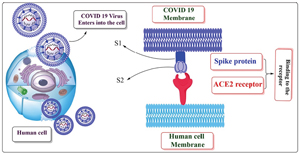
Figure 1. Systematic diagram presenting the spike protein of COVID-19 virus binding to the ACE2 (Angiotensin converting enzyme II) receptor and penetrating the targeted host cell.
Female reproductive system
COVID-19 may affect the female reproductive system through invading the target cells, by binding to ACE2 (angiotensin-converting enzyme II). ACE2 usually maintains the levels of angiotensin II and angiotensin (1-7) to apply its special action, which is widely expressed in the vagina, uterus, ovaries and placenta. The reason of female fertility is the ovarian reserve, which could affect fecundity by decreasing egg quality when diminished (Steiner et al., 2017). Hence, the function of ovarian reserve for the impact of COVID-19 is the primary observation indicator on female fertility. Additionally, to explore heterogeneity we must include the type of fertility decline, age, the subgroup analyses and sensitivity studies are conducted. It is believed that fertility approximately starts at the age of thirteen and at the age of forty-nine the women begins to become infertile (Jensen et al., 2018). Female fertility declines naturally with ageing. At the age of thirty to thirty-five the decline in fertility is slow and steady. But, because of reduction in the ovarian reserve and oocyte quality, the decline increases after the age of thirty-five years (Ahmed et al., 2020).
ACE2 expressed in the ovary
In ovaries from both reproductive-age women and postmenopausal women, ACE2 mRNA transcripts were detected (Reis et al., 2011). From the Gene Cards, we analyzed the ACE2 data and came to know that ACE2 is extremely present in the ovary. Therefore, the ovary might be the potential target of COVID 19 (Jing et al., 2020).The key enzyme ACE2 in the axis plays a very important synergistic role in maintaining the levels of both angiotensin II (Ang II) and angiotensin [Ang (1-7)]. The function of Ang II induces steroid secretion (Hayashi et al., 2003), oocyte maturation (Giometti et al., 2005; Stefanello et al., 2006; Yoshimura et al., 1992), facilitates follicle development (Ferreira et al., 2011), influences ovulation (Acosta et al., 2000; Ferreira et al., 2007; Guo et al., 2012; Kuji et al., 1996; Kuo et al., 1991), and also maintains corpus luteum progression (Sugino et al., 2005). The function of Angiotensin (1-7) is mainly to promote the production of both progesterone and estradiol (Costa et al., 2003), and ovulation enhancement (Tonellotto dos Santos et al., 2012; Viana et al., 2011).The most common endocrinopathy that is polycystic ovary syndrome, mainly affects reproductive-aged women, with a frequency which may exceed 10 to 15%, according to the population studied and the criteria used for the diagnostic. COVID-19 has certain factors known to have direct associations with PCOS, including hyper-inflammation, ethnicity predisposition, hyperandrogenism, and very low vitamin-D levels. Furthermore, there is markedly high frequency of female patient populations with multiple cardio-metabolic conditions, including obesity, hypertension and type 2 diabetes, which may increase the risk of adverse COVID-19 consequences.
ACE2 expressed in uterus and vagina
In the uterus of both human (Vaz-Silva et al., 2009) and rats (Brosnihan et al., 2012), there is ACE2 mRNA, and the presence of ACE2 has been confirmed after analyzing the report from the Swedish based program and Human Genes database (Jing et al., 2020). In the regeneration of endometrium, vascular bed, menstruation initiation through spiral artery vasoconstriction, Angiotensin II plays a double role (Ahmed et al., 1995). Furthermore, Ang II enhances the endometrial fibrosis and also increases the stroma cells and proliferation of uterus epithelium (Shan et al., 2014; 2015). In the endometrium, Angiotensin II functions for normal menarche, and sometimes alteration and dysfunctional uterine bleeding related with hyperplastic endometria (Li & Ahmed, 1996).
ACE2 expressed in pregnancy
All Angiotensin II, angiotensin (1-7) and ACE2 function mainly during pregnancy through regulating fetus formation and regulating blood pressure (Hering et al., 2010). Both ACE2 and angiotensin (1-7) act as a paracrine regulator in the early and late events of pregnancy (Neves et al., 2008). To control and balance the hydro-salinity and blood pressure of a pregnant women, ACE2 hydrolyzes angiotensin II into angiotensin (1-7), and angiotensin I hydrolyzes into angiotensin (1-9) and changes to angiotensin (1-7) (Pringle et al., 2011). To the pregnant women and fetuses, COVID-19 infection poses a high threat and causes fetal distress, premature birth and rupture of fetal membranes and caesarean section (Chen et al., 2020a;b; Zhu et al., 2020). Women brought to the labor ward should be checked according to the symptoms of COVID 19 and must be divided into separate ward based on the condition of their COVID report shown in the Figure 2.
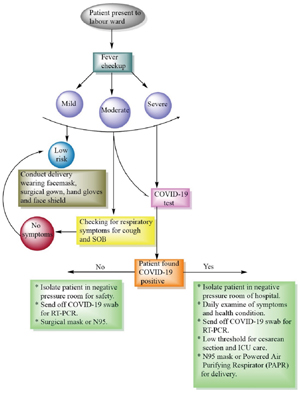
Figure 2. Schematic representation demonstrating the risk of the patients presenting to the delivery ward.
CONCLUSION
COVID-19 may infect the female reproductive system through the expression of ACE2 enzyme present in the different parts of the human body, which may cause fetal distress, menstrual disorder and infertility. Pregnant women should take the suitable measures and precautions during routine check-ups and visits to the hospital and labor ward.
REFERENCES
Acosta TJ, Ozawa T, Kobayashi S, Hayashi K, Ohtani M, Kraetzl WD, Sato K, Schams D, Miyamoto A. Periovulatory changes in the local release of vasoactive peptides, prostaglandin f(2alpha), and steroid hormones from bovine mature follicles in vivo. Biol Reprod. 2000;63:1253-61. PMID: 11058527 DOI: 10.1095/biolreprod63.5.1253 Medline
Ahmed A, Li XF, Shams M, Gregory J, Rollason T, Barnes NM, Newton JR. Localization of the angiotensin II and its receptor subtype expression in human endometrium and identification of a novel high-affinity angiotensin II binding site. J Clin Invest. 1995;96:848-57. PMID: 7635979 DOI: 10.1172/JCI118131 Medline
Ahmed TA, Ahmed SM, El-Gammal Z, Shouman S, Ahmed A, Mansour R, El-Badri N. Oocyte Aging: The Role of Cellular and Environmental Factors and Impact on Female Fertility. Adv Exp Med Biol. 2020;1247:109-23. PMID: 31802446 DOI: 10.1007/5584_2019_456 Medline
Brosnihan KB, Bharadwaj MS, Yamaleyeva LM, Neves LA. Decidualized pseudopregnant rat uterus shows marked reduction in Ang II and Ang-(1-7) levels. Placenta. 2012;33:17-23. PMID: 22101031 DOI: 10.1016/j.placenta.2011.10.016 Medline
Chen L, Bi J, Nakai M, Bunick D, Couse JF, Korach KS, Nowak RA. Expression of basigin in reproductive tissues of estrogen receptor-{alpha} or -{beta} null mice. Reproduction. 2010;139:1057-66. PMID: 20388736 DOI: 10.1530/REP-10-0069 Medline
Chen H, Guo J, Wang C, Luo F, Yu X, Zhang W, Li J, Zhao D, Xu D, Gong Q, Liao J, Yang H, Hou W, Zhang Y. Clinical characteristics and intrauterine vertical transmission potential of COVID-19 infection in nine pregnant women: a retrospective review of medical records. Lancet. 2020a;395:809-15. PMID: 32151335 DOI: 10.1016/S0140-6736(20)30360-3 Medline
Chen L, Li Q, Zheng D, Jiang H, Wei Y, Zou L, Feng L, Xiong G, Sun G, Wang H, Zhao Y, Qiao J. Clinical Characteristics of Pregnant Women with Covid-19 in Wuhan, China. N Engl J Med. 2020b;382:e100. PMID: 32302077 DOI: 10.1056/NEJMc2009226 Medline
Costa AP, Fagundes-Moura CR, Pereira VM, Silva LF, Vieira MA, Santos RA, Dos Reis AM. Angiotensin-(1-7): a novel peptide in the ovary. Endocrinology. 2003;144:1942-8. PMID: 12697701 DOI: 10.1210/en.2002-220787 Medline
Ferreira R, Oliveira JF, Fernandes R, Moraes JF, Gonçalves PB. The role of angiotensin II in the early stages of bovine ovulation. Reproduction. 2007;134:713-9. PMID: 17965262 DOI: 10.1530/REP-07-0239 Medline
Ferreira R, Gasperin B, Rovani M, Santos J, Barreta M, Bohrer R, Price C, Gonçalves PB. Angiotensin II signaling promotes follicle growth and dominance in cattle. Endocrinology. 2011;152:4957-65. PMID: 22009728 DOI: 10.1210/en.2011-1146 Medline
Fu J, Zhou B, Zhang L, Balaji KS, Wei C, Liu X, Chen H, Peng J, Fu J. Expressions and significances of the angiotensin-converting enzyme 2 gene, the receptor of SARS-CoV-2 for COVID-19. Mol Biol Rep. 2020;47:4383-92. PMID: 32410141 DOI: 10.1007/s11033-020-05478-4 Medline
Giometti IC, Bertagnolli AC, Ornes RC, da Costa LF, Carambula SF, Reis AM, de Oliveira JF, Emanuelli IP, Gonçalves PB. Angiotensin II reverses the inhibitory action produced by theca cells on bovine oocyte nuclear maturation. Theriogenology. 2005;63:1014-25. PMID: 15710189 DOI: 10.1016/j.theriogenology.2004.05.022 Medline
Guo B, Zhang XM, Li SJ, Tian XC, Wang ST, Li DD, Liu DF, Yue ZP. Expression and regulation of Ang-2 in murine ovaries during sexual maturation and development of corpus luteum. Mol Biol (Mosk). 2012;46:900-6. PMID: 23350236 DOI: 10.1134/S0026893312060076 Medline
Hayashi KG, Acosta TJ, Tetsuka M, Berisha B, Matsui M, Schams D, Ohtani M, Miyamoto A. Involvement of angiopoietin-tie system in bovine follicular development and atresia: messenger RNA expression in theca interna and effect on steroid secretion. Biol Reprod. 2003;69:2078-84. PMID: 12954734 DOI: 10.1095/biolreprod.103.017152 Medline
Hering L, Herse F, Geusens N, Verlohren S, Wenzel K, Staff AC, Brosnihan KB, Huppertz B, Luft FC, Muller DN, Pijnenborg R, Cartwright JE, Dechend R. Effects of circulating and local uteroplacental angiotensin II in rat pregnancy. Hypertension. 2010;56:311-8. PMID: 20530295 DOI: 10.1161/HYPERTENSIONAHA.110.150961 Medline
Jensen RE, Martins N, Parks MM. Public Perception of Female Fertility: Initial Fertility, Peak Fertility, and Age-Related Infertility Among U.S. Adults. Arch Sex Behav. 2018;47:1507-16. PMID: 29582267 DOI: 10.1007/s10508-018-1197-4 Medline
Jing Y, Run-Qian L, Hao-Ran W, Hao-Ran C, Ya-Bin L, Yang G, Fei C. Potential influence of COVID-19/ACE2 on the female reproductive system. Mol Hum Reprod. 2020;26:367-73. PMID: 32365180 DOI: 10.1093/molehr/gaaa030 Medline
Kuji N, Sueoka K, Miyazaki T, Tanaka M, Oda T, Kobayashi T, Yoshimura Y. Involvement of angiotensin II in the process of gonadotropin-induced ovulation in rabbits. Biol Reprod. 1996;55:984-91. PMID: 8902207 DOI: 10.1095/biolreprod55.5.984 Medline
Kuo TC, Endo K, Dharmarajan AM, Miyazaki T, Atlas SJ, Wallach EE. Direct effect of angiotensin II on in-vitro perfused rabbit ovary. J Reprod Fertil. 1991;92:469-74. PMID: 1886102 DOI: 10.1530/jrf.0.0920469 Medline
Li F, Lu H, Zhang Q, Li X, Wang T, Liu Q, Yang Q, Qiang L. Impact of COVID-19 on female fertility: a systematic review and meta-analysis protocol. BMJ Open. 2021;11:e045524. PMID: 33632754 DOI: 10.1136/bmjopen-2020-045524 Medline
Li R, Yin T, Fang F, Li Q, Chen J, Wang Y, Hao Y, Wu G, Duan P, Wang Y, Cheng D, Zhou Q, Zafar MI, Xiong C, Li H, Yang J, Qiao J. Potential risks of SARS-CoV-2 infection on reproductive health. Reprod Biomed Online. 2020;41:89-95. PMID: 32466994 DOI: 10.1016/j.rbmo.2020.04.018 Medline
Li XF, Ahmed A. Expression of angiotensin II and its receptor subtypes in endometrial hyperplasia: a possible role in dysfunctional menstruation. Lab Invest. 1996;75:137-45. PMID: 8765314 Medline
Lippi G, Lavie CJ, Henry BM, Sanchis-Gomar F. Do genetic polymorphisms in angiotensin converting enzyme 2 (ACE2) gene play a role in coronavirus disease 2019 (COVID-19)? Clin Chem Lab Med. 2020;58:1415-22. PMID: 32598305 DOI: 10.1515/cclm-2020-0727 Medline
Mahdian S, Shahhoseini M, Moini A. COVID-19 Mediated by Basigin Can Affect Male and Female Fertility. Int J Fertil Steril. 2020;14:262-3. PMID: 33098397 DOI: 10.22074/ijfs.2020.134702 Medline
Matsuyama S, Nagata N, Shirato K, Kawase M, Takeda M, Taguchi F. Efficient activation of the severe acute respiratory syndrome coronavirus spike protein by the transmembrane protease TMPRSS2. J Virol. 2010;84:12658-64. PMID: 20926566 DOI: 10.1128/JVI.01542-10 Medline
Neves LA, Stovall K, Joyner J, Valdés G, Gallagher PE, Ferrario CM, Merrill DC, Brosnihan KB. ACE2 and ANG-(1-7) in the rat uterus during early and late gestation. Am J Physiol Regul Integr Comp Physiol. 2008;294:R151-61. PMID: 17977916 DOI: 10.1152/ajpregu.00514.2007 Medline
Pringle KG, Tadros MA, Callister RJ, Lumbers ER. The expression and localization of the human placental prorenin/renin-angiotensin system throughout pregnancy: roles in trophoblast invasion and angiogenesis? Placenta. 2011;32:956-62. PMID: 22018415 DOI: 10.1016/j.placenta.2011.09.020 Medline
Reis FM, Bouissou DR, Pereira VM, Camargos AF, dos Reis AM, Santos RA. Angiotensin-(1-7), its receptor Mas, and the angiotensin-converting enzyme type 2 are expressed in the human ovary. Fertil Steril. 2011;95:176-81. PMID: 20674894 DOI: 10.1016/j.fertnstert.2010.06.060 Medline
Shan T, Shang W, Zhang L, Zhao C, Chen W, Zhang Y, Li G. Effect of angiotensin-(1-7) and angiotensin II on the proliferation and activation of human endometrial stromal cells in vitro. Int J Clin Exp Pathol. 2015;8:8948-57. PMID: 26464636 Medline
Shan T, Zhang L, Zhao C, Chen W, Zhang Y, Li G. Angiotensin-(1-7) and angiotensin II induce the transdifferentiation of human endometrial epithelial cells in vitro. Mol Med Rep. 2014;9:2180-6. PMID: 24718590 DOI: 10.3892/mmr.2014.2128 Medline
Stefanello JR, Barreta MH, Porciuncula PM, Arruda JN, Oliveira JF, Oliveira MA, Gonçalves PB. Effect of angiotensin II with follicle cells and insulin-like growth factor-I or insulin on bovine oocyte maturation and embryo development. Theriogenology. 2006;66:2068-76. PMID: 16889824 DOI: 10.1016/j.theriogenology.2006.06.005 Medline
Steiner AZ, Pritchard D, Stanczyk FZ, Kesner JS, Meadows JW, Herring AH, Baird DD. Association Between Biomarkers of Ovarian Reserve and Infertility Among Older Women of Reproductive Age. JAMA. 2017;318:1367-76. PMID: 29049585 DOI: 10.1001/jama.2017.14588 Medline
Sugino N, Suzuki T, Sakata A, Miwa I, Asada H, Taketani T, Yamagata Y, Tamura H. Angiogenesis in the human corpus luteum: changes in expression of angiopoietins in the corpus luteum throughout the menstrual cycle and in early pregnancy. J Clin Endocrinol Metab. 2005;90:6141-8. PMID: 16118339 DOI: 10.1210/jc.2005-0643 Medline
Tonellotto dos Santos J, Ferreira R, Gasperin BG, Siqueira LC, de Oliveira JF, Santos RA, Reis AM, Gonçalves PB. Molecular characterization and regulation of the angiotensin-converting enzyme type 2/angiotensin-(1-7)/MAS receptor axis during the ovulation process in cattle. J Renin Angiotensin Aldosterone Syst. 2012;13:91-8. PMID: 21824993 DOI: 10.1177/1470320311417273 Medline
Vaz-Silva J, Carneiro MM, Ferreira MC, Pinheiro SV, Silva DA, Silva-Filho AL, Witz CA, Reis AM, Santos RA, Reis FM. The vasoactive peptide angiotensin-(1-7), its receptor Mas and the angiotensin-converting enzyme type 2 are expressed in the human endometrium. Reprod Sci. 2009;16:247-56. PMID: 19164480 DOI: 10.1177/1933719108327593 Medline
Viana GE, Pereira VM, Honorato-Sampaio K, Oliveira CA, Santos RA, Reis AM. Angiotensin-(1-7) induces ovulation and steroidogenesis in perfused rabbit ovaries. Exp Physiol. 2011;96:957-65. PMID: 21666031 DOI: 10.1113/expphysiol.2011.058453 Medline
Wastnedge EAN, Reynolds RM, van Boeckel SR, Stock SJ, Denison FC, Maybin JA, Critchley HOD. Pregnancy and COVID-19. Physiol Rev. 2021;101:303-18. PMID: 32969772 DOI: 10.1152/physrev.00024.2020 Medline
Yoshimura Y, Karube M, Koyama N, Shiokawa S, Nanno T, Nakamura Y. Angiotensin II directly induces follicle rupture and oocyte maturation in the rabbit. FEBS Lett. 1992;307:305-8. PMID: 1644185 DOI: 10.1016/0014-5793(92)80701-H Medline
Zhou Y, Vedantham P, Lu K, Agudelo J, Carrion R Jr, Nunneley JW, Barnard D, Pöhlmann S, McKerrow JH, Renslo AR, Simmons G. Protease inhibitors targeting coronavirus and filovirus entry. Antiviral Res. 2015;116:76-84. PMID: 25666761 DOI: 10.1016/j.antiviral.2015.01.011 Medline
Zhu H, Wang L, Fang C, Peng S, Zhang L, Chang G, Xia S, Zhou W. Clinical analysis of 10 neonates born to mothers with 2019-nCoV pneumonia. Transl Pediatr. 2020;9:51-60. PMID: 32154135 DOI: 10.21037/tp.2020.02.06 Medline