JBRA Assist. Reprod. 2023;00(0):00-00
ORIGINAL ARTICLE
doi: 10.5935/1518-0557.20230049
Seminal glucose levels: a prognostic factor of sperm survival to cryopreservation?
1Department of Obstetrics and Gynecology Universidade Federal de Minas Gerais, Belo Horizonte, Brazil
2Department of Surgery, Universidade Federal de Minas Gerais, Belo Horizonte, Brazil
CONFLICT OF INTEREST
None.
ABSTRACT
Objective: Considering that glucose is an important component of seminal plasma and is a cryoprotectant at high concentrations, the aim of this study was to investigate the possible association of glucose levels in fresh semen with the sperm survival and motility rates following cryopreservation.
Methods: This was a prospective study including 149 men undergoing semen analysis due to male and/or female infertility. The seminal samples were analyzed according to the World Health Organization standards and glucose concentrations were measured using a dipstick glucometer. Samples were cryopreserved with Test Yolk Buffer-Gentamicine freezing medium under liquid nitrogen for an average of 120 days. The frozen aliquots were thawed at 37°C for 10 minutes and analyzed using the same methods and protocols used pre-freezing.
Results: Glucose levels ranged from 14 to 99 mg/dL and were similar in individuals with normal (n=100) vs. abnormal (n=49) semen analysis. The rates of sperm recovery (total, alive or motile sperm) in the cryopreserved samples did not change among samples with different glucose levels (p>0.05, Kruskal-Wallis ANOVA and Spearman’s correlation coefficient).
Conclusions: There appears to be no association between glucose levels in human semen samples and their resistance to cryopreservation.
Keywords: semen, glucose, cryopreservation, infertility
INTRODUCTION
Approximately one in ten adult men is infertile, and half of them seek medical help to conceive (Datta et al., 2016). Male factor infertility is defined as infertility caused primarily by abnormal semen parameters or function, abnormalities of the male reproductive system, or inadequate sexual function and ejaculation (Zegers-Hochschild et al., 2017). When spermatogenesis is so severely compromised that no sperm can be recovered in the ejaculate or even through testicular biopsy, the couple may decide to use heterologous semen obtained from gamete banks. The availability of donor sperm presupposes cryopreservation, so samples can be safely processed, screened for infectious agents, stored, and shipped. Sperm cryopreservation is also useful for fertility preservation in men undergoing medical or surgical interventions that are potentially sterilizing (Practice Committee of the American Society for Reproductive Medicine & Practice Committee for the Society for Assisted Reproductive Technology, 2021).
Some substances found in the seminal fluid have an important role in the preservation of frozen semen (Muiño-Blanco et al., 2008; Colás et al., 2009; Queiroz et al., 2020). Glucose plays a significant role in sperm motility and is a required substrate to support acrosome reaction during the capacitation process (Williams & Ford, 2001; Marín-Briggiler et al., 2021). The availability of glucose is essential to maintain human sperm motility in vitro during 24h and keep their full potential to fertilize oocytes (Mahadevan et al., 1997). The addition of exogenous glucose solution during in vitro incubation increases sperm motility, mitochondrial function and vitality for up to 10 days at room temperature or four days at 37°C (Amaral et al., 2011). However, it is still unknown whether endogenous glucose levels in fresh semen samples correlate with their survival and viability after cryopreservation.
Thus, the aim of this study was to investigate the possible association of glucose levels in fresh, undiluted human semen with the sperm survival and motility rates following cryopreservation.
MATERIAL AND METHODS
Patients, samples and semen analysis
Seminal samples were obtained from 149 consecutive men attending the reproductive medicine unit of an academic hospital in Belo Horizonte, Brazil, for diagnosis and treatment of infertility. The study protocol was approved by the Research Ethics Committee of Universidade Federal de Minas Gerais and all participants provided written informed consent.Each patient donated only one sample for the study. Samples were collected by masturbation into non-toxic sterile collectors and maintained at 37ºC on a warm plate until complete liquefaction. Seminal samples were analyzed within 60 minutes after ejaculation for morphology, concentration, motility and vitality (Vieira et al., 2012) using established standard criteria according to WHO guidelines (Cooper et al., 2010). The study population was divided according to the results of the seminal analysis as normal (n=100), defined as having sperm concentration ≥15million/ml, total sperm number ≥39million and progressive motility ≥32% according to the updated WHO reference limits; or abnormal (n=49) when at least one seminal parameter was below the reference values.Azoospermic patients were excluded, as well as those who had sperm morphology with normal forms < 4%, semen volume <2ml, progressive motility = 0%, or total sperm count < 1 million per ejaculate. These criteria were chosen to avoid post-thawing motile sperm counts below the detection limit of the analytic method.
Glucose Quantification
Glucose quantification was performed using test-strips Accu-Check Active®, Roche®. Briefly, a drop of fresh semen was placed on a specific area of the dipstick and read immediately in a glucometer. The results provided by the glucometer were expressed as mg/dL, ordered and classified into tertiles. The 1st tertile had glucose values between 14 and 31 mg/dL; the 2nd tertile was between 32 and 45 mg/dL, and the 3rd tertile was between 46 and 99 mg/dL.
Cryopreservation
The time between sample collection and freezing ranged from 30 minutes to 1 hour. Semen freezing was performed using a rapid freezing protocol (Vieira et al., 2012; Queiroz et al., 2020). Test Yolk Buffer with Gentamicine (TyB-G) and 12% Glycerol freezing medium (Irvine Scientific, Santa Ana, CA, USA) previously stored at -20°C were thawed at room temperature for 30 minutes and added dropwise to cryopreservation tubes containing the fresh semen samples in a 1:1 ratio for a total volume of 1 ml.The cryotubes were fixed in racks positioned horizontally on the vapor of liquid nitrogen in a polystyrene foam box, 10 cm above the liquid surface for 10 minutes, and then were plunged into liquid nitrogen and stored for a median period of 120 days (interquartile interval 91-122 days). Then, the frozen aliquots were thawed at 37°C for 10 minutes and analyzed using the same methods and protocols used before freezing. All analyses were performed blind to patient identification and to the baseline semen parameters.
Statistical analysis
Since most variables had non-normal distribution, they were summarized as medians and interquartile intervals. Differences between groups were analyzed with Brunner-Munzel test (two groups) (Karch, 2021) or Kruskal-Wallis ANOVA followed by Dunn’s test for multiple comparisons (three groups). Spearman’s rank correlation coefficients were calculated to test the association between glucose levels and other quantitative semen parameters in fresh and frozen samples. The sample size was calculated to detect differences of at least 20% in the sperm recovery rates between groups with different seminal glucose levels, with alpha = 0.05 and statistical power = 0.8.
RESULTS
Apart from the parameters used to define the two groups (sperm count, concentration, and motility) the groups with normal and altered seminal analysis differed only by age (median 37 vs. 35 years, Table 1). There was no difference between the groups regarding the time of abstinence, sample volume, or concentration of seminal glucose (Table 1).
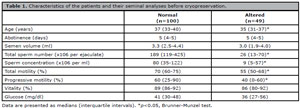
Table 1. Characteristics of the patients and their seminal analyses before cryopreservation.
In fresh samples, seminal glucose levels correlated positively but weakly with sperm count only in the group with altered semen analysis (Sperman’s r=0.301, n=49, p=0.04, Figure 1A). However, glucose levels did not correlate with sperm motility or vitality in any of the groups (Figure 1 B-D).
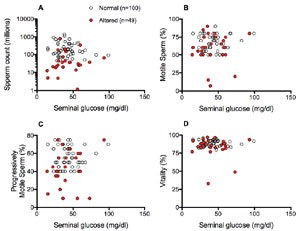
Figure 1. Linear correlation analyses between glucose levels and semen parameters in fresh samples.
When we analyzed the possible association between glucose levels in fresh samples and their resistance to cryopreservation, we observed that the sperm recovery rates were similar between samples with different glucose concentrations (p>0.05, Kruskal-Wallis ANOVA, Figure 2). This was confirmed by the linear correlation analysis that showed no correlation between glucose levels in fresh samples and sperm recovery after cryopreservation (Figure 3).
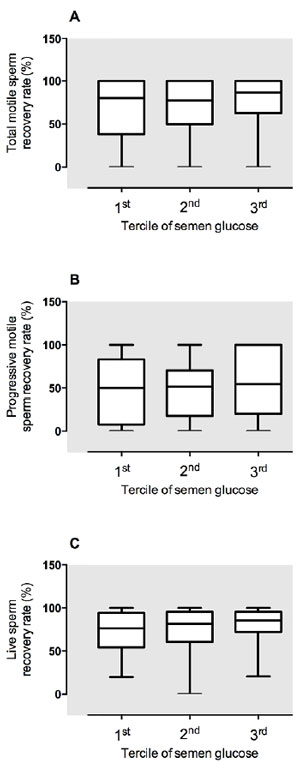
Figure 2. Post-thawing outcomes of all seminal samples (n=149) according to their glucose concentrations measured with dipstick before cryopreservation.
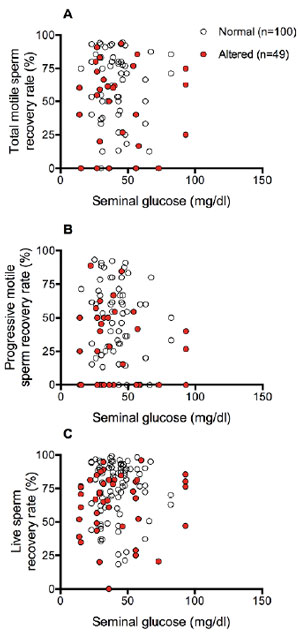
Figure 3. Linear correlation analyses between glucose levels in fresh samples and sperm recovery after cryopreservation.
DISCUSSION
In the present study, we investigated the possible relationship between glucose levels in human semen and its resistance to cryopreservation. Our hypothesis was that semen samples with higher glucose levels would be more protected from cryoinjury, considering that glucose protects sperm from low temperature damage (McGonagle et al., 2002) and prolongs sperm vitality, motility and fertilizing potential in vitro (Mahadevan et al., 1997; Amaral et al., 2011). However, we found no evidence of association between endogenous glucose levels and cryopreservation outcomes in human semen samples. Exogenous nutrients, including glucose, are critically needed to keep sperm alive and preserve their progressive motility as well as their capacitation, i.e., the metabolic and kinetic changes that render the sperm capable of penetrating the zona pellucida to fertilize the oocyte (Marín-Briggiler et al., 2021). During cryopreservation, the cell enters a state of minimum metabolism (Whaley et al., 2021) and exogenous energy sources may no longer be required, so the availability of glucose in the seminal plasma loses importance once the cell temperature is stabilized at very low level. On the other hand, the sperm survival to cryopreservation is affected by protective factors like antioxidants that are present before freezing and attenuate cell damage henceforth (Shokri et al., 2019).
In fresh semen, there was a weak positive correlation between seminal glucose and total sperm count, but not between glucose levels and sperm motility or vitality. Only one previous study measured glucose in fresh human semen and found no difference between normal, oligospermic, azoospermic and vasectomized men (Diamandis et al., 1999), corroborating with our present findings. As far as we know, the present study is the first to analyze seminal glucose concentrations before cryopreservation. We found no association between glucose levels and the rates of sperm recovery (total, alive or motile sperm) in the cryopreserved samples. It is well established that high concentrations of glucose in the cryoprotectant solution prevent cryodamage and increase the recovery of motile sperm (McGonagle et al., 2002; Bhat et al., 2020). Therefore, our findings suggest that this protective effect does not change with the physiological variations of the amount of endogenous glucose that is present in fresh semen, but only with the supraphysiological levels attained by the addition of exogenous glucose.
A strength of this study is the hypothesis-driven, prospective design, with all samples handled equally and blindly, a simple and accurate method of glucose measurement and a statistically robust sample of men with normal as well as altered semen. Some limitations, however, should be noted. We only investigated individuals referred to the clinic for couple infertility, therefore our data should not be automatically extrapolated to typical semen donors, to oncological patients or to transgender females seeking fertility preservation. This limitation was due to the ethical decision to perform the study using surplus samples after routine semen analysis instead of samples from patients requiring cryopreservation.
In conclusion, there appears to be no association between glucose levels in human semen samples and their resistance to cryopreservation. While glucose is an important component of seminal plasma and is a cryoprotectant at high concentrations, the measurement of endogenous glucose levels does not help to predict the sperm recovery rate after cryopreservation of human semen.
Funding: Research supported by FAPEMIG and CNPq.
REFERENCES
Amaral A, Paiva C, Baptista M, Sousa AP, Ramalho-Santos J. Exogenous glucose improves long-standing human sperm motility, viability, and mitochondrial function. Fertil Steril. 2011;96:848-50. PMID: 21839434 DOI: 10.1016/j.fertnstert.2011.07.1091
Medline
Bhat MH, Blondin P, Vincent P, Benson JD. Low concentrations of 3-O-methylglucose improve post thaw recovery in cryopreserved bovine spermatozoa. Cryobiology. 2020;95:15-9. PMID: 32619521 DOI: 10.1016/j.cryobiol.2020.06.013
Medline
Colás C, Junquera C, Pérez-Pé R, Cebrián-Pérez JA, Muiño-Blanco T. Ultrastructural study of the ability of seminal plasma proteins to protect ram spermatozoa against cold-shock. Microsc Res Tech. 2009;72:566-72. PMID: 19322897 DOI: 10.1002/jemt.20710
Medline
Cooper TG, Noonan E, von Eckardstein S, Auger J, Baker HW, Behre HM, Haugen TB, Kruger T, Wang C, Mbizvo MT, Vogelsong KM. World Health Organization reference values for human semen characteristics. Hum Reprod Update. 2010;16:231-45. PMID: 19934213 DOI: 10.1093/humupd/dmp048
Medline
Datta J, Palmer MJ, Tanton C, Gibson LJ, Jones KG, Macdowall W, Glasier A, Sonnenberg P, Field N, Mercer CH, Johnson AM, Wellings K. Prevalence of infertility and help seeking among 15 000 women and men. Hum Reprod. 2016;31:2108-18. PMID: 27365525 DOI: 10.1093/humrep/dew123
Medline
Diamandis EP, Arnett WP, Foussias G, Pappas H, Ghandi S, Melegos DN, Mullen B, Yu H, Srigley J, Jarvi K. Seminal plasma biochemical markers and their association with semen analysis findings. Urology. 1999;53:596-603. PMID: 10096390 DOI: 10.1016/s0090-4295(98)00550-0
Medline
Mahadevan MM, Miller MM, Moutos DM. Absence of glucose decreases human fertilization and sperm movement characteristics in vitro. Hum Reprod. 1997;12:119-23. PMID: 9043915 DOI: 10.1093/humrep/12.1.119
Medline
Marín-Briggiler CI, Luque GM, Gervasi MG, Oscoz-Susino N, Sierra JM, Mondillo C, Salicioni AM, Krapf D, Visconti PE, Buffone MG. Human Sperm Remain Motile After a Temporary Energy Restriction but do Not Undergo Capacitation-Related Events. Front Cell Dev Biol. 2021;9:777086. PMID: 34869380 DOI: 10.3389/fcell.2021.777086
Medline
McGonagle LS, Goldstein M, Feldschuh J, Foote RH. The influence of cryoprotective media and processing procedures on motility and migration of frozen-thawed human sperm. Asian J Androl. 2002;4:137-41. PMID: 12085105
Medline
Muiño-Blanco T, Pérez-Pé R, Cebrián-Pérez JA. Seminal plasma proteins and sperm resistance to stress. Reprod Domest Anim. 2008;43:18-31. PMID: 18803753 DOI: 10.1111/j.1439-0531.2008.01228.x
Medline
Practice Committee of the American Society for Reproductive Medicine and the Practice Committee for the Society for Assisted Reproductive Technology. Guidance regarding gamete and embryo donation. Fertil Steril. 2021;115:1395-410. PMID: 33838871 DOI: 10.1016/j.fertnstert.2021.01.045
Medline
Queiroz SC, Dela Cruz C, Casalechi M, Nery SF, Reis FM. Seminal protein levels assessed with dipstick test correlate with sperm recovery after cryopreservation. Hum Fertil (Camb). 2020:1-7. PMID: 32715868 DOI: 10.1080/14647273.2020.1798515
Medline
Shokri S, Ebrahimi SM, Ziaeipour S, Nejatbakhsh R. Effect of insulin on functional parameters of human cryopreserved sperms. Cryobiology. 2019;87:68-73. PMID: 30763565 DOI: 10.1016/j.cryobiol.2019.02.002
Medline
Vieira MA, Nery SF, Tavares RL, Cruz CD, Reis FM, Camargos AF. Rapid thawing human sperm does not affect basic parameters in normozoospermic men: a double-blind prospective study. Int Braz J Urol. 2012;38:108-15. PMID: 22397772 DOI: 10.1590/s1677-55382012000100015
Medline
Whaley D, Damyar K, Witek RP, Mendoza A, Alexander M, Lakey JR. Cryopreservation: An Overview of Principles and Cell-Specific Considerations. Cell Transplant. 2021;30:963689721999617. PMID: 33757335 DOI: 10.1177/0963689721999617
Medline
Williams AC, Ford WC. The role of glucose in supporting motility and capacitation in human spermatozoa. J Androl. 2001;22:680-95. PMID: 11451366
Medline
Zegers-Hochschild F, Adamson GD, Dyer S, Racowsky C, de Mouzon J, Sokol R, Rienzi L, Sunde A, Schmidt L, Cooke ID, Simpson JL, van der Poel S. The International Glossary on Infertility and Fertility Care, 2017. Hum Reprod. 2017;32:1786-801. PMID: 28760517 DOI: 10.1016/j.fertnstert.2017.06.005
Medline