JBRA Assist. Reprod. 2024;28(4):554-557
ORIGINAL ARTICLE
doi: 10.5935/1518-0557.20240042
Gender differences in behaviors toward acceptance of donor egg, sperm, and embryo in Northern Thai infertile couples
1Division of Reproductive Medicine, Department of Obstetrics and Gynecology, Faculty of Medicine, Chiang Mai University, Chiang Mai 50200, Thailand
2CMEx Fertility Center, Center of Medical Excellence, Chiang Mai University, Chiang Mai 50200, Thailand
CONFLICTS OF INTEREST
The authors report no conflicts of interest.
ABSTRACT
Objective: This study aimed to examine the behavior towards the acceptance of donor egg, donor sperm, and donor embryo of Northern Thai infertile couples, separated between men and women.
Methods: A cross-sectional study was conducted at the CMEx Fertility Center, Chiang Mai, Thailand. The questionnaires consisted of sociodemographic questions and the acceptance of couples toward donor egg, sperm and embryo. The couples filled in the answers separately.
Results: A total of 250 infertile couples were assessed. There were no differences in the acceptance rate of donor egg, sperm and embryo between the men and the women. Male acceptance rates were 25.6%, 18.8%, and 18.8%, respectively; while female acceptance rates were 24.4%, 18.4%, and 19.2%, respectively. Most couples (over 70%) concordantly rejected the donation program. Around 10% of couples had discordant answers. The concordance accepted for couples for donor egg, sperm and embryo was only 20%, 13.2%, and 14.8%. Older people and those who had been infertile for a longer period were significantly more likely to accept donation programs.
Conclusions: There is no difference concerning the acceptance of donor gametes and embryo among men and women. Most participants reject the utilization of donor programs, the overall acceptance rate is relatively low. This may indicate the need for more adequate information and education for the community to enhance prevention programs rather than focus on the treatment with donor gametes or embryos.
Keywords: gender, behavior, donor gamete, donor embryo
INTRODUCTION
Although advancements in Assisted Reproductive Technology (ART) are undeniably effective and have guaranteed an immense number of successful results, gamete quality remains the key to successful conception and child delivery. If the reproductive cells are defective or either of the couples is unable to produce the gamete, donor eggs, sperm, or embryos may have to be utilized to overcome infertility.
The trends of adopting donor gametes and embryos have been increasing. In 2019, ART using donor gametes and embryos produced over 4,100 successful births in the United Kingdom, with 1 of every 170 births attributed to donor gametes and embryos. The utilization of donor eggs has increased the rate of pregnancy from 5% to 30% in females aged 43-50 (HFEA, 2022), and the pregnancy rate may be as high as 40.6% with donor embryos (Halle, 2023). In the United States, donor gametes, donor embryos, and surrogacy contributed to 16% of all ART treatments (Kushnir et al., 2017). These findings suggest that the utilization of donor eggs, sperm, or embryos could be a promising solution for couples suffering from absent or poor gametes.
Despite its favorable premise and outcomes, the use of these donor gametes and embryos did not seem to be as accepted in Asia, including Thailand, as it in other parts of the world, and remains a controversial topic among infertile couples and society. As there is currently no study in this field in Thailand, we would like to examine the behavior toward the acceptance of donor egg, sperm, and embryo among Northern Thai infertile couples, separating the behaviors of men and women according to the country law that the use of donor gamete and embryo for conception must have the consent from the spouse. We aim to extract and implement these data into the planning of conception attempts and to exhibit the limitations and problems of this ART modality to provide alternative solutions to infertile couples with defective reproductive cells.
MATERIALS AND METHODS
This cross-sectional study was carried out at the CMEx Fertility Center, Chiang Mai, Thailand from March to October 2023 with the approval of the Research Ethics Committee of the School of Medicine, Chiang Mai University. The infertile couples that visited our center received study information. Voluntarily filling in the questionnaire was considered as consent. Both male and female partners completed the questionnaire separately and anonymously.
The questionnaire comprised two parts. The first part was sociodemographic background including gender, age, duration of conception attempt, child from previous and/or current marriage, education, occupation, income per month and religion. The second part was their behaviors toward the acceptance of donor egg, sperm, and embryo, structured in “Accept” and “Reject” options. Only completely filled-out questionnaires were used for data analysis.
Data was analyzed using the Chi-square test, independent sample t-test or Mann-Whitney U test based on data type and distribution of the SPSS program version 27. p-value <0.05 was considered statistically significant.
RESULTS
Two hundred and fifty infertile couples were included in the study. The sociodemographic data of the participants was separated by gender are shown in Table 1. The majority of the participants, both men and women, are between 31 and 40 years old, trying to conceive for less than five years, never had children, education are at a bachelor’s degree, run a personal business, earned more than 30,000 baths per month, and are Buddhist (Table 1).
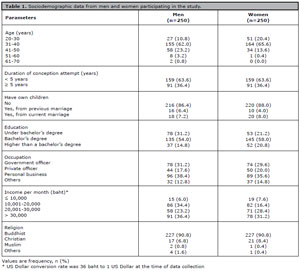
Table 1. Sociodemographic data from men and women participating in the study.
Regarding their behavior towards the acceptance of donor gametes and embryos, the total acceptance rates for donor egg, donor sperm, and donor embryo were 25%, 18.6%, and 19%, respectively. No differences were shown in the acceptance rate of donor egg, sperm, and embryo between men and women. Male acceptance rates were 25.6%, 18.8%, and 18.8%, respectively; while female acceptance rates were 24.4%, 18.4%, and 19.2%, respectively (Table 2).
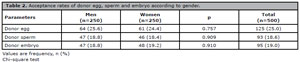
Table 2. Acceptance rates of donor egg, sperm and embryo according to gender.
Most couples concordantly rejected donor egg, sperm, and embryo (70%, 76%, and 76.8%, respectively). Around 10% of couples were discordant regarding their answer, one partner accepted and the other rejected. The concordance of acceptance of couples for donor egg, sperm and embryo were only 20%, 13.2%, and 14.8% (Table 3).
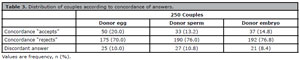
Table 3. Distribution of couples according to concordance of answers.
Table 4 provides the association of the behavior toward the acceptance of the donation program and the sociodemographic variables including age, duration of conception attempt, infertility type, education, income, and religion. Older people were significantly more likely to accept donation programs (p=0.002), as were those who had been infertile for a longer period (p=0.001).
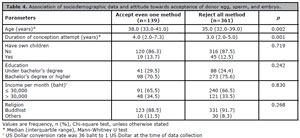
Table 4. Association of sociodemographic data and attitude towards acceptance of donor egg, sperm, and embryo.
DISCUSSION
The donation program has become the ART modality of choice for many couples whose gametes of either partner is defective in quality and/or quantity. To date, there has been no study on the behavior of Thai people towards the acceptance of donor gametes and embryos. We studied infertile people, not the general population, because these people have the most opportunity to use the donation program. We suggest that individual experience plays a role in the decision to accept donor gametes and embryo. Our data from 500 infertile people found that most participants rejected the utilization of donor gametes and embryos, and the acceptance for donor egg, sperm, and embryo was only 25%, 18.6%, and 19.1%. The number was similar to that in the survey performed in India which the acceptance rate for donor egg was 32%, donor sperm was 17.4% and donor embryo was 19.7% (Banerjee & Singla, 2018). But when compared with data from the United Kingdom, 61.3% accept donor egg and 48.4% accept donor sperm, the acceptance rate of our country is much lower (Kazem et al., 1995). This may be attributed to the cultural differences in the conservative beliefs of family structure, in which involving gametes or embryos from a third-party may interfere with social and biological connections within the family. This suggestion is in sync with Africans, in which a child represents everything, and procreation is rather conferred by the pregnancy, which is visible, than by the genes; therefore the acceptance of donor gametes and embryos in their country is very high at 89% (Écra et al., 2017).
We tried to identify sociodemographic factors that may influence behavior towards the acceptance of donor gametes and embryos. Our study found a strong association between acceptance and older age, and longer duration of infertility. This finding is consistent with many studies (Kazem et al., 1995; Bello et al., 2014), suggesting that people will accept donor programs as the last option to overcome infertility. After a long period of emotional and physical exhaustion, the donor program may be the most feasible to fulfill their families. Some studies demonstrate the influence of education (Kazem et al., 1995), and religion (Braverman & Corson, 1995) on the acceptance rate of donor programs, which was not found in our study.
We examined the difference in behaviors between men and women, and also assessed the concordance of the couple’s answers. According to the Thailand law, no ART procedure will be done without the spouse’s consent including the donation program. We found that gender does not affect behavior towards the acceptance of donor gametes and embryos. Both men and women equally accept donor egg, sperm, and embryo, and are more amenable to accepting donor egg than sperm and embryo. The hypothetical explanation for this inclination in the preference for donor eggs is that it enables both partners to feel involved in the childbearing and to share a connection with the child, the father would share the genetic tie; and the mother could experience pregnancy and build a maternal bond with the child, all of which are impossible to achieve in cases of donor sperm and donor embryo (Bracewell-Milnes et al., 2016; Eisenberg et al., 2010).
Discordant responses to the acceptance of donor gametes and embryos by the couples lead to an inability to access the donation program that requires consent from the spouse. Our study found discordant answers by the couples in 10% for the donor egg; 10.8% for the donor sperm and 8.4% for the donor embryo. This further reduces the number of couples accessing the donation program, limited to the concordance between accepting couples, which is only 20% for donor egg; 13.2% for donor sperm and 14.8% for donor embryo. Although this number may not represent the actual number in the real situation because this questionnaire was given at the beginning of the infertility evaluation, their behavior may change as the need for their use of donor gamete and embryo becomes more imminent. However, the responses from the representative infertile couples have shown interesting trends and could be further utilized by healthcare professionals. In our data, the behavior of Thai infertile couples toward the utilization of donor gamete and embryo is relatively low.
Although changing a person’s behavior is possible, but extremely difficult, it requires a broader change in their environment and culture (Wagner et al., 2020). Therefore, the most possible solution seems to be a preventive modality including primary, secondary and tertiary approaches to minimize the risk of losing reproductive ability that led to the need for donor gametes and embryos. For instance, increasing public awareness of age-related fertility decline (Habbema et al., 2015), giving importance to fertility advice as a part of primary health care and preconception program (Vause et al., 2009; Anderson et al., 2010), early in identifying infertility risk factors and acting immediately such as further investigation or referral to a fertility specialist (Nekuei et al., 2013), provide adequate information on fertility preservation issues (Rodriguez-Wallberg et al., 2021). This strategy can result in a higher chance of successful pregnancy whether naturally or from treatment.
In conclusion, this study reflects the behavior toward the acceptance of donor gametes and embryos of infertile couples in Thailand. There was no difference in the acceptance rate among men and women. The overall acceptance of donor gametes and embryos is relatively low. This may indicate the need for more adequate information and education for the community to enhance the prevention program rather than focus on the treatment with donor gametes or embryos.
Acknowledgments
The authors would like to thank the men and women who took the time to complete these questionnaires, as well as the School of Medicine at Chiang Mai University for their support.
REFERENCES
Anderson K, Norman RJ, Middleton P. Preconception lifestyle advice for people with subfertility. Cochrane Database Syst Rev. 2010;CD008189. PMID: 20393968 DOI: 10.1002/14651858.CD008189.pub2 Medline
Banerjee K, Singla B. Acceptance of Donor Eggs, Donor Sperms, or Donor Embryos in Indian Infertile Couples. J Hum Reprod Sci. 2018;11:169-71. PMID: 30158814 DOI: 10.4103/jhrs.JHRS_63_17 Medline
Bello FA, Akinajo OR, Olayemi O. In-vitro fertilization, gamete donation and surrogacy: perceptions of women attending an infertility clinic in Ibadan, Nigeria. Afr J Reprod Health. 2014;18:127-33. PMID: 25022149 Medline
Bracewell-Milnes T, Saso S, Bora S, Ismail AM, Al-Memar M, Hamed AH, Abdalla H, Thum MY. Investigating psychosocial attitudes, motivations and experiences of oocyte donors, recipients and egg sharers: a systematic review. Hum Reprod Update. 2016;22:450-65. PMID: 27016289 DOI: 10.1093/humupd/dmw006 Medline
Braverman AM, Corson SL. Factors related to preferences in gamete donor sources. Fertil Steril. 1995;63:543-9. PMID: 7851584 DOI: 10.1016/S0015-0282(16)57423-8 Medline
Eisenberg ML, Smith JF, Millstein SG, Walsh TJ, Breyer BN, Katz PP; Infertility Outcomes Program Project Group. Perceived negative consequences of donor gametes from male and female members of infertile couples. Fertil Steril. 2010;94:921-6. PMID: 19523614 DOI: 10.1016/j.fertnstert.2009.04.049 Medline
Habbema JDF, Eijkemans MJC, Leridon H, te Velde ER. Realizing a desired family size: when should couples start? Hum Reprod. 2015;30:2215-21. PMID: 26185187 DOI: 10.1093/humrep/dev148 Medline
Halle TM. What are the 2023 Fertility Statistics I Need to Know About? Cofertility; 2023. Available at: https://www.cofertility.com/family-learn/fertility-statistics
HFEA. Trends in egg, sperm and embryo donation 2020: Human Fertilisation & Embryology Authority 2022. Available at: https://www.hfea.gov.uk/about-us/publications/research-and-data/trends-in-egg-sperm-and-embryo-donation-2020/
Kazem R, Thompson LA, Hamilton MP, Templeton A. Current attitudes towards egg donation among men and women. Hum Reprod. 1995;10:1543-8. PMID: 7593532 DOI: 10.1093/HUMREP/10.6.1543 Medline
Kushnir VA, Darmon SK, Shapiro AJ, Albertini DF, Barad DH, Gleicher N. Utilization of third-party in vitro fertilization in the United States. Am J Obstet Gynecol. 2017;216:266.e1-266.e10. PMID: 27856185 DOI: 10.1016/j.ajog.2016.11.1022 Medline
Nekuei N, Kazemi A, Ehsanpur S, Beigi NM. Preconception risk assessment of infertile couples. Iran J Nurs Midwifery Res. 2013;18:27-32. PMID: 23983724 Medline
Rodriguez-Wallberg KA, Hao X, Marklund A, Johansen G, Borgström B, Lundberg FE. Hot Topics on Fertility Preservation for Women and Girls-Current Research, Knowledge Gaps, and Future Possibilities. J Clin Med. 2021;10:1650. PMID: 33924415 DOI: 10.3390/jcm10081650 Medline
Vause TDR, Jones L, Evans M, Wilkie V, Leader A. Pre-conception health awareness in infertility patients. J Obstet Gynaecol Can. 2009;31:717-20. PMID: 19772703 DOI: 10.1016/S1701-2163(16)34275-X Medline