JBRA Assist. Reprod. 2024;28(4):670-677
ORIGINAL ARTICLE
doi: 10.5935/1518-0557.20240060
Effect of β-caryophyllene on Sperm Cryopreservation
1Post-Graduate Program in Tropical Zootechnics/Federal University of Piaui, Teresina, Piauí, Brazil
2University Mauricio de Nassau, Teresina, Piauí, Brazil
3Post-Graduate Program in Technologies Applied to Animals of Regional Interest/Federal University of Piaui, Teresina, Piauí, Brazil
4Department of Veterinary Clinic and Surgery/Federal University of Piauí, Teresina, Piauí, Brazil
5Technical College of Teresina/Federal University of Piauí, Teresina, Piauí, Brazil
6Faculty of Veterinary Medicine, State University of Ceará, Fortaleza, Ceará, Brazil
CONFLICTS OF INTEREST
None.
ABSTRACT
Objective: This study aimed to assess the impact of β-caryophyllene (BC) supplementation in the extender on the post-cryopreservation quality of semen from Dorper rams.
Methods: Six Dorper rams were utilized for semen collection over 16 weeks, with BC concentrations determined via the MTT test. Animals were divided into a control group and three treatment groups receiving BC at concentrations of 1.0mM, 2.0mM, and 3.0mM in the Trisegg yolk diluent. Semen was cryopreserved and stored in liquid nitrogen for at least 15 days. After thawing, in vitro assessments including CASA, acrosomal integrity, plasma membrane integrity, mitochondrial membrane potential, and thermo-resistance tests were conducted. Additionally, the TBARS assay was performed to evaluate oxidative stress.
Results: While BC supplementation did not significantly affect sperm motility, it notably improved mitochondrial potential and mitigated oxidative stress in cryopreserved ram semen.
Conclusions: Incorporating β-caryophyllene into the extender exhibited beneficial effects on the quality of Dorper ram semen post-cryopreservation, enhancing mitochondrial functionality and reducing oxidative stress.
Keywords: andrology, sheep, antioxidant, reproduction
INTRODUCTION
The use of cryopreserved semen from rams with superior genetics in reproductive biotechniques is one of the efficient biotechniques to promote the gain in productivity (Elsayed et al., 2019; Jha et al., 2019). However, this procedure provides low fertility in ewes when compared to the use of fresh semen because ovine sperm is extremely susceptible to low temperatures. This susceptibility has been attributed to the high concentrations of polyunsaturated fatty acids in the plasma membrane of sheep spermatozoa that make the cells sensitive, in the presence of reactive oxygen species (ROS) as well as to cold shock (Allai et al., 2018; Amini et al., 2019). Therefore, the efficiency of ram semen cryopreservation should be improved by preventing oxidative stress.
When transitioning from physiological temperature to freezing temperature, semen undergoes substantial stress on the spermatozoa’s plasma membrane, resulting in rearrangement and destabilization of cellular components, along with an influx of calcium (Padilha et al., 2012). Therefore, cryopreservation subjects spermatozoa to a series of physical and chemical insults - cryoinjuries, such as the attack of free radicals, which diminishes sperm viability and fertility. They are particularly vulnerable to lipid peroxidation due to the abundance of polyunsaturated fatty acids in their plasma membrane (Mata-Campuzano et al., 2015).
It is noteworthy that a low level of ROS produced as a result of oxidative metabolism is necessary to perform sperm functions such as capacitation, acrosomal reaction, hyperactivation and sperm-ovocyte fusion. Therefore, a balance must be maintained between the production and consumption of these ROS, as imbalance can lead to the onset of high rates of lipid peroxidation due to excess amounts of ROS (Gushiken et al., 2022).
Post-thaw sperm viability still faces obstacles, such as excess ROS production, despite scientific and technological advances. The main cause of decreased viability due to imbalance in ROS levels are changes in ejaculate osmolarity and changes in sperm conformation during freezing and thawing procedures, which lead to decreased post-thaw fertility rates (Batissaco et al., 2020).
The positive advances obtained with reproductive biotechniques can be achieved through improvements in semen cryopreservation diluents. In general, a suitable freezing extender needs, among other requirements, a system to neutralize the toxic ROS products produced by spermatozoa (Bittencourt et al., 2013). Thus, it is assumed that the addition of a potent antioxidant can contribute to improve the reproductive performance of sheep by improving the viability of sperm cells after the cryopreservation process.
ß-Caryophyllene (BC), a potent antioxidant, is a phytocannabinoid, abundantly found in spices such as pepper, clover, cinnamon, and oregano. BC has been shown to exert organoprotective effects against the deleterious effects of drugs, xenobiotics, or other chemical toxicants on the liver, kidney, pancreas, intestine, and brain (Al-Taee et al., 2019). Various biological activities have been attributed to this natural product, such as anti-inflammatory, antibiotic, antioxidant, anticancer, and local anesthetic (Pant et al., 2014). We aimed to evaluate the effect of β-caryophyllene, an antioxidant, added to the diluent on the quality of semen from Dorper breed sheep after cryopreservation.
MATERIAL AND METHODS
Test Substance β-Caryophyllene
The β-caryophyllene >80% purity, was obtained commercially from the company Sigma-Aldrich (Saint Louis, Missouri, USA). From a standard Tris diluent (composed of 12.11 g Tris; 6.8 g citric acid; 2.5 g fructose; 2.5 g lactose; 1 mL gentamicin, 44 mg/mL; 68 mL distilled water, 32 mL glycerol), Tris-egg yolk was prepared (composed of 60% distilled water; 20% egg yolk and 20% standard Tris diluent, osmolarity ~350 mOsm/kg and pH 6.8).
In determining non-toxic concentrations of β-caryophyllene for ovine sperm, a cell viability test was conducted using concentrations of 0.7, 1.0, 1.5, 2.0, and 3.0mM (Machado et al., 2020). Subsequently, based on the results of the cell viability test (MTT test), presented in Figure 1, three concentrations of BC were selected for further experimentation. Three experimental groups were formed with the following concentrations of β-caryophyllene: 1.0mM; 2.0mM and 3.0mM, added to the Tris-egg yolk diluent (Gushiken et al., 2022). The Tris-egg yolk diluent, without test substance, was considered as the control group.
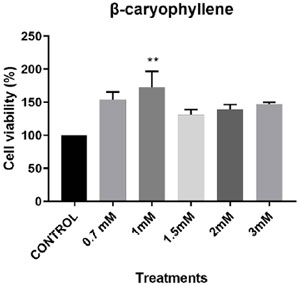
Figure 1. Cell viability of post-thawed ovine sperm at concentrations 0.7; 1.0; 1.5; 2.0 and 3.0mM of β-caryophyllene (BC). Values are expressed as mean±standard deviation (SD). (**)p<0.01.
Animals
Six sheep of the Dorper breed, 3 to 5 years old, from the from the Technical College of Teresina, Piauí, Brazil (Latitude:-5.047851720557213, Longitude: -42.78303633983549), of tropical Aw climate with dry season (Köppen-Geiger climate classification), and with body condition score of 3 to 4, on a scale of 1 to 5. All animals have a proven fertility history and were evaluated for general health, reproductive organ integrity and sperm quality. The animals were fed with concentrate containing 22% crude protein [3/4 corn meal + 1/4 soybean meal] and green forage, with 70% elephant grass (Pennisetum purpureum Schum). Mineralization was incorporated into the feed, and water was provided ad libitum.
Semen collection and initial evaluation
Semen was collected once a week for eight weeks during the rainy season and another eight weeks during the dry season, totaling 96 ejaculates. The collections were made with the aid of a female in estrus, an artificial vagina and using a 15 mL graduated test tube, sterile and properly protected with aluminum foil to prevent exposure of semen to light. The test tubes with the six ejaculates were placed in a water bath at 37°C and separately evaluated for color, appearance, volume (mL), turbulence (0-5), total motility (%) and sperm vitality (1-5) under a phase contrast microscope (Olympus optical Co., Ltd., Tokyo, Japan). Sperm concentration was obtained in a Neubauer chamber, at a dilution of 1:400, in distilled water. Only ejaculates with turbulence ≥ 3; total motility ≥ 80%; vitality ≥ 3; sperm concentration ≥ 3.5 X 10⁹ sperm/mL and sperm pathologies ≤ 20% were used in this study. When approved, the samples from the six ejaculates were mixed to form a pool, aiming to increase the semen volume and eliminate the individual variability of the animals. After pool formation, it was divided in four aliquots, which were kept at 37°C in a water bath before the experimental procedures. The semen samples were collected in the rainy and non-rainy season in order to minimize the environmental effect.
Cryopreservation of semen
The diluted semen was packed in 0.25 ml straws (50 X 106 viable spermatozoa per straw) and frozen in TK 3000® machine (TK Tecnology in Freezing Ltda, Uberaba, Brazil), at the freezing curve −0,25°C/min, from 25°C to 5°C and −20°C/min, from 5°C to −120°C and, after reaching −120°C, the straws were immersed in liquid nitrogen (−196°C) and stored in a cylinder with liquid nitrogen. The equilibration time at 5°C was at least 30 minutes. After at least 15 days of storage, the semen samples were thawed in a 37°C water bath for 30 seconds and evaluated for cell viability, plasma membrane integrity, acrosome integrity, mitochondrial function, post thaw kinetics and thermo-resistance test (TTR). In addition, the thiobarbituric acid reactive substances (TBARS) test was performed to evaluate the lipid peroxidation reaction.
Cell viability test (MTT Test)
Given the need to verify which concentrations are non-toxic for sheep spermatozoa, the cell viability test was performed using β-caryophyllene at concentrations; 0.7; 1.0; 1.5; 2.0 and 3.0mM (Ghorbani-Anarkooli et al., 2019). Cell viability was assessed using the MTT test (MTT tetrazolium salt - [3-(4,5-dimethylthiazol-2-yl)-2,5-di-phenyltetrazolium bromide]), for which semen was thawed in a 37°C water bath for 30 seconds. 20µL of semen was transferred to Elisa plate containing 96 wells and 20µL of MTT solution was added to the wells containing the samples and as well as to the negative control wells. The plate was kept in an incubator with 5% CO2 at a temperature of 37°C for four hours. After this period, 70µL of 10% SDS (Sodium dodecyl (laurel) sulfate solution) was added and the plate was again kept in the oven overnight until reading was performed using a spectrophotometer at a wavelength of 570 nm (Souza, 2012). With regards to the results of this test, as demonstrated in Figure 1, the three concentrations of BC that were used in the other tests were selected.
Analysis of plasma membrane integrity
To evaluate plasma membrane integrity, the double staining method was used with carboxyfluorescein diacetate (DCF; Sigma-Aldrich®, St. Louis, MO, USA) and propidium iodide (PI; Sigma-Aldrich®, St. Louis, MO, USA), modified by (Coleto et al., 2002), in which 50-μL aliquots of post-thawed semen were diluted in 150μL of TRIS solution (composed of 7.210g Tris, 4.048g citric acid, 2.976g fructose and 200 mL distilled water) containing 5μL of DCF (0.46mg/mL in DMSO) and 20μL of IP (0.5mg/mL in PBS) and incubated for 10 minutes at 38°C. A total of 200 spermatozoa were evaluated under an epifluorescence microscope (Olympus optical Co., Ltd., Tokyo, Japan) at 400x magnification using DBP 580-630nm emission filter and DBP 485/20nm excitation filter. Spermatozoa were classified as having a intact membrane when stained green and a damaged membrane when stained red.
Analysis of acrosomal integrity
To assess acrosome integrity, the fluorescein isothiocyanate dye conjugated to Peanut agglutinin (FITC-PNA; Sigma-Aldrich®, St Louis, MO, USA) was used according to the technique described by Roth et al. (1998), in which a 20μL aliquot of FITC-PNA stock solution (1mg/mL) was thawed and added to 480μL of phosphate buffered solution (PBS Sigma-Aldrich®, St Louis, MO, USA) to obtain the final concentration of 100μg/mL. Aliquots (20μL) of this solution were placed on smears of slides containing spermatozoa, which were incubated for 20 minutes in a humid chamber at 4°C in the absence of light. After incubation, the slides were rinsed twice in chilled PBS (4°C) and placed for drying in the absence of light. Immediately before evaluation, 5μL of UCD mounting medium (4.5mL glycerol, 0.5mL PBS, 5mg sodium azide, and 5mg p-phenylenediamine) was placed on the slide and covered with a coverslip. 200 spermatozoa per slide were evaluated at 1000x magnification under immersion oil in an epifluorescence microscope (Olympus optical Co., Ltd., Tokyo, Japan), using LP 515nm emission filter and BP 450-490nm for excitation. Spermatozoa were classified as having an intact acrosome when the acrosomal region was stained with green fluorescence, or as having a reacted acrosome when there was a green fluorescent band in the equatorial region of the sperm head or no green fluorescence in the entire head region.
Mitochondrial membrane potential analysis
Mitochondrial function was determined by using a lipophilic cationic fluorochrome JC-1 (Cossarizza et al., 1993). Therefore, aliquots of 50μL of post-thawed semen were diluted in 150μL of Tris containing 5μL of JC-1 (0.15mM in DMSO) and incubated for 10 minutes at 38°C. A total of 200 spermatozoa were evaluated under an epifluorescence microscope (Olympus optical Co., Ltd., Tokyo, Japan) at 1000x magnification under immersion oil, using LP 515nm emission filter and BP 450-490nm for excitation. Cells stained in orange were classified with high mitochondrial membrane potential, and those stained in green were classified with low membrane potential.
Evaluation of sperm kinetics using integrated optical visual system
Sperm kinetics were evaluated using a computer-assisted sperm analysis system (Computer-assisted Sperm Analysis-CASA). The CASA consisted of a phase-contrast optical microscopy system (Nikon™ H5505, Eclipse 50i, Japan), with stroboscopic illumination, and a hot stage at 37°C, a video camera (Basler Vision Tecnologie™ A312FC, Ahrensburg, Germany), and a computer with Class™ sperm analyzer software (Microptics, SL, version 3.2.0, Barcelona, Spain). Sperm kinetic variables were evaluated after washing the samples in Tris medium (v/v) subsequently incubated in a 37°C water bath for 5 minutes. The variables evaluated were: progressive motility (MOP- μm/s), curvilinear velocity (VCL - μm/s), straight line velocity (VSL - μm/s), average path velocity (VAP- μm/s), linearity (LIN - %), straightness (STR-%), lateral head shift (ALH - μm), Wobble oscillation index (WOB - %), cross beat frequency (BCF-Hz) and hyperactivity, for each sperm analyzed.
Thermoresistance Test (TTR)
The heat resistance test was performed according to Vianna et al. (2009), which consisted in evaluating the longevity of spermatozoa from thawed semen samples, incubated in a 37°C water bath for a period of 3 hours. The thawed samples were conditioned in 1.5 mL microtubes and incubated at 37°C, subsequently, they were evaluated for total motility (TM - %) and sperm vitality (1-5) by means of phase contrast microscopy (Olympus optical Co., Ltda., Tokyo, Japan) with attached hotplate, at 400x magnification, at 0, 60, 120 and 180 minutes post thawing according to Brazilian College of Animal Reproduction (CBRA, 2013).
Thiobarbituric Acid Reactive Substances (TBARS) levels, malondialdehyde (MDA) concentrations
MDA concentrations were determined by thiobarbituric acid reactive substance production (TBARS) according to the method described by (Ohkawa et al., 1979) with adaptations. Accordingly, 100μL of post-thawed semen was added to 175μL of 20% acetic acid (pH 3.5) and 300μL of 0.5% thiobarbituric acid. The mixture was then incubated in a water bath for 45 minutes at 100°C and subsequently cooled in an ice bath for 15 minutes. After this procedure, 25μL of 8.1% sodium dodecyl sulfate (SDS) was added to the mixture and centrifuged for 15 minutes at 12,000rpm at 25°C. 200µL of the supernatant was transferred to 96-well plate where absorbance was read at wavelength of 532 nm. A calibration analytical curve was prepared using MDA as standard at concentrations of 1.0, 5.0, 10.0, 25.0 and 50.0nmol/mL. The samples were analyzed in duplicate, and the results expressed in nmol of MDA per mL of sample.
Statistical Analysis
Cell viability test was performed in triplicate and TBARS production in duplicate. The data were analyzed by ANOVA and the means were compared using the Tukey’s test (5% probability). Analyses were performed using Graph Pad Prism version 8 software (Graph Pad Software, California, USA).
Ethics in animal experimentation
All experimental procedures were submitted for approval by the Ethics Committee on Animal Use (CEUA) of the Federal University of Piauí (UFPI), approval number 405/17 and certified.
RESULTS
The result of the kinetics of cryopreserved ovine spermatozoa post-thaw at 1.0, 2.0 and 3.0mM of BC showed no statistically significant difference compared to the control group (Table 1 and Figure 2). Specifically, the control group exhibited a TM of 47.5%±4.5, with NPM and PM values of 18.7%±1.6 and 28.8%±3.5, respectively. Similarly, the treatment groups with BC concentrations of 1.0mM, 2.0mM, and 3.0mM displayed comparable motility parameters.
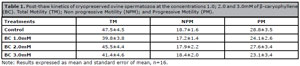
Table 1. Post-thaw kinetics of cryopreserved ovine spermatozoa at the concentrations 1.0; 2.0 and 3.0mM of β-caryophyllene (BC). Total Motility (TM); Non progressive Motility (NPM); and Progressive Motility (PM).

Figure 2. Kinetic parameters of post-thawed ovine sperm at concentrations 1.0; 2.0 and 3.0mM of β-caryophyllene (BC). Values are expressed as mean±standard deviation (SD). a) Linear curvilinear velocity (μm/s); b) Straightline velocity (μm/s); c) Average travel velocity (μm/s); d) Linearity (%); e) Rectilinearity (%); f) Oscillation (%); g) Lateral head displacement amplitude (μm); h) Tail beat frequency (Hz); and i) Hyperactivity (%). n = 16.
Cell viability assay, as depicted in Figure 1, revealed that the control group and the groups treated with 0.7, 1.5, 2, and 3mM of BC exhibited close to 100% cell viability. However, notably, at 1mM of BC, cell viability exceeded 150%, demonstrating statistical significance (p<0.01).
The plasma membrane integrity (PM), mitochondrial potential (MIT), and acrosome integrity (AC) results are presented in Table 2. The control group exhibited a PM percentage of 39.8%±3.2. Conversely, the PM percentages in the BC-treated groups were slightly higher: 45.7%±4.2 for 1.0mM BC, 43.3%±4.6 for 2.0mM BC, and 33.3%±4.7 for 3.0mM BC. Regarding MIT, the control group had a percentage of 45.4%±2.0, whereas the BC-treated groups showed varied percentages: 54.4%±1.5 for 1.0mM BC, 44.0%±4.2 for 2.0mM BC, and 43.2%±2.9 for 3.0mM BC. As for AC, the control group displayed a percentage of 58.3%±2.8, while the BC-treated groups showed differences: 67.3%±4.1 for 1.0mM BC, 53.2%±3.5 for 2.0mM BC, and 56.6%±4.5 for 3.0mM BC. Notably, BC supplementation, particularly at the concentration of 1.0mM, significantly influenced MIT, indicating an enhancement in this parameter with statistical significance (p<0.05).

Table 2. Plasma membrane integrity (PM), mitochondrial potential (MIT) and acrosomal integrity (AC) of post-thawed ovine spermatozoa at 1.0, 2.0 and 3.0mM concentrations of β-caryophyllene (BC).
The evaluation of sperm kinetics using an integrated optical visual system revealed that the kinetic parameters measured showed no statistically significant difference in post-thawed ovine sperm at any concentrations of BC (Figure 2) (p>0.05).
The thermoresistance test parameters results include total motility (TM) and vitality (VG) at various time points (0, 60, 120, and 180 minutes) during exposure to elevated temperatures (Table 3). At the initial time point (0 minutes), there were no significant differences observed in TM and VG between the control group and the groups treated with BC. However, as the exposure time increased, TM gradually decreased in all groups, with no significant differences noted among the treatment groups and the control (p>0.05). Similarly, VG exhibited a slight decline over time across all groups, without significant differences observed among the treatment groups compared to the control (p>0.05).

Table 3. Total motility (TM) and vitality (VG) of post-thawed ovine spermatozoa at concentrations; 1.0, 2.0 and 3.0mM of β-caryophyllene (BC) submitted to the thermo-resistance test.
Regarding the levels of thiobarbituric acid reactive substances (Table 4), the results indicate that the addition of BC at concentrations of 2.0 and 3.0mM led to a significant reduction in MDA concentration compared to the control group. Specifically, the MDA concentration in semen treated with 2.0mM BC was 28.5±1.4nmol/L, while in the 3.0mM BC group, it was 28±2.7nmol/L. These values were significantly lower than the MDA concentration in the control group (45.6±4.3nmol/L). However, at a concentration of 1.0mM BC, the reduction in MDA concentration was not statistically significant compared to the control group. The MDA concentration in the 1.0mM BC group was 34±2.0nmol/L.

Table 4. Levels of thiobarbituric acid reactive substances (malondialdehyde -MDA) in post- thawed ovine semen at concentrations of 1.0, 2.0 and 3.0mM of β-caryophyllene (BC).
DISCUSSION
Sperm kinetics is an indicator of sperm quality. The motility dynamics offered by the CASA system and traditional semen evaluations provide valuable information about semen quality before and after freezing (Batissaco et al., 2020). However, the results observed in this study showed no improvement in sperm motility with addition of BC to the diluent. In contrast to the findings of Espinosa-Ahedo et al. (2022), which demonstrated beta-caryophyllene’s ability to alleviate sperm quality and quantity due to cadmium-induced damage. Furthermore, it corroborates the findings of Bastaki et al. (2020), which found no influence of beta-caryophyllene or betacaryophyllene epoxide on sperm parameters.
The analysis of plasma membrane integrity, acrosomal integrity and mitochondrial potential parameters are important because they are closely linked to semen quality, as the structural integrity of spermatozoa is necessary to maintain fertilization ability (Batissaco et al. , 2020). However, at the concentration of 1.0mM it promoted a higher percentage of mitochondrial matrix integrity, when compared to the control group. Thus, the addition of BC promoted an improvement in mitochondrial potential. The use of this antioxidant may be associated with a possible protection of the mitochondrial membrane, which results in a higher rate of oxidative phosphorylation and higher metabolic activity. This have a direct impact on cell motility, since mitochondria are responsible for transforming and making energy available for cell movement (Corandin, 2013).
However, the addition of BC did not promote significant effects on cell motility. Studies have shown the importance of mitochondria for sperm functionality, as the main source of ATP in cell homeostasis and motility.
Several studies demonstrate the antioxidant, antimu-tagenic, and cytotoxicity-reducing effects of beta-caryophyllene (BC) in various tissues (Di Sotto et al., 2010; Viveros-Paredes et al., 2017; Di Giacomo et al., 2018; Wang et al., 2018). The lack of correlation between the observed improvement in mitochondrial parameters and the absence of improvements in sperm kinetics can be attributed to the complexity of mechanisms of action and the different responses of cells and tissues to its effects. While BC effects on mitochondrial parameters may be more direct and immediate, influencing mitochondrial matrix integrity and membrane potential, improvements in sperm kinetics may depend on a more complex interaction of factors, such as the regulation of membrane ion channels or the synthesis of proteins related to motility (Pereira et al., 2017).
The concentration of 2.0mM of BC was able to decrease the production of ROS, by reducing lipid peroxidation, but this fact did not contribute to an improvement in sperm motility. It is noteworthy that the lower the concentration of MDA, the lower its production in the medium and, consequently, the lower the occurrence of lipid peroxidation. MDA is one of the secondary products formed from the oxidation of lipids promoted by ROS. MDA is considered a biomarker of lipid peroxidation, i.e. oxidative stress (Gaschler & Stockwell, 2017). The correlation between lipid peroxidation and sperm motility was demonstrated by (Najafi et al., 2014; Mehdipour et al. , 2017). It can be inferred that other factors may contribute to sperm motility, besides peroxidative stress reduction alone was insufficient in improving the motility of these cells.
It was concluded that although β-Caryophyllene did not increase sperm motility, it improved mitochondrial potential and attenuated oxidative stress in ram semen after cryopreservation.
ACKNOWLEDGEMENTS
To the Laboratory of Animal Reproduction Biotechnology of the Federal University of Piauí (LBRA-UFPI), the Technical College of Teresina (CTT- UFPI) and the Laboratory of Goat and Sheep Semen Technology of the State University of Ceará (UECE).
REFERENCES