JBRA Assist. Reprod. 2025;29(2):201-210
ORIGINAL ARTICLE
doi: 10.5935/1518-0557.20240095
Predictors of Pregnancy after Artificial Insemination in Women with Polycystic Ovary Syndrome
1ICBAS - School of Medicine and Biomedical Sciences, UMIB - Unit for Multidisciplinary Research in Biomedicine, University of Porto, Porto, Portugal
2Centro de Procriação Medicamente Assistida / Banco Público de Gâmetas, Centro Materno-Infantil do Norte Dr. Albino Aroso (CMIN), Centro Hospitalar Universitário de Santo António (CHUdSA), Unidade Local de Saúde de Santo António (ULSSA), Porto, Portugal
3Departamento da Mulher e da Medicina Reprodutiva, Centro Materno-Infantil do Norte Dr. Albino Aroso (CMIN), Centro Hospitalar Universitário de Santo António (CHUdSA), Unidade Local de Saúde de Santo António (ULSSA), Porto, Portugal
4ITR - Laboratory for Integrative and Translational Research in Population Health, University of Porto, Porto, Portugal
CONFLICT OF INTEREST
The authors have no conflict of interest to declare.
ABSTRACT
Objective: Polycystic Ovary Syndrome (PCOS) is the most common endocrine disorder in women of reproductive age, being one of the main causes of infertility. Anti-Müllerian hormone (AMH) is an important marker of ovarian reserve and has been proposed as an alternative criterion for the diagnosis of PCOS. This study verifies whether AMH and body mass index (BMI) values are predictors of pregnancy in infertile women with PCOS undergoing artificial insemination (AI), a less invasive and painless technique of assisted reproductive technologies (ART).
Methods: This retrospective observational study involved 220 women with PCOS who underwent AI between 2010 and 2022. Participants were categorized into three groups based on BMI and serum AMH levels. To categorize the three AMH classes, the 25th (4.08ng/mL) and 75th (8.99ng/mL) AMH percentiles were defined as cut-offs, and the words ‘low’, ‘middle’, and ‘high’ were utilized to define the groups.
Results: There was a tendency towards a decrease in reproductive outcomes (number of inseminations with positive human-chorionic gonadotropin, number of live births, and number of term births) with an increase in the BMI value. All of these outcomes were also slightly higher in women with ‘middle’ AMH levels compared to women with ‘low’ and ‘high’ AMH. However, none of these results were statistically significant.
Conclusions: This study suggests BMI may be an important predictive factor for pregnancy and there appears to be a range of biological normality for AMH values, where ‘low’ and ‘high’ levels of this hormone could constitute a marker of poor reproductive prognosis, in women with PCOS undergoing AI.
Keywords: polycystic ovary syndrome, artificial insemination, intrauterine insemination, anti-Müllerian hormone, body mass index, reproductive outcomes
INTRODUCTION
Polycystic ovarian syndrome (PCOS) is the most common endocrine condition in women of reproductive age, affecting them from adolescence to menopause (Gao et al., 2022; Teede et al., 2023). It has a prevalence of 8-13% and accounts for almost 80% of cases of anovulatory infertility (Gao et al., 2022; Sivanandy & Ha, 2023; Teede et al., 2023). This syndrome is characterized by an increase in the pulsatility of gonadotropin-releasing hormone (GnRH), which stimulates the secretion of luteinizing hormone (LH), which in turn increases the production of androgens by theca cells, resulting in a high luteinizing hormone/follicle-stimulating hormone (LH/FSH) ratio (Sadeghi et al., 2022; Teede et al., 2023). Women with PCOS have a diverse clinical presentation, including gynecological/reproductive, metabolic, endocrine, and psychiatric features (Gao et al., 2022; Rudnicka et al., 2021). In terms of gynecology, these women may experience oligomenorrhea, amenorrhea, and/or infertility (di Clemente et al., 2022; Gao et al., 2022; Teede et al., 2023). Hirsutism, acne, and alopecia are endocrine symptoms and indicators of clinical hyperandrogenism (di Clemente et al., 2022; Gao et al., 2022; Teede et al., 2023). Regardless of age or body mass index (BMI) at the time of diagnosis, PCOS increases the risk of cardiovascular disease, high blood pressure, dyslipidemia, type 2 diabetes mellitus, obesity, metabolic dysfunction-associated steatotic liver disease (MASLD), and obstructive sleep apnea (di Clemente et al., 2022; Gao et al., 2022; Teede et al., 2023). Women with PCOS are more likely to develop depression and anxiety disorders, as well as endometrial hyperplasia and cancer (Teede et al., 2023). All of these problems worsen the patients’ infertility. Furthermore, pregnant women with this syndrome are at a higher risk of miscarriage, gestational diabetes, hypertension, fetal growth restriction, preterm birth, and cesarean section (Gao et al., 2022).
This pathology is diagnosed using the 2003 Rotterdam criteria (Rotterdam ESHRE/ASRM-Sponsored PCOS consensus workshop group, 2004), which require the presence of two of the following three criteria: (1) oligoor anovulation, (2) clinical/laboratory hyperandrogenism, and (3) ultrasound-detected polycystic ovaries (Sivanandy & Ha, 2023). Before making a clear diagnosis of PCOS, other endocrine illnesses (thyroid dysfunction, hyperprolactinemia, congenital adrenal hyperplasia, Cushing’s syndrome, among others) must be ruled out (Collée et al., 2021). Regarding criterion (1), the definition of oligomenorrhea differs according to the woman’s reproductive stage (Teede et al., 2023). Thus, oligomenorrhea is physiological around menarche and menopause; if it occurs 1-3 years after menarche, it is defined as menstrual cycles longer than 45 days; if it occurs 3 years or more after menarche, it is defined as cycles longer than 35 days or when women have fewer than 8 normal-length cycles per year (Gao et al., 2022; Teede et al., 2023). Regarding criterion (2), hyperandrogenism can appear as hirsutism or acne; however, when these signs are mild or absent, a biochemical examination can be performed by measuring total and free testosterone levels (Gao et al., 2022). Finally, criterion (3) requires using ultrasound to detect 20 or more follicles in at least one ovary, with the transvaginal technique being the most accurate (Gao et al., 2022; Teede et al., 2023).
Anti-Müllerian hormone (AMH) is a peptide produced by the granulosa cells of pre-antral and small antral ovarian follicles from the 36th week post-conception until menopause, and it is an essential marker of ovarian reserve (di Clemente et al., 2022; Rudnicka et al., 2021; Teede et al., 2023). AMH levels can be tested in both serum and follicular fluid and vary with age and BMI (Gao et al., 2022; Moreira et al., 2023; Teede et al., 2023). After a brief perinatal surge, AMH levels stay low until they peak at puberty and then gradually decline throughout reproductive life until menopause (di Clemente et al., 2022; Rudnicka et al., 2021; Sadeghi et al., 2022; Sivanandy & Ha, 2023). Furthermore, serum AMH appears to vary among women with a higher BMI (Gao et al., 2022), and the link between these two factors is not consistent between studies. In women with regular menstrual cycles, AMH values are lower in the luteal phase compared to the follicular phase. However, this variation is not significant and AMH can be measured on any day, unlike FSH and LH, which must be assessed at the beginning of the follicular phase (Teede et al., 2023). AMH regulates sexual differentiation by suppressing the development of Müllerian ducts in male fetuses (Rudnicka et al., 2021; Teede et al., 2023). The absence of AMH in female fetuses allows Müllerian ducts to mature and give rise to the fallopian tubes, uterus, cervix, and upper part of the vagina (Teede et al., 2023). This hormone also controls ovarian folliculogenesis by choosing only one dominant follicle and limiting the recruitment of other primordial follicles via a paracrine mechanism (Rudnicka et al., 2021). AMH is also important for raising LH secretion and androgen synthesis while decreasing expression of the LH receptor and aromatase, an enzyme that converts androgens into estrogens (di Clemente et al., 2022; Rudnicka et al., 2021).
Serum AMH levels in women with PCOS are 2 to 4 times greater than in women without PCOS, owing to an increased number of pre-antral follicles and small antral follicles, as well as AMH upregulation by granulosa cells (di Clemente et al., 2022). This explains the high LH/FSH ratio and the large levels of androgens in these women, and also the possibility of a positive feedback loop between AMH, LH, and GnRH in PCOS (Rudnicka et al., 2021). Because of the close relationship between serum AMH levels and preantral and antral ovarian follicle counts on ultrasound, AMH has been advocated as an alternative diagnostic criterion, particularly in circumstances when ultrasound examination of the ovaries is challenging (Rudnicka et al., 2021). Recent research shows that replacing criterion (3) of the Rotterdam criteria with serum AMH levels can effectively predict the existence of PCOS with a high sensitivity (78 to 100%) and specificity (88 to 100%) (Rudnicka et al., 2021; Teede et al., 2023). The most commonly proposed AMH cohort point in Caucasians is 4.9 ng/mL (Rudnicka et al., 2021), however other research has already attempted to create alternative cut-offs for the ideal AMH value according to the outcomes of IVF techniques in these patients facing infertility (Vale-Fernandes et al., 2023a).
The initial step in treating PCOS in women is to lose weight and limit calorie intake by regular exercise and a fatand sugar-free diet (Sadeghi et al., 2022). A 5-10% weight loss can normalize the menstrual cycle and restore fertility (Collée et al., 2021; Sadeghi et al., 2022). In the second line, medicines such as combined oral contraceptives, antidiabetics (metformin, liraglutide, orlistat), and anti-androgens (spironolactone, finasteride) can be administered alone or in combination, depending on the patient’s goals (Gao et al., 2022; Sadeghi et al., 2022). Bariatric surgery might be viewed as the final stage in weight loss (Gao et al., 2022).
If weight loss alone is ineffective for infertility treatment, ovulation induction is used, with letrozole or clomiphene citrate as first-line medications (Gao et al., 2022). In the second phase, gonadotropins or ovarian drilling are recommended, and in the final phase, assisted reproductive technologies (ART) (Gao et al., 2022). In vitro fertilization (IVF) with single embryo transfer was the primary technique used; however, in recent years, some clinical trials have focused on a less invasive, less expensive, and painless technique, artificial insemination (AI) or intrauterine insemination (IUI), and have shown that it can be used as a first step before proceeding to IVF (Sivanandy & Ha, 2023). Approximately 98% of pregnancies occurred in the first three AI cycles (Sivanandy & Ha, 2023).
AI is an ART approach that allows sperm to cross natural barriers in the female vaginal canal (Allahbadia, 2017; Bayer et al., 2018). AI can be conducted with or without prior ovarian stimulation, and in the vast majority of cases, this is done to boost the technique’s success rate (Allahbadia, 2017). After ovulation is triggered, a vaginal ultrasound is done on the 12th day of the menstrual cycle to monitor the size of the ovarian follicles (Bayer et al., 2018). When the follicle reaches 18 mm, recombinant-human chorionic gonadotropin (r-HCG) is given, and insemination is scheduled 36 hours later (Bayer et al., 2018). On the day of insemination, a semen sample is collected and then cleaned and processed to remove bacteria and prostaglandins while also concentrating the sperm (Bayer et al., 2018). AI is performed using a speculum, which facilitates the insertion of a catheter into the uterine cavity and allows prepared sperm to flow through, followed by a pregnancy test 14 days later (Bayer et al., 2018).
The aim of this study is to determine if AMH and BMI levels are predictors of conception in PCOS-infertile women undergoing AI.
MATERIALS AND METHODS
Scientific research
The electronic databases Pubmed, ScienceDirect, and SciELO were searched for relevant studies using the search terms “PCOS” or “Polycystic Ovary Syndrome” in combination with “Intrauterine Insemination” or “IUI”, “artificial inseminations” or “AI”, “Assisted Reproductive Technologies” or “ART”, “Body Mass Index” or “BMI”, and “Anti-Müllerian Hormone” or “AMH”. Before reading the articles in full, the title and abstract were used to choose them, with no language restrictions.
Study design
This is a retrospective and observational study carried out at the Center for Medically Assisted Procreation (CPMA, in Portuguese), a public ART center, of the Centro Materno- Infantil do Norte Dr. Albino Aroso (CMIN) and approved by the Ethics Committee of the Unidade Local de Saúde de Santo António / Institute of Biomedical Sciences Abel Salazar (ULSSA/ICBAS), Porto, Portugal (Reference - 2023.278[239-DEFI/230-CE]).
Selection criteria
All women diagnosed with PCOS using the Rotterdam criteria (Rotterdam ESHRE/ASRM-Sponsored PCOS consensus workshop group, 2004) and undergoing AI between January 1, 2010, and December 31, 2022, were included, for a total of 220 women with PCOS and 359 AI cycles. In all AI cycles conducted at our center none of the clinical cases presented any male factor infertility - all individuals presented a normal sperm count in the initial evaluation according to the WHO criteria (Cooper et al., 2010). At our center, AI is only performed on women who have one to two good-sized follicles during stimulation; otherwise, if a greater number of follicles are observed, the cycle is canceled, and contraception is recommended, as we do not convert these cycles to IVF due to specific access rules and a waiting list for IVF treatments at the public centers. Additionally, while few women have only one patent fallopian tube, if this occurs and stimulation is detected on that side, the cycle is canceled. Intervention was ovarian stimulation and/or AI if post wash total motile sperm count was > 8 million (Evans et al., 2020). Mature follicles were defined as ≥ 14 mm as measured on the day of ovulation trigger (Evans et al., 2020). Exclusion criteria included donor treatments and a probable diagnosis of PCOS without matching the Rotterdam criteria, as well as the presence of clinical/biochemical hyperandrogenism caused by other factors than PCOS. The data (age, BMI, FSH, LH, AMH, number of inseminations, pregnancies with positive beta-human chorionic gonadotropin (β-HCG), full-term pregnancies, and miscarriages) were taken from the CMIN CPMA’s anonymized database. The study participants were divided into three groups based on age, BMI, and serum AMH levels. The following age groups were considered: class 1 (<31 years), class 2 (31-40 years), and class 3 (>40 years). BMI classification: class 1 (<25 kg/m2), class 2 (25-30 kg/m2), and class 3 (>30 kg/m2). To categorize the three AMH classes, the 25th (4.08 ng/mL) and 75th (8.99 ng/mL) AMH percentiles were defined as cut-offs, and the words ‘low’, ‘middle’, and ‘high’ were utilized. Therefore, the ‘low’ group comprises the AI cycles of women with AMH levels below the 25th percentile (n=29), the ‘middle’ group comprises the AI cycles of women with AMH levels between the 25th and 75th percentile (n=58) and the ‘high’ group comprises AI cycles of women with AMH levels above the 75th percentile (n=29). These classification categories ‘low’, ‘middle’, and ‘high’ are used only to simplify the description of the results and allow for better comparison, so they are not synonyms for biological normality.
Outcomes
The key outcome is the number of AI-induced pregnancies and live deliveries, as well as their relationship to BMI and serum AMH levels. Pregnancies were confirmed by testing serum β-HCG levels around 14 days after insemination. Secondary outcomes include the number of miscarriages and full-term deliveries.
Statistical analysis
Statistical analysis was carried out using the Statistical Package for the Social Sciences version 29 (IBM SPSS 29) software. Continuous variables were described as mean±standard deviation, whereas categorical variables were represented by the number of cases and percentages. Pearson’s Chi-square test was employed to evaluate significance for categorical variables, while the ANOVA test was used to check for variance homogeneity in continuous data. If the result was negative, the Kruskal-Wallis test was applied. Pearson’s correlation was used to determine the degree of relationship between reproductive outcomes in women with PCOS who underwent AI and BMI and serum AMH levels. A linear correlation test was also run between the AMH classes, BMI, and age. A p-value <0.05 indicated statistical significance result.
RESULTS
A sample of 220 PCOS women who received a total of 359 AI cycles was examined. These cycles produced 75 pregnancies, which equates to 20.89%. The sample included women aged 21-41 years, with an average age of 31.45 years (±4.24) and a BMI of 25.86 kg/m2 (± 5.21). The average FSH and LH levels were 6.17 (± 1.68) mIU/mL and 8.90 (± 4.60) mIU/mL, respectively, with an LH/FSH ratio of 1.48 (± 0.69). The average blood AMH level among these women was 7.30 ng/mL (± 5.10). Table 1 describes the characteristics of the women in the sample.
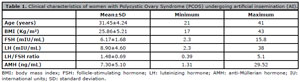
Table 1. Clinical characteristics of women with Polycystic Ovary Syndrome (PCOS) undergoing artificial insemination (AI).
The women in the sample (n=220) were split based on their BMI and serum AMH levels. In terms of BMI (Table 2), no statistically significant differences were found between the traits and reproductive outcomes examined and BMI. However, there was a trend towards fewer conceptions, live births, and term births when the BMI increased.
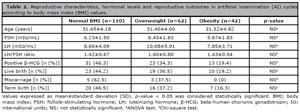
Table 2. Reproductive characteristics, hormonal levels and reproductive outcomes in artificial insemination (AI) cycles according to body mass index (BMI) values.
The sample’s age, BMI, and serum AMH values did not follow a normal distribution. 84.5% (n=186) of the women were under 31 years old, whereas 50% (n=110) had a normal body weight (BMI<25 kg/m2).
Despite 47.2% (n=104) AMH missing results, 13.2% (n=29) were below the 25th AMH percentile (AMH≤4.08 ng/mL), 26.4% (n=58) between the 25th and 75th AMH percentile, and 13.2% (n=29) above the 75th AMH percentile (AMH≥8.99 ng/mL).
In this regard, a correlation study was performed, revealing a significant negative association between BMI and FSH (r=-0.152; p=0.031). The remaining associations were not statistically significant (Table 3).
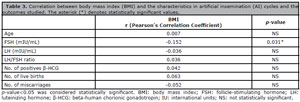
Table 3. Correlation between body mass index (BMI) and the characteristics in artificial insemination (AI) cycles and the outcomes studied. The asterisk (*) denotes statistically significant values.
Table 4 shows that women with PCOS and ‘low’ serum AMH levels are older and have a lower BMI, but this is not statistically significant (p>0.05). However, women with ‘high’ AMH levels are younger (p=0.018), and have a lower FSH value (p=0.026), a higher LH value (‘middle’ vs. ‘high’: p=0.018; ‘low’ vs. ‘high’: p=0.025) and, subsequently, a higher LH/FSH ratio (‘middle’ vs. ‘high’: p=0.006; ‘low’ vs. ‘high’: p<0.001). Women with ‘middle’ AMH levels had somewhat greater reproductive outcomes (number of AIs with positive β-HCG, number of live births, number of miscarriages, and number of term births) than those with ‘low’ or ‘high’ AMH levels, but there were no statistically significant differences.
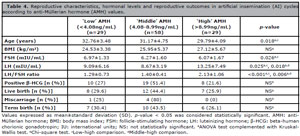
Table 4. Reproductive characteristics, hormonal levels and reproductive outcomes in artificial insemination (AI) cycles according to anti-Müllerian hormone (AMH) values.
Furthermore, there was a significant positive relationship between serum AMH levels, serum LH levels, and the LH/FSH ratio (Table 5). On the other hand, there was an inverse relationship found between blood AMH levels and age and serum FSH levels. There were no significant differences found between serum AMH levels and BMI (r=0.126; p=0.177), the number of AI cycles with positive β-HCG (r=0.026; p=0.783), the number of births alive (r=0.049; p=0.598), or the number of miscarriages (r=-0.061; p=0.515).
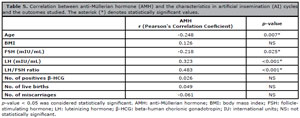
Table 5. Correlation between anti-Müllerian hormone (AMH) and the characteristics in artificial insemination (AI) cycles and the outcomes studied. The asterisk (*) denotes statistically significant values.
To rule out potential confounding factors, a linear regression analysis was conducted between the number of AI cycles with positive β-HCG and age, BMI, and AMH value, yielding a p-value of 0.876.
DISCUSSION
The World Health Organization (WHO) recommends that ART be used as a last resort for treating infertility in women with PCOS (Gao et al., 2022). While the effectiveness of different ART methods has been debated, AI is increasingly being used as a first step before IVF. AI is considered less invasive, more affordable, and painless (Sivanandy & Ha, 2023), even though IVF typically leads to better reproductive outcomes (Bayer et al., 2018). However, there is limited research on how BMI and AMH levels affect the success of AI in women with PCOS, especially in cases where ovulatory issues are present but sperm counts are normal.
Women in this study had an average BMI over 25 kg/m2, indicating they were above the normal weight range. Additionally, they exhibited high serum levels of LH and AMH, along with an increased LH/FSH ratio. These findings are consistent with existing literature on the physical and hormonal characteristics of PCOS women (Sadeghi et al., 2022; Teede et al., 2023). To understand the role of BMI in shaping these hormonal changes, we examined findings from other studies. Research indicates that there are significant differences in FSH, LH, and the LH/FSH ratio between obese and non-obese women (Lal et al., 2017). Specifically, a notable negative correlation exists between BMI and FSH levels in our results as previously documented by another research group (Kiddy et al., 1990). However, while some studies have found that overweight or obese women have lower LH levels (Chen et al., 2018), our study did not find this association. Similarly, we observed no significant relationship between BMI and the LH/FSH ratio, which aligns with previous research (Alnakash & Al-Tae’e, 2007; Saadia, 2020). The relationship between BMI, LH, FSH, the LH/FSH ratio, and AMH in women with PCOS is complex. While there may be some influence of BMI on hormonal levels, the inconsistencies across studies highlight the need for more research. Future studies should focus on understanding the factors that contribute to these relationships, such as insulin resistance and inflammation, to improve treatment options for managing PCOS.
BMI has been identified as a significant predictor of pregnancy outcomes, both in natural conception and following ART (Aydin et al., 2013; Chen et al., 2018). Our investigation observed a trend indicating a decline in the number of pregnancies as BMI increased; however, this trend did not reach statistical significance. This finding aligns with the results of previous studies that have reported similar outcomes (Guan et al., 2021; Sheng et al., 2017; Souter et al., 2011). Moreover, our results corroborate existing literature that indicates no significant differences in live birth rates or miscarriage rates associated with varying BMI levels (Guan et al., 2021; Sheng et al., 2017; Souter et al., 2011).These findings contribute to the broader understanding of how BMI may modulate reproductive outcomes, suggesting that other factors may play a more crucial role in influencing pregnancy success in this population.
AMH presents distinct advantages over other female hormones in reproductive assessments, as its levels remain stable throughout the menstrual cycle, exhibit minimal variability between cycles, and are less influenced by the operator’s skill in measurement (Elgindy et al., 2008). Consequently, evaluating serum AMH levels may serve as a reliable reference for counseling women with PCOS regarding the prognosis of pregnancy outcomes following AI (Li et al., 2010). Our investigation revealed a significant inverse correlation between AMH levels and age, which aligns with existing literature documenting the gradual decline of AMH due to ovarian aging and subsequent deterioration of oocyte quality (Bertone-Johnson et al., 2018; de Kat et al., 2016; Dondik et al., 2017; Gunasheela et al., 2021; Kruszyńska A, Słowińska-Srzednicka, 2017; Li et al., 2010; Tal et al., 2014). This decline in AMH is typically associated with an increase in serum FSH levels, confirming the findings of both our study and earlier research (Bhattacharya et al., 2022; Desforges-Bullet et al., 2010; Dewailly et al., 2020; Guo et al., 2021; Homburg et al., 2013; Li et al., 2010; Tal et al., 2014; Xi et al., 2012). Conversely, our study indicated a positive association between serum AMH and LH levels, which is corroborated by previous investigations (Bhattacharya et al., 2022; Desforges-Bullet et al., 2010; Dewailly et al., 2020; Guo et al., 2021; Homburg et al., 2013; Li et al., 2010; Lin et al., 2011; Piouka et al., 2009; Tal et al., 2014; Vale-Fernandes et al., 2023a; Xi et al., 2012). Additionally, a positive correlation was identified between AMH levels and the LH/FSH ratio. While this ratio is commonly utilized in the diagnosis of PCOS (Le et al., 2019; Tola et al., 2018), its prognostic value for pregnancy outcomes in women undergoing AI remains inadequately explored. Regarding the relationship between BMI and serum AMH levels, our study found a non-significant trend suggesting that women with lower AMH levels tended to have lower BMI. However, this association is not universally acknowledged, as some studies report a positive correlation (Dondik et al., 2017), while others indicate a negative correlation (Cui et al., 2014; Gao et al., 2022; Kriseman et al., 2015; Vagios et al., 2021; Zhang et al., 2023). The variability in findings may be influenced by differences in the age groups studied, suggesting that age could act as a confounding variable in the relationship between AMH and BMI. Overall, these findings underscore the importance of AMH as a potential biomarker for predicting reproductive outcomes in women with PCOS undergoing ART, particularly in the context of AI. Further research is essential to clarify the implications of AMH levels in this population and to explore potential confounding factors that may influence these relationships.
AMH is widely recognized as a key biomarker for assessing ovarian reserve (di Clemente et al., 2022; Rudnicka et al., 2021; Teede et al., 2023), and elevated levels of AMH may correlate with an increased risk of adverse reproductive outcomes (Vale-Fernandes et al., 2023a; Vale-Fernandes et al., 2024). In our analysis, while we observed no significant differences, women classified with ‘low’ and ‘high’ AMH levels demonstrated slightly decreased rates of inseminations resulting in positive β-HCG when compared to women with ‘middle’ AMH levels. In a study involving 360 infertile women from France without a diagnosis of PCOS, pregnancy rates following a single cycle of AI were evaluated based on AMH percentiles. Specifically, participants were stratified according to the 20th and 80th percentiles of AMH, which correspond to approximately 1 ng/mL and 4.5 ng/mL, respectively. The authors reported no statistically significant differences in pregnancy rates among the various AMH groups (Lamazou et al., 2012). Conversely, another study indicated that women with serum AMH levels equal to or exceeding 2.3 ng/mL experienced significantly higher pregnancy rates compared to those with lower AMH levels (Moro et al., 2016). Furthermore, our data revealed that women with ‘middle’ AMH levels experienced a marginally higher number of live births and miscarriages; however, these differences were not statistically significant. This observation contrasts with findings from other studies suggesting that higher AMH concentrations may be associated with an improved likelihood of achieving a live birth (Stalzer et al., 2023). In the context of preterm birth, existing literature indicates an elevated risk in women with PCOS (Boomsma et al., 2006; Kjerulff et al., 2011; Qin et al., 2013); however, our investigation found no association between AMH levels and the incidence of term deliveries. These results align with prior research that suggests a biological spectrum of normalcy: ‘low’ AMH levels are indicative of diminished ovarian reserve, while ‘high’ AMH levels may be associated with increased disease severity and poorer reproductive prognosis (Guo et al., 2021; La Marca et al., 2004; Lin et al., 2011; Piouka et al., 2009; Sun et al., 2021; Tal et al., 2020; Tal et al., 2014; Vale-Fernandes et al., 2023a). One possible explanation for these findings is that elevated AMH concentrations may lead to aberrant folliculogenesis, alterations in endometrial receptivity, and placental dysfunction (Tal et al., 2020; Vale-Fernandes et al., 2024). Overall, our findings contribute to the complex understanding of AMH as a prognostic biomarker in reproductive outcomes for women undergoing AI, particularly those affected by PCOS. Further longitudinal studies are warranted to elucidate the nuanced relationships between AMH levels, ovarian reserve, and reproductive outcomes across diverse populations.
Despite the established biological reference range for AMH levels, numerous studies have endeavored to define specific cut-off values for both the diagnosis of PCOS and the assessment of reproductive prognosis. Our research group has previously reported proposed cut-off thresholds for healthy women that may enhance ovarian response following gamete donation (Oliveira et al., 2023; Vale-Fernandes et al., 2023b) and for infertile women undergoing IVF treatments to predict poor and high response to stimulation (Reis et al., 2024). In the context of IVF, several studies have identified cut-off levels of AMH that optimize its diagnostic utility in women with PCOS. For instance, a study conducted in India established a cut-off of 3.34 ng/mL, indicating a sensitivity of 98% and a specificity of 93% for predicting ovarian response (Saikumar et al., 2013). Additionally, another investigation determined that an AMH cut-off of 4.9 ng/mL exhibited the strongest correlation between sensitivity and specificity (Wiweko et al., 2014). While there has been increasing research into the diagnostic and prognostic roles of AMH in the context of IVF cycles for women with PCOS, there remains a significant gap in knowledge regarding its implications for AI. The present study represents a pioneering effort to explore the relationship between serum AMH levels and reproductive outcomes in women with PCOS undergoing AI. Given the importance of AMH as a potential biomarker in reproductive medicine, further investigation is warranted to elucidate its prognostic value in this specific setting.
This study contains several limits and strengths. The use of percentiles rather than absolute AMH scores improves the generalizability of the findings. The study’s biggest limitation is its retrospective nature, which means that the analysis is based on previously collected data, making it impossible to acquire more information on specific variables. Furthermore, AMH levels were only routinely obtained starting in 2017, limiting the sample size on this parameter (there is 47.27% missing AMH values - out of the total sample of 220 participants, AMH values were documented and assessed in 116 women). Another limitation is that the study was conducted in a single public center with a predominantly Caucasian population, failing to account for racial/ethnic differences in AMH levels, as well as variations caused by genetic and environmental factors such as obesity, smoking, and vitamin D deficiency (Iliodromiti et al., 2013; Tal & Seifer, 2013). This study was conducted in a public center where AI treatments are restricted to women under the age of 42, and IVF is limited to those under 40. Consequently, the sample population is confined to a relatively narrow age range, which constrains the ability to perform stratified analyses based on chronological age. The study did not address the differences between having one or two growing follicles, which could introduce selection analyses bias and covered both natural and stimulated insemination cycles, but did not individually analyze the various ovulation-inducing drugs. Several trials, however, have demonstrated that stimulation with clomiphene citrate, letrozole, and gonadotropins was equally effective and safe in promoting conception in women with PCOS (Huang et al., 2018). Although all men met the minimum insemination criteria mentioned in the methodology, a comparative analysis based on sperm profile was not carried out, which constitutes a limitation to consider. All individuals presented a normal sperm count in the initial evaluation according to the WHO criteria (Cooper et al., 2010) and according some authors AI is a well-supported first-line treatment for moderate male factor subfertility and is considered cost-effective (Ombelet et al., 2003). However, identifying specific semen parameters that predict pregnancy outcomes after AI is challenging due to inconsistencies in semen analysis standards and other influencing factors, such as patient selection and ovarian stimulation methods (Ombelet et al., 2003). While research indicates that strict sperm morphology criteria and inseminating motile sperm count are critical for AI success, a definitive threshold for optimal semen quality remains undetermined, although rates appear to decline with fewer than 5% normal sperm and an inseminating motile sperm count below 1 million (Ombelet et al., 2003). A significant limitation of the present study pertains to the nature of the data that can be analyzed within the context of AI cycles. These cycles represent first-line techniques in ART, characterized by their relatively straightforward and minimally invasive nature. Consequently, specific details regarding oocyte and embryonic characteristics remain unknown. Nevertheless, it is important to note that this study encompasses a substantial cohort of treatments involving women diagnosed with PCOS undergoing AI. The findings yield valuable insights into the reproductive prognosis for this population, which often exhibits a poor reproductive outlook even in the context of IVF treatments (Vale-Fernandes et al., 2023a).
CONCLUSION
While this study did not find statistically significant results, it suggests a trend where higher BMI is linked to fewer pregnancies in infertile women with PCOS undergoing AI. This supports the idea that BMI could be an important predictor of pregnancy outcomes, highlighting the need for continued weight loss efforts in this group.
This study further elucidates women with ‘low’ and ‘high’ AMH levels exhibit reduced rates of conception and live births, although these findings did not achieve statistical significance. It appears that there exists a median range of biological normality concerning AMH levels. Consequently, one may infer that both ‘low’ and ‘high’ AMH levels may correlate with an unfavorable reproductive prognosis in women with PCOS undergoing AI, consistent with our previous research findings in the context of IVF (Vale-Fernandes et al., 2023a).
Acknowledgments
The authors would like to thank Liliana Fonseca, MD, Endocrinologist, for development of the database, Carolina Lemos for statistical review and the staff of the Center for Medically Assisted Procreation/Public Gamete Bank, Gynaecology Department, Centro Materno-Infantil do Norte Dr. Albino Aroso (CMIN) and Unidade Local de Saúde de Santo António (ULSSA), for collaborating.
REFERENCES
Allahbadia GN. Intrauterine Insemination: Fundamentals Revisited. J Obstet Gynaecol India. 2017;67:385-92. PMID: 29162950 DOI: 10.1007/s13224-017-1060-x Medline
Aydin Y, Hassa H, Oge T, Tokgoz VY. Factors predictive of clinical pregnancy in the first intrauterine insemination cycle of 306 couples with favourable female patient characteristics. Hum Fertil (Camb). 2013;16:286-90. PMID: 24171641 DOI: 10.3109/14647273.2013.841328 Medline
Bertone-Johnson ER, Manson JE, Purdue-Smithe AC, Steiner AZ, Eliassen AH, Hankinson SE, Rosner BA, Whitcomb BW. Anti-Müllerian hormone levels and incidence of early natural menopause in a prospective study. Hum Reprod. 2018;33:1175-82. PMID: 29659835 DOI: 10.1093/humrep/dey077 Medline
Boomsma CM, Eijkemans MJ, Hughes EG, Visser GH, Fauser BC, Macklon NS. A meta-analysis of pregnancy outcomes in women with polycystic ovary syndrome. Hum Reprod Update. 2006;12:673-83. PMID: 16891296 DOI: 10.1093/humupd/dml036 Medline
Chen R, Chen S, Liu M, He H, Xu H, Liu H, Du H, Wang W, Xia X, Liu J. Pregnancy outcomes of PCOS overweight/obese patients after controlled ovarian stimulation with the GnRH antagonist protocol and frozen embryo transfer. Reprod Biol Endocrinol. 2018;16:36. PMID: 29636081 DOI: 10.1186/s12958-018-0352-z Medline
Collée J, Mawet M, Tebache L, Nisolle M, Brichant G. Polycystic ovarian syndrome and infertility: overview and insights of the putative treatments. Gynecol Endocrinol. 2021;37:869-74. PMID: 34338572 DOI: 10.1080/09513590.2021.1958310 Medline
Cooper TG, Noonan E, von Eckardstein S, Auger J, Baker HW, Behre HM, Haugen TB, Kruger T, Wang C, Mbizvo MT, Vogelsong KM. World Health Organization reference values for human semen characteristics. Hum Reprod Update. 2010;16:231-45. PMID: 19934213 DOI: 10.1093/humupd/dmp048 Medline
Cui Y, Shi Y, Cui L, Han T, Gao X, Chen ZJ. Age-specific serum antimüllerian hormone levels in women with and without polycystic ovary syndrome. Fertil Steril. 2014;102:230-236e232. PMID: 24746743 DOI: 10.1016/j.fertnstert.2014.03.032 Medline
de Kat AC, van der Schouw YT, Eijkemans MJ, Herber-Gast GC, Visser JA, Verschuren WM, Broekmans FJ. Back to the basics of ovarian aging: a population-based study on longitudinal anti-Müllerian hormone decline. BMC Med. 2016;14:151. PMID: 27716302 DOI: 10.1186/s12916-016-0699-y Medline
Desforges-Bullet V, Gallo C, Lefebvre C, Pigny P, Dewailly D, Catteau-Jonard S. Increased anti-Müllerian hormone and decreased FSH levels in follicular fluid obtained in women with polycystic ovaries at the time of follicle puncture for in vitro fertilization. Fertil Steril. 2010;94:198-204. PMID: 19361798 DOI: 10.1016/j.fertnstert.2009.03.004 Medline
Dewailly D, Barbotin AL, Dumont A, Catteau-Jonard S, Robin G. Role of Anti-Müllerian Hormone in the Pathogenesis of Polycystic Ovary Syndrome. Front Endocrinol (Lausanne). 2020;11:641. DOI: https://doi.org/10.3389/fendo.2020.00641 PMID: 33013710 DOI: 10.3389/fendo.2020.00641 Medline
di Clemente N, Racine C, Rey RA. Anti-Müllerian Hormone and Polycystic Ovary Syndrome in Women and Its Male Equivalent. Biomedicines. 2022;10:2506. PMID: 36289767 DOI: 10.3390/biomedicines10102506 Medline
Dondik Y, Virji N, Butler TS, Gaskins JT, Pagidas K, Sung L. The Value of Anti-Müllerian Hormone in Predicting Clinical Pregnancy After Intrauterine Insemination. J Obstet Gynaecol Can. 2017;39:880-5. PMID: 28647445 DOI: 10.1016/j.jogc.2017.01.029 Medline
Elgindy EA, El-Haieg DO, El-Sebaey A. Anti-Müllerian hormone: correlation of early follicular, ovulatory and midluteal levels with ovarian response and cycle outcome in intracytoplasmic sperm injection patients. Fertil Steril. 2008;89:1670-6. PMID: 17658520 DOI: 10.1016/j.fertnstert.2007.05.040 Medline
Evans MB, Stentz NC, Richter KS, Schexnayder B, Connell M, Healy MW, Devine K, Widra E, Stillman R, DeCherney AH, Hill MJ. Mature Follicle Count and Multiple Gestation Risk Based on Patient Age in Intrauterine Insemination Cycles With Ovarian Stimulation. Obstet Gynecol. 2020;135:1005-14. PMID: 32282611 DOI: 10.1097/AOG.0000000000003795 Medline
Gao Y, Jiang S, Chen L, Xi Q, Li W, Zhang S, Kuang Y. The pregnancy outcomes of infertile women with polycystic ovary syndrome undergoing intrauterine insemination with different attempts of previous ovulation induction. Front Endocrinol (Lausanne). 2022;13:922605. PMID: 36093093 DOI: 10.3389/fendo.2022.922605 Medline
Guan HJ, Pan LQ, Song H, Tang HY, Tang LS. Predictors of pregnancy after intrauterine insemination in women with polycystic ovary syndrome. J Int Med Res. 2021;49:3000605211018600. PMID: 34038202 DOI: 10.1177/03000605211018600 Medline
Gunasheela D, Murali R, Appaneravanda LC, Gerstl B, Kumar A, Sengeetha N, Nayak H, Chandrikadevi PM. Age-Specific Distribution of Serum Anti-Mullerian Hormone and Antral Follicle Count in Indian Infertile Women. J Hum Reprod Sci. 2021;14:372-9. PMID: 35197682 DOI: 10.4103/jhrs.jhrs_65_21 Medline
Guo Y, Liu S, Hu S, Li F, Jin L. High Serum Anti-Müllerian Hormone Concentrations Are Associated With Poor Pregnancy Outcome in Fresh IVF/ICSI Cycle but Not Cumulative Live Birth Rate in PCOS Patients. Front Endocrinol (Lausanne). 2021;12:673284. PMID: 34122349 DOI: 10.3389/fendo.2021.673284 Medline
Homburg R, Ray A, Bhide P, Gudi A, Shah A, Timms P, Grayson K. The relationship of serum anti-Mullerian hormone with polycystic ovarian morphology and polycystic ovary syndrome: a prospective cohort study. Hum Reprod. 2013;28:1077-83. PMID: 23377771 DOI: 10.1093/humrep/det015 Medline
Huang S, Du X, Wang R, Li R, Wang H, Luo L, O’Leary S, Qiao J, Mol BWJ. Ovulation induction and intrauterine insemination in infertile women with polycystic ovary syndrome: A comparison of drugs. Eur J Obstet Gynecol Reprod Biol. 2018;231:117-21. PMID: 30366343 DOI: 10.1016/j.ejogrb.2018.08.002 Medline
Iliodromiti S, Kelsey TW, Anderson RA, Nelson SM. Can anti-Mullerian hormone predict the diagnosis of polycystic ovary syndrome? A systematic review and meta-analysis of extracted data. J Clin Endocrinol Metab. 2013;98:3332-40. PMID: 23775353 DOI: 10.1210/jc.2013-1393 Medline
Kiddy DS, Sharp PS, White DM, Scanlon MF, Mason HD, Bray CS, Polson DW, Reed MJ, Franks S. Differences in clinical and endocrine features between obese and non-obese subjects with polycystic ovary syndrome: an analysis of 263 consecutive cases. Clin Endocrinol (Oxf). 1990;32:213-20. PMID: 2112067 DOI: 10.1111/j.1365-2265.1990.tb00857.x Medline
Kjerulff LE, Sanchez-Ramos L, Duffy D. Pregnancy outcomes in women with polycystic ovary syndrome: a metaanalysis. Am J Obstet Gynecol. 2011;204:558.e1-6. PMID: 21752757 DOI: 10.1016/j.ajog.2011.03.021 Medline
Kriseman M, Mills C, Kovanci E, Sangi-Haghpeykar H, Gibbons W. Antimullerian hormone levels are inversely associated with body mass index (BMI) in women with polycystic ovary syndrome. J Assist Reprod Genet. 2015;32:1313-6. PMID: 26238387 DOI: 10.1007/s10815-015-0540-0 Medline
Kruszyńska A, Słowińska-Srzednicka J. Anti-Müllerian hormone (AMH) as a good predictor of time of menopause. Prz Menopauzalny. 2017;16:47-50. PMID: 28721129 DOI: 10.5114/pm.2017.68591 Medline
La Marca A, Orvieto R, Giulini S, Jasonni VM, Volpe A, De Leo V. Mullerian-inhibiting substance in women with polycystic ovary syndrome: relationship with hormonal and metabolic characteristics. Fertil Steril. 2004;82:970-2. PMID: 15482785 DOI: 10.1016/j.fertnstert.2004.06.001 Medline
Lamazou F, Fuchs F, Genro V, Malagrida L, Torre A, Albert M, Wainer R. Valeur prédictive de l’hormone antimüllérienne sur les issues des inséminations intra-utérines [Intra-uterine insemination outcomes according to the serum AMH level on day 3]. J Gynecol Obstet Biol Reprod (Paris). 2012;41:122-7. French. PMID: 21962540 DOI: 10.1016/j.jgyn.2011.08.005 Medline
Le MT, Le VNS, Le DD, Nguyen VQH, Chen C, Cao NT. Exploration of the role of anti-Mullerian hormone and LH/FSH ratio in diagnosis of polycystic ovary syndrome. Clin Endocrinol (Oxf). 2019;90:579-85. DOI: https://doi.org/10.1111/cen.13934 PMID: 30636332 DOI: 10.1111/cen.13934 Medline
Li HW, Yeung WS, Lau EY, Ho PC, Ng EH. Evaluating the performance of serum antimullerian hormone concentration in predicting the live birth rate of controlled ovarian stimulation and intrauterine insemination. Fertil Steril. 2010;94:2177-81. PMID: 20171627 DOI: 10.1016/j.fertnstert.2009.12.059 Medline
Lin YH, Chiu WC, Wu CH, Tzeng CR, Hsu CS, Hsu MI. Antimüllerian hormone and polycystic ovary syndrome. Fertil Steril. 2011;96:230-5. PMID: 21549367 DOI: 10.1016/j.fertnstert.2011.04.003 Medline
Moreira MV, Vale-Fernandes E, Albergaria IC, Alves MG, Monteiro MP. Follicular fluid composition and reproductive outcomes of women with polycystic ovary syndrome undergoing in vitro fertilization: A systematic review. Rev Endocr Metab Disord. 2023;24:1045-73. PMID: 37493841 DOI: 10.1007/s11154-023-09819-z Medline
Moro F, Tropea A, Scarinci E, Leoncini E, Boccia S, Federico A, Alesiani O, Lanzone A, Apa R. Anti-Müllerian hormone concentrations and antral follicle counts for the prediction of pregnancy outcomes after intrauterine insemination. Int J Gynaecol Obstet. 2016;133:64-8. PMID: 26873125 DOI: 10.1016/j.ijgo.2015.08.021 Medline
Oliveira TFS, Barreiro M, Tomé A, Vale-Fernandes E. Female Reproductive Health - study of an egg donor population. JBRA Assist Reprod. 2023;27:638-43. PMID: 37850860 DOI: 10.5935/1518-0557.20230046 Medline
Ombelet W, Deblaere K, Bosmans E, Cox A, Jacobs P, Janssen M, Nijs M. Semen quality and intrauterine insemination. Reprod Biomed Online. 2003;7:485-92. PMID: 14656412 DOI: 10.1016/S1472-6483(10)61894-9 Medline
Piouka A, Farmakiotis D, Katsikis I, Macut D, Gerou S, Panidis D. Anti-Mullerian hormone levels reflect severity of PCOS but are negatively influenced by obesity: relationship with increased luteinizing hormone levels. Am J Physiol Endocrinol Metab. 2009;296:E238-43. PMID: 18957615 DOI: 10.1152/ajpendo.90684.2008 Medline
Qin JZ, Pang LH, Li MJ, Fan XJ, Huang RD, Chen HY. Obstetric complications in women with polycystic ovary syndrome: a systematic review and meta-analysis. Reprod Biol Endocrinol. 2013;11:56. PMID: 23800002 DOI: 10.1186/1477-7827-11-56 Medline
Reis AB, Leal C, Barreiro M, Tomé A, Vale-Fernandes E. Anti-Müllerian hormone as a predictor of the number of oocytes obtained during in vitro fertilization treatments. JBRA Assist Reprod. 2024;28:597-603. PMID: 39311652 DOI: 10.5935/1518-0557.20240049 Medline
Rotterdam ESHRE/ASRM-Sponsored PCOS consensus workshop group. Revised 2003 consensus on diagnostic criteria and long-term health risks related to polycystic ovary syndrome (PCOS). Hum Reprod. 2004;19:41-7. PMID: 14688154 DOI: 10.1093/humrep/deh098 Medline
Rudnicka E, Kunicki M, Calik-Ksepka A, Suchta K, Duszewska A, Smolarczyk K, Smolarczyk R. Anti-Müllerian Hormone in Pathogenesis, Diagnostic and Treatment of PCOS. Int J Mol Sci. 2021;22:12507. DOI: https://doi.org/10.3390/ijms222212507 PMID: 34830389 DOI: 10.3390/ijms222212507 Medline
Saadia Z. Follicle Stimulating Hormone (LH: FSH) Ratio in Polycystic Ovary Syndrome (PCOS) - Obese vs. Non- Obese Women. Med Arch. 2020;74:289-93. PMID: 33041447 DOI: 10.5455/medarh.2020.74.289-293 Medline
Sadeghi HM, Adeli I, Calina D, Docea AO, Mousavi T, Daniali M, Nikfar S, Tsatsakis A, Abdollahi M. Polycystic Ovary Syndrome: A Comprehensive Review of Pathogenesis, Management, and Drug Repurposing. Int J Mol Sci. 2022;23:583. PMID: 35054768 DOI: 10.3390/ijms23020583 Medline
Saikumar P, Selvi VK, Prabhu K, Venkatesh P, Krishna P. Anti mullerian hormone: a potential marker for recruited non growing follicle of ovarian pool in women with polycystic ovarian syndrome. J Clin Diagn Res. 2013;7:1866-9. PMID: 24179884 DOI: 10.7860/JCDR/2013/5530.3337 Medline
Sheng Y, Lu G, Liu J, Liang X, Ma Y, Zhang X, Zhang S, Sun Y, Sun Y, Chen W, Fang W, Chen Z. Effect of body mass index on the outcomes of controlled ovarian hyperstimulation in Chinese women with polycystic ovary syndrome: a multicenter, prospective, observational study. J Assist Reprod Genet. 2017;34:61-70. PMID: 27817037 DOI: 10.1007/s10815-016-0830-1 Medline
Sivanandy MS, Ha SK. The Role of Serum Anti-Mullerian Hormone Measurement in the Diagnosis of Polycystic Ovary Syndrome. Diagnostics (Basel). 2023;13:907. PMID: 36900051 DOI: 10.3390/diagnostics13050907 Medline
Souter I, Baltagi LM, Kuleta D, Meeker JD, Petrozza JC. Women, weight, and fertility: the effect of body mass index on the outcome of superovulation/intrauterine insemination cycles. Fertil Steril. 2011;95:1042-7. PMID: 21195401 DOI: 10.1016/j.fertnstert.2010.11.062 Medline
Stalzer A, Seybold D, Gantt P, Broce M, Cronkright A. Anti-Müllerian Hormone: A Predictor of Successful Intrauterine Insemination. Cureus. 2023;15:e47200. PMID: 38022255 DOI: 10.7759/cureus.47200 Medline
Sun TC, Zhou SJ, Song LL, Li JH, Chen X, Tian L. High anti-Müllerian hormone levels might not reflect the likelihood of clinical pregnancy rate in IVF/ICSI treatment. JBRA Assist Reprod. 2021;25:266-71. PMID: 33710839 DOI: 10.5935/1518-0557.20200094 Medline
Tal R, Seifer CM, Khanimov M, Seifer DB, Tal O. High serum Antimullerian hormone levels are associated with lower live birth rates in women with polycystic ovarian syndrome undergoing assisted reproductive technology. Reprod Biol Endocrinol. 2020;18:20. PMID: 32156287 DOI: 10.1186/s12958-020-00581-4 Medline
Tal R, Seifer DB. Potential mechanisms for racial and ethnic differences in antimullerian hormone and ovarian reserve. Int J Endocrinol. 2013;2013:818912. PMID: 24348557 DOI: 10.1155/2013/818912 Medline
Tal R, Seifer DB, Khanimov M, Malter HE, Grazi RV, Leader B. Characterization of women with elevated antimüllerian hormone levels (AMH): correlation of AMH with polycystic ovarian syndrome phenotypes and assisted reproductive technology outcomes. Am J Obstet Gynecol. 2014;211:59 e1-8. PMID: 24593938 DOI: 10.1016/j.ajog.2014.02.026 Medline
Teede HJ, Tay CT, Laven JJE, Dokras A, Moran LJ, Piltonen TT, Costello MF, Boivin J, Redman LM, Boyle JA, Norman RJ, Mousa A, Joham AE. Recommendations From the 2023 International Evidence-based Guideline for the Assessment and Management of Polycystic Ovary Syndrome. J Clin Endocrinol Metab. 2023;108:2447-69. PMID: 37580314 DOI: 10.1210/clinem/dgad463 Medline
Tola H, Abbas M, Alhassan EA, Shrif NE, Rida M. Assessment of the Role of the Anti-Mullerian Hormone, Luteinizing Hormone/Follicle Stimulating Hormone Ratio in the Diagnosis of Polycystic Ovary Syndrome in Sudanese Women. Open Access Maced J Med Sci. 2018;6:1244-7. PMID: 30087729 DOI: 10.3889/oamjms.2018.260 Medline
Vagios S, James KE, Sacha CR, Hsu JY, Dimitriadis I, Bormann CL, Souter I. A patient-specific model combining antimüllerian hormone and body mass index as a predictor of polycystic ovary syndrome and other oligo-anovulation disorders. Fertil Steril. 2021;115:229-37. PMID: 33077236 DOI: 10.1016/j.fertnstert.2020.07.023 Medline
Vale-Fernandes E, Barreiro M, Leal C, Macedo RZ, Tomé A, Monteiro MP. Elevated Anti-Müllerian Hormone as a Prognostic Factor for Poor Outcomes of In Vitro Fertilization in Women with Polycystic Ovary Syndrome. Biomedicines. 2023a;11:3150. PMID: 38137371 DOI: 10.3390/biomedicines11123150 Medline
Vale-Fernandes E, Barreiro M, Monteiro MP. Candidates selection for oocyte donation in a public gamete bank-Predictive value of the anti-Müllerian hormone. Porto Biomed J. 2023b;8:e199. PMID: 37213250 DOI: 10.1097/j.pbj.0000000000000199 Medline
Vale-Fernandes E, Moreira MV, Rodrigues B, Pereira SS, Leal C, Barreiro M, Tomé A, Monteiro MP. Anti-Müllerian hormone a surrogate of follicular fluid oxidative stress in polycystic ovary syndrome? Front Cell Dev Biol. 2024;12:1408879. PMID: 39011395 DOI: 10.3389/fcell.2024.1408879 Medline
Wiweko B, Maidarti M, Priangga MD, Shafira N, Fernando D, Sumapraja K, Natadisastra M, Hestiantoro A. Anti-mullerian hormone as a diagnostic and prognostic tool for PCOS patients. J Assist Reprod Genet. 2014;31:1311-6. PMID: 25119192 DOI: 10.1007/s10815-014-0300-6 Medline
Xi W, Gong F, Lu G. Correlation of serum Anti-Müllerian hormone concentrations on day 3 of the in vitro fertilization stimulation cycle with assisted reproduction outcome in polycystic ovary syndrome patients. J Assist Reprod Genet. 2012;29:397-402. PMID: 22382641 DOI: 10.1007/s10815-012-9726-x Medline
Zhang M, Liu X, Xu X, Li J, Bu Z, Yang Q, Shi H, Niu W, Dai S, Liang Y, Guo Y. The reference value of anti-Müllerian hormone to diagnose polycystic ovary syndrome is inversely associated with BMI: a retrospective study. Reprod Biol Endocrinol. 2023;21:15. PMID: 36726106 DOI: 10.1186/s12958-023-01064-y Medline