JBRA Assist. Reprod. 2025;29(2):333-337
ORIGINAL ARTICLE
doi: 10.5935/1518-0557.20250014
Investigation of the Relationship Between Clinical Features and the Sonographic Appearance of the Ovaries with the Delta Neutrophil Index in Polycystic Ovary Syndrome
1University of Health Sciences Ankara City Hospital, Gynecology and Obstetrics Department, Ankara, Turkey
2Ankara University Faculty of Medicine, Gynecology and Obstetrics Department, Ankara, Turkey
3Ankara Mamak State Hospital, Radiology Department, Ankara, Turkey
CONFLICT OF INTEREST
The authors have no conflicts of interest relevant to this article.
ABSTRACT
Objective: Polycystic Ovary Syndrome (PCOS) is a common endocrine disorder in women of reproductive age, characterized by metabolic, reproductive, and inflammatory disturbances. This study aimed to investigate the relationship between clinical features, the sonographic appearance of the ovaries, and the Delta Neutrophil Index (DNI) in women with PCOS.
Methods: This retrospective study included 60 women diagnosed with PCOS and 60 healthy controls. Clinical, laboratory, and ultrasonographic data were collected and analyzed. The Delta Neutrophil Index (DNI), neutrophil/lymphocyte ratio (NLR), platelet/lymphocyte ratio (PLR), and ultrasonographic parameters, including ovarian stroma/total area ratio, and ovarian volume, were compared between the groups.
Results: The study found that DNI, NLR, and PLR were significantly higher in the PCOS group compared to the control group, indicating a chronic low-grade inflammatory state. Significant differences were also observed in ovarian stroma/total area ratio, and ovarian volume between the groups. Additionally, a statistically significant relationship between acne and DNI was found in the PCOS group, while other symptoms such as infertility, hirsutism, and hair loss did not show a significant correlation with DNI.
Conclusions: This study demonstrates a clear relationship between elevated inflammatory markers and ovarian morphology in PCOS. The findings suggest that inflammation plays a significant role in the pathophysiology of PCOS, underscoring the importance of incorporating anti-inflammatory treatment strategies in the clinical management of the disease.
Keywords: PCOS, infertility, ovarian volume, delta neutrophil index, hirsutism
INTRODUCTION
Polycystic Ovary Syndrome (PCOS) is one of the most common endocrine disorders in women of reproductive age, characterized by anovulation, hyperandrogenism, and polycystic ovary morphology (Amsterdam ESHRE/ASRM-Sponsored 3rd PCOS Consensus Workshop Group, 2012). This syndrome adversely affects not only reproductive health but also metabolic and psychological well-being (Azziz et al., 2004). Women with PCOS commonly experience metabolic complications such as insulin resistance, dyslipidemia, obesity, and increased cardiovascular risk (Teede et al., 2018). Additionally, clinical symptoms such as infertility, hirsutism, acne, hair loss, and menstrual irregularities are frequently observed in these patients (Goodarzi et al., 2011).
Although the pathogenesis of PCOS is not yet fully understood, it is believed that the syndrome is associated with chronic low-grade inflammation (Rotterdam ESHRE/ASRM-Sponsored PCOS Consensus Workshop Group, 2004). In recent years, there has been an increase in studies investigating the use of hematological markers to evaluate this inflammatory response (Kelly et al., 2001). One such parameter is the delta neutrophil index (DNI), which measures the difference between neutrophil precursors and mature neutrophils and is considered a biomarker reflecting systemic inflammation (Kayacık Günday & Yılmazer, 2024). The role of DNI as an indicator of increased inflammatory response in women with PCOS, and its relationship with the clinical characteristics of the disease, is still under investigation (Barry et al., 2014; Azziz et al., 2006).
Furthermore, ultrasonographic parameters such as ovarian artery Doppler, ovarian stroma/total area ratio, and ovarian volume in PCOS patients provide significant data to better understand the clinical features of this syndrome (Michele et al., 2025). Ovarian artery Doppler measurements are particularly used to evaluate ovarian blood flow, and significant differences have been observed in these values in PCOS patients (Thessaloniki ESHRE/ASRM-Sponsored PCOS Consensus Workshop Group, 2008). The ovarian stroma/total area ratio and ovarian volume are also increased in women with PCOS, and statistically significant results have been obtained compared to the control group (Dewailly et al., 2014). These ultrasonographic parameters play an important role in the diagnosis of PCOS and in monitoring the progression of the disease.
The primary aim of this study is to compare delta neutrophil index values between women with PCOS and healthy individuals. Secondly, the relationship between delta neutrophil index and clinical symptoms such as infertility, hirsutism, acne, hair loss, and menstrual irregularities in women with PCOS will be examined. In addition, the differences in ultrasonographic parameters such as ovarian artery Doppler, ovarian stroma/total area ratio, and ovarian volume between PCOS patients and the control group will also be evaluated. These findings are expected to provide valuable insights for the clinical management and development of treatment strategies for PCOS.
MATERIALS AND METHODS
This retrospective study includes the analysis of the clinical, laboratory, and ultrasonographic findings of 60 women diagnosed with PCOS and 60 healthy individuals in the control group. The study was conducted with local ethics committee approval and in accordance with the Helsinki Declaration.
Study Group Selection
The diagnosis of PCOS was based on the 2003 Rotterdam criteria (Rotterdam ESHRE/ASRM-Sponsored PCOS Consensus Workshop Group, 2004). The study group was selected from women diagnosed with PCOS in our hospital between 2020 and 2023. The control group was composed of healthy individuals with similar demographic characteristics such as age and body mass index (BMI). None of the individuals in the control group had any endocrine or metabolic diseases.
Data Collection
The clinical data of the patients were retrospectively collected from the hospital database. Demographic data, BMI, menstrual regularity, hirsutism, acne, hair loss, and other symptoms were recorded. Laboratory data included delta neutrophil index (DNI), complete blood count (CBC) parameters, and ultrasonographic findings (antral folicle count (AFC), ovarian stroma/total area ratio, and ovarian volume). The delta neutrophil index was calculated from peripheral blood samples using the formula (% band neutrophil + % segmented neutrophil) / % lymphocyte.
Ultrasonographic Evaluation
Transvaginal ultrasound was used to measure AFC and ovarian volume. The ovarian volume, ovarian stroma/total area ratio were calculated from ultrasound images, and AFC was also recorded. All ultrasonographic measurements were performed by an experienced radiologist.
Statistical Analysis
The data were analyzed using SPSS (Statistical Package for the Social Sciences) version 25.0. The normality of data distribution was assessed using the Shapiro-Wilk test. Normally distributed data were presented as mean±standard deviation (Mean±SD). Group comparisons for continuous variables were performed using the independent sample t-test or Mann-Whitney U test. A p-value of <0.05 was considered statistically significant.
RESULTS
In this retrospective study, clinical, laboratory, and ultrasonographic data were compared between 60 women with Polycystic Ovary Syndrome (PCOS) and 60 healthy individuals in the control group.
Demographic Data and Clinical Findings
The mean age of the patients in the PCOS group was 28.4±5.2 years, while the mean age of the individuals in the control group was 27.9±4.8 years, with no significant difference between the groups in terms of age and BMI (p>0.05). The most common clinical symptoms in the PCOS group were hirsutism (60%), acne (43%), hair loss (50%), and menstrual irregularities (73%).
Delta Neutrophil Index and Complete Blood Count Parameters
The delta neutrophil index (DNI) was significantly higher in the PCOS group compared to the control group (p=0.04). The neutrophil/lymphocyte ratio (NLR) was also significantly higher in the PCOS group compared to the control group (p=0.043). Platelet count was 314.4±81.2 in the PCOS group and 290±67.85 in the control group, with this difference also being statistically significant (p=0.036). There was no significant difference between the groups in terms of lymphocyte count (p=0.059). However, the platelet/lymphocyte ratio (PLR) was 143.2±56.42 in the PCOS group and 117.2±54.42 in the control group, with this difference being statistically significant (p=0.023) (Table 1).
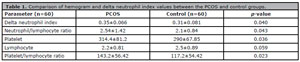
Table 1. Comparison of hemogram and delta neutrophil index values between the PCOS and control groups.
Relationship Between Symptoms and Delta Neutrophil Index
When evaluated in terms of symptoms, a statistically significant relationship was found between the presence of acne and the delta neutrophil index in the PCOS group (p=0.001). Patients with acne had a higher delta neutrophil index. There was no significant relationship between delta neutrophil index and infertility, hirsutism, hair loss, or menstrual irregularities (Table 2).
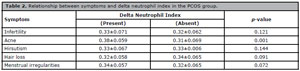
Table 2. Relationship between symptoms and delta neutrophil index in the PCOS group.
Ultrasonographic Findings
A total of 120 patients were included, with 60 in the PCOS group and 60 in the control group. The parameters evaluated include the mean ovarian stromal area relative to the ovarian area, mean ovarian volume, and mean antral follicle count. The results are summarized in Table 3.

Table 3. Ultrasonographic findings between the PCOS and control groups.
Mean Ovarian Stromal Area/Ovarian Area
The mean ovarian stromal area to ovarian area ratio was significantly higher in the PCOS group (0.44±0.21) compared to the control group (0.32±0.11), with a p-value of <0.001. This indicates a significant increase in the stromal area in patients with PCOS, suggesting that the ovarian stroma is more prominent relative to the total ovarian area in this population.
Mean Ovarian Volume
The mean ovarian volume was also significantly greater in the PCOS group (12.2±2.1cm3) compared to the control group (8.8±0.8 cm3), with a p-value of <0.001. This finding reflects the characteristic enlargement of the ovaries often observed in PCOS patients, which is typically attributed to the presence of multiple follicles and increased stromal tissue.
Mean Antral Follicle Count
Additionally, the mean antral follicle count was significantly higher in the PCOS group (14.4±6.1) compared to the control group (7.1±5.2), with a p-value of <0.001. This result underscores the hyperandrogenic state and disrupted follicular development commonly associated with PCOS, where an increased number of antral follicles is noted.
DISCUSSION
PCOS is a common endocrine disorder in women that affects multiple systems, including reproductive health and metabolic processes. In our study, we found that inflammatory parameters such as DNI, NLR, platelet count, and PLR were significantly higher in women with PCOS compared to the control group. These results support the presence of chronic low-grade inflammation in women with PCOS, which is consistent with findings from previous studies in the literature (Rudnicka et al., 2021).
Delta Neutrophil Index and Inflammation
DNI is used as a significant marker of inflammation. In a study conducted on sepsis patients, a DNI cutoff value of 0.027 was found to have high sensitivity (89%) and specificity (86%) for distinguishing septic patients (Park et al., 2011). Furthermore, in patients with systemic inflammatory response syndrome (SIRS), a DNI cutoff value of 0.0275 was used to predict candidemia, demonstrating a sensitivity of 72.9% and a specificity of 78.6% (Park et al., 2020). In liver transplant recipients, a DNI value of 0.0205 on postoperative day 14 was identified as an important prognostic marker for predicting early mortality (Lee et al., 2023).
DNI has been investigated as a potential marker for inflammation in PCOS. A study by Gunday and Yılmazer found that the DNI was significantly higher in PCOS patients compared to controls, with a suggested cutoff value of 0.015 for distinguishing between the two groups. This cutoff demonstrated a sensitivity of 78% and a specificity of 35%, with an area under the curve (AUC) of 0.588 (Günday & Yılmazer, 2023).
In our study, the significantly higher DNI values in women with PCOS compared to the control group indicate the presence of chronic low-grade inflammation in these patients. Moran et al. (2015) similarly reported increased inflammatory responses in women with PCOS, linking this increase to metabolic complications such as insulin resistance and obesity. It is frequently emphasized in the literature that inflammation contributes to the clinical features of PCOS, including insulin resistance and hyperandrogenism (Legro et al., 2013).
NLR is another indicator of inflammatory response, and it was also found to be significantly higher in women with PCOS compared to the control group. This finding has been confirmed by studies such as that by Li et al. (2022). Elevated NLR levels suggest that inflammation is widespread in women with PCOS and may be related to the metabolic and cardiovascular complications of the disease (Diamanti-Kandarakis & Dunaif, 2012).
Platelet Count and Platelet/Lymphocyte Ratio (PLR)
Our study also observed that platelet count and PLR were significantly higher in women with PCOS compared to the control group. This finding strengthens the role of inflammation in the pathogenesis of PCOS. Similar results were reported by Talmor & Dunphy (2015). Increased PLR values indicate that inflammatory processes are becoming more pronounced, and PCOS is associated with chronic inflammation (Rudnicka et al., 2021). Elevated PLR levels suggest that women with PCOS are at an increased risk for cardiovascular complications, which may lead to long-term health issues (Özay & Özay, 2021).
Inflammation Associated with Symptoms
In this study, we evaluated the relationship between symptoms and delta neutrophil index, and found a significant correlation between the presence of acne and DNI in the PCOS group. Acne is an inflammatory skin condition, and inflammation may have significant effects on the skin in women with PCOS (Tanghetti, 2013). However, no significant relationship was found between DNI and infertility, hirsutism, hair loss, or menstrual irregularities. These results suggest that inflammation is more related to metabolic processes, and hormonal imbalances play a larger role in the emergence of these symptoms (Barber et al., 2006).
Ultrasonographic Findings and Ovarian Morphology
The findings from this study highlight the distinct ultrasonographic characteristics of PCOS. Notably, the ovarian stromal area to ovarian area ratio and mean ovarian volume were significantly higher in the PCOS group compared to controls. These results are consistent with previous research indicating that increased stromal tissue and enlarged ovarian volume are characteristic features of PCOS (Buckett et al., 1999).
Additionally, the mean AFC was significantly elevated in the PCOS group. This aligns with the established understanding that women with PCOS often exhibit a higher number of antral follicles, which reflects the disrupted follicular development associated with the syndrome (Franks & Hardy, 2020). The increased AFC, combined with the heightened stromal area and ovarian volume, reinforces the notion that ultrasonographic parameters are valuable in the diagnosis and assessment of PCOS.
In summary, our study underscores the significance of ultrasound findings, particularly ovarian volume, stromal area, and AFC, in characterizing PCOS. These metrics not only assist in diagnosis but also enhance our understanding of the pathophysiology of this condition, potentially guiding future management strategies.
CONCLUSION
This study demonstrates that inflammatory markers (DNI, NLR, PLR) are elevated in women with PCOS, and significant changes in ovarian morphology are observed. It is clear that inflammation is an important factor that should be considered in the clinical management of PCOS. Given that PCOS affects not only reproductive health but also metabolic processes and cardiovascular health, it is of great importance to develop treatment strategies that target inflammation. Further prospective studies are needed to better understand the effects of inflammation on PCOS. These findings suggest that targeting inflammation in treatment strategies may be crucial in preventing long-term complications associated with PCOS.
REFERENCES
Amsterdam ESHRE/ASRM-Sponsored 3rd PCOS Consensus Workshop Group. Consensus on women’s health aspects of polycystic ovary syndrome (PCOS). Hum Reprod. 2012;27:14-24. PMID: 22147920 DOI: 10.1093/humrep/der396 Medline
Azziz R, Woods KS, Reyna R, Key TJ, Knochenhauer ES, Yildiz BO. The prevalence and features of the polycystic ovary syndrome in an unselected population. J Clin Endocrinol Metab. 2004;89:2745-9. PMID: 15181052 DOI: 10.1210/jc.2003-032046 Medline
Azziz R, Carmina E, Dewailly D, Diamanti-Kandarakis E, Escobar-Morreale HF, Futterweit W, Janssen OE, Legro RS, Norman RJ, Taylor AE, Witchel SF; Androgen Excess Society. Positions statement: criteria for defining polycystic ovary syndrome as a predominantly hyperandrogenic syndrome: an Androgen Excess Society guideline. J Clin Endocrinol Metab. 2006;91:4237-45. PMID: 16940456 DOI: 10.1210/jc.2006-0178 Medline
Barber TM, McCarthy MI, Wass JA, Franks S. Obesity and polycystic ovary syndrome. Clin Endocrinol (Oxf). 2006;65:137-45. PMID: 16886951 DOI: 10.1111/j.1365-2265.2006.02587.x Medline
Barry JA, Azizia MM, Hardiman PJ. Risk of endometrial, ovarian and breast cancer in women with polycystic ovary syndrome: a systematic review and meta-analysis. Hum Reprod Update. 2014;20:748-58. PMID: 24688118 DOI: 10.1093/humupd/dmu012 Medline
Buckett WM, Bouzayen R, Watkin KL, Tulandi T, Tan SL. Ovarian stromal echogenicity in women with normal and polycystic ovaries. Hum Reprod. 1999 Mar;14(3):618-21. PMID: 10221685 DOI: 10.1093/humrep/14.3.618 Medline
Dewailly D, Lujan ME, Carmina E, Cedars MI, Laven J, Norman RJ, Escobar-Morreale HF. Definition and significance of polycystic ovarian morphology: a task force report from the Androgen Excess and Polycystic Ovary Syndrome Society. Hum Reprod Update. 2014;20:334-52. PMID: 24345633 DOI: 10.1093/humupd/dmt061 Medline
Diamanti-Kandarakis E, Dunaif A. Insulin resistance and the polycystic ovary syndrome revisited: an update on mechanisms and implications. Endocr Rev. 2012;33:981-1030. PMID: 23065822 DOI: 10.1210/er.2011-1034 Medline
Goodarzi MO, Dumesic DA, Chazenbalk G, Azziz R. Polycystic ovary syndrome: etiology, pathogenesis and diagnosis. Nat Rev Endocrinol. 2011;7:219-31. PMID: 21263450 DOI: 10.1038/nrendo.2010.217 Medline
Günday ÖK, Yılmazer M. Delta neutrophil index in obese and non-obese polycystic ovary syndrome patients. Obstet Gynecol Sci. 2023;66:441-8. PMID: 37500074 DOI: 10.5468/ogs.22310 Medline
Kayacık Günday Ö, Yılmazer M. Combined delta neutrophil index and red blood cell distribution width as a new biomarker to predict endometriosis. J Turk Ger Gynecol Assoc. 2024;25:30-7. PMID: 38058127 DOI: 10.4274/jtgga.galenos.2023.2022-11-4 Medline
Kelly CC, Lyall H, Petrie JR, Gould GW, Connell JM, Sattar N. Low grade chronic inflammation in women with polycystic ovarian syndrome. J Clin Endocrinol Metab. 2001;86:2453-5. PMID: 11397838 DOI: 10.1210/jcem.86.6.7580 Medline
Lee J, Son S, Kim H, Ju M. Delta Neutrophil Index as a New Early Mortality Predictor after Liver Transplantation. J Clin Med. 2023;12:2501. PMID: 37048585 DOI: 10.3390/jcm12072501 Medline
Legro RS, Arslanian SA, Ehrmann DA, Hoeger KM, Murad MH, Pasquali R, Welt CK; Endocrine Society. Diagnosis and treatment of polycystic ovary syndrome: an Endocrine Society clinical practice guideline. J Clin Endocrinol Metab. 2013;98:4565-92. PMID: 24151290 DOI: 10.1210/jc.2013-2350 Medline
Li L, Yu J, Zhou Z. Association between neutrophil-to-lymphocyte ratio and polycystic ovary syndrome: A PRISMA-compliant systematic review and meta-analysis. Medicine (Baltimore). 2022 Sep 23;101(38):e30579. PMID: 36197242 DOI: 10.1097/MD.0000000000030579 Medline
Moran LJ, Norman RJ, Teede HJ. Metabolic risk in PCOS: phenotype and adiposity impact. Trends Endocrinol Metab. 2015;26:136-43. PMID: 25591984 DOI: 10.1016/j.tem.2014.12.003 Medline
Park BH, Kang YA, Park MS, Jung WJ, Lee SH, Lee SK, Kim SY, Kim SK, Chang J, Jung JY, Kim YS. Delta neutrophil index as an early marker of disease severity in critically ill patients with sepsis. BMC Infect Dis. 2011;11:299. PMID: 22040292 DOI: 10.1186/1471-2334-11-299 Medline
Park SY, Lee JS, Oh J, Park JY. Delta neutrophil index as a predictive and prognostic factor for Candidemia patients: a matched case-control study. BMC Infect Dis. 2020;20:396. PMID: 32503442 DOI: 10.1186/s12879-020-05117-0 Medline
Rotterdam ESHRE/ASRM-Sponsored PCOS Consensus Workshop Group. Revised 2003 consensus on diagnostic criteria and long-term health risks related to polycystic ovary syndrome (PCOS). Fertil Steril. 2004;81:19-25. PMID: 14711538 DOI: 10.1016/j.fertnstert.2003.10.004 Medline
Talmor A, Dunphy B. Female obesity and infertility. Best Pract Res Clin Obstet Gynaecol. 2015;29:498-506. PMID: 25619586 DOI: 10.1016/j.bpobgyn.2014.10.014 Medline
Tanghetti EA. The role of inflammation in the pathology of acne. J Clin Aesthet Dermatol. 2013;6:27-35. PMID: 24062871 Medline
Teede HJ, Misso ML, Costello MF, Dokras A, Laven J, Moran L, Piltonen T, Norman RJ; International PCOS Network. Recommendations from the international evidence-based guideline for the assessment and management of polycystic ovary syndrome. Hum Reprod. 2018;33:1602-18. PMID: 30052961 DOI: 10.1093/humrep/dey256 Medline
Thessaloniki ESHRE/ASRM-Sponsored PCOS Consensus Workshop Group. Consensus on infertility treatment related to polycystic ovary syndrome. Fertil Steril. 2008;89:505-22. PMID: 18243179 DOI: 10.1016/j.fertnstert.2007.09.041 Medline