JBRA Assist. Reprod. 2026;00(0):00-00
CASE REPORT
doi: 10.5935/1518-0557.20260031
First Brazilian birth after Preimplantation Genetic Testing for Severe Methylmalonic Acidemia: preventing sudden infant death
1Clinical Department, Centro de Reprodução Humana - Clínica Lavie, Franca, SP, Brazil
2Embryology Laboratory, Centro de Reprodução Humana - Clínica Lavie, Franca, SP, Brazil
3Neonatal Intensive Care Unit, São Joaquim Hospital e Maternidade Unimed, Franca, SP, Brazil
4IgenomixBrazil, São Paulo-SP, Brazil
5IgenomixSpain, Valencia, Spain
CONFLICTS OF INTEREST
The present manuscript has no conflict of interests.
ABSTRACT
Methylmalonic acidemia (MMA) is a rare autosomal recessive metabolic disorder caused by pathogenic variants in the MMUT gene, often associated with severe neonatal manifestations and sudden unexpected death in infancy (SUDI). Preimplantation Genetic Testing for Monogenic Diseases (PGT-M) offers a valuable reproductive option for at-risk couples seeking to prevent transmission of such conditions. This represents the first Brazilian case of a healthy birth following combined PGT-M and PGT-A for MMA known. After the neonatal loss of their first child due to mut0-type MMA, a couple underwent genetic testing, which identified compound heterozygosity in MMUT: a maternal deletion (c.1196_1197del) and a paternal duplication (c.213_216dup). Haplotype construction used parental and proband DNA. Two IVF cycles yielded 13 blastocysts; of these, one embryo was diagnosed as being both euploid and unaffected, and two were euploid and heterozygous carriers. One of those embryos was selected for transfer, resulting in an uneventful pregnancy and the live birth of a healthy female infant. This single case highlights the clinical utility of PGT-M to prevent the recurrence of a severe inborn errors of metabolism and underscores the importance of early genetic counseling in couples with prior adverse neonatal outcomes.
Keywords: preimplantation genetic testing, PGT-M, methylmalonic acidemia, MMUT, monogenic disease, assisted reproduction
INTRODUCTION
Inborn errors of metabolism (IEMs) are estimated to account for up to 6% of sudden unexpected deaths in infancy (SUDI) (Boles et al., 1998; Chace et al., 2001; Van Rijt et al., 2016). Among them, methylmalonic acidemia (MMA; MIM 251000) is a well-recognized cause of SUDI (Van Rijt et al., 2016). Clinically, MMA can manifest in the neonatal period with lethargy and metabolic crisis such as acidosis, hyperketonemia, hypoor hyperglycemia, and hyperammonemia-potentially progressing to multiorgan failure, coma, and death (Panigrahi et al., 2017; Manoli et al., 2022).
MMA is an autosomal recessive disorder caused by pathogenic variants in the MMUT gene, which encodes methylmalonyl-CoA mutase. This enzyme plays a key role in propionate metabolism by converting methylmalonyl-CoA into succinyl-CoA (Raval et al., 2015; Manoli et al., 2022). The severity of MMA correlates with residual enzyme activity. Individuals with the mut0 subtype, characterized by absent or minimal enzyme activity, typically present with severe phenotypes and poor prognosis. In contrast, those with partial deficiency (mut⁻) often exhibit milder symptoms and improved survival (Raval et al., 2015; Manoli et al., 2022). The disorder is rare, with most studies reporting a birth prevalence below 1 per 100,000 live births (Almási et al., 2019). However, data on MMA prevalence and genetic diagnosis in the Brazilian pediatric population remain scarce (Colombiano et al., 2020).
In Brazil, MMA is not completely included in the newborn screening program. Despite the promulgation of Law No. 14.154/2021, which expands the national newborn screening program, the effective implementation of this policy remains incomplete and uneven across states. As a result, disorders such as MMA are still not routinely screened in most regions, leaving a significant gap in early detection and prevention of SUDI cases. Conversely, early identification through newborn screening has been associated with reduced mortality, milder disease presentation, and improved neurodevelopmental outcomes (Manoli et al. 2022).
Preimplantation Genetic Testing (PGT), applied in the context of in vitro fertilization (IVF), allows couples at risk of transmitting genetic disorders to select unaffected embryos. Initially reported for MMA in 2015 (Bautista-Llácer et al., 2015), Preimplantation Genetic Testing for Monogenic Diseases (PGT-M) has since been successfully used in families with newly identified MMUT variants (Habibzadeh et al., 2020; He et al., 2022). This approach offers an alternative to prenatal diagnosis and plays a pivotal role in reproductive planning for families affected by monogenic disorders (Parikh et al., 2023).
In this study, we describe the case of a young couple who lost their first child during the neonatal period due to MMA. Following this experience, they sought assisted reproduction with the goal of preventing the recurrence of an IEM.
CASE DESCRIPTION
Clinical history and presentation
IRB/CEP approval was waived as this study is a case report. Written informed consent was obtained from the patient prior to the procedure, allowing the anonymous use of their clinical data for scientific research. The consent process followed institutional guidelines and was conducted in compliance with Brazilian Health Regulatory Agency (ANVISA) requirements. A male infant was born at term by cesarean section on June 6, 2023. At birth, he exhibited poor sucking and was supplemented with formula. By day 3 of life, he developed grunting and hypotonia, requiring admission to the neonatal intensive care unit (NICU). Initial laboratory findings revealed severe dehydration, metabolic acidosis, electrolyte disturbances, and renal dysfunction. Clinical deterioration included seizures, apnea, pancytopenia, and the need for mechanical ventilation and peritoneal dialysis.
Metabolic workup revealed markedly elevated levels of methylmalonic acid and homocysteine, raising suspicion for MMA. Despite the initiation of hydroxycobalamin therapy and metabolic support, the patient’s condition worsened. He developed refractory shock and disseminated intravascular coagulation (DIC), ultimately succumbing to intractable metabolic acidosis on June 18, 2023, at 13 days of life.
Postmortem molecular analysis identified a mut0 form of MMA due to compound heterozygosity in the MMUT gene (OMIM #251000). The maternal allele harbored a deletion, MMUT (NM_000255.4): c.1196_1197del [p.(Val399GlufsTer24)], while the paternal allele carried a duplication, c.213_216dup [p.Tyr73Leufs*12]. These frameshift variants are associated with complete enzyme deficiency and non-responsiveness to vitamin B12 therapy.
Genetic counseling and fertility assessment
Following genetic counseling, the couple underwent carrier testing that confirmed heterozygous status for each pathogenic variant. They were counseled regarding reproductive risks and informed about PGT-M as one of the strategies for family planning. Subsequently, the couple opted for it in association with IVF at a specialized laboratory. Parental DNA samples were collected to perform the PGT-M work up at Igenomix Spain. The PGT-M protocol included a combined direct and indirect approach using fluorescent PCR technology. The direct analysis involved PCR amplification and sequencing of the MMUT gene. Indirect analysis included amplification of informative short tandem repeat (STR) markers linked to MMUT: D6S1689, D6S1566, D6S951, D6S269, D6S49864, D6S948, and D6S272. PCR products were analyzed via capillary electrophoresis using the AB 3130 platform (Thermo Fisher Scientific, USA), allowing precise haplotype determination for embryo selection.
Preimplantation Genetic Testing for MMUT-Related Methylmalonic Acidemia: IVF procedures
The woman, a 29-year-old patient, underwent two cycles of IVF using a controlled ovarian hyperstimulation (COH) protocol with a GnRH antagonist regimen. Ovarian stimulation was achieved with recombinant follicle-stimulating hormone (rFSH) and human menopausal gonadotropin (hMG), followed by oocyte maturation triggered with recombinant human chorionic gonadotropin (rHCG). Oocyte retrieval occurred 35 hours after rHCG administration under transvaginal ultrasound guidance. The husband’s semen analysis revealed parameters within normal reference ranges. Fertilization was performed via intracytoplasmic sperm injection (ICSI). In the first IVF cycle, 10 mature oocytes were retrieved and fertilized, resulting in 9 fertilized oocytes, 6 of which progressed to day 5 blastocysts and were cryopreserved. In the second cycle, 11 mature oocytes were retrieved and fertilized, yielding 7 blastocysts. A total of 13 blastocysts-comprising fresh and previously cryopreserved embryos-were subjected to trophectoderm (TE) biopsy for PGT-M. Genomic DNA from biopsied TE cells was first subjected to whole genome amplification (WGA) using the Ion ReproSeq Kit (Thermo Fisher Scientific, USA). Both directwand indirect approaches were employed to analyze the mutations in each embryo, enabling the detection of parental mutations and informative linked polymorphic markers. A separate DNA aliquot was reserved for Preimplantation Genetic Testing for Aneuploidies (PGT-A), performed at the Igenomix Brazil laboratory using next-generation sequencing (NGS) technology, following the validated protocol described by García-Pascual et al. (2020). Sequencing was carried out on the Ion S5 System (Thermo Fisher Scientific, USA), and data were processed through Ion Reporter software, aligned to the hg19 human reference genome. Combined PGT-M and PGT-A results for nine embryos are presented in Table 1. Four embryos exhibited amplification failure during preimplantation genetic testing, indicating that the DNA could not be reliably amplified to generate conclusive results, and were therefore excluded from further consideration.
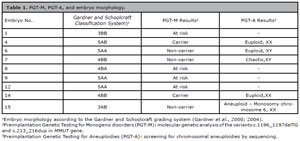
Table 1. PGT-M, PGT-A, and embryo morphology.
Embryo transfer and outcomes
Genetic analysis of 9 blastocysts identified four embryos as affected, carrying both pathogenic MMUT variants. Two embryos were genetically unaffected (non-carriers) but demonstrated aneuploid or chaotic chromosomal profiles on PGT-A. Among the remaining embryos, one was identified as a non-carrier with a euploid karyotype, and two were heterozygous carriers (single pathogenic MMUT variant) with euploid chromosomal profiles.
Following compreHensive genetic counseling and informed consent, the couple elected to proceed with the transfer of a single euploid heterozygous carrier embryo - Figure 1. Endometrial preparation for Frozen Embryo Transfer (FET) was followed a hormone replacement protocol, consisting of oral estradiol (8 mg/day) initiated on day 3 of the menstrual cycle. After 12 days of estradiol administration, the endometrium measured 9 mm in thickness, and vaginal micronized progesterone (600 mg/day) was initiated to support implantation.
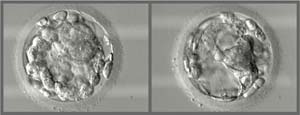
Figure 1. Embryo images at FET showing blastocyst re-expansion, approximately two hours later, after thawing.
The embryo transfer resulted in a positive serum β-hCG level of 123.4 mIU/mL, measured 10 days post-transfer. The pregnancy progressed without complications. First-trimester ultrasound at 12 weeks and 4 days of gestation demonstrated normal fetal biometry (CRL: 5.26 cm), fetal heart rate of 161 bpm, presence of the nasal bone, and nuchal translucency measurement of 1.41 mm, all within the expected reference ranges for gestational age - Figure 2. The pregnancy culminated in the live birth of a healthy female infant.
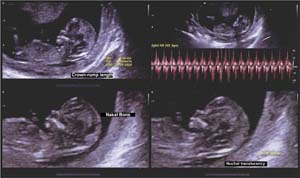
Figure 2. First-trimester obstetric ultrasound at 12 weeks and 4 days, showing crown-rump length (CRL: 5.26cm), nuchal translucency (NT: 1,41 mm), nasal bone and fetal heart rate (HR), within normal range. The images display biometric parameters and ultrasonographic markers used in first-trimester aneuploidy screening.
DISCUSSION
PGT-M has seen significant growth in both complexity and frequency (ASRM, 2023). Data from the European Society of Human Reproduction and Embryology (ESHRE) Preimplantation Genetic Diagnosis Consortium indicates a steady annual increase in IVF/PGT-M cycles (Coonen et al., 2020). According to recent analyses, nearly two-thirds of PGT-M procedures target autosomal dominant diseases (64%), followed by autosomal recessive (19%) and X-linked disorders (18%) (Spinella et al., 2023). In contrast, data from Brazil show that recessive conditions can account for up to 40% of PGT-M indications, reflecting population-specific genetic backgrounds and screening practices.
MMA is a severe autosomal recessive disorder with high morbidity and mortality, particularly in early-onset forms. Even with treatment, affected individuals remain at risk for intellectual disability, kidney failure, and recurrent metabolic crises, which may progress to coma or death. Mortality rates in the early 2000s were estimated at approximately 40% (Zhou et al., 2018), underscoring the urgency of early diagnosis and the rationale for incorporating PGT-M into reproductive planning when biallelic pathogenic variants are identified.
Despite its clinical severity and early onset, methylmalonic acidemia (MMA) is not currently included in the Brazilian national newborn screening program. Although Law No. 14.154/2021 expanded the scope of neonatal screening, the effective implementation of this policy remains incomplete and uneven across different states (Randon et al., 2020; Manoli et al., 2022). Its detection is limited to expanded carrier panels available in private settings, a gap that highlights the need to broaden access to genetic screening and counseling-especially in families with a history of early neonatal loss or suspected metabolic disorders. Current guidance documents do not specify which conditions should be included on an expanded panel, but there is consensus among professional societies that expanded carrier screening panels should focus on childhood-onset conditions likely to have a significant impact on quality of life.
Once causative mutations are established in a proband, at-risk couples can be offered carrier screening and reproductive options such as prenatal or preimplantation genetic testing (Manoli et al., 2022). Based on Mendelian inheritance, approximately 50-75% of embryos in PGT-M for recessive disorders are expected to be unaffected (either carriers or wild-type) (Harper et al., 2012). Internal data from Igenomix suggest that, on average, six embryos are needed to achieve an 85% chance of obtaining at least one transferable embryo (Igenomix internal data).
Over 250 pathogenic variants in the MMUT gene have been identified (Acquaviva et al., 2005; Worgan et al., 2006). While some founder mutations have been reported in specific populations, no single predominant pathogenic variant has been identified in the genetically diverse American population (Ledley et al., 1988). This molecular heterogeneity adds another layer of complexity to PGT-M test development for MMA, since the test cannot predict the embryo´s phenotype.
Despite technological advances and an increasing number of cases, PGT-M remains a complex process that requires individualized genetic counseling, prior confirmation of parental variants, and case-specific assay development-ideally completed before the initiation of IVF. Technical and interpretive challenges persist, including the need for assay customization and the nuanced classification of embryos. Therefore, establishing realistic expectations through transparent communication about test limitations and alternative reproductive options is essential early in the process (ASRM, 2023).
Also, comparative studies indicate that about half of PGT-M-unaffected embryos may still be aneuploid (mean maternal age 32.4 years). Combining PGT-M with Preimplantation Genetic Testing for Aneuploidies (PGT-A) can improve implantation rates (75% vs. 53%) and live-birth rates (59.4% vs. 37.5%), while reducing miscarriage (20% vs. 40%). However, it also decreases the number of embryos available for transfer (Goldman et al., 2016). Although the risk of aneuploidy in younger women is not negligible-studies report that embryonic aneuploidy among women aged 26-30 years ranges from 20% to 27% (Franasiak et al., 2014)-current evidence suggests that the overall benefit of PGT-A may be limited in this group (Scriven, 2022). Most aneuploidies arise from maternal meiotic errors, but growing evidence indicates that paternal factors may also contribute to embryonic aneuploidy and infertility outcomes (Rodrigo et al., 2019). Importantly, some viable embryos may be discarded due to mosaicism or false-positive aneuploidy results (Scriven, 2022; Calull et al., 2025). In one retrospective NGS study, 17.1% of embryos with reproductive potential would have been excluded if PGT-A had been applied prior to transfer (Shen et al., 2022). Therefore, the use of PGT-A alongside PGT-M should be individualized, carefully balancing potential benefits against the risk of discarding embryos capable of producing healthy live births.
Beyond technical considerations, emotional and ethical factors are central to reproductive decision-making. Parents of children with chronic or life-limiting conditions frequently report profound emotional strain associated with witnessing their child’s suffering (Pergament, 1991; Hui et al., 2002; Roberts & Franklin, 2004; Kalfoglou et al., 2005), particularly because for most genetic disorders, management is limited to alleviating symptoms with no curative treatments currently available (Gallois et al., 2025).
CONCLUSION
This single case illustrates the successful use of PGT-M in preventing the recurrence of a severe and life-threatening form of methylmalonic acidemia (MMA) in a young Brazilian couple following neonatal loss. The identification of compound heterozygous variants in the MMUT gene and the application of individualized genetic testing strategies enabled the birth of a healthy child, highlighting the value of PGT-M even in younger patients, where genetic risk may often be underestimated.
Importantly, this case underscores a critical gap in the Brazilian healthcare context: current newborn screening programs in Brazil do not routinely include MMA, a rare but potentially fatal metabolic disorder. This highlights the need for broader access to carrier screening and genetic counseling in the preconception period, particularly for families with a history of early infant loss, to allow timely diagnosis and expand reproductive options for at-risk couples.
As genetic technologies continue to evolve, their integration into routine clinical care in Brazil represents a powerful tool for preventing devastating inherited diseases.
ACKNOWLEDGEMENTS
The authors would like to thank the parents for allowing the study to be conducted.
REFERENCES
Acquaviva C, Benoist JF, Pereira S, Callebaut I, Koskas T, Porquet D, Elion J. Molecular basis of methylmalonyl-CoA mutase apoenzyme defect in 40 European patients affected by mut(o) and mutforms of methylmalonic acidemia: identification of 29 novel mutations in the MUT gene. Hum Mutat. 2005;25:167-76. PMID: 15643616 DOI: 10.1002/humu.20128 Medline
Almási T, Guey LT, Lukacs C, Csetneki K, Vokó Z, Zelei T. Systematic literature review and meta-analysis on the epidemiology of methylmalonic acidemia (MMA) with a focus on MMA caused by methylmalonyl-CoA mutase (mut) deficiency. Orphanet J Rare Dis. 2019;14:84. PMID: 31023387 DOI: 10.1186/s13023-019-1063-z Medline
Boles RG, Buck EA, Blitzer MG, Platt MS, Cowan TM, Martin SK, Yoon H, Madsen JA, Reyes-Mugica M, Rinaldo P. Retrospective biochemical screening of fatty acids disorders in post-mortem liver of 418 cases of sudden infant death in the first year of life. J Pediatr. 1998;132:924-33. PMID: 9627580 DOI: 10.1016/s0022-3476(98)70385-3 Medline
Calull A, Victores-Monroy A, González-Ortega C, Martínez-Robles I, Ramírez-Macías AA, Gutiérrez-Gutiérrez AM. Chaotic blastocysts in preimplantation genetic testing for aneuploidy: prevalence, characterization, and re-biopsy results. Fertil Steril. 2025;124:319-26. PMID: 40332063 DOI: 10.1016/j.fertnstert.2025.04.001 Medline
Coonen E, Van Montfoort A, Carvalho F, Kokkali G, Moutou C, Rubio C, De Rycke M, Goossens V. ESHRE PGT Consortium data collection XVI-XVIII: cycles from 2013 to 2015. Hum Reprod Open. 2020;2020:hoaa043. PMID: 33033756 DOI: 10.1093/hropen/hoaa043 Medline
Franasiak JM, Forman EJ, Hong KH, Werner MD, Upham KM, Treff NR, Scott RT Jr. The nature of aneuploidy with increasing age of the female partner: a review of 15,169 consecutive trophectoderm biopsies evaluated with comprehensive chromosomal screening. Fertil Steril. 2014;101:656-63.e1. PMID: 24355045 DOI: 10.1016/j.fertnstert.2013.11.004 Medline
Gallois H, Ravitsky V, Roy MC, Laberge AM. Defining ethical criteria to guide the expanded use of Noninvasive Prenatal Screening (NIPS): Lessons about severity from preimplantation genetic testing. Eur J Hum Genet. 2025;33:167-75. PMID: 39462080 DOI: 10.1038/s41431-024-01714-8 Medline
García-Pascual CM, Navarro-Sánchez L, Navarro R, Martínez L, Jiménez J, Rodrigo L, Simón C, Rubio C. Optimized NGS approach for detection of aneuploidies and mosaicism in PGT-A and imbalances in PGT-SR. Genes (Basel). 2020;11:724. PMID: 32610655 DOI: 10.3390/genes11070724 Medline
Gardner DK, Lane M, Stevens J, Schlenker T, Schoolcraft WB. Blastocyst score affects implantation and pregnancy outcome: towards a single blastocyst transfer. Fertil Steril. 2000;73:1155-8. PMID: 10856474 DOI: 10.1016/s0015-0282(00)00518-5 Medline
Gardner DK, Surrey E, Minjarez D, Leitz A, Stevens J, Schoolcraft WB. Single blastocyst transfer: a prospective randomized trial. Fertil Steril. 2004;81:551-5. PMID: 15037401 DOI: 10.1016/j.fertnstert.2003.07.023 Medline
Goldman KN, Nazem T, Berkeley A, Palter S, Grifo JA. Preimplantation Genetic Diagnosis (PGD) for Monogenic Disorders: the Value of Concurrent Aneuploidy Screening. J Genet Couns. 2016;25:1327-37. PMID: 27277129 DOI: 10.1007/s10897-016-9975-4 Medline
Habibzadeh P, Tabatabaei Z, FaraziFard MA, Jamali L, Hafizi A, Nikuei P, Salarian L, NasrEsfahani MH, Anvar Z, Faghihi MA. Pre-implantation genetic diagnosis in an Iranian family with a novel mutation in MUT gene. BMC Med Genet. 2020;21:22. PMID: 32013889 DOI: 10.1186/s12881-020-0959-8 Medline
Harper JC, Wilton L, Traeger-Synodinos J, Goossens V, Moutou C, SenGupta SB, Pehlivan Budak T, Renwick P, De Rycke M, Geraedts JP, Harton G. The ESHRE PGD Consortium: 10 years of data collection. Hum Reprod Update. 2012;18:234-47. PMID: 22343781 DOI: 10.1093/humupd/dmr052 Medline
He B, Wang L, Wu Q, Wang X, Ji X, Shi W, Shi J, Qiang R, Zhen S. Clinical application of NGS-based SNP haplotyping for PGT-M of methylmalonic acidemia. Syst Biol Reprod Med. 2022;68:80-8. PMID: 34913786 DOI: 10.1080/19396368.2021.2005718 Medline
Hui PW, Lam YH, Chen M, Tang MH, Yeung WS, Ng EH, Ho PC. Attitude of at-risk subjects towards preimplantation genetic diagnosis of alphaand beta-thalassaemias in Hong Kong. Prenat Diagn. 2002;22:508-11. PMID: 12116317 DOI: 10.1002/pd.387 Medline
Kalfoglou AL, Scott J, Hudson K. PGD patients’ and providers’ attitudes to the use and regulation of preimplantation genetic diagnosis. Reprod Biomed Online. 2005;11:486-96. PMID: 16274615 DOI: 10.1016/s1472-6483(10)61145-5 Medline
Ledley FD, Lumetta MR, Zoghbi HY, VanTuinen P, Ledbetter SA, Ledbetter DH. Mapping of human methylmalonyl CoA mutase (MUT) locus on chromosome 6. Am J Hum Genet. 1988;42:839-46. PMID: 2897160. Medline
Panigrahi I, Bhunwal S, Varma H, Singh S. Methylmalonic acidemia with novel MUT gene mutations. Case Rep Genet. 2017;2017:8984951. PMID: 29158924 DOI: 10.1155/2017/8984951 Medline
Parikh F, Athalye A, Madon P, Khandeparkar M, Naik D, Sanap R, Udumudi A. Genetic counseling for pre-implantation genetic testing of monogenic disorders (PGT-M). Front Reprod Health. 2023;5:1213546. PMID: 38162012 DOI: 10.3389/frph.2023.1213546 Medline
Pergament E. Preimplantation diagnosis: a patient perspective. Prenat Diagn. 1991;11:493-500. PMID: 1766924 DOI: 10.1002/pd.1970110803 Medline
Practice Committee and Genetic Counseling Professional Group of the American Society for Reproductive Medicine, American Society for Reproductive Medicine, Washington, D.C.. Electronic address: asrm@asrm.org Indications and management of preimplantation genetic testing for monogenic conditions: a committee opinion. Fertil Steril. 2023;120:61-71. PMID: 37162432 DOI: 10.1016/j.fertnstert.2023.03.003 Medline
Randon DN, Sperb-Ludwig F, Vianna FSL, Becker APP, Vargas CR, Sitta A, Sant’Ana AN, Schwartz IVD, Bitencourt FH. Prevalence of the most common pathogenic variants in three genes for inborn errors of metabolism associated with sudden unexpected death in infancy: a population-based study in south Brazil. Genet Mol Biol. 2020;43:20190298. PMID: 32706845 DOI: 10.1590/1678-4685-GMB-2019-0298 Medline
Raval DB, Merideth M, Sloan JL, Braverman NE, Conway RL, Manoli I, Venditti CP. Methylmalonic acidemia (MMA) in pregnancy: a case series and literature review. J Inherit Metab Dis. 2015;38:839-46. PMID: 25567501 DOI: 10.1007/s10545-014-9802-8 Medline
Roberts C, Franklin S. Experiencing new forms of genetic choice: findings from an ethnographic study of preimplantation genetic diagnosis. Hum Fertil (Camb). 2004;7:285-93. PMID: 15621894 DOI: 10.1080/14647270400016449 Medline
Rodrigo L, Meseguer M, Mateu E, Mercader A, Peinado V, Bori L, Campos-Galindo I, Milán M, García-Herrero S, Simón C, Rubio C. Sperm chromosomal abnormalities and their contribution to human embryo aneuploidy. Biol Reprod. 2019;101:1091-101. PMID: 31318411 DOI: 10.1093/biolre/ioz125 Medline
Scriven PN. Combining PGT-A with PGT-M risks trying to do too much. J Assist Reprod Genet. 2022;39:2015-8. PMID: 35583570 DOI: 10.1007/s10815-022-02519-8 Medline
Shen X, Chen D, Ding C, Xu Y, Fu Y, Cai B, Wang Y, Wang J, Li R, Guo J, Pan J, Zhang H, Zeng Y, Zhou C. Evaluating the application value of NGS-based PGT-A by screening cryopreserved MDA products of embryos from PGT-M cycles with known transfer outcomes. J Assist Reprod Genet. 2022;39:1323-31. PMID: 35275308 DOI: 10.1007/s10815-022-02447-7 Medline
Spinella F, Bronet F, Carvalho F, Coonen E, De Rycke M, Rubio C, Goossens V, Van Montfoort A. ESHRE PGT Consortium data collection XXI: PGT analyses in 2018. Hum Reprod Open. 2023;2023:hoad010. PMID: 37091225 DOI: 10.1093/hropen/hoad010 Medline
Van Rijt WJ, Koolhaas GD, Bekhof J, Heiner Fokkema MR, de Koning TJ, Visser G, Schielen PC, van Spronsen FJ, Derks TG. Inborn errors of metabolism that cause sudden infant death: a systematic review with implications for population neonatal screening programmes. Neonatology. 2016;109:297-302. PMID: 26907928 DOI: 10.1159/000443874 Medline
Worgan LC, Niles K, Tirone JC, Hofmann A, Verner A, Sammak A, Kucic T, Lepage P, Rosenblatt DS. Spectrum of mutations in mut methylmalonic acidemia and identification of a common Hispanic mutation and haplotype. Hum Mutat. 2006;27:31-43. PMID: 16281286 DOI: 10.1002/humu.20258 Medline
Zhou X, Cui Y, Han J. Methylmalonic acidemia: Current status and research priorities. Intractable Rare Dis Res. 2018;7:73-8. PMID: 29862147 DOI: 10.5582/irdr.2018.01026 Medline