JBRA Assist. Reprod. 2026 2026;00(0):00-00
REVIEW
doi: 10.5935/1518-0557.20260046
Recombinant Human Granulocyte Colony-stimulating Factor for Reproductive Failure: A Systematic Review and Meta-analysis
1Graduate Program in Medical Sciences, Universidade de Fortaleza (UNIFOR), Fortaleza, CE, 60.811-905, Brazil
2Medical School, Universidade de Fortaleza (UNIFOR), Fortaleza, CE, 60.811-905, Brazil
CONFLICT OF INTEREST
The authors declare no conflicts of interest.
ABSTRACT
Reproductive failure including recurrent pregnancy loss (RPL) and recurrent implantation failure (RIF)-is often attributed to immune dysregulation at the maternal-fetal interface. Recombinant human granulocyte colony-stimu-lating factor (rhG-CSF) has been proposed as an immu-nomodulatory therapy to enhance reproductive outcomes. This systematic review and meta-analysis included 10 randomized controlled trials evaluating rhG-CSF in women diagnosed with RPL or RIF. The primary outcomes were clinical pregnancy rate (CPR), live birth rate (LBR), and miscarriage rate (MR). Overall, rhG-CSF did not significant-ly improve CPR (odds ratio [OR]=1.16; 95% confidence interval [95% CI], 0.48-2.80; p=0.74) and showed high heterogeneity (I2=86%). Subgroup analysis indicated a significant increase in CPR among RIF patients (OR=1.73; 95% CI, 1.17-2.55; p=0.006; I2=17%), while no benefit was observed in RPL. No significant differences were found for LBR (OR=1.53; 95% CI, 0.88-2.66; p=0.13) or MR (OR=0.72; 95% CI, 0.26-1.96; p=0.52). Safety profiles and obstetric or perinatal outcomes were inadequately re-ported. The high heterogeneity likely reflects variation in patient selection, rhG-CSF dosing regimens, and the lack of immunological stratification for identifying responsive subgroups. While rhG-CSF may improve implantation out-comes in RIF, its effect on live birth remains uncertain. Fu-ture randomized trials should employ standardized treat-ment protocols and integrate immunogenetic diagnostics to optimize patient selection and clinical benefit.
Keywords: granulocyte colony-stimulating factor, implan-tation failure, habitual abortion, recurrent pregnancy loss, immunotherapy
INTRODUCTION
Reproductive failure, encompassing recurrent pregnancy loss (RPL) and recurrent implantation failure (RIF), remains a major clinical challenge in reproductive medicine. The European Society of Human Reproduction and Embryology (ESHRE) defines RPL as the loss of two or more pregnancies confirmed by ultrasound or histopathological examination, irrespective of sequence (ESHRE Guideline Group on RPL, 2023). RIF, according to updated ESHRE recommendations, is not defined by a fixed number of failed embryo transfers but rather by the absence of pregnancy after achieving a cumulative implantation probability exceeding 60%. This typically corresponds to at least two transfers of high-quality euploid embryos within a receptive endometrial environment (ESHRE Working Group on Recurrent Implantation Failure, 2023).
Despite considerable advances in assisted reproductive technologies (ARTs), a substantial proportion of RPL and RIF cases remain idiopathic. Increasing evidence implicates immune dysregulation at the maternal-fetal interface in their pathophysiology (Kwak-Kim et al., 2016). Various immune factors contribute to these disorders, including autoimmune and alloimmune abnormalities, aberrant natural killer (NK) cell activity, imbalances in Th1/Th2 cytokine ratios, impaired regulatory T cell (Treg) function, and insufficient maternal tolerance to paternal antigens (Kwak-Kim et al., 2022; Cavalcante et al., 2025a,b). These observations have underscored the importance of exploring immunomodulatory therapies to restore maternal-fetal immune balance and improve reproductive outcomes (Cavalcante et al., 2025a,b).
Granulocyte colony-stimulating factor (G-CSF) is a glycoprotein cytokine traditionally employed in hematology to stimulate neutrophil proliferation and mobilize hematopoietic stem cells. Recently, its potential roles in reproductive biology have attracted attention (Franzke, 2006; Crawford et al., 2017; Zhou & Zhou, 2025). G-CSF exhibits immunomodulatory and trophic properties within the endometrium and placenta. It is secreted by various cell types at the maternal-fetal interface and contributes to key reproductive processes, including decidualization, trophoblast invasion, placental angiogenesis, immune tolerance, and enhancement of endometrial receptivity (Franzke, 2006; Cavalcante et al., 2015; Kamath et al., 2020; Zhou & Zhou, 2025).
Aberrant G-CSF expression has been associated with reproductive pathologies such as RPL, RIF, polycystic ovary syndrome, thin endometrium, and endometriosis (Cavalcante et al., 2015; Han et al., 2023; He et al., 2023). In RPL, reduced G-CSF levels in villous tissue have been linked to impaired trophoblast proliferation and migration as well as defective macrophage-mediated immune regulation via NLRP3 inflammasome activation (Scarpellini et al., 2019; Gao et al., 2022). Animal models have further demonstrated that G-CSF administration reduces embryo resorption and restores immune homeostasis (Işık et al., 2021; Zhou & Zhou, 2025).
In RIF, a dysregulated cytokine milieu-characterized by elevated proinflammatory Th1 cytokines (e.g., IL-2 and IFN-γ) and reduced anti-inflammatory mediators (e.g., IL-10 and G-CSF)-creates a Th1-dominant immune environment detrimental to implantation (Guo et al., 2022; Kwak-Kim et al., 2022; Cavalcante et al., 2025a,b). Several clinical studies and meta-analyses have suggested that recombinant human G-CSF (rhG-CSF), delivered via intrauterine infusion or subcutaneous injection, may enhance endometrial thickness, implantation rates, and pregnancy outcomes, particularly in specific subgroups (Cavalcante et al., 2015; Zhou & Zhou, 2025). However, results remain inconsistent, and well-designed randomized controlled trials (RCTs) are needed to confirm their efficacy and safety.
This systematic review and meta-analysis (SRMA) aims to comprehensively evaluate existing evidence on the therapeutic use of rhG-CSF in reproductive failure, with a focus on RPL and RIF. By integrating clinical and mechanistic findings, this study seeks to clarify rhG-CSF’s potential as an adjunctive therapy and identify directions for future research to refine patient selection and treatment strategies.
MATERIALS AND METHODS
Protocol registration
This SRMA was prospectively registered with the International Prospective Register of Systematic Reviews (PROSPERO; Registration No. CRD420251015418).
Study search strategy
The review was conducted following the Preferred Reporting Items for Systematic Reviews and Meta-Analyses (PRISMA) guidelines (Supporting Information Data S1) (Page et al., 2021). A comprehensive search of PubMed/MEDLINE, Embase, and Web of Science databases was performed to identify RCTs published up to March 31, 2025. The search, executed by one author (M.B.C.), combined Medical Subject Headings and free-text terms using Boolean operators (OR/AND). The final strategy included the following key terms: (“G-CSF” OR “Granulocyte colony-stimulating factor” OR “colony-stimulating factor 3” OR “CSF 3”) AND (“recurrent miscarriage” OR “recurrent pregnancy loss” OR “habitual abortion” OR “implantation failure” OR “recurrent implantation failure”).All retrieved citations were managed using EndNote X9 (Clarivate Analytics, Philadelphia, USA). Duplicates were removed before screening. References were then imported into Rayyan (Qatar Computing Research Institute), a web-based and mobile-assisted platform designed to facilitate systematic review screening. Rayyan’s features-including automated exclusion tools, high sensitivity and specificity in search results, and a collaborative review interface-enhanced the efficiency and accuracy of the screening process.
Study selection
Two reviewers (ELRDB and DSS) independently screened the titles and abstracts to identify potentially eligible studies. Full texts were retrieved for detailed assessment against the predefined inclusion and exclusion criteria. Disagreements were resolved through discussion and consensus, and when necessary, by consultation with a third reviewer (MBC). The authors of the included studies were not contacted for additional information or clarification. References from eligible studies and relevant review articles were manually searched to identify additional records.The eligibility criteria were defined using the PICOS framework:
• Population (P): Women with unexplained RPL or RIF.Studies that examined rhG-CSF for thin endometrium management in RIF patients were excluded. Additional exclusion criteria included observational studies (cross-sectional, case-control, or cohort), animal experiments, reviews, meta-analyses, book chapters, conference abstracts, editorials, letters, patents, case reports, and non-English publications.
• Intervention (I): Administration of rhG-CSF via any route (subcutaneous or intrauterine), dosage, or timing (preconception or early pregnancy).
• Comparator (C): Placebo or no treatment.
• Outcomes (O): Clinical pregnancy rate (CPR), miscarriage rate (MR), live birth rate (LBR), and maternal or fetal adverse events.
• Study design (S): RCTs.
Data collection
A standardized data extraction form was developed, piloted, and finalized by the research team. Two authors (ELRDB and DSS) independently extracted data, and discrepancies were resolved by the lead reviewer (MBC) to ensure accuracy and consistency. The following variables were collected from each included study: (a) first authorand year of publication, (b) country of origin, (c) type of reproductive failure (RPL or RIF), (d) operational definition used, (e) treatment protocol (rhG-CSF dose, route of administration, and frequency), and (f) primary and secondary outcomes.
Quality assessment
The methodological quality and risk of bias of each included RCT were evaluated using the Cochrane Risk of Bias 2 (RoB 2) tool. Seven domains were assessed: (1) random sequence generation, (2) allocation concealment, (3) blinding of participants and personnel, (4) blinding of outcome assessors, (5) completeness of outcome data, (6) selective outcome reporting, and (7) other potential sources of bias. Each domain was rated as “low risk,” “some concerns,” or “high risk,” with an overall judgment subsequently assigned. Two reviewers (ELRDB and DSS) conducted independent appraisals, and disagreements were resolved through discussion or by referral to a third reviewer (MBC). This rigorous quality assessment ensured a transparent evaluation of internal validity and informed the interpretation of synthesized findings.
Statistical analysis
Meta-analyses were conducted to evaluate the impact of rhG-CSF on CPR, MR, and LBR in women with reproductive failure. Included RCTs were stratified into two subgroups based on clinical indication (RPL or RIF). Pooled effect sizes were calculated using the inverse variance (IV) method under a random-effects model to account for both within-and between-study variability. Results were expressed as odds ratios (ORs) with corresponding 95% confidence intervals (95% CIs).Heterogeneity among studies was assessed using the χ2 test, I2 statistic, and τ2 (restricted maximum likelihood [REML]). Subgroup analyses were performed to compare treatment effects between RPL and RIF cohorts. Statistical significance was set at p<0.05. All analyses were performed using Review Manager (RevMan Web, version 2023). Publication bias was evaluated visually through funnel plot inspection.
RESULTS
Literature search
The initial database search identified 670 potentially relevant articles (PubMed/MEDLINE, n=120; Embase, n=397; Web of Science, n=153). After eliminating 246 duplicates, 424 unique records remained. Screening of titles and abstracts via the Rayyan platform led to the exclusion of 398 articles. The full texts of the remaining 26 publications were then assessed for eligibility, resulting in the inclusion of 10 studies in the SRMA (Figure 1). Sixteen articles were excluded after full-text review for the following reasons: availability of abstract only (n=6), inappropriate study design (n=5), or publication in a non-English language (n=5; Data S1).
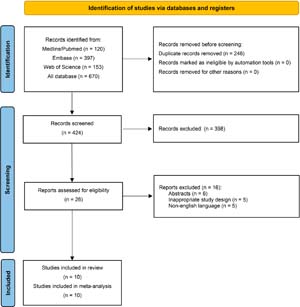
Figure 1. PRISMA 2020 flow diagram illustrating the study selection process for the systematic review and meta-analysis on rhG-CSF and reproductive failure. The flowchart depicts the identification, screening, eligibility, and inclusion of studies evaluating the therapeutic effect of rhG-CSF in women with reproductive failure.
Study selection and characteristics
Table 1 presents the key features of the included studies. A total of 10 RCTs, published between 2009 and 2022, met the inclusion criteria. Most trials were conducted in Iran (n=5), followed by Italy, the United Kingdom, Egypt, China, and Turkey. Three studies enrolled women with RPL (Scarpellini & Sbracia, 2009; Zafardoust et al., 2017; Eapen et al., 2019), though inclusion criteria varied, ranging from ≥3 pregnancy losses (Zafardoust et al., 2017; Eapen et al., 2019) to ≥5 losses (Scarpellini & Sbracia, 2009), regardless of sequence.The remaining seven studies focused on RIF (Aleyasin et al., 2016; Davari-Tanha et al., 2016; Eftekhar et al., 2016; Arefi et al., 2018; Huang et al., 2022; Kalem et al., 2020; Karimi et al., 2020). These trials generally defined RIF as the failure to achieve a clinical pregnancy after at least two embryo transfer cycles using morphologically high-quality embryos. Most used ≥2 or ≥3 implantation failures as the diagnostic threshold, with explicit reference to embryo quality parameters.All trials compared rhG-CSF with either a placebo or no intervention. Administration routes included intrauterine (IU) infusion in five trials (three RPLs and two RIFs) and subcutaneous (SC) injection in the remaining five (three RPLs and two RIFs). The rhG-CSF dosage varied widely, from 150 μg to 1 mg/kg/day, and administration schedules ranged from single infusions on the day of embryo transfer to repeated doses over several weeks.Primary outcomes included CPR, LBR, and MR, although outcome combinations differed across studies. CPR was the most frequently evaluated endpoint. Overall, the trials exhibited substantial clinical and methodological heterogeneity, reflecting differences in treatment regimens, study populations, and experimental contexts in evaluating rhG-CSF for reproductive failure.
Quality assessment
The methodological rigor of the included RCTs was assessed using the Cochrane Risk of Bias (RoB 2) tool (Data S1). All studies showed low risk of bias for random sequence generation, indicating appropriate randomization procedures. However, only three trials reported sufficient detail on allocation concealment and were rated as low risk in this domain; the remaining seven were classified as unclear, suggesting potential selection bias.Blinding of participants and personnel was adequate in five studies, unclear in four, and high risk in one, indicating possible performance bias in some trials. Outcome assessor blinding was low risk in six studies, unclear in three, and high risk in one, raising potential concerns about detection bias, especially for subjectively evaluated outcomes.Regarding incomplete outcome data, six studies were rated as low risk, while two were unclear and two high risk due to incomplete reporting or unbalanced loss to follow-up. For selective reporting, seven studies demonstrated low risk, whereas three lacked accessible protocols or showed inconsistencies in reported outcomes. Under “other bias,” seven studies were deemed low risk, two unclear, and one high risk, primarily due to baseline imbalances, undisclosed funding, or potential conflicts of interest.Overall, the majority of studies exhibited acceptable methodological quality. Nevertheless, the limitations in allocation concealment, blinding, and attrition highlight potential threats to internal validity and should be considered when interpreting the pooled results.Assessment of publication bias through funnel plots suggested asymmetry for CPR and MR outcomes. For CPR (Figure S3), most studies clustered on the right side of the plot, indicating a predominance of positive findings for rhG-CSF. The absence of small studies with null or negative outcomes may imply potential publication bias or small-study effects. One study with an exceptionally low odds ratio contributed to heterogeneity.Similarly, the MR funnel plot (Figure S4) demonstrated asymmetry, with studies scattered at both extremes of the odds ratio scale (one with OR > 10 and another<0.2), suggesting outlier effects and possible publication bias. The broad variation in effect sizes and limited number of trials constrain the robustness of these findings. In contrast, the LBR funnel plot (Figure S5) appeared symmetric, with balanced distribution around the line of no effect, suggesting minimal publication bias for this endpoint. However, the small sample of included studies limits definitive interpretation.
Clinical pregnancy rate
Nine RCTs involving 887 women (452 receiving rhG-CSF and 435 receiving placebo) were included in the CPR analysis. The pooled estimate indicated no significant overall effect of rhG-CSF on CPR (OR=1.16; 95% CI, 0.48-2.80; p=0.74). Substantial heterogeneity was observed (Τ2=1.51; Χ2=52.26, df=8; I2=86%; p<0.00001), reflecting high variability among trials (Figure 2).
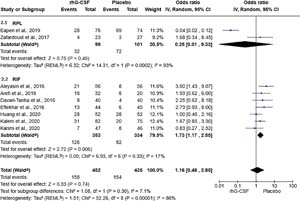
Figure 2. Forest plot showing the effect of rhG-CSF on clinical pregnancy rates (CPRs) in women with reproductive failure. The meta-analysis revealed no significant benefit among patients with recurrent pregnancy loss (RPL; OR: 0.25; 95% CI, 0.01-9.33; I2=93%), while a significant improvement was observed in those with recurrent implantation failure (RIF; OR: 1.73; 95% CI, 1.17-2.55; I2=17%). Overall, the combined effect was not statistically significant (OR: 1.16; 95% CI, 0.48-2.80; I2=86%).
In the RPL subgroup, two studies evaluated rhG-CSF treatment. Although the pooled estimate favored rhG-CSF, the result was not statistically significant (OR=0.25; 95% CI, 0.01-9.33; p=0.45), with extremely high heterogeneity (Τ2=6.32; Χ2=14.31, df=1; I2=93%; p=0.0002). The broad confidence intervals and small sample size indicate limited precision and reliability of this estimate (Figure 2.1).In contrast, seven RIF trials comprising 687 participants (Aleyasin et al., 2016; Davari-Tanha et al., 2016; Eftekhar et al., 2016; Arefi et al., 2018; Huang et al., 2022; Kalem et al., 2020; Karimi et al., 2020) demonstrated a statistically significant improvement in CPR with rhG-CSF compared with placebo (OR=1.73; 95% CI, 1.17-2.55; p=0.006). Heterogeneity was low (Τ2=0.05; Χ2=6.93, df=6; I2=17%; p=0.33), suggesting consistent findings across studies (Figure 2.2).The test for subgroup differences between RPL and RIF was not statistically significant (Χ2=1.08; p=0.30; I2=7.1%), indicating that the apparent differences in treatment effect between these populations were not supported by statistical evidence.
Miscarriage rate
Eight RCTs, involving 500 participants (243 in the rhG-CSF group and 257 in the control group), were included in the MR analysis. The pooled effect showed no statistically significant difference between rhG-CSF and placebo (OR=0.72; 95% CI, 0.26-1.96; p=0.52), indicating no clear evidence that rhG-CSF reduces the risk of miscarriage. Moderate heterogeneity was detected (Τ2=1.25; Χ2=20.27, df=7; I2=68%; p=0.005), reflecting variability among studies (Figure 3).
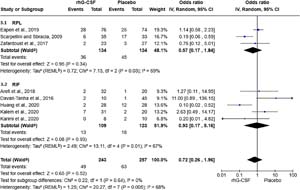
Figure 3. Forest plot showing the effect of rhG-CSF on miscarriage rates in women with reproductive failure. No significant reduction in MR was observed with rhG-CSF compared with placebo, either among RPL patients (OR: 0.57; 95% CI, 0.17-1.84; I2=69%) or RIF patients (OR: 0.93; 95% CI, 0.17-5.16; I2=67%). The overall pooled effect was not statistically significant (OR: 0.72; 95% CI, 0.26-1.96; p=0.52; I2=68%).
Three trials evaluated rhG-CSF in women with RPL (Scarpellini & Sbracia, 2009; Zafardoust et al., 2017; Eapen et al., 2019). The pooled estimate revealed a non-significant trend favoring rhG-CSF (OR=0.57; 95% CI, 0.17-1.84; p=0.34), with moderate heterogeneity (Τ2=0.72; Χ2=7.13, df=2; I2=69%; p=0.03). This variation may stem from differences in dosing regimens, routes of administration, and the immunological profiles of participants (Figure 3.1).Five studies examined the effect of rhG-CSF among women with RIF (Davari-Tanha et al., 2016; Arefi et al., 2018; Huang et al., 2022; Kalem et al., 2020; Karimi et al., 2020). The pooled analysis did not yield a statistically significant result (OR=0.93; 95% CI, 0.17-5.16; p=0.93), with moderate heterogeneity (Τ2=2.49; Χ2=13.11, df=4; I2=67%; p=0.01). The wide confidence intervals suggest imprecision, likely due to small sample sizes and inconsistencies in diagnostic criteria and outcome definitions (Figure 3.2).The subgroup comparison between RPL and RIF populations showed no statistically significant difference (Χ2=0.22; p=0.64; I2=0%), indicating that the underlying reproductive condition did not modify the effect of rhG-CSF on miscarriage outcomes.
Live birth rate
Six RCTs, including 624 participants (322 in the rhG-CSF group and 302 in the control group), were eligible for the LBR analysis. Across studies, 132 live births occurred in the rhG-CSF group and 103 in the control group. The overall pooled effect of rhG-CSF on LBR was not statistically significant (OR=1.53; 95% CI, 0.88-2.66; p=0.13). Moderate heterogeneity was observed (Τ2=0.25; Χ2=10.67, df=5; I2=54%; p=0.06), indicating some variability in the treatment effects (Figure 4).
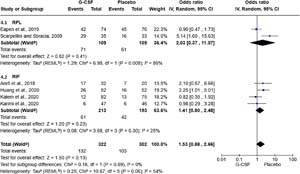
Figure 4. Forest plot showing the effect of rhG-CSF on live birth rates in women with reproductive failure. The analysis demonstrated no significant increase in LBR with rhG-CSF compared with placebo among RPL patients (OR: 2.03; 95% CI, 0.37-11.07; I2=86%) or RIF patients (OR: 1.41; 95% CI, 0.80-2.48; I2=25%). The overall effect was not statistically significant (OR: 1.53; 95% CI, 0.88-2.66; p=0.13; I2=54%)
Two RCTs examined the use of rhG-CSF among women with RPL (Scarpellini & Sbracia, 2009; Eapen et al., 2019). The pooled estimate indicated a nonsignificant trend favoring rhG-CSF (OR=2.03; 95% CI, 0.37-11.07; p=0.41), with high heterogeneity (Τ2=1.29; Χ2=6.98, df=1; I2=86%; p=0.008). This heterogeneity was largely influenced by the pronounced treatment effect reported by Scarpellini & Sbracia (2009), contrasting with the neutral results of Eapen et al. (2019) (Figure 4.1).Four trials investigated rhG-CSF in RIF patients. The pooled estimate again showed no significant effect on LBR (OR=1.41; 95% CI, 0.80-2.48; p=0.23), with low heterogeneity (Τ2=0.08; Χ2=3.68, df=3; I2=25%; p=0.30), suggesting consistency across studies. Among these, Huang et al. (2022) was the only trial to report a statistically significant benefit (OR=2.25; 95% CI, 1.01-5.01) (Figure 4.2).The test for subgroup differences between RPL and RIF populations was not statistically significant (Χ2=0.16; p=0.69; I2=0%), indicating that the type of reproductive failure did not significantly influence the effect of rhG-CSF on live birth outcomes.
Adverse events
Adverse events (AEs) related to rhG-CSF administration were reported in only 2 of the 10 included RCTs (Scarpellini & Sbracia, 2009; Eapen et al., 2019). The remaining trials either did not assess safety outcomes or explicitly stated that no AEs occurred, limiting the overall interpretation of the treatment’s safety profile.In the study by Scarpellini & Sbracia (2009), no significant differences were found between the rhG-CSF and placebo groups regarding neonatal weight, pregnancy complications, or overall adverse effects. However, specific AEs were reported in the rhG-CSF arm, including one case of skin rash and two cases of pronounced leukocytosis (white blood cell count, > 25,000/mL). The placebo group reported one case of mild gestational hypertension. Notably, no congenital malformations or perinatal abnormalities were identified in either group.Eapen et al. (2019) reported AEs in 52 participants (68.4%) receiving rhG-CSF and in 43 participants (58.1%) in the placebo group, with no statistically significant between-group difference. Congenital anomalies occurred in one infant in each group (rhG-CSF: 2.1%; placebo: 2.0%; RR=0.9; 95% CI, 0.1-13.4; p=0.93). Exploratory analyses also revealed no significant differences in key obstetric outcomes.The most common AEs among rhG-CSF recipients were gastrointestinal disorders (43%), nervous system disorders (28%), musculoskeletal and connective tissue disorders (26%), reproductive system and breast disorders (25%), and infections (21%). Serious AEs included two gastrointestinal complications, one lower respiratory tract infection, and one case of severe headache. Musculoskeletal symptoms were significantly more frequent in the rhG-CSF group than in the placebo group (p=0.01).Overall, AEs were generally mild to moderate in severity. rhG-CSF demonstrated an acceptable safety profile; however, musculoskeletal complaints may warrant closer clinical monitoring in future studies and clinical use.
DISCUSSION
This systematic review and meta-analysis evaluated the effects of rhG-CSF on reproductive outcomes in women with RPL or RIF. In the overall analysis, rhG-CSF did not significantly improve CPR, MR, or LBR. However, subgroup analysis revealed a significant increase in CPR among women with RIF, suggesting a potential benefit in this subgroup.
Marked variability was observed in effect sizes across studies, as evidenced by wide confidence intervals and high heterogeneity indices (I2 values up to 86%), particularly among trials involving RPL populations. Such heterogeneity likely reflects differences in study design, patient selection, and treatment protocols, complicating direct comparisons and limiting the interpretability of pooled results. Although rhG-CSF significantly improved CPR in the RIF subgroup (OR=1.73; 95% CI, 1.17-2.55; p=0.006), no significant effect was observed in other outcomes or among RPL patients. These findings suggest that the therapeutic benefit of rhG-CSF may depend on specific clinical and immunological contexts, underscoring the need for well-controlled studies in more homogeneous populations to determine its true efficacy.
The significant improvement in CPR among RIF patients aligns with the proposed biological mechanisms of G-CSF. This cytokine plays a key role in modulating the maternal-fetal interface by enhancing endometrial proliferation, angiogenesis, and trophoblast invasion, while also regulating local immune responses (Franzke, 2006; Ding et al., 2022). rhG-CSF promotes immune tolerance by expanding regulatory T cells and modulating NK cell cytotoxicity, potentially improving implantation in women whose reproductive failure is driven by immune dysregulation. These mechanisms provide a plausible biological basis for the observed improvement in implantation outcomes among RIF patients (Franzke, 2006; Ding et al., 2022).
Despite increasing interest in rhG-CSF as an adjuvant therapy in reproductive medicine, findings across studies remain inconsistent. Some meta-analyses have reported significant benefits in RIF, demonstrating higher CPR (OR=2.49; 95% CI, 1.56-3.98; I2=0%), implantation rates (OR=2.82; 95% CI, 1.29-6.15), and LBR (OR=3.16; 95% CI, 1.61-6.22; I2=0%) (Su et al., 2024). A network analysis also indicated that subcutaneous administration was superior to intrauterine infusion for both CPR (OR=2.79 vs. 1.74) and implantation rate (OR=2.81 vs. 2.15) (He et al., 2024). Conversely, other studies failed to show significant improvements in LBR among either RIF or RPL patients, with results such as OR=1.35 (95% CI, 0.99-1.84; p=0.06) and no clear advantage over placebo in specific analyses (Mu et al., 2023). In RPL populations, although a modest increase in conception rates has been reported (RR=1.34; 95% CI, 1.03-1.74; p=0.028), the improvement has not translated into higher LBRs (Mu et al., 2023).
The heterogeneity and inconsistency of findings across the literature likely stem from methodological variability. The included studies differ substantially in dosage (ranging from 100 to 300 µg), route of administration (intrauterine, subcutaneous, or both), and timing relative to the reproductive cycle. Furthermore, patient selection criteria were poorly standardized, with many studies enrolling women with unexplained RPL or RIF, a highly heterogeneous population with diverse etiologies and immunological profiles. This lack of stratification makes it difficult to identify the specific subgroups that might derive the greatest benefit from rhG-CSF therapy. Standardized protocols regarding dosage, administration timing, and patient selection are urgently needed to clarify the treatment’s clinical value.
Emerging evidence supports a precision-medicine approach to rhG-CSF use, guided by immunogenetic profiling. In particular, the identification of killer-cell immunoglobulin-like receptor (KIR) and human leukocyte antigen-C (HLA-C) genotypes may help predict response to rhG-CSF. A mismatch in KIR/HLA-C combinations has been associated with impaired NK cell function, reduced endogenous G-CSF secretion, and suboptimal placentation. In a study by Cozzolino et al. (2024), rhG-CSF administration in patients with such immunogenetic incompatibility resulted in a 3.8-fold increase in ongoing pregnancy rates (aOR=3.808), a fivefold increase in LBR (aOR=4.998), and a 94% reduction in MR (aOR=0.057) compared with untreated controls (Cozzolino et al., 2024). These findings reinforce the potential of immunogenetic screening to identify candidates most likely to benefit from rhG-CSF, in line with the principles of personalized reproductive immunology. Integrating such diagnostics into clinical practice could enable targeted treatment, improving success rates and minimizing unnecessary interventions (Cavalcante et al., 2025a,b).
This SRMA has several strengths that enhance its credibility and clinical relevance. Adherence to PRISMA guidelines ensured methodological rigor in study selection, data extraction, and analysis. The inclusion of only RCTs minimizes bias and enhances the reliability of the evidence. Furthermore, the analysis focused on clinically meaningful outcomes-CPR, LBR, and MR-providing results directly applicable to reproductive medicine practice. Subgroup analyses by reproductive condition and treatment approach also offer valuable insight into differential treatment effects across patient groups.
Nonetheless, several limitations must be acknowledged. Considerable heterogeneity among the included studies-stemming from differences in study populations, definitions of reproductive failure, and rhG-CSF dosing regimens-represents a key limitation. The relatively small number of trials reduces statistical power, particularly for subgroup analyses, and may limit generalizability. Moreover, few studies incorporated immunological diagnostics in patient selection, despite evidence suggesting that immune factors may strongly influence treatment response. Safety data were inconsistently reported, precluding a comprehensive assessment of adverse events and maternal-fetal outcomes.
Future research should address these gaps through well-designed, adequately powered RCTs employing standardized treatment protocols and precise inclusion criteria. Particular emphasis should be placed on integrating immunogenetic diagnostics-such as KIR/HLA-C typing, NK cell phenotyping, and cytokine profiling-to facilitate individualized therapy. Comprehensive safety evaluations and long-term follow-up studies are also warranted to elucidate the broader effects of rhG-CSF on placentation, pregnancy health, and neonatal outcomes.
CONCLUSION
This systematic review and meta-analysis indicate that rhG-CSF may improve CPRs in women with RIF but does not significantly affect LBRs or MRs in the broader population with reproductive failure. Although the improvement in CPR suggests a potential benefit during the implantation phase, the absence of effects on LBR and MR reflects the multifactorial nature of pregnancy maintenance, which involves processes extending beyond implantation. While rhG-CSF may enhance endometrial receptivity and early embryo attachment, it appears insufficient to influence later immunological and placental mechanisms critical for sustaining pregnancy.
The substantial heterogeneity among studies-particularly in patient selection, dosing regimens, and treatment timing-along with the lack of immunogenetic stratification, limits the generalizability of current evidence and may have obscured benefits in specific subgroups. Therefore, future well-designed RCTs are warranted. These should incorporate immunogenetic profiling (e.g., KIR/HLA-C combinations) to refine patient selection and better define the therapeutic role of rhG-CSF in reproductive medicine.
Funding
REFERENCES
Aleyasin A, Abediasl Z, Nazari A, Sheikh M. Granulocyte colony-stimulating factor in repeated IVF failure, a randomized trial. Reproduction. 2016;151:637-42. PMID: 26980809 DOI: 10.1530/REP-16-0046
Medline
Arefi S, Fazeli E, Esfahani M, Borhani N, Yamini N, Hosseini A, Farifteh F. Granulocyte-colony stimulating factor may improve pregnancy outcome in patients with history of unexplained recurrent implantation failure: An RCT. Int J Reprod Biomed. 2018;16:299-304. PMID: 30027145
Medline
Cavalcante MB, Costa Fda S, Barini R, Araujo Júnior E. Granulocyte colony-stimulating factor and reproductive medicine: A review. Iran J Reprod Med. 2015;13:195-202. PMID: 26131007
Medline
Cavalcante MB, Harrity C, Luu T, Fatunbi J, Nakagawa K, Zhang Y, Zhang T, Alanazi H, Wu L, Lee S, Barini R, Kwak-Kim J. 2025 American Society for Reproductive Immunology Guidelines for the Treatment of Recurrent Pregnancy Losses: Practice Recommendations From the ASRI Clinical Reproductive Immunology Fellowship. Am J Reprod Immunol. 2025a;93:e70099. PMID: 40444404. DOI: 10.1111/aji.70099
Medline
Cavalcante MB, Sarno M, Barini R. Immune biomarkers in cases of recurrent pregnancy loss and recurrent implantation failure. Minerva Obstet Gynecol. 2025b;77:34-44. PMID: 39704735 DOI: 10.23736/S2724-606X.24.05549-0
Medline
Cozzolino M, Pellegrini L, Tartaglia S, Mancuso S, De Angelis F, Vaquero E, Alecsandru D, Pellicer A, Galliano D. Subcutaneous G-CSF administration improves IVF outcomes in patients with recurrent implantation failure presenting a KIR/HLA-C mismatch. J Reprod Immunol. 2024;165:104310. PMID: 39106544. DOI: 10.1016/j. jri.2024.104310
Medline
Crawford J, Becker PS, Armitage JO, Blayney DW, Chavez J, Curtin P, Dinner S, Fynan T, Gojo I, Griffiths EA, Hough S, Kloth DD, Kuter DJ, Lyman GH, Mably M, Mukherjee S, Patel S, Perez LE, Poust A, Rampal R, et al. Myeloid Growth Factors, Version 2.2017, NCCN Clinical Practice Guidelines in Oncology. J Natl Compr Canc Netw. 2017;15:1520-41. PMID: 29223990 DOI: 10.6004/jnccn.2017.0175
Medline
Davari-Tanha F, Shahrokh Tehraninejad E, Ghazi M, Shahraki Z. The role of G-CSF in recurrent implantation failure: A randomized double blind placebo control trial. Int J Reprod Biomed. 2016;14:737-42. PMID: 28066833
Medline
Ding J, Wang J, Cai X, Yin T, Zhang Y, Yang C, Yang J. Granulocyte colony-stimulating factor in reproductive-related disease: Function, regulation and therapeutic effect. Biomed Pharmacother. 2022;150:112903. PMID: 35430390 DOI: 10.1016/j.biopha.2022.112903
Medline
Eapen A, Joing M, Kwon P, Tong J, Maneta E, De Santo C, Mussai F, Lissauer D, Carter D; RESPONSE study group. Recombinant human granulocytecolony stimulating factor in women with unexplained recurrent pregnancy losses: a randomized clinical trial. Hum Reprod. 2019;34:424-32. PMID: 30776296 DOI: 10.1093/humrep/dey393
Medline
Eftekhar M, Miraj S, Farid Mojtahedi M, Neghab N. Efficacy of Intrauterine infusion of granulocyte colony stimulating factor on patients with history of implantation failure: A randomized control trial. Int J Reprod Biomed. 2016;14:687-90. PMID: 27981253
Medline
ESHRE Guideline Group on RPL; Bender Atik R, Christiansen OB, Elson J, Kolte AM, Lewis S, Middeldorp S, Mcheik S, Peramo B, Quenby S, Nielsen HS, van der Hoorn ML, Vermeulen N, Goddijn M. ESHRE guideline: recurrent pregnancy loss: an update in 2022. Hum Reprod Open. 2023;2023:hoad002. PMID: 36873081 DOI: 10.1093/hropen/hoad002
Medline
ESHRE Working Group on Recurrent Implantation Failure; Cimadomo D, de Los Santos MJ, Griesinger G, Lainas G, Le Clef N, McLernon DJ, Montjean D, Toth B, Vermeulen N, Macklon N. ESHRE good practice recommendations on recurrent implantation failure. Hum Reprod Open. 2023;2023:hoad023. PMID: 37332387 DOI: 10.1093/hropen/hoad023
Medline
Franzke A. The role of G-CSF in adaptive immunity. Cytokine Growth Factor Rev. 2006;17:235-44. PMID: 16807060 DOI: 10.1016/j.cytogfr.2006.05.002
Medline
Gao P, Zha Y, Wei L, Zhou X, Zhu S, Zhang H, Gao X, Jiang Y, Chen Y, Li J, Zhang J, Yu J, Wang S, Liu H, Feng L. G-CSF: A vehicle for communication between trophoblasts and macrophages which may cause problems in recurrent spontaneous abortion. Placenta. 2022;121:164-72. PMID: 35364512. DOI: 10.1016/j.placenta.2022.03.125
Medline
Guo L, Guo A, Yang F, Li L, Yan J, Deng X, Dai C, Li Y. Alterations of Cytokine Profiles in Patients With Recurrent Implantation Failure. Front Endocrinol (Lausanne). 2022;13:949123. PMID: 35898466 DOI: 10.3389/ fendo.2022.949123
Medline
Han MT, Cheng W, Zhu R, Wu HH, Ding J, Zhao NN, Li H, Wang FX. The cytokine profiles in follicular fluid and reproductive outcomes in women with endometriosis. Am J Reprod Immunol. 2023;89:e13633. PMID: 36250899. DOI: 10.1111/aji.13633
Medline
He Y, Li R, Yin J, Yang Z, Wang Y, Chen L, Yang S, Qiao J. Influencing of serum inflammatory factors on IVF/ICSI outcomes among PCOS patients with different BMI. Front Endocrinol (Lausanne). 2023;14:1204623. PMID: 37693353 DOI: 10.3389/fendo.2023.1204623
Medline
He Y, Su X, Li H, Tang R, Ju Y, Chen S, Wang X. Subcutaneous injection granulocyte colony-stimulating factor (G-CSF) is superior to intrauterine infusion on patients with recurrent implantation failure: A systematic review and network meta-analysis. J Reprod Immunol. 2024;163:104250. PMID: 38669790 DOI: 10.1016/j.jri.2024.104250
Medline
Huang P, Yao C, Wei L, Lin Z. The intrauterine perfusion of granulocyte-colony stimulating factor (G-CSF) before frozen-thawed embryo transfer in patients with two or more implantation failures. Hum Fertil (Camb). 2022;25:301-5. PMID: 32862740 DOI: 10.1080/14647273.2020.1811904
Medline
Işık G, Oktem M, Guler I, Oktem E, Ozogul C, Saribas S, Erdem A, Erdem M. The impact of granulocyte colony-stimulating factor (G-CSF) on thin endometrium of an animal model with rats. Gynecol Endocrinol. 2021;37:438-45. PMID: 32611261 DOI: 10.1080/09513590.2020.1786508
Medline
Kalem Z, Namli Kalem M, Bakirarar B, Kent E, Makrigiannakis A, Gurgan T. Intrauterine G-CSF Administration in Recurrent Implantation Failure (RIF): An Rct. Sci Rep. 2020;10:5139. PMID: 32198409 DOI: 10.1038/s41598-020-61955-7
Medline
Kamath MS, Kirubakaran R, Sunkara SK. Granulocyte-colony stimulating factor administration for subfertile women undergoing assisted reproduction. Cochrane Database Syst Rev. 2020;1:CD013226. PMID: 31978254 DOI: 10.1002/14651858.CD013226.pub2
Medline
Kwak-Kim J, AlSubki L, Luu T, Ganieva U, Thees A, Dambaeva S, Gilman-Sachs A. The role of immunologic tests for subfertility in the clinical environment. Fertil Steril. 2022;117:1132-43. PMID: 35534290 DOI: 10.1016/j.fertnstert.2022.04.009
Medline
Kwak-Kim J, Skariah A, Wu L, Salazar D, Sung N, Ota K. Humoral and cellular autoimmunity in women with recurrent pregnancy losses and repeated implantation failures: A possible role of vitamin D. Autoimmun Rev. 2016;15:943-7. PMID: 27491565. DOI: 10.1016/j.autrev.2016.07.015
Medline
Mu F, Huang J, Zeng X, Liu L, Wang F. Efficacy and safety of recombinant human granulocyte colony-stimulating factor in patients with unexplained recurrent spontaneous abortion: A systematic review and meta-analysis. J Reprod Immunol. 2023;156:103830. PMID: 36821985 DOI: 10.1016/j.jri.2023.103830
Medline
Page MJ, McKenzie JE, Bossuyt PM, Boutron I, Hoffmann TC, Mulrow CD, Shamseer L, Tetzlaff JM, Akl EA, Brennan SE, Chou R, Glanville J, Grimshaw JM, Hróbjartsson A, Lalu MM, Li T, Loder EW, Mayo-Wilson E, McDonald S, McGuinness LA, et al. The PRISMA 2020 statement: an updated guideline for reporting systematic reviews. BMJ. 2021;372:n71. PMID: 33782057 DOI: 10.1136/bmj.n71
Medline
Scarpellini F, Klinger FG, Rossi G, Sbracia M. Immunohistochemical Study on the Expression of G-CSF, G-CSFR, VEGF, VEGFR-1, Foxp3 in First Trimester Trophoblast of Recurrent Pregnancy Loss in Pregnancies Treated with G-CSF and Controls. Int J Mol Sci. 2019;21:285. PMID: 31906232 DOI: 10.3390/ijms21010285
Medline
Scarpellini F, Sbracia M. Use of granulocyte colony-stimulating factor for the treatment of unexplained recurrent miscarriage: a randomised controlled trial. Hum Reprod. 2009;24:2703-8. PMID: 19617208 DOI: 10.1093/humrep/dep240
Medline
Su Q, Pan Z, Yin R, Li X. The value of G-CSF in women experienced at least one implantation failure: a systematic review and meta-analysis. Front Endocrinol (Lausanne). 2024;15:1370114. PMID: 38694938 DOI: 10.3389/ fendo.2024.1370114
Medline
Zafardoust S, Akhondi MM, Sadeghi MR, Mohammadzadeh A, Karimi A, Jouhari S, Ansaripour S. Efficacy of Intrauterine Injection of Granulocyte Colony Stimulating Factor (G-CSF) on Treatment of Unexplained Recurrent Miscarriage: A Pilot RCT Study. J Reprod Infertil. 2017;18:379-85. PMID: 29201668
Medline
Zhou L, Zhou L. The Mechanisms and therapeutic effects of granulocyte colony-stimulating factor in reproduction. Reprod Biol Endocrinol. 2025;23:78. PMID: 40420179 DOI: 10.1186/s12958-025-01414-y
Medline