JBRA Assisted Reproduction 2026;30(3):569-573
ORIGINAL ARTICLE
doi: 10.5935/1518-0557.20260049
Impact of chronic endometritis treatment in patients with reproductive failure
1Department of Obstetrics and Gynecology, Hospital Universitario 12 de Octubre, Universidad Complutense de Madrid, Madrid, Spain
CONFLICT OF INTEREST
The authors declare no conflicts of interest.
ABSTRACT
Objective: To assess whether the diagnosis and antibiotic treatment of chronic endometritis improve reproductive outcomes in patients with recurrent pregnancy loss or recurrent implantation failure.
Methods: This retrospective study included 67 women with recurrent pregnancy loss or recurrent implantation failure. Chronic endometritis was diagnosed in 30 patients (44.8%) based on hysteroscopic findings, CD138-positive histology, or a positive endometrial culture. All patients diagnosed with chronic endometritis received first-line antibiotic therapy, most commonly doxycycline 200 mg/day for 14 days.
Results: Following antibiotic therapy, 17 patients (56.7%) achieved a clinical pregnancy and 12 (40%) achieved a live birth. Clinical pregnancy and live birth rates were similar in women with recurrent pregnancy loss (60% and 40%, respectively) and those with recurrent implantation failure (55% and 40%, respectively), with no statistically significant differences between patients with resolved and persistent chronic endometritis (p>0.05).
Conclusion: In this study, antibiotic treatment for chronic endometritis was not associated with a statistically significant improvement in reproductive outcomes. The heterogeneity of diagnostic and therapeutic approaches highlights the need for standardized criteria and well-designed prospective studies to clarify its clinical relevance.
Keywords: chronic endometritis, reproductive failure, recurrent implantation failure, recurrent pregnancy loss, antibiotic therapy
INTRODUCTION
Chronic endometritis (CE) is characterized by persistent inflammation of the endometrial mucosa, and is often associated with polymicrobial infections, endometrial dysbiosis, or immunological alterations (Ticconi et al., 2024). While many patients remain asymptomatic, CE has been increasingly associated with recurrent implantation failure (RIF) and recurrent pregnancy loss (RPL) (Cicinelli et al., 2019; Ticconi et al., 2024).
The reported prevalence varies widely (3%-68%) depending on the population studied and the diagnostic criteria applied (Cicinelli et al., 2019; Li et al., 2021; Liu et al., 2022; Ticconi et al., 2024), highlighting the heterogeneity of diagnostic criteria and study populations.
Diagnosis is typically based on a combination of hysteroscopy, endometrial biopsy, and immunohistochemistry for CD138-positive plasma cells, with MUM1 recently proposed as an additional marker to improve diagnostic sensitivity (Santoro et al., 2023). Several studies have suggested improved reproductive outcomes after antibiotic therapy, particularly when histological resolution is achieved (Cheng et al., 2022; Liu et al., 2022; Veiga et al., 2023; Vitagliano et al., 2022). However, variability in diagnostic approaches and treatment protocols still hinders the development of clear clinical guidance.
This study aimed to evaluate whether the diagnosis and treatment of CE improve reproductive outcomes in women with reproductive failure.
MATERIAL AND METHODS
A retrospective study was conducted at a tertiary care hospital from January 2019 to December 2024, including 67 patients with a history of reproductive failure, as shown in Figure 1. Reproductive failure was defined as either RPL - two or more miscarriages according to the 2017 ESHRE Guideline (ESHRE Guideline Group on RPL et al., 2018) - or RIF - three or more unsuccessful embryo transfers with morphologically good-quality embryos, as established by the British Fertility Society (Mascarenhas et al., 2022). Embryo quality was assessed according to the morphological classification described in the updated Istanbul Consensus Workshop on Oocyte and Embryo Morphological Assessment (Working Group on the update of the ESHRE/ALPHA Istanbul Consensus, 2025).
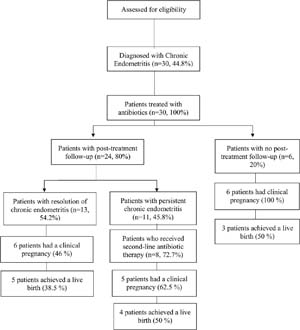
Figure 1. Treatment, post-treatment follow-up, and reproductive outcomes.
The inclusion criteria were women diagnosed with RPL or RIF who underwent hysteroscopic, histological, or microbiological evaluation for suspected CE. Exclusion criteria included loss to follow-up after diagnostic evaluation or refusal to receive antibiotic therapy.
All patients underwent diagnostic hysteroscopy with directed endometrial biopsy. In selected cases, microbiological cultures were obtained under hysteroscopic guidance. CE was diagnosed when at least one of the following criteria was met: (1) hysteroscopic features suggestive of CE, according to the criteria described by Cicinelli et al. (2019); (2) histological identification of at least one CD138-positive plasma cell per high-power field; or (3) positive endometrial culture.
All patients diagnosed with CE received first-line antibiotic therapy following Cicinelli et al. (2018) protocol, most commonly doxycycline 200 mg/day for 14 days. Post-treatment evaluation was performed by repeat biopsy or culture using a Cornier cannula. CE was considered resolved when no plasma cells or pathogens were detected. Otherwise, the condition was classified as persistent. Most patients with persistent CE received second-line antibiotic therapy, most commonly ceftriaxone 500 mg single dose with doxycycline 200 mg/day and metronidazole 500 mg/12 hours.
The primary outcome of this study was the live birth rate following CE treatment, defined as the proportion of patients who achieved at least one live birth after one or more embryo transfers (ESHRE Working Group on Recurrent Implantation Failure, 2023). The secondary outcome was the clinical pregnancy rate, defined as the proportion of embryo transfers resulting in pregnancy confirmed by an ultrasound-detected gestational sac (ESHRE Working Group on Recurrent Implantation Failure, 2023). Subgroup analyses compared outcomes between (1) women with RIF versus RPL and (2) patients with resolved versus persistent CE after treatment.
Continuous variables were tested for normality using the Shapiro-Wilk test. Qualitative variables are presented as absolute frequencies (n) and percentages (%), and quantitative variables as mean±standard deviation or median and interquartile range, as appropriate. The chi-square test, linear-by-linear association test, or Fisher’s exact test was used to assess associations between qualitative variables. Statistical analyses were performed using IBM SPSS Statistics 25.0, with p<0.05 considered statistically significant. The study protocol was reviewed and approved by the institutional ethics committee, which granted a waiver of informed consent because of the retrospective design and use of anonymized data. An anonymized dataset is available at Vázquez Ramos (2025).
RESULTS
Among the 67 women with reproductive failure, CE was diagnosed in 30 (44.8%) based on one or more diagnostic criteria. Of these, 20 (66.7%) had RIF and 10 (33.3%) had RPL. The median age of the cohort was 35 years [32-36], with a mean anti-Müllerian hormone (AMH) level of 3.7±2.7 ng/mL and a median total motile sperm count (TMSC) of 7×10⁶ [1.5-25.6] (Table 1). Male factor infertility and ovarian factor infertility were each observed in 10 cases (33.3%) (Table 1).
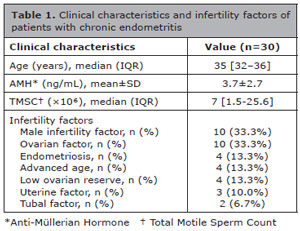
Table 1. Clinical characteristics and infertility factors of patients with chronic endometritis
Histological detection by CD138 immunostaining was the most common diagnostic approach (86.7%), followed by hysteroscopic findings (all showing endometrial micropolyps) (26.7%) and positive cultures (20%). The isolated microorganisms are shown in Table 2.
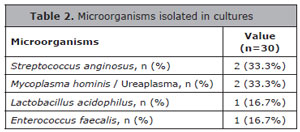
Table 2. Microorganisms isolated in cultures
Most patients received doxycycline 200 mg/day for 14 days as first-line therapy (n=20; 66.7%). The remaining 10 patients received ciprofloxacin 500 mg every 12 hours, amoxicillin-clavulanic acid 875/125 mg every 8 hours, or combined antibiotic regimens, as detailed in Table 3. Post-treatment evaluation was performed in 24 patients (80%), confirming CE resolution in 13 (54.2%) and persistence in 11 (45.8%). Among those with persistent CE, 8 (72.7%) received second-line antibiotic therapy, most commonly ceftriaxone 500 mg as a single dose followed by doxycycline 200 mg/day and metronidazole 500 mg every 12 hours. In the remaining cases, treatment included cefixime 400 mg/day, amoxicillin-clavulanic acid 875/125 mg every 8 hours, or a combination of metronidazole 500 mg every 12 hours and ciprofloxacin 500 mg every 12 hours (Table 4).
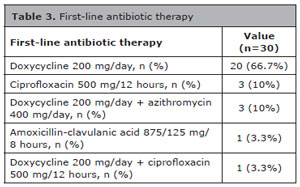
Table 3. First-line antibiotic therapy
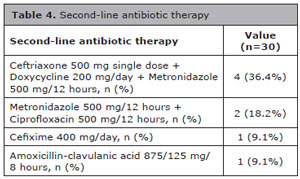
Table 4. Second-line antibiotic therapy
Following antibiotic therapy, 17 patients (56.7%) achieved a clinical pregnancy and 12 (40%) achieved a live birth. On average, each patient underwent 1.37±0.85 embryo transfers after treatment. Among women with RIF, 55% achieved a clinical pregnancy and 40% achieved a live birth, whereas among those with RPL the rates were 60% and 40%, respectively (Table 5). Clinical pregnancy and live birth rates did not differ significantly between patients with resolved CE (46.2% and 38.5%) and those with persistent disease after second-line antibiotic therapy (62.5% and 50%) (p>0.05). However, the small sample size of this study limited its power to detect statistically significant differences. Nevertheless, the observed clinical pregnancy and live birth rates suggest a potentially favorable reproductive trend following antibiotic therapy.

Table 5. Reproductive outcomes according to type of reproductive failure
DISCUSSION
This study adds to the existing evidence on the role of CE in reproductive failure and the potential benefit of antibiotic therapy, showing a CE resolution rate of 54.2%, with 56.7% of patients achieving a clinical pregnancy and 40% achieving a live birth. Although no statistically significant differences were observed according to CE resolution status, these descriptive outcomes still suggest a potentially favorable reproductive trend after treatment.
Our results align with previous studies reporting variable CE resolution rates and reproductive outcomes following antibiotic therapy (Cicinelli et al., 2021; Kitaya et al., 2017; Sakai et al., 2024; Veiga et al., 2023; Vitagliano et al., 2022; Xiong et al., 2021). Despite the moderate resolution rate, the reproductive outcomes observed in our study were comparable to those reported in larger cohorts, supporting the clinical value of CE management. However, the heterogeneity of diagnostic methods, small sample size, and retrospective design limit the generalizability of our results.
The biological plausibility of CE’s negative impact on fertility is well-established. Persistent endometrial inflammation leads to leukocyte infiltration, cytokine and chemokine overexpression, and transcriptional dysregulation of immune and angiogenic pathways, together with impaired stromal decidualization, progesterone resistance, and abnormal uterine contractility (Di Pietro et al., 2013; Kitaya & Yasuo, 2010; Pirtea et al., 2021; Wu et al., 2017). These mechanisms compromise endometrial receptivity and may explain the reproductive improvement observed after antibiotic therapy (Buzzaccarini et al., 2020).
Potential confounders such as embryo quality, female age, and underlying infertility factors may also have influenced reproductive outcomes in our cohort. Nonetheless, all patients underwent hysteroscopy-guided biopsy, which ensured diagnostic accuracy and consistency, and most completed post-treatment follow-up, allowing a reliable evaluation of therapeutic response.
The main limitations of this study are its small sample size and retrospective design, both of which reduce statistical power and limit generalizability. Despite these constraints, the observed 40% live birth rate is consistent with previous reports and supports CE as a potentially modifiable condition affecting reproductive prognosis.
Additionally, while our study did not demonstrate significant differences based on post-treatment CE status, current evidence suggests that confirming histological resolution may improve reproductive outcomes (Cheng et al., 2022; Liu et al., 2022). Therefore, several authors advocate for the systematic post-treatment evaluations to optimize clinical management.
Future research should aim to investigate the role of CE as a modifiable risk factor for reproductive failure through large, prospective studies using standardized diagnostic and therapeutic criteria. It should also explore adjuvant strategies to enhance treatment efficacy. In this regard, Zou et al. (2023) reported improved implantation and pregnancy rates with combined antibiotic and corticosteroid treatment, opening new avenues for investigation.
CONCLUSION
In this cohort, antibiotic treatment of CE was associated with clinical pregnancy and live birth rates of 56.7% and 40%, respectively. No statistically significant differences in reproductive outcomes were observed between patients with resolved and persistent CE after treatment. Given the small sample size and diagnostic heterogeneity, these findings should be interpreted cautiously; however, the observed trends are consistent with previous studies and support the clinical relevance of CE management in assisted reproduction. Larger prospective studies using standardized diagnostic and therapeutic criteria are needed to clarify its true impact on reproductive outcomes.
ACKNOWLEDGMENTS
The authors would like to thank all co-authors for their valuable contributions and critical review of the manuscript.
REFERENCES
Buzzaccarini G, Vitagliano A, Andrisani A, Santarsiero CM, Cicinelli R, Nardelli C, Ambrosini G, Cicinelli E. Chronic endometritis and altered embryo implantation: a unified pathophysiological theory from a literature systematic review. J Assist Reprod Genet. 2020;37:2897-911. PMID: 33025403 DOI: 10.1007/s10815-020-01955-8 Medline
Cheng X, Huang Z, Xiao Z, Bai Y. Does antibiotic therapy for chronic endometritis improve clinical outcomes of patients with recurrent implantation failure in subsequent IVF cycles? A systematic review and meta-analysis. J Assist Reprod Genet. 2022;39:1797-813. PMID: 35829835 DOI: 10.1007/s10815-022-02558-1 Medline
Cicinelli E, Matteo M, Trojano G, Mitola PC, Tinelli R, Vitagliano A, Crupano FM, Lepera A, Miragliotta G, Resta L. Chronic endometritis in patients with unexplained infertility: Prevalence and effects of antibiotic treatment on spontaneous conception. Am J Reprod Immunol. 2018;79:e12782. PMID: 29135053 DOI: 10.1111/aji.12782 Medline
Cicinelli E, Resta L, Loizzi V, Pinto V, Santarsiero C, Cicinelli R, Greco P, Vitagliano A. Antibiotic therapy versus no treatment for chronic endometritis: a case-control study. Fertil Steril. 2021;115:1541-8. PMID: 33722376 DOI: 10.1016/j.fertnstert.2021.01.018 Medline
Cicinelli E, Vitagliano A, Kumar A, Lasmar RB, Bettocchi S, Haimovich S; International Working Group for Standardization of Chronic Endometritis Diagnosis. Unified diagnostic criteria for chronic endometritis at fluid hysteroscopy: proposal and reliability evaluation through an international randomized-controlled observer study. Fertil Steril. 2019;112:162-73.e2. PMID: 31104760 DOI: 10.1016/j.fertnstert.2019.03.004 Medline
Di Pietro C, Cicinelli E, Guglielmino MR, Ragusa M, Farina M, Palumbo MA, Cianci A. Altered transcriptional regulation of cytokines, growth factors, and apoptotic proteins in the endometrium of infertile women with chronic endometritis. Am J Reprod Immunol. 2013;69:509-17. PMID: 23351011 DOI: 10.1111/aji.12076 Medline
ESHRE Guideline Group on RPL; Bender Atik R, Christiansen OB, Elson J, Kolte AM, Lewis S, Middeldorp S, Nelen W, Peramo B, Quenby S, Vermeulen N, Goddijn M. ESHRE guideline: recurrent pregnancy loss. Hum Reprod Open. 2018;2018:hoy004. PMID: 31486805 DOI: 10.1093/hropen/hoy004 Medline
ESHRE Working Group on Recurrent Implantation Failure; Cimadomo D, de Los Santos MJ, Griesinger G, Lainas G, Le Clef N, McLernon DJ, Montjean D, Toth B, Vermeulen N, Macklon N. ESHRE good practice recommendations on recurrent implantation failure. Hum Reprod Open. 2023;2023:hoad023. PMID: 37332387 DOI: 10.1093/hropen/hoad023 Medline
Kitaya K, Matsubayashi H, Takaya Y, Nishiyama R, Yamaguchi K, Takeuchi T, Ishikawa T. Live birth rate following oral antibiotic treatment for chronic endometritis in infertile women with repeated implantation failure. Am J Reprod Immunol. 2017;78:e12719. PMID: 28608596 DOI: 10.1111/aji.12719 Medline
Kitaya K, Yasuo T. Aberrant expression of selectin E, CXCL1, and CXCL13 in chronic endometritis. Mod Pathol. 2010;23:1136-46. PMID: 20495539 DOI: 10.1038/modpathol.2010.98 Medline
Li Y, Xu S, Yu S, Huang C, Lin S, Chen W, Mo M, Lian R, Diao L, Ding L, Zeng Y. Diagnosis of chronic endometritis: How many CD138+ cells/HPF in endometrial stroma affect pregnancy outcome of infertile women? Am J Reprod Immunol. 2021;85:e13369. PMID: 33152123 DOI: 10.1111/aji.13369 Medline
Liu J, Liu ZA, Liu Y, Cheng L, Yan L. Impact of antibiotic treatment for chronic endometritis on pregnancy outcomes in women with reproductive failures (RIF and RPL): A systematic review and meta-analysis. Front Med (Lausanne). 2022;9:980511. PMID: 36405621 DOI: 10.3389/fmed.2022.980511 Medline
Mascarenhas M, Jeve Y, Polanski L, Sharpe A, Yasmin E, Bhandari HM; British Fertility Society. Management of recurrent implantation failure: British Fertility Society policy and practice guideline. Hum Fertil (Camb). 2022;25:813-37. PMID: 33820476 DOI: 10.1080/14647273.2021.1905886 Medline
Pirtea P, Cicinelli E, De Nola R, de Ziegler D, Ayoubi JM. Endometrial causes of recurrent pregnancy losses: endometriosis, adenomyosis, and chronic endometritis. Fertil Steril. 2021;115:546-60. PMID: 33581856 DOI: 10.1016/j.fertnstert.2020.12.010 Medline
Sakai K, Takehara I, Kaneko H, Nakamura F, Nakai N, Takahashi K, Matsukawa J, Matsuo K, Nagase S. Impact of Diagnosis and Treatment of Chronic Endometritis on Outcomes Before Starting Assisted Reproductive Technology: A Retrospective Study. Reprod Sci. 2024;31:3086-94. PMID: 38981993 DOI: 10.1007/s43032-024-01633-5 Medline
Santoro A, Travaglino A, Inzani F, Angelico G, Raffone A, Maruotti GM, Straccia P, Arciuolo D, Castri F, D’Alessandris N, Scaglione G, Valente M, Cianfrini F, Masciullo V, Zannoni GF. The Role of Plasma Cells as a Marker of Chronic Endometritis: A Systematic Review and Meta-Analysis. Biomedicines. 2023;11:1714. PMID: 37371809 DOI: 10.3390/biomedicines11061714 Medline
Ticconi C, Inversetti A, Marraffa S, Campagnolo L, Arthur J, Zambella E, Di Simone N. Chronic endometritis and recurrent reproductive failure: a systematic review and meta-analysis. Front Immunol. 2024;15:1427454. PMID: 39286255 DOI: 10.3389/fimmu.2024.1427454 Medline
Veiga ECA, Soares Junior JM, Samama M, Ikeda F, Francisco LS, Sartor A, Urbanetz LAML, Baracat EC, Ueno J. Chronic endometritis and assisted reproduction: a systematic review and meta-analysis. Rev Assoc Med Bras (1992). 2023;69:e20230792. PMID: 37851720 DOI: 10.1590/1806-9282.20230792 Medline
Vitagliano A, Laganà AS, De Ziegler D, Cicinelli R, Santarsiero CM, Buzzaccarini G, Chiantera V, Cicinelli E, Marinaccio M. Chronic Endometritis in Infertile Women: Impact of Untreated Disease, Plasma Cell Count and Antibiotic Therapy on IVF Outcome-A Systematic Review and Meta-Analysis. Diagnostics (Basel). 2022;12:2250. PMID: 36140651 DOI: 10.3390/diagnostics12092250 Medline
Working Group on the update of the ESHRE/ALPHA Istanbul Consensus; Coticchio G, Ahlström A, Arroyo G, Balaban B, Campbell A, De Los Santos MJ, Ebner T, Gardner DK, Kovačič B, Lundin K, Magli MC, Mcheik S, Morbeck DE, Rienzi L, Sfontouris I, Vermeulen N, Alikani M. The Istanbul consensus update: a revised ESHRE/ALPHA consensus on oocyte and embryo static and dynamic morphological assessment†,‡. Hum Reprod. 2025;40:989-1035. PMID: 40288770 DOI: 10.1093/humrep/deaf021 Medline
Wu D, Kimura F, Zheng L, Ishida M, Niwa Y, Hirata K, Takebayashi A, Takashima A, Takahashi K, Kushima R, Zhang G, Murakami T. Chronic endometritis modifies decidualization in human endometrial stromal cells. Reprod Biol Endocrinol. 2017;15:16. PMID: 28259137 DOI: 10.1186/s12958-017-0233-x Medline
Xiong Y, Chen Q, Chen C, Tan J, Wang Z, Gu F, Xu Y. Impact of oral antibiotic treatment for chronic endometritis on pregnancy outcomes in the following frozen-thawed embryo transfer cycles of infertile women: a cohort study of 640 embryo transfer cycles. Fertil Steril. 2021;116:413-21. PMID: 33926717 DOI: 10.1016/j.fertnstert.2021.03.036 Medline
Zou Y, Ming L, Ding J, Xiao Z, Li S, Yang J, Bao A, Zhang Y. Low dosage of prednisone acetate combined with doxycycline in the treatment of chronic endometritis in patients with repeated implantation failure. Am J Reprod Immunol. 2023;89:e13713. PMID: 37165806 DOI: 10.1111/aji.13713 Medline