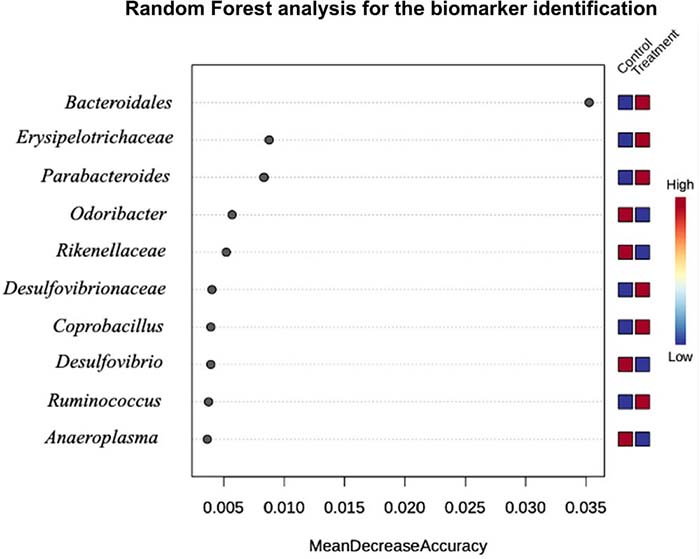
Figure 4. Random Forest Analysis Identifies Key Microbial Biomarkers Associated with Controlled Ovarian Hyperstimulation (COH). Random forest classification was performed to identify bacterial taxa that most accurately distinguish fecal microbiota profiles of COH-treated mice (n=10) from control mice (n=10). The x-axis shows the Mean Decrease Accuracy, reflecting the contribution of each taxon to model performance. The y-axis lists the most discriminative taxa, with Bacteroidales, Erysipelotrichaceae, and Parabacteroides emerging as top predictors. The heatmap on the right illustrates the relative abundance of each taxon across groups, with the color scale ranging from red (high abundance) to blue (low abundance). Notably, Bacteroidales was more abundant in the COH group and ranked as the most informative biomarker, suggesting its relevance in microbial shifts associated with ovarian hyperstimulation.