JBRA Assist. Reprod. 2026 2026;00(0):00-00
ORIGINAL ARTICLE
doi: 10.5935/1518-0557.20260081
Vaginal-Endometrial Microbiome Synchrony as a Predictor of Implantation in Frozen Embryo Transfer Cycles: A Prospective Study
1Department of Reproductive Medicine and Surgery, Mahatma Gandhi Medical College and Hospital, Jaipur, Rajasthan, India
2Department of Obstetrics and Gynaecology, Dr. Ram Manohar Lohia Institute of Medical Sciences, Lucknow, Uttar Pradesh, India
3Krishna Medical Centre, Lucknow, Uttar Pradesh, India
CONFLICTS OF INTEREST
None.
ABSTRACT
Objective: To evaluate whether vaginal-endometrial microbiome synchrony is associated with biochemical and clinical pregnancy outcomes in frozen embryo transfer (FET) cycles.
Methods: This prospective observational study included 100 women undergoing single Day 5 FET cycles. Vaginal and endometrial samples were collected during a mock FET cycle on progesterone day 5 and analyzed using a contamination-aware targeted 16S rRNA polymerase chain reaction (PCR) panel optimized for low-biomass reproductive tract samples. A Synchrony Index (SI), a similarity metric analogous to Jaccard-type indices, was calculated based on shared dominant microbial taxa between vaginal and endometrial compartments. An SI cutoff of ≥0.7 was pre-specified prior to outcome analysis based on biological plausibility and accepted similarity thresholds in microbiome research. Biochemical pregnancy (β-hCG positive) and clinical pregnancy rates were compared between high and low SI groups. A randomly selected subset underwent next-generation sequencing validation.
Results: Baseline demographic, ovarian reserve, embryo quality, and endometrial parameters were comparable between groups. Biochemical pregnancy rates were significantly higher in women with high SI compared with low SI (65.5% vs. 28.9%, p<0.001), as were clinical pregnancy rates (61.8% vs. 26.7%, p<0.001). On multivariable logistic regression adjusting for clinical confounders, SI remained independently associated with biochemical pregnancy (adjusted odds ratio 1.20 per 0.1 increase; 95% CI 1.06-1.36; p=0.004). PCR-derived SI demonstrated substantial agreement with sequencing-based validation.
Conclusion: Vaginal-endometrial microbiome synchrony is independently associated with biochemical pregnancy in Day 5 FET cycles. The PCR-based Synchrony Index warrants further evaluation as an investigational biomarker of reproductive tract receptivity in larger and independent cohorts.
Keywords: endometrial microbiome, vaginal microbiome, frozen embryo transfer, implantation, assisted reproductive technology
INTRODUCTION
Despite substantial advances in embryo culture systems, vitrification techniques, and blastocyst selection, failure of embryo implantation remains a major limiting factor in assisted reproductive technology (ART), particularly in frozen embryo transfer (FET) cycles (Gardner & Schoolcraft, 1999; Roque et al., 2019). In FET cycles, embryonic competence is largely optimized, and implantation success depends predominantly on endometrial receptivity and the uterine environment, with outcomes commonly reported as biochemical pregnancy, clinical pregnancy, and live birth.
In recent years, the reproductive tract microbiome has emerged as an important modulator of implantation and pregnancy outcomes. The endometrial microbiome has been increasingly recognized as a potential determinant of endometrial receptivity and implantation biology (Franasiak & Scott, 2017). Several studies have reported that a Lactobacillus-dominant vaginal microbiome is associated with higher biochemical pregnancy, clinical pregnancy, and live birth rates (Moreno et al., 2016; Kyono et al., 2018; Koedooder et al., 2019a; Kroon et al., 2018). However, most studies have evaluated the vaginal or endometrial microbiome in isolation, despite biological continuity between these compartments and potential confounding by host, behavioral, and treatment-related factors that influence microbiome composition.
The uterus is not a sterile or isolated organ but part of a continuous reproductive tract ecosystem, with ascending microbial migration and immune-microbial interactions influencing endometrial receptivity (Ravel et al., 2011; Chen et al., 2017). Recent evidence suggests that discordance between vaginal and endometrial microbiomes may be associated with poorer ART outcomes, highlighting the importance of inter-compartmental microbial harmony rather than isolated compartment-specific microbial profiles (Su et al., 2024).
To date, no clinically feasible biomarker exists to quantify vaginal-endometrial microbiome concordance in routine ART practice. The present study evaluates vaginal- endometrial microbiome synchrony using a novel PCRbased Synchrony Index, conceptualized as a similarity metric, and investigates its association with biochemical pregnancy and clinical pregnancy outcomes in Day 5 frozen embryo transfer cycles within a clinically optimized and well-characterized cohort.
MATERIAL AND METHODS
Study design and setting
This prospective observational study was conducted at Krishna Medical Centre, Lucknow, between August 2023 and July 2025. The study evaluated the association between vaginal-endometrial microbiome synchrony and reproductive outcomes in women undergoing single Day 5 frozen embryo transfer (FET) cycles. The study was approved by the Institutional Ethics Committee of Krishna Medical Centre, Lucknow (Approval No: 019/2023).
Study population
A total of 100 women undergoing frozen embryo transfer were included after providing written informed consent. To minimize embryological confounding, only cycles involving the transfer of a single good-quality Day 5 blastocyst were analyzed.
Inclusion criteria
Women were eligible for inclusion if they met all of the following criteria:
• Age between 21 and 35 years
• Body mass index (BMI) between 19 and 29 kg/m2
• Antral follicle count (AFC) ≥8
• Availability of at least one good-quality Day 5 blastocyst (≥3BB)
• Endometrial thickness ≥8 mm on the day of progesterone initiation
• Endometrial vascularity zone 3 or 4 according to Applebaum criteria
Exclusion criteria
Women were excluded if they had:
• Clinical or subclinical genital tract infection
• Antibiotic or probiotic use within one month prior to sampling
• Uterine pathology (fibroids distorting the cavity, polyps, adhesions)
• Previous uterine surgery affecting the cavity
• Thin endometrium or poor endometrial vascularity
• Use of donor gametes or surgically retrieved sperm
• Autoimmune or systemic inflammatory disease
• Active or recent symptomatic bacterial vaginosis or vaginitis at the time of sampling
• Use of intravaginal medications, douching, or vaginal products within 72 hours prior to sampling
• Sexual intercourse within 72 hours prior to microbiome sampling
Endometrial preparation protocol
All patients underwent a standardized hormone replacement therapy (HRT) protocol for endometrial preparation. Oral estradiol valerate was initiated on cycle day 2 or 3 at a dose of 6 mg/day in divided doses and was titrated up to a maximum of 8-10 mg/day based on endometrial response. Endometrial development was monitored using serial transvaginal ultrasonography, assessing endometrial thickness and vascularity at intervals of 5-7 days. Estradiol dosing was adjusted to achieve an endometrial thickness ≥8 mm with satisfactory vascularity (Applebaum zone 3 or 4).Once endometrial criteria were met, progesterone supplementation was initiated to achieve endometrial transformation. Progesterone was administered as vaginal micronized progesterone (600-800 mg/day in divided doses) or intramuscular progesterone (100 mg/day), according to institutional protocol and patient preference. The day of progesterone initiation was designated as progesterone day 0.Frozen embryo transfer of a single Day 5 blastocyst was performed on progesterone day 5. Luteal phase support with progesterone was continued until serum β-hCG testing and, in the event of pregnancy, maintained until at least 10 weeks of gestation, in accordance with standard clinical practice. Estradiol supplementation was continued concomitantly during the luteal phase and early pregnancy.
Microbiome sampling
Microbiome sampling was performed during a mock FET cycle preceding the actual embryo transfer to avoid interference with implantation. The subsequent frozen embryo transfer cycle was performed after a typical interval of one to two menstrual cycles following mockcycle sampling. Microbiome composition was assumed to be relatively stable over this interval, although longitudinal assessment was not performed. Vaginal sampling was performed first, and vaginal samples were collected from the posterior fornix using sterile, single-use swabs. To minimize contamination during endometrial sampling, the cervix was visualized using a sterile speculum and gently cleansed with sterile normal saline to remove cervical mucus. A new sterile speculum was used for endometrial sampling. Endometrial samples were obtained using a sterile double-sheathed (protected) endometrial sampling catheter, with the outer sheath shielding the inner cannula during passage through the vagina and cervix. The inner sampling catheter was exposed only after entry into the uterine cavity, thereby minimizing vaginal and cervical microbial carryover. Care was taken to ensure that the sampling device did not contact the vaginal walls during insertion.Both vaginal and endometrial samples were collected on progesterone day 5, corresponding to the window of implantation for Day 5 blastocysts, and immediately transferred into sterile, DNA-free collection tubes. Samples were placed on ice immediately after collection and transferred for freezing within 30 minutes. Samples were transported on ice and stored at -80°C until analysis. DNA extraction was performed in batches using the QIAamp DNA Mini Kit (Qiagen, Hilden, Germany), following the manufacturer’s protocol for low-biomass clinical specimens. All extraction procedures were carried out in a designated clean laboratory area physically separated from PCR setup areas to reduce environmental contamination risk.Compliance with pre-sampling restrictions outlined in the exclusion criteria was reconfirmed at the time of sample collection. Smoking status and use of systemic hormonal medications other than the prescribed endometrial preparation regimen were recorded at baseline.
Contamination control and quality assurance
Given the low-biomass nature of endometrial microbiome assessment, strict contamination-aware procedures were followed throughout sample collection and processing. All sampling materials were sterile and single-use, and sample handling was performed using aseptic technique.Negative controls were incorporated at multiple stages, including DNA extraction blanks and no-template PCR controls, to monitor for background contamination. Field blanks were not routinely processed because of the clinical constraints of intrauterine sampling. Given the lowbiomass nature of endometrial microbiome assessment, the absence of field blanks represents a methodological limitation that may affect interpretability despite negative extraction blanks and no-template PCR controls. Contamination in low microbial biomass microbiome studies is a well-recognized methodological challenge, and rigorous controls - including extraction blanks, notemplate controls, and field blanks - are recommended to reduce confounders (Eisenhofer et al., 2019). Taxa were considered potential contaminants and excluded from dominance and synchrony calculations if they were detected exclusively in negative controls (extraction blanks or no-template PCR controls) and absent from corresponding clinical samples, or if amplification occurred only in controls without reproducible detection in duplicate clinical reactions.In addition, amplification in clinical samples was considered valid only if reproducibly detected in duplicate reactions. Taxa detected exclusively in negative controls or showing non-reproducible single-replicate amplification were excluded from dominance and Synchrony Index calculations. All negative controls (extraction blanks and no-template PCR controls) demonstrated undetermined Ct values.
Microbiome analysis and Synchrony Index
Targeted quantitative PCR (qPCR) assays were designed in-house in accordance with MIQE guidelines (Bustin et al., 2009) using Primer-BLAST (NCBI) and Primer3Plus, targeting genusand species-group-specific regions of the 16S rRNA gene (Silva database v138 alignment). In silico specificity was confirmed using BLASTn against the NCBI non-redundant and human genome databases.Targeted taxa included Lactobacillus spp. (pan-genus), Lactobacillus crispatus, Lactobacillus iners, Gardnerella vaginalis, Atopobium vaginae, and selected anaerobic bacteria (Prevotella spp., Mobiluncus spp., Streptococcus spp., Enterococcus spp., and Escherichia coli). Primer and hydrolysis probe sequences, amplicon sizes (80-120 bp), amplification efficiencies, and analytical validation parameters are provided in Supplementary Table S1. qPCR amplification was performed on a Bio-Rad CFX96 RealTime PCR System (Bio-Rad Laboratories, Hercules, CA, USA) using hydrolysis probe chemistry under standardized cycling conditions: 95°C for 10 minutes, followed by 40 cycles of 95°C for 15 seconds and 60°C for 1 minute.Analytical validation included standard curve analysis (101-106 copies per reaction; R2 > 0.99), amplification efficiency between 95-105%, and limit of detection ranging from 10-100 genome copies per reaction. Specificity was confirmed using reference ATCC strains (L. crispatus ATCC 33820; L. iners ATCC 55195; G. vaginalis ATCC 14018; A. vaginae ATCC BAA-1632) and mock community testing. Intra- and inter-assay reproducibility demonstrated Ct coefficient of variation <5%. PCR reactions were performed in duplicate for each target. A taxon was considered detected if both duplicate reactions amplified with Ct ≤38. Ct values ≤35 were classified as strong positives, while Ct values between 35 and 38 were considered low-level detections. Reactions with Ct >38 or undetermined were classified as negative.Dominance within each sample was defined as the taxon demonstrating the lowest mean Ct value among detected taxa. A Ct difference <2 cycles between taxa was considered biologically equivalent (approximately corresponding to less than a four-fold difference in template abundance) and classified as mixed dominance. Dominance was determined separately for vaginal and endometrial samples. Given the logarithmic nature of qPCR amplification, Ct values were interpreted as semiquantitative proxies of relative signal strength within the predefined targeted panel rather than absolute abundance equivalence across taxa.For each patient, dominant taxa were identified separately for vaginal and endometrial compartments. Vaginal-endometrial microbiome synchrony was quantified using a Synchrony Index (SI), calculated as the number of shared dominant taxa divided by the total number of unique dominant taxa across both compartments. The SI represents a similarity metric analogous to Jaccard-type indices; values range from 0 to 1. A cutoff of SI ≥0.7 was pre-specified prior to outcome analysis and was not optimized based on outcome distributions. The Synchrony Index calculation algorithm and dominance classification criteria were predefined prior to outcome analysis and applied uniformly across all samples. The SI was calculated solely for research purposes and did not influence clinical decision-making.
Validation using next-generation sequencing
A randomly selected subset comprising 20% of the study population underwent 16S rRNA gene nextgeneration sequencing for validation purposes. Sequencing targeted the 16S rRNA V3-V4 region using an Illumina MiSeq platform (2×300 bp paired-end sequencing). Sequencing was used to provide broader taxonomic context and to validate concordance with PCR-derived genusand predefined Lactobacillus species-group-level synchrony patterns. Pearson correlation analysis was performed to assess agreement between continuous PCRderived Synchrony Index (SI) values and sequencingderived similarity metrics, while Cohen’s kappa statistic was used to assess agreement between high versus low SI classification (SI ≥0.7). The 2×2 contingency table used to calculate Cohen’s kappa for high versus low SI classification is provided in Supplementary Table S2.
Outcome measures and statistical analysis
The primary outcome was biochemical pregnancy, defined as a positive serum β-human chorionic gonadotropin (β-hCG) test. The secondary outcome was clinical pregnancy, confirmed by the presence of fetal cardiac activity on transvaginal ultrasound. Continuous variables were expressed as mean ± standard deviation, and categorical variables as frequencies and percentages. Group comparisons were performed using Student’s t-test for continuous variables and chi-square test for categorical variables. Covariates included in multivariable models were selected a priori based on established clinical relevance to ART outcomes, and model parsimony was prioritized to reduce the risk of overfitting in accordance with accepted events-per-variable considerations. Multivariable logistic regression analysis was performed to identify variables independently associated with biochemical pregnancy. Model assumptions were assessed prior to interpretation, and no evidence of multicollinearity was observed among included covariates. The Synchrony Index was modeled both as a continuous variable (per 0.1 increase) and as a dichotomous variable (high vs. low synchrony) to enhance clinical interpretability. A p-value <0.05 was considered statistically significant.
Reporting and missing data
This study was conducted and reported in accordance with the STROBE (Strengthening the Reporting of Observational Studies in Epidemiology) guidelines (von Elm et al., 2007). A participant flow diagram illustrating screening, eligibility, exclusions, and final analysis is provided (Figure 1). All women included in the final cohort had complete clinical, microbiome, and outcome data; therefore, no missing data imputation was performed, and analyses were conducted using a complete-case approach.
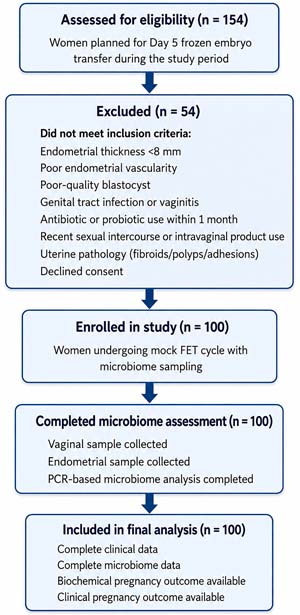
Figure 1. STROBE-style flow diagram of study participants. Flow diagram depicting the number of women screened for eligibility, excluded with reasons, enrolled, and included in the final analysis.
RESULTS
Table 1 summarizes the baseline demographic, ovarian reserve, embryological, and endometrial characteristics of women stratified according to Synchrony Index (SI). All baseline variables fell within the predefined inclusion criteria. As shown in Table 1, women in the high and low SI groups were comparable with respect to age, body mass index, and antral follicle count, indicating similar baseline reproductive potential across groups. Ultrasound markers of endometrial receptivity, including endometrial thickness and vascularity, were also well matched. Importantly, all patients in both groups underwent transfer of good-quality Day 5 blastocysts (≥3BB), ensuring uniform embryological quality. No amplification was observed in DNA extraction blanks or no-template PCR controls, supporting the absence of detectable background contamination.
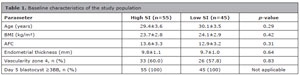
Table 1. Baseline characteristics of the study populationParameter High SI (n=55) Low SI (n=45) p-value Age (years) 29.4±3.6 30.1±3.5 0.29 BMI (kg/m2) 23.7±2.8 24.1±2.9 0.42 AFC 13.6±3.3 12.9±3.2 0.31 Endometrial thickness (mm) 9.8±1.1 9.7±1.0 0.64 Vascularity zone 4, n (%) 33 (60.0) 26 (57.8) 0.83 Day 5 blastocyst ≥3BB, n (%) 55 (100) 45 (100) Not applicable All participants met predefined inclusion criteria (age 21-35 years; BMI 19-29 kg/m2). Values are presented as mean ± standard deviation.
Table 2 presents biochemical pregnancy and clinical pregnancy outcomes according to Synchrony Index. As demonstrated in Table 2, women with high vaginal- endometrial microbiome synchrony exhibited significantly higher biochemical pregnancy rates compared with those with low synchrony. A similar pattern was observed for clinical pregnancy rates, which were more than two-fold higher in the high SI group.

Table 2. Biochemical pregnancy and clinical pregnancy outcomes according to Synchrony IndexOutcome High SI (n=55) Low SI (n=45) p-value Biochemical pregnancy (β-hCG positive), n (%) 36 (65.5) 13 (28.9) <0.001 Clinical pregnancy, n (%) 34 (61.8) 12 (26.7) <0.001
Table 3 displays the results of multivariable logistic regression analysis evaluating predictors of biochemical pregnancy. After adjustment for potential confounders including age, body mass index, antral follicle count, embryo quality, endometrial thickness, and vascularity, Synchrony Index remained the only variable independently associated with biochemical pregnancy.
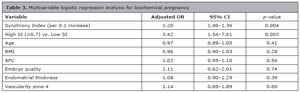
Table 3. Multivariable logistic regression analysis for biochemical pregnancyVariable Adjusted OR 95% CI p-value Synchrony Index (per 0.1 increase) 1.20 1.06-1.36 0.004 High SI (≥0.7) vs. Low SI 3.42 1.54-7.61 0.003 Age 0.97 0.89-1.05 0.41 BMI 0.96 0.90-1.03 0.28 AFC 1.02 0.95-1.10 0.54 Embryo quality 1.11 0.62-2.01 0.74 Endometrial thickness 1.08 0.90-1.29 0.39 Vascularity zone 4 1.14 0.69-1.89 0.60
Table 4 illustrates biochemical pregnancy outcome according to dominant vaginal-endometrial microbiome patterns. As shown in Table 4, profiles dominated by predefined Lactobacillus species-groups (L. crispatus- associated) demonstrated the highest biochemical pregnancy rates, whereas dysbiotic profiles were associated with the poorest outcomes. Intermediate biochemical pregnancy rates were observed in women with Lactobacillus iners associated dominant patterns or mixed Lactobacillus-associated profiles. These results support differential associations of predefined Lactobacillus species-groups with early biochemical pregnancy success as reflected by biochemical pregnancy, and suggest that not all Lactobacillus-dominant microbiomes confer equal reproductive benefit. These pattern-based analyses were exploratory and were not adjusted for multiple comparisons. The gradient observed across microbiome patterns further reinforces the biological plausibility of the Synchrony Index as a clinically meaningful marker. Dominant microbiome patterns were defined based on targeted PCR detection of dominant bacterial genera and predefined Lactobacillus species-groups (L. crispatus and L. iners).
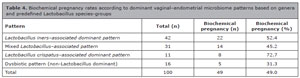
Table 4. Biochemical pregnancy rates according to dominant vaginal-endometrial microbiome patterns based on genera and predefined Lactobacillus species-groupsPattern Total (n) Biochemical pregnancy (n) Biochemical pregnancy (%) Lactobacillus iners-associated dominant pattern42 22 52.4 Mixed Lactobacillus-associated pattern31 14 45.2 Lactobacillus crispatus-associated dominant pattern11 8 72.7 Dysbiotic pattern (non-Lactobacillus dominant) 16 5 31.3 Total 100 49 49.0 Dominant microbiome patterns were defined based on targeted PCR detection of dominant bacterial genera and predefined Lactobacillus species-groups (L. crispatus and L. iners).
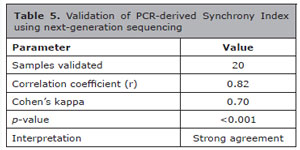
Table 5. Validation of PCR-derived Synchrony Index using next-generation sequencingParameter Value Samples validated 20 Correlation coefficient (r) 0.82 Cohen’s kappa 0.70 p-value <0.001 Interpretation Strong agreement
DISCUSSION
The present prospective observational study demonstrates that vaginal-endometrial microbiome synchrony is independently associated with biochemical pregnancy in Day 5 frozen embryo transfer cycles. By restricting the analysis to single good-quality Day 5 blastocyst transfers and applying strict embryological and endometrial inclusion criteria, the study reduced embryonic and procedural confounders, thereby allowing focused evaluation of microbiome-related determinants of early pregnancy outcome as reflected by biochemical pregnancy. These findings should be interpreted as associative rather than causal given the observational design, and synchrony may represent a surrogate marker of shared host or hormonal influences rather than a direct mechanistic microbial effect.
Previous studies have consistently reported an association between Lactobacillus-dominant reproductive tract microbiomes and improved assisted reproduction outcomes. Moreno et al. (2016) first reported that a non-Lactobacillus-dominant endometrial microbiota was associated with reduced biochemical pregnancy-related outcomes, suggesting that microbial composition of the endometrium may influence endometrial receptivity. Subsequent investigations confirmed that endometrial dysbiosis is associated with lower biochemical pregnancy, clinical pregnancy, and live birth rates (Kyono et al., 2018; Moreno et al., 2022). More recently, Bui et al. (2023) demonstrated that specific endometrial microbiota compositions are associated with differential IVF outcomes, reinforcing the concept that microbial ecology within the uterine environment may influence implantation success. A systematic review by Koedooder et al. (2019b) similarly concluded that reproductive tract microbiome composition is associated with IVF outcomes, while highlighting methodological heterogeneity and variability in sampling strategies across studies. However, these studies predominantly evaluated the endometrial compartment in isolation and did not account for potential interactions with the vaginal microbiome.
The biological continuity of the female reproductive tract suggests that early pregnancy establishment may be influenced not only by local endometrial microbial composition but also by functional harmony between vaginal and endometrial microbiomes. Ravel et al. (2011), Gajer et al. (2012), and Chen et al. (2017) demonstrated that the reproductive tract harbors a microbial continuum rather than isolated niches. Building on this concept, Su et al. (2024) reported poorer ART outcomes in women with discordant vaginal and endometrial microbiomes, highlighting the relevance of inter-compartmental microbial concordance. The present study extends these observations by quantifying synchrony using a continuous similarity index and demonstrating an independent association between microbiome synchrony and biochemical pregnancy, specifically within the confines of a predefined targeted bacterial panel rather than comprehensive whole-microbiome profiling.
A key finding of this study is that the Synchrony Index remained independently associated with biochemical pregnancy after adjustment for age, body mass index, ovarian reserve, embryo quality, and ultrasoundbased markers of endometrial receptivity. In this optimized cohort, conventional predictors were not independently associated with biochemical pregnancy, whereas microbiome synchrony retained its association. This observation suggests that vaginal-endometrial microbial synchrony may reflect biological processes not fully captured by routine ultrasound or embryological assessment; however, replication in larger and independent cohorts is required before firm conclusions can be drawn, particularly in more heterogeneous populations with broader age ranges and embryo quality variation.
Analysis of predefined Lactobacillus species-groups further supports biological plausibility. Consistent with previous reports, dominance of the predefined L. crispatus-associated species-group was associated with higher biochemical pregnancy rates, whereas dysbiotic profiles demonstrated lower rates. Väinämö et al. (2023) reported superior IVF outcomes in women with L. crispatus-dominant vaginal microbiomes compared with L. iners dominance. Mechanistically, L. crispatus produces higher levels of lactic acid and bacteriocins, maintains low vaginal pH, and promotes a relatively stable microenvironment, whereas L. iners has been associated with microbial instability and transitions to dysbiosis (Petrova et al., 2017). Given the targeted nature of the present qPCR panel and the absence of comprehensive whole-microbiome profiling, these species-group findings should be interpreted within the limits of predefined taxonomic resolution, and do not exclude the potential contribution of non-targeted or low-abundance taxa.
The use of a targeted qPCR-based microbiome assessment provides a pragmatic approach to evaluating inter-compartmental synchrony. While next-generation sequencing offers broader taxonomic resolution, its cost, technical complexity, and longer turnaround time may limit accessibility in routine clinical settings. In the present study, validation of the PCR-derived Synchrony Index against sequencing-based analysis demonstrated strong agreement in a subset of samples (r=0.82; Cohen’s κ=0.70), supporting methodological concordance at the genus and predefined species-group level. Nevertheless, sequencing-based validation was limited to a subset of participants and should not be interpreted as full methodological equivalence, and the precision of agreement estimates may be constrained by the modest validation sample size.
Limitations
This study has several limitations that warrant consideration. It was conducted at a single tertiary care center, which may limit generalizability to broader assisted reproduction populations. The strict inclusion criteria were designed to optimize embryological and endometrial parameters and minimize confounding; however, this approach may limit external validity to more heterogeneous frozen embryo transfer (FET) cohorts encountered in routine clinical practice.Microbiome assessment was performed during a standardized mock cycle rather than the actual transfer cycle, and longitudinal stability of vaginal-endometrial microbial profiles across cycles was not evaluated. Although pre-sampling restrictions were implemented and compliance reconfirmed, biological variability and longerterm microbiome dynamics cannot be entirely excluded.Given the low-biomass nature of endometrial microbiome research, contamination remains an inherent methodological concern. Although stringent contamination-aware procedures were implemented, including protected sampling, batch DNA extraction in a clean laboratory environment, and incorporation of extraction blanks and no-template PCR controls (all of which demonstrated undetermined Ct values), field blanks were not routinely processed. The absence of field blanks represents a recognized limitation in low-biomass workflows and may affect interpretability of low-abundance detections despite strict quality control measures.The study employed a targeted qPCR panel focusing on selected dominant reproductive tract taxa and predefined Lactobacillus species-groups. Taxa outside this predefined panel were not assessed; therefore, the Synchrony Index reflects concordance among targeted dominant taxa rather than whole-microbiome similarity across all bacterial communities. Furthermore, dominance classification was derived from relative Ct signal strength within the targeted panel. Given the logarithmic nature of qPCR amplification, Ct values provide a semi-quantitative proxy rather than absolute abundance measurement across taxa.Validation using 16S rRNA sequencing was performed in a randomly selected 20% subset of participants. While substantial agreement was observed between PCR-derived and sequencing-derived synchrony metrics, the relatively small validation subset limits the precision of concordance estimates and may result in wider confidence intervals for agreement statistics.As an observational study, causal relationships between vaginal-endometrial microbial synchrony and reproductive outcomes cannot be inferred. Synchrony may reflect shared host, hormonal, or immunological determinants rather than direct microbial interaction effects. Additionally, although the Synchrony Index cutoff was pre-specified, its generalizability and predictive stability require confirmation in larger, multicenter cohorts with live birth as a primary endpoint.Despite these limitations, the study provides novel insight into inter-compartmental microbial concordance in a well-characterized FET population and supports further investigation of vaginal-endometrial microbial synchrony in reproductive medicine.
CONCLUSION
This study demonstrates an independent association between vaginal-endometrial microbiome synchrony and biochemical pregnancy in Day 5 frozen embryo transfer cycles. In this optimized cohort, microbiome synchrony remained associated with biochemical pregnancy after adjustment for conventional predictors. The findings suggest that assessment of reproductive tract microbiome synchrony may provide complementary information beyond conventional ultrasound and embryological parameters within a research setting. A PCR-based Synchrony Index represents a potentially feasible and scalable investigational tool for use in ART settings; however, it should currently be considered exploratory and hypothesis-generating rather than ready for routine clinical implementation. Further prospective, multicenter, and interventional studies are warranted to determine whether modulation of microbiome synchrony influences implantation dynamics and live birth outcomes in assisted reproduction.
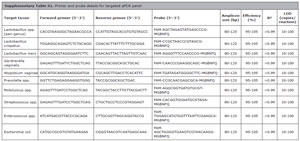
Supplementary Table S1. Primer and probe details for targeted qPCR panel
Primers and probes were designed in accordance with MIQE guidelines using Primer-BLAST and Primer3Plus with specificity verified by BLASTn against NCBI databases. Amplification efficiencies were derived from standard curve analysis (l01-106 copies per reaction) with R2 >0.99. Analytical sensitivity ranged from 10-100 genome copies per reaction with reproducible Ct <38 in duplicate assays.

Supplementary Table S2. Agreement between PCR-derived and sequencing-derived SI classification (n = 20)
High SI defined as SI > 0.7; Low SI defined as SI<0.7. Observed agreement: 85%. Cohen's K = 0.70; p<0.001.
REFERENCES
Bui BN, van Hoogenhuijze N, Viveen M, Mol F, Teklenburg G, de Bruin JP, Besselink D, Stevens Brentjens L, Mackens S, Rogers MRC, Steba GS, Broekmans F, Paganelli FL, van de Wijgert JHHM. The endometrial microbiota of women with or without a live birth within 12 months after a first failed IVF/ICSI cycle. Sci Rep. 2023;13:3444. PMID: 36859567 DOI: 10.1038/s41598-023-30591-2
Medline
Bustin SA, Benes V, Garson JA, Hellemans J, Huggett J, Kubista M, Mueller R, Nolan T, Pfaffl MW, Shipley GL, Vandesompele J, Wittwer CT. The MIQE guidelines: minimum information for publication of quantitative realtime PCR experiments. Clin Chem. 2009;55:611-22. PMID: 19246619 DOI: 10.1373/clinchem.2008.112797
Medline
Chen C, Song X, Wei W, Zhong H, Dai J, Lan Z, Li F, Yu X, Feng Q, Wang Z, Xie H, Chen X, Zeng C, Wen B, Zeng L, Du H, Tang H, Xu C, Xia Y, Xia H, et al. The microbiota continuum along the female reproductive tract and its relation to uterine-related diseases. Nat Commun. 2017;8:875. PMID: 29042534 DOI: 10.1038/s41467-01700901-0
Medline
Eisenhofer R, Minich JJ, Marotz C, Cooper A, Knight R, Weyrich LS. Contamination in low microbial biomass microbiome studies: issues and recommendations. Trends Microbiol. 2019;27:105-17. PMID: 30497919 DOI: 10.1016/j.tim.2018.11.003
Medline
Franasiak JM, Scott RT. Endometrial microbiome. Curr Opin Obstet Gynecol. 2017;29:146-52. PMID: 28266933 DOI: 10.1097/GCO.0000000000000357
Medline
Gajer P, Brotman RM, Bai G, Sakamoto J, Schütte UME, Zhong X, Koenig SSK, Fu L, Ma ZS, Zhou X, Abdo Z, Forney LJ, Ravel J. Temporal dynamics of the human vaginal microbiota. Sci Transl Med. 2012;4:132ra52. PMID: 22553250 DOI: 10.1126/scitranslmed.3003605
Medline
Gardner DK, Schoolcraft WB. Culture and transfer of human blastocysts. Curr Opin Obstet Gynecol. 1999;11:307-11. PMID: 10369209 DOI: 10.1097/00001703-19990600000013
Medline
Koedooder R, Singer M, Schoenmakers S, Savelkoul PHM, Morré SA, de Jonge JD, Poort L, Cuypers WJSS, Beckers NGM, Broekmans FJM, Cohlen BJ, den Hartog JE, Fleischer K, Lambalk CB, Smeenk JMJS, Budding AE, Laven JSE. The vaginal microbiome as a predictor for outcome of in vitro fertilization with or without intracytoplasmic sperm injection: a prospective study. Hum Reprod. 2019a;34:1042-54. PMID: 31119299 DOI: 10.1093/humrep/dez065 Erratum in: Hum Reprod. 2019;34:2091-2. PMID: 31119299 DOI: 10.1093/humrep/dez127
Medline
Koedooder R, Mackens S, Budding A, Fares D, Blockeel C, Laven J, Schoenmakers S. Identification and evaluation of the microbiome in the female and male reproductive tracts. Hum Reprod Update. 2019b;25:298-325. PMID: 30938752 DOI: 10.1093/humupd/dmy048
Medline
Kroon SJ, Ravel J, Huston WM. Cervicovaginal microbiota, women’s health, and reproductive outcomes. Fertil Steril. 2018;110:327-36. PMID: 30098679 DOI: 10.1016/j.fertnstert.2018.06.036
Medline
Kyono K, Hashimoto T, Nagai Y, Sakuraba Y. Analysis of endometrial microbiota by 16S ribosomal RNA gene sequencing among infertile patients: a single-center pilot study. Reprod Med Biol. 2018;17:297-306. PMID: 30013432 DOI: 10.1002/rmb2.12105
Medline
Moreno I, Codoñer FM, Vilella F, Valbuena D, MartinezBlanch JF, Jimenez-Almazán J, Alonso R, Alamá P, Remohí J, Pellicer A, Ramon D, Simon C. Evidence that the endometrial microbiota has an effect on implantation success or failure. Am J Obstet Gynecol. 2016;215:684703. PMID: 27717732 DOI: 10.1016/j.ajog.2016.09.075
Medline
Moreno I, Garcia-Grau I, Perez-Villaroya D, GonzalezMonfort M, Bahçeci M, Barrionuevo MJ, Taguchi S, Puente E, Dimattina M, Lim MW, Alama P, Vilella F, Simon C. Endometrial microbiota composition is associated with reproductive outcome in infertile patients. Microbiome. 2022;10:1. PMID: 34980280 DOI: 10.1186/s40168-02101184-w
Medline
Petrova MI, Reid G, Vaneechoutte M, Lebeer S. Lactobacillus iners: friend or foe? Trends Microbiol. 2017;25:182-91. PMID: 27914761 DOI: 10.1016/j.tim.2016.11.007
Medline
Ravel J, Gajer P, Abdo Z, Schneider GM, Koenig SSK, McCulle SL, Karlebach S, Gorle R, Russell J, Tacket CO, Brotman RM, Davis CC, Ault K, Peralta L, Forney LJ. Vaginal microbiome of reproductive-age women. Proc Natl Acad Sci U S A. 2011;108:4680-7. PMID: 20534435 DOI: 10.1073/pnas.1002611107
Medline
Roque M, Haahr T, Geber S, Esteves SC, Humaidan P. Fresh versus elective frozen embryo transfer in IVF/ICSI cycles: a systematic review and meta-analysis of reproductive outcomes. Hum Reprod Update. 2019;25:2-14. PMID: 30388233 DOI: 10.1093/humupd/dmy033
Medline
Su W, Gong C, Zhong H, Yang H, Chen Y, Wu X, Jin X, Hu J. Vaginal and endometrial microbiome dysbiosis associated with adverse embryo transfer outcomes. Reprod Biol Endocrinol. 2024;22:111. PMID: 39198832 DOI: 10.1186/s12958-024-01274-y
Medline
Väinämö S, Saqib S, Kalliala I, Kervinen K, Luiro K, Niinimäki M, Halttunen-Nieminen M, Virtanen S, Nieminen P, Salonen A, Holster T. Longitudinal analysis of vaginal microbiota during IVF fresh embryo transfer and in early pregnancy. Microbiol Spectr. 2023;11:e0165023. PMID: 37882794 DOI: 10.1128/spectrum.01650-23
Medline
von Elm E, Altman DG, Egger M, Pocock SJ, Gøtzsche PC, Vandenbroucke JP; STROBE Initiative. The Strengthening the Reporting of Observational Studies in Epidemiology (STROBE) statement: guidelines for reporting observational studies. PLoS Med. 2007;4:e296. PMID: 17941714 DOI: 10.1371/journal.pmed.0040296
Medline