JBRA Assist. Reprod. 2026;00(0):00-00
ORIGINAL ARTICLE
doi: 10.5935/1518-0557.20260113
Risk Profiling of Obstetric Complications: A Multivariable Analysis of Reproductive Factors, Maternal Knowledge, and Antenatal Care Using National Survey Data from Indonesia
1Doctoral Program of Health Sciences, Faculty of Public Health, Universitas Indonesia, Indonesia
2Department of Biostatistics and Population Studies, Faculty of Public Health, Universitas Indonesia, Indonesia
3School of Information Systems, Bina Nusantara University, Indonesia
4Universitas Prima Nusantara Bukittinggi
CONFLICT OF INTEREST
None.
ABSTRACT
Objective: Obstetric complications remain a major contributor to maternal morbidity. However, population-based risk-profiling approaches that integrate reproductive characteristics, maternal knowledge, and a history of previous complications remain limited. This study aimed to develop a population-level risk-profiling framework using nationwide data from the 2023 Indonesian Health Survey and to assess the contributions of key determinants to the likelihood of complications.
Methods: This analytical cross-sectional study used nationally representative data from the 2023 Indonesian Health Survey (SKI 2023). Obstetric complications were defined as a composite outcome encompassing complications during pregnancy, childbirth, and the postpartum period. Multivariable logistic regression was used to estimate adjusted odds ratios (aORs).
Results: The model demonstrated good statistical fit and yielded stable population-level estimates. Five variables remained significant predictors. A history of previous obstetric complications was the strongest determinant (aOR 3.55; 95% CI 3.34–3.80). Limited knowledge of pregnancy danger signs (aOR 1.66; 95% CI 1.53–1.80) and postpartum danger signs (aOR 1.14; 95% CI 1.06–1.23) was associated with higher odds of complications. High-risk parity was moderately associated with complications (aOR 1.20; 95% CI 1.13–1.28), as was incomplete antenatal care (aOR 1.09; 95% CI 1.01–1.17).
Conclusion: Obstetric complications are associated with a history of previous complications, maternal knowledge, and reproductive factors. These findings support the use of simple indicators for population-level risk profiling.
Keywords: obstetric complications, risk profiling, pregnancy history, reproductive factors, maternal knowledge
INTRODUCTION
Obstetric complications remain a leading cause of maternal morbidity and mortality worldwide, particularly in health systems that do not yet fully support the provision of high-quality antenatal care (Bartels et al., 2024; Nguyen et al., 2025). In 2020, the World Health Organization reported approximately 287,000 maternal deaths globally, many attributable to postpartum hemorrhage, hypertensive disorders of pregnancy, infections, and labor complications (WHO, 2025). In Indonesia, maternal mortality remains a substantial challenge, with the maternal mortality ratio (MMR) reaching 189 per 100,000 live births in 2022; many of these deaths were associated with acute obstetric complications (Yunitasari et al., 2023).
A range of studies has shown that the likelihood of obstetric complications is influenced by a combination of reproductive factors, a history of previous complications, and the mother’s ability to recognize pregnancy danger signs (Lindroos et al., 2024; Whelan et al., 2024). Although technological advances, such as the introduction of articulating laparoscopic instruments, have enhanced surgical precision, variations in clinical outcomes and residual complication risks remain evident (Arega et al., 2024). Patient vulnerability, socioeconomic status, and variability in clinical practices across health care facilities also continue to affect the likelihood of complications. Consequently, reducing maternal morbidity and mortality requires a systematic approach (Mamun et al., 2023; Heinonen et al., 2024).
Beyond mortality, severe obstetric morbidities such as preeclampsia, placenta accreta spectrum, obstetric sepsis, and major hemorrhage have long-term consequences for both maternal and neonatal health (Heerboth et al., 2024; Meulenbroeks et al., 2024). Studies indicate that preeclampsia and placental implantation disorders have complex biological underpinnings, necessitating stronger clinical detection capabilities (Bartels et al., 2024). Other research has also highlighted that most stillbirths are associated with placental abnormalities that could be identified earlier. These findings suggest that the likelihood of obstetric complications is determined not only by clinical factors but also by the capacity of the health system to respond rapidly to pregnancy danger signs (Yunitasari et al., 2023). Service quality, health care provider competence, and the availability of technology are critical to ensuring early detection, as evidenced by variations in obstetric outcomes across regional and international studies (Borges et al., 2024).
Reproductive factors such as maternal age, parity, and a history of previous complications have been widely recognized as strong predictors of obstetric complications in subsequent pregnancies (Dai et al., 2023; Li et al., 2025). Advanced maternal age is closely associated with preeclampsia and placental disorders, whereas high parity is often associated with hemorrhage and shoulder dystocia (Bartels et al., 2024; Damtew et al., 2024). Research on obstetric anal sphincter injury also indicates that a history of complications increases the likelihood of recurrence (Rygaard et al., 2024; Kedar Sade et al., 2025). Meanwhile, maternal knowledge of pregnancy and postpartum danger signs is a key determinant of early risk recognition and timely care-seeking behavior (Sadore et al., 2023). Studies have shown that delays in recognizing risks contribute substantially to poor maternal and neonatal outcomes, especially in emergencies such as sepsis and postpartum hemorrhage (Damtew et al., 2024; Kolokythas et al., 2024).
Nevertheless, various studies suggest that risk-assessment systems in health care settings continue to face substantial challenges. Barriers to implementing obstetric triage, inconsistencies in initial assessments, and limited resources hinder the optimization of early detection (Bartels et al., 2024; Lindroos et al., 2024). Other complications, such as obstetric sepsis, are also frequently underdiagnosed despite their substantial long-term effects (Daoud & Oxford-Horrey, 2024). Changes in clinical practice, the adoption of telehealth (Tormen et al., 2024), variations in surgical techniques, and inequities in health care access present new challenges that have not been fully evaluated in relation to the prevention of obstetric complications.
Despite increasing evidence regarding individual determinants of obstetric complications, integrated population-based risk-profiling models that simultaneously incorporate reproductive history, maternal knowledge, and health care utilization remain limited, particularly in low- and middle-income countries (Gesese et al., 2023; Ijdi et al., 2025). Most existing studies are based on clinical or facility-level data, which may limit their generalizability to broader populations.
To address this gap, this study integrates key domains, including reproductive history, maternal knowledge, and health care utilization, using a nationally representative dataset. These variables were selected on the basis of their epidemiological relevance, enabling a comprehensive population-level risk-profiling approach.
Accordingly, this study aimed to develop a population-level risk-profiling framework using data from the 2023 Indonesian Health Survey (SKI 2023), with a focus on identifying key determinants for risk stratification rather than constructing a prognostic prediction model.
MATERIALS AND METHODS
Study Design and Data Source
This cross-sectional study used data from the 2023 Indonesian Health Survey (SKI 2023), a nationally representative survey. To account for the complex survey design, all analyses incorporated sampling weights, clustering, and stratification. The cross-sectional approach was chosen to explore associations between variables and support the development of a population-level risk-profiling framework. Although this design does not permit temporal inferences, it is suitable for identifying key factors associated with obstetric complications in large-scale population data.
Population and Sample
The analysis included 64,408 women aged 15–49 years with complete information on their most recent pregnancy. Observations with more than 10% missing data across key variables were excluded, and a complete-case analysis was performed. The dataset did not distinguish between singleton and multiple pregnancies, which is acknowledged as a limitation.
Instruments and Procedures
Data were collected using the SKI 2023 questionnaire, which included information on sociodemographic characteristics, reproductive history, maternal knowledge, and obstetric complications. The instrument was standardized and administered by trained enumerators. The collected variables were coded and subjected to descriptive and inferential analyses. Weighted analytical procedures were applied to ensure that the estimates remained consistent with the population structure. All procedures adhered to guidelines for the use of secondary data and to confidentiality principles.
Quality Control
Quality-control procedures were implemented throughout data preparation and analysis to maintain accuracy and consistency. The SKI 2023 data underwent national standardization processes, including enumerator training and internal verification by the survey organizers before distribution. Data-completeness checks, coding-consistency validation, and the handling of missing values were completed before the primary analysis. Weighted analytical methods were used to ensure national representativeness. Data cleaning included consistency checks, outlier screening, and verification of variable coding.
Variables
All variables were defined before analysis on the basis of their relevance to maternal health research and their availability in the SKI 2023 dataset. This approach was intended to ensure consistency while maintaining interpretability at the population level.
Outcome Variable
The outcome of interest was obstetric complications, defined as a composite outcome encompassing complications during pregnancy, childbirth, or the postpartum period. This composite measure was used to reflect the overall burden of maternal morbidity, given that individual complications may be underreported in survey-based data. To maintain interpretability, each component was also examined separately to ensure that the overall outcome was not driven by a single dominant condition. All outcomes were based on self-reported information, which may introduce recall bias.
Exposure Variables
Reproductive factors
Maternal age, parity, and gravida were included as key reproductive variables based on their well-established associations with obstetric risk in previous studies.
Previous complication history
A history of previous adverse pregnancy events was derived from information on previous pregnancy outcomes, mode of delivery, and miscarriage history. For women with no previous pregnancy (nulliparous women), this variable was coded as no previous complication.
Maternal knowledge
Knowledge of pregnancy and postpartum danger signs was assessed using structured survey questions covering commonly recognized clinical warning signs. The knowledge variables were derived from standard indicators used in maternal health surveys. Knowledge was measured at the time of the survey, after the most recent pregnancy; therefore, reverse causality cannot be excluded because women who experienced complications may subsequently have acquired additional knowledge.
Antenatal care (ANC) completeness
ANC completeness was assessed according to the receipt of essential service components during pregnancy rather than the number of visits alone. A total of 19 components were included, and women who received all components were classified as having complete ANC.Because this information was collected retrospectively, the measure may be affected by recall bias and potential misclassification.
Data Analysis
Data analysis was performed using Stata version 17.0 (StataCorp, TX, USA). Descriptive analyses were conducted to summarize participant characteristics. Bivariate associations between independent variables and obstetric complications were examined using logistic regression. Multivariable logistic regression was then used to estimate adjusted odds ratios (aORs) with 95% confidence intervals. Variables were selected on the basis of prior evidence and clinical relevance, rather than solely through automated selection procedures, to improve model stability and reduce overfitting. Potential confounding was assessed by examining changes in effect estimates after variable adjustment. Multicollinearity was evaluated using variance inflation factors (VIFs), with values below 10 considered acceptable. Model performance was assessed in terms of discrimination, using the area under the receiver operating characteristic curve (AUC), and calibration, using the Hosmer–Lemeshow test.
Ethical Approval
The research data were obtained from the 2023 Indonesian Health Survey (SKI 2023), provided by the Ministry of Health of the Republic of Indonesia. Access was granted after verification and the signing of a Non-Disclosure Agreement (NDA), document number 2502DECE0C7C5924. The dataset cannot be redistributed because of confidentiality regulations. Requests for data access may be submitted through the Ministry of Health’s official Data Request Service in accordance with applicable procedures.
Data Availability Statement
The data analyzed in this study were derived from the 2023 Indonesian Health Survey (SKI 2023). Because of confidentiality requirements and the Non-Disclosure Agreement with the Ministry of Health of the Republic of Indonesia, the dataset is not publicly accessible and cannot be shared or redistributed by the authors. Researchers wishing to access the data must submit a formal request through the Ministry of Health’s official data-access mechanism and comply with applicable regulations.
RESULTS
The univariate analysis showed that most respondents were in the 20–34-year reproductive-age group, with a substantial proportion classified as high-risk on the basis of age (Table 1). A substantial proportion reported previous obstetric complications. Most deliveries occurred in health facilities; however, complete ANC coverage was low. Knowledge was limited: most participants were unaware of pregnancy danger signs, and nearly half were unaware of postpartum danger signs. These findings provide a concise overview of reproductive characteristics, service use, and maternal knowledge in the study population.
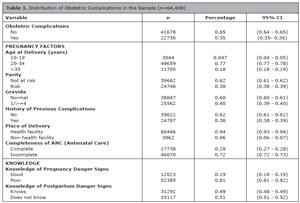
Table 1. Distribution of Obstetric Complications in the Sample (n = 64,408)
The bivariate analysis presented in Table 2 showed that several factors were significantly associated with obstetric complications. Maternal age >35 years was associated with higher odds of complications (cOR 1.11; 95% CI 1.04–1.18), whereas the 10–19-year age group showed no significant association. Reproductive factors showed a consistent pattern: high-risk parity (1 or >4 births) and high-risk gravidity (first pregnancy or ≥4 pregnancies) were associated with 18% and 16% higher odds of complications, respectively. Maternal knowledge was also important: women with limited knowledge of pregnancy danger signs (cOR 1.68; 95% CI 1.56–1.82) or postpartum danger signs (cOR 1.14; 95% CI 1.08–1.21) had higher odds of complications. Lower reported complication rates among deliveries assisted by non-health personnel and those occurring outside health facilities may reflect detection or reporting bias. A history of previous complications was the strongest predictor, with nearly fourfold higher odds of obstetric complications (cOR 3.79; 95% CI 3.57–4.03). These findings suggest that reproductive factors, maternal knowledge, and a history of previous complications are key components to consider in risk-profiling approaches.
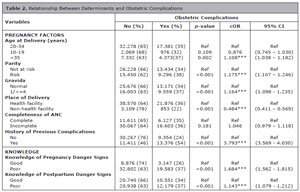
Table 3. Relationship Between Determinants and Obstetric Complications
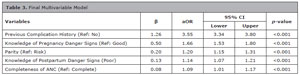
Table 3. Final Multivariable Model
The multivariable analysis identified five independent predictors of obstetric complications. A history of previous complications remained the strongest determinant (aOR 3.55; 95% CI 3.34–3.80 ), followed by limited knowledge of pregnancy danger signs (aOR 1.66; 95% CI 1.53–1.80) and postpartum danger signs (aOR 1.14; 95% CI 1.06–1.23). High-risk parity (aOR 1.20; 95% CI 1.13–1.28) and incomplete antenatal care (aOR 1.09; 95% CI 1.01–1.17) were also associated with higher odds of complications.
Deliveries occurring outside health facilities had lower reported odds of complications (aOR 0.76; 95% CI 0.64–0.90), which may reflect differences in detection or reporting rather than a true protective effect.
The model showed reasonable discrimination between women with and without complications, with an area under the receiver operating characteristic curve (AUC) of 0.72 (95% CI 0.71–0.73). The model also showed good agreement between observed and expected outcomes, as indicated by a nonsignificant Hosmer–Lemeshow test (p>0.05).
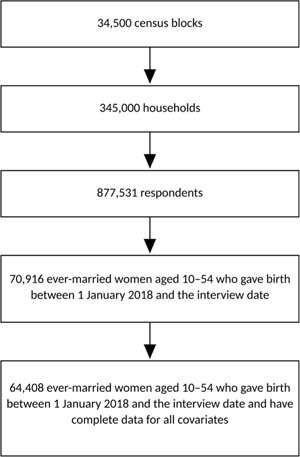
Figure 1. Population and Sample
DISCUSSION
In this nationally representative population, obstetric complications were associated with a combination of reproductive history, maternal knowledge, and service-related factors. Among the variables examined, a history of previous complications emerged as the most important factor.
Women with such a history were substantially more likely to experience complications again, suggesting that vulnerability may persist across pregnancies (Asefa et al., 2020). This finding is consistent with previous studies indicating that reproductive history plays a central role in shaping maternal risk over time (Eroglu et al., 2024; Kolokythas et al., 2024). In practical terms, this finding supports the early identification and closer monitoring of women with previous complications, particularly in primary care.
Maternal knowledge was also associated with obstetric complications. Women with limited knowledge of pregnancy and postpartum danger signs were more likely to experience complications (Shiferaw et al., 2013; Bantas et al., 2019; Ijdi et al., 2025). This finding is consistent with the concept that the ability to recognize warning signs can influence how promptly women seek care (Velebil et al., 2025). In settings where access to health care varies, improving maternal knowledge could contribute to the earlier detection and management of complications.
Reproductive characteristics, particularly high-risk parity, remained associated with complications after adjustment (Li et al., 2025). This finding supports existing evidence that repeated pregnancies or extreme parity may increase physiological strain and contribute to adverse outcomes (Laksono et al., 2020; Zhang et al., 2023). A notable finding was the lower frequency of reported complications among women who delivered outside health care facilities (Adil et al., 2024). This finding should be interpreted cautiously because it likely reflects underrecognition or underreporting rather than a genuinely lower risk. Women who deliver outside formal health care settings may have limited access to clinical assessment, resulting in fewer reported diagnoses.
In addition, incomplete antenatal care showed a modest association with complications. This finding suggests that the content and quality of care may be more important than the number of visits alone. Strengthening risk communication and standardizing assessments within antenatal care services may improve the early identification of complications.
The overall model showed reasonable discrimination, with an AUC of 0.72, indicating acceptable performance at the population level. By demonstrating that essential predictors can be captured through routinely collected data, this study provides a basis for scalable screening tools that may enhance triage and preventive strategies in primary health care systems (Zhang et al., 2023; Lindroos et al., 2024). External validation remains necessary to refine the model’s clinical applicability.
Several limitations should be considered. First, the use of self-reported data may introduce recall bias and underreporting, particularly for complications that occurred outside health care facilities. Second, the cross-sectional design limits the ability to establish temporal relationships between exposures and outcomes. In particular, maternal knowledge and antenatal care variables were assessed after the most recent pregnancy, raising the possibility of reverse causality (Rutledge et al., 2023). Third, residual confounding by unmeasured clinical variables, such as comorbidities or nutritional status, cannot be excluded. Finally, the use of a composite outcome may mask differences among specific types of complications.
Despite these limitations, this study provides a population-level perspective on key factors associated with obstetric complications. The findings suggest that routinely collected information, such as reproductive history and maternal knowledge, can support early risk identification in primary health care settings. However, further validation is needed before this approach can be applied to clinical decision-making.
CONCLUSION
This study shows that obstetric complications are associated with a history of previous complications, maternal knowledge, and reproductive factors in a nationally representative population. These findings highlight the potential value of simple, routinely collected information in supporting early risk identification in maternal health services, particularly in primary care. Although this approach may be useful for population-level risk stratification, it should not be interpreted as a tool for precise individual-level prediction.
Recommendations:
Future studies should validate these findings in different populations and incorporate additional clinical variables that may improve risk identification. Strengthening maternal education about danger signs and improving the quality of antenatal care may also enhance the early detection of obstetric complications. At the program level, integrating simple risk-profiling approaches into routine maternal health services could support more targeted monitoring and timely referral.
Acknowledgments:
The authors thank the Center for Technology Assessment and Application (PPAPT) and the Indonesia Endowment Fund for Education (LPDP) for their financial and institutional support.
REFERENCES
Adil H, Maqsood M, Kadri HM, Ahmed H, Iqbal MF, Nizamani M, Hussain T, Syed N, Asghar L. Long working hours and obstetric complications: A cross-sectional study among female doctors. Eur J Obstet Gynecol Reprod Biol X. 2024;22:100302. PMID: 39011059 DOI: 10.1016/j.eurox.2024.100302
Medline
Arega BN, Feleke LA, Tilahun HA, Ahmed DM, Hailu FG. Proportion of stillbirth and associated factors among women who deliver at public hospitals in Bahir Dar city, north-West Ethiopia. BMC Womens Health. 2024;24:122. PMID: 38365779 DOI: 10.1186/s12905-024-02920-8
Medline
Asefa GG, Gebrewahid TG, Nuguse H, Gebremichael MW, Birhane M, Zereabruk K, Zemicheal TM, Hailay A, Abrha WA, Hadera SA, Hailu AG, Beyene BH, Dagnazgi EA, Tekulu FG, Welay F. Determinants of Neonatal Jaundice among Neonates Admitted to Neonatal Intensive Care Unit in Public General Hospitals of Central Zone, Tigray, Northern Ethiopia, 2019: a Case-Control Study. Biomed Res Int. 2020;2020:4743974. PMID: 33145350 DOI: 10.1155/2020/4743974
Medline
Borges VEL, Barbosa F Jr, Neves FF, Mesquita MRS, Moisés ECD. National survey regarding obstetricians’ perspective of obstetric emergencies in Brazil. Clinics (Sao Paulo). 2024;79:100333. PMID: 38330790 DOI: 10.1016/j.clinsp.2024.100333
Medline
Dai J, Shi Y, Wu Y, Guo L, Lu D, Chen Y, Wang Y, Lai H, Kong X. The interaction between age and parity on adverse pregnancy and neonatal outcomes. Front Med (Lausanne). 2023;10:1056064. PMID: 36910494 DOI: 10.3389/fmed.2023.1056064
Medline
Damtew BS, Hailu AM, Fente BM, Workneh TW, Abdi HB. Determinant of adverse early neonatal outcomes following emergency cesarean section in North West, Ethiopia: institutional-based case-control study. BMC Pregnancy Childbirth. 2024;24:881. PMID: 39734223 DOI: 10.1186/s12884-024-07037-2
Medline
Daoud AK, Oxford-Horrey C. Long-term sequelae and management following obstetric sepsis. Semin Perinatol. 2024;48:151981. PMID: 39307593 DOI: 10.1016/j.semperi.2024.151981
Medline
Eroglu M, Yaksi N, Taskomur AT, Efendi GY, Oztop DB. Effect of perceived social support, comorbid psychiatric disorders, and pregnancy complications on adaptation to pregnancy in adolescents: A comparison study from southeastern Turkey. Arch Pediatr. 2024;31:513-8. PMID: 39477741 DOI: 10.1016/j.arcped.2024.08.002
Medline
Gesese SS, Mersha EA, Balcha WF. Knowledge of danger signs of pregnancy and health-seeking action among pregnant women: a health facility-based cross-sectional study. Ann Med Surg. 2023;85:1722-30. PMID: 37228959 DOI: 10.1097/ms9.0000000000000610
Medline
Heerboth S, Devlin PM, Benipal S, Trawick E, Raghuraman N, Coviello E, Brown EE, Quist-Nelson J. Evidence-based obstetric guidance in the setting of a global intravenous fluid shortage. Am J Obstet Gynecol MFM. 2024;6:101556. PMID: 39577770 DOI: 10.1016/j.ajogmf.2024.101556
Medline
Heinonen K, Saisto T, Gissler M, Sarvilinna N. Maternal and neonatal complications of shoulder dystocia with a focus on obstetric maneuvers: Maternal and neonatal complications of shoulder dystocia with a focus on obstetric maneuvers: A case-control study of 1103 deliveries. Acta Obstet Gynecol Scand. 2024;103:1965-74. PMID: 38276972 DOI: 10.1111/aogs.14780
Medline
Ijdi RE, Ducille CM, Singh K. Knowledge of Maternal Health Complications: A Critical Analysis Among Pregnant Women in Bangladesh. PLOS Glob Public Health. 2025;5:e0005469. PMID: 41231784 DOI: 10.1371/journal.pgph.0005469
Medline
Kedar Sade E, Lantsberg D, Tagar Sar-El M, Gefen S, Gafner M, Katorza E. Identifying causes and associated factors of stillbirths using autopsy of the fetus and placenta. Arch Gynecol Obstet. 2025;311:237-44. PMID: 38691157 DOI: 10.1007/s00404-024-07522-1
Medline
Kolokythas A, Badeghiesh A, Baghlaf H, Dahan MH. A comparison of obstetric and neonatal outcomes in polycystic ovary syndrome and congenital adrenal hyperplasia: a retrospective analysis of a population database. F S Sci. 2024;5:293-300. PMID: 38795844 DOI: 10.1016/j.xfss.2024.05.001
Medline
Laksono AD, Rukmini R, Wulandari RD. Regional disparities in antenatal care utilization in Indonesia. PLoS One. 2020;15:e0224006. PMID: 32053621 DOI: 10.1371/journal.pone.0224006
Medline
Li S, Li J, Du L, Wang X, Zhang Y, Xiao Y, Pan C, Huo Y. Association between parity and adverse maternal and neonatal outcomes: a population-based cross-sectional study. Front Med (Lausanne). 2025;12:1697655. PMID: 41368317 DOI: 10.3389/fmed.2025.1697655
Medline
Lindroos L, Sengpiel V, Elden H. Experiences of implementing and working with obstetric emergency triage: A qualitative study among Swedish midwifes, auxiliary nurses, and obstetricians. Sex Reprod Healthc. 2024;40:100958. PMID: 38492272 DOI: 10.1016/j.srhc.2024.100958
Medline
Mamun A, Biswas T, Scott J, Sly PD, McIntyre HD, Thorpe K, Boyle FM, Dekker MN, Doi S, Mitchell M, McNeil K, Kothari A, Hardiman L, Callaway LK. Adverse childhood experiences, the risk of pregnancy complications and adverse pregnancy outcomes: a systematic review and meta-analysis. BMJ Open. 2023;13:e063826. PMID: 37536966 DOI: 10.1136/bmjopen-2022-063826
Medline
Meulenbroeks D, Jonkers D, Scheepers H, Gubbels J. Obstetric healthcare experiences and information needs of Dutch women in relation to their vegan diet during pregnancy. Prev Med Rep. 2024;48:102916. PMID: 39534463 DOI: 10.1016/j.pmedr.2024.102916
Medline
Nguyen CG, Burns H, Bolten K, Cathcart AM, Caughey A, Jou J, Harrison R. Socioeconomic disadvantage and the risk for adverse post-operative outcomes after gynecologic cancer surgery. Int J Gynecol Cancer. 2025;35:102757. PMID: 41297076 DOI: 10.1016/j.ijgc.2025.102757
Medline
Rutledge E, Spiers A, Vardeman J, Griffin N, Nisar T, Muir T, Antosh DD. Educating Women About Pelvic Floor Disorders During Pregnancy From the First to the "Fourth Trimester": A Randomized Clinical Trial. Urogynecology (Phila). 2023;29:770-6. PMID: 37607311 DOI: 10.1097/SPV.0000000000001341
Medline
Rygaard A, Jonsson M, Wikström AK, Brismar‐Wendel S, Hesselman S. Obstetric anal sphincter injury in the second birth after perineal wound complication in the first birth: A nationwide register cohort study. BJOG. 2024;131:1378-84. PMID: 38628047 DOI: 10.1111/1471-0528.17830
Medline
Sadore A, Kebede Y, Birhanu Z. Pregnancy Risk Perception, Knowledge of Obstetric Danger Signs and Attitude Towards Skilled Delivery Service Utilization Among Pregnant Mothers in a Rural Setting in South Ethiopia: A Community-Based Cross-Sectional Study. Int J Womens Health. 2023;15:1845-56. PMID: 38046268 DOI: 10.2147/IJWH.S432447
Medline
Shiferaw S, Spigt M, Godefrooij M, Melkamu Y, Tekie M. Why do women prefer home births in Ethiopia? BMC Pregnancy Childbirth. 2013;13:5. PMID: 23324550 DOI: 10.1186/1471-2393-13-5
Medline
Tormen M, Toniolo B, Pecci L, Soraci G, Taliento C, Greco P, Salvioli S. Exploring the impact of integrating telehealth in obstetric care: A scoping review. Eur J Obstet Gynecol Reprod Biol. 2024;302:242-8. PMID: 39332087 DOI: 10.1016/j.ejogrb.2024.09.031
Medline
Velebil P, Savona-Ventura C, Zaigham M, Mahmood T, Wladimiroff J, Louwen F. How to influence rising caesarean section rates in Europe? An invited scientific review by European Board and College of Obstetrics and Gynaecology (EBCOG). Eur J Obstet Gynecol Reprod Biol. 2025;311:113979. PMID: 40328050 DOI: 10.1016/j.ejogrb.2025.113979
Medline
Whelan AR, Thorsen MM, MacCarrick G, Russo ML. Cardiovascular and obstetrical outcomes among delivering patients with Marfan or Loeys-Dietz syndrome: a retrospective analysis by hospital delivery setting. Am J Obstet Gynecol MFM. 2024;6:101340. PMID: 38460826 DOI: 10.1016/j.ajogmf.2024.101340
Medline
Yunitasari E, Matos F, Zulkarnain H, Kumalasari DI, Kusumaningrum T, Putri TE, Yusuf A, Astuti NP. Pregnant woman awareness of obstetric danger signs in developing country: systematic review. BMC Pregnancy Childbirth. 2023;23:357. PMID: 37194036 DOI: 10.1186/s12884-023-05674-7
Medline
Zhang J, Liu X, Rao L, Ma R, Wu W, Chen C, Lin Y. Adverse obstetric and perinatal outcomes of patients with history of recurrent miscarriage: a retrospective cohort study. Fertil Steril. 2023;120:626-34. PMID: 37121567 DOI: 10.1016/j.fertnstert.2023.04.028
Medline