JBRA Assist. Reprod. 2026 2026;00(0):00-00
REVIEW
doi: 10.5935/1518-0557.20260094
Endometriosis in IVF/ICSI: Clinical Outcomes, Cumulative Live Birth, and a Pragmatic Narrative Review for Patient Counseling and Management
1University Hospital Sveti Duh, Department of Obstetrics and Gynecology, Unit of Reproductive Medicine. Zagreb, Croatia
CONFLICTS OF INTEREST
None.
ABSTRACT
This pragmatic narrative review provides a phenotype-informed framework for counseling and managing women with endometriosis undergoing IVF/ICSI, with emphasis on cumulative live birth and preservation of ovarian reserve. A focused literature search was conducted in PubMed/MEDLINE, Scopus, and Google Scholar, covering studies published from 2021 to 2026 and including selected earlier landmark studies when relevant. Evidence was synthesized according to disease phenotype, the presence of adenomyosis, prior surgery, and key reproductive outcomes, including ovarian response, embryo cohort size, implantation, and cumulative live birth. Endometriosis appears to act predominantly as a quantitative ovarian constraint, characterized by reduced anti-Müllerian hormone levels, lower antral follicle count, and decreased oocyte yield, particularly in women with ovarian endometrioma or prior cystectomy. Fertilization and embryo competence are generally preserved, suggesting that the main limitation is embryo cohort size rather than intrinsic embryo quality. Implantation may be modestly impaired in selected phenotypes, especially in the presence of adenomyosis, whereas live birth per transfer may remain broadly comparable after adjustment. Adenomyosis is heterogeneous, and its variable presentation may influence reproductive outcomes and treatment response. Endometriosis does not preclude successful IVF/ICSI. Counseling should therefore emphasize cumulative outcomes, preservation of ovarian reserve, and avoidance of unnecessary ovarian surgery within a pragmatic, phenotype-informed management strategy.
Keywords: endometriosis, endometrioma, IVF, ICSI, adenomyosis, cumulative live birth
CLINICAL CONTEXT AND RATIONALE
Endometriosis is a chronic estrogen-dependent inflammatory disorder affecting approximately 10% of women of reproductive age and a substantially higher proportion of those presenting with infertility (Becker et al., 2022). Its relationship with impaired fertility is multifactorial and phenotype-dependent, involving anatomic distortion, altered pelvic inflammatory milieu, impaired ovarian reserve and potential endometrial dysfunction (Becker et al., 2022; Zondervan et al., 2020). As a result, many affected women ultimately require assisted reproductive technology (ART), most commonly IVF/ICSI, to achieve pregnancy (Becker et al., 2022).
Despite the extensive literature, clinical decisionmaking for women with endometriosis undergoing IVF/ ICSI remains challenging. The evidence is heterogeneous and often combines different disease phenotypes, surgical histories, and ART protocols, limiting its direct translation into clinical practice (Zondervan et al., 2020; Mappa et al., 2024). In particular, uncertainty persists regarding the relative contributions of ovarian and endometrial factors, the clinical value of endometrioma surgery before ART, and the optimal stimulation and embryo transfer strategies for different patient subgroups (Mappa et al., 2024; Liao et al., 2025).
Contemporary data increasingly support a unifying concept: endometriosis predominantly exerts a quantitative ovarian effect, characterized by reduced AMH levels, a lower antral follicle count, and decreased oocyte yield, especially in women with ovarian endometrioma and/or prior cystectomy (Liao et al., 2025; Wu et al., 2021). In contrast, fertilization, embryo development, and live birth per transfer are frequently preserved when highquality embryos are available (Wu et al., 2021; Kamath et al., 2022). This distinction has important implications for counseling because the principal limitation often lies in the size of the embryo cohort rather than in intrinsic embryo competence (Kamath et al., 2022).
At the same time, implantation may be modestly impaired in selected phenotypes, particularly in the presence of coexisting adenomyosis or deep infiltrating disease (Bourdon et al., 2022). In these patients, uterine factors may interact with ovarian limitations to influence cumulative outcomes. Importantly, cumulative live birth, rather than single-cycle success, has emerged as the most clinically relevant endpoint, yet it is often underemphasized in routine counseling (Mappa et al., 2024; Kamath et al., 2022).
Another key source of clinical uncertainty is the role of surgery before IVF/ICSI. Although endometrioma cystectomy may improve pain and facilitate oocyte retrieval in selected cases, robust evidence indicates a consistent decline in ovarian reserve without a clear improvement in live birth outcomes (Moreno-Sepulveda et al., 2022; Riemma et al., 2026). This creates an important trade-off between potential surgical benefits and iatrogenic harm, underscoring the need for careful patient selection and transparent counseling.
Given these complexities, a structured but pragmatic framework is needed to integrate phenotype, ovarian reserve, prior surgery, and uterine factors into coherent clinical decision-making. Therefore, the aim of this review is not to summarize all available evidence again, but to translate contemporary data into a clinically applicable counseling and management framework for women with endometriosis undergoing IVF/ICSI, with an emphasis on cumulative outcomes and the avoidance of unnecessary ovarian damage.
Literature search strategy
A focused narrative review was conducted using PubMed/MEDLINE, Scopus and Google Scholar. The search covered studies published from January 2021 to January 2026, with additional inclusion of key earlier landmark studies where relevant. Search terms included combinations of "endometriosis," "IVF," "ICSI," "ovarian reserve," "oocyte yield," "embryo quality," "implantation," "adenomyosis," and "live birth. "Priority was given to systematic reviews, meta-analyses, and large cohort studies. Relevant observational studies were included when higher-level evidence was limited. The authors selected studies based on their clinical relevance and applicability to counseling and management in IVF/ICSI.
This review was not conducted as a formal systematic review; however, efforts were made to ensure a structured and clinically meaningful synthesis of the available evidence.
In this review, cumulative live birth rate refers to the probability of achieving at least one live birth from all fresh and frozen embryo transfers derived from a single ovarian stimulation and oocyte retrieval cycle.
PHENOTYPE AND BASELINE ASSESSMENT
Although phenotype provides a clinically intuitive description of anatomic presentation, it does not replace established classification systems such as rASRM, EFI, or ENZIAN#. These systems may provide complementary information regarding disease extent and fertility prognosis. Therefore, the present framework should be interpreted as a pragmatic clinical model rather than as a validated classification system.
Accurate pre-IVF assessment in women with endometriosis should move beyond a binary diagnosis and focus on phenotype, ovarian reserve, prior surgical history, and coexisting uterine disease because these factors directly influence both treatment strategy and counseling (Becker et al., 2022; Zondervan et al., 2020).
From a pragmatic perspective, endometriosis can be grouped into three clinically relevant phenotypes: peritoneal disease, ovarian endometrioma, and deep infiltrating endometriosis (DIE). Each phenotype is associated with distinct mechanisms of infertility and different implications for ART. Ovarian endometrioma is most consistently linked to reduced ovarian reserve and an impaired response to stimulation, whereas DIE and adenomyosis are more often associated with implantation-related factors (Mappa et al., 2024; Liao et al., 2025; Wu et al., 2021). Peritoneal endometriosis is often difficult to diagnose noninvasively and may require surgical confirmation (Guerriero et al., 2016); therefore, in clinical practice, the phenotype may be inferred or classified retrospectively.
IMPACT ON OVARIAN RESPONSE, EMBRYO COMPETENCE AND IMPLANTATION
Ovarian response: a predominantly quantitative effect
Across contemporary studies, the most consistent finding is that endometriosis is associated with reduced ovarian reserve and a diminished response to stimulation, particularly in women with ovarian endometrioma and/or prior ovarian surgery (Liao et al., 2025; Wu et al., 2021; Moreno-Sepulveda et al., 2022). This is reflected in lower AMH levels, a reduced antral follicle count, and fewer retrieved and mature oocytes during IVF/ICSI cycles.The magnitude of this effect is generally modest but clinically relevant, with most meta-analyses reporting approximately one to two fewer oocytes per cycle than in controls (Mappa et al., 2024; Liao et al., 2025). Importantly, this reduction is not uniform across all phenotypes. Women with isolated peritoneal disease often demonstrate ovarian responses comparable to those of other infertility populations, whereas women with endometrioma- especially bilateral disease or previous cystectomy-show a more pronounced impairment (Liao et al., 2025; Wu et al., 2021; Moreno-Sepulveda et al., 2022).The underlying mechanisms are likely multifactorial, involving chronic inflammation, oxidative stress and mechanical disruption of ovarian tissue. However, from a clinical standpoint, the key implication is straightforward: fewer oocytes are available per cycle, which directly limits the size of the embryo cohort and may prolong time to pregnancy.This quantitative limitation may be further amplified by surgical intervention, particularly ovarian cystectomy. Multiple studies have demonstrated a significant and sustained decline in AMH following endometrioma cystectomy, without clear evidence of improved IVF outcomes (Moreno-Sepulveda et al., 2022; Riemma et al., 2026). As a result, prior surgery emerges as a major modifier of ovarian response and should be explicitly incorporated into both counseling and treatment planning.
Embryo competence: preserved despite reduced yield
In contrast to its effect on ovarian response, endometriosis appears to have a limited and inconsistent effect on oocyte and embryo quality. Although some individual studies report subtle differences in embryo morphology or developmental kinetics, pooled data suggest that fertilization rates, blastocyst formation rates, and live birth per transfer are largely comparable to those observed in women without endometriosis (Mappa et al., 2024; Wu et al., 2021; Kamath et al., 2022; Somigliana et al., 2023).The donor-oocyte model provides particularly important insight. Studies comparing donor-recipient cycles indicate that, when oocyte quality is controlled, live birth rates in women with endometriosis are similar to those in controls, suggesting that the uterine environment alone does not markedly impair reproductive potential under optimized ART conditions (Kamath et al., 2022).Similarly, analyses focusing on embryo competence- using indirect markers such as fertilization and blastulation rates and, in some cases, euploidy-have not demonstrated a consistent or clinically meaningful reduction attributable to endometriosis (Wu et al., 2021; Kamath et al., 2022). This supports the concept that intrinsic embryo viability is often preserved, particularly in younger women and in the absence of extensive ovarian damage.From a clinical perspective, this distinction is critical. The primary limitation in endometriosis-associated infertility is not the quality of individual embryos, but rather the number of embryos available for transfer. This explains why live birth per transfer is frequently reassuring, while cumulative outcomes may be lower due to reduced embryo cohort size.
Implantation and uterine factors: phenotype-dependent effects
The effect of endometriosis on implantation is more nuanced and appears to be phenotype-dependent. Although some studies report modestly reduced implantation rates in women with endometriosis, particularly those with advanced disease, these findings are inconsistent and are often attenuated after adjustment for confounding variables (Mappa et al., 2024; Liao et al., 2025). A key modifier is the presence of adenomyosis, which has been associated with impaired implantation, lower clinical pregnancy rates, and reduced cumulative live birth in ART populations (Bourdon et al., 2022). In these patients, uterine factors may play a more prominent role than ovarian limitations and should be considered explicitly when treatment is planned.Deep infiltrating endometriosis may also contribute to altered pelvic anatomy and inflammatory signaling, although its independent effect on implantation remains less clearly defined. Importantly, modern IVF/ICSI protocols-particularly those incorporating frozen embryo transfer-may mitigate some adverse endometrial effects associated with endometriosis by allowing embryo transfer in a more controlled hormonal environment.Evidence from donor-oocyte and euploid embryo transfer studies further supports the concept that endometrial receptivity is not uniformly impaired in endometriosis. When embryo quality is optimized and confounders are controlled, implantation and live birth rates are often comparable to those in women without the disease (Kamath et al., 2022).
Clinical integration: from mechanisms to counseling
Taken together, these findings support a pragmatic clinical model in which endometriosis appears to act predominantly as a quantitative ovarian constraint, with more limited and context-dependent effects on embryo competence and implantation.This model has direct implications for clinical practice. First, stimulation strategies should aim to maximize oocyte yield within safe limits, particularly in women with reduced ovarian reserve or prior surgery. Second, counseling should emphasize that embryo quality is generally preserved, providing reassurance regarding success per transfer. Third, treatment planning should focus on cumulative live birth rather than single-cycle outcomes, reflecting the central role of embryo cohort size.Finally, the identification of coexisting uterine disease- particularly adenomyosis-should guide decisions regarding embryo transfer strategy, including the potential use of freeze-all approaches in selected patients.Overall, integrating ovarian, embryologic, and uterine factors into a unified framework enables more precise counseling and supports a shift toward individualized, phenotype-driven ART management in women with endometriosis. Key counseling points are summarized in Table 1.
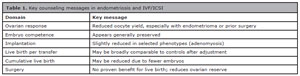
Table 1. Key counseling messages in endometriosis and IVF/ICSI
SURGERY BEFORE IVF/ICSI: WHEN TO INTERVENE AND WHEN TO AVOID
The central clinical dilemma
The decision to perform surgery before IVF/ICSI is one of the most consequential and controversial steps in the management of endometriosis-associated infertility. Although surgery may improve symptoms and, in selected cases, restore pelvic anatomy, it also carries a well-documented risk of iatrogenic ovarian damage, particularly in women with ovarian endometrioma (Moreno-Sepulveda et al., 2022; Riemma et al., 2026; Younis & Taylor, 2024).From a contemporary perspective, this decision should not be framed simply as "surgery versus IVF," but rather as a trade-off between potential anatomic or symptomatic benefits and the loss of ovarian reserve, with direct implications for cumulative live birth.
Evidence overview: limited reproductive benefit, consistent ovarian harm
Current evidence does not support the routine surgical removal of endometriomas before IVF/ICSI to improve reproductive outcomes. Multiple studies and metaanalyses demonstrate that cystectomy is associated with a significant decline in AMH levels and ovarian response without a corresponding improvement in fertilization, implantation, or live birth rates (Moreno-Sepulveda et al., 2022; Riemma et al., 2026; Younis & Taylor, 2024).Importantly, the negative effect on ovarian reserve appears to be dose-dependent, with a greater decline observed in bilateral disease and after repeat surgery (Moreno-Sepulveda et al., 2022; Younis & Taylor, 2024). This is clinically relevant because even modest reductions in ovarian reserve may result in fewer retrieved oocytes and a smaller embryo cohort, ultimately affecting cumulative live birth.In contrast, IVF/ICSI outcomes per transfer are generally comparable between women with untreated endometrioma and those without endometriosis, further questioning the routine role of surgery as a preparatory step (Mappa et al., 2024; Liao et al., 2025; Wu et al., 2021).
Indications for surgery: a selective, not routine approach
Despite the lack of reproductive benefit, surgery retains a role in carefully selected cases. Current evidence and guidelines support intervention in the following situations:
• Severe or refractory pain not responsive to medical therapyIn these situations, the goal of surgery is not to improve IVF success per se, but to address symptoms or enable safe and effective ART (Becker et al., 2022; Riemma et al., 2026).
• Suspicion of malignancy or atypical imaging features
• Technical difficulty or impossibility of oocyte retrieval, particularly when the ovary is inaccessible
• Large cysts causing substantial anatomic distortion when safe follicular access cannot be achieved
Surgical principles: minimizing harm when intervention is necessary
When surgery is indicated, every effort should be made to preserve ovarian tissue and vascularization. Tissuesparing techniques, meticulous hemostasis, and avoidance of excessive coagulation are essential to minimize damage to the ovarian cortex (Paik & Jee, 2024).Equally important is the avoidance of repeat surgery, which is consistently associated with a disproportionate reduction in ovarian reserve and should generally be discouraged unless clearly justified (Moreno-Sepulveda et al., 2022; Younis & Taylor, 2024).Preoperative counseling should explicitly address the potential impact on ovarian reserve and the possible need for expedited or alternative fertility strategies following surgery.
Integrating surgery into a cumulative live birth framework
A key conceptual shift in modern ART is the prioritization of cumulative live birth rather than single-cycle outcomes. Within this framework, any intervention that reduces ovarian reserve without clearly improving implantation or live birth should be approached with caution.For most women with endometrioma who are planning IVF/ICSI, an upfront ART strategy without prior surgery is therefore appropriate. Surgery should be reserved for situations in which its benefits clearly outweigh its risks rather than being used routinely as a preparatory step.This approach aligns with the broader principle of "ovarian reserve preservation first," particularly in women with an already reduced ovarian reserve or prior ovarian surgery.
Clinical take-home message
A pragmatic decision algorithm integrating these elements is presented in Figure 1.
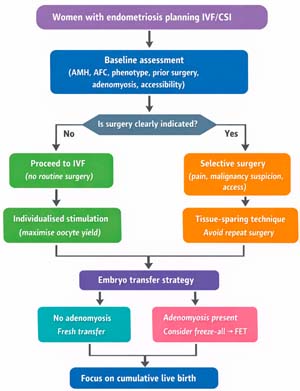
Figure 1. Pragmatic decision algorithm for women with endometriosis undergoing IVF/ICSI. Management is guided by phenotype, ovarian reserve, and uterine factors, with an emphasis on avoiding unnecessary surgery and optimizing cumulative live birth. Clinical decision-making should also incorporate patient age, prior ovarian surgery, and reproductive urgency.
PRAGMATIC IVF/ICSI MANAGEMENT: TRANSLATING EVIDENCE INTO PRACTICE
Ovarian stimulation strategy
Because endometriosis appears to act predominantly as a quantitative ovarian constraint, the central goal of ovarian stimulation is to maximize oocyte yield within safe limits, particularly in women with reduced ovarian reserve or prior ovarian surgery (Liao et al., 2025; Wu et al., 2021; Moreno-Sepulveda et al., 2022).GnRH antagonist protocols are generally preferred because of their flexibility, shorter duration, and favorable safety profile. Individualization of the gonadotropin dose based on age, AMH, and AFC is essential, with particular attention to avoiding a suboptimal response in women with an already compromised ovarian reserve. In this context, the concept of cumulative oocyte yield across cycles should be introduced early during counseling, especially for patients with diminished ovarian reserve.Alternative stimulation strategies, including progestinprimed ovarian stimulation (PPOS), may be considered in selected cases, although evidence specific to endometriosis remains limited.Adjuvant strategies (e.g., androgens, growth hormone, and antioxidant supplementation) remain controversial and should not be used routinely because evidence of benefit is inconsistent. Instead, the focus should remain on optimizing standard stimulation parameters and minimizing further ovarian injury.
Fresh versus frozen embryo transfer: a selective approach
The choice between fresh and frozen embryo transfer should be guided by the endometrial environment and coexisting uterine disease rather than by endometriosis alone.In women without adenomyosis or endometrial abnormalities, fresh embryo transfer remains a reasonable and effective option, with outcomes comparable to those in other infertility populations (Mappa et al., 2024; Liao et al., 2025; Wu et al., 2021). However, in the presence of adenomyosis or suboptimal endometrial conditions, a freeze-all strategy followed by frozen embryo transfer (FET) may be advantageous because it allows embryo transfer in a more physiologically controlled setting (Bourdon et al., 2022).Importantly, a freeze-all strategy should not be applied routinely to all women with endometriosis; rather, it should be used selectively based on individual clinical characteristics. In FET cycles, both natural and artificial endometrial preparation protocols are used in clinical practice. Some clinicians may consider GnRH suppression in selected patients with adenomyosis, although supporting evidence remains limited.
Role of medical pretreatment: limited and selective
Prolonged pituitary suppression (e.g., GnRH agonist pretreatment) has historically been proposed to improve ART outcomes in endometriosis. However, contemporary evidence does not consistently demonstrate a meaningful benefit in live birth, particularly when modern IVF protocols are used.Accordingly, current evidence does not support routine pretreatment. Its use should be limited to selected cases, such as severe adenomyosis or symptomatic disease, in which short-term suppression may improve endometrial receptivity or patient comfort. Even in these situations, the decision should be individualized and balanced against the delay in treatment.
Fertility preservation
Some considerations discussed in this review are also relevant to women with endometriosis who are considering fertility preservation, particularly the effects of prior surgery, ovarian reserve, and expected oocyte yield. However, management goals in this setting differ from those of immediate IVF/ICSI treatment because the primary objective is to maximize the potential for oocyte cryopreservation rather than to optimize short-term embryo transfer outcomes.
Counseling framework: shifting focus to cumulative success
Effective counseling is central to the management of endometriosis-associated infertility. Patients should be informed that:
• Ovarian response may be reduced, particularly in the presence of endometrioma or prior surgery (Liao et al., 2025; Wu et al., 2021; Moreno-Sepulveda et al., 2022)This shift in perspective helps align expectations with biologic reality and supports adherence to a staged, cumulative treatment strategy when necessary.
• Embryo quality and live birth per transfer are generally preserved (Wu et al., 2021; Kamath et al., 2022)
• The main limitation lies in embryo cohort size, not intrinsic embryo competence (Kamath et al., 2022)
• Cumulative live birth, rather than single-cycle success, is the most relevant outcome
Integrating phenotype into daily practice
A pragmatic approach to IVF/ICSI in endometriosis should integrate the key domains identified in this review:Ovarian factor: optimize stimulation and avoid unnecessary surgeryEmbryologic factor: provide reassurance regarding preserved competenceUterine factor: identify adenomyosis and individualize the transfer strategyThis integrated, phenotype-based model enables clinicians to move beyond protocol-driven care and adopt a mechanism-based, individualized approach tailored to each patient’s dominant limitation. A phenotype-based pragmatic management approach is summarized in Table 2.
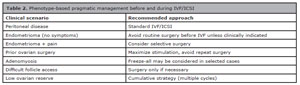
Table 2. Phenotype-based pragmatic management before and during IVF/ICSI
LIMITATIONS
This review has several limitations. The available evidence is largely based on retrospective, heterogeneous studies, with variability in phenotype classification and diagnostic criteria, particularly for adenomyosis. Confounding factors, including prior ovarian surgery, may substantially influence ovarian reserve and IVF/ICSI outcomes. Donor-oocyte models, although informative, may not fully reflect uterine receptivity in all clinical contexts.
Many of the proposed management considerations are therefore based on a combination of available evidence and clinical interpretation and may vary according to patient characteristics and local expertise. In addition, because this article is a structured narrative synthesis rather than a formal systematic review with meta-analysis, it does not quantify pooled effect sizes and should be interpreted accordingly.
CONCLUSION
Endometriosis does not preclude successful IVF/ICSI, but it may alter the pathway to pregnancy in a phenotypedependent manner. The most consistent effect appears to be a quantitative reduction in ovarian response, whereas embryo competence appears generally preserved and implantation may be influenced by coexisting uterine disease.
Current evidence does not consistently support routine surgical intervention before IVF/ICSI, and surgery should be reserved for clearly defined indications. Instead, management should prioritize preservation of ovarian reserve, optimization of cumulative embryo yield, and selective use of embryo transfer strategies.
A pragmatic, evidence-informed approach that integrates phenotype, ovarian reserve, and uterine factors into clinical decision-making provides a useful framework for counseling and management. This shift from protocolbased to individualized, mechanism-driven care may help improve outcomes in women with endometriosis undergoing IVF/ICSI.
REFERENCES
Becker CM, Bokor A, Heikinheimo O, Horne A, Jansen F, Kiesel L, King K, Kvaskoff M, Nap A, Petersen K, Saridogan E, Tomassetti C, van Hanegem N, Vulliemoz N, Vermeulen N; ESHRE Endometriosis Guideline Group. ESHRE guideline: endometriosis. Hum Reprod Open. 2022;2022:hoac009. PMID: 35350465 DOI: 10.1093/hropen/hoac009
Medline
Bourdon M, Santulli P, Bordonne C, Millisher A, MaitrotMantelet L, Maignien C, Marcellin L, Melka L, Chapron C. Presence of adenomyosis at MRI reduces live birth rates in ART cycles for endometriosis. Hum Reprod. 2022;37:1470-79. PMID: 35460419 DOI: 10.1093/humrep/deac083
Medline
Guerriero S, Condous G, van den Bosch T, Valentin L, Leone FP, Van Schoubroeck D, Exacoustos C, Installé AJ, Martins WP, Abrao MS, Hudelist G, Bazot M, Alcazar JL, Gonçalves MO, Pascual MA, Ajossa S, Savelli L, Dunham R, Reid S, Menakaya U, et al. Systematic approach to sonographic evaluation of the pelvis in women with suspected endometriosis, including terms, definitions and measurements: a consensus opinion from the International Deep Endometriosis Analysis (IDEA) group. Ultrasound Obstet Gynecol. 2016;48:318-32. PMID: 27349699 DOI: 10.1002/uog.15955
Medline
Kamath MS, Subramanian V, Antonisamy B, Sunkara SK. Endometriosis and oocyte quality: an analysis of 13 614 donor oocyte recipient and autologous IVF cycles. Hum Reprod Open. 2022;2022:hoac025. PMID: 35747401 DOI: 10.1093/hropen/hoac025
Medline
Liao L, Pan Z, Li Y. Endometriosis as a risk factor: impact on IVF outcomes and reproductive parameters: a systematic review and meta-analysis. Arch Gynecol Obstet. 2025;312:1085-93. PMID: 40748500 DOI: 10.1007/s00404-025-08137-w
Medline
Mappa I, Page ZP, Di Mascio D, Patelli C, D’Antonio F, Giancotti A, Gebbia F, Mariani G, Cozzolino M, Muzii L, Rizzo G. The Effect of Endometriosis on In Vitro Fertilization Outcomes: A Systematic Review and Meta-Analysis. Healthcare (Basel). 2024;12:2435. PMID: 39685057 DOI: 10.3390/healthcare12232435
Medline
Moreno-Sepulveda J, Romeral C, Niño G, Pérez-Benavente A. The Effect of Laparoscopic Endometrioma Surgery on Anti-Müllerian Hormone: A Systematic Review of the Literature and Meta-Analysis. JBRA Assist Reprod. 2022;26:88-104. PMID: 34755503 DOI: 10.5935/15180557.20210060
Medline
Paik H, Jee BC. Impact of Ablation Versus Cystectomy for Endometrioma on Ovarian Reserve, Recurrence, and Pregnancy: An Updated Meta-Analysis. Reprod Sci. 2024;31:1924-35. PMID: 38509401 DOI: 10.1007/s43032-024-01512-z
Medline
Riemma G, García-Velasco JA, Abrão MS, Leone Roberti Maggiore U, Vignali M, Solima E, Ceccaroni M, Chiantera V, Moawad GN, Laganà AS, Agrifoglio V, De Franciscis P, Donna MCD, D’Amato A, Favilli A, Etrusco A. IVF/ ICSI or surgery as first approach for the treatment of infertility associated with ovarian and deep infiltrating endometriosis? A systematic review and meta-analysis. Reprod Biomed Online. 2026;52:105178. PMID: 41447907 DOI: 10.1016/j.rbmo.2025.105178
Medline
Somigliana E, Li Piani L, Paffoni A, Salmeri N, Orsi M, Benaglia L, Vercellini P, Vigano’ P. Endometriosis and IVF treatment outcomes: unpacking the process. Reprod Biol Endocrinol. 2023;21:107. PMID: 37936154 DOI: 10.1186/s12958-023-01157-8
Medline
Wu Y, Yang R, Lan J, Lin H, Jiao X, Zhang Q. Ovarian Endometrioma Negatively Impacts Oocyte Quality and Quantity But Not Pregnancy Outcomes in Women Undergoing IVF/ICSI Treatment: A Retrospective Cohort Study. Front Endocrinol (Lausanne). 2021;12:739228. PMID: 34880831 DOI: 10.3389/fendo.2021.739228
Medline
Younis JS, Taylor HS. The impact of ovarian endometrioma and endometriotic cystectomy on anti-Müllerian hormone, and antral follicle count: a contemporary critical appraisal of systematic reviews. Front Endocrinol (Lausanne). 2024;15:1397279. PMID: 38800489 DOI: 10.3389/fendo.2024.1397279
Medline
Zondervan KT, Becker CM, Missmer SA. Endometriosis. N Engl J Med. 2020;382:1244-56. PMID: 32212520 DOI: 10.1056/NEJMra1810764
Medline