JBRA Assisted Reproduction 2025;29(Suppl.2 SBRA 2025):128
29th Annual Congress of the SBRA. São Paulo/SP - Brazil, 2025
doi: 10.5935/1518-0557.20263762
P-116. High Rates of Spontaneous In Vitro Maturation in Fresh and Vitrified GV Oocytes: A Comparative Study
JBRA Assisted Reproduction 2025;29(Suppl.2 SBRA 2025):128
Poster Presentation
29th Annual Congress of the SBRA. São Paulo/SP - Brazil, 2025
doi: 10.5935/1518-0557.20263762
P-116. High Rates of Spontaneous In Vitro Maturation in Fresh and Vitrified GV Oocytes: A Comparative Study
1 Fertipraxis – Centro de Reprodução Humana - Rio de Janeiro - RJ – Brasil
Objective: Immature oocytes are routinely discarded, particularly those at the germinal vesicle (GV) stage retrieved after ovulatory trigger in stimulated cycles, due to unclear clinical management. In selected poor-prognosis cases such as intracytoplasmic sperm injection (ICSI) or oocyte cryopreservation cycles with low maturation rates, low oocyte yield, or reduced oocyte quality additional embryos derived from spontaneously matured GV oocytes could be clinically relevant. Although maturation and developmental rates are considered suboptimal these rates are not well known. This study aimed to evaluate and compare spontaneous in vitro maturation (IVM) rates of fresh GV oocytes versus vitrified–warmed GV oocytes after 24 and 48 hours of in vitro culture
Methods: This prospective comparative study included 89 surplus GV-stage oocytes from 41 patients undergoing controlled ovarian stimulation for in vitro fertilization or oocyte cryopreservation between December 2024 and July 2025. A total of 46 fresh GV oocytes from 25 patients undergoing ICSI cycles and 43 vitrified–warmed GV oocytes from oocyte cryopreservation cycles were cultured in CSCM NXC medium under high-viscosity oil without hormonal supplementation. Spontaneous maturation from GV to metaphase II (MII) was assessed after 24 and 48 hours of culture. Fisher's exact test was used to compare maturation rates between groups. A p-value <0.05 was considered statistically significant.
Results: The mean age was 37.04±3.93 years in the fresh group and 36.00±3.18 years in the vitrified group (p=0.38). After 24 hours, GV-to-MII maturation occurred in 43.5% (20/46) of fresh oocytes and 53.4% (23/43) of vitrified oocytes (p=0.39). At 48 hours, maturation rates increased to 60.9% (28/46) and 74.4% (32/43), respectively (p=0.18). The proportion of oocytes remaining immature (GV or MI) after 48 hours was similar between groups (24.0% vs. 25.5%; p=0.80). Seven fresh oocytes degenerated during culture, whereas no degeneration occurred in the vitrified group.
Conclusion: Spontaneous maturation rates were high in both fresh and vitrified GV oocytes after in vitro culture, with approximately half achieving MII by 24 hours and over 60–70% by 48 hours. These findings suggest that maintaining GV oocytes in culture for spontaneous maturation could provide additional MII oocytes for injection, particularly in poor- prognosis cases. Larger studies are needed to confirm these results and assess the impact on fertilization and embryo development, as well as clinical outcomes.
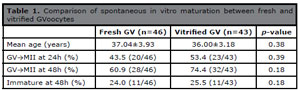
Table 1. Comparison of spontaneous in vitro maturation between fresh and
vitrified GVoocytes