JBRA Assisted Reproduction 2025;29(Suppl.2 SBRA 2025):194
29th Annual Congress of the SBRA. São Paulo/SP - Brazil, 2025
doi: 10.5935/1518-0557.20263891
P-182. Profile Analysis of Patients with Elevated Sperm DNA Fragmentation in Northeastern Brazil
JBRA Assisted Reproduction 2025;29(Suppl.2 SBRA 2025):194
Poster Presentation
29th Annual Congress of the SBRA. São Paulo/SP - Brazil, 2025
doi: 10.5935/1518-0557.20263891
P-182. Profile Analysis of Patients with Elevated Sperm DNA Fragmentation in Northeastern Brazil
1 Criovidas Donare Ltda - Joao Pessoa – PB -Brasil
Objective: This study aimed to analyze the profile of patients treated at a seminal analysis laboratory with high rates of sperm DNA fragmentation, investigating associated lifestyle factors and their influence on male fertility. The primary objective was to identify the prevalence of variables such as age, comorbidities, lifestyle habits, and drug use, as well as to evaluate the individual impact of each factor on increased sperm DNA fragmentation.
Methods: This is a longitudinal and descriptive study, with data corresponding to tests conducted between January 2023 and December 2023. Inclusion criteria involved analyzing semen samples with sperm DNA fragmentation rates above 25% were analyzed, while patients with insufficient samples or incomplete data were excluded. The study included 237 patients (aged 26–62 years at sample collection), stratified into two groups: <39 years (n=114) and ≥39 years (n=123). This age cutoff was selected not only to reflect clinically relevant thresholds for male fertility decline but also to ensure balanced group sizes (48.1% vs. 51.9%), maximizing statistical power for comparative analyses. The methodological approach prioritized non-parametric tests, such as the Mann-Whitney test, due to non-normality of the data, as confirmed by the Shapiro-Wilk test (p<0.05).
Results: The results revealed significant differences between the two groups. Patients aged 39 or older exhibited an average fragmentation higher than the younger group (33.46% vs. 30.98%), supporting the influence of age on seminal quality. However, interesting patterns emerged in the analysis of associated factors: while varicocele was more prevalent in the younger group (21.05% vs. 14.91%), the impact of medication use was substantially greater among older patients (39.47% vs. 24.56%). Smoking and alcohol consumption showed low overall prevalence (<5% and ~14%, respectively), with no marked differences between groups. These findings suggest that, although advanced age is associated with greater fragmentation of sperm DNA, other factors, such as those analyzed in the study, significantly impact seminal quality. The lower prevalence of varicocele in the older group raises questions about potential compensatory mechanisms in the body.
Conclusion: The study highlights the multifactorial complexity of male infertility and the need for personalized approaches that consider not only age but also the clinical, pharmacological, and social profiles of patients. Keywords: Sperm DNA fragmentation, infertility, age, varicocele, reproductive medicine
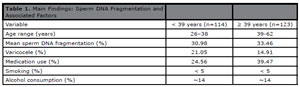
Table 1. Main Findings: Sperm DNA Fragmentation and Associated Factors