JBRA Assisted Reproduction 2025;29(Suppl.2 SBRA 2025):181
29th Annual Congress of the SBRA. São Paulo/SP - Brazil, 2025
doi: 10.5935/1518-0557.20263906
P-169. Opportunity for Comprehensive Women's Health Care in Oocyte Donor Candidates at an Assisted Reproduction Service
JBRA Assisted Reproduction 2025;29(Suppl.2 SBRA 2025):181
Poster Presentation
29th Annual Congress of the SBRA. São Paulo/SP - Brazil, 2025
doi: 10.5935/1518-0557.20263906
P-169. Opportunity for Comprehensive Women's Health Care in Oocyte Donor Candidates at an Assisted Reproduction Service
1 Clinica Genics - São Paulo - SP - Brasil
Objective: To evaluate the role of oocyte donor screening not only as a safety measure for assisted reproduction treatments but also as an opportunity for access to specialized gynecologic care, disease screening, and reproductive counseling in women without regular medical assistance.
Methods: A qualitative analysis was conducted of the oocyte donor screening protocol at an assisted reproduction clinic in São Paulo, Brazil, in accordance with CFM Resolution No. 2,320/2022 and ANVISA RDC No. 771/2022. The protocol included detailed clinical evaluation, physical examination with height and weight measurement, breast examination, optional cervical cytology (Pap test) for cervical cancer screening, transvaginal ultrasound for antral follicle count (AFC), laboratory tests for sexually transmitted infections (STIs), blood typing, karyotype, and hemoglobin electrophoresis. Candidates were classified after the initial consultation and completion of tests as: approved, pre-approved, definitive exclusion, or temporary exclusion.
Results: Screening identified a significant number of women who had never received prior guidance on their clinical or laboratory conditions. Although reproductive counseling in young women applying for oocyte donation may not be routine, cases of premature ovarian failure or low follicle count within the clinic's target age group were observed. Beyond reproductive aspects, medical evaluation emphasized the donor's overall health. In cases of obesity, patients were counseled on the need for weight loss, regular physical activity, and, when possible, follow-up with specialists. The initial consultation also allowed immediate treatment of STIs such as chlamydia and syphilis, combined with counseling on fertility and prevention. Chronic Chlamydia trachomatis infection is known to cause tubal obstruction, impairing the donor's own fertility. Although not required by current regulations, cervical cytology was incorporated into the protocol and led to the detection of high-grade cervical intraepithelial neoplasia, enabling early referral and treatment. Chromosomal analysis revealed alterations in a small proportion of candidates, all of whom were referred for genetic counseling. A large proportion of candidates had never undergone specialized gynecologic evaluation or high-complexity laboratory testing, reinforcing the social and preventive value of screening. In addition to diagnosing and treating relevant conditions, the process created an opportunity for reflection on personal fertility and reproductive health, amplifying the positive impact of the consultation. See details in Table 1.
Conclusion: When conducted comprehensively and in a multidisciplinary manner, oocyte donor screening transcends its regulatory role in ensuring safety in assisted reproduction treatments and becomes a tool for comprehensive women's health care. By enabling the identification and, when possible, treatment of sexually transmitted infections, genetic alterations, and cervical lesions, it provides direct benefits to donors, promotes health education, and expands access to specialized care for women who often have restricted access to these resources. This integrated model reinforces the importance of complete screening protocols, aligned with current regulations, as an effective strategy for health promotion and disease prevention.
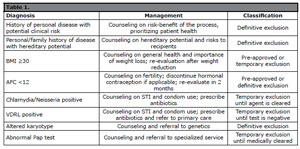
Table 1.