JBRA Assist. Reprod. 2026;00(0):00-00
UPDATE ARTICLE
doi: 10.5935/1518-0557.20260124
Microsurgical Varicocele Repair in Adults in the Era of Assisted Reproduction: An Evidence-Based Reappraisal Against Misinformation
1Androcenter, Instituto de Andrologia, Curitiba, Paraná, Brazil.
2Division of Urology, Hospital de Clínicas, Universidade Federal do Paraná, Curitiba, Paraná, Brazil.
3Pós-graduação em Ciências da Saúde, University of Caxias do Sul School of Medicine, Caxias do Sul, Rio Grande do Sul, Brazil.
4Conception – Center for Human Reproduction, Caxias do Sul, Rio Grande do Sul, Brazil.
5Materbaby, Human Reproduction Clinic, Maringá, Paraná, Brazil.
6Fertília, Human Reproduction Clinic of Alagoas, Maceió, Alagoas, Brazil.
7Division of Urology, Department of Surgery, University Hospital, School of Medicine, Federal University of Amapá, Macapá, Amapá, Brazil.
8Androscience, Science and Innovation Center in Andrology, São Paulo, São Paulo, Brazil.
9ANDROFERT, Andrology and Human Reproduction Clinic, Referral Center for Male Reproduction, Campinas, São Paulo, Brazil.
10Department of Urology, Faculty of Medicine of Jundiaí, Jundiaí, São Paulo, Brazil.
11Department of Urology, Hospital Universitário dos Servidores do Estado (HUSE), Universidade Federal do Estado do Rio de Janeiro (UNIRIO), Rio de Janeiro, Rio de Janeiro, Brazil.
12Urology Division, Centro Universitário FMABC, Santo André, São Paulo, Brazil.
13Instituto Ideia Fértil, Santo André, São Paulo, Brazil.
14IPGO, Human Reproduction Clinic, São Paulo, São Paulo, Brazil.
15Clínica MF Fertilidade Masculina, Belo Horizonte, Minas Gerais, Brazil.
16Laboratório de Reprodução, Departamento de Biologia Celular, Universidade Federal de Minas Gerais (UFMG), Belo Horizonte, Minas Gerais, Brazil.
17Departamento de Reprodução Humana, Hospital Mater Dei Santo Agostinho, Belo Horizonte, Minas Gerais, Brazil.
18Department of Surgery, Division of Urology, Human Reproduction Section, Federal University of São Paulo (UNIFESP), São Paulo, São Paulo, Brazil.
19Hospital Universitário Pedro Ernesto, Universidade do Estado do Rio de Janeiro, Rio de Janeiro, Rio de Janeiro, Brazil.
20Embrion Medicina Reprodutiva, Rio de Janeiro, Rio de Janeiro, Brazil.
21Hospital das Clínicas HCFMUSP, Faculdade de Medicina, Universidade de São Paulo, São Paulo, São Paulo, Brazil.
22Department of Surgery, Universidade Federal de Pernambuco, Recife, Pernambuco, Brazil.
23Division of Urology, Instituto de Medicina Integral Prof. Fernando Figueira, Recife, Pernambuco, Brazil.
CONFLICT OF INTEREST
The authors declare no conflict of interest
ABSTRACT
Varicocele remains the most common correctable cause of male infertility and one of the few male-factor conditions in which targeted intervention may improve both sperm quality and reproductive outcomes. Despite a robust body of evidence supporting its clinical relevance, the role of varicocele repair has increasingly been challenged by the widespread dissemination of health misinformation through digital platforms. Simplified narratives frequently suggest that assisted reproductive technologies (ART) have rendered surgical correction obsolete, that varicocelectomy carries significant risk, or that its impact on fertility is minimal.These claims are not supported by contemporary evidence. Microsurgical varicocelectomy, particularly through the subinguinal approach, is associated with a favorable safety profile, including low recurrence rates, minimal hydrocele formation, and an exceptionally low risk of ischemic testicular injury when performed by experienced surgeons. In appropriately selected men with clinical varicocele, infertility, and abnormal semen parameters or elevated sperm DNA fragmentation, repair leads to clinically meaningful improvements in sperm concentration, motility, total motile sperm count, and genomic integrity. These biological changes translate into higher spontaneous pregnancy and live birth rates, as well as improved outcomes in ART, including fertilization, clinical pregnancy, and live birth.In addition to clinical outcomes, varicocelectomy may reduce the need for more invasive and costly reproductive interventions, reinforcing its role as a fertility optimization strategy rather than a competing alternative to ART. Evidence also supports a selective role for varicocele repair in non-obstructive azoospermia, where it may improve sperm retrieval or, in a minority of cases, restore sperm to the ejaculate.The persistence of misinformation highlights the need for critical appraisal and synthesis of the available evidence. This expert opinion provides a comprehensive, pathophysiologically grounded, and quantitatively supported reappraisal of microsurgical varicocelectomy in modern male infertility care, while addressing the impact of health misinformation in the digital era and emphasizing the role of the urologist in evidence-based patient counseling.
Keywords: Varicocele, Varicocelectomy, Male infertility, Sperm DNA fragmentation, Assisted reproductive techniques, Health misinformation
INTRODUCTION
Varicocele has occupied a central place in male reproductive medicine for decades because it is common, clinically identifiable, biologically plausible as a cause of testicular dysfunction, and potentially correctable. Its prevalence is estimated at approximately 15% in the general male population, but it rises substantially among infertile men, affecting approximately 35% of men with primary infertility and up to 80% of men with secondary infertility (Pagani et al., 2019). This epidemiological gradient strongly suggests that varicocele is not merely an incidental anatomical finding in many infertile men, but rather a clinically relevant contributor to impaired reproductive potential.
In the contemporary era, however, the role of varicocele repair has increasingly been challenged by narratives circulating outside the scientific literature, with dubious intentions. These narratives often argue that assisted reproductive technologies, particularly in vitro fertilization (IVF) and intracytoplasmic sperm injection (ICSI), can bypass male-factor infertility so efficiently that treating varicocele is unnecessary. Although superficially appealing, this position confuses technological circumvention with biological correction. Assisted reproduction can sometimes overcome barriers to fertilization, but it does not reverse sperm defects or the testicular microenvironmental abnormalities caused by varicocele, does not necessarily reduce sperm DNA damage, and does not eliminate the clinical, emotional, and financial burden of repeated treatment cycles.
Current guideline-based care does not support abandoning varicocele repair in favor of ART. The European Association of Urology guidelines and the AUA/ASRM guideline on male infertility recommend considering varicocelectomy in men attempting conception who have a clinical, palpable varicocele, infertility, and abnormal semen parameters (Schlegel et al., 2021; Minhas et al., 2025). This is particularly important because varicocele correction is not indicated for all patients. Identifying those who are most likely to benefit from correction requires evaluation by a physician qualified to manage these cases. Modern clinical reasoning should also incorporate elevated sperm DNA fragmentation into the decision-making process, as DNA fragmentation is a biologically relevant marker of sperm quality that may be abnormal even when conventional semen parameters are not severely impaired. Elevated sperm DNA fragmentation has been associated with poorer embryo development, lower implantation rates, and higher miscarriage rates (Borges et al., 2019; Li et al., 2024; Wan et al., 2026). Thus, varicocele repair should be considered in men with infertility, clinical varicocele, and either abnormal semen parameters or elevated sperm DNA fragmentation.
This distinction is more than semantic. Conventional semen analysis provides an essential but incomplete assessment of male fertility. Sperm concentration, motility, and morphology remain important, but they do not fully reflect oxidative stress, chromatin integrity, or the capacity of sperm to support normal embryo development. A man may have borderline or even acceptable conventional semen parameters while still harboring clinically meaningful sperm DNA damage. In the context of infertility and a clinical varicocele, this finding may provide a biological rationale for varicocele repair, even when traditional semen analysis alone would underestimate the male-factor contribution.
PATHOPHYSIOLOGICAL RATIONALE: WHY VARICOCELE AFFECTS MORE THAN SPERM COUNT
The pathophysiology of varicocele-associated infertility is multifactorial and involves a combination of thermal, vascular mechanisms, including venous hypertension and venous valve insufficiency, oxidative stress, endocrine disfunction, and molecular mechanisms (Cho et al., 2016).
The pampiniform plexus plays an important role in maintaining the testicular microenvironment. Thermoregulation is affected when venous dilation and reflux impair this countercurrent heat exchange system, scrotal temperature rises and spermatogenesis may be disrupted, because spermatogenesis requires a testicular temperature 1°C below body temperature. In parallel, venous stasis may contribute to testicular hypoxia, while reflux of metabolites may further disturb the local testicular environment (Su et al., 2021).
Among these mechanisms, oxidative stress has emerged as a central unifying pathway. Excessive reactive oxygen species can damage sperm membranes, impair mitochondrial function, reduce motility, and directly fragment sperm DNA (Agarwal et al., 2012). This is particularly important because spermatozoa have limited DNA repair capacity, and mature sperm cells are vulnerable to oxidative injury during epididymal transit. Varicocele, therefore, should not be conceptualized simply as a cause of oligozoospermia or asthenozoospermia, but as a condition capable of impairing sperm functional competence and genomic integrity.
Sperm DNA fragmentation has become one of the most clinically relevant expressions of this injury. Elevated sperm DNA fragmentation has been associated with poorer embryo development, lower implantation rates, and higher miscarriage rates (Borges et al., 2019; Li et al., 2024; Wan et al., 2026). This provides a mechanistic bridge between varicocele and reproductive outcomes that cannot be explained solely by conventional semen parameters. It also helps explain why repair may improve outcomes in couples with recurrent pregnancy loss, failed assisted reproduction, or unexplained infertility when a clinical varicocele and elevated DNA fragmentation are present (Minhas et al., 2025).
The implication for clinical practice is clear. A narrow indication based exclusively on abnormal concentration, motility, or morphology may fail to identify men whose sperm quality is compromised at the genomic level. In a modern andrology framework, sperm DNA fragmentation should be considered part of the assessment of sperm quality, and elevated fragmentation in an infertile couple with clinical varicocele should be recognized as a relevant indication for discussing varicocele repair.
MICROSURGICAL VARICOCELECTOMY: WHY TECHNIQUE DETERMINES OUTCOMES
The safety and efficacy of varicocele repair depend heavily on surgical technique. Historical concerns regarding recurrence, hydrocele, arterial injury, and testicular atrophy are inseparable from older approaches that lacked magnification and did not allow consistent identification of all relevant spermatic cord structures. The microsurgical approach changed this landscape by allowing precise visualization of internal spermatic veins, external spermatic veins, cremasteric veins, lymphatics, and the testicular artery (Pagani et al., 2019).
The anatomical complexity of the spermatic cord explains why magnification matters. Al-Kandari and colleagues, in a detailed analysis of microscopic subinguinal varicocelectomy in 100 consecutive cases, documented a mean of approximately 14 spermatic veins and more than one artery per cord unit, highlighting the risk of incomplete repair or inadvertent arterial injury when surgery is performed without adequate visualization (Al-Kandari et al., 2018). In the same series, recurrence was reported in 2% of cases and hydrocele formation was extremely uncommon, reinforcing the concept that meticulous microsurgical technique produces both anatomical completeness and clinical safety (Al-Kandari et al., 2018).
Microsurgical subinguinal varicocelectomy offers several practical advantages. The subinguinal route avoids opening the external oblique aponeurosis, reduces postoperative discomfort, and provides direct access to the spermatic cord. Under the operating microscope, the surgeon can ligate multiple venous channels while preserving lymphatic drainage and arterial inflow (Goldstein et al., 1992). The use of micro-Doppler, when available, can further assist in arterial identification, especially in anatomically complex cases or in surgeons seeking an additional layer of safety. These technical refinements are not peripheral details; they are the reason contemporary microsurgical varicocelectomy has a substantially better complication profile than non-microsurgical approaches (Abdel-Maguid & Othman, 2010; Al-Kandari et al., 2018; Pagani et al., 2019).
The importance of urologic expertise should be emphasized. Varicocelectomy is sometimes portrayed in public discourse as a simple procedure whose outcomes are independent of operator skill. This is inaccurate. The difference between a high-quality microsurgical repair and an imprecise venous ligation may determine recurrence, hydrocele formation, arterial preservation, postoperative pain, and ultimately reproductive benefit. For this reason, the role of the urologist is not limited to diagnosing varicocele. The urologist is responsible for selecting the appropriate patient, counseling the couple, performing a technically rigorous repair, and integrating the result into the broader reproductive plan.
SAFETY AND ISCHEMIC ORCHITIS: PLACING RISK IN THE CORRECT CONTEXT
One of the most emotionally charged arguments used against varicocele repair is the fear of ischemic orchitis or testicular atrophy. This concern has intuitive power because testicular injury is a serious potential consequence of any spermatic cord operation. However, the key question is not whether ischemic injury is theoretically possible, but whether it occurs with clinically meaningful frequency in contemporary microsurgical varicocelectomy.
The available evidence indicates that ischemic orchitis and testicular atrophy are exceptionally rare after microsurgical repair. In a classic microsurgical series, no cases of testicular atrophy were observed, supporting the very low frequency of clinically significant ischemic injury with contemporary microsurgical technique (Goldstein et al., 1992). This rarity is biologically and technically plausible. The testicular artery can be directly visualized and preserved under magnification, and collateral arterial supply further reduces the likelihood of clinically significant ischemia when surgery is performed properly.
The safety profile is summarized in Table 1. The table should not be interpreted as a guarantee of zero risk, but rather as a representation of the modern microsurgical standard. It also illustrates why online claims suggesting a high risk of testicular damage are misleading when they fail to distinguish microsurgical repair from older or non-microsurgical techniques.
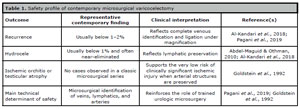
Table 1. Safety profile of contemporary microsurgical varicocelectomy
The clinical message is that varicocelectomy should not be presented to patients as a high-risk operation when performed microsurgically by experienced surgeons. The risk discussion should be balanced, transparent, and technique-specific. It should also be compared with the real alternatives faced by the couple, including prolonged infertility, repeated assisted reproduction cycles, and failure to correct an identifiable male-factor condition.
QUANTITATIVE IMPROVEMENT IN SEMEN QUALITY: WHY THE EFFECT IS CLINICALLY MEANINGFUL
The effect of varicocelectomy on semen parameters has been repeatedly demonstrated in observational studies, comparative studies, randomized trials, and meta-analyses. Although the magnitude of improvement varies according to baseline semen quality, varicocele grade, age, duration of infertility, female partner factors, and follow-up interval, the direction of effect is consistent. Men undergoing repair frequently experience increases in sperm concentration and progressive motility (Baazeem et al., 2011), as well as clinically meaningful increases in total motile sperm count that may alter the subsequent reproductive treatment pathway (Samplaski et al., 2017).
These improvements matter because reproductive decision-making often depends on thresholds. A man with a very low total motile sperm count may initially be directed toward IVF or ICSI. If varicocelectomy increases the total motile sperm count sufficiently, the couple may become eligible for less invasive options, such as intrauterine insemination (IUI) or timed intercourse attempts (Samplaski et al., 2017). Thus, the clinical value of repair is not limited to improving a laboratory report. It may change the entire reproductive pathway.
The representative effects are summarized in Table 2. These values are approximate and should be used for counseling rather than as deterministic predictions for individual patients. Nevertheless, they provide a more tangible understanding of the magnitude of benefit.
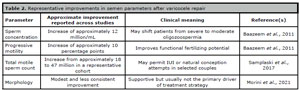
Table 2. Representative improvements in semen parameters after varicocele repairParameterApproximate improvement reported across studiesClinical meaningReference(s)Sperm concentrationIncrease of approximately 12 million/mLMay shift patients from severe to moderate oligozoospermiaBaazeem et al., 2011Progressive motilityIncrease of approximately 10 percentage pointsImproves functional fertilizing potentialBaazeem et al., 2011Total motile sperm countIncrease from approximately 18 to 47 million in a representative cohortMay permit IUI or natural conception attempts in selected couplesSamplaski et al., 2017MorphologyModest and less consistent improvementSupportive but usually not the primary driver of treatment strategyMorini et al., 2021IUI: intrauterine insemination.
SPERM DNA FRAGMENTATION AND VARICOCELE: A CENTRAL MODERN INDICATION
The emergence of sperm DNA fragmentation as a clinically relevant biomarker has expanded the conceptual basis for varicocele repair. DNA fragmentation reflects the integrity of the paternal genome delivered to the oocyte. Elevated sperm DNA fragmentation has been associated with poorer embryo development, lower implantation rates, and higher miscarriage rates (Borges et al., 2019; Li et al., 2024; Wan et al., 2026).
Varicocele is one of the most important treatable causes of elevated sperm DNA fragmentation. The mechanism is biologically coherent: varicocele increases oxidative stress, oxidative stress damages sperm DNA, and repair reduces the oxidative burden. Meta-analytic data indicate that varicocelectomy reduces sperm DNA fragmentation by approximately 7 percentage points (Table 3), with greater benefit in men who have elevated baseline fragmentation (Lira Neto et al., 2021).
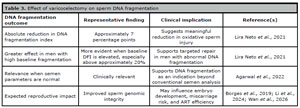
Table 3. Effect of varicocelectomy on sperm DNA fragmentationDNA fragmentation outcomeRepresentative findingClinical implicationReference(s)Absolute reduction in DNA fragmentation indexApproximately 7 percentage pointsSuggests meaningful reduction in oxidative sperm injuryLira Neto et al., 2021Greater effect in men with high baseline fragmentationMore evident when baseline DFI is elevated, especially above approximately 20%Supports targeted repair in men with abnormal DNA fragmentationLira Neto et al., 2021Relevance when semen parameters are normalClinically relevantSupports DNA fragmentation as an indication beyond conventional semen analysisAgarwal et al., 2022Expected reproductive impactImproved sperm genomic integrityMay influence embryo development, miscarriage risk, and ART efficiencyBorges et al., 2019; Li et al., 2024; Wan et al., 2026DNA: deoxyribonucleic acid; DFI: DNA fragmentation index; ART: assisted reproductive technology.
This represents an area in which oversimplified online narratives may be particularly misleading. Public discussions frequently equate male fertility with sperm concentration alone, whereas contemporary reproductive medicine requires a broader assessment of sperm function and quality. Beyond contributing to motility and fertilization, spermatozoa transmit the paternal genome and epigenetic information to the embryo. Therefore, if varicocele repair improves sperm DNA integrity, its potential clinical relevance may persist even in the era of intracytoplasmic sperm injection.
NATURAL PREGNANCY AND LIVE BIRTH: TRANSLATING BIOLOGY INTO OUTCOMES
The ultimate measure of a fertility intervention is not simply improvement in semen parameters, but improvement in pregnancy and live birth rates. Varicocelectomy has repeatedly been associated with higher spontaneous pregnancy rates in appropriately selected couples (Table 4). Meta-analyses report odds ratios for spontaneous pregnancy in the range of approximately 1.8–2.0 after repair, indicating that treatment can nearly double the odds of natural conception compared with observation in selected populations (Jensen et al., 2017; Birowo et al., 2020; Shiraishi, 2024). Moreover, the pregnancy rate in infertile men with varicocele is 17%, increasing to 42% after subinguinal microsurgical varicocelectomy. However, these data come from non-randomized studies (Schlegel et al., 2021). Live birth is even more clinically meaningful than pregnancy, and available data suggest a favorable effect as well, with reported odds ratios reaching approximately 2.0–2.8 in some syntheses (Birowo et al., 2020; Shiraishi, 2024).
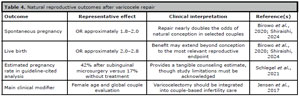
Table 4. Natural reproductive outcomes after varicocele repairOutcomeRepresentative effectClinical interpretationReference(s)Spontaneous pregnancyOR approximately 1.8-2.0Repair nearly doubles the odds of natural conception in selected couplesBirowo et al., 2020; Shiraishi, 2024Live birthOR approximately 2.0-2.8Benefit may extend beyond conception to the most relevant reproductive endpointBirowo et al., 2020; Shiraishi, 2024Estimated pregnancy rate in guideline-cited analysis42% after subinguinal microsurgery versus 17% without treatmentProvides a tangible counseling estimate, though study limitations must be acknowledgedSchlegel et al., 2021Main clinical modifierFemale age and global couple evaluationVaricocelectomy should be integrated into couple-based infertility careJensen et al., 2017OR: odds ratio.
The central point is that varicocele repair is not merely a laboratory intervention. It can improve the real-world probability of pregnancy and live birth. This is precisely why dismissing it as obsolete is scientifically unsound.
ASSISTED REPRODUCTION AND VARICOCELECTOMY: COMPLEMENTARY STRATEGIES FOR OPTIMIZING MALE FERTILITY
A common false dichotomy frames varicocelectomy and assisted reproduction as competing strategies. In fact, they are often complementary. Varicocelectomy may allow some couples to conceive naturally, may move others from IVF/ICSI toward IUI, and may improve outcomes in couples who still require IVF or ICSI (Table 5) (Esteves et al., 2016a; Kohn et al., 2017; Samplaski et al., 2017).
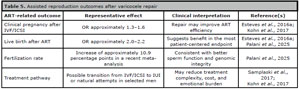
Table 5. Assisted reproduction outcomes after varicocele repairART-related outcomeRepresentative effectClinical interpretationReference(s)Clinical pregnancy after IVF/ICSIOR approximately 1.3-1.6Repair may improve ART efficiencyEsteves et al., 2016a; Kohn et al., 2017Live birth after ARTOR approximately 2.0-2.2Suggests benefit in the most patient-centered endpointEsteves et al., 2016a; Palani et al., 2025Fertilization rateIncrease of approximately 10.9 percentage points in a recent metaanalysisConsistent with better sperm function and genomic integrityPalani et al., 2025Treatment pathwayPossible transition from IVF/ICSI to IUI or natural attempts in selected menMay reduce treatment complexity, cost, and emotional burdenSamplaski et al., 2017; Kohn et al., 2017ART: assisted reproductive technology; IVF: in vitro fertilization; ICSI: intracytoplasmic sperm injection; IUI: intrauterine insemination; OR: odds ratio.
Meta-analyses and systematic reviews have reported improved clinical pregnancy and live birth rates after varicocele repair before ART, particularly in IVF/ICSI populations (Esteves et al., 2016a; Kirby et al., 2016; Kohn et al., 2017). Representative estimates include odds ratios of approximately 1.3–1.6 for clinical pregnancy and approximately 2.0–2.2 for live birth. These values vary across studies, but the direction of effect supports the concept of male-factor optimization before ART.
The economic implications are substantial. In vitro fertilization and ICSI are expensive, physically demanding, emotionally stressful, and often inaccessible to many couples. If varicocelectomy improves sperm quality enough to reduce the number of ART cycles, allows less invasive treatment, or increases the efficiency of IVF/ICSI, it becomes relevant not only clinically but also economically. The correct question is not whether ART can bypass varicocele in some cases, it is whether treating varicocele can improve the couple’s overall chance of success with less burden, lower cumulative cost, and better biological conditions.
One common concern is the interval between varicocele correction and the expected clinical response, which usually requires approximately three months or longer. However, many investigations and therapeutic interventions in the female partner also require time, often enough to allow for the potential benefits of varicocele treatment to emerge. This reinforces the importance of initiating the male evaluation in parallel with the female partner’s investigation, rather than delaying it until the female workup has been completed.
NON-OBSTRUCTIVE AZOOSPERMIA: A NUANCED BUT LEGITIMATE DISCUSSION
The role of varicocelectomy in non-obstructive azoospermia is less definitive than in men with oligozoospermia or elevated sperm DNA fragmentation. The AUA/ASRM guideline explicitly states that couples with clinical varicocele and non-obstructive azoospermia should be informed of the absence of definitive evidence supporting varicocele repair before ART (Schlegel et al., 2021). This caution is appropriate and should be preserved in any scientifically honest discussion.
At the same time, the topic should not be dismissed. Reported postoperative sperm recovery varies across clinical contexts and definitions. The AUA/ASRM guideline cites approximately 9.6% of selected men achieving motile ejaculated sperm sufficient to avoid surgical sperm retrieval, whereas the systematic review by Esteves et al. reported sperm in postoperative ejaculates in 43.9% of treated men (Esteves et al., 2016b; Schlegel et al., 2021). More recent synthesis also suggests that varicocelectomy may improve sperm recovery in the ejaculate, sperm retrieval rates, and clinical pregnancy rates in selected men with non-obstructive azoospermia and clinical varicocele (Çayan et al., 2026).
This evidence is not strong enough to justify presenting varicocelectomy as mandatory in non-obstructive azoospermia (Table 6). However, it justifies a shared decision-making discussion in selected couples. The couple should understand that the probability of ejaculated sperm recovery is modest, that ART may be delayed for several months, and that micro-TESE may still be required. They should also understand that, in some cases, even a small chance of ejaculated sperm recovery may be meaningful, especially if it avoids or simplifies surgical sperm retrieval.
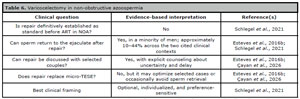
Table 6. Varicocelectomy in non-obstructive azoospermiaClinical questionEvidence-based interpretationReference(s)Is repair definitively established as standard before ART in NOA?NoSchlegel et al., 2021Can sperm return to the ejaculate after repair?Yes, in a minority of men; approximately 10-44% across the two cited clinical contextsEsteves et al., 2016b; Schlegel et al., 2021Can repair be discussed with selected couples?Yes, with explicit counseling about uncertainty and delayEsteves et al., 2016b; Çayan et al., 2026Does repair replace micro-TESE?No, but it may optimize selected cases or occasionally avoid sperm retrievalEsteves et al., 2016b; Çayan et al., 2026Best clinical framingOptional, individualized, and preference-sensitiveSchlegel et al., 2021ART: assisted reproductive technology; NOA: non-obstructive azoospermia; micro-TESE: microdissection testicular sperm extraction.
COST-EFFECTIVENESS AND THE BROADER BURDEN OF INFERTILITY TREATMENT
The value of varicocelectomy cannot be assessed only by postoperative semen parameters or pregnancy rates. Infertility care imposes substantial financial, physical, and emotional burdens on couples, and assisted reproductive technologies, although effective, can be costly and treatment intensive (Sönmez & Haliloğlu, 2018). Repeated ART cycles may also impose a substantial psychological burden, particularly following treatment failure, which has been associated with increased depression and anxiety (Milazzo et al., 2016). A male-directed intervention that improves the probability of natural conception, increases the feasibility of IUI, or enhances ART efficiency may therefore provide benefits that extend beyond the male patient.
This is especially relevant in healthcare systems with limited ART coverage or in settings where IVF and ICSI are largely funded out of pocket. In such contexts, failure to address a correctable male-factor condition such as clinical varicocele may lead to premature escalation toward more invasive and costly interventions. Evidence suggests that varicocele repair may reduce reliance on more invasive ART in selected couples and may improve reproductive outcomes when ART is still required (Sönmez & Haliloğlu, 2018; Palani et al., 2025).
Importantly, corrective interventions and laboratory-based reproductive technologies should not be viewed as mutually exclusive. Rather, they should be integrated within a sequential and individualized treatment strategy. When the male partner presents with a clinical varicocele and impaired sperm quality—including abnormal semen parameters or elevated sperm DNA fragmentation— varicocelectomy may serve as a fertility optimization step prior to ART. If assisted reproduction remains necessary, it may then be performed under improved biological conditions, potentially enhancing outcomes and reducing overall treatment burden (Kirby et al., 2016; Kohn et al., 2017).
WHY ONLINE MISINFORMATION GETS THIS WRONG
The recent proliferation of misinformation regarding varicocele reflects a broader and well-documented challenge in modern medicine: the rapid and large-scale dissemination of misleading health information through digital platforms. Social media ecosystems allow unverified content to spread globally within minutes, often bypassing scientific scrutiny and peer-review processes, thereby amplifying narratives that may be incomplete, inaccurate, or intentionally distorted (Wang et al., 2019; Desai et al., 2022). This phenomenon has been described as part of a wider "infodemic," in which an overwhelming volume of information—both accurate and false—circulates simultaneously, making it increasingly difficult for patients and the general public to distinguish reliable evidence from misinformation (Borges do Nascimento et al., 2022).
In the context of varicocele, these dynamics contribute to the emergence of simplified and misleading narratives that tend to converge around three recurrent claims: that assisted reproductive technologies have rendered surgical repair obsolete, that varicocelectomy carries an unacceptably high risk, and that its impact on fertility is clinically negligible. The persistence and reach of these claims illustrate the capacity of social media to disseminate simplified or misleading health information rapidly and at scale, often outside traditional scientific review processes (Wang et al., 2019; Desai et al., 2022).
Each of these assertions fails when examined in light of the available evidence, yet their continued circulation illustrates how misinformation can distort clinical reasoning. The claim that ART has made varicocelectomy unnecessary ignores the fundamental distinction between bypassing a biological problem and correcting it. While techniques such as IVF and ICSI can circumvent certain aspects of male-factor infertility, they do not address the underlying pathophysiological disturbances within the testis. In contrast, varicocelectomy directly improves the biological substrate of spermatogenesis, leading to measurable gains in sperm concentration, motility, total motile sperm count, and genomic integrity, including reductions in sperm DNA fragmentation. These changes have implications not only for natural conception but also for the efficiency and success of assisted reproduction.
The perception that surgery is inherently high-risk reflects another common mechanism of misinformation, in which outdated or decontextualized information is presented without reference to technological and methodological advances. Contemporary microsurgical varicocelectomy is characterized by precise anatomical dissection with preservation of arterial and lymphatic structures, resulting in low recurrence rates, minimal hydrocele formation, and an exceptionally low incidence of ischemic complications. The frequently cited concern regarding testicular ischemia is not supported by modern surgical data and persists largely as a remnant of earlier, non-microsurgical approaches.
Similarly, the suggestion that the fertility benefits of varicocele repair are minimal exemplifies selective interpretation of evidence, a hallmark of health misinformation. A substantial body of quantitative data demonstrates improvements in semen parameters, reductions in sperm DNA fragmentation, and significant increases in both spontaneous pregnancy and live birth rates following repair. In addition, improvements in ART outcomes—including fertilization, clinical pregnancy, and live birth rates—have been consistently reported.
The broader implications of such misinformation are clinically relevant. Studies have shown that exposure to misleading health information may lead to delayed medical care, reduced adherence to evidence-based treatments, and erosion of trust in healthcare professionals (Borges do Nascimento et al., 2022; Keikha et al., 2025). In reproductive medicine, this may translate into inappropriate treatment choices, unnecessary escalation to invasive interventions, or missed opportunities to correct modifiable male-factor conditions.
Ultimately, what unites these misconceptions is not a lack of data, but a fragmentation of evidence, context, and clinical reasoning. Misinformation thrives in environments where information is decontextualized and rapidly disseminated, whereas effective medical decision-making depends on synthesis, critical appraisal, and integration of evidence. When the full body of scientific data is considered, varicocelectomy emerges not as an obsolete intervention, but as a biologically sound and clinically meaningful component of modern male infertility management. Addressing this disconnect requires not only scientific evidence, but also active engagement of healthcare professionals in digital communication, as recommended by current literature on combating health misinformation (Keikha et al., 2025).
CONCLUSION
Microsurgical varicocelectomy remains a cornerstone of contemporary male infertility care. Its value lies in the fact that it treats an underlying and correctable malefactor condition rather than merely bypassing it. In men with infertility, clinical varicocele, and abnormal semen parameters or elevated sperm DNA fragmentation, repair is associated with meaningful improvements in sperm concentration, motility, total motile sperm count, DNA integrity, spontaneous pregnancy, live birth, and selected ART outcomes.
The procedure is safe when performed using microsurgical technique by experienced urologists, with low recurrence rates, minimal hydrocele formation, and an exceptionally low risk of ischemic testicular injury. In non-obstructive azoospermia, the indication is more nuanced and should be offered selectively through shared decision-making rather than as a universal recommendation.
The modern role of varicocelectomy is not to replace assisted reproduction, but to optimize the male reproductive contribution before natural conception attempts, IUI, IVF, or ICSI. In an era of misinformation, the responsibility of the professional involved in the care of infertile couples is to provide balanced, evidence-based counseling that integrates biological plausibility, quantitative outcomes, surgical expertise, couple-centered decision-making, and realistic expectations. The evidence does not support abandoning varicocele repair. It supports using it thoughtfully, selectively, and skillfully.
USE OF ARTIFICIAL INTELLIGENCE:
AI (Claude AI) was used solely to improve the readability and language of this manuscript. The authors reviewed and edited the content as needed and take full responsibility for the content of the article.
REFERENCES
Abdel-Maguid AF, Othman I. Microsurgical and nonmagnified subinguinal varicocelectomy for infertile men: a comparative study. Fertil Steril. 2010;94:2600-3. PMID: 20447629 DOI: 10.1016/j.fertnstert.2010.03.063
Medline
Agarwal A, Hamada A, Esteves SC. Insight into oxidative stress in varicocele-associated male infertility: part 1. Nat Rev Urol. 2012;9:678-90. PMID: 23165403 DOI: 10.1038/nrurol.2012.197
Medline
Agarwal A, Farkouh A, Parekh N, Zini A, Arafa M, Kandil H, Tadros N, Busetto GM, Ambar R, Parekattil S, Boitrelle F, Sallam H, Jindal S, Ko E, Simopoulou M, Park HJ, Sadighi MA, Saleh R, Ramsay J, Martinez M, et al. Sperm DNA fragmentation: a critical assessment of clinical practice guidelines. World J Mens Health. 2022;40:30-7. PMID: 33988000 DOI: 10.5534/wjmh.210056
Medline
Al-Kandari AM, Khudair A, Arafa A, Zanaty F, Ezz A, El-Shazly M. Microscopic subinguinal varicocelectomy in 100 consecutive cases: spermatic cord vascular anatomy, recurrence and hydrocele outcome analysis. Arab J Urol. 2018;16:181-7. PMID: 29713549 DOI: 10.1016/j. aju.2017.12.002
Medline
Baazeem A, Belzile E, Ciampi A, Dohle G, Jarvi K, Salonia A, Weidner W, Zini A. Varicocele and male factor infertility treatment: a new meta-analysis and review of the role of varicocele repair. Eur Urol. 2011;60:796-808. PMID: 21733620 DOI: 10.1016/j.eururo.2011.06.018
Medline
Birowo P, Tendi W, Widyahening IS, Atmoko W, Rasyid N. The benefits of varicocele repair for achieving pregnancy in male infertility: a systematic review and meta-analysis. Heliyon. 2020;6:e05439. PMID: 33204888 DOI: 10.1016/j. heliyon.2020.e05439
Medline
Borges E Jr, Zanetti BF, Setti AS, Braga DPAF, Provenza RR, Iaconelli A Jr. Sperm DNA fragmentation is correlated with poor embryo development, lower implantation rate, and higher miscarriage rate in reproductive cycles of non-male factor infertility. Fertil Steril. 2019;112:483-90. PMID: 31200969 DOI: 10.1016/j.fertnstert.2019.04.029
Medline
Borges do Nascimento IJ, Pizarro AB, Almeida JM, Azzopardi-Muscat N, Gonçalves MA, Björklund M, Novillo-Ortiz D. Infodemics and health misinformation: a systematic review of reviews. Bull World Health Organ. 2022;100:544-61. PMID: 36062247 DOI: 10.2471/BLT.21.287654
Medline
Çayan S, Pinggera GM, Alipour H, Altay B, Shah R, Giulioni C, Mostafa T, Hamoda T, Alarcon DCA, Dardmeh F, Daoud S, Fathalla N, Gunes S, Le TV, Vishwakarma RB, Harraz AM, Arafa M, Cannarella R, Rambhatla A, Zini A, et al. The effects of varicocele repair on testicular sperm retrieval, sperm recovery in the ejaculate and clinical pregnancy rates in non-obstructive azoospermic men with clinical varicocele: a systematic review and meta-analysis. World J Mens Health. 2026;44:593-607. PMID: 40676886 DOI: 10.5534/wjmh.250065
Medline
Cho CL, Esteves SC, Agarwal A. Novel insights into the pathophysiology of varicocele and its association with reactive oxygen species and sperm DNA fragmentation. Asian J Androl. 2016;18:186-93. PMID: 26732105 DOI: 10.4103/1008-682X.170441
Medline
Desai AN, Ruidera D, Steinbrink JM, Granwehr B, Lee DH. Misinformation and disinformation: the potential disadvantages of social media in infectious disease and how to combat them. Clin Infect Dis. 2022;74:e34-e39. PMID: 35568471 DOI: 10.1093/cid/ciac109
Medline
Esteves SC, Roque M, Agarwal A. Outcome of assisted reproductive technology in men with treated and untreated varicocele: systematic review and meta-analysis. Asian J Androl. 2016a;18:254-8. PMID: 26510504 DOI: 10.4103/1008-682X.163269
Medline
Esteves SC, Miyaoka R, Roque M, Agarwal A. Outcome of varicocele repair in men with nonobstructive azoospermia: systematic review and meta-analysis. Asian J Androl. 2016b;18:246-53. PMID: 26680033 DOI: 10.4103/1008-682X.169562
Medline
Goldstein M, Gilbert BR, Dicker AP, Dwosh J, Gnecco C. Microsurgical inguinal varicocelectomy with delivery of the testis: an artery and lymphatic sparing technique. J Urol. 1992;148:1808-11. PMID: 1433614 DOI: 10.1016/S0022-5347(17)37035-0
Medline
Jensen CFS, Østergren P, Dupree JM, Ohl DA, Sønksen J, Fode M. Varicocele and male infertility. Nat Rev Urol. 2017;14:523-33. PMID: 28675168 DOI: 10.1038/nrurol.2017.98
Medline
Keikha L, Shahraki-Mohammadi A, Nabiolahi A. Strategies and prerequisites for combating health misinformation on social media: a systematic review. BMC Public Health. 2025;26:139. PMID: 41351160 DOI: 10.1186/s12889-025-25858-4
Medline
Kirby EW, Wiener LE, Rajanahally S, Crowell K, Coward RM. Undergoing varicocele repair before assisted reproduction improves pregnancy rate and live birth rate in azoospermic and oligospermic men with a varicocele: a systematic review and meta-analysis. Fertil Steril. 2016;106:1338-43. PMID: 27526630 DOI: 10.1016/j.fertnstert.2016.07.1093
Medline
Kohn TP, Kohn JR, Pastuszak AW. Varicocelectomy before assisted reproductive technology: are outcomes improved? Fertil Steril. 2017;108:385-91. PMID: 28865536 DOI: 10.1016/j.fertnstert.2017.06.033
Medline
Li F, Duan X, Li M, Ma X. Sperm DNA fragmentation index affect pregnancy outcomes and offspring safety in assisted reproductive technology. Sci Rep. 2024;14:356. PMID: 38172506 DOI: 10.1038/s41598-023-45091-6
Medline
Lira Neto FT, Roque M, Esteves SC. Effect of varicocelectomy on sperm deoxyribonucleic acid fragmentation rates in infertile men with clinical varicocele: a systematic review and meta-analysis. Fertil Steril. 2021;116:696-712. PMID: 33985792 DOI: 10.1016/j.fertnstert.2021.04.003
Medline
Milazzo A, Mnatzaganian G, Elshaug AG, Hemphill SA, Hiller JE; Astute Health Study Group. Depression and anxiety outcomes associated with failed assisted reproductive technologies: a systematic review and meta-analysis. PLoS One. 2016;11:e0165805. PMID: 27835654 DOI: 10.1371/journal.pone.0165805
Medline
Minhas S, Boeri L, Capogrosso P, Cocci A, Corona G, Dinkelman-Smit M, Falcone M, Jensen CF, Gül M, Kalkanli A, Kadioğlu A, Martinez-Salamanca JI, Morgado LA, Russo GI, Serefoğlu EC, Verze P, Salonia A. European Association of Urology Guidelines on Male Sexual and Reproductive Health: 2025 update on male infertility. Eur Urol. 2025;87:601-16. PMID: 40118737 DOI: 10.1016/j. eururo.2025.02.026
Medline
Morini D, Spaggiari G, Daolio J, Melli B, Nicoli A, De Feo G, Valli B, Viola D, Garganigo S, Magnani E, Pilia A, Polese A, Colla R, Simoni M, Aguzzoli L, Villani MT, Santi D. Improvement of sperm morphology after surgical varicocele repair. Andrology. 2021;9:1176-84. PMID: 33825345 DOI: 10.1111/andr.13012
Medline
Pagani RL, Ohlander SJ, Niederberger CS. Microsurgical varicocele ligation: surgical methodology and associated outcomes. Fertil Steril. 2019;111:415-9. PMID: 30827515 DOI: 10.1016/j.fertnstert.2019.01.002
Medline
Palani A, Cannarella R, Saleh R, Salvio G, Harraz AM, Crafa A, Bahar F, Bocu K, Kumar N, Kothari P, Pinggera GM, Cayan S, Colpi GM, Atmoko W, Shah R, Agarwal A. Impact of varicocele repair on assisted reproductive technique outcomes in infertile men: a systematic review and meta-analysis. World J Mens Health. 2025;43:344-58. PMID: 39344117 DOI: 10.5534/wjmh.240132
Medline
Samplaski MK, Lo KC, Grober ED, Zini A, Jarvi KA. Varicocelectomy to "upgrade" semen quality to allow couples to use less invasive forms of assisted reproductive technology. Fertil Steril. 2017;108:609-12. PMID: 28911932 DOI: 10.1016/j.fertnstert.2017.07.017
Medline
Schlegel PN, Sigman M, Collura B, De Jonge CJ, Eisenberg ML, Lamb DJ, Mulhall JP, Niederberger C, Sandlow JI, Sokol RZ, Spandorfer SD, Tanrikut C, Treadwell JR, Oristaglio JT, Zini A. Diagnosis and treatment of infertility in men: AUA/ASRM guideline part II. Fertil Steril. 2021;115:62-9. PMID: 33309061 DOI: 10.1016/j.fertnstert.2020.11.016
Medline
Shiraishi K. Role of varicocele repair in the era of assisted reproductive technologies: lessons from 2000 cases of microsurgical varicocele repair. Reprod Med Biol. 2024;23:e12589. PMID: 38948338 DOI: 10.1002/rmb2.12589
Medline
Sönmez MG, Haliloğlu AH. Role of varicocele treatment in assisted reproductive technologies. Arab J Urol. 2018;16:188-96. PMID: 29713550 DOI: 10.1016/j.aju.2018.01.002
Medline
Su JS, Farber NJ, Vij SC. Pathophysiology and treatment options of varicocele: an overview. Andrologia. 2021;53:e13576. PMID: 32271477 DOI: 10.1111/and.13576
Medline
Wan B, Fu Y, Ma N, Zhou Z, Lu W. Sperm DNA fragmentation and assisted reproduction: an umbrella meta-analysis. Eur J Med Res. 2026;31:218. PMID: 41501955 DOI: 10.1186/s40001-025-03801-y
Medline
Wang Y, McKee M, Torbica A, Stuckler D. Systematic literature review on the spread of health-related misinformation on social media. Soc Sci Med. 2019;240:112552. PMID: 31561111 DOI: 10.1016/j.socscimed.2019.112552
Medline