JBRA Assist. Reprod. 2025;29(Suppl 1):45-45
POSTER PRESENTATION
doi: 10.5935/1518-0557.20250099
P-031. Antioxidant Effect of Phloroglucinol in the Cryopreservation of Human Spermatozoa
1Inmater Fertility Clinic, Lima, Peru
2Ricardo Palma University, Lima, Peru
Objective: To evaluate the antioxidant effect of phloroglucinol in the cryopreservation of human sperm and determine its effect on motility, vitality and DNA fragmentation.
Methods: Semen samples were collected from 22 patients (ages 21-48) at Inmater Fertility Clinic (Lima, Peru) after informed consent. Samples were obtained by masturbation following 3-5 days of abstinence and analyzed per WHO guidelines (2010). Inclusion criteria: sperm concentration ≥ 15 × 106/mL, total count ≥ 39 × 106, progressive motility ≥ 32%, total motility ≥ 40%, viability ≥ 58%, morphology ≥ 4%, round cells < 5 × 10⁶/mL. The experimental work was carried out at Ricardo Palma University. Four aliquots of fresh semen were mixed (1:1) with a cryoprotectant containing 15% glycerol and supplemented with phloroglucinol at 0, 5, 25, or 50 µg/mL. After 10 min of equilibration, samples were loaded into 0.5 mL straws, sealed, and frozen at -78.5°C for 1 h before liquid nitrogen storage (-196°C). Thawing occurred after seven days by immersing straws in water for 5 min, followed by incubation at 37°C for 10 min. Post-thaw, sperm quality was assessed for motility, viability and DNA fragmentation using the Halosperm kit. Statistical analysis used one-way repeated-measures ANOVA. Non-normally distributed variables were squared for normalization. Pairwise comparisons were conducted via Student’s t-test with Bonferroni correction (p < 0.05). Results are presented as mean±standard deviation.
Results: Phloroglucinol significantly improved the cryosurvival factor of progressive sperm motility at a concentration of 5 µg/ mL (p = 0.044); however, it reduced motility at concentrations equal to or greater than 25µg/mL. Samples frozen with phloroglucinol showed a slight increase in post-thaw sperm viability, although this effect was not statistically significant (p = 0.31). On the other hand, the percentage of sperm with DNA fragmentation decreased significantly at all Phloroglucinol concentrations: 5 µg/mL (p = 0.01), 25 µg/mL (p = 0.0006) and 50 µg/mL (p = 0.003) compared to the control group (0 µg/mL).
Conclusion: This study showed that supplementing the cryopreservation medium with phloroglucinol decreases the oxidative stress produced during the cryopreservation of human sperm.
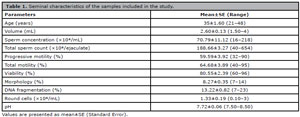
Table 1. Seminal characteristics of the samples included in the study.
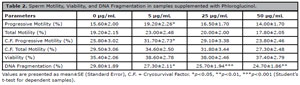
Table 2. Sperm Motility, Viability, and DNA Fragmentation in samples supplemented with Phloroglucinol.