JBRA Assist. Reprod. 2026 2026;00(0):00-00
REVIEW
doi: 10.5935/1518-0557.20260060
Endometrial Preparation for Frozen Embryo Transfer: Protocols and Pregnancy Outcomes
1Department of Gynecology and Obstetrics, Unidade Local de Saúde de Trás-os-Montes e Alto Douro (ULSTMAD), Vila Real, Portugal
2IVI Assisted Reproduction and Fertility Clinic, Vigo, Spain
CONFLICT OF INTERESTS
There are no conflicts of interest to declare.
ABSTRACT
Frozen embryo transfer (FET) has become widely used over the past decade, largely because of advances in vitrification techniques. To optimize pregnancy rates in FET cycles, accurate synchronization between embryo development and endometrial receptivity is essential. However, the optimal individualized approach to endo-metrial preparation remains a matter of ongoing debate. This review summarizes the current literature on endo-metrial preparation protocols and their impact on preg-nancy and perinatal outcomes, with a particular focus on artificial, natural, and stimulated cycles. Although many studies have methodological limitations, some well-de-signed randomized controlled trials suggest improved pregnancy rates and better perinatal outcomes with FET compared with fresh embryo transfer, including a low-er risk of preterm delivery and ovarian hyperstimulation syndrome (OHSS). Nonetheless, artificial endometrial preparation-characterized by the absence of a corpus luteum-has been associated with a higher incidence of hypertensive disorders of pregnancy and large-for-ges-tational-age (LGA) infants. This has renewed interest in whether transferring frozen embryos into a more physio-logic endometrium, as occurs in natural or modified nat-ural cycles, may not only enhance implantation but also reduce maternal and neonatal morbidity. The emergence of personalized luteal phase support across different protocols is another promising area that warrants further investigation. This narrative review provides a compre-hensive overview of endometrial preparation strategies for FET and their effects on clinical outcomes based on the most recent available evidence.
Keywords: frozen embryo transfer, endometrial prepara-tion, hormone replacement therapy cycle, natural cycle, corpus luteum, pregnancy outcomes
INTRODUCTION
Frozen embryo transfer (FET) has become widely used worldwide over the past decade because of improvements in vitrification techniques and assisted reproductive technology (ART) (Wong et al., 2014). The adoption of the freeze-all strategy has increased in recent years because it allows elective single-embryo transfer, decreases the risk of ovarian hyperstimulation syndrome, and provides time for preimplantation genetic testing (Roque et al., 2019; Shapiro et al., 2014a). Additional potential advantages of FET include reductions in low birth weight, small-for-gestational-age infants, preterm birth, placenta previa, placental abruption, and perinatal mortality compared with fresh embryo transfer (ET) (Ginström Ernstad et al., 2019; Sha et al., 2018). Moreover, several studies have suggested that FET is associated with a slightly higher live birth rate than fresh ET, possibly because of superior endometrial receptivity in FET cycles (Roque et al., 2019; Wang et al., 2017).
To maximize pregnancy rates in FET, synchronization between embryo and endometrial development is crucial. Nevertheless, the optimal individualized approach to endometrial priming remains under debate (Groenewoud et al., 2013). The protocols commonly used in clinical practice can be subdivided into (1) natural cycles (NC), including true natural cycles (t-NC) and modified natural cycles (m-NC), in which endogenous estradiol and progesterone are secreted during a spontaneous cycle; (2) artificial cycles (AC), also referred to as hormone replacement treatment cycles, with administration of exogenous estradiol and progesterone; and (3) mild ovarian stimulation (mild-OS), using gonadotropins, clomiphene citrate, or letrozole to induce ovulation (Hsueh et al., 2023). The latest Cochrane review concluded that, to date, there is no evidence favoring one preparation method over another in terms of implantation rates and/or live birth rates (LBR) (Glujovsky et al., 2020). However, recent studies have demonstrated an increased likelihood of obstetric complications, particularly hypertensive disorders of pregnancy (HDP) and large-for-gestational-age (LGA) infants, associated with artificial endometrial preparation because of the absence of a corpus luteum (Sha et al., 2018; Moreno-Sepulveda et al., 2021; Zaat et al., 2021; Roelens et al., 2022; Busnelli et al., 2022). Additionally, early pregnancy loss appears to be considerably higher in artificial cycles than in natural cycles (Vinsonneau et al., 2022). Therefore, there is an ongoing debate about whether transferring frozen embryos into a more physiologic, nonstimulated endometrium may not only improve pregnancy rates but also reduce maternal and neonatal morbidity.
This review comprehensively examines endometrial preparation protocols for FET cycles and their impact on pregnancy outcomes based on recent literature.
MATERIALS AND METHODS
A thorough search was conducted in PubMed and the Cochrane Central Register of Controlled Trials (CENTRAL). The search terms included frozen embryo transfer, endometrial receptivity, natural cycle, modified natural cycle, hormone replacement treatment cycle, artificial cycle, mild stimulation cycle, corpus luteum, and pregnancy outcomes. The literature review was limited to papers published in English. All relevant articles published through May 2024 were reviewed.
FROZEN EMBRYO TRANSFER PROTOCOLS
FET preparation methods can primarily be classified into artificial and natural cycles, with the latter encompassing both true and modified natural cycles (Casper & Yanushpolsky, 2016). Less frequently, a mild-OS protocol may be applied (Peeraer et al., 2015). In the artificial cycle, also known as the hormone replacement treatment (HRT) cycle, endometrial proliferation and suppression of follicular growth are achieved through timely exogenous supplementation with estradiol and progesterone (Casper & Yanushpolsky, 2016; Mackens et al., 2017). Conversely, in NC, endogenous estradiol and progesterone produced during a spontaneous cycle prepare the endometrium; therefore, these protocols are best suited for patients with regular menstrual cycles (Casper & Yanushpolsky, 2016; Mackens et al., 2017).
Hormone Replacement Treatment (HRT)
Originally developed for patients with ovarian failure in the context of an oocyte donation program, this preparation method has become the most commonly used protocol for endometrial preparation before FET because it requires minimal cycle monitoring and allows convenient scheduling (Younis et al., 1996; Wong et al., 2021; von Versen-Höynck et al., 2021). In HRT, endometrial preparation and receptivity are achieved by sequential administration of estrogen and progesterone to mimic the natural menstrual cycle. Because exogenous estrogen administration suppresses follicular growth, pregnancies resulting from HRT-FET do not have a functional corpus luteum and therefore lack vasoactive substances such as relaxin. These substances, which are produced by the corpus luteum, are important for early maternal cardiovascular adaptation (von Versen-Höynck et al., 2019). Despite the widespread use of HRT cycles, they may have drawbacks, including higher cost, inconvenience, and potential adverse effects related to estrogen supplementation (Mackens et al., 2017).
Estrogen administration
Treatment with estrogen is initiated on the first, second, or third day of the cycle to prepare the endometrium and inhibit spontaneous follicular growth (Mumusoglu et al., 2021). Estrogen is usually administered empirically for 14 days to simulate the NC (Lutjen et al., 1984). However, some studies suggest that 5-7 days may be sufficient for appropriate endometrial proliferation (Navot et al., 1986). A retrospective study of 1,439 patients undergoing their first euploid blastocyst transfer after a freeze-all strategy concluded that the duration of estrogen administration did not negatively affect implantation, clinical pregnancy, early pregnancy loss, or LBRs (Sekhon et al., 2019). These findings were corroborated by Racca et al. (2021) in a randomized controlled trial that showed no differences in pregnancy outcomes when comparing 7 and 14 days of estrogen supplementation before FET. Nevertheless, a higher miscarriage rate with shorter estrogen supplementation has also been reported (Borini et al., 2001). Estrogen administration can be extended for up to 28 days (Bourdon et al., 2018) or even 36 days (Sekhon et al., 2019), if needed, without negatively affecting reproductive outcomes, thereby allowing more flexible scheduling of FET (Bourdon et al., 2018; Soares et al., 2005).Estrogens are available in natural and synthetic forms and can be administered by various routes, including oral (micronized estradiol or estradiol valerate), vaginal (estradiol valerate), and transdermal (estradiol gel or estradiol patches), with similar reproductive outcomes (Glujovsky et al., 2020). In a meta-analysis, Glujovsky et al. (2010) found that FET cycle outcomes were not affected by the type or route of estrogen supplementation. Estrogen can be administered either at a fixed dose of 6 mg daily or in a step-up regimen. A large retrospective study of 8,254 oocyte donation cycles compared both protocols (fixed-dose and step-up regimens) and reported similar LBRs between groups (33.0% vs. 32.5%, respectively) (Madero et al., 2016).Data regarding the need for endocrine monitoring during HRT are scarce. In particular, late-follicular serum estradiol and luteinizing hormone (LH) levels do not appear to predict outcomes (Remohí et al., 1997; Niu et al., 2008; Bocca et al., 2015). Serum progesterone measurements may also be used to detect escape ovulation, a rare occurrence (1.9-7.4% incidence) that can be observed in HRT-FET cycles without pituitary suppression (van de Vijver et al., 2014).
GnRH agonists and antagonists
In HRT-FET, GnRH analogs have been proposed to regulate the hypothalamic-pituitary-ovarian axis and enhance the endometrial environment. Specifically, GnRH agonists are used to suppress endogenous hormonal fluctuations and prevent premature ovulation (Wu et al., 2021). In most HRT protocols, pituitary downregulation with a GnRH agonist is initiated in the midluteal phase of the preceding cycle before estrogen administration to avoid spontaneous follicular development and premature ovulation (Dal Prato et al., 2002).The main disadvantage of an HRT protocol without pituitary suppression is the risk of premature ovulation, which may result in cycle cancellation and has been reported in 1.9% to 7.4% of cases (van de Vijver et al., 2014; Dal Prato et al., 2002). Therefore, in addition to estrogen administration, a GnRH agonist can be incorporated into an HRT protocol to prevent spontaneous ovulation (Keltz et al., 1995). One RCT involving 234 patients undergoing FET cycles compared HRT protocols with and without GnRH agonist suppression. GnRH agonist suppression was associated with higher clinical pregnancy and live birth rates, primarily because of reduced cycle cancellation rates (El-Toukhy et al., 2004). Nevertheless, a Cochrane meta-analysis (Glujovsky et al., 2020) found no significant difference between the two protocols regarding clinical pregnancy rate (CPR), cycle cancellation rate, miscarriage rate, or endometrial thickness. A retrospective cohort study involving 9,263 women compared pregnancy outcomes after FET with and without long-acting GnRH agonist administration before the HRT protocol (Xia et al., 2022). No difference in LBR between the two protocols was observed in women with no or one previous failed embryo implantation. In contrast, among women with multiple previous failed embryo implantations, the HRT protocol with GnRH agonist achieved a higher LBR than the HRT protocol without GnRH agonist (Xia et al., 2022).Although pituitary suppression with a GnRH agonist lowers the cycle cancellation rate, HRT without suppression is more patient-friendly and results in CPRs comparable to those observed with GnRH agonist suppression (Mumusoglu et al., 2021). GnRH antagonists provide immediate and reversible suppression of the pituitary-gonadal axis while avoiding the initial flare effect characteristic of GnRH agonist administration.Suppression of the hypothalamic-pituitary axis using a GnRH analog may be performed before HRT. Although GnRH agonists are most commonly used for this purpose, GnRH antagonists may also be administered for pituitary suppression (Mumusoglu et al., 2021; Tarlatzis et al., 2006). Because of their short half-life, GnRH antagonists avoid prolonged pituitary suppression in cases of cycle cancellation after initiation of endometrial priming and have been associated with shorter preparation time, absence of cyst formation, lack of estrogen-deprivation symptoms, and the possibility of self-administration (Tarlatzis et al., 2006).
Progesterone administration
When endometrial proliferation after estrogen administration is considered adequate, progesterone is introduced to support the final phase of endometrial preparation before embryo transfer. The ideal endometrial thickness in HRT-FET cycles has been reported to be between 9 and 14 mm (El-Toukhy et al., 2008). However, because a previous meta-analysis linked endometrial thickness ≤7 mm in fresh IVF cycles to a reduced chance of pregnancy, this cutoff value is often extended to FET as well (Dain et al., 2013; Kasius et al., 2014). Other common indicators of good endometrial receptivity assessed by transvaginal ultrasonography include a trilaminar endometrial pattern and the presence of endometrial blood flow (Craciunas et al., 2019). For patients undergoing HRT-FET, ensuring optimal exposure to progesterone supplementation is crucial for successful conception. However, there are insufficient data to define the ideal route, dose, and start date of progesterone in HRT-FET cycles (Miles et al., 1994; Zarei et al., 2017; Alsbjerg et al., 2020). Progesterone is available for administration through multiple routes, including oral, rectal, intramuscular, subcutaneous, and vaginal routes, with the vaginal route being the most commonly used. Currently, comparative data on how different routes or doses of progesterone supplementation affect subsequent reproductive outcomes remain insufficient. Two RCTs have evaluated intramuscular versus vaginal routes in patients undergoing HRT-FET and found comparable CPRs (Wang et al., 2015; Lightman et al., 1999). Retrospective data are inconsistent, with some studies favoring the IM route (Haddad et al., 2007; Kaser et al., 2012) and others showing no significant differences in outcomes (Leonard et al., 2015; Shapiro et al., 2014b). Compared with intramuscular (IM) injections, patients tend to prefer the vaginal route because it is fast, simple, and painless. A retrospective study involving 1,364 HRT-FET cycles compared reproductive outcomes between two regimens: 400 mg of vaginal micronized progesterone twice daily combined with 10 mg of oral progesterone twice daily, and 400 mg of vaginal micronized progesterone twice daily alone (Vuong et al., 2021). The group receiving combined vaginal and oral progesterone had a significantly lower miscarriage rate (3.4% vs. 6.6%) and a higher LBR (46.3% vs. 41.3%) (Vuong et al., 2021). A double-blind, placebo-controlled RCT found that oral dydrogesterone is equally effective and has a similar safety profile in fresh cycles (Tournaye et al., 2017). Regarding the ideal progesterone dose in HRT-FET cycles, a retrospective study concluded that doubling the vaginal progesterone gel dose in patients with oligomenorrhea significantly improved live birth rates (Alsbjerg et al., 2020). Further RCTs are clearly needed to establish the most effective regimen and optimal dose of different progesterone supplementation methods for HRT-FET (Hsueh et al., 2023).Endocrine monitoring of serum progesterone during the luteal phase in HRT-FET cycles has also yielded conflicting results. Evidence from systematic reviews indicates that serum luteal progesterone levels around 10 ng/mL are associated with improved ongoing pregnancy and live birth rates, higher clinical pregnancy rates, and a reduced risk of miscarriage in women undergoing FET treatment (Melo et al., 2021). Conversely, progesterone levels >20 ng/mL on the day of transfer, possibly because of escape ovulation and subsequent embryo-endometrial asynchrony, have been linked to reduced ongoing pregnancy and live birth rates (Kofinas et al., 2015), whereas progesterone levels between 22 and 31 ng/mL during the midluteal phase have been considered optimal (Yovich et al., 2015).No consensus has been reached regarding the ideal duration of luteal support in HRT-FET cycles after conception (Sha et al., 2018). Because endogenous progesterone secretion by the corpus luteum is absent in this protocol, progesterone supplementation for luteal support is especially critical. In theory, progesterone supplementation should continue until the luteoplacental shift, which occurs at approximately 10-12 weeks of gestation, when adequate endogenous progesterone is produced by the placenta (Neumann et al., 2020).
Natural Cycle (NC)
NCs involve tracking endometrial proliferation and follicular development through sequential ultrasound and/ or hormonal evaluations during the proliferative phase to identify the optimal timing for embryo transfer. Transfer timing is guided either by spontaneous ovulation (the so-called t-NC) or by ovulation triggering with human chorionic gonadotropin (hCG) in m-NC (Santos-Ribeiro et al., 2023). NC-FET has become popular as a more natural approach, with the benefit of not requiring estrogen supplementation. Overall, however, NC protocols have some challenges and limitations because they require more frequent clinic visits, provide less scheduling flexibility, and carry a higher risk of cycle cancellation (Santos-Ribeiro et al., 2023).
The proliferative phase
In a t-NC, a dominant follicle matures and produces estradiol, which promotes endometrial development and thickening. Ovulation occurs naturally, and the ovulation site forms the corpus luteum, a functional ovarian cyst that produces progesterone and renders the endometrium receptive to embryo implantation (Casper & Yanushpolsky, 2016). To plan FET, the exact timing of spontaneous ovulation must be accurately identified, requiring frequent endocrine evaluations and transvaginal ultrasonographic monitoring, usually every other day or daily.The initial step in evaluating embryo-endometrial synchronization is confirmation of ovulation of the dominant follicle. In practice, the first assessment begins with transvaginal ultrasound evaluation on the second or third day of menstruation to exclude cysts or a corpus luteum from the previous cycle (Mumusoglu et al., 2021). Transvaginal ultrasonographic monitoring of follicle size and growth then begins on cycle days 8-10, and serum hormone levels (E2, LH, and progesterone) are measured when the dominant follicle reaches an average diameter of 15 mm (Mumusoglu et al., 2021). In m-NC, ovulation is induced with hCG when the leading follicle reaches an average diameter of 16-20 mm. In addition to triggering ovulation, hCG increases serum progesterone production during the early and midluteal phases, functioning as early luteal phase support (LPS) (Mumusoglu et al., 2021). At present, there is no consensus on the dose (5,000-10,000 IU) used to trigger ovulation in the modified-NC protocol (Svenstrup et al., 2022). Theoretically, the minimal effective dose required to trigger ovulation would lead to lower early serum progesterone levels, reducing the risk of endometrial advancement, which is known to adversely affect endometrial receptivity (Mumusoglu et al., 2021). Although serum hormone levels are often carefully evaluated, the role of endocrine monitoring in addition to routine ultrasound monitoring remains highly debated in both true and modified NC-FET cycles (Groenewoud et al., 2017; Lee et al., 2014).Natural-cycle FET requires monitoring of LH levels, early luteal progesterone, and follicular development to identify the LH surge and ensure adequate corpus luteum function, although LH detection may be logistically challenging and normal luteal function can only be assumed in regular ovulatory cycles (Casper & Yanushpolsky, 2016). A precise definition of a clinical LH surge is lacking, but it is generally considered an increase in LH of at least 180% above the last recorded serum value, with a continued rise thereafter (Testart et al., 1981). Serum rather than urinary LH testing is recommended, as urinary LH testing is associated with a high false-negative rate (Miller & Soules, 1996). In addition, a 1-day delay should be considered when timing FET because of urinary LH clearance (Testart et al., 1981; Cekan et al., 1986). For FET scheduling, some clinics rely not only on documentation of the LH surge but also on ultrasonographic indicators of ovulation (Kosmas et al., 2007). Although ovulation typically occurs 24 hours after the spontaneous LH surge, it can occur up to 56 hours after the LH surge (Kosmas et al., 2007). Follicular collapse is the most common ultrasonographic indicator of ovulation. Regarding clinical outcomes, three retrospective studies comparing t-NC with m-NC found no significant differences between the two methods (Weissman et al., 2009; Chang et al., 2011; Tomás et al., 2012). However, a recent retrospective study including 2,353 FET cycles showed a significantly higher CPR with t-NC-FET (without LPS) than with m-NC-FET (with LPS), even after adjusting the transfer policy according to the type of ovulation trigger and excluding patients who received hCG despite an LH surge (46.9% vs. 29.7%, p<0.001) (Montagut et al., 2016).
The luteal phase
Luteal phase defect or deficiency (LPD) is usually characterized by failure of the corpus luteum to produce adequate progesterone levels or by an insufficient endometrial response to circulating progesterone (Gaggiotti-Marre et al., 2020). Historically, the prevalence of LPD among infertile patients was estimated to be approximately 8% (Rosenberg et al., 1980), with midluteal serum progesterone levels below 10 ng/mL considered indicative of NC-related LPD (Jordan et al., 1994). The need for LPS in t-NC or m-NC remains unclear. In t-NC, available retrospective studies show mixed results: some support the use of LPS (Veleva et al., 2013), whereas others report similar reproductive outcomes with or without LPS (Montagut et al., 2016; Waldman et al., 2021).Because hCG has a long half-life and a prolonged luteotropic effect during the early luteal phase for up to 7 days after administration, LPS may not be necessary in m-NC (Fauser et al., 2002; Casper & Yanushpolsky, 2016; Eftekhar et al., 2013). For m-NC-FET, both prospective (Eftekhar et al., 2013) and retrospective (Kyrou et al., 2010) studies found no difference in pregnancy outcomes with or without LPS. If used, the timing of LPS administration in t-NC or m-NC appears crucial because premature progesterone supplementation may cause embryo-endometrial asynchrony, leading to reduced reproductive outcomes (Montagut et al., 2016). Progesterone should not be administered earlier than 3 days after the LH surge when LPS is used (van de Vijver et al., 2017).
Mild-Ovarian Stimulation (mild-OS) cycle
The rationale for mild ovarian stimulation (mild-OS) in regularly cycling women is to correct subtle defects in folliculogenesis and the subsequent luteal phase, thereby creating a more favorable endometrial environment for embryo implantation. Additionally, mild-OS reduces the risks associated with the supraphysiologic levels of exogenous estrogen and progesterone in HRT cycles (Peeraer et al., 2015; Van der Auwera et al., 1994). The endometrium can be prepared for embryo transfer using oral ovulatory agents (such as clomiphene citrate or letrozole), exogenous gonadotropins, or a combination of these. Protocols available for this purpose include less than 150 IU of urinary/recombinant follicle-stimulating hormone (FSH) per day, letrozole at a dose of 2.5-5 mg per day, or clomiphene citrate (CC) at a dose of 50-100 mg per day, beginning on the second or third day of the cycle (Mumusoglu et al., 2021). Letrozole is an aromatase inhibitor with a half-life of approximately 2 days, compared with approximately 2 weeks for CC (Kaser et al., 2012). During letrozole use, the hypothalamic-pituitary-ovarian axis remains intact, in contrast to CC. Additionally, letrozole does not negatively affect the endometrium (Miller et al., 2012). As with CC, not all patients respond to a 5-day course of letrozole. As a result, extended regimens (7-10 days), stair-step protocols, and combinations with low-dose recombinant gonadotropins have been suggested (Thomas et al., 2019). Customization of mild-OS protocols according to individual patient characteristics is crucial for optimizing outcomes (Hsueh et al., 2023). The follicular response is tracked through regular vaginal ultrasonography and/or serum hormone assessment. As in m-NC, hCG is administered when the leading follicle reaches 17-18 mm, endometrial thickness is >7 mm, and serum estradiol is >150 pg/mL (Mumusoglu et al., 2021). The scheduling of FET is determined by the day on which the embryos were frozen; day-3 embryos are transferred on hCG+5, and blastocyst-stage embryos are transferred on hCG+7 (Lightman et al., 1999; Haddad et al., 2007). Although standard clinical practice is to use LPS in mild-OS cycles for FET, this practice is largely extrapolated from non-IVF OS cycles; therefore, RCTs are needed to clarify the role of LPS in mild-OS cycles (Mumusoglu et al., 2021).
HRT versus NC
Based on findings from available retrospective and prospective cohort studies, most data indicate that reproductive outcomes are comparable between NC (t-NC and m-NC) FET and HRT-FET (Hancke et al., 2012; Lathi et al., 2015). However, conflicting data have emerged: some studies reported better outcomes (Guan et al., 2016; Liu et al., 2020), whereas others showed worse outcomes (Hill et al., 2010; Givens et al., 2009) among patients undergoing NC compared with those receiving HRT-FET. Of note, some studies have shown an alarmingly high rate of early pregnancy loss in HRT cycles (Veleva et al., 2013). Furthermore, when HRT-FET was compared with fresh embryo transfer, hormonal substitution FET was associated with a 1.7-fold higher miscarriage rate (Veleva et al., 2013). A meta-analysis comparing obstetric outcomes between NC and HRT-FET also found that patients undergoing HRT-FET had a higher risk of early pregnancy loss (Zaat et al., 2023). A Cochrane meta-analysis of five RCTs showed a nonsignificant trend toward a higher CPR with HRT than with NC (Glujovsky et al., 2020). A network meta-analysis including 26 RCTs and 113 cohort studies compared seven different FET protocols: t-NC, m-NC, HRT with and without GnRH agonist suppression, letrozole, CC, and exogenous gonadotropin (Wu et al., 2021). Among all protocols, HRT had the lowest LBR (Wu et al., 2021) when compared with t-NC (OR = 0.85, 95% CI 0.48-1.49) and m-NC (OR = 0.79, 95% CI 0.56-1.11) (Wu et al., 2021). Importantly, an RCT involving 959 FET cycles found that patients undergoing HRT-FET had a higher cancellation rate than those undergoing an m-NC protocol (124/464 vs. 101/495; OR 1.4, 95% CI 1.1-1.9; p=0.02) (Groenewoud et al., 2016). In conclusion, the available evidence suggests that reproductive outcomes in NC (t-NC and m-NC) are marginally better than those in HRT, although the quality of evidence is low.
HRT versus Mild-OS
In a recent Cochrane meta-analysis, pooled stimulation with gonadotropins, letrozole, or CC showed that CPR was significantly higher with mild-OS than with HRT cycles (OR = 1.63, 95% CI 1.12-2.38; n=656; five RCTs; I2 = 11%; low-quality evidence) (Hsueh et al., 2023). Regarding LBR, no significant difference among t-NC, modified-NC, and mild-OS protocols was reported (Wu et al., 2021). In a recent network meta-analysis of 26 RCTs comparing various FET protocols, mild-OS using gonadotropins (OR = 1.77, 95% CI 1.06-2.98; very low-quality evidence) and mild-OS using letrozole (OR = 1.67, 95% CI 1.22-2.28; low-quality evidence) were associated with significantly higher LBRs than HRT (Wu et al., 2021). In a recent retrospective study of 2,664 patients with PCOS undergoing FET, endometrial thickness was significantly greater in the letrozole group than in the HRT group (Zhang et al., 2019). Another study, although based on low-quality evidence, showed that endometrial thickness was significantly lower with CC than with HRT (mean difference = -1.04, 95% CI -1.59 to -0.49; n=92). Nonetheless, two other small studies showed no significant difference in endometrial thickness between mild-OS with letrozole and HRT cycles (Peigné et al., 2019).In summary, although HRT and NC (t-NC/modified-NC) remain the most commonly used protocols, emerging evidence indicates that mild-OS may be a feasible option for FET.
TIMING OF EMBRYO TRANSFER
Endometrial receptivity describes a condition of the endometrium that favors embryo implantation and involves a complex interplay of molecular, cellular, and structural changes (Cha et al., 2012). The receptive window, referred to as the window of implantation (WOI), is a brief period during which the endometrium is amenable to embryo attachment and subsequent implantation (Cha et al., 2012). In the natural cycle, the WOI is confined to days 8-10 after ovulation, during which the blastocyst can implant (Wilcox et al., 1999). However, there appear to be significant interindividual variations in the timing of the WOI, which cannot be determined by ultrasonographic, hormonal, or histologic evaluations (Craciunas et al., 2019). The goal of FET timing is to ensure that the blastocyst encounters the optimal receptive/selective endometrial stage during the WOI. Endometrial receptivity testing is a diagnostic tool that uses transcriptomic analyses to categorize endometrial biopsy samples as prereceptive, early receptive, receptive, late receptive, or postreceptive (Ruiz-Alonso et al., 2013), with the aim of establishing the ideal individualized timing for FET based on the start of progesterone exposure (Ruiz-Alonso et al., 2013). However, although numerous attempts have been made to identify biomarkers of endometrial receptivity (Coutifaris et al., 2004; Edgell et al., 2013), no RCT-validated clinical test is currently available for routine use.
Hormone replacement treatment
It is widely accepted that when progesterone levels reach a critical threshold, they trigger a well-timed and orderly secretory transformation of the endometrium, leading to receptivity (Franasiak et al., 2016). However, since the inception of ART, the ideal duration of progesterone exposure before embryo transfer has remained a challenging topic. In HRT cycles, initiating progesterone supplementation 3 days before cleavage-stage embryo transfer results in pregnancy rates of up to 40.5% (Givens et al., 2009). In contrast, Escribá et al. (2006), in a study involving oocyte recipients, found a higher biochemical pregnancy rate with longer progesterone supplementation: day-3 embryo transfer after 5 days of progesterone supplementation. A Cochrane review concluded that initiating progesterone on the same day as, or the day after, oocyte retrieval (OR) leads to a statistically significant increase in pregnancy rate compared with starting progesterone on the day before OR (Glujovsky et al., 2010). Similarly, an RCT showed a trend toward higher CPRs with the shorter protocol when blastocyst transfer occurred after 5 rather than 7 days of progesterone supplementation (32.5% vs. 27.6%, not statistically significant) (van de Vijver et al., 2017). Conversely, a higher risk of early pregnancy loss was reported when day-4 embryos were transferred on the third day of progesterone supplementation. This finding may reflect asynchrony between the embryo and endometrium or deficient decidualization as a consequence of only 3 days of progesterone supplementation (Mackens et al., 2017). According to the available literature, the optimal day to start progesterone appears to be either the theoretical day of OR or 1 day later (Mackens et al., 2017). Currently, cleavage-stage embryos and blastocysts are generally transferred on the fourth and sixth days of progesterone supplementation, respectively (Mackens et al., 2017).
Natural Cycle
In NC, the optimal WOI is believed to begin 6 days after the postovulatory progesterone surge and to last approximately 2-4 days (ranging from LH+7 to LH+11) (Navot et al., 1991). When planning embryo transfer based on the LH surge, it is important to consider that the LH surge can span 30 hours (Acosta et al., 2000). LH stimulates progesterone production by peripheral granulosa cells, with levels rising slightly to 1-3 ng/mL from 12 hours to 3 days before ovulation. After ovulation, progesterone increases steeply to 3-10 ng/mL as production shifts to the corpus luteum (Acosta et al., 2000). Timing differences between t-NC and m-NC-FET must be considered, because ovulation occurs 24-36 hours after a spontaneous LH surge but 36-48 hours after hCG administration (Kosmas et al., 2007). In practice, blastocyst-stage embryos are scheduled for FET 5 days after ultrasonographic confirmation of ovulation or 6 days after the LH surge in t-NC, and 7 days after hCG administration in m-NC (Mumusoglu et al., 2021). A retrospective study assessed the spontaneous LH surge (≥20 mIU/mL) to determine m-NC timing and recommended that FET be scheduled on hCG+6 when an LH surge is observed and on hCG+7 in the absence of an LH surge (Johal et al., 2021). Likewise, a multicenter RCT studied the ideal timing for m-NC-FET and concluded that embryo transfer should be scheduled on LH+6 in true NC and hCG+7 in m-NC (Johal et al., 2021). In a review on optimal endometrial preparation and timing, Mackens et al. (2017) proposed an FET timing strategy and terminology that could help standardize and improve clinical practice (Fig. 1).
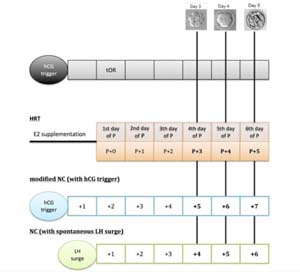
Figure 1. Clinical practice proposal for embryo transfer timing in the different preparation methods. tOR, theoretical oocyte retrieval; E2, estradiol; P, progesterone; NC, natural cycle. [From Mackens et al. (2017), reprinted with permission of the author]
In HRT, embryo transfer is performed on the day corresponding to embryonic age +1 of progesterone administration, noted as P+embryonic age (e.g., day-5 embryo transfer on the sixth day of progesterone administration, noted as P+5). In m-NC with hCG triggering, embryo transfer is performed on the day corresponding to embryonic age +2 after hCG injection (e.g., day-5 embryo transfer on hCG+7). In t-NC with a spontaneous LH surge, embryo transfer is performed on the day corresponding to embryonic age +1 after the LH surge (e.g., day-5 embryo transfer on LH+6) (Mackens et al., 2017).
Mild-Ovarian Stimulation (mild-OS) cycle
FET scheduling is determined by the developmental stage at which embryos were frozen; day-3 embryos are transferred on hCG+5, and blastocyst-stage embryos are transferred on hCG+7 (Lightman et al., 1999; Haddad et al., 2007). Although standard clinical practice is to use LPS in mild-OS cycles for FET, this practice is largely extrapolated from non-IVF OS cycles; therefore, RCTs are needed to clarify the role of LPS in mild-OS cycles (Mumusoglu et al., 2021).
MATERNAL AND OBSTETRIC OUTCOMES
Multiple studies have associated HRT cycles with an increased risk of hypertensive disorders of pregnancy compared with NC or mild-OS FET cycles (Ginström Ernstad et al., 2019; Asserhøj et al., 2021; Hu et al., 2021). This association may be linked to the absence of a corpus luteum, resulting in (1) lower serum levels of relaxin and vascular endothelial growth factor, (2) reduced reactive hyperemia index, (3) fewer angiogenic and nonangiogenic circulating endothelial progenitor cells, and (4) absence of a decrease in mean arterial pressure during pregnancy (Conrad, 2011; von Versen-Höynck et al., 2019). Additionally, the likelihood of postpartum hemorrhage and cesarean delivery is significantly higher after HRT than after t-NC or m-NC (Ginström Ernstad et al., 2019; Asserhøj et al., 2021; Hu et al., 2021). Another study concluded that the HRT protocol is associated with a higher risk of preterm delivery, very preterm delivery, and premature rupture of membranes compared with the m-NC protocol (Hu et al., 2021). Conversely, rates of small-for-gestational-age infants, placenta previa, and congenital abnormalities do not differ significantly among m-NC, mild-OS, and HRT protocols (Hu et al., 2021). A recent meta-analysis including 30 RCTs and cohort studies compared obstetric and neonatal outcomes between NC-FET and HRT-FET (Zaat et al., 2023). Regarding obstetric outcomes, a reduced risk of early pregnancy loss, preterm birth, very preterm birth, pregnancy-induced hypertension, preeclampsia, placenta previa, and postpartum hemorrhage was observed in pregnancies resulting from NC-FET (Zaat et al., 2023). The same study concluded that newborns conceived in NC-FET cycles had an overall reduced risk of several adverse neonatal outcomes, such as being large for gestational age, low birth weight, and macrosomia, compared with newborns conceived in HRT-FET cycles (Zaat et al., 2023). A study by Litzky et al. (2018) showed that macrosomia and LGA were more prevalent in FET cycles than in fresh embryo transfer cycles and spontaneous pregnancies (Elias et al., 2020). A retrospective cohort study including 9,267 FET cycles resulting in singleton live births compared mean birth weight among different FET protocols, including m-NC (n=2,224), mild-OS (n=4,299), and HRT (n=2,744) (Wang et al., 2020). The HRT group had a significantly higher mean birth weight than the mild-OS group. Singleton newborns conceived through FET using HRT were more likely to be LGA than those born after m-NC or mild-OS (19.92% vs. 16.94% and 19.29% vs. 16.12%, respectively). The mild-OS group had lower adjusted odds of macrosomia than the m-NC group. Regarding birth weight and the risk of macrosomia/LGA, no significant differences were observed between m-NC and mild-OS (Wang et al., 2020). Therefore, the FET protocol used may significantly influence the likelihood of macrosomia/LGA.
Considering the elevated maternal and obstetric risks, some authors have recommended a back-to-nature approach, suggesting that greater emphasis should be placed on t-NC and m-NC protocols in the future (Lawrenz et al., 2020).
CONCLUSIONS
Currently, no definitive data identify the optimal endometrial preparation protocol before FET for improving implantation and pregnancy outcomes. The available evidence, although of limited quality, suggests that NC (both t-NC and m-NC) may be more beneficial than HRT. Artificial cycles should be approached with caution because of the potential for early pregnancy loss reported in some studies. Moreover, recent evidence also points to a higher risk of obstetric complications, such as hypertensive disorders of pregnancy, attributed to the absence of the corpus luteum. Therefore, the role of HRT-FET cycles in ovulatory patients remains under debate. Additional RCTs should address unanswered questions related to the best regimen and optimal dose of estrogen and progesterone supplementation in HRT-FET, as well as the use of LPS in NC. Regarding the timing of warmed blastocyst transfer, the available evidence suggests that the optimal timing for FET is LH surge +6 days in the t-NC protocol, hCG trigger +7 days in the m-NC protocol, and progesterone +5 days in the HRT protocol.
In conclusion, further well-designed and robust RCTs comparing different protocols to optimize endometrial preparation for FET, while considering individual risk factors, may provide additional opportunities to improve pregnancy outcomes.
REFERENCES
Acosta AA, Elberger L, Borghi M, Calamera JC, Chemes H, Doncel GF, Kliman H, Lema B, Lustig L, Papier S. Endometrial dating and determination of the window of implantation in healthy fertile women. Fertil Steril. 2000;73:788-98. PMID: 10731542 DOI: 10.1016/s0015-0282(99)00605-6
Medline
Alsbjerg B, Thomsen L, Elbaek HO, Laursen R, Povlsen BB, Haahr T, Humaidan P. Can combining vaginal and rectal progesterone achieve the optimum progesterone range required for implantation in the HRT-FET model? Reprod Biomed Online. 2020;40:805-11. PMID: 32376312 DOI: 10.1016/j.rbmo.2020.02.007
Medline
Asserhøj LL, Spangmose AL, Aaris Henningsen AK, Clausen TD, Ziebe S, Jensen RB, Pinborg A. Adverse obstetric and perinatal outcomes in 1,136 singleton pregnancies conceived after programmed frozen embryo transfer (FET) compared with natural cycle FET. Fertil Steril. 2021;115:947-56. PMID: 33461756 DOI: 10.1016/j.fertnstert.2020.10.039
Medline
Bocca S, Real EB, Lynch S, Stadtmauer L, Beydoun H, Mayer J, Oehninger S. Impact of serum estradiol levels on the implantation rate of cleavage stage cryopreserved-thawed embryos transferred in programmed cycles with exogenous hormonal replacement. J Assist Reprod Genet. 2015;32:395-400. PMID: 25563580 DOI: 10.1007/s10815-014-0402-1
Medline
Borini A, Dal Prato L, Bianchi L, Violini F, Cattoli M, Flamigni C. Effect of duration of estradiol replacement on the outcome of oocyte donation. J Assist Reprod Genet. 2001;18:185-90. PMID: 11432108 DOI: 10.1023/a:1009472416305
Medline
Bourdon M, Santulli P, Maignien C, Gayet V, Pocate-Cheriet K, Marcellin L, Chapron C. The deferred embryo transfer strategy improves cumulative pregnancy rates in endometriosis-related infertility: A retrospective matched cohort study. PLoS One. 2018;13:e0194800. PMID: 29630610 DOI: 10.1371/journal.pone.0194800
Medline
Busnelli A, Schirripa I, Fedele F, Bulfoni A, Levi-Setti PE. Obstetric and perinatal outcomes following programmed compared to natural frozen-thawed embryo transfer cycles: a systematic review and meta-analysis. Hum Reprod. 2022;37:1619-41. PMID: 35553678 DOI: 10.1093/humrep/deac073
Medline
Casper RF, Yanushpolsky EH. Optimal endometrial preparation for frozen embryo transfer cycles: window of implantation and progesterone support. Fertil Steril. 2016;105:867-72. PMID: 26820769 DOI: 10.1016/j.fertnstert.2016.01.006
Medline
Cekan SZ, Beksac MS, Wang E, Shi S, Masironi B, Landgren BM, Diczfalusy E. The prediction and/or detection of ovulation by means of urinary steroid assays. Contraception. 1986;33:327-45. PMID: 3731775 DOI: 10.1016/0010-7824(86)90095-8
Medline
Cha J, Sun X, Dey SK. Mechanisms of implantation: strategies for successful pregnancy. Nat Med. 2012;18:1754-67. PMID: 23223073 DOI: 10.1038/nm.3012
Medline
Chang EM, Han JE, Kim YS, Lyu SW, Lee WS, Yoon TK. Use of the natural cycle and vitrification thawed blastocyst transfer results in better in-vitro fertilization outcomes: cycle regimens of vitrification thawed blastocyst transfer. J Assist Reprod Genet. 2011;28:369-74. PMID: 21229386 DOI: 10.1007/s10815-010-9530-4
Medline
Conrad KP. Emerging role of relaxin in the maternal adaptations to normal pregnancy: implications for preeclampsia. Semin Nephrol. 2011;31:15-32. PMID: 21266262 DOI: 10.1016/j.semnephrol.2010.10.003
Medline
Coutifaris C, Myers ER, Guzick DS, Diamond MP, Carson SA, Legro RS, McGovern PG, Schlaff WD, Carr BR, Steinkampf MP, Silva S, Vogel DL, Leppert PC; NICHD National Cooperative Reproductive Medicine Network. Histological dating of timed endometrial biopsy tissue is not related to fertility status. Fertil Steril. 2004;82:1264-72. PMID: 15533340 DOI: 10.1016/j.fertnstert.2004.03.069
Medline
Craciunas L, Gallos I, Chu J, Bourne T, Quenby S, Brosens JJ, Coomarasamy A. Conventional and modern markers of endometrial receptivity: a systematic review and meta-analysis. Hum Reprod Update. 2019;25:202-23. PMID: 30624659 DOI: 10.1093/humupd/dmy044
Medline
Dain L, Bider D, Levron J, Zinchenko V, Westler S, Dirnfeld M. Thin endometrium in donor oocyte recipients: enigma or obstacle for implantation? Fertil Steril. 2013;100:1289-95. PMID: 23954352 DOI: 10.1016/j.fertnstert.2013.07.1966
Medline
Dal Prato L, Borini A, Cattoli M, Bonu MA, Sciajno R, Flamigni C. Endometrial preparation for frozen-thawed embryo transfer with or without pretreatment with gonadotropin-releasing hormone agonist. Fertil Steril. 2002;77:956-60. PMID: 12009350 DOI: 10.1016/s0015-0282(02)02960-6
Medline
Edgell TA, Rombauts LJ, Salamonsen LA. Assessing receptivity in the endometrium: the need for a rapid, non-invasive test. Reprod Biomed Online. 2013;27:486-96. PMID: 23933033 DOI: 10.1016/j.rbmo.2013.05.014
Medline
Eftekhar M, Rahsepar M, Rahmani E. Effect of progesterone supplementation on natural frozen-thawed embryo transfer cycles: a randomized controlled trial. Int J Fertil Steril. 2013;7:13-20. PMID: 24520458
Medline
El-Toukhy T, Taylor A, Khalaf Y, Al-Darazi K, Rowell P, Seed P, Braude P. Pituitary suppression in ultrasound-monitored frozen embryo replacement cycles. A randomised study. Hum Reprod. 2004;19:874-9. PMID: 15016780 DOI: 10.1093/humrep/deh183
Medline
El-Toukhy T, Coomarasamy A, Khairy M, Sunkara K, Seed P, Khalaf Y, Braude P. The relationship between endometrial thickness and outcome of medicated frozen embryo replacement cycles. Fertil Steril. 2008;89:832-9. PMID: 17681313 DOI: 10.1016/j.fertnstert.2007.04.031
Medline
Elias FTS, Weber-Adrian D, Pudwell J, Carter J, Walker M, Gaudet L, Smith G, Velez MP. Neonatal outcomes in singleton pregnancies conceived by fresh or frozen embryo transfer compared to spontaneous conceptions: a systematic review and meta-analysis. Arch Gynecol Obstet. 2020;302:31-45. PMID: 32445067 DOI: 10.1007/s00404-020-05593-4
Medline
Escribá MJ, Bellver J, Bosch E, Sánchez M, Pellicer A, Remohí J. Delaying the initiation of progesterone supplementation until the day of fertilization does not compromise cycle outcome in patients receiving donated oocytes: a randomized study. Fertil Steril. 2006;86:92-7. PMID: 16818032 DOI: 10.1016/j.fertnstert.2005.12.048
Medline
Fauser BC, de Jong D, Olivennes F, Wramsby H, Tay C, Itskovitz-Eldor J, van Hooren HG. Endocrine profiles after triggering of final oocyte maturation with GnRH agonist after cotreatment with the GnRH antagonist ganirelix during ovarian hyperstimulation for in vitro fertilization. J Clin Endocrinol Metab. 2002;87:709-15. PMID: 11836309 DOI: 10.1210/jcem.87.2.8197
Medline
Franasiak JM, Ruiz-Alonso M, Scott RT, Simón C. Both slowly developing embryos and a variable pace of luteal endometrial progression may conspire to prevent normal birth in spite of a capable embryo. Fertil Steril. 2016;105:861-6. PMID: 26940791 DOI: 10.1016/j.fertnstert.2016.02.030
Medline
Gaggiotti-Marre S, Álvarez M, González-Foruria I, Parriego M, Garcia S, Martínez F, Barri PN, Polyzos NP, Coroleu B. Low progesterone levels on the day before natural cycle frozen embryo transfer are negatively associated with live birth rates. Hum Reprod. 2020;35:1623-9. PMID: 32478389 DOI: 10.1093/humrep/deaa092
Medline
Ginström Ernstad E, Wennerholm UB, Khatibi A, Petzold M, Bergh C. Neonatal and maternal outcome after frozen embryo transfer: Increased risks in programmed cycles. Am J Obstet Gynecol. 2019;221:126.e1-18. PMID: 30910545. DOI: 10.1016/j.ajog.2019.03.010
Medline
Givens CR, Markun LC, Ryan IP, Chenette PE, Herbert CM, Schriock ED. Outcomes of natural cycles versus programmed cycles for 1677 frozen-thawed embryo transfers. Reprod Biomed Online. 2009;19:380-4. PMID: 19778483. DOI: 10.1016/s1472-6483(10)60172-1
Medline
Glujovsky D, Pesce R, Fiszbajn G, Sueldo C, Hart RJ, Ciapponi A. Endometrial preparation for women undergoing embryo transfer with frozen embryos or embryos derived from donor oocytes. Cochrane Database Syst Rev. 2010:CD006359. PMID: 20091592 DOI: 10.1002/14651858.CD006359.pub2
Medline
Glujovsky D, Pesce R, Sueldo C, Quinteiro Retamar AM, Hart RJ, Ciapponi A. Endometrial preparation for women undergoing embryo transfer with frozen embryos or embryos derived from donor oocytes. Cochrane Database Syst Rev. 2020;10:CD006359. PMID: 33112418 DOI: 10.1002/14651858.CD006359.pub3
Medline
Groenewoud ER, Cantineau AE, Kollen BJ, Macklon NS, Cohlen BJ. What is the optimal means of preparing the endometrium in frozen-thawed embryo transfer cycles? A systematic review and meta-analysis. Hum Reprod Update. 2013;19:458-70. PMID: 23820515 DOI: 10.1093/humupd/dmt030
Medline
Groenewoud ER, Cohlen BJ, Al-Oraiby A, Brinkhuis EA, Broekmans FJ, de Bruin JP, van den Dool G, Fleisher K, Friederich J, Goddijn M, Hoek A, Hoozemans DA, Kaaijk EM, Koks CA, Laven JS, van der Linden PJ, Manger AP, Slappendel E, Spinder T, Kollen BJ, Macklon NS. A randomized controlled, non-inferiority trial of modified natural versus artificial cycle for cryo-thawed embryo transfer. Hum Reprod. 2016;31:1483-92. PMID: 27179265 DOI: 10.1093/humrep/dew120
Medline
Groenewoud ER, Macklon NS, Cohlen BJ; ANTARCTICA Study Group. The effect of elevated progesterone levels before HCG triggering in modified natural cycle frozen-thawed embryo transfer cycles. Reprod Biomed Online. 2017;34:546-54. PMID: 28319018 DOI: 10.1016/j.rbmo.2017.02.008
Medline
Guan Y, Fan H, Styer AK, Xiao Z, Li Z, Zhang J, Sun L, Wang X, Zhang Z. A modified natural cycle results in higher live birth rate in vitrified-thawed embryo transfer for women with regular menstruation. Syst Biol Reprod Med. 2016;62:335-42. PMID: 27400398 DOI: 10.1080/19396368.2016.1199064
Medline
Haddad G, Saguan DA, Maxwell R, Thomas MA. Intramuscular route of progesterone administration increases pregnancy rates during non-downregulated frozen embryo transfer cycles. J Assist Reprod Genet. 2007;24:467-70. PMID: 17721816 DOI: 10.1007/s10815-007-9168-z
Medline
Hancke K, More S, Kreienberg R, Weiss JM. Patients undergoing frozen-thawed embryo transfer have similar live birth rates in spontaneous and artificial cycles. J Assist Reprod Genet. 2012;29:403-7. PMID: 22391824 DOI: 10.1007/s10815-012-9724-z
Medline
Hill MJ, Miller KA, Frattarelli JL. A GnRH agonist and exogenous hormone stimulation protocol has a higher live-birth rate than a natural endogenous hormone protocol for frozen-thawed blastocyst-stage embryo transfer cycles: an analysis of 1391 cycles. Fertil Steril. 2010;93:416-22. PMID: 19171338 DOI: 10.1016/j.fertnstert.2008.11.027
Medline
Hsueh YW, Huang CC, Hung SW, Chang CW, Hsu HC, Yang TC, Lin WC, Su SY, Chang HM. Finding of the optimal preparation and timing of endometrium in frozen-thawed embryo transfer: a literature review of clinical evidence. Front Endocrinol (Lausanne). 2023;14:1250847. PMID: 37711892 DOI: 10.3389/fendo.2023.1250847
Medline
Hu KL, Zhang D, Li R. Endometrium preparation and perinatal outcomes in women undergoing single-blastocyst transfer in frozen cycles. Fertil Steril. 2021;115:1487-94. PMID: 33487443 DOI: 10.1016/j.fertnstert.2020.12.016
Medline
Johal JK, Bavan B, Zhang W, Gardner RM, Lathi RB, Milki AA. The impact of timing modified natural cycle frozen embryo transfer based on spontaneous luteinizing hormone surge. J Assist Reprod Genet. 2021;38:219-25. PMID: 33230616 DOI: 10.1007/s10815-020-01994-1
Medline
Jordan J, Craig K, Clifton DK, Soules MR. Luteal phase defect: the sensitivity and specificity of diagnostic methods in common clinical use. Fertil Steril. 1994;62:54-62. PMID: 8005304 DOI: 10.1016/s0015-0282(16)56815-0
Medline
Kaser DJ, Ginsburg ES, Missmer SA, Correia KF, Racowsky C. Intramuscular progesterone versus 8% Crinone vaginal gel for luteal phase support for day 3 cryopreserved embryo transfer. Fertil Steril. 2012;98:1464-9. PMID: 22959457 DOI: 10.1016/j.fertnstert.2012.08.007
Medline
Kasius A, Smit JG, Torrance HL, Eijkemans MJ, Mol BW, Opmeer BC, Broekmans FJ. Endometrial thickness and pregnancy rates after IVF: a systematic review and meta-analysis. Hum Reprod Update. 2014;20:530-41. PMID: 24664156 DOI: 10.1093/humupd/dmu011
Medline
Keltz MD, Jones EE, Duleba AJ, Polcz T, Kennedy K, Olive DL. Baseline cyst formation after luteal phase gonadotropin-releasing hormone agonist administration is linked to poor in vitro fertilization outcome. Fertil Steril. 1995;64:568-72. PMID: 7641912 DOI: 10.1016/s0015-0282(16)57794-2
Medline
Kofinas JD, Blakemore J, McCulloh DH, Grifo J. Serum progesterone levels greater than 20 ng/dl on day of embryo transfer are associated with lower live birth and higher pregnancy loss rates. J Assist Reprod Genet. 2015;32:1395-9. PMID: 26238390 DOI: 10.1007/s10815-015-0546-7
Medline
Kosmas IP, Tatsioni A, Fatemi HM, Kolibianakis EM, Tournaye H, Devroey P. Human chorionic gonadotropin administration vs. luteinizing monitoring for intrauterine insemination timing, after administration of clomiphene citrate: a meta-analysis. Fertil Steril. 2007;87:607-12. PMID: 17173907 DOI: 10.1016/j.fertnstert.2006.10.003
Medline
Kyrou D, Fatemi HM, Popovic-Todorovic B, Van den Abbeel E, Camus M, Devroey P. Vaginal progesterone supplementation has no effect on ongoing pregnancy rate in hCG-induced natural frozen-thawed embryo transfer cycles. Eur J Obstet Gynecol Reprod Biol. 2010;150:175-9. PMID: 20219279 DOI: 10.1016/j.ejogrb.2010.02.038
Medline
Lathi RB, Chi YY, Liu J, Saravanabavanandhan B, Hegde A, Baker VL. Frozen blastocyst embryo transfer using a supplemented natural cycle protocol has a similar live birth rate compared to a programmed cycle protocol. J Assist Reprod Genet. 2015;32:1057-62. PMID: 26018319 DOI: 10.1007/s10815-015-0499-x
Medline
Lawrenz B, Coughlan C, Melado L, Fatemi HM. The ART of frozen embryo transfer: back to nature! Gynecol Endocrinol. 2020;36:479-83. PMID: 32188299 DOI: 10.1080/09513590.2020.1740918
Medline
Lee VC, Li RH, Chai J, Yeung TW, Yeung WS, Ho PC, Ng EH. Effect of preovulatory progesterone elevation and duration of progesterone elevation on the pregnancy rate of frozen-thawed embryo transfer in natural cycles. Fertil Steril. 2014;101:1288-93. PMID: 24602752 DOI: 10.1016/j.fertnstert.2014.01.040
Medline
Leonard PH, Hokenstad AN, Khan Z, Jensen JR, Stewart EA, Coddington CC. Progesterone support for frozen embryo transfer: intramuscular versus vaginal suppository demonstrates no difference in a cohort. J Reprod Med. 2015;60:103-8. PMID: 25898472
Medline
Lightman A, Kol S, Itskovitz-Eldor J. A prospective randomized study comparing intramuscular with intravaginal natural progesterone in programmed thaw cycles. Hum Reprod. 1999;14:2596-9. PMID: 10527993 DOI: 10.1093/humrep/14.10.2596
Medline
Litzky JF, Boulet SL, Esfandiari N, Zhang Y, Kissin DM, Theiler RN, Marsit CJ. Effect of frozen/thawed embryo transfer on birthweight, macrosomia, and low birthweight rates in US singleton infants. Am J Obstet Gynecol. 2018;218:433.e1-433.e10. PMID: 29291410 DOI: 10.1016/j.ajog.2017.12.223
Medline
Liu X, Shi W, Shi J. Natural cycle frozen-thawed embryo transfer in young women with regular menstrual cycles increases the live-birth rates compared with hormone replacement treatment: a retrospective cohort study. Fertil Steril. 2020;113:811-7. PMID: 32147171 DOI: 10.1016/j.fertnstert.2019.11.023
Medline
Lutjen P, Trounson A, Leeton J, Findlay J, Wood C, Renou P. The establishment and maintenance of pregnancy using in vitro fertilization and embryo donation in a patient with primary ovarian failure. Nature. 1984;307:174-5. PMID: 6690997 DOI: 10.1038/307174a0
Medline
Mackens S, Santos-Ribeiro S, van de Vijver A, Racca A, Van Landuyt L, Tournaye H, Blockeel C. Frozen embryo transfer: a review on the optimal endometrial preparation and timing. Hum Reprod. 2017;32:2234-42. PMID: 29025055 DOI: 10.1093/humrep/dex285
Medline
Madero S, Rodriguez A, Vassena R, Vernaeve V. Endometrial preparation: effect of estrogen dose and administration route on reproductive outcomes in oocyte donation cycles with fresh embryo transfer. Hum Reprod. 2016;31:1755-64. PMID: 27141040 DOI: 10.1093/humrep/dew099
Medline
Melo P, Chung Y, Pickering O, Price MJ, Fishel S, Khairy M, Kingsland C, Lowe P, Petsas G, Rajkhowa M, Sephton V, Tozer A, Wood S, Labarta E, Wilcox M, Devall A, Gallos I, Coomarasamy A. Serum luteal phase progesterone in women undergoing frozen embryo transfer in assisted conception: a systematic review and meta-analysis. Fertil Steril. 2021;116:1534-56. PMID: 34384594 DOI: 10.1016/j.fertnstert.2021.07.002
Medline
Miles RA, Paulson RJ, Lobo RA, Press MF, Dahmoush L, Sauer MV. Pharmacokinetics and endometrial tissue levels of progesterone after administration by intramuscular and vaginal routes: a comparative study. Fertil Steril. 1994;62:485-90. PMID: 8062942 DOI: 10.1016/s0015-0282(16)56935-0
Medline
Miller PB, Soules MR. The usefulness of a urinary LH kit for ovulation prediction during menstrual cycles of normal women. Obstet Gynecol. 1996;87:13-7. PMID: 8532248 DOI: 10.1016/0029-7844(95)00352-5
Medline
Miller PB, Parnell BA, Bushnell G, Tallman N, Forstein DA, Higdon HL 3rd, Kitawaki J, Lessey BA. Endometrial receptivity defects during IVF cycles with and without letrozole. Hum Reprod. 2012;27:881-8. PMID: 22246449 DOI: 10.1093/humrep/der452
Medline
Montagut M, Santos-Ribeiro S, De Vos M, Polyzos NP, Drakopoulos P, Mackens S, van de Vijver A, van Landuyt L, Verheyen G, Tournaye H, Blockeel C. Frozen-thawed embryo transfers in natural cycles with spontaneous or induced ovulation: the search for the best protocol continues. Hum Reprod. 2016;31:2803-10. PMID: 27798046 DOI: 10.1093/humrep/dew263
Medline
Moreno-Sepulveda J, Espinós JJ, Checa MA. Lower risk of adverse perinatal outcomes in natural versus artificial frozen-thawed embryo transfer cycles: a systematic review and meta-analysis. Reprod Biomed Online. 2021;42:1131-45. PMID: 33903031 DOI: 10.1016/j.rbmo.2021.03.002
Medline
Mumusoglu S, Polat M, Ozbek IY, Bozdag G, Papanikolaou EG, Esteves SC, Humaidan P, Yarali H. Preparation of the Endometrium for Frozen Embryo Transfer: A Systematic Review. Front Endocrinol. 2021;12:688237. PMID: 34305815 DOI: 10.3389/fendo.2021.688237
Medline
Navot D, Laufer N, Kopolovic J, Rabinowitz R, Birkenfeld A, Lewin A, Granat M, Margalioth EJ, Schenker JG. Artificially induced endometrial cycles and establishment of pregnancies in the absence of ovaries. N Engl J Med. 1986;314:806-11. PMID: 3951513. DOI: 10.1056/NEJM198603273141302
Medline
Navot D, Scott RT, Droesch K, Veeck LL, Liu HC, Rosenwaks Z. The window of embryo transfer and the efficiency of human conception in vitro. Fertil Steril. 1991;55:114-8. PMID: 1986951 DOI: 10.1016/s0015-0282(16)54069-2
Medline
Neumann K, Depenbusch M, Schultze-Mosgau A, Griesinger G. Characterization of early pregnancy placental progesterone production by use of dydrogesterone in programmed frozen-thawed embryo transfer cycles. Reprod Biomed Online. 2020;40:743-51. PMID: 32336650. DOI: 10.1016/j.rbmo.2020.01.019
Medline
Niu Z, Feng Y, Sun Y, Zhang A, Zhang H. Estrogen level monitoring in artificial frozen-thawed embryo transfer cycles using step-up regime without pituitary suppression: is it necessary? J Exp Clin Assist Reprod. 2008;5:4. PMID: 18598369 DOI: 10.1186/1743-1050-5-4
Medline
Peeraer K, Couck I, Debrock S, De Neubourg D, De Loecker P, Tomassetti C, Laenen A, Welkenhuysen M, Meeuwis L, Pelckmans S, Meuleman C, D’Hooghe T. Frozen-thawed embryo transfer in a natural or mildly hormonally stimulated cycle in women with regular ovulatory cycles: a RCT. Hum Reprod. 2015;30:2552-62. PMID: 26364081 DOI: 10.1093/humrep/dev224
Medline
Peigné M, Devouche E, Ferraretto X, Gricourt S, Luton D, Patrat C, Epelboin S. Higher live birth rate with stimulated rather than artificial cycle for frozen-thawed embryo transfer. Eur J Obstet Gynecol Reprod Biol. 2019;243:144-9. PMID: 31704531 DOI: 10.1016/j.ejogrb.2019.10.040
Medline
Remohí J, Ardiles G, García-Velasco JA, Gaitán P, Simón C, Pellicer A. Endometrial thickness and serum oestradiol concentrations as predictors of outcome in oocyte donation. Hum Reprod. 1997;12:2271-6. PMID: 9402294 DOI: 10.1093/humrep/12.10.2271
Medline
Roelens C, Racca A, Mackens S, Van Landuyt L, Buelinckx L, Gucciardo L, Tournaye H, De Vos M, Blockeel C. Artificially prepared vitrified-warmed embryo transfer cycles are associated with an increased risk of pre-eclampsia. Reprod Biomed Online. 2022;44:915-22. PMID: 35282993 DOI: 10.1016/j.rbmo.2021.12.004
Medline
Roque M, Haahr T, Geber S, Esteves SC, Humaidan P. Fresh versus elective frozen embryo transfer in IVF/ICSI cycles: a systematic review and meta-analysis of reproductive outcomes. Hum Reprod Update. 2019;25:2-14. PMID: 30388233 DOI: 10.1093/humupd/dmy033
Medline
Rosenberg SM, Luciano AA, Riddick DH. The luteal phase defect: the relative frequency of, and encouraging response to, treatment with vaginal progesterone. Fertil Steril. 1980;34:17-20. PMID: 7398902 DOI: 10.1016/s0015-0282(16)44831-4
Medline
Ruiz-Alonso M, Blesa D, Díaz-Gimeno P, Gómez E, Fernández-Sánchez M, Carranza F, Carrera J, Vilella F, Pellicer A, Simón C. The endometrial receptivity array for diagnosis and personalized embryo transfer as a treatment for patients with repeated implantation failure. Fertil Steril. 2013;100:818-24. PMID: 23756099 DOI: 10.1016/j.fertnstert.2013.05.004
Medline
Santos-Ribeiro S, Godinho CM, Reis-Soares S. Nature (almost) always prevails - challenging the status quo of artificial cycle frozen embryo transfers. Reprod Biomed Online. 2023;47:103352. PMID: 37804605 DOI: 10.1016/j.rbmo.2023.103352
Medline
Sekhon L, Feuerstein J, Pan S, Overbey J, Lee JA, Briton-Jones C, Flisser E, Stein DE, Mukherjee T, Grunfeld L, Sandler B, Copperman AB. Endometrial preparation before the transfer of single, vitrified-warmed, euploid blastocysts: does the duration of estradiol treatment influence clinical outcome? Fertil Steril. 2019;111:1177-85.e3. PMID: 31029432 DOI: 10.1016/j.fertnstert.2019.02.024
Medline
Sha T, Yin X, Cheng W, Massey IY. Pregnancy-related complications and perinatal outcomes resulting from transfer of cryopreserved versus fresh embryos in vitro fertilization: a meta-analysis. Fertil Steril. 2018;109:330-42.e9. PMID: 29331236 DOI: 10.1016/j.fertnstert.2017.10.019
Medline
Shapiro BS, Daneshmand ST, Garner FC, Aguirre M, Hudson C. Clinical rationale for cryopreservation of entire embryo cohorts in lieu of fresh transfer. Fertil Steril. 2014a;102:3-9. PMID: 24842675 DOI: 10.1016/j.fertnstert.2014.04.018
Medline
Shapiro DB, Pappadakis JA, Ellsworth NM, Hait HI, Nagy ZP. Progesterone replacement with vaginal gel versus i.m. injection: cycle and pregnancy outcomes in IVF patients receiving vitrified blastocysts. Hum Reprod. 2014b;29:1706-11. PMID: 24847018 DOI: 10.1093/humrep/deu121
Medline
Soares SR, Troncoso C, Bosch E, Serra V, Simón C, Remohí J, Pellicer A. Age and uterine receptiveness: predicting the outcome of oocyte donation cycles. J Clin Endocrinol Metab. 2005;90:4399-404. PMID: 15797956 DOI: 10.1210/jc.2004-2252
Medline
Svenstrup L, Möller S, Fedder J, Pedersen DE, Erb K, Andersen CY, Humaidan P. Does the HCG trigger dose used for IVF impact luteal progesterone concentrations? a randomized controlled trial. Reprod Biomed Online. 2022;45:793-804. PMID: 35879196 DOI: 10.1016/j.rbmo.2022.04.019
Medline
Tarlatzis BC, Fauser BC, Kolibianakis EM, Diedrich K, Rombauts L, Devroey P. GnRH antagonists in ovarian stimulation for IVF. Hum Reprod Update. 2006;12:333-40. PMID: 16567347 DOI: 10.1093/humupd/dml001
Medline
Testart J, Frydman R, Feinstein MC, Thebault A, Roger M, Scholler R. Interpretation of plasma luteinizing hormone assay for the collection of mature oocytes from women: definition of a luteinizing hormone surge-initiating rise. Fertil Steril. 1981;36:50-4. PMID: 7250407 DOI: 10.1016/s0015-0282(16)45617-7
Medline
Tomás C, Alsbjerg B, Martikainen H, Humaidan P. Pregnancy loss after frozen-embryo transfer--a comparison of three protocols. Fertil Steril. 2012;98:1165-9. PMID: 22840239 DOI: 10.1016/j.fertnstert.2012.07.1058
Medline
Thomas S, Woo I, Ho J, Jones T, Paulson R, Chung K, Bendikson K. Ovulation rates in a stair-step protocol with Letrozole vs clomiphene citrate in patients with polycystic ovarian syndrome. Contracept Reprod Med. 2019;4:20. PMID: 31867117 DOI: 10.1186/s40834-019-0102-4
Medline
Tournaye H, Sukhikh GT, Kahler E, Griesinger G. A Phase III randomized controlled trial comparing the efficacy, safety and tolerability of oral dydrogesterone versus micronized vaginal progesterone for luteal support in in vitro fertilization. Hum Reprod. 2017;32:1019-27. PMID: 28333318 DOI: 10.1093/humrep/dex023
Medline
van de Vijver A, Polyzos NP, Van Landuyt L, De Vos M, Camus M, Stoop D, Tournaye H, Blockeel C. Cryopreserved embryo transfer in an artificial cycle: is GnRH agonist down-regulation necessary? Reprod Biomed Online. 2014;29:588-94. PMID: 25281196 DOI: 10.1016/j.rbmo.2014.08.005
Medline
van de Vijver A, Drakopoulos P, Polyzos NP, Van Landuyt L, Mackens S, Santos-Ribeiro S, Vloeberghs V, Tournaye H, Blockeel C. Vitrified-warmed blastocyst transfer on the 5th or 7th day of progesterone supplementation in an artificial cycle: a randomised controlled trial. Gynecol Endocrinol. 2017;33:783-6. PMID: 28443690 DOI: 10.1080/09513590.2017.1318376
Medline
Van der Auwera I, Meuleman C, Koninckx PR. Human menopausal gonadotrophin increases pregnancy rate in comparison with clomiphene citrate during replacement cycles of frozen/thawed pronucleate ova. Hum Reprod. 1994;9:1556-60. PMID: 7989521 DOI: 10.1093/oxfordjournals.humrep.a138748
Medline
Veleva Z, Orava M, Nuojua-Huttunen S, Tapanainen JS, Martikainen H. Factors affecting the outcome of frozen-thawed embryo transfer. Hum Reprod. 2013;28:2425-31. PMID: 23756705 DOI: 10.1093/humrep/det251
Medline
Vinsonneau L, Labrosse J, Porcu-Buisson G, Chevalier N, Galey J, Ahdad N, Ayel JP, Rongières C, Bouet PE, Mathieu d’Argent E, Cédrin-Durnerin I, Pessione F, Massin N. Impact of endometrial preparation on early pregnancy loss and live birth rate after frozen embryo transfer: a large multicenter cohort study (14 421 frozen cycles). Hum Reprod Open. 2022;2022:hoac007. PMID: 35274060 DOI: 10.1093/hropen/hoac007
Medline
von Versen-Höynck F, Narasimhan P, Selamet Tierney ES, Martinez N, Conrad KP, Baker VL, Winn VD. Absent or Excessive Corpus Luteum Number Is Associated With Altered Maternal Vascular Health in Early Pregnancy. Hypertension. 2019;73:680-90. PMID: 30636549 DOI: 10.1161/HYPERTENSIONAHA.118.12046
Medline
von Versen-Höynck F, Conrad KP, Baker VL. Which protocol for frozen-thawed embryo transfer is associated with the best outcomes for the mother and baby? Fertil Steril. 2021;115:886-7. PMID: 33715870 DOI: 10.1016/j.fertnstert.2021.01.042
Medline
Vuong LN, Pham TD, Le KTQ, Ly TT, Le HL, Nguyen DTN, Ho VNA, Dang VQ, Phung TH, Norman RJ, Mol BW, Ho TM. Micronized progesterone plus dydrogesterone versus micronized progesterone alone for luteal phase support in frozen-thawed cycles (MIDRONE): a prospective cohort study. Hum Reprod. 2021;36:1821-31. PMID: 33930124 DOI: 10.1093/humrep/deab093
Medline
Waldman IN, Racowsky C, Disler ER, Thomas A, Lanes A, Hornstein MD. The clinical relevance of luteal phase progesterone support in true natural cycle cryopreserved blastocyst stage embryo transfers: a retrospective cohort study. Fertil Res Pract. 2021;7:4. PMID: 33563330 DOI: 10.1186/s40738-021-00096-5
Medline
Wang A, Santistevan A, Hunter Cohn K, Copperman A, Nulsen J, Miller BT, Widra E, Westphal LM, Yurttas Beim P. Freeze-only versus fresh embryo transfer in a multicenter matched cohort study: contribution of progesterone and maternal age to success rates. Fertil Steril. 2017;108:254-61.e4. PMID: 28579411 DOI: 10.1016/j.fertnstert.2017.05.007
Medline
Wang B, Zhang J, Zhu Q, Yang X, Wang Y. Effects of different cycle regimens for frozen embryo transfer on perinatal outcomes of singletons. Hum Reprod. 2020;35:1612-22. PMID: 32681726 DOI: 10.1093/humrep/deaa093
Medline
Wang Y, He Y, Zhao X, Ji X, Hong Y, Wang Y, Zhu Q, Xu B, Sun Y. Crinone Gel for Luteal Phase Support in Frozen-Thawed Embryo Transfer Cycles: A Prospective Randomized Clinical Trial in the Chinese Population. PLoS One. 2015;10:e0133027. PMID: 26222435 DOI: 10.1371/journal.pone.0133027
Medline
Weissman A, Levin D, Ravhon A, Eran H, Golan A, Levran D. What is the preferred method for timing natural cycle frozen-thawed embryo transfer? Reprod Biomed Online. 2009;19:66-71. PMID: 19573293 DOI: 10.1016/s1472-6483(10)60048-x
Medline
Wilcox AJ, Baird DD, Weinberg CR. Time of implantation of the conceptus and loss of pregnancy. N Engl J Med. 1999;340:1796-9. PMID: 10362823 DOI: 10.1056/NEJM199906103402304
Medline
Wong KM, Mastenbroek S, Repping S. Cryopreservation of human embryos and its contribution to in vitro fertilization success rates. Fertil Steril. 2014;102:19-26. PMID: 24890275 DOI: 10.1016/j.fertnstert.2014.05.027
Medline
Wong KM, van Wely M, Verhoeve HR, Kaaijk EM, Mol F, van der Veen F, Repping S, Mastenbroek S. Transfer of fresh or frozen embryos: a randomised controlled trial. Hum Reprod. 2021;36:998-1006. PMID: 33734369 DOI: 10.1093/humrep/deaa305
Medline
Wu HM, Chang HM, Leung PCK. Gonadotropin-releasing hormone analogs: Mechanisms of action and clinical applications in female reproduction. Front Neuroendocrinol. 2021;60:100876. PMID: 33045257 DOI: 10.1016/j.yfrne.2020.100876
Medline
Xia L, Tian L, Zhang S, Huang J, Wu Q. Hormonal Replacement Treatment for Frozen-Thawed Embryo Transfer With or Without GnRH Agonist Pretreatment: A Retrospective Cohort Study Stratified by Times of Embryo Implantation Failures. Front Endocrinol (Lausanne). 2022;13:803471. PMID: 35185793 DOI: 10.3389/fendo.2022.803471
Medline
Younis JS, Simon A, Laufer N. Endometrial preparation: lessons from oocyte donation. Fertil Steril. 1996;66:873-84. PMID: 8941049 DOI: 10.1016/s0015-0282(16)58677-4
Medline
Yovich JL, Conceicao JL, Stanger JD, Hinchliffe PM, Keane KN. Mid-luteal serum progesterone concentrations govern implantation rates for cryopreserved embryo transfers conducted under hormone replacement. Reprod Biomed Online. 2015;31:180-91. PMID: 26099447 DOI: 10.1016/j.rbmo.2015.05.005
Medline
Zaat T, Zagers M, Mol F, Goddijn M, van Wely M, Mastenbroek S. Fresh versus frozen embryo transfers in assisted reproduction. Cochrane Database Syst Rev. 2021;2:CD011184. PMID: 33539543 DOI: 10.1002/14651858.CD011184.pub3
Medline
Zaat TR, Kostova EB, Korsen P, Showell MG, Mol F, van Wely M. Obstetric and neonatal outcomes after natural versus artificial cycle frozen embryo transfer and the role of luteal phase support: a systematic review and meta-analysis. Hum Reprod Update. 2023;29:634-54. PMID: 37172270 DOI: 10.1093/humupd/dmad011
Medline
Zarei A, Sohail P, Parsanezhad ME, Alborzi S, Samsami A, Azizi M. Comparison of four protocols for luteal phase support in frozen-thawed Embryo transfer cycles: a randomized clinical trial. Arch Gynecol Obstet. 2017;295:239-46. PMID: 27761732 DOI: 10.1007/s00404-016-4217-4
Medline
Zhang J, Liu H, Wang Y, Mao X, Chen Q, Fan Y, Xiao Y, Kuang Y. Letrozole use during frozen embryo transfer cycles in women with polycystic ovary syndrome. Fertil Steril. 2019;112:371-7. PMID: 31126712 DOI: 10.1016/j.fertnstert.2019.04.014
Medline