JBRA Assist. Reprod 2007;11(2):17-21
ARTIGO ORIGINAL
doi: 10.5935/1518-0557.2007.11.2.04
Optimal Reproductive Competence of Oocytes Retrieved Through Follicular Flushing in Poor Responders Patients
Competência Reprodutiva dos Oócitos Obtidos Através do Flushing Folicular em Baixas Respondedoras
Center: Departments of Obstetrics and Gynecology and Reproductive Medicine ( J.B.S., R.F., D.H.M.L, R.F.), Clamart, France
ABSTRACT
Among the possible mild stimulation protocols, the natural cycle offers many advantages. Natural cycles have been proposed as an alternative to simplify in-vitro fertilization (IVF) treatment procedures, to reduce its costs, and to avoid the risks of ovarian hyperstimulation and multiple pregnancies. Improvements in laboratory techniques and methods of follicle aspiration have created a renewed interest in natural cycle IVFET and turned into a viable option. Objective: The objective of this study was to assess the reproductive competence of oocytes obtained by follicular flushing in poor responders patients. Design: Prospective comparative study. Patients and Methods: 165 infertile IVF-ET candidates. We studied 271 consecutive mono-follicular IVF-ET cycles. Oocyte pickup (OPU) was performed 34 hours after hCG administration, oocytes were allocated in two groups according to its retrieval method: oocytes obtained in the first follicular aspiration (group FA, n=127); and oocytes retrieved in the subsequent follicular flushing (group FF, n=102).Main outcome measure: Clinical pregnancy and embryo implantation rates. Results: Patients’ characteristics, fertilization rates, and clinical pregnancy rates/oocyte were comparable in both of groups. In contrast, embryo morphology (41% vs. 59%, P<0.01) and implantation rates (20.4% vs. 34.8%, P<0.04) were better in the group FF. Conclusions: An optimal reproductive competence was observed on oocytes retrieved by follicular flushing in poor responders patients.
Key Words: Follicular flushing, Oocyte quality, Embryo implantation, Poor responders.
RESUMO
Entre os protocolos possíveis de estimulação, o ciclo natural oferece muitas vantagens. Os ciclos naturais foram propostos como uma alternativa de simplificar o tratamento de fertilização in vitro (FIV), reduzir os custos, e evitar os riscos de hiperestimulação ovariana e de gravidezes múltiplas. As melhorias nas técnicas de laboratório e nos métodos de aspiração folicular criaram um interesse renovado no ciclo natural FIV-TE e tornou-se uma opção viável. Objetivo: O objetivo deste estudo foi avaliar a competência reprodutiva dos oócitos obtidos através do flushing folicular em pacientes baixas respondedoras. Desenho: Estudo prospectivo comparativo. Pacientes e Métodos: 165 inférteis candidatas à FIV-TE. Nós estudamos 271 ciclos mono-folicular consecutivos de FIV- TE. A punção folicular (OPU) foi executado 34 horas após a administração do hCG, os oócitos foram alocados em dois grupos de acordo com o método de obtenção: oócitos obtidos na primeira aspiração folicular (grupo FA, n=127); e oócitos recuperados através do flushing folicular (grupo FF, n=102). Avaliação principal: Taxa de gravidez clínica e de implantação embrionária. Resultados: As características dos pacientes, a taxa de fertilização e a taxa de gravidez clínica/oócito foram comparáveis em ambos os grupos. Em contraste, a morfologia do embrião (41% versus 59%, P<0.01) e as taxas de implantação (20.4% versus 34.8%, P<0.04) foram melhores no grupo FF. Conclusões: Competência reprodutiva eficaz foi observado nos oócitos recuperados através do flushing folicular em pacientes baixas respondedoras.
Palavras chaves: Flushing folicular, qualidade de oócitos, implantação embrionária, baixas respondedoras.
INTRODUCTION
Among the possible mild stimulation protocols, the natural cycle offers many advantages. Natural cycles have been proposed as an alternative to simplify in-vitro fertilization (IVF) treatment procedures, to reduce its costs, and to avoid the risks of ovarian hyperstimulation and multiple pregnancies (Foulot et al., 1989; Paulson et al., 1992; Aboulghar et al., 1995; Ubaldi et al., 2005). Improvements in laboratory techniques and methods of follicle aspiration have created a renewed interest in natural cycle IVF-ET and turned into a viable option.
Poor ovarian response is observed in 9-24% (Keay 1997) of patients undergoing ovarian stimulation. Many strategies of treatment were suggested to improve the historically poor outcome of this group. Several reports have recommended that performing natural cycle IVF on these patients might be a valid alternative to egg donation and COH, in terms of costs and outcome (Janssens et al., 1999; Bassil et al., 1999; Castelo Branco et al., 2005).
The quality of oocytes retrieved by follicular flushing has been questioned by controversial data on the controlled ovarian hyperstimulation (COH) protocols. In fact, this procedure has been considered as useless after the randomized studies that showed the same oocyte retrieval rate with or without flushing, and a longer anesthesia and more expensive procedure (Kingsland et al., 1991; Tan et al., 1992). Similarly, data from literature exhibits a reduced performance of oocytes obtained by follicular flushing (el Hussein et al., 1992) and, therefore this technique has been described like superfluous. Conversely, recent data showed an increase in the number of retrieved oocytes when follicular flushing was practiced in COH protocols with an achieved improvement in pregnancy rates and live birth rates (Bagtharia et al., 2005).
However, the interest of follicular flushing has not been studied on the mono-dominant IVF-ET cycles. This treatment is an alternative proposed for patients having a deficit on ovarian response to COH (Bassil et al., 1999; Morgia et al., 2004; Castelo Branco et al., 2005). This question becomes even more important because the prevalence of oocyte retrieval failure which has been reported from 15% to 40% (Daya et al., 1995; Bassil et al., 1999; Pelinck et al., 2002; Morgia et al.,2004).
Hence, in the study reported here, we evaluated the interest of follicular flushing on the IVF-ET by mono-dominant cycle and the reproductive potential of oocytes obtained by this procedure.
PATIENTS AND METHODS
Patients
We prospectively studied 165 infertile women with low ovarian reserve, 20-37 years of age, undergoing 271 consecutive mono-dominant follicle IVF-ET cycles from January 2005 to December 2006. The low ovarian reserve was defined by a previous ovarian stimulation failure and/or by a severe alteration on ovarian reserve revealed on the hormonal basal levels and on a day 3 antral follicular count (AFC) by ultrasound. The previous cancellation on COH was indicated when less than 5 follicles reached the follicular maturation (=16 mm) despite an appropriated ovarian stimulation. A second ovarian stimulation was proposed if the basal hormonal levels and the ultrasound for the AFC were normal despite the first insufficient response. The low ovarian reserve was defined by two or more of the following factors: antral follicular count < 10 on both ovaries, FSH >/= 10 UI/L and <15 UI/L and/or AMH < 2 ng/ml.The inclusion criteria were as follows: (i) both ovaries present and deprived of morphological abnormalities; (ii) regular menstrual cycles between 24 and 35 days; (iii) no current or past diseases affecting the ovaries or gonadotrophin or sex steroid secretion, clearance or excretion; (iv) no clinical signs of hyperandrogenism; (v) no current hormone therapy; and (vi) adequate visualization of both ovaries in transvaginal ultrasound scans. The causes of infertility were male factor (45.9%), unexplained infertility (24%), tubal abnormalities (21.6%) and endometriosis (8.5%). An informed consent was obtained from all patients and this investigation received the approval of our internal Institutional Review Board.
IVF-ET protocol
On cycle day 3, all patients underwent blood samplings by venipuncture at approximately 9 AM for serum E2, progesterone (P4), and LH measurements. Later in the morning, the number and the sizes of early antral follicles were assessed by ultrasound equipped with a tissue harmonic imaging system (Thomas and Rubin 1998). From cycle day 8 onward, the selection of the dominant follicle was monitored by ultrasound and by serum E2 levels. When its mean diameter exceeded 12 mm, to prevent the risk of premature LH peak and to control further follicular maturation, GnRH antagonist 0.5 mg (cetrorelix acetate; Cetrotide 0.25 mg, Serono Pharmaceuticals, Boulogne, France) and hMG 150 IU (Menopur, Ferring Pharmaceuticals, Gentilly, France) were administered subcutaneously daily until the day of hCG (Gonadotrophine Chorionique “Endo”, Organon Pharmaceuticals, Saint-Denis, France) administration. Finally, women received a 5,000-IU hCG injection intramuscularly when the dominant follicle diameter exceeded 16 mm.
Follicular aspiration and follicular flushing
The oocyte was picked up approximately 34 hours after hCG administration. Under transvaginal ultrasound guidance, the follicular fluid from the single preovulatory follicle was aspirated using a 10-mL syringe. The aspiration needle was kept steady inside the follicle until the oocyte was found and isolated. These oocytes were entered in group FA.In case of negative oocyte recovery, sequential follicular flushings were performed using 10-mL syringes filled with 3 mL of a balanced saline solution (Tyrode’s salt solution, Eurobio Pharmaceuticals, Courtaboeuf, France) previously warmed at 37°C. These oocytes were entered in group FF.Oocyte pickup failure was defined by a negative oocyte recovery after 4 consecutive follicular flushings. ICSI was used only in the presence of male factor (<300.000 progressive spermatozoons). Top quality embryo was defined on day 2 as those having no multinucleated blastomeres, four or five blastomeres, and less than 20% anucleated fragments (Van Royen et al., 1999). Embryo transfer was performed 2 days after oocyte pickup (OPU) using a classic Frydman catheter (CCD laboratories, Paris, France). The luteal phase was supported with micronized progesterone (Estima Gé, Effik Pharmaceuticals, Bièvres, France, 600 mg/day) administered daily by vaginal route starting on the evening of ET.
Analysis of groups
FA and FF groups were analyzed by comparing the prevalence of oocytes with fractured zona pellucida (FZP), the fertilization rate, the prevalence of top quality embryos (A and B from the Van Royen et al. classification), and the implantation rate and clinical pregnancy rate per oocyte.
Hormonal measurements
Serum E2 and P4 levels were determined by an automated multi-analysis system using a chemiluminescence technique (Advia-Centaur, Bayer Diagnostics, Puteaux, France). For E2, lower detection limit was 15 pg/mL, linearity up to 1,000 pg/mL, and intraand interassay coefficients of variation were 8% and 9%, respectively. For P4 , lower detection limit was 0.1 ng/mL, linearity up to 60 ng/mL, and intraand interassay coefficients of variation were 8% and 9%, respectively. Serum LH levels were measured by an immunometric technique using an Amerlite kit (Ortho Clinical Diagnostics, Strasbourg, France). Lower limit of detection was 0.1 mIU/mL and intraand interassay CVs were 5 and 7%, respectively for LH.
Statistical analysis
Measures of central tendency and variability used were, respectively, the mean and standard error of the mean when data distribution was normal, and the median and the ranges when normality could not be ascertained. Normality distribution of the data was assessed with the Kolmogorov Smirnov test. Unpaired data were compared with the unpaired Student’s ttest or the Mann Whitney test, when appropriate. Relationship between two continuous variables was assessed by correlation when they were independent from each other and by simple regression when there was a dependency relationship. The Spearman’s test was used to determine if coefficients of correlation (r) were significantly different from zero. The chi-square and Fisher’s exact test were used to compare categorical variables. The present study was powered to detect anticipated differences of 25% in embryo implantation rates at >80% power at 0.05 significance level. A P value <0.05 indicated was considered statistically significant.
RESULTS
Patients’ characteristics and cycle monitoring data
Overall, 271 IVF-ET cycles with follicular aspiration were studied. In 229 cycles the oocyte was recovered. In spite of flushing the oocyte recovery failure was present in 15.4% (42 oocyte retrieval failures). From the oocytes recovered 127 were retrieved from follicular fluid (Group FA, 55.4%) and 102 (Group FF, 44.5%) from follicular flushing (1-4). 80.3% in the 1st, 10.7% in the 2nd, 5.8% in the 3rd and 2.9% in the 4th.Patients’ characteristics and cycle monitoring data in the FA and FF groups are detailed in Table I. As shown, ages of patients, BMI values, menstrual cycle lengths, antral follicle counts on day 3 were comparable in both of groups. Etiologies of infertility were also similar in FA and FF groups. Moreover, the day of hCG administration, and preovulatory follicle size, endometrial thickness, and serum E2, P4, and LH levels of the day of hCG were not statistically different between two groups of oocytes.
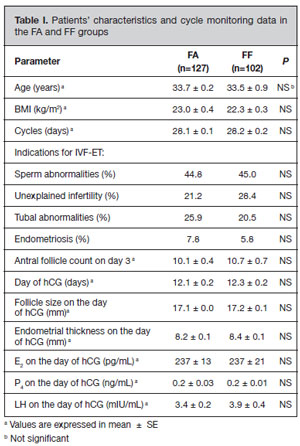
Table I. Patients’ characteristics and cycle monitoring data in the FA and FF groups
Embryology and IVF-ET outcome data
Embryology data and IVF-ET outcome data are summarized in Table II. Both of groups of oocytes remained similar with regard to prevalence of FZP, fertilization rates and clinical pregnancy rates/oocyte (gestational sac observed at ultrasound scans at around 7 weeks of amenorrhea). Conversely, the prevalence of top quality embryos and the implantation rates (total number of gestational sacs x 100/total number of embryos transferred) were higher in the oocytes retrieved by follicular flushing (41.2% vs 59.7%, P <0.01; and 20.4 vs 34.8, P <0.04, respectively).
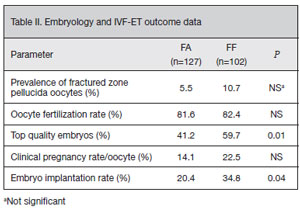
Table II. Embryology and IVF-ET outcome data
DISCUSSION
The present study aimed at evaluating the efficacy of follicular flushing in the mono-dominant IVF-ET cycle for poor responders patients and the reproductive competence of oocytes issued from this technique. For this, its design required the following methodological characteristics. First, we included IVF-ET consecutive cycles in two years to avoid bias. Second, the single follicle cycles allow us to properly track the oocyte reproductive competence. Third, in order to achieve a fine assessment of oocytes according to its origin, we accurately separated groups FA and FF since its retrieval.
Natural and semi natural cycle IVF-ET has many potential advantages: (i) the multiple pregnancy rate was close to zero, (ii) there is no risk of OHSS, (iii) per cycle, natural and semi natural cycle IVF-ET is physically less demanding than stimulated IVF-ET and probably less emotionally (Hojgaard et al., 2001) and (iv) per cycle, natural and semi natural cycle IVFET is cheaper than stimulated IVF-ET. One of the disadvantages of natural and semi natural cycle IVF-ET is a high cancellation rate because of premature LH surges or premature ovulation. Cancellation rates varying from 17-47% have been reported during IVF in unstimulated cycles (Paulson et al., 1992; Claman et al., 1993; Fahy et al., 1995). Our findings demonstrate that the oocyte recovery failure was present in 15.4%.
Poor response to COH is age-related, but it also occurs in young patients. It is generally accepted that poor responders have a reduced number of follicles remaining in the ovary, in both young and old patients. In our study, the use of IVF-ET with a semi natural-cycle protocol was a valuable alternative to COH in poor responders. In these patients, semi naturalcycle IVF is at least as effective as COH, especially in younger patients, with a better implantation rate. This alternative should be proposed to poor responders, because the semi natural cycle is cheaper than hyperstimulation and permits a more “friendly” approach to IVF with results comparable to those with COH, at least in these patients. Considering the poor IVFET prognosis (Wilcox et al., 1988; Toner et al.,1991; Medrum, 1993) in poor responders, approximately, 20% may be quite an acceptable rate.
The results of our investigation indicated that, in poor responders patients, the oocytes retrieved 34 post hCG by follicular flushing demonstrate a better morphological quality and implantation outcome of the corresponding embryo than those already present in follicular fluid. The mechanisms underlying this relationship may at least partly explain some of the beneficial effects of the interdependence of oocytes and cumulus cells. Co-cultures of oocytes and cumulus cells have been employed in vitro to restore support from the surrounding cumulus cells to the oocyte and/or to probe interactions between the two cell compartments. The cumulus cells are intimately connected with the oocyte through long microvilli that traverse through the zona to contact the oolemma to form gap junctions and desmosomes (Motta et al., 1994). The gap junctions help to mediate the transport of certain molecules that are necessary for oocyte metabolism (Brower and Schultz, 1982; Haghinat and Van Winkle, 1990). In addition to these effects, the granulosa cells also appear to exert some of their effects on the oocyte via paracrine signals (Albertini et al., 2001). The oocyte release phenomenon might be explained by a reduced contact between oocyte and granulose cells ( Albertini et al.,, 2001)
In conclusion, the practice of follicular flushing is required to improve the pregnancy rates in semi natural cycle IVF for poor responders patients. Moreover, oocytes obtained by follicular flushing in poor responders patients under an early oocyte retrieval have a high reproductive competence as observed on the embryo implantation rates, but more studies, randomized controlled trial, comparing flushing and no flushing in natural and semi natural cycle IVF-ET is warranted to confirm our results. Cumulus-oocyte dependence in patients with a low ovarian reserve should be the matter of additional investigation.
Medrum, D. Female reproductive aging - ovarian and uterine factors. Fertil. Steril.,1993; 59, 1-5