JBRA Assist. Reprod. 2009;13(2):9-12
ARTIGO ORGINAL
doi: 10.5935/1518-0557.2010.13.2.02
Prospective randomized study to compare the effects of embryo culture performed in an incubator Class 100 with High Efficiency Particulate Air filter (HEPA) plus Volatile Organic Compounds (VOC) filter on outcome measures of ICSI cycles
Estudo prospectivo e randomizado para comparar os efeitos da cultura de embriões realizada em incubadora Classe 100 equipada com filtro HEPA VOCs nos resultados dos ciclos de ICSI
G&O Ginecologia e Obstetrícia da Barra - Rio de Janeiro - Brasil
Apresentado como Tema Livre no 9º Taller General da Red Latinoamericana de Reproduccíon Asistida - Cancún - 23/25 abril 2009
RESUMO
Os laboratórios têm instalado filtros especializados nas incubadoras com o objetivo de melhorar a qualidade do ar. Objetivo: Determinar se a cultura de embriões realizada em incubadora Classe 100 equipada com filtro HEPA VOCs melhora os resultados dos ciclos de ICSI.
Métodos: Neste estudo prospectivo e randomizado foram incluídas pacientes com idade ≤ 39 anos que realizaram transferência de EB a fresco no período de setembro de 2007 a janeiro de 2009. Foram incluídos 114 ciclos. A cultura foi realizada em incubadora equipada com filtro HEPA VOCs para partículas e compostos voláteis (Grupo 1 = 53) ou em incubadora idêntica equipada apenas com filtro HEPA (Grupo 2 = 61). Os end points analisados foram número de embriões de boa qualidade transferidos (≥ 8 celulas G1/G2) e gestação clínica.
Resultados: Houve 42 transferências no grupo 1 e 55 no grupo 2. Nos grupos 1 e 2 não houve transferência em 11 e 6 ciclos respectivamente devido a falha na captação ou a risco de hiperestímulo. Os 2 grupos eram semelhantes quanto a idade, total de gonadotrofinas, duração do estímulo, espessura endometrial no dia do hCG e nº de oócitos MII aspirados. Não foi observada diferença estatisticamente significativa entre os grupos quanto ao nº de oócitos MII aspirados, nº de embriões de boa qualidade transferidos, taxas de fertilização e clivagem. A taxa de gestação clínica embora maior no grupo 1 não foi estatisticamente significativa
Conclusão: Os dados deste estudo demonstraram resultados semelhantes quando a cultura de embriões foi realizada em incubadora equipada com filtro HEPA VOCs.
Palavras-chave: ICSI, embriões, oócitos, fertilização in vitro, qualidade do ar
ABSTRACT
Many laboratories have installed specialized incubator filtration units with the intent of enhancing air quality. The aim of this study is to determine whether an incubator Class 100 with HEPA VOC filter enhance the outcome measures in ICSI cycles.This prospective, randomized study recruited patients of age ≤ 39 years who underwent fresh ICSI cycles from September 2007 to January 2009. 114 ICSI cycles were included. Embryo culture was performed either in an incubator equipped with HEPA filter plus carbon-activated for volatile organic compounds (Group I = 53) or in an identical incubator Class 100 with HEPA filter only without carbon activated (Group II = 61). Main outcome measures were nº of good quality embryos transferred (≥ 8 cells G1/G2) and clinical pregnancy.A total of 42 transfers were performed in Group I and 55 in Group II. There were 11 cycles without transfers in Group I and 6 in Group II due to either oocyte retrieval failure or OHSS risk.The two groups were similar in terms of age, total amount of gonadotropins, duration of stimulation, endometrial thickness on the hCG day, nº of metaphase II oocytes retrieved per patient. No significant difference was found neither for the mean nº of MII oocytes nor for fertilization and cleavage rates. The mean nº of embryos transferred and top quality embryos transferred were similar. Clinical pregnancy was not significantly higher in Group I.The data of this study has demonstrated no significant differences between the two groups in all parameters analyzed.
Keywords: ICSI, embryo, oocytes, fertilization in vitro, air quality
INTRODUCTION
Many of the environmental conditions for in vitro embryo production, have been relatively standardized with very little change in the past years in vitro production systems (Brinster, 1963; Bavister 1995). Laboratory air quality and IVF outcome have been receiving considerable attention because human embryo development in vitro is considered to be related, among other factors, to the conditions of the culture, especially to the air quality in the in vitro fertilization laboratory and in the adjacent semen collection and preparation rooms. Many laboratories have installed specialized incubator filtration units with the intent of enhancing air quality for embryo culture. As these filtration units are expensive; hence, it should be prudent for programs to determine whether they are effective in their own laboratory environments as the efficacy of this approach is not yet conclusive (Battaglia et al., 2001).
International Congresses of Reproductive Medicine, have been systematically presenting correlation of the presence of pollutants in the air of the IVF laboratory to the fall in the implantation rates (Worrilow et al., 2001, 2002) and to a lower formation of in vitro blastocyst when exposed to volatile organic compounds (VOCs) (Johnson et al., 1993). It has been shown that the use of activated carbon in the incubators reduces the concentration of VOCs (Weissenborn et al., 2001).
At least five studies discuss this topic in full detail including one of our own group (Cohen et al., 1997, 1998; Hall et al., 1998; Boone et al., 1999; Souza et al. 2009). To date, however, the influence the quality of ambient air and gas environment in incubators can have on the embryo development is still little recognized.
It is known that mammals are protected on a large or small scale against environmental agents to which they are exposed, through their epithelial, immune, and digestive systems. Nevertheless, classic studies on toxicology (Klinefelter et al., 1993) do not apply to oocytes and in vitro embryos, since in this situation, mechanisms of absorption of toxic substances can work more directly on the oocyte with effects on the embryo that will come from this oocyte after fertilization.
In vitro fertilization clinics and laboratories are usually located in urban centers with a high rate of environmental pollution or close to industrialized areas. Considering that around 95% of the internal air in the incubator comes from the opening of the door and only 5% from the CO2 cylinder used to supply the incubator, it is supposedly correct to say that the presence of pollutants from different originating sources present in the room could interfere in the in vitro embryo development.
To better understand the effects of air quality used in the culture of human embryos, this prospective, randomized study compared the results obtained in the ICSI cycles when embryo culture was performed either in an incubator Thermo Forma®, model 3110, serial II, Class 100 equipped with HEPA filter (High Efficiency Particulate Air) plus carbon-activated for volatile organic compounds (HEPA VOC filter) or in an identical incubator with HEPA filter only without carbon activated
MATERIALS AND METHODS
Patients
This prospective, randomized comparative study involved recruitment of patients of age ≤ 39 years who underwent fresh ICSI cycles from September 2007 to January 2009. A hundred and fourteen ICSI cycles were included. Embryo culture was performed either in an incubator Thermo Forma®, model 3110, serial II, Class 100 equipped with HEPA filter (High Efficiency Particulate Air) plus carbon-activated for volatile organic compounds-HEPA VOCs filter (Group I = 53) or in an identical incubator with HEPA filter only without carbon activated (Group II = 61). One incubator had HEP filter with 99.99% efficiency in removing particulate contaminants ≥ 0.5 μm plus volatile organic compounds (VOC) filter. The other incubator had only HEPA filter with 99.99% efficiency in removing particulate contaminants ≥ 0.5 μm without VOC filter. The Institutional review board of Centro Médico BarraShopping approved the study protocol and all patients gave an oral consent for data utilization as they had already signed a full written consent for ART procedures.
Ovarian stimulation
Ovarian stimulation was carried out using recombinant FSH (Out et al., 1996) (Gonal-F, Serono Laboratoires). It was initiated on cycle day 2 and doses varied from 150 to 300 IU/d depending on the patient’s age, body mass index, ovarian pattern, menstrual cycles and basal hormones. Follicle growth was assessed by vaginal ultrasound. A daily dose of 0.25mg of GnRH antagonist (Cetrotide, Serono Laboratories) administration was initiated when the leading follicle reached 14 mm and continued until the day of hCG administration. Oocyte maturation was triggered by subcutaneous administration of hCG (Ovidrel, Serono) when at least one follicle reached 18 mm in diameter and two 16 mm. Transvaginal oocyte retrieval was scheduled 34-36 hours later (Wickland et al.,1983; Rombauts et al., 2000). The supplementation of the luteal phase was started on the day of oocyte retrieval and consisted of natural micronized progesterone 600 mg per day intravaginally (Smitz et al., 1992) in three divided doses (Utrogestan®, Farmoquimica).
Semen preparation
Samples were obtained by masturbation, after a minimum of 2 and maximum of 5 days abstinence. The evaluation of semen density and motility was carried out according to the recommendations of the World Health Organization, 1999. The samples were prepared to remove seminal fluid, debris, virus and bacteria, and concentrate on the spermatozoa with good motility and morphology using two discontinuous gradients (Bourne et al., 1995) (40% - 80%; Sperm Grad, Vitrolife). The final density and motility were assessed and, whenever necessary, dilutions were performed.
Oocyte preparation and ICSI procedure
During ovum pick-up, the cumulus-corona cell complexes were immediately separated from the follicular fluid and transferred into 1 ml of IVF medium (Vitrolife, Kungsbacka, Sweden) in Falcon dishes. The cells of the cumulus and corona radiata were removed by incubation for 30 s in Gamete medium with 40 IU hyaluronidase/ml (Type IV; Sygma, Aldrich, St Louis, USA) (Lassale et al., 1985). Afterward, the oocytes were observed under the inverted microscope at x200 magnification for maturity assessment. The ICSI procedures were carried out on an inverted microscope (Eclipse TE 300, Nikon Corporation, Tokyo, Japan) at X 200 equipped with a Narishige micromanipulation system. A single spermatozoon was selected, immobilized and injected into the ooplasm. The injected oocytes were then transferred into 16 μl droplets of IVF medium covered by light paraffin oil. The dishes with the injected oocytes were incubated in two different incubation environments. In Group I (n=53),the embryo culture was performed in an incubator Thermo Forma®, model 3110, serial II, Class 100 equipped with HEPA filter (High Efficiency Particulate Air) plus carbon-activated for volatile organic compounds (HEPA VOC filter). In Group II (n=61), the embryo culture was performed in an identical incubator that had HEPA filter only without carbon activated.
Assessment of fertilization and embryo cleavage
Eighteen hours after the microinjection, the oocytes were observed under an inverted microscope to check for the presence of two pronuclei and the extrusion of the second polar body as sign of normal fertilization (Trounson & Bongo, 1996). The embryo cleavage was evaluated on day 2 and day 3 according to developmental stage and morphological quality, as specified in the grading system of Manual de Procedimientos REDE (1998). This classification is based on equal-size blastomeres, pattern of fragmentation, and cytoplasmic appearance. Grade 1 represents perfect morphology and Grade 4 is the worst. Embryo replacement was usually done on day 3.If supernumerary embryos were available, they were cryopreserved on day 2 or 3 by the slow freezing protocol with propanediol (Lassalle et al., 1985).Pregnancy was confirmed by detecting increasing serum hCG concentrations 14 days after embryo replacement. A clinical pregnancy was defined as the presence of cardiac activity confirmed by vaginal ultrasound at 6-7 weeks gestation (Goswamy, 1999).
Statistical analysis
The Student’s t-test was used for comparison of numerical variables and the chi-square (X2) for qualitative data. The difference was considered statistically significant at p-value < 0.05.
RESULTS
The 114 ICSI cycles were randomized into two groups: In 53 cycles (Group I), an incubator Thermo Forma®, model 3110, serial II, Class 100, with HEPA VOC filter air flow system was used. In 61 cycles (Group II), an incubator Thermo Forma®, model 3110, serial II, Class 100 with HEPA filter only without carbon activated was used. A total of 42 transfers were performed in Group I and 55 in Group II. There were 11 cycles without transfers in Group I and 6 in Group II due to either oocyte retrieval failure or OHSS risk.
The two study groups were similar in terms of age, total amount of gonadotropins, duration of stimulation, endometrial thickness on the day of hCG administration, number of metaphase II oocytes retrieved per patient, (Table 1). No significant difference between the groups was found for mean number of number of morphologically mature oocytes. No significant difference between the groups was found for fertilization and cleavage rates. The mean of the number of embryos transferred and top quality embryos transferred, defined as 8 cells Grade 1/ Grade 2, were similar between the groups (Table 2). The clinical pregnancy was not significantly higher in Group I than in Group II (Table 2).
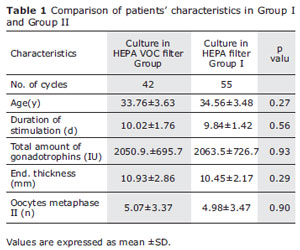
Table 1. Comparison of patients’ characteristics in Group I and Group II
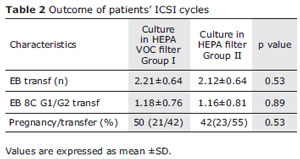
Table 2. Outcome of patients’ ICSI cycles
DISCUSSION
Considering the tendency of human embryos to be transferred back to the uterus after 72 hours (Carillo et al., 1998) in culture and that they are often maintained inside the incubator during this period, we aimed to compare two incubation environments -HEPA plus VOCs filter and HEPA filter only - used for the culture of human embryos to evaluate possible differences in embryo quality and pregnancy rates.
Battaglia et al, (2001) in a prospective randomized trial with incubator CODA® equipped versus non CODA® incubators revealed no effect on embryo quality and pregnancy rate involving human embryos. The authors recommend that IVF laboratories considering CODA® filtration should perform their own analysis to assess their needs before equipping the entire laboratory with expensive filtration systems.
Although some papers concluded that fertilization and cleavage rates, quality of embryos transferred and clinical pregnancies are improved in an environment with high quality air, our study demonstrated no effect on embryo quality and pregnancy rates when embryo culture involved air filtration system with HEPA VOCs filter. We have acknowledged that there is a need for more studies to demonstrate the real impact of the high-quality on human in vitro fertilization outcome.
CONCLUSION
The data of this prospective, randomized comparative study has demonstrated that culture of human embryos in an incubator with HEPA filtration system plus VOCs filter revealed no effect on embryo quality and pregnancy rate. The effectiveness of laboratory air and incubator purification systems is perhaps dependent on unique and specific characteristics of each laboratory and the surrounding area.
Wickland M. Collection of human oocytes by the use of sonography. Fertil Steril 1983; 39:603-607.