JBRA Assist. Reprod. 2004; 08(05):16-24
ARTIGO ORIGINAL
doi: 10.5935/1518-0557.2004.8.5.04
IVF and ICSI Outcome in Couples With Unexplained Infertility: A Randomized Study of 60 Cases
Université Catholique de Louvain, Cliniques Universitaires St Luc, Department of Gynecology, Brussels, Belgium
Abstract
Objective: To evaluate the outcome of IVF and ICSI in idiopathic infertility.
Design: Prospective randomized study.
Setting: University Hospital.
Patients: From 1999 to 2001, 60 patients were randomly allocated to Group I (IVF-ICSI split insemination) or Group II (conventional insemination).
Results: Unexplained infertility is defined as failing to establish a pregnancy despite no cause of infertility being identified. IVF has been proposed as one of the therapeutic approaches to improve fertility. Stimulation parameters were not significantly different in the two groups. The fertilization failure rate after normal insemination was respectively 13.3% and 16.6% in Groups I and II. The pregnancy rate per transfer was respectively 50% and 36.7% in Groups I and II. After two attempts, the cumulative pregnancy rate was 60% and 50% respectively in Groups I and II.
Conclusion: No statistical difference was observed between the two groups in this small series, suggesting that the systematic use of ICSI (or ICSI/IVF split) during the first attempt does not benefit couples with unexplained infertility.
Keywords: Idiopathic infertility, unexplained infertility, IVF, ICSI, fertilization failure, rescue ICSI
Introduction
Unexplained infertility is defined as failing to establish a pregnancy despite no cause of infertility being identified or after correction of the factor presumed to be responsible for infertility (Moghissi & Wallach, 1983). Unexplained infertility has been reported in 1% to 37% of infertile couples, depending on the accuracy of the sterility work-up (Collins & Crosignani, 1992). The spontaneous fecundity rate in these couples is approximately 2% (Crosignani et al., 1991) and IVF has been proposed as one of the therapeutic approaches to improve fertility. It is considered as an effective treatment for long-standing unexplained subfertility (Navot et al., 1988; Gürgan et al., 1995; Guzick et al., 1995; Donderwinkel et al., 2000).
Similar pregnancy rates were found when compared with tubal infertility despite a higher incidence of total fertilization and a decreased fertilization rate (Mackenna et al., 1992; Gürgan et al, 1995). Lower fertilization rates may be attributed to unidentified sperm problems (Molloy et al., 1991) or defective oocytes (Mackenna et al., 1992; Ezra et al., 1992; Kamal et al., 1999). In cases of total or near total fertilization failure, Yuzpe et al. (2000) proposed rescue ICSI. On the contrary, others encountered no pregnancies after total fertilization failure despite the possibility of obtaining fertilization with this technique (Kuczynski et al., 2002).
The purpose of this prospective study was to assess whether the IVF-ICSI split insemination method can improve the final outcome of IVF for unexplained infertility. In the literature, only a few studies have reported data obtained after rescue ICSI, another approach used to improve the final IVF outcome in case of unexplained infertility. Only 4 out of 17 cases described by Tsirigotis et al. (1995) and 17 out of 32 in the series of Yuzpe et al. (2000) were reported. We therefore present our results of rescue ICSI for this particular indication. However, to establish whether rescue intracytoplasmic sperm injection of unfertilized human oocytes could be an alternative to the normal insemination procedure or the IVF-ICSI split insemination method, a greater number of cases must be studied.
Materials and Methods
Patients
IVF and ET data from 60 couples with primary unexplained infertility undergoing their first IVF attempt between 1999 and 2001 were analyzed. Secondary unexplained infertility was excluded to suppress certain prognostic factors resulting from a prior conception.Unexplained infertility was defined as the lack of conception (primary infertility) during a period of up to 2 years, despite unprotected intercourse, and restricted to a complete normal infertility work-up, including laparoscopy, according to the recommendations of the ESHRE (Crosignani et al., 1993). Repeated semen analyses in the husband were normal according to Kruger’s strict criteria.
Study design
From 1999 to 2001, a prospective randomized study was conducted. The study groups consisted of 60 patients with unexplained infertility. All these patients were undergoing their first attempt and were included when at least 10 cumulus cell-oocyte complexes were collected. Patients were randomly allocated to Group I or Group II.In Group I, IVF-ICSI split insemination was applied to sibling oocytes. In Group II, 30 women had conventional insemination and rescue ICSI was used when very poor fertilization occurred. All metaphase II oocytes that failed to fertilize underwent rescue ICSI 19-22 hours after oocyte insemination, according to the time sequence proposed by Yupze et al. (2000). Fertilization was obtained with one-day-old spermatozoa and checked 10 hours after injection.Approval was obtained from the Ethics Committee of the Catholic University of Louvain.
Ovarian stimulation protocol
Stimulation protocols consisted in a long down-regulation protocol using buserelin nasal spray (Hoechst, Frankfurt, Germany) or triptorelin i.m. (Decapeptil, Ipsen-Beaufour, Paris, France), followed by administration of HMG or rFSH. Human chorionic gonadotropin 10,000 IU was administered when at least 3 follicles reached a mean diameter of 18mm.Transvaginal ultrasonography-guided oocyte retrieval was performed 35 hours later.After recovery, the cumulus-oocyte complexes were placed in 20 ìl droplets of IVF TM-20 medium (Vitrolife, Göteborg, Sweden) covered with paraffin oil (Ovoil™-100, Vitrolife, Göteborg, Sweden). The same fertilization medium was used for all study patients.Pronuclear zygotes showing evident signs of normal fertilization were put into culture. In all cases, embryo transfers were performed on day 3 for all first attempts.
Results
Our population characteristics and stimulation parameters are shown in Table 1. The women’s age, sterility duration and stimulation parameters were similar in both groups.

Table 1. Population characteristics and stimulation parameters
The fertilization, implantation and pregnancy rates are shown in Table 2. In case of normal insemination, the number of cycles with fertilization failure after normal insemination was 13.3% in Group I and 16.6% in Group II, whereas after ICSI in Group I, no fertilization failures occurred. In the five cases of very poor fertilization in Group II, rescue ICSI was applied and the fertilization rate was 59% with, as a result, no cycles with absence of fertilization.

Table 2. Fertilization, implantation and pregnancy rates
The implantation rate was 25% and 19% respectively in Groups I and II. Pregnancy rates were 50% and 36.7% respectively in Groups I and II. In Group I, if no pregnancy occurred at the first attempt, it was followed by a second attempt with 100% classic insemination in case of a > 25% fertilization rate during the first attempt or by a second attempt with 100% ICSI in case of a = 25% fertilization rate during the first attempt.
In Group II, in case of no pregnancy during the first attempt, it was followed by a second attempt with 100% classic insemination in case of a > 25% fertilization rate during the first attempt or a second attempt with 100% ICSI when rescue ICSI was performed during the first attempt. We analyzed the results of the first and second attempts per couple to see which protocol gave the most satisfactory results (Table 3).
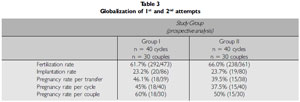
Table 3. Globalization of 1st and 2nd attempts
After two attempts, in Groups I and II respectively, the implantation rate was 23.2% and 23.7%, the pregnancy rate per transfer was 46.1% and 39.5%, the pregnancy rate per cycle was 45% and 37.5% and the pregnancy rate per couple was 60% and 50%.
Discussion
Higher incidences of total fertilization failures were observed in couples with unexplained infertility in conventional IVF, compared to couples with tubal disease. In a small series of couples with tubal infertility, complete fertilization failure occurred in 12.5% after conventional IVF and in 3.6% after ICSI (Staessen et al., 1999).
Hoping to improve the outcome, the indications for ICSI were extended to include patients with unexplained infertility (Aboulghar et al., 1996; Ruiz et al., 1997). Only a few authors have described the results of ICSI in a selected population of women with unexplained sterility. Some found no differences in fertilization, implantation and pregnancy rates when ICSI was used for unexplained fertilization failure in conventional IVF (Cohen et al., 1994) compared to the use of ICSI for male factor indications (Lipitz et al., 1993; Svalander et al., 1995; Benadiva et al., 1999), suggesting that ICSI could be a therapeutic alternative to improve the outcome in cases of unexplained infertility. After failed intrauterine insemination with controlled ovarian hyperstimulation, Aboulghar et al. (1999) obtained a pregnancy rate of 36.7% after IVF and ICSI in sibling oocytes, with total fertilization failure in IVF in 17.6% of cases.
On the contrary, others reported that ICSI is less successful in couples with previous fertilization failure and normal semen parameters (Gabrielsen et al., 1996; Miller et al., 1998; Tomas et al., 1998; Tucker et al., 1999), suggesting the presence of probably intrinsic oocyte defects that are not bypassed by ICSI. Bhattacharya et al. (2001), in a randomized multicenter controlled trial, did not find any advantage either, in terms of implantation and pregnancy rates, of ICSI over IVF in couples with non-male-factor infertility.
Another way to improve outcome is to apply rescue ICSI as proposed by Yuzpe et al. (2000). Rescue ICSI may be applied to unfertilized oocytes after they have been exposed to spermatozoa about 18 hours earlier. Although fertilization could be achieved in this way, serious concerns may be raised because of a possible increased risk for genetic abnormalities (Nagy et al., 1993). This procedure was studied in a non-selected population and an increase in fertilization and embryonic development was observed in the two studies but no pregnancy was achieved (Park et al., 2000; Kuczynski et al., 2002).
The purpose of our study was to establish whether, in cases of unexplained infertility, we should systematically propose to assign 50% of retrieved sibling oocytes to conventional IVF and 50% to ICSI, or if we should only propose ICSI in a subsequent cycle if fertilization failed during the first attempt.
We chose sibling oocytes in our selected population as the unit of randomization to evaluate if the avoidance of fertilization failure in our study Group I led to an improvement in the final outcome. The fertilization rate was 61.6% and 66.2% respectively in Groups I and II when normal insemination was used. In our study, as in the others, the fertilization data were expressed per oocyte surrounded by cumulus and corona and categorized as mature, which correlates to metaphase II of maturation.
Two authors have reported data on fertilization in unexplained infertility but, unfortunately, no information about their final outcome. Fishel et al. (2000) reported a higher incidence of fertilization with ICSI than IVF in patients with unexplained failure of a previous conventional IVF cycle and Hershlag et al. (2002) reported a fertilization rate in sibling oocytes treated by conventional IVF which was significantly lower than the fertilization rate (65.3%) obtained by ICSI in the same group. A similar trend was observed by Aboulghar et al. (1996). Khamsi et al. (2001) reported that ICSI resulted in better fertilization rates than conventional IVF (71.3 vs. 57.2) but in their series of 35 patients, only 10 suffered from unexplained infertility and no conclusion concerning this specific group can be drawn.
In our prospective randomized study, fertilization rates after conventional IVF were similar to those obtained after ICSI. Complete absence of fertilization was found in normal insemination in 13.3% of cases in Group I and 16.6% in Group II, similar to the rates observed in the literature which were between 6.76% and 17.6% (Ruiz et al., 1997; Aboulghar et al., 1999; Fishet et al., 2000; Hershlag et al., 2002).
This is in agreement with three other groups that included patients with tubal infertility (Van Steirteghem et al., 1999) and patients with non-male infertility factors [14.3%] (Khamsi et al., 2001).
Of course, there were finally no fertilization failures in Group I because 50% of the oocytes underwent the ICSI procedure. However, if ICSI performed on sibling oocytes is a way of avoiding fertilization failure, the remaining question concerns the implantation potential of embryos obtained by ICSI compared with those obtained using conventional IVF in the same cycles. In our series, although no statistically significant difference was found between implantation and pregnancy rates per transfer and per cycle between the two groups, there was a tendency towards a higher implantation and pregnancy rate in Group I. Because of the small number, however, no definite conclusion can be drawn.
Another limitation of our prospective study is the fact that the implantation potential of the embryos obtained by ICSI or conventional IVF cannot be assessed separately due to the within patient design of our study. Indeed, our policy of transferring the best embryos according to morphological criteria resulted in nearly 30% of embryos transfers from both IVF insemination and ICSI.
In the literature, there are some arguments supporting the view that ICSI should not be systematically proposed in case of unexplained infertility. Indeed, in a prospective randomized study, the fertilization rates and formation of good quality embryos were not significantly different from conventional IVF or ICSI in patients with non-male factor infertility (Van Steirtegham et al., 1999). Moreover, Dumoulin et al. (2000) compared embryonic development originating from conventional IVF and ICSI up to the blastocyst stage and found a lower rate of blastocyst formation in their ICSI group, while their pregnancy and ongoing pregnancy rates were significantly higher in this latter group.
In our study, we performed 5 cases of rescue ICSI in the presence of very poor fertilization or total fertilization failure after conventional insemination. We used this technique for 16.6% of the cycles, giving a 0% fertilization failure rate and thus salvaging all cycles. A fertilization rate of 59.1% was achieved with rescue ICSI. In our study, no ongoing pregnancy occurred after transfer of embryos obtained by this procedure, although Yuzpe et al. (2000) reported 4 ongoing pregnancies in a series of 29 cycles with embryo transfer. We agree with Park et al. (2000) and Kuczynski et al. (2002) who also reported that late ICSI increased the rate of fertilization in fertilization failure cycles but failed to achieve pregnancy.
Finally, we compared the results of the two study groups, including first and second attempts. We did not find any difference in implantation rate or pregnancy rate per transfer and per cycle between the IVF-ICSI split group and the IVF-ICSI rescue group, suggesting that a first attempt with normal insemination and a second attempt with ICSI, if a fertilization rate of <25% or no fertilization at all is seen during the first attempt, will achieve similar outcomes.
Conclusion
We conclude that performing normal insemination in patients with unexplained infertility at their first attempt, followed by ICSI in a subsequent cycle if fertilization failure occurred during the first attempt is a satisfactory protocol. We stress that although no statistical significance was observed between the IVF and the IVF/ICSI split groups, this may be because of the small number of cases included and not necessarily because of an equal outcome. Furthermore, we found no advantage to using rescue ICSI, even if our series was limited.
Moreover, the process of fertilization can fail at any stage, as demonstrated in a cellular exploration of nonfertilized oocytes by immunofluorescence (Rawe et al., 2001), and it will remain difficult to evaluate if ICSI is able to bypass all unexplained problems.
Although, obviously, no complete fertilization failure was observed after ICSI in this carefully selected population, the increased workload and organization of the laboratory staff, the increased cost and the theoretical potential for an increased risk of cytogenetic abnormalities, as suggested by Nagy et al. (1993), should nevertheless all be taken into consideration and weighed up.
23. Moghissi KS, Wallach EE - Unexplained infertility. Fertil. Steril., 39: 5-21, 1983.