JBRA Assisted Reproduction
ORIGINAL ARTICLE
doi: 10.5935/1518-0557.20130059
Newborn outcome after assisted reproductive technologies with annexin V (MACS): first report
Resultados de récem-nascidos após tecnologias reprodutivas com anexina V (MACCS): primeiro relato
Centro de Estudios en Ginecologia y Reproducción (CEGYR)
Accredited Redlara center
Buenos Aires, Argentina
ABSTRACT
Objective: To compare newborn data of couples underwent conventional assisted reproductive technology (ART), with mild and severe male factor vs. couples under ART with MACS.
Methods: This is retrospective and comparative study. A hundred patients who performed ART cycles (2009-2011) with a newborn (NB) achieved with MACS were considered (Group I). It was included cycles where fresh embryo transfer and fresh homologous semen were performed. Indications for MACS treatment were: sperm DNA fragmentation (TUNEL) >20% and/or cleaved caspase 3 (C3A)>11%. It was included cycles with donated and own oocytes. Variables such as: weight, sex, gestational age, congenital malformations, multiple gestation, perinatal mortality and obstetrics and fetal complications were included. Two comparative groups were considered: NB after ICSI with mild male factor (Group II) and severe male factor with normal TUNEL and C3A (GroupIII), both groups without MACS.
Results: NB with MACS, Group II and III in cycles using own oocytes, were 67 (47 single and 20 double), 37 (23 single and 14 double) and 38 (23 single and 15 double), respectively. NB with MACS, Group II and III using donated oocytes were 50 (36 single and 14 double), 59 (33 single and 26 double) and 22 (14 single and 8 double), respectively. No significant differences were found between groups.
Conclusion: NB after MACS has similar characteristics in comparison with conventional ICSI.
Key words: newborn, MACS, ICSI
RESUMO
Objetivo: Comparar os dados recém-nascidos de casais sofreu tecnologia de reprodução assistida convencional (ART), com leve e grave fator masculino contra casais em arte com MACS.
Métodos: Estudo retrospectivo e comparativo. Cem pacientes que realizaram ciclos de reprodução (2009-2011) com recém-nascido (RN) alcançado com MACS foram considerados (Grupo I). Foram incluídos ciclos onde foram realizados transferência de embriões frescos e sêmen fresco homólogo. As indicações para tratamento MACS foram: fragmentação do DNA do esperma (TUNEL)> 20% e / ou caspase 3 (C3A)> 11%. Foram incluídos ciclos com doação de óvulos ou próprios. Variáveis, tais como: peso, sexo, idade gestacional, malformações congênitas, gestação múltipla, a mortalidade perinatal e obstetrícia e complicações fetais foram incluídos. Foram considerados dois grupos comparativos: NB após ICSI com fator masculino leve (Grupo II) e fator masculino severo com TUNEL normal e C3A (Grupo III), ambos os grupos, sem MACS.
Resultados: RN com MACS, Grupo II e III em ciclos utilizando oócitos próprios, foram 67 (47 únicos e 20 duplos), 37 (23 únicos e 14 duplos) e 38 (23 únicos e 15 duplos), respectivamente. NB com MACS, Grupo II e III utilizando oócitos doados foram 50 (36 únicos e 14 duplos), 59 (33 únicos e 26 duplos) e 22 (14 únicos e 8 duplos), respectivamente. Não foram encontradas diferenças significativas entre os grupos.
Conclusão: NB após MACS tem características semelhantes em comparação com ICSI convencional.
Palavras- chave: récem-nascidos; MACS; ICSI
INTRODUCTION
It is estimated that over 100,000 children are born annually in the world with assisted reproduction techniques (ART) (Bonduelle et al, 2005). The increase of techniques and its effectiveness has been associated with the introduction of embryo cryopreservation and intracytoplasmic sperm injection (ICSI). In the United States (USA) (SART) there were a total of 154,412 assisted reproduction treatments in 2011, 99% corresponded to IVF-ICSI cycles, with a live birth rate of 36.0%. Moreover, 9332 fresh embryo transfers were performed in oocyte receptors, with a live birth rate of 54.9%.
ART has become as the best option treatment for female and male infertility, however, pregnancy rates remains suboptimal in cases of severe male factor (ASRM, 2004).
Even though sperm conventional analysis provides significant information, it is not representative of DNA damage events or programmed cell death (apoptosis). These events can be greatly responsible for low fertilization and implantation rate (Avendaño et al, 2008; Boe-Hansen et al., 2006; Sakkas & Alvarez, 2010). Sperm DNA integrity has been shown to influence over fertilization (Marchetti et al., 2002), implantation and pregnancy rates (Seli & Sakkas, 2005).
In order to improve sperm quality, noninvasive therapies have been developed to reduce sperm apoptosis levels by magnetic micro-beads or Annexin columns (MACS, “Magnetic Activated Cell Sorting”) (Said et al., 2006, 2008). This technique is based on sperm selection using a biodegradable magnetic spheres conjugated with AnnexinV. Apoptotic sperm externalize phosphatidylserine on their membrane which has high affinity with Annexin V. This technique allows the isolation of affected spermatozoa conjugated with Annexin V placed into a magnetic field exposed column (Said et al., 2005).
Despite the extensive application of these procedures, children prognosis has been less important than the success of these techniques. Moreover, multiple gestations and deliveries have increase as a consequence of ART. Today it is estimated that over 70% of twin pregnancies and 99% of triplets or more are due to infertility treatments. Fetus and newborn main risks, product of multiple pregnancies, are prematurity and zygosity.
Only two studies have reported clinical pregnancies after ART with Annexin V columns (Polak de Fried et al., 2009; Rawe et al., 2009). This technique is predominantly done in Latin America. Researchers from Spain, Turkey, France, Canada, and China, have also published their own results. There are no newborns data reported with MACS in ART. Our institution has a significant casuistry in newborn data of ART with MACS, in that sense we believe in the importance of this first report.
Finally, the objective of our study is to compare newborn data of couples underwent conventional ART (with mild and severe male factor) vs. couples under ART with MACS.
METHODS
The present is a retrospective and comparative study. A hundred patients who performed ART cycles at CEGYR (Reproductive Medicine, Buenos Aires-Argentina) between January (2009) to March (2011) with a newborn (NB) achieved with MACS were considered (Group I). It was included cycles where fresh embryo transfer and fresh homologous semen were performed. Indications for MACS treatment were: sperm DNA fragmentation (TUNEL) >20% and/or cleaved caspase 3 (C3A) >11% in a previous semen analysis (6 months or less).
Newborns were evaluated by the following variables:
(1)Gestational age at birth. It was calculated from the date of the last menstrual period. It was classified in: Premature (when delivery occurs before 37 weeks of gestation), term (37 to 42 weeks gestation) and post mature (after 42 weeks gestation) (Carrascosa et al., 2004).
(2)Weight: in grams
(3)Sex: female or male
(4)Number of fetus: single or multiple pregnancies, determined by ultrasound on first trimester.
(5)Congenital malformations: It was defined as the primary structural defect of an organ; part of it or larger areas of the body, resulting from an alteration in the development of the fetus, and that is evident on a physical examination of the newborn, or after birth, when an organ is anatomically affected. It has been divided in major and minor. Major congenital malformations have a significant functional compromise for the patient, so they have medical or esthetic consequences, require early attention, sometimes urgent and therefore also have psychological impact (Mueller et al., 2001; Nussbaum et al., 2001).
(6)Obstetrical complications: Obstetrical complications relate to disruptions and disorders in pregnancy, childbirth, labor, and in the early neonatal period. Examples of such complications include prenatal drug exposure, inadequate maternal nutrition, minor physical anomalies and birth complications. Obstetric complications can have long term effects on a child, including the emphasis on problem behaviors.
(7)Fetal complications.
(8)Perinatal mortality:considered all deaths among the twenty-eighth week of gestation and the seventh day of birth.
For the comparative analysis the following groups were considered:
Group I: patients undergoing MACS
Group II: ART patients with mild male factor (sperm concentration greater than 5 million/ml, strict morphology index greater than 4%).
Group III: ART patients with severe male factor, normal levels of TUNEL and/or cleaved caspase 3 (sperm concentration less than 5 million/ml, strict morphology index less than 4%).
Groups II and III had similar characteristics (124 cycles). Thus, in ART cycles using own oocytes, the main infertility reason was male factor and female age were ≤ 37 years. Cycles with a follicular response during the ovarian stimulation ≥ 10 follicles, was considered. In egg donation cycles, the main infertility cause was advanced female reproductive age or premature ovarian failure, and male factor. Fresh embryos transfer and fresh semen samples were performed for all groups.
The total population of newborns at each group is shown in Table 1. Statistical analysis was performed using ANOVA and chi-square test using the MedCalc statistical software (v12.4).
RESULTS
In Group I, patients age ranged 26-43 (own oocytes) and 31-47 (donated oocytes). In group II, age range was 26-38 (own oocytes) and 29-50 (donates oocytes). In group III, patients age ranged 27-38 (own oocytes) and 39-46 (donated oocytes). There was no significant difference related to age range variability.
Total number of pregnancies in Groups I, II and III are shown in Table 2, the number of fetuses (single or multiple) at each group is also detailed. In Group I, single pregnancy rate was 82.5 % with own oocytes, and 84% with donated oocytes. In this group all multiple pregnancies were double. Patients from group II had a single pregnancy rate of 77 % (own oocytes) and 72% (donated oocytes), similarly all pregnancies were double. In Group III, pregnancy rate was 77% (own oocytes) and 78% (donated oocytes). One of multiple pregnancies was triple (own oocytes).
Newborn weight distribution, expressed in grams, is stated in Table 3. In Group I, with own oocytes, 72% of newborns presented a normal weight (between 2500 and 3999 grams), 23% and 5% a low weight (1000-2499 grams) and high weight (>4000 gram), respectively. In the same group, with donated oocytes, it was obtained a 78% of newborns with normal weight, 18% and 4% with low weight and high weight, respectively. The comparison between Group I (own and donated oocytes) against Group II and III shows that there is not a significant difference regarding new born weight (Table 4 and 5).
Gestational age distribution of newborns is represented in Table 6. In group I, 63% of premature babies correspond to double pregnancies. In this group, with own oocytes, the gestational age rate was 37.2 ± 2.2 weeks. Moreover, within this group, 14 premature newborns presented a prematurity rate of 34.0 ± 22 weeks. In group I, with donate oocytes, the gestational age rate was 38.0 ± 1.2 weeks, and the 5 premature newborn´s had a prematurity rate 35.4 ± 1.2 weeks. Similarly, in group II, 74% of premature babies correspond to double pregnancies. Within this group, with own oocytes, the gestational age rate was 37.5 ± 2.0. Seven premature newborn´s presented a prematurity rate of 34.3 ± 2.0 weeks. In the same group, with donated oocytes, the gestational age rate was 38 ± 2 weeks and the 12 premature newborns had a prematurity rate of 35.6 ± 2 weeks. In group III, with own oocytes, the gestational age rate was 37.6 ± 2.0; within this group the 8 premature newborns presented a prematurity rate of 35.0 ± 2 weeks. In the same group with donated oocytes, the gestational age rate was 37.6 ± 2.0; the 6 premature newborns had a prematurity rate of 37.3 ± 2 weeks and correspond to 43% of double pregnancies. The comparison of newborns gestational age between group I vs. group II and group III was not significant different (p>0.05) (Tables 7 and 8).
The distribution of neonatal admissions, malformations, neonatal deaths and sex ratio of newborns is shown in Table 9. When the variables were compared between groups, there were no significant differences (Table 10). The few malformations presented were: in group I, a newborn with Down syndrome from a woman with 37 years old with own oocytes; in group II, a newborn with left Pulmonary Hypoplasia from woman who received donated oocytes. In Group III there was a newborn with Cranial Hypoplasia from a woman who received donated oocytes. There were no neonatal deaths. Ninety percent of neonatal complications were respiratory distress syndrome; other 10% were for hyperbilirubinemia and suction difficulty.
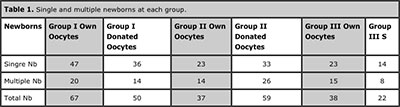
Table 1. Single and multiple newborns at each group.
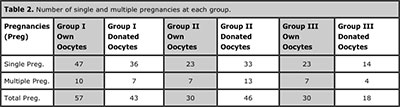
Table 2. Number of single and multiple pregnancies at each group.
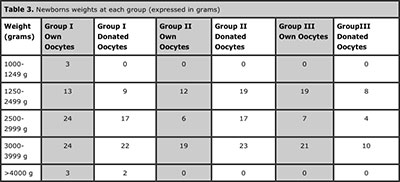
Table 3. Newborns weights at each group (expressed in grams)
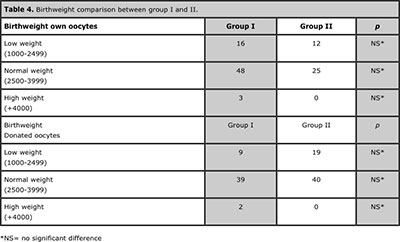
Table 4. Birthweight comparison between group I and II.
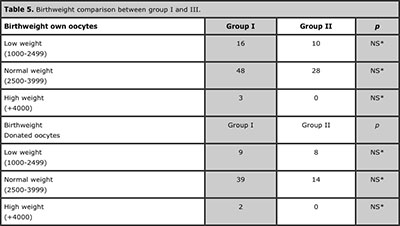
Table 5. Birthweight comparison between group I and III.
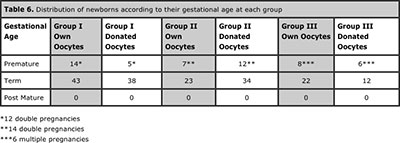
Table 6. Distribution of newborns according to their gestational age at each group
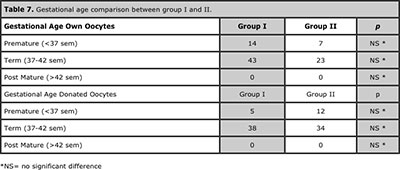
Table 7. Gestational age comparison between group I and II.
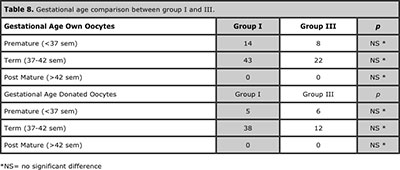
Table 8. Gestational age comparison between group I and III.
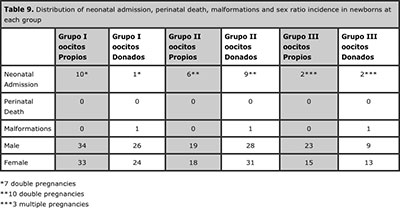
Table 9. Distribution of neonatal admission, perinatal death, malformations and sex ratio incidence in newborns at each group
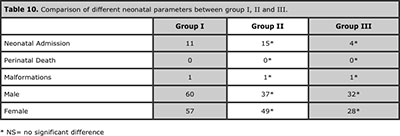
Table 10. Comparison of different neonatal parameters between group I, II and III.
DISCUSSION
Since 1992 when Palermo et al., published the first pregnancies obtained through ICSI, this techniques has become as a routine procedure in IVF laboratories around the world. Initially, ICSI was conducted in cases of infertility with severe male factor, but at the present ICSI indication has changed. Currently it is performed in couples with conventional IVF repeated failures, intrauterine insemination failures, low ovarian response and poor oocyte quality. As we mentioned above, annually is estimated that more 100 000 children born with ART (Bonduelle et al., 2005).
At the present study, we want to highlight “MACS” as new sperm selection technique. This technique has been successfully used on patients with high levels of DNA fragmentation before ICSI. This is the first report that compares reproductive outcomes and newborns data from MACS cycles in relation to conventional ART (ICSI).
Considering the important significance of DNA fragmentation and apoptosis markers to evaluate the seminal quality in infertile male, arises the question about therapeutic options. Recently, different alternatives have been proposed to improve reproductive outcomes in infertile men with these deficiencies. Thus, Greco et al., (2005) reported that antioxidants consumption previously to ICSI, during 2-3 months, has failed to improve fertilization and cleavage rates, but it´s able to enhance both implantation (19.6 % vs. 2.2 %) and pregnancies rates (48.2% vs. 6.9%) in a significant manner respect to patients with DNA damage without antioxidants. Authors concludes that antioxidants treatments before ICSI could be important to improve reproductive prognosis in patients with high values of sperm DNA damage. However, others authors claim that antioxidant use do not significantly improve ICSI outcomes and it should be important to consider DNA fragmentation origin (Bolle et al., 2002).
Testicular biopsy is another therapeutic alternative to select non DNA damaged sperm in patients with high levels of apoptotic sperm on ejaculate. It was postulated testicle spermatozoa should have a low proportion of DNA fragmentation in comparison with ejaculated sperm (Greco et al., 2005). The authors describes that there was not differences over fertilization and embryo quality rates. However, using testicular sperm for ICSI, eight clinical pregnancies were achieved (four single and four double) with 44.4% and 20.7% of pregnancy and implantation rate, respectively. On the other hand, only one pregnancy has been obtained with ejaculated sperm. This pregnancy subsequently finished in a miscarriage. Authors propose, for ICSI procedure, that testicular biopsy could be a possible strategy to reduce DNA damage incidence. This reduction can be able by the omission of sperm epididymal transit, where the majority of DNA damage takes place by oxidative stress (Ramos et al. 2004).
Annexin V columns were proposed as a new non-invasive method to reduce high levels of DNA fragmentation in ejaculated spermatozoa. Several groups have reported the utility of these metallic microspheres (50nm diameter) bounded with Annexin V. When phosphatidylserine externalization takes place in death or apoptotic sperm, it could be a useful feature to select undamaged spermatozoa by the incubation with Annexin V beads that pass through under a 0.5 T magnetic field. Healthy spermatozoa (Annexin V-) pass freely through the column (Grunewald et al., 2001; Paasch et al, 2003, 2004). In theory these spermatozoa could be used for ART. In that sense, the main concern is respect to the technique safety. Paasch et al., (2003), using transmission electron microscopy, published that over a negative spermatozoon there were not unspecific beads attached. Our group performed similar studies using scanning electron microscopy with the same results (data not shown). This preliminary observation indicates that unbound spermatozoa don’t have metallic beads over the surface.
The first randomize prospective clinical study for MACS vs. DGC (density gradient centrifugation) was reported by Dirican et al., 2008. This report includes two groups: MACS=122 couples and DGC=74 couples, after the analysis the authors reported a significant pregnancy rate increase in MACS group. Other published papers reported ongoing pregnancies and a healthy baby born in patients with high levels of DNA fragmentation who performed ICSI with MACS (Polak de Fried et al 2009; Rawe et al., 2009). There was not any fetal complication reported in these two publications.
The development of new ART techniques creates some concern about the outcome of children conceive by these methods. In 2009 were published two papers that discuss some of the problems associated with children born by ART. The first one compared the obstetric and neonatal outcomes of ART (IVF and ICSI) with spontaneous pregnancies and concluded that exists more prematurity, low birthweight and increased obstetric diseases, such as hypertension, gestational diabetes, miscarriage, placental diseases and bleeding associated to ART (Sebastiani et al., 2009). Other prospective study report 7008 infants (113 from IVF and 6895 after natural conception) and concluded that twin births rate after IVF was significantly higher with respect to natural fertilization (56.6% and 2.4% respectively) and the rate of newborns congenital defects in IVF babies was 5.3% vs. 1.1% in newborns after spontaneous conception (p <0.002) (Sanchis et al., 2009).
At the present study, no significant differences were found between groups in relation to multiple pregnancies, birthweight, gestational age, and fetal-obstetrical complications. Also, in our study after the comparison between Group I (own and donated oocytes) with groups II and III, there was no difference in relation to congenital malformations. The number of congenital malformations is consistent with that expected in the general population (ICSI). We found an infant with Down syndrome in MACS group with own oocytes, and control groups had a newborn with pulmonary Hypoplasia and another with cranial Hypoplasia, both from ART with donated oocytes. There were no neonatal deaths reported in our revision. More of these kind of studies should be conducted to have knowledge of children conceived by ART techniques
CONCLUSION
In summary, this study illustrates the successfully implementation of MACS technique in patients with high levels of sperm DNA fragmentation, presenting similar reproductive results as the conventional ART (ICSI).
There was not a significant difference of newborns data with ICSI+MACS vs. ICSI (mild male factor) and ICSI (severe male factor with normal TUNEL and/or cleaved caspase 3). Newborns after using MACS have similar characteristics to infants after conventional ICSI.
REFERENCES
ASRM Assisted reproductive technology in the United States: 2000 results generated from the American Society for Reproductive Medicine/Society for Assisted Reproductive Technology Registry. Fertil Steril 2004; 81: 1207-1220.
Medline Crossref
Avendaño C, Franchi A, Taylor S. Fragmentation of DNA in morphologically normal human spermatozoa. Fertil Steril. 2008; 1077-84.
Medline Crossref
Boe-Hansen G, Fedder J, Ersboll A and Christensen PThe sperm chromatin structure assay a diagnostic tool in the human fertility clinic. Human Reprod. 2006; 6: 1576- 1582.
Medline Crossref
Bolle P, Evandri MG and Saso L The controversial efficacy of vitamin E for human male infertility. Contraception 2002; 65:313-315.
Medline Crossref
Bonduelle M, Liebaers I, Deketelaere V, Derde MP, Camus M, Devroey P, et al. Neonatal data on a cohort of 2889 infants born after ICSI (1991–1999) and of 2995 infants born after IVF(1983–1999). Hum Reprod. 2002;17:671–94 .
Medline Crossref
Bonduelle M, Wennerholm UB, Loft A, Tarlatzis BC, Peters C, Henriet S, et al. A multi-centre cohort study of the physical health of 5 year-old children conceived after intracytoplasmatic sperm injection, in vitro fertilization and natural conception.Hum Reprod. 2005;20:413–9.
Medline Crossref
Carrascosa A, Yeste D, Copil A, Almar J, Salcedo S y Gussinyé M. Patrones antropométricos de los recién nacidos pretérmino y a término (24-42 semanas de edad gestacional) en el Hospital Materno-Infantil Vall d’Hebron (Barcelona) (1997-2002). An Pediatr 2004; 60(5):406-16).
Medline Crossref
Dirican EK, Ozgün OD, Akarsu S, et al. Clinical outcome of magnetic activated cell sorting of non-apoptotic spermatozoa before density gradient centrifugation for assisted reproduction. J. Assist. Reprod. Genet. 2008;25:375–381.
Medline Crossref
Greco E, Romano S, Lacobelli M, et al. ICSI in cases of sperm DNA damage: beneficial effect of oral antioxidant treatment. Human Reprod 2005;20:2590-2594.
Medline Crossref
Greco E, Scarselli F, Iacobelli M, et al. Efficient treatment of infertility due to sperm DNA damage by ICSI with testicular spermatozoa. Hum Reprod 2005;20:226-230.
Medline Crossref
Grunewald S, Paasch U, Glander HJ, et al. Enrichment of non-apoptotic human spermatozoa after cryopreservation by immunomagnetic cell sorting. Cell Tissue Bank 2001;2:127-133.
Medline Crossref
Marchetti C, Obert G, Deffosez P. Study of mitochondrial membrane potential, reactive oxygen species, DNA fragmentation and cell viability by flow cytometry in human sperm. Hum. Reprod. 2002; 17:1257–1265.
Medline Crossref
Paasch U, Grunewald S, Agarwal A, et al. Activation pattern of caspases in human spermatozoa. Fertil Steril 2004;81:802-809.
Medline Crossref
Paasch U, Grunewald S, Fitzl G, et al. Deterioration of plasma membrane is associated with activated caspases in human spermatozoa. J Androl 2003;24:246-252.
Medline Crossref
Polak de Fried E, Denaday F. Single and twin ongoing pregnancies in two cases of previous ART failure after ICSI performed with sperm sorted using annexin V microbeads. Fertil Steril. 2010;94(1):351.
Medline Crossref
Ramos L, De Boer P, Meuleman E, et al. Chromatin condensation and DNA damage of human epididymal spermatozoa in obstructive azoospermia. Reprod Biomed Online 2004;4:392-397.
Medline Crossref
Rawe VY, Boudri HU, Alvarez Sedó C, Carro M, Papier S, Nodar F. Healthy baby born after reduction of sperm DNA fragmentation using cell sorting before ICSI. Reprod Biomed Online. 2010;20(3):320-3.
Medline Crossref
Said T, Agarwal A, Grunewald S, et al. Selection of nonapoptotic spermatozoa as a new tool for enhancing assisted reproduction outcomes: an in vitro model. Biol. Reprod. 2006;74:530–537.
Medline
Said T, Agarwal A, Zborowski M, et al. Utility of magnetic cell separation as a molecular sperm preparation technique. J. Androl. 2008;29:134–142.
Medline Crossref
Said TM, Grunewald S, Paasch U, et al. Advantage of combining magnetic cell separation with sperm preparation techniques. Reprod. Biomed. Online. 2005;10:740–746.
Medline Crossref
Sanchis A, Marcos Puig B, Juan Garcı´a L, Morales Sua´rez-Varela M, Beledo Go´mez A, Balanza´ Machancosa R, et al. Caracterı´sticas de los recie´n nacidos tras fecundacio´n in vitro. An Pediatr (Barc). 2009.10.1016/j.anpedi.2009.02.002.
Medline Crossref
Sakkas D, Alvarez JG. Sperm DNA fragmentation: mechanisms of origin, impact on reproductive outcome, and analysis. FertilSteril.2010 Mar 1;93(4):1027-36.
Medline Crossref
Sebastiani Sebastiani G, Pertierra Cortada A, Vidal Sorde´ E, Balasch Cortina J, Figueras Aloy J. Factores relacionados con las tecnicas de reproduccion asistida y su repercusion en el neonato. An Pediatr. 2009.
Medline Crossref
Seli E, Sakkas D. Spermatozoal nuclear determinants of reproductive outcome: implications for ART. Hum. Reprod. Update. 2005;11:337–349.
Medline Crossref