JBRA Assist. Reprod. 2016;20 (2):66-71
ORIGINAL ARTICLE
doi: 10.5935/1518-0557.20160016
Does basal luteinizing hormone help predict the fate of in vitro fertilization?
1Department of Obstetrics and Gynaecology, BPS Government College for Women, Khanpur Kalan, District Sonepat, Haryana, India
2Department of Obstetrics and Gynaecology, All India Institute of Medical Sciences, New Delhi, India
CONFLICT OF INTERESTS
No conflict of interest have been declared.
ABSTRACT
Objective: Evaluate the role of baseline serum luteinizing hormone (LH) in predicting the success of in-vitro fertilization (IVF) in terms of clinical pregnancy and live birth rate.
Methods: Women who underwent IVF and/or intracytoplasmic sperm injection (ICSI), following either the agonist or the antagonist protocol, were retrospectively evaluated over a period of two years at the All India Institute of Medical Sciences, New Delhi. We investigated the correlation of serum LH levels in the follicular phase with pregnancy outcomes. A P-value lower than 0.05 was considered as statistically significant.
Results: The individuals (351) were divided into four groups based on LH and FSH baseline values, and the levels were correlated with clinical pregnancy and live births. The highest clinical pregnancy rate (25%) was achieved in women with low LH (< 2IU/l); whereas the miscarriage rate was almost similar in all the groups. The pregnancy rate was the lowest (16%) in women with high LH levels (> 8IU/L). Pregnancy rates were intermediate (20%) if LH was intermediate (2-8IU/L). However, none of the results had statistical significance.
Conclusions: Early follicular serum LH levels before an IVF/ICSI treatment cycle did not have any clear relationship with clinical pregnancy or live birth rates.
Keywords: luteinizing hormone, IVF, ICSI, clinical pregnancy rate, live birth rate.
INTRODUCTION
In the present era of increasing infertility, the demand for assisted reproductive techniques has increased dramatically. Various factors have been evaluated to find out the protocol which would work better for a given patient. Although both FSH and LH are necessary for folliculogenesis, the role of LH in predicting infertility outcomes is still a matter of debate (Lévy et al., 2000).
Tests for predicting the outcome of assisted reproductive techniques have been inconsistent (Meheshwari et al., 2006; Broekmans et al., 2006). Among the ones for ovarian reserve, age is the most reliable and consistent variable. Women with normal baseline follicular stimulating hormone (FSH) levels behave as good responders (Toner et al., 1991; Scott et al., 1989) and patients with high FSH may respond poorly to standard ovarian stimulation in terms of oocyte retrieval (Toner et al., 1991; Toporcerova et al., 2006).
Though measured routinely prior to ART, the role of baseline LH is still not clear. Previous studies clearly support the role of LH in terms of follicular growth, maturation, and in preventing further growth of secondary follicles as the dominant follicle reaches maturity and ovulation. However, LH in excess of the ‘ceiling threshold’ can also be associated with poor reproductive outcomes (Zeleznik & Hillier, 1984; Stanger & Yovich, 1985; Howles et al., 1986; Regan et al., 1990). Still, others do not agree on the role of LH in determining the clinical outcome of ART. (Jurema et al., 2003)
Hence, the objective of the present study is to find out whether follicular phase LH levels have any correlation with cycle response and clinical outcomes of in- vitro fertilization (IVF) treatment.
MATERIALS AND METHODS
This is a retrospective study, carried out at the All India Institute of Medical Sciences infertility center, stretched over a period of 18 months. Data from the 351 patients recruited in their first IVF cycle was extracted from a computer database.
Serum samples of FSH, LH (follicular phase day 2 or day 3) and Anti Mullerian hormone (AMH) were collected during fasting, using chemiluminescent immunoassay and enzyme immunoassay, respectively, prior to starting stimulation. We also counted the antral follicles between day 2-5 using the Siemens Antras-114720 version machine. Either long down regulation of GnRH agonist or antagonist protocol was employed in all cycles.
In the long agonist cycle, pituitary down-regulation was achieved by administering GnRH analogue (1mg) daily by subcutaneous injection, starting from day-21 of the previous cycle and continued for 14 days. The dose was reduced to half two weeks later, after confirming full down-regulation by means of endocrinal and ultrasound parameters – including estradiol <20pg/ml, progesterone <2ng/ml, LH <2mIU/ml (chemiluminescent immunoassay); absence of follicular activity and thin endometrium. Once the down-regulation was complete, ovarian stimulation was started using gonadotrophins. For controlled ovarian hyper-stimulation (COH) we used recombinant FSH. The initial gonadotropin dose was decided according to age, body mass index (BMI), ovarian reserve and previous response (Al-Shawaf et al., 2001). Initial ultrasound was performed after 5 days. Further gonadotropin dose was adjusted according to ultrasound findings.
As for the antagonist protocol, r-FSH was started on day 2 of the cycle. The ultrasound scan was repeated after 5 days and if the follicles were in the range of 12-14 mm, GnRH antagonist (250 microgram) was added (4-6 days). The gonadotropin dose was adjusted according to follicular maturation. Recombinant human chorionic gonadotropin (r-hCG 250 microgram) was administered for final maturation when there were 3 or more follicles of at least 18 mm in diameter and endometrial thickness >8 mm with triple line. The cycle was cancelled if less than 3 follicles of no more than 15mm were formed. Transvaginal oocytes retrieval under anesthesia was scheduled 34 to 36h later. We used Cook’s single lumen ovum pick-up needle under an aspiration pressure of 125mmHg. We recorded oocyte maturity and embryo grading. The oocytes were evaluated for normal fertilization (2 distinct pronuclei). Further embryos were observed for cleavage - 4 cells, 16 cells to blastocyst stage. Finally, we transferred the embryo (day 2 to day 5) using the soft Cook’s transfer catheter under trans-abdominal ultrasound guidance. We used the stiffer Frydman catheter when it was difficult to pass through the internal cervical os. During the luteal phase, we added progesterone (100 mg im daily) along with 10 mg of oral dydrogesterone, prednisolone and ecosprin - 75 mg daily.
Pregnancy was confirmed using the urine pregnancy test after 14 days of transfer and we measured serum beta-hCG concentrations. Clinical ongoing pregnancy was confirmed by ultrasound as the presence of a gestational sac with a beating heart. Biochemical pregnancies were the ones with positive serum beta-hCG concentrations, but without a gestational sac. Miscarriage was defined as a pregnancy that could not continue beyond 20 weeks. Delivery of at least one viable infant was counted as a live birth (LB). And twins, triplets were considered as one LB.
As the main aim of the study was to find out the correlation between baseline serum LH and IVF outcome, the study population was further divided into four subgroups based on LH and FSH levels.
Statistical analysis
The statistical Analysis was carried out using the Stata 11.0 (College Station, Texas, USA) software. The data was expressed as number (percentage) or mean ± SD/median (minimum-maximum), as appropriate. Due to skewed distributions, the FSH and LH values were logarithmically transformed. The logarithmically transformed values of baseline FSH and LH were graphically arranged in a bivariate correlation plot. The graph was divided into four quadrants by analyzing all given combinations of FSH and LH - aiming at achieving an optimal pregnancy rate in any of the quadrants. This provided ‘linked cut-off levels’ for FSH and LH, determining four groups of combinations of FSH and LH (low FSH–low LH (group 1), high FSH–low LH (group 2), low FSH–high LH (group 3), and high FSH–high LH (group 4)) for in-between comparison. Categorical pregnancy outcomes and quantitative pregnancy outcomes were compared among the four groups of LH and FSH using the Chi-square and ANOVA tests followed by post-hoc analysis (Bonferroni)/Kruskal-Wallis tests, respectively. A P-value <0.05 was considered statistically significant.
RESULTS
Out of the 360 patients in the study population, 9 were cancelled and only 351 patients were analyzed. These nine were cancelled were either due to poor response or failed fertilization. Amongst the studied sample, 291 received long agonist protocol and the rest (60) the antagonist. The patients were submitted either to IVF alone or IVF-ICSI cycle.
Demographic variables and baseline characteristics of all the study population are depicted on tables 1 and 2, respectively. Male and female infertility were classified separately but there were overlapping cases.
We used dichotomous univariate cut-off levels to distinguish between the groups with the highest and the lowest pregnancy rates: for FSH, 6.7 U/l; for LH, 4.5 U/l. Using these cut-off levels, the study population was divided into four groups of FSH–LH. Group I: low FSH and low LH; Group II: high FSH and low LH; Group III: low FSH and high LH and Group IV: high FSH and high LH levels. Combined levels of baseline FSH and LH are presented in a bivariate plot (Fig. 1). Low FSH levels combined with low LH levels were associated with the highest pregnancy rates. The combination of high FSH and low LH was associated with the lowest success rates.
Baseline and follow-up Characteristics of these four groups are shown on table 3. Upon follow-up, we found that the outcome in terms of gonadotropin dose, total days of stimulation and endometrial thickness prior to transfer were significant, and favored group I. Whereas, E2 on the day of trigger, oocytes retrieved, mature oocytes, number of embryos and grade I embryos were also statistically significant, but highest in group III, lagging marginally in Group I as shown in figures 2,3 and 4. Clinical pregnancy outcomes and live birth rates did not achieve statistical significance.
Furthermore, in patients with PCOS, the pregnancy outcome was studied dividing the patients in two groups, one with LH <3 and the other with LH >3, but the results were not significant (P=.50). Also, LH was not a deciding factor for determining the protocol type. No statistical difference was observed with either of the protocol used.
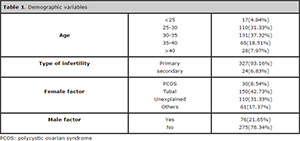
Table 1. Demographic variables
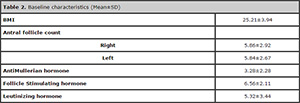
Table 2. Baseline characteristics (Mean±SD)
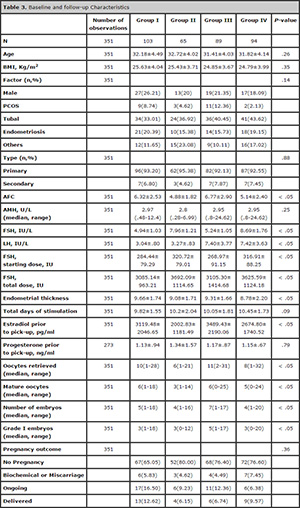
Table 3. Baseline and follow-up Characteristics
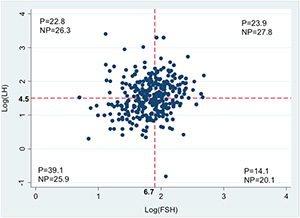
Figure 1. Bivariate correlation plot of logarithmically transformed baseline FSH and LH levels. By analysing all given combinations of FSH and LH levels and aiming at an optimal pregnancy rate in one of the quadrants, the ‘univariate cut-off levels’ for FSH (6.7 U/l) and LH (4.5 U/l) were provided and four groups of FSH–LH combinations could be determined. The mean pregnancy rate (P%) and non-pregnancy rate (NP%) is given in each group (quadrant). N is 351 IVF/ICSI treatment cycles.
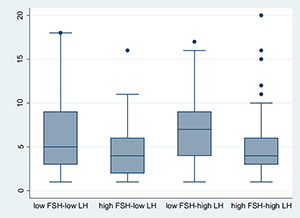
Figure 2. Number of oocytes retrieved
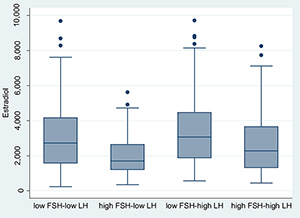
Figure 3. Estradiol levels on the day of trigger
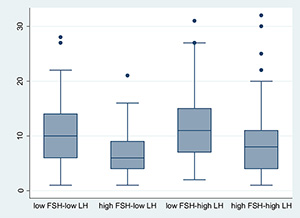
Figure 4. Number of mature oocytes
DISCUSSION
There are several screening tests available, that can help predict ovarian reserve (Muasher et al., 1988; Smotrich et al., 1995; Watt et al., 2000). However, none of them can accurately and adequately predict ovarian response or ART success (Navot et al., 1987; Winslow et al., 1991; Zaidi et al., 1996; Tomas et al., 1997; Seifer et al., 1999). The basic concept in ovarian physiology is the two-cell-two-gonadotropin model, which establishes the role for both LH and FSH in folliculogenesis. Granulose cells (FSH dependent) convert androgens produced by the theca cells (LH-dependent) to estradiol by aromatase action. Hence, intraovarian production of growth factors and estradiol help in follicular maturation. Additionally preventing further growth of secondary follicles once the dominant follicle reaches maturity helps reaching the final stage.
The present study aims at identifying the relationship between baseline serum LH and IVF outcome, including sufficient number of individuals undergoing both IVF and ICSI cycles. In this study, based on LH, none of the groups showed a statistical difference in terms of CP, LB or miscarriage. In a study carried out by Jurema et al. (2003) only baseline FSH and E2, but not LH (antagonist cycle), were found to be lower in patients with positive outcomes (Jurema et al., 2003). Our results also did not show any correlation between LH and IVF outcome. Data from Noci et al. (2000) concerning 249 patients (83 with LH <3; 166 with LH >3), also confirmed that ovarian responsiveness to purified FSH is independent of follicular-phase LH levels (Noci et al., 2000). These findings are also in agreement with our study. Homburg et al. (1988) showed deleterious effect of high LH in PCOD group on ovulation and conception and it may be a causal factor in early pregnancy losses. Although not statistically significant, there is a trend towards increased pregnancy rates and LB, seen in those with LH <2, and miscarriage in those with LH> 8 in the present study.
However, our results are in apparent contrast with those from Mukherjee et al. (1996), who reported decreased ovarian response and lower pregnancy rates in a population with high FSH/LH ratio (>3.6) in the presence of normal FSH. Other investigators (Muasher et al., 1988; Shrim et al., 2006; Liu and Greenblatt, 2008) also reported a negative impact of a low LH: FSH ratio on treatment outcome.
Debate on whether LH supplementation is needed in COH cycles or not has gained a renewal interest in highly purified urinary gonadotropin and recombinant gonadotropin preparations. In theory, if low endogenous LH levels are associated with a decreased probability of ongoing pregnancy, then LH supplementation might be indicated. On the other hand, if there is none, then there is no justification for it. A systematic review (Kolibianakis et al., 2006) concluded that low endogenous LH levels (WHO II oligo-anovulation) during ovarian stimulation are not associated with a decreased probability of ongoing pregnancy beyond 12 weeks. On the contrary, the opposite may be true. Therefore, routine LH supplementation is not a sensible rationale.
Though the previous literature has shown mixed results, our study does not support the role of baseline LH in predicting ovarian response and cycle success. But the proposed explanation to what we have observed can be supported by the fact that even low circulating levels of LH in GnRH agonists protocols is sufficient to enable adequate follicular development and achieve pregnancy. Further, LH levels measured on any day of stimulation with a GnRH agonist cycle, or on the day of onset, are not related to ovarian response. (Loumaye et al., 1997; Cabrera et al., 2005).
CONCLUSION
We conclude that our findings do not reveal any distinct relationship between baseline LH levels and pregnancy. Hence, measuring follicular phase serum LH has no useful value for predicting success of IVF/ICSI cycles. Therefore, we agree on dropping LH measurement prior to ART and advice on other cost effective tests in settings with less resources, like ours. But further studies are still needed to confirm the value of LH in predicting IVF success.
REFERENCES
Al-Shawaf T, Zosmer A, Hussain S, Tozer A, Panay N, Wilson C, Lower AM, Grudzinskas JG. Prevention of severe ovarian hypestimulation syndrome in IVF with or without ICSI and embryo transfer: a modified ‘coasting’ strategy based on ultrasound for identification of high-risk patients. Hum Reprod. 2001; 16:24-30.
Medline Crossref
Broekmans FJ, Kwee J, Hendricks DJ, Mol BW, Lambalk CB. A systematic review of tests predicting ovarian reserve and IVF outcome. Hum Reprod Update. 2006; 12:685-718.
Medline Crossref
Cabrera RA, Stadtmauer L, Mayer JF, Gibbons WE, Oehninger S. Follicular phase serum levels of luteinizing hormone do not influence delivery rates in in vitro fertilization cycles downregulated with a gonadotropin-releasing hormone agonist and stimulated with recombinant follicle-stimulating hormone. Fertil Steril. 2005; 83:42-8.
Medline Crossref
Homburg R, Armar N A, Eshel A, Adams J, Jacobs H S. Influence of serum luteinising hormone concentrations on ovulation, conception, and early pregnancy loss in polycystic ovary syndrome. BMJ. 1988;297:1024-26
Medline
Howles CM, Macnamee MC, Edwards RG, Goswamy R, Steptoe PC. Effect of high tonic concentrations of luteinising hormone on outcome on in-vitro fertilisation. Lancet 1986; 2: 521-2.
Medline Crossref
Jurema MW, Bracero NJ, Garcia JE. Fine tuning cycle day 3 hormonal assessment of ovarian reserve improves in vitro fertilization outcome in gonadotropin-releasing hormone antagonist cycles. Fertil Steril. 2003, 80-1.
Medline Crossref
Kolibianakis EM, Collins J, Tarlatzis B, Papanikolaou E, Devroey P. Are endogenous LH levels during ovarian stimulation for IVF using GnRH analogues associated with the probability of ongoing pregnancy? A systematic review Hum Reprod Update. 2006; 12: 3–12.
Medline Crossref
Lévy DP, Navarro JM, Schattman GL, Davis OK, Rosenwaks Z. The role of LH in ovarian stimulation:exogenous LH: let’s design the future. Hum Reprod. 2000;15:2258-65.
Medline Crossref
Liu KE, Greenblatt EM. Elevated day 3 follicle-stimulating hormone/luteinizing hormone ratio >or= 2 is associated with higher rates of cancellation in in vitro fertilization-embryo transfer cycles. Fertil Steril 2008;90:297–301.
Medline Crossref
Loumaye E, Engrand P, Howles Cm, O’dea L. Assessment of the role of serum luteinizing hormone and estradiol response to follicle-stimulating hormone on in vitro fertilization treatment outcome. Fertil Steril. 1997; 67:889-99.
Medline Crossref
Meheshwari A, Fowler P, Bhattachrya S. Assesment of ovarian reserve-should we perform tests ovarian reserve routinely? Hum Reprod. 2006; 21:2729-35.
Medline Crossref
Muasher SJ, Oehninger S, Simonetti S, Matta J, Ellis LM, Liu HC, Jones GS, Rosenwaks Z. The value of basal and/or stimulated serum gonadotropin levels in prediction of stimulation response and in vitro fertilization outcome. Fertil Steril. 1988; 50:298-307.
Medline
Mukherjee T, Copperman AB, Lapinski R, Sandler B, Bustillo M, Grunfeld L. An elevated day three follicle-stimulating hormone:luteinizing hormone ratio (FSH:LH) in the presence of a normal day 3 FSH predicts a poor response to controlled ovarian hyperstimulation. Fertil Steril. 1996; 65:588-93.
Medline
Navot D, Rosenwaks Z, Margalioth EJ. Prognostic assessment of female fecundity. Lancet. 1987;2:645-7.
Medline Crossref
Noci I, Maggi M, Fuzzi B, Biagiotti R, Ricci F, Marchionni M. Effect of low day 3 luteinizing hormone level on in vitro fertilization treatment outcome. Gynecol Endocrinol. 2000; 5:321-6.
Medline Crossref
Regan L, Owen EJ, Jacobs HS. Hypersecretion of luteinising hormone, infertility, and miscarriage. Lancet. 1990; 336:1141-4.
Medline Crossref
Scott RT, Toner JP, Muasher SJ, Oehninger S, Robinson S, Rosenwaks Z. Follicle stimulating hormone levels on cycle day 3 are predictive of in vitro fertilization outcome. Fertil Steril. 1989; 51:651-4.
Medline
Seifer DB, Scott RT Jr, Bergh PA, Abrogast LK, Friedman CI, Mack CK, Danforth DR. Women with declining ovarian reserve may demonstrate a decrease in day 3 serum inhibin B before a rise in day 3 follicle-stimulating hormone. Fertil Steril. 1999;72:63-5
Medline Crossref
Shrim A, Elizur SE, Seidman DS, Rabinovici J, Wiser A, Dor J. Elevated day 3 FSH/LH ratio due to low LH concentrations predicts reduced ovarian response. Reprod Biomed Online 2006;12:418–22.
Medline Crossref
Smotrich DB, Widra EA, Gindoff PR, Levy MJ, Hall JL, Stillman RJ. Prognostic value of day 3 estradiol on in vitro fertilization outcome. Fertil Steril. 1995; 64:1136-40.
Medline
Stanger JD, Yovich JL. Reduced in-vitro fertilization of human oocytes from patients with raised luteinizing hormone concentrations during the follicular phase. Br J Obstet Gynaecol. 1985;92:385-93.
Medline
Tomas C, Nuojua-Huttunen S, Martikainen H. Pretreatment transvaginal ultrasound examination predicts ovarian responsiveness to gonadotrophins in in-vitro fertilization. Hum Reprod. 1997;12: 220-3.
Medline Crossref
Toner JP, Philput CB, Jones GS, Muasher SJ. Basal follicle-stimulating hormone level is a better predictor of in vitro fertilization performance than age. Fertil Steril 1991, 55:784-91.
Medline
Toporcerova S, Adam J, Toporcer T, Hredzak R, Ostro A. [Basal concentrations of FSH (follicle stimulating hormone) as apredictor of success of IVF-ICSI cycle]. Ceska Gynecol. 2006; 71:474-9.
Medline
Watt AH, Legedza AT, Ginsburg ES, Barbieri RL, Clarke RN, Hornstein MD. The prognostic value of age and follicle-stimulating hormone levels in women over forty years of age undergoing in vitro fertilization. J Assist Reprod Genet. 2000;17:264-8.
Medline Crossref
Winslow KL, Toner JP, Brzyski RG, Oehninger S C, Acosta AA, Muasher SJ. The gonadotropin releasing hormone agonist stimulation test--a sensitive predictor of performance in the flare-up in vitro fertilization cycle. Fertil Steril. 1991;56:711-7.
Medline
Zaidi J, Barber J, Kyei-Mensah A, Bekir J, Campbell S, Tan SL. Relationship of ovarian stromal blood flow at the baseline ultrasound scan to subsequent follicular response in an in vitro fertilization program. Obstet Gynecol. 1996;88:779-84
Medline
Zeleznik AL, Hillier SG. The role of gonadotropins in the selection of the preovulatory follicle. Clin Obstet Gynecol. 1984;27:927-40.
Medline