JBRA Assist. Reprod. 2016;20 (2):49-58
ORIGINAL ARTICLE
doi: 10.5935/1518-0557.20160013
Assisted reproductive techniques in Latin America: The Latin American Registry, 2013
1Reproductive Medicine Unit - Las Condes Clinic, Chile
2Ethics and Public Policies Program in Human Reproduction, University Diego Portales, Chile
3Reproductive Medicine Unit – Monteblanco Clinic, Chile
4Latin American Network of Assisted Reproduction (REDLARA), Uruguay
CONFLICT OF INTERESTS
No conflict of interest have been declared.
ABSTRACT
Multinational data on assisted reproduction techniques undertaken in
2013 were collected from 158 institutions in 15 Latin American
countries. Individualized cycle-based data included 57,456 initiated
cycles. Treatments included autologous IVF and intracytoplasmic sperm
injection (ICSI), frozen embryo transfers, oocyte donations. In
autologous reproduction, 29.22% of women were younger than 35 years,
40.1% were 35–39 years and 30.6% were 40 years or older. Overall
delivery rate per oocyte retrieval was 20.6% for ICSI and 25.4% for
IVF. Multiple births included 20.7% for twins and 1.1% for triplets and
over. In oocyte donations, twins reached 30% and triplets 1.4%. In
singletons, pre-term births were 7.5%: 36.58% in twins and 65.52% in
triplets. The relative risk for prematurity was 4.9 (95% CI 4.5 to 5.3)
in twins and 8.7 (95% CI 7.6 to 10.0) in triplets and above. Perinatal
mortality was 29.4 per 1000 in singletons, 39.9 per 1000 in twins and
71.6 per 1000 in high order multiples. Elective single embryo transfer
represented only 2% of cycles, with delivery rate of 39.1% in women
aged 34 years or less. Given the effect of multiple births and
prematurity, it is mandatory to reduce the number of embryos
transferred in the region.
Keywords: Assisted reproductive technology, Epidemiology, IVF/ICSI, Latin America, Perinatal outcome, Registry.
INTRODUCTION
The Latin American Registry of Assisted Reproduction (RLA) established
in 1990 was the first multinational and regional registry collecting
data on Assisted Reproduction Technologies (ART). For the first twenty
years, summary data was obtained electronically via web page from every
participating institution, belonging to twelve countries in the region.
Since 2010, new software has been developed and implemented, which
allows for the collection of cycle-based data from every treatment
cycle. Data collection is therefore recorded individually, starting
with controlled ovarian stimulation (COS) until birth or miscarriage.
Today, individualised data is obtained from ART treatments done in 158
institutions in 15 countries, covering more than 80% of ART cycles
performed in the region. This report corresponds to the 25th edition of
RLA. Previous reports, from 1990 to 1998, are available as printed
copies, and those from 1999 to 2009 as PDF files, which can be
downloaded from the web page of the Latin American Network of Assisted
Reproduction (REDLARA) at: www.redlara.com. Today, reports are
published simultaneously in RBM Online, and in the JBRA Assisted
Reproduction, the official journal of REDLARA.
The main RLA objectives have been to: a) disseminate information on ART
procedures performed in Latin America, b) monitor outcomes, as well as
trends in safety and efficacy among centres and countries, c) empower
infertile couples in their capacity to evaluate risks and benefits when
requesting ART treatments, and d) develop a robust database for
epidemiological studies.
In this report we are communicating information on availability,
effectiveness, and perinatal outcomes of ART treatment initiated
between 1st January 2013 and 31st
December 2013, and babies born up to September 2014. It is also our aim
to describe regional trends on how ART is practiced in the region,
including the number of embryos transferred, multiple births and its
impact on pre-term births and perinatal mortality.
MATERIALS AND METHODS
ART data
was collected from 158 centres in 15 countries (supplementary table I),
covering in vitro fertilisation (IVF), intra-cytoplasmic sperm
injection (ICSI), oocyte donation (OD) (both fresh and frozen), frozen
embryo transfer (FET), and preimplantation genetic diagnosis and
screening, registered together as PGD. In addition to ART, data on
intrauterine insemination using husband (IUI-H) and donor (IUI-D) semen
was also included. This report includes treatments started between 1st January 2013 and 31st
December 2013, and babies born up to September 2014. As part of the
accreditation programme, all participating institutions agreed to have
their data registered and published by the Latin American Registry of
ART. Given it is a multinational registry, no other consent form was
requested.
As was the case in the two previous years, data was
collected using an individualised cycle based software. The method of
collecting and reporting data is also similar to that used in the two
previous years, making all tables comparable (Zegers-Hochschild et al., 2015).
Each centre entered its data directly in an online RLA web-based
system. Built-in algorithms for internal consistency; any error or
discrepancy, not identified by the software, was discussed and
clarified by RLA´s central office. Given that the RLA is a voluntary
multinational registry, centres are not obliged to upload each case
immediately as the cycle is initiated. Therefore, some cases are sent
to the RLA upon recruitment while others are included retrospectively.
Since the new cycle based registry has only been available for two
years, the calculation of cumulative delivery rates could not be
performed directly. Therefore, we made estimates by adding deliveries
derived from fresh and frozen transfers in every age group.
When appropriate, the chi-squared test was used to analyse independence of categorical variables.
A P-value
less than 0.05 was considered statistically significant. Relative risks
are presented with the corresponding 95% confidence interval. All
terminologies used in this registry correspond to the glossary
published in 2009 by the International Committee for Monitoring
Assisted Reproductive Technologies (ICMART) and the World Health
Organization (WHO) (Zegers-Hochschild et al., 2009).
We registered cases of severe ovarian hyperstimulation syndrome, where
hospitalization or medical interventions were required.
RESULTS
Participating centres
One hundred and fifty-eight centres in fifteen countries reported ART
procedures performed during 2013. They included: 36,494 initiated
autologous fresh IVF/ICSI cycles; 10,912 FET; 8,434 oocytes donation
(OD) (heterologous) cycles of which, 5,927 were fresh transfers and
2,507 FET; and 1,616 initiated cycles for fertility preservation (FP).
Access to ART procedures, defined as the sum of IVF/ICSI initiated
cycles, FET and OD cycles, per million women aged 15-45 years, reached
a mean of 425, bearing a large variation between countries (Table 1).
Size of participating institutions
Excluding fertility preservation, a total of 55,840 initiated cycles
was reported. The number of initiated cycles by institution ranged from
23 to 2,765, where 21% of reporting centres performed ≤ 100 cycles; 35%
between 100 and 250 cycles; 21% between 251 and 500 cycles; 17% between
500 and 1,000 cycles; and 6% ≥ 1,000 cycles.
ART procedure and access
As in
previous years, the majority of initiated cycles were reported by
Brazil, representing 44% of all cycles, followed by Argentina with 23%
and Mexico 13% (Table 1). In addition the majority of reporting clinics are located in these countries (35%, 17% and 18%, respectively).
Out of 36,494 initiated autologous cycles, which represents a 14.56%
increase with respect to 2012, 3.85% were cancelled before follicular
aspiration. Therefore a total of 35,089 OPU were performed; and in
96.25% of them, at least one mature oocyte was recovered. The preferred
technique for insemination was ICSI (84.7%). In 25,590 cases, at least
one embryo was transferred.
The three main reasons to explain the 7,710 cases where in spite of
having mature oocytes, no embryos were transferred, included: 5,168
cases of total embryo freezing; 1,326 cases of absence of embryos for
transfer; and 1,216 cases of complete fertilization failure.
Information on the 472 remaining cases includes a mixture of abnormal
oocytes and absence of normal embryos for transfer.
One hundred and forty-five centres registered 10,912 FET cycles
representing 8.32% increase over the previous year and 144 centres
reported 5,927 fresh OD cycles representing 9.84% increase over 2012.
In 63% of these cycles, oocytes were donated from exclusive donors,
i.e., women that underwent controlled ovarian hyperstimulation (COS)
and oocyte pick up with the only purpose of donating their oocytes.
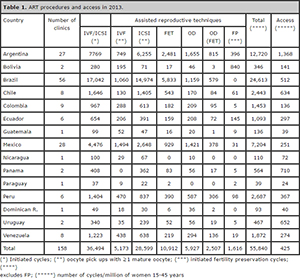
Table 1. ART procedures and access in 2013.
Pregnancies and deliveries
Table 2
shows the clinical pregnancy rate (CPR) and delivery rate (DR) per
oocyte pick-up (OPU) in fresh autologous cycles. Both CPR and DR per
OPU were higher in IVF cycles than in ICSI cycles (31.45% and 25.75%, P<0.001; 25.39%, and 20.61%, P<0.001,
respectively). In both instances, the differences reached statistical
significance; however, the lack of random allocation of subjects in
each treatment category must be considered carefully before reaching
any conclusion.
In OD cycles, the CPR and DR per ET were 47.25% and 39.05%, respectively (Table 3).
Similar trends were observed in the case of FET cycles: both CPR and DR
were higher when embryos were obtained from donated oocytes (Table 3:
38.17% and 33.58%; 31.09% and 26.65%, respectively). However, no
differences were found when DR of FET with donated oocytes was compared
with autologous FET in a subgroup of women aged less than 35 years
(33.19% and 31.50% respectively; RR 1.05, CI95% 0.87-1.27). Delivery
rate in 3,640 embryo donors was 41.31% compared with 35.55% in 2,287
embryo transfers among shared donors, i.e. women undergoing assisted
reproduction and at the same time donated part of the oocytes
recovered. The differences in DR in these two conditions were highly
significant (P= 0.015) in favour of using exclusive donors, OR
1.28 (CI 95% 1.14.- 1.42). It is not possible from the data collected
in the registry, to gather information on the different criteria used
to decide which and how many oocytes were donated for third party
reproduction.

Table 2. Clinical pregnancy rate and delivery rate in fresh autologous IVF/ICSI cycles in 2013.
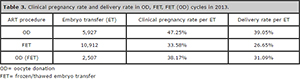
Table 3. Clinical pregnancy rate and delivery rate in OD, FET, FET (OD) cycles in 2013.
Age of women undergoing ART procedures and delivery rate
The mean age of women undergoing autologous IVF/ICSI was 36.38 years
(SD 4.55). The distribution of initiated IVF/ICSI cycles according to
the woman’s age is shown in Figure 1.
The majority of cycles was performed in women aged 35-39 years
(40.13%). Furthermore, 30.65% of women undergoing IVF/ICSI were ≥ 40
years. In the case of fresh OD cycles, the mean age of woman reached
41.49 years (SD=5.01); of which 50.76% were 43 years and older.
As
expected, the delivery rate per embryo transfer in autologous ART was
significantly influenced by the age of the female partner. The effect
of age on the DR/ET in fresh cycles is shown in Figures 2 and 3. DR per ET decreased with age, from 38.37% in the younger population to 9.12% in the oldest group (P<0.001).
In the case of OD, the age of oocyte recipients did not systematically
affect DR per ET, as seen in figure 3. DR/ET reached 41.42% in women
aged ≤34 years (n=478 ET); 42.26% in women aged 35 to 39 (n=1,053 ET);
40.17% in women aged 40 to 42 (n=1,419 ET); and 37.03% in women aged
≥43 years (n=3,027 ET) (P=0.009).
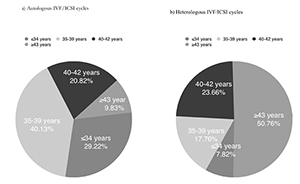
Figure 1. Age distribution of women initiating autologous or heterologous IVF/ICSI cycles, 2013.
Number of embryos transferred and multiple births
Fresh autologous IVF/ICSI
Table 4
shows the outcome of 25,590 fresh autologous IVF/ICSI ET with a mean
number of embryos transferred of 2.1 (SD= 0.71), 2.2 when
cleaving-embryos were transferred, and 2.0 when blastocyst-stage
embryos were transferred. In the majority of cases (57.2%), two embryos
were transferred; while the transfer of 3 and ≥4 embryos represented
23.4% and 2.5% of ET respectively. The transfer of more than two
embryos was not associated with a significant increase in CPR: 39.15%
when two embryos were transferred, 39.28% when three embryos were
transferred, and 35.26% when four or more embryos were transferred.
However, the proportion of triplet deliveries increased with the
transfer of more than two embryos.
When two embryos were
transferred, the proportion of triplet deliveries was 0.60%; increasing
to 2.33% with the transfer of 3 embryos and 4.88% when >3 embryos
were transferred.
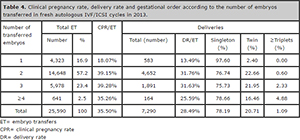
Table 4. Clinical pregnancy rate, delivery rate and gestational order
according to the number of embryos transferred in fresh autologous
IVF/ICSI cycles in 2013.
Fresh heterologous IVF/ICSI
Table 5
shows the outcome of 5,927 transfer cycles with OD, with a mean number
of embryos transferred of 2.2 (SD=0.61); 2.3 when cleaving-embryos were
transferred, and 2.0 when blastocyst-stage embryos were transferred.
In 65.82% of cases, two embryos were transferred, and ≥ 3 embryos were
transferred in 27.16%. As with autologous reproduction, the transfer of
more than two embryos was not associated with a significant increase in
CPR (47.73% with two embryos, 48.71% with three embryos and 36.36% with
≥4 embryos transferred). However, the delivery of triplets increased
from 0.53% with the transfer of two embryos to 3.48% with three and
10.0% with the transfer of four or more embryos.
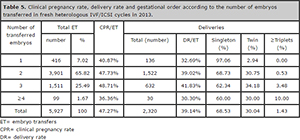
Table 5. Clinical pregnancy rate, delivery rate and gestational order
according to the number of embryos transferred in fresh heterologous
IVF/ICSI cycles in 2013.
Autologous frozen/thawed embryo transfers
Table 6
shows the outcome of 10,912 FET cycles, with a mean number of embryos
transferred of 2.0 (SD=0.65). In the majority of cases (61.84%) two
embryos were transferred. Compared with the transfer of two embryos,
the transfer of three and ≥four embryos was not associated with a
significant increase in CPR (35.11%, 35.57%, 37.98%, respectively). The
proportion of triplet deliveries was higher when three embryos were
transferred (3.87%) than when two embryos were transferred (0.37%).
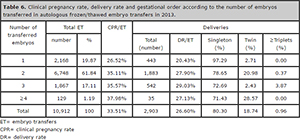
Table 6. Clinical pregnancy rate, delivery rate and gestational order
according to the number of embryos transferred in autologous
frozen/thawed embryo transfers in 2013.
Heterologous frozen/thawed embryo transfers
Table 7
shows the outcomes of 2,507 cases of FET with donated oocytes, with a
mean number of embryos transferred of 2.08 (SD=0.65). Compared with the
transfer of two embryos and in contrast with autologous FET cycles, the
transfer of three and ≥four embryos was associated with a significant
increase in CPR (37.69%, 44.01%; 47.06%, respectively; P<0.001).
As was the case in autologous FET, the proportion of triplet deliveries
was higher when three embryos were transferred (2.96%).
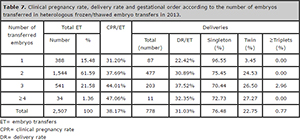
Table 7. Clinical pregnancy rate, delivery rate and gestational order
according to the number of embryos transferred in heterologous
frozen/thawed embryo transfers in 2013.
Elective singe and double embryo transfer (eSET & eDET)
Elective single embryo transfer (eSET) and elective double embryo
transfer (eDET) accounted for 2% (n=512) and 23.24% (n=5,892) of
autologous fresh embryo transfers, respectively. DR/ET reached 30.08%
with eSET and 41.62% with eDET, which was significantly higher than
non-elective transfers. DR in non-elective SET was only 11.26% in 3,811
transfers (P<0.0001), and non-elective DET was 25.13% in 8,756 ET (P<0.0001). In women aged ≤34 years DR after eSET and eDET reached 39.07% and 47.82%, respectively.
Perinatal outcome
A total of 16,042 live births were registered following treatment in
2013. Of these, 8,621 were born after autologous fresh transfers, 4003
after heterologous fresh and frozen transfers, and 3418 after
autologous FET (Table 8).
The duration of gestation was reported in a total of 11,008 deliveries
from both autologous and heterologous reproduction. Among 8,385
singletons, the mean gestational age at delivery was 37.55 weeks of
amenorrhea. This mean dropped to 35.22 weeks a in 2,500 twin
deliveries, 32.63 weeks in 120 triplet; and 29.67 weeks in three cases
of quadruplets (P<0.001).
The relative risk for prematurity was 4.9 (95% CI 4.5 to 5.3) in twins,
and 8.7 (95% CI 7.6 to 10.0) in triplets and higher.
The percentage of preterm births was 7.51% in singletons, 36.58% in twins, 65.52% in triplets, and 100.00% in quadruplets (P<0.0001).
The percentage of very preterm birth was 1.85% in singletons, 7.13% in
twins, 21.38% in triplets and 66.67% in quadruplets (P<0.0001).
How preterm birth affects perinatal mortality can be inferred from Table 8. An increase in gestational order was significantly (P<0.0001)
associated with pre term birth and consequently a rise in perinatal
mortality. Singletons had a perinatal mortality of 29.38 per thousand,
compared with 39.94 per thousand in twins and 71.59 per thousand in
triplets and more (P<0.0001). Furthermore, perinatal
mortality among singletons born after fresh OD was only 15.6 per
thousand and 13.4 per thousand for frozen /thawed OD.
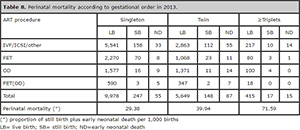
Table 8. Perinatal mortality according to gestational order in 2013.
Spontaneous abortion rate
The spontaneous abortion rate in women undergoing fresh IVF–ICSI was
18.29%, which increased significantly with the age of the female
partner, reaching 36.43% in women aged 42 years and older (P<0.0001).
The miscarriage rate in women undergoing fresh OD was 16.48%, and there
were no significant differences according to the age of recipients; the
miscarriage rate reached 13.10%, 15.98%, 14.24%, and 18.31% in women
aged ≤34 years, 35-39 years, 40-42 years and ≥43 years respectively
(Figure 4).
The miscarriage rate in women undergoing FET was
19.52%. No subgroup analysis was performed in this case, since the RLA
reports the age of the woman at the time of embryo transfer not at the
time of embryo freezing.
Preimplantation Genetic Diagnosis (PGD)
The RLA registers PGD and PGS together. Eighty-six centres from twelve
different countries reported 1,920 cycles of PGD. The majority was
performed in blastocysts (55.79%). Overall, there were 708 embryo
transfers. The mean age of women was 38 years (range 21 to 49 years). A
mean of four embryos were analysed in each cycle, and a mean of one
embryo was reported as normal. Two hundred and eight clinical
pregnancies were registered and 172 deliveries (145 singletons and 27
twins), thus a total of 199 healthy babies were born
The use of PGD was not associated with any significant decrease in
miscarriage rate, reaching 16.98%, 11.24%, 21.57% and 35.71% in women
aged ≤34 years, 35-39 years, 40-42 years and ≥43 years, respectively.
Assisted hatching (AH)
Institutions in ten different countries reported 5,687 cycles with AH.
The mean age of women undergoing assisted hatching was 37 years (range
19 to 49 years), and the mean number of embryos transferred was 2.2
(SD=0.80). Of the 4,767 embryo transfers reported, a clinical pregnancy
was achieved in 1,775 cases, resulting in 1,400 deliveries (29.37%). Of
these, 1,106 were singletons, 276 twins and 18 triplets.
Implantation rate (IR)
The IR
in fresh IVF/ICSI cycles reached 20.98%. It was significantly
associated with the age of the woman: 27,23% in women under 35 years,
20.09% in women aged 35 to 39 years, 12.88% in women aged 40 to 42
years, and 7.99% in women over 42 years (P<0.001).
It was also significantly associated with the developmental stage at
embryo transfer: 19.05% when cleaving-embryos were transferred, and
28.58% when blastocyst-stage embryos were transferred (P<0.001).
The use of PGD was also associated to an increase in IR. Indeed, IR of
chromosomally normal embryos reached 32.02% in women under 35 years,
30.67% in women aged 35 to 39 years, 22.22% in women aged 40 to 42
years, and 19.15% in women over 42 years.
Intrauterine insemination (IUI)
Ninety-four clinics in ten countries reported 6,250 cycles of IUI with
semen of the male partner (IUI-H). The delivery rate per cycle was
14.91%, 10.04% of which were twin deliveries and 1.41%
triplets-and-higher order. As with other fertility treatments, the age
of the female partner, strongly influenced results. Delivery rate after
IUI dropped from 18.4% per cycle in women under 35 years, to 13.4% in
women 35 to 39 years. In women between 40 and 42, delivery rate was
7.1% dropping to 3.5% in women >42. Seventy-six clinics in ten
countries reported 963 cycles of donor (IUI-D). The delivery rate per
cycle (23.36%) was higher than for autologous IUI. The multiple
delivery rate was 8.56%: 7.66% twins and 0.90% triplets and higher.
Cumulative/total delivery rate
Table 9
shows the cumulative delivery rate according to women’s age. As
expected, the most meaningful increment in delivery rate was seen in
younger women (<35 years), where the delivery rate per oocyte pick
up increased from 29.21% in all fresh cycles to 41.26%, while in women
aged 43 and older, it only increased from 5.49% to 9.72%.
Figure 5 shows the cumulative delivery rate in autologous IVF/ICSI, according to the age of the female partner.
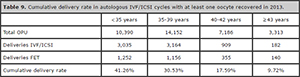
Table 9. Cumulative delivery rate in autologous IVF/ICSI cycles with at least one oocyte recovered in 2013.
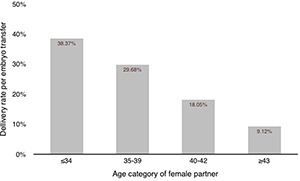
Figure 2. Effect of age category of female partner on the delivery rate
per embryo transfer in fresh autologous IVF/ICSI, 2013.
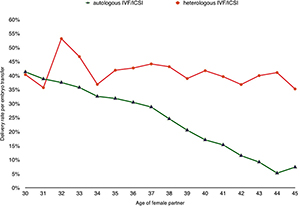
Figure 3. Effect of age of female partner on the delivery rate per
embryo transfer in fresh autologous and heterologous IVF/ICSI, 2013.
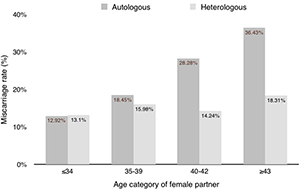
Figure 4. Effect of age of female partner on the miscarriage rate, 2013.
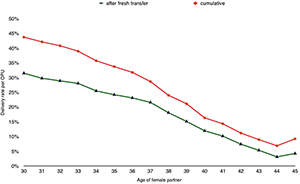
Figure 5. Cumulative delivery rate in autologous IVF/ICSI cycles with at least one oocyte recovered in 2013.
Fertility preservation
Sixty-six centres from twelve countries reported 1,616 initiated cycles
for fertility preservation; 74% of these were performed in healthy
women. Overall, the mean age of women undergoing this procedure was 37
years (SD=4.7). The mean number of oocytes preserved was 8 (range from
nil to 39). In all cases, the technique for cryopreservation was
vitrification. There were ten cases of OHSSS and one case of
haemorrhage.
Complications
Clinics reported
218 cases of severe ovarian hyperstimulation syndrome (where
hospitalization or medical interventions were required), corresponding
to a rate of 1.97%. Other less frequent complications included
fifty-nine cases of haemorrhage and twenty-one cases of infection.
However, it is likely that complications were under-reported.
DISCUSSION
This is the 25th
version of the RLA, which has been published continuously since 1990.
The major change in data collection was introduced for cycles performed
during 2011, when a cycle-based registry was implemented.
Between 2012 and 2013 there was an 18% increase in initiated cycles;
from 47,326 cycles reported in 2012 to 55,840 reported in 2013. This
increase is not explained only by an increase in the number of
countries and centres registering their data, but also by an increase
in the mean number of cycles registered by many institutions. In 2012
the mean number of cycles reported by clinics was 309, increasing to
355 in 2013 (Zegers-Hochschild et al., 2015). Nevertheless, with access to 425 cycles per million women aged 15-45 years, Latin America is far behind developed countries (Ishihara et al., 2015).
It is worth mentioning that countries like Argentina, with a consistent
policy towards recognizing the right to start a family as a human
right, has the highest number of ART cycles per population. It is very
likely that Argentina and now Uruguay, the only two countries in Latin
America with laws providing universal access to ART, will increase the
number of procedures per million of the population in these countries
over the rest of the region. Countries where access to treatment
depends on the individual capacity to pay will remain with low coverage.
Many centres have adopted the policy of delaying embryo transfer by
freezing all embryos in order to transfer them in a subsequent cycle.
In 2013, 5,168 cycles were reported, representing a major increase over
the 3,393 cases reported in 2012.
We did not find any significant difference with the previous report
regarding pregnancy and delivery rates, mean number of embryos
transferred or the consistently low proportion of eSET or eDET (Zegers-Hochschild et al., 2015).
Although this is partially influenced by the fact that ART in Latin
America is mostly paid by the couples themselves, the reality is that
in the absence of a forced policy restricting embryo transfer to a
maximum or two embryos, many centres transfer 3 or 4 embryos even in
cycles with donated oocytes. As a matter of fact, in 2013 more than 25%
of fresh autologous and heterologous ART cycles had more than two
embryos transferred; which was not associated with an increase in
clinical pregnancy rates, but with a significant increase in the
proportion of triplets and higher order births.
As expected, eSET
and eDET were associated with higher CPR and DR than the single and
double non-elective transfers. The data presented here should encourage
professionals in Latin America to restrict the number of embryos to be
transferred to a maximum of two. When comparing this information with
other national registries, it is important to bear in mind that in
Latin America, 30% of autologous assisted reproduction cycles initiated
are in women who are 40 years and older and 70% are in women ≥ 35 years.
This report shows that even twin deliveries are associated with an
increased risk of preterm births, and perinatal mortality. We have no
explanation for the increased perinatal mortality in singletons when
compared with the previous year (29.3 and 25.2% per thousand
respectively) and a simultaneous drop in perinatal mortality for twins
and triplets (Zegers-Hochschild et al., 2015).
Overall, perinatal mortality after ART is higher than in spontaneous
pregnancies as expressed in global statistics by country (Jackson et al., 2004).
However, the mean age of women delivering in most countries in Latin
America fluctuates between 20 and 30 years, while more than 70% of
autologous assisted reproduction treatments in the region are performed
in women ≥ 35 years, and 30% in women ≥ 40 years. Therefore, comparing
perinatal mortality with the overall population needs to consider these
variables.
When examining trends over the past 5 years, the mean
number of embryos transferred in fresh autologous IVF/ICSI cycles
dropped from 2.5 in 2008 to 2.1 in 2013. This results from a drop in
the number of transfers with 3 and ≥4 embryos from 48.2% to 25.9%; and
an increment in the number of SET from 11.9% to 18.1%. This was also
accompanied by an increase in the number of FET from 4,225 to 10,912 in
the last five years. Considering that the larger contributors to
multiple births are young women, the mean number of ET in women under
35 decreased from 2.5 in 2008 to 2.3 in 2013. The question that needs
to be answered is whether there has been an improvement in the
performance of centers that justify the reduction of embryos to be
transferred without severely jeopardizing pregnancy or delivery rates.
A way to address this question is to look at implantation rates as an
indirect marker of the quality of each embryo generated and
transferred. In women under 35 years, the implantation rate was 23% in
2008 and 28% in 2013. Clinical pregnancy rates in 176 eSET performed in
2008 was 29.0% compared with 38.3% from 515 eSET in 2013. Also, the
proportion of blastocyst-stage embryo transfers in fresh IVF/ICSI
cycles increased in these last 5 years, from 1,509 embryo transfers
(8.2%) in 2008 to 5,564 transfers in 2013 (15.2%), resulting in an
increase in implantation rate from 20.0% in day 3 compared with 28.6%
in day 5 of embryo culture.
This information suggests that although at a slow pace, centres are
directing their efforts to strategies that help reduce the number of
multiple births.
One of the main strengths of the RLA is the uniformity in terminology.
All clinics reporting to RLA, use the glossary published in 2009 by the
International Committee for Monitoring Assisted Reproductive
Technologies (ICMART) and the World Health Organization (WHO) (Zegers-Hochschild et al., 2009), translated into Spanish and Portuguese.
The other strength is that the data-voluntarily reported by each centre
is periodically checked by an external and independent accreditation
team, composed of a clinician and an embryologist, responsible for
visiting every center willing to provide its data to the RLA.
For the purpose of scientific comparisons among different therapeutic
strategies, this registry does not allow for accurate comparisons; the
main weakness is that registries report observational data, and not a
summary of randomized controlled trials.
Since this report examines observational data, the comparison of
results cannot be considered as high-level evidence in favour or
against certain procedures.
This is the case with the significantly higher pregnancy and delivery
rates achieved with IVF compared with ICSI cycles. It is quite possible
that couples selected for IVF are expected to have better fertilization
rates and can be more fertile couples altogether.
Furthermore, the high proportion of ICSI over IVF does not seem to follow a biomedical reason (Ishihara et al., 2015).
As seen over time, in countries where ART is subsidized by public
funds, the proportion of ICSI is relatively low, in the order of 60 to
70% in Australia and Northern Europe. In regions where ART is paid
directly by consumer, the proportion of ICSI rises above 80%; and this
is the case in Latin America, the Middle East and several countries in
Europe (Ishira et al., 2015; Zegers-Hochschild et al., 2011).
There is a general belief, that centres favour the use of ICSI in order
to avoid unexpected failed fertilization or low fertilization rates
with regular IVF.
Since the main drawback of ART procedures
reported in Latin America is the high proportion of
multiple-gestations, and the perinatal complications that follow;
strategies to reduce the number of embryos transferred must be enforced.
One such strategy is to transfer blastocyst-stage embryos instead of
cleaving embryos. Especially so in women aged 34 years and less, in
which the implantation rate of blastocysts is significantly higher than
day 3 transfers (25.6% and 34.8%, respectively, P<0.05).
Furthermore, delivery rates per embryo transfer of eSET in women
<35, rises from 17.42% when day-three embryos are transferred, to
33.77% when blastocyst-stage embryos are transferred.
In summary, this is the fourth cycle-based registry published by the
RLA. It is reassuring to patients and clinics that the results of ART
procedures performed in the region are similar to other regions of the
world (Ferraretti et al., 2013; Zegers-Hochschild et al., 2013).
Although Latin America is on the right path to reducing the number of
embryos transferred, we need a more drastic reduction in order to
prevent multiple births, or at least, high order multiples and decrease
the corresponding perinatal complications.
REFERENCES
Ferraretti
AP, Goossens V, Kupka M, Battacharya S, de Mouzon J, Castilla JA, Erb
K, Korsak V, Nyboe Andersen A; European Society of Human Reproduction
and Embryology (ESHRE). Assisted reproductive technology in Europe,
2009: results generated from European registers by ESHRE. Hum Reprod.
2013; 28:2318-31.
Medline Crossref
Ishihara
O, Adamson GD, Dyer S, de Mouzon J, Nygren KG, Sullivan EA,
Zegers-Hochschild F, Mansour R. International Committee for Monitoring
Assisted Reproductive Technologies: World Report on Assisted
Reproductive Technologies, 2007. Fertil Steril. 2015; 103: 402–13.
Medline Crossref
Jackson
RA, Gibson KA, Wu YW, Croughan MS. Perinatal outcomes in singletons
following in vitro fertilization: a meta-analysis. Obstet Gynecol.
2004;103:551-63.
Medline Crossref
Zegers-Hochschild
F, Adamson GD, de Mouzon J, Ishihara O, Mansour R, Nygren K, Sullivan
E, Vanderpoel S; International Committee for Monitoring Assisted
Reproductive Technology; World Health Organization. International
Committee for Monitoring Assisted Reproductive Technology (ICMART) and
the World Health Organization (WHO) revised glossary of ART
terminology. Fertil. Steril. 2009; 92, 1520-4.
Medline Crossref
Zegers-Hochschild
F, Schwarze JE, Crosby JA, Musri C, de Souza MCB. Assisted reproductive
technologies (ART) in Latin America: The Latin American Registry, 2011.
JBRA Assist. Reprod. 2013; 17:216-23.
Crossref
Zegers-Hochschild
F, Schwarze JE, Crosby JA, Musri C, Borges de Souza MC. Assisted
reproductive technologies in Latin America: the Latin American Registry
2012. Reprod Biomed Online. 2015; 30:43-51.
Medline Crossref
Supplementary Data
PARTICIPATING INSTITUTIONS
ARGENTINA
• Instituto de Fertilidad Asistida
• Centro de Estudios en Ginecología y Reproducción (CEGYR)
• Centro de Salud Reproductiva (CER)
• Centro de Estudios en Reproducción Humana (CERH)
• Centro Integral de Ginecología, Obstetricia y Reproducción (CIGOR)
• Centro de Investigaciones en Medicina Reproductiva (CIMER)
• Centro de Medicina Reproductiva Bariloche
• Centro de Estudios en Reproducción y Procedimientos de Fertilización Asistida (CRECER)
• FECUNDITAS
• FERTILAB
• Centro de Reproducción FERTLEQUIP
• Centro especializado en tratamientos para la mujer (GENS)
• Hospital de Clínicas
• FECUNDART
• Instituto de Medicina Reproductiva
• Centro de Reproducción, Servicio de Ginecología, Hospital Italiano
• Mater, Medicina Reproductiva
• Nascentis, Medicina Reproductiva
• HALITUS, Instituto Médico
• Instituto Medico de ginecología y Fertilidad PREFER
• PREGNA, Medicina Reproductiva
• Programa de asistencia reproductiva PROAR
• PROCREARTE
• Fertilidad San Isidro
• SARESA, Salud Reproductiva Salta
• Seremas
• VITAE, Medicina Reproductiva
BOLIVIA
• CENALFES
• Instituto de Salud Reproductiva
BRASIL
• ANDROLAB, Clínica e Laboratório de Reprodução Humana e Andrologia
• ANDROFERT, Centro de Referencia em Reprodução Masculina
• FERTIVITRO, Centro de Reprodução Humana
• BIOS, Centro de Medicina Reprodutiva
• Centro de Reprodução Humana de Campinas
• CEDILON, Laboratório de Reprodução Humana
• Centro de Medicina Reprodutiva
• VIDA, Centro de Fertilidade REDE D’OR
• Clínica FERTWAY
• ORIGINARE, Centro de Investigação e Reprodução Humana
• CLINIFERT, Centro de Reprodução Humana
• CONCEPTUS, Centro de Reprodução Assistida de Cear
• CONCEBER, Centro de Medicina Reprodutiva
• Clínica ORIGEN
• Centro de Reprodução Humana CONCEPTION
• Centro de Reprodução Humana MONTELEONE
• Fértile Diagnósticos
• CEERH, Centro especializado em Reprodução Humana
• EMBRYOLIFE, Instituto de Medicina Reprodutiva
• Centro de Reprodução Humana, Endoscopia e Medicina Fetal de Bahia (CENAFERT)
• Instituto VERHUM
• Clínica FERTIBABY
• Clínica FERTIBABY BH
• FECUNDA, Reprodução Humana
• FELICCITA, Instituto de Fertilidade Ltda.
• HUMANA, Medicina Reprodutiva (Ex Centro de Reprodução Assistida FEMINA)
• FERTILITY, Centro de Fertilização Assistida de Campo Grande
• FERTILITY, Centro de Fertilização Assistida
• FERTIL Reprodução Humana
• REPROFERTY
• FERTICLIN, Clínica de Fertilidade Humana
• GENESIS, Centro de Assistência em Reprodução Humana
• BRAGENICS
• FERTIPRAXIS, Centro de Reprodução Humana (Ex Fert. Gin. e Obst. de Barra)
• GERA, Grupo de Endoscopia e Reprodução Assistida
• Instituto de Saúde Da Mulher, Cegonha Medicina Reprodutiva
• IVI São Paulo, Chedid Grieco S.A.
• PRIMORDIA, Medicina Reprodutiva (Huntington RJ)
• Hospital de Clínicas de Ribeirão Preto
• HUNTINGTON, Centro de Medicina Reprodutiva
• JULES WHITE, Centro de Medicina Reprodutiva
• IMR, Instituto de Medicina Reprodutiva e Fetal
• INSEMINE, Centro de Reprodução Humana
• Serviço de Reprodução Humana Del Hospital e Maternidade Santa Joana
• Life Reprodução humana
• FERTILITAT, Centro de Medicina Reprodutiva
• Clínica MATRIX
• Pro-criar Monte Sinai
• Centro de Reprodução Humana Nilo Frantz
• Clínica ORIGEN
• Clínica PRO-CRIAR, Medicina Reprodutiva
• Clínica PRO NASCER
• Centro de Reproducão Humana de São José de Rio Preto
• GENESIS, Centro de Reprodução Humana
• Centro de Reprodução Humana Prof. Franco Junior
• Centro de Ensino e Pesquisa em Reprodução Assistida (Centro de Rep. Asist. Hospital Da ASA SUL)
CHILE
• UMR Clínica de la Mujer Antofagasta
• Centro de Estudios Reproductivos (CER)
• Unidad de Medicina Reproductiva, Clínica Alemana
• Unidad de Medicina Reproductiva, Clínica las Condes
• Unidad de Medicina Reproductiva, Clínica de la Mujer
• Programa e Fertilización Asistida I.D.I.M.I.
• Clínica Monteblanco
• Centro de Fertilidad y Medicina Reproductiva Concepción S.A.
COLOMBIA
• Centro FECUNDAR, Cali
• Asociados en Fertilidad y Reproducción Humana
• MEDIFERTIL (EUGIN)
• FERTIVIDA
• Centro Médico IMBANACO
• Instituto de Fertilidad Humana S.A.S. (INSER)
• IN SER, Instituto Antioqueño de Reproducción
• PROCREAR
• Unidad de Fertilidad, Procreación Medicamente Asistida
ECUADOR
• Clínica de Medicina Reproductiva BIOGEPA
• Centro Ecuatoriano de Reproducción Humana
• Clínica INFES
• Instituto Nacional de Investigación de Fertilidad y Esterilidad (INNAIFEST)
• CONCEBIR, Unidad de Fertilidad y Esterilidad
• Unidad de Fertilidad Hospital Alcívar
GUATEMALA
• Centro de Reproducción Humana S.A. (CER)
MEXICO
• Biofertility Center
• Biología de la Reproducción Humana, Cirugía Reproductiva Gin. y Obst. (INSEMER)
• Centro de Diagnóstico Ginecológico
• CEMAIN
• Clínica de Biología de la Reproducción
• Unidad de Reproducción Asistida del Servicio de Reproducción Humana del C.M.N. 20 de Noviembre
• Instituto para el estudio de la Concepción Humana IECH
• Centro de Reproducción Asistida del Hospital Español (HISPAREP)
• Centro de Reproducción Asistida del Occidente
• Centro de Reproducción Asistida de Saltillo
• Centro Universitario de Medicina Reproductiva
• EMBRYOS POLANCO SA de CV
• Fertility Center Cancún
• Ginecología y Reproducción Asistida GYRA
• Instituto para el estudio de la Concepción Humana de Baja California
• Instituto Mexicano de Alta Tecnología Reproductiva S.C. (INMATER)
• Instituto IMER de Tijuana
• Instituto Médico de la mujer (RED CREA)
• Instituto de Ciencias en Reproducción Humana, sede Guadalajara
• Instituto de Ciencias en Reproducción Humana, sede Matamoros
• Centro especializado para la atención de la mujer
• INGENES
• Instituto Valenciano de Infertilidad (IVI) México
• Instituto de Ciencias en Reproducción Humana (VIDA), sede León
• Centro de Medicina Reproductiva FILIUS
• PROGEN, Reproducción Asistida y Medicina Fetal
• Centro especializado en esterilidad y Reproducción Humana
• Instituto de Ciencias en Reproducción Humana VIDA, Ciudad de Mexico.
NICARAGUA
• Centro de Fertilidad de Nicaragua
PANAMA
• IVI Panamá S.A.
• Centro de reproducción Punta Pacifica
PARAGUAY
• Neolife, Medicina y cirugía reproductiva
PERU
• Clínica CEFRA, Centro de Fertilidad y Reproducción Asistida
• Centro de Fertilidad y Ginecología del Sur (CFGS)
• FERTILAB, Laboratorio de Reproducción asistida
• Clínica Miraflores, Instituto de Ginecología y Fertilidad
• Grupo Pranor, Clínica CONCEBIR
• Grupo Pranor, Instituto de Ginecología y Reproducción
REPUBLICA DOMINICANA
• Instituto de Reproducción y Ginecología del CIBAO (IREGCI)
URUGUAY
• Centro de Esterilidad Montevideo (CEM)
• Centro de Reproducción Humana del Interior
VENEZUELA
• FERTILAB
• UNIFERTES
• Centro Medico docente la Trinidad
• EMBRIOS, Centro de Fertilidad y Reproducción Humana, Hospital de Clínicas de Caracas
• GENESIS, Unidad de Fertilidad y Reproducción
• UNISARE
• Instituto Venezolano de Fertilidad
• Laboratorios In Vitro de Venezuela