JBRA Assist. Reprod. 2021;25(1):136-149
REVIEW
doi: 10.5935/1518-0557.20200051
Factors related to infertility in Brazil and their relationship with success rates after assisted reproduction treatment: an integrative review
1Department of Morphology, Federal University of Rio Grande do Norte, Natal, RN, Brazil
CONFLICT OF INTERESTS
The authors declare that there are no conflicts of interest related to this
study.
ABSTRACT
This integrative review evaluated the most commonly diagnosed causes of
infertility in men and women in Brazil, as well as the medically assisted
reproduction technologies regularly employed in these cases. We searched in four
electronic databases (PubMed, including Medline; Scopus; Web of Science and
LILACS), and two grey literature (Google Scholar and OpenGrey), guided by the
focused question: "What are the main factors responsible for male and female
infertility in Brazil, and what are its relationships with success rates after
assisted reproduction treatment?". We included interventional or observational
studies, without limitation by language or year of publication. Our searches in
the electronic indexers recovered 1,119 articles, and after analyzing the
inclusion and exclusion criteria, 27 articles composed the body of analysis for
this review. We grouped the studies into four themes: factors responsible for
male and female infertility, assisted reproductive technologies (ART) used in
the infertility treatment, assisted reproduction procedures, and clinical
predictors of success rates in ART. Despite the scarcity of studies analyzing
the association between infertility and assisted reproductive technologies in
Brazil, it was possible to infer that the most prevalent infertility cause in
women was endometriosis, while in men it was azoospermia. The most widely
assisted reproductive technology applied in the country is the intracytoplasmic
injection of spermatozoa (ICSI), ensuring better success rates in the treatment
of infertility for men and women.
Keywords: male and female infertility, technologies of assisted reproduction, in vitro fertilization, intracytoplasmic sperm injection
INTRODUCTION
The World Health Organization (WHO) defines infertility as the inability of a couple
to establish a clinical pregnancy after 12 months of regular unprotected sexual
intercourse. Although commonly perceived as a female disorder, male factors are
equally prevalent when considering the causes of infertility. Thus, it is estimated
that female factors account for 35 to 40% of the causes of infertility, male factors
for 20 to 40% and factors in which both have dysfunctions represent 20 to 30%, as
the other idiopathic causes, causing sterility without apparent cause (Nardelli et al., 2014; WHO, 2019; Zeqiraj et al., 2018).
Considering the treatment of infertile patients, assisted reproduction becomes an
important alternative to try to make pregnancy possible to couples that have
difficulty in conceiving naturally. Fertilization rates in Brazil show that the
country's assisted reproduction services are effective, reaching international
standards. Data from the 12th report of the National System of Embryo
Production (SisEmbrio) indicate that the average success rate in fertilization is
76%, which is within the quality standards suggested in the international
literature, ranging from 65% to 75% (SART,
2019; SisEmbrio, 2019).
Although intracytoplasmic sperm injection is one of the most widely used treatments,
assisted reproductive techniques also include conventional in vitro fertilization, artificial insemination and methods for monitoring reproductive
cycles; and the method or technique to be used is chosen according to the patient's
clinical condition. However, little is known, about the most prevalent causes of
infertility in Brazil and which treatment is the most appropriate for each case.
Considering the importance of this knowledge to support decision making during the
planning of an assisted reproduction treatment, the objective of this integrative
review was to answer the focused question: "What are the main factors responsible
for male and female infertility in Brazil, and its relationship with success rates
after assisted reproduction treatment?"
MATERIAL AND METHODS
This integrative review covered the following stages: establishing the hypothesis and
objectives of the integrative review; establishing the criteria for paper inclusion
and exclusion (sample selection); defining the information to extract from the
selected papers; evaluation of the studies included; interpretation of the results
and synthesis of the studies. We used the PICO strategy to formulate the question
addressed in this review, which is an acronym for Patient (or Population),
Intervention, Comparison and Outcomes (Higgins et al., 2013).
This strategy allowed the identification of keywords, which helped locate relevant
primary studies in the databases. Thus, the question that outlined the study was
"What are the main factors responsible for male and female infertility in Brazil,
and what is its relationship with the success rates after assisted reproduction
treatment?" So, based on this question, the first element of the strategy (P)
consists on patients with infertility; the second (I) refers to the assisted
reproduction treatments; the third element (C), refers to the comparison of the
interventions applied to the patients, and the fourth element (O) deals with the
technique's effectiveness.
Inclusion criteria
The inclusion criteria for the paper selection were: primary studies, conducted
in Brazil; that cited infertility; which assisted reproduction treatment was
employed; and the treatment outcome (whether there was pregnancy or not). There
was no restriction regarding the time of publication or language.
Exclusion criteria
We excluded papers based on the following criteria: (1) studies with animals; (2)
treatments conducted in other countries; (3) studies that did not mention the
infertility condition; (4) studies that did not mention the assisted
reproductive technique employed; (5) studies that did not present the outcome of
the treatment; (6) literature reviews, summaries, books, chapters of books,
letters, opinion article, technical papers and guidelines.
Information sources
We conducted a computerized bibliographic search in four databases: PubMed
(including Medline), Scopus, Web of Science and LILACS (Latin American and
Caribbean Literature in Health Sciences), and two grey literature: Google
Scholar and OpenGrey, for any references that might could have been missed.
Additional information on search strategies is provided in Appendix 1. All
searches were conducted on April 14, 2019.
Search
We combined the main descriptors related to the subjects we investigated, listed
below, using the Boolean operators "AND" and "OR": "Assisted Reproductive
Technology" OR "Assisted Reproductive Technologies" OR "Assisted Reproductive
Technique" OR "Assisted Reproductive Techniques" OR "Assisted Reproductive
Technic" OR "Assisted Reproductive Technics" AND "Brazil" (more details in
Appendix 1).
We chose these keywords because they are associated with the object of study, and
they belong to the catalog of PubMed descriptors (MESH Terms). We used the same
keywords in LILACS, adding in this case their translations into Portuguese and
Spanish, according to the Health Sciences Descriptors (DeCS).
We checked the references we obtained through the electronic search, and we
removed the duplicates using the EndNote Web software (Thompson Reuters).
Study selection and data collection process
In the first phase, four independent reviewers selected the studies (K.S.M.,
M.A.G.S.M., E.A.D.A. and G.R.S.), they evaluated the titles and summaries of the
articles we identified by the search strategy. At that stage, we sorted the
articles according to the eligibility criteria established. We retained for
further analysis of the full text those articles that generated questions and
were potentially eligible. In the second phase, we fully read the studies
selected by the four reviewers, which made it possible to exclude other articles
because they did not meet the revision proposal. In the third phase, we
extracted the main information of the articles and synthesized in summary
tables, so that they could guide the critical analyses of the studies selected.
We resolved the disagreements by discussion, consultation and guidance of a
fifth reviewer (D.B.M.).
Data items
The data we collected included the year of publication, place of study/treatment,
type of study (observational or interventional), infertility condition of the
patient (men and women), assisted reproductive techniques employed in each case
and the outcome of the treatment (if there was implantation, gestation and live
births).
Data synthesis
We calculated the prevalence of each infertility condition dividing the number of
times in which each condition was cited in the articles by the total number of
conditions presented in this review, multiplying the result by 100.
RESULTS
Result selection
Figure 1 depicts the bibliographic search
process and the review selection criteria. The searches in the electronic
databases and in the grey literature recovered 1,125 papers. After removing the
duplicates, we evaluated 1,119 papers, and we excluded 916, resulting in 203
articles for full text reading. In this second step, we excluded 168 papers,
because they did not meet the eligibility criteria. Thus, we included 27
remaining studies in the qualitative and quantitative synthesis.
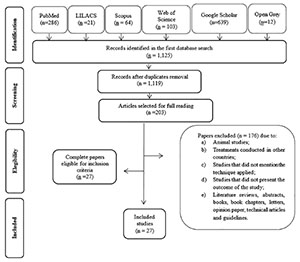
Figure 1.
Flow diagram of literature search and selection criteria
Characteristics of the studies
Table 1 shows a summary of the
characteristics of the studies included in this review. Through the categorized
analysis of the 27 articles that composed the final sample, we found that all
were published between 2003 and 2019. Of these, 4 were cross-sectional studies
(Pasqualotto et al.,
2003; Esteves & Glina,
2005; Cota et al.,
2012; Souza et al.,
2017), 12 were cohort studies (Pinheiro et al., 2003; Borges et al., 2003; Glina et al., 2005; Pasqualotto et al., 2005; Romão et al., 2010; Semião-Francisco et al.,
2010; Cota et al.,
2012; Borges et al.,
2013; Coelho Neto et
al., 2015; Maia-Filho et al., 2015; Scheffer et al., 2017; Bercaire et al., 2018); 6 were case-control
studies (Setti et al.,
2011; Pasqualotto et
al., 2012; Cavagna et al., 2012; Picinato et al., 2014; Donabela et al., 2015; Costa et al., 2016); 3
were case reports (Valle et
al., 2012; Taitson et al., 2012; Borges et al., 2016) and 2 were randomized
controlled trials (Geber & Sampaio,
2013; Nastri et al.,
2013).
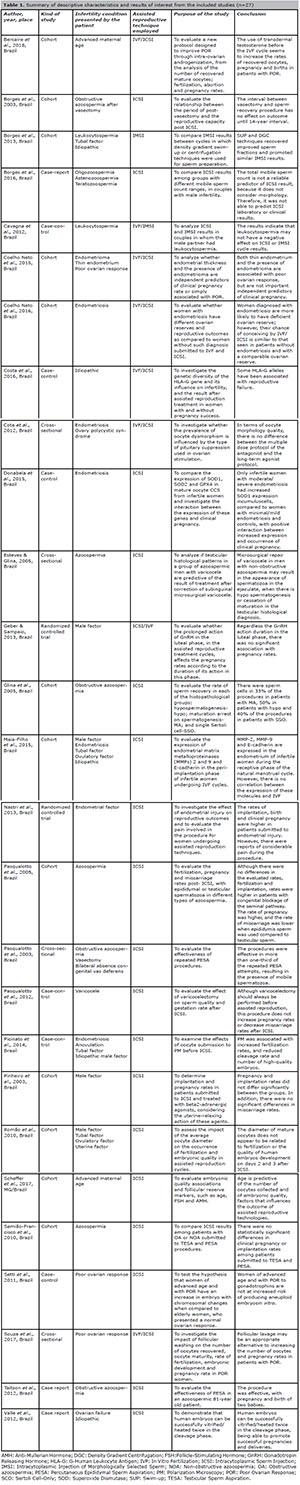
Table 1. Summary of descriptive characteristics and results of interest from the included studies (n=27)
In 15.21% of the articles included in this review, endometriosis is cited as the main condition causing female infertility (Cota et al., 2012; Nastri et al., 2013; Maia-Filho et al., 2015; Picinato et al., 2014; Donabela et al., 2015; Coelho Neto et al., 2015; 2016); and in 13.04% azoospermia is the male infertility condition (Pasqualotto et al., 2003; Glina et al., 2005; Esteves & Glina, 2005; Pasqualotto et al., 2005; Semião-Francisco et al., 2010; Taitson et al., 2012). Figure 2 shows the other infertility conditions presented by the patients.
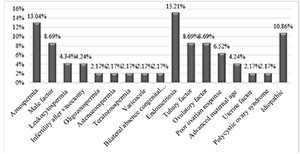
Figure 2.
Causes of male and female infertility most frequently reported in
this review
Regarding the assisted reproduction techniques, 7 studies (25.92%) mentioned that patients were submitted to intracytoplasmic sperm injection (ICSI) or conventional in vitro fertilization (IVF) (Cota et al., 2012; Geber & Sampaio, 2013; Coelho Neto et al., 2015; 2016; Costa et al., 2016; Souza et al., 2017; Bercaire et al., 2018); 18 studies (66.66%) cited ICSI exclusively (Pinheiro et al., 2003; Borges et al., 2003; Pasqualotto et al., 2003; Glina et al., 2005; Esteves & Glina, 2005; Pasqualotto et al., 2005; Romão et al., 2010; Semião-Francisco et al., 2010; Setti et al., 2011; Pasqualotto, et al., 2012; Valle et al., 2012; Taitson et al., 2012; Nastri et al., 2013; Picinato et al., 2014; Maia-Filho et al., 2015; Donabela et al., 2015; Borges et al., 2016; Scheffer et al., 2017); and 2 studies (7.40%) cited the Intracytoplasmic Injection of Morphologically Selected Sperm (IMSI) (Cavagna et al., 2012; Borges et al., 2013). IVF was used mainly in cases associated with female infertility, such as endometriosis, poor ovarian response, polycystic ovary syndrome and advanced age. ICSI cycles were associated with cases similar to IVF, and causes related to the reduction in sperm count and/or quality. IMSI predominated in leukocytospermia conditions.
DISCUSSION
This integrative review investigated the main conditions of male and female
infertility in Brazil, and their relationship with success rates after the treatment
of assisted reproduction. By our knowledge, it is the first to address this theme,
allowing the compilation about the relations between such conditions and the
assisted reproduction treatments employed in the country.
Main factors responsible for female and male infertility
The main factors associated with female infertility included endometriosis, tubal
factor, polycystic ovary syndrome, endocrine/anovulatory and advanced age; while
for males it included seminal alterations (azoospermia, oligozoospermia,
asthenozoospermia and teratozoospermia), varicocele and infertility after
vasectomy, and anatomical factors.
The most prevalent factor in women is endometriosis, which consists of having
endometrial tissue outside the uterus, inducing a chronic inflammatory reaction
and the formation of adhesions. In this pathology, the endometrial tissue is
commonly lodged on the peritoneal surface, ovaries and rectovaginal septum.
Endometriosis is increasing in women and has an important relationship with
female infertility, since endometrial tissue even outside the uterus, continues
to be stimulated monthly by the action of the menstrual cycle hormones. This
leads to an inflammatory reaction, which consequently influences the hormonal
regulation necessary for ovulation, as well as embryo implantation (Crosera et al., 2010; Nácul & Spritzer, 2010).
The peritoneal tube factor is also an important cause of female infertility.
Pelvic inflammatory diseases, especially those caused by Chlamydia
trachomatis and Neisseria gonorrhoeae, are
undoubtedly among the most common causes of functional loss of uterine tubes,
besides other causes such as endometriosis - which leads to tubal infertility
(Fernandes et al.,
2014).
Despite advances in assisted reproduction, poor ovarian response (POR) to
gonadotrophin stimulation remains a problem in fertility treatment, especially
in IVF, where a large number of oocytes are desirable. Many protocols and
adjuvant therapies have already been proposed for the treatment of bad
responders; among them ANDRO-IVF, a new protocol that promotes intraovarian
androgenization. The idea that testosterone could be useful to improve poor
ovarian response is based on studies which suggest that androgens play an
important role in the early stages of follicular development. Besides that, the
increase in intraovarian concentration of androgens appears to raise the
expression of Follicle-Stimulating Hormone (FSH) receptors in granulosa cells,
increasing ovary sensitivity to FSH. Transdermal testosterone before the IVF
cycle seems to increase the rate of pregnancy and births by decreasing the
required dose of gonadotropin, as well as the number of days of stimulation.
Although these studies are still scarce, they have been promising, bringing new
possibilities of adjuvant treatment to patients with low response to ovarian
stimulation (Setti et al.,
2011; Borges et al.,
2013).
Polycystic ovary syndrome (POS) is the main gynecological endocrinopathy in women
of reproductive age, and it is the most common cause of infertility due to
anovulation. This endocrinopathy occurs in the ovaries from an imbalance in
hormonal levels of androgens and insulin, causing the formation of ovarian
cysts, which can interfere with the ovulation process. In this case, the patient
does not ovulate properly and, therefore, may present long intervals between
menstrual cycles, and may remain without menstruation for months, thus leading
to infertility (Santana et al.,
2008).
Advanced maternal age is also an important factor associated with female
infertility, since natural fecundity and pregnancy rates decline with increasing
age. This is due to significant reductions in the number and quality of the
oocytes, since women are born with a limited pool of oocytes, which degenerate
throughout their lives at each menstrual cycle. However, the main factor in the
etiology of age-related female infertility is the decline in oocyte quality,
since older women have higher rates of single chromatid abnormalities in
oocytes, as well as chromosomal aneuploidies (Scheffer et al., 2017).
Azoospermia was the most prevalent factor in men, which consists of the absence
of sperm in the semen. It is classified as obstructive or excretory azoospermia
(OA), in cases where production is normal, but there is excretory pathway
obstruction (epididymis, deferent or ejaculatory duct); vasectomy is the main
example, and non-obstructive or secretory azoospermia (NOA), when there is
testicular failure leading to the abolition of sperm production. In combination,
there is azoospermia in approximately 10% of men with infertility (Harris & Sandlow, 2008; Vieira et al., 2009).
Seminal alterations, such as azoospermia (Pasqualotto et al., 2003; Glina et al., 2005; Esteves & Glina, 2005; Pasqualotto et al., 2005; Semião-Francisco et al., 2010; Taitson et al., 2012),
oligozoospermia (Borges et al.,
2016), asthenozoospermia (Borges et al., 2016) and teratozoospermia (Borges et al., 2016) were
the most frequently cited infertility conditions in this review, and refer to
abnormalities in sperm number, motility and morphology. Azoospermic men do not
have sperm in their ejaculate, while in oligozoospermia there is a reduction in
the amount of sperm present in the ejaculated fluid. In asthenozoospermia, there
is a decreased spermatozoa motility, which can cause the inability or difficulty
for sperm to fertilize the oocyte, while in teratozoospermia there is a large
percentage of abnormally shaped sperm. There are morphology defects in different
parts of the sperm: head, intermediate part and tail, which may render the
natural fertilization, process impossible (Zegers-Hochschild et al., 2017).
Varicoceles are also an important cause of male infertility, being a condition
that involves dilations and crooked veins of the pampiniform plexus, which drain
blood from the testicles. Such alterations cause changes in temperature,
oxygenation, nutrition and release of free radicals in testicular cells, which
may compromise spermatogenesis and, consequently, cause male infertility (Cocuzza, 2011).
Another condition associated with male infertility is post-vasectomy infertility,
a form of obstructive azoospermia, caused by the ligation of the deferent ducts
in man. In these cases, men become infertile due to interruptions in sperm
transit. However, given the widespread use of vasectomy as a method of
contraception, there is a growing demand for vasovasostomy, which consists of
surgical reversal, in which the two separate parts of the deferent duct are
reconnected. ICSI combined with percutaneous epididymis sperm aspiration (PESA),
or testicular sperm aspiration (TESA) is currently a widely used approach for
fertility restoration in post-vasectomy cases, where anastomosis has failed.
However, there is a relationship between the post-vasectomy period and the
reproductive capacity of spermatozoa, that is, the shorter it is, the higher the
chances of fertility return by ICSI. The rates of pregnancy and implants
decrease significantly when sperm recovery is performed 14 years after surgery
(Borges et al.,
2003).
The articles included in this revision also mentioned infertility caused by
anatomic factors, such as the congenital bilateral absence of the deferential
duct, an anomaly responsible for approximately 6% of the cases of obstructive
azoospermia, and for 1-2% of the cases of infertility in men (Bernardino et al.,
2003).
Assisted reproductive technologies most commonly used in infertility
treatment
Five techniques stand out today in medically assisted reproduction: intrauterine
insemination (IUI), IVF, ICSI and IMSI. IUI is a simple procedure of three
steps: follow-up of natural follicular development, semen collection and
processing and artificial insemination through a catheter. IVF, in turn, is
based on the collection of gametes, which are placed in contact on the same
culture plate, and the sperm will then fertilize the oocyte outside the female
body. After embryo fertilization and cultivation in the laboratory, it is
transferred to the uterus. ICSI is a variant of IVF, in which we select a
spermatozoon and inserted it into the oocyte cytoplasm with the help of a
micromanipulator, surpassing the radiate crown and the zona pellucida, thus
increasing fertilization rates. Finally, IMSI or super ICSI, is a technique that
carefully selects sperm based on morphology, using a microscope that enables a
magnification higher than 6,000 times, while in ICSI this increase is of 400X,
which, in the second case, does not enable the identification of some
morphological abnormalities. However, IMSI is not used world widely anymore,
because the technology offers no benefit over ICSI for live birth or miscarriage
rates; although there is evidence that IMSI improves clinical pregnancy rates,
this evidence is of very low quality (Santos,
2010; González-Ortega et
al., 2010; Sermondade et al., 2011; Teixeira et al., 2020).
Among the AR technologies used in the country, ICSI is usually the main technique
of choice, since it enables to solve the problems of infertility in most cases
in which sperm quantity or motility is significantly reduced (Pasqualotto et al., 2003; Glina et al., 2005; Esteves & Glina, 2005; Pasqualotto et al., 2005; Semião-Francisco et al.,
2010; Taitson et
al., 2012). The greatest advantage compared to other
techniques is that fertilization is less affected by concentration, motility
and/or sperm morphology, and its disadvantage is the high cost of the procedure.
Therefore, ICSI is today the most used technique in cases where there are
serious changes in seminal parameters (Nagy et al., 1995; Santos, 2010).
Considering the success rates achieved after the treatments employed, IVF was
more effective in cases of infertility caused by advanced or profound
endometriosis; in women with absence of uterine tubes or tubal lesions that
prevented natural fertilization or artificial insemination, and in cases of
idiopathic infertility. On the other hand, ICSI was effective in cases similar
to conventional IVF, and in cases of severe male infertility, obstructive or
non-obstructive, leading to absence of sperm in the ejaculate; in cases of
varicocele, and in cases using cryopreserved samples.
AR treatment procedures and their relationship with success rates
In addition to these high complexity techniques, we employ several methods to
obtain and process gametes, through complementary technologies and procedures
that help increase gestational rates. We use sperm recovery methods, such as
PESA and TESA, in conditions when the patient has azoospermia, either OA or NOA,
with the goal of increasing fertilization rates in assisted reproduction
treatments. These techniques are widely used in post-vasectomy infertility, when
there is obstructive azoospermia, followed by ICSI, to achieve better success
rates (Pasqualotto et al.,
2003; Semião-Francisco et
al., 2010; Taitson et al., 2012).
Sperm capacitation techniques, such as Swim-up (SUP) and density gradient
centrifugation (DGC), which recovers fractions of high-quality sperm, are
recommended to select spermatozoa with greater motility, by eliminating seminal
plasma, which contains motility inhibitors, and immobile spermatozoa, along with
immature cells and debris. Both sperm capacitating techniques are advantageous
to be performed prior to assisted reproduction treatments, since the increase in
spermatic motility favors penetration into the oocyte and, consequently,
increases the fertilization rates (Borges et al., 2013).
On the other hand, follicular washing is a good alternative to enable a greater
number of oocytes in patients with POR, since it improves the chances of
overcoming the retention of oocytes in the follicle during direct aspiration or
in the collection system, thus increasing the number of oocytes recovered (Souza et al., 2017).
Endometrial injury is an intentional damage to the endometrium by biopsy or
curettage, which can induce decidualisation and increase the likelihood of
implantation. This is because it induces a significant increase in the secretion
of cytokines, interleukins, growth factors, macrophages and dendritic cells,
which may be beneficial for the implantation of embryos and may lead to better
synchronization between the endometrium and the embryo transfer, with a
consequent increase in the rates of live births and clinical pregnancy. Overall,
the results suggest a benefit from endometrial scratching. However, the studies
have significant limitations; thus, the results may be biased. Therefore, it is
not possible to say with any confidence whether endometrial injury can increase
the probability of pregnancy. It is also important to consider potential adverse
events of this procedure, including excessive pain and bleeding (Garris & Garris, 2003; Li & Hao, 2009; Lensen et al., 2016; Gnainsky et al., 2010; Nastri et al., 2012).
Clinical predictors of success rates in assisted reproductive
technologies
The search for predictors of success in highly complex assisted reproductive
treatments, such as IVF and ICSI, is essential, since it can determine the
efficiency of the techniques and, consequently, the rates of gestational
success. Among the predictors of success in the high-complexity assisted
reproduction treatments discussed in this review, those who best determined the
effectiveness of the techniques, as well as the rates of gestational success
were: age, embryo quality and number of oocytes recovered, followed by two
promising predictors: the HLA-G allele diversity profile and the SOD1 gene
expression.
Maternal age is an important clinical predictor of success rates, since it is
correlated to the number of oocytes collected and embryo quality, factors that
influence the outcomes of assisted reproduction treatments. As age progresses,
natural fecundity and pregnancy rates decline, which occurs due to a significant
reduction in the number and quality of oocytes. However, the main factor in the
etiology of age-related female infertility is the decline in oocyte quality,
since older women have higher rates of single chromatid abnormalities in
oocytes, as well as chromosomal aneuploidies (Scheffer et al., 2017).
We analyzed embryonic quality from studying the morphology of embryos and the way
they evolved, until the 5th or 6th day after IVF
procedures. Some of the parameters we assessed were oocyte shape, cellular
fragmentation degree, number of blastomeres and their morphology, the presence
of vacuoles and the first polar body (1st PB). Regarding quality, the
following factors yield bad prognosis: embryos with irregular cleavages,
anuclear fragments, irregular blastomeres, low number of blastomeres, and
absence of 1st PB, which in turn may indicate that the oocyte is
still immature or that it has already become post-mature, both unfit for
insemination. The indicators of good prognosis include the occurrence of
cleavage at the right time (leading to a suitable number of cells for the day of
development; for example, the presence of embryos with 4 cells on day 2 and with
8 cells on day 3); harmonic and balanced cell division (leading to blastomere
symmetry); absence of embryonic fragmentation; vacuole-free cytoplasm and signs
of compaction (Araújo et al.,
2008).
However, even embryos classified as being of good quality will not necessarily
result in a clinical pregnancy, since endometrial health will be the determining
factor. This is because endometrial receptivity disorders represent a potential
source of implantation failure, even with good quality embryos. Embryonic
implantation is a complex process that requires a synchronization between a
healthy embryo and a receptive endometrium. This integrative capacity depends on
several endocrine, paracrine and autocrine factors, which are responsible for
endometrial receptivity. This is the period during which the epithelium of the
endometrium acquires function, even transient, for blastocyst welcoming and
implantation. This period is of extreme importance for implantation, since if
the embryo reaches the endometrium or is transferred during IVF in a period
outside the implantation window (either before or after), implantation will not
occur (Martins, 2007; Tan et al., 2018).
The number of oocytes recovered is also an important prognostic variable, since
there is a correlation between this number and treatment success rates. In
Brazil, the average number of oocytes produced per woman is about 9.3. However,
higher chances of success are obtained from IVF cycles with 15 oocytes
recovered, with success rates of 65% of live births in women aging 18-34 years;
50% in patients aging 35-37 years; 47% of live births for women with 38 or 39
years old; and 35% of live births for women aged 40 or over. However, even with
the average number of oocytes recovered below the considered "ideal", the
average fertilization in Brazil reaches 76% (Sunkara et al., 2011; SisEmbrio, 2019).
The human-G leukocyte antigen (HLA-G) encodes a protein class I (Ib), whose
expression is intense in trophoblastic cells, and has therefore been recognized
to confer immunological tolerance to the fetus. Some HLA-G alleles have been
associated with increased or reduced expression of the levels of this protein,
which have been associated with reproductive failure. However, it is still
difficult to reach a consensus on the role of the different HLA-G alleles during
pregnancy (Costa et al.,
2016). However, it can be a promising clinical predictor, since
identifying regulatory differences between alleles will not only improve our
understanding of pregnancy biology, but it can also help unravel the immunogenic
factors associated with infertility.
Although poorly explored, the gene expression evaluation in cumulus cells (CCS)
of infertile women with endometriosis has been used to investigate the
mechanisms involved in infertility associated with this disease. There is a
greater expression of the SOD1 gene in infertile patients with moderate/severe
endometriosis, when compared with healthy infertile patients or those with mild
endometriosis. These results suggest an attempt to prevent oocyte oxidative
damage triggered by the disease. Since only infertile women with moderate/severe
endometriosis showed increased SOD1 expression in CCS compared to women with
minimal/mild endometriosis and controls with positive interaction between
increased expression and occurrence of clinical pregnancy, SOD1 may be a
potential biomarker of clinical pregnancy, followed by ICSI (Donabela et al.,
2015).
The birefringence analysis of the zona pellucida and visualization of the meiotic
spindle under polarization microscopy (PM) are also clinical predictors, since
they have correlation with implantation and pregnancy rates. These rates were
significantly higher when transferring embryos derived from high refringence
oocytes (HR), while miscarriage rates were higher when transferring embryos
derived from low refringence oocytes (LR). Moreover, the fertilization rate was
significantly lower when the meiotic spindle was not visible. However, a
limitation of this technique is that while it may potentially increase these
fertilization rates, this strategy may reduce the number of high-quality
embryos, since the additional handling of the oocyte required to perform the PM
is the main reason for this reduction (Picinato et al., 2014).
Despite the findings described here, this review had some methodological
limitations, the main one being the scarcity of studies analyzing the
association between infertility and assisted reproductive technologies in
Brazil. Another possible limitation is that we did not include studies published
on non-conventional and low-diffusion access bases, despite our effort using
search strategies in a broad and careful way.
CONCLUSION
The qualitative and quantitative analysis of the studies that associated infertility
and assisted reproductive technologies in Brazil showed that the main factors of
female infertility were endometriosis, tubal factor, polycystic ovary syndrome,
endocrine/anovulatory and advanced age, while males had reductions in sperm count
and/or quality, infertility after vasectomy, varicocele and anatomical factors.
Regarding post-treatment success rates, they were associated with the assisted
reproduction technologies chosen for each infertility condition, as well as the use
of procedures such as PESA, TESA, follicular lavage and endometrial injury, which
may result in better gestational rates when employed during assisted reproduction
cycles.
ICSI has been the predominant technique employed and has proven to be the most
promising for the treatment of female and male infertility.

Appendix 1. Search keywords used in databases
REFERENCES
Araújo MCPM, Araújo CHM, Rocha MG, Martins WP, Reis RM, Ferriani RA,
Navarro PAAS. First polar body morphology and fertilization rate, cleavage rate,
and embryo quality. Rev Bras Ginecol Obstet. 2008;30:360-5 DOI:
10.1590/S0100-72032008000700007.
Crossref
Bercaire L, Nogueira SM, Lima PC, Alves VR, Donadio NF, Dzik A,
Cavagna M, Fanchin R. ANDRO-IVF: a novel protocol for poor responders to IVF
controlled ovarian stimulation. JBRA Assist Reprod. 2018;22:52-5.
Medline Crossref
Bernardino ALF, Lima CE, Zatz MA. Analysis of mutations in the
cystic fibrosis transmembrane regulator (CFTR) gene in patients with obstructive
azoospermia. Genet Mol Biol. 2003;26:1-3.
Crossref
Borges E Jr, Rossi-Ferragut LM, Pasqualotto FF, Rocha CC, Iaconelli
A Jr. Different intervals between vasectomy and sperm retrieval interfere in the
reproductive capacity from vasectomized men. J Assist Reprod Genet. 2003;20:33-7
Medline Crossref
Borges E Jr, Setti AS, Vingris L, Figueira RCS, Braga DPAF,
Iaconelli A Jr. Intracytoplasmic morphologically selected sperm injection
outcomes: the role of sperm preparation techniques. J Assist Reprod Genet.
2013;30:849-54.
Medline Crossref
Borges E Jr, Setti AS, Braga DPAF, Figueira RCS, Iaconelli A Jr.
Total motile sperm count has a superior predictive value over the WHO 2010
cut-off values for the outcomes of intracytoplasmic sperm injection cycles.
Andrology. 2016;4:880-6.
Medline Crossref
Cavagna M, Oliveira JB, Petersen CG, Mauri AL, Silva LF, Massaro FC,
Franco JG Jr. The influence of leukocytospermia on the outcomes of assisted
reproductive technology. Reprod Biol Endocrinol. 2012;10:44.
Medline Crossref
Coelho Neto MA, Martins WP, Lima ML, Barbosa MA, Nastri CO, Ferriani
RA, Navarro PA. Ovarian response is a better predictor of clinical pregnancy
rate following embryo transfer than is thin endometrium or presence of an
endometrioma. Ultrasound Obstet Gynecol. 2015;46:501-5.
Medline Crossref
Coelho Neto MA, Martins WP, Luz CM, Jianini BT, Ferriani RA, Navarro
PA. Endometriosis, Ovarian Reserve and Live Birth Rate Following In Vitro
Fertilization/Intracytoplasmic Sperm Injection. Rev Bras Ginecol Obstet.
2016;38:218-24
Medline Crossref
Costa CH, Gelmini GF, Nardi FS, Roxo VM, Schuffner A, da Graça MB.
HLA-G profile of infertile couples who underwent assisted reproduction
treatment. Human Immunol. 2016;77:1179-86.
Medline Crossref
Cota AM, Oliveira JB, Petersen CG, Mauri AL, Massaro FC, Silva LF,
Nicoletti A, Cavagna M, Baruffi RL, Franco JG Jr. GnRH agonist versus GnRH
antagonist in assisted reproduction cycles: oocyte morphology. Reprod Biol
Endocrinol. 2012;10:33.
Medline Crossref
Donabela FC, Meola J, Padovan CC, de Paz CC, Navarro PA. Higher SOD1
Gene Expression in Cumulus Cells From Infertile Women With Moderate and Severe
Endometriosis. Reprod Sci. 2015;22:1452-60.
Medline Crossref
Esteves SC, Glina S. Recovery of spermatogenesis after microsurgical
subinguinal varicocele repair in azoospermic men based on testicular histology.
Int Braz J Urol. 2005;31:541-8.
Medline Crossref
Fernandes LB, Arruda JT, Approbato MS, Garcia-Zapata MT. Chlamydia
trachomatis and Neisseria gonorrhoeae infection: factors associated with
infertility in women treated at a human reproduction public service. Rev Bras
Ginecol Obstet. 2014;36:353-8.
Medline Crossref
Garris DR, Garris BL. Cytomorphometric analysis and surface
ultrastructure of developing decidua. Tissue Cell. 2003,35:233-42.
Medline Crossref
Geber S, Sampaio M. Effect of duration of the GnRH agonists in the
luteal phase in the outcome of assisted reproduction cycles. Gynecol Endocrinol.
2013;29:608-10.
Medline Crossref
Glina S, Soares JB, Antunes Jr N, Galuppo AG, Paz LB, Wonchockier R.
Testicular histopathological diagnosis as a predictive factor for retrieving
spermatozoa for ICSI in non-obstructive azoospermic patients. Int Braz J Urol.
2005;31:338-41.
Medline Crossref
Gnainsky Y, Granot I, Aldo PB, Barash A, Or Y, Schechtman E, Mor G,
Dekel N. Local injury of the endometrium induces an inflammatory response that
promotes successful implantation. Fertil Steril. 2010;94:2030-6.
Medline Crossref
González-Ortega C, Cancino-Villarreal P, Pérez-Torres A,
Vargas-Maciel MA, Martínez-Garza SG, Pérez-Peña E, Gutiérrez-Gutiédrrez AM.
Intracytoplasmic morphologically selected sperm injection (IMSI) vs
intracytoplasmic sperm injection (ICSI) in patients with repeated ICSI failure.
Ginecol Obstet Mex. 2010;78:652-9.
Medline
Harris SE, Sandlow JI. Sperm acquisition in nonobstructive
azoospermia: what are the options? Urol Clin North Am. 2008;35:235-42.
Medline Crossref
Higgins HM, Green LE, Green MJ, Kaler J. How does reviewing the
evidence change veterinary surgeons' beliefs regarding the treatment of ovine
footrot? A quantitative and qualitative study. PLoS One. 2013;8:e64175.
Medline Crossref
Lensen SF, Manders M, Nastri CO, Gibreel A, Martins WP, Templer GE,
Farquhar C. Endometrial injury for pregnancy following sexual intercourse or
intrauterine insemination. Cochrane Database Syst Rev. 2016;6:CD011424.
Medline Crossref
Li R, Hao G. Local injury to the endometrium: its effect on
implantation. Curr Opin Obstet Gynecol. 2009;21:236-9.
Medline Crossref
Maia-Filho VO, Rocha AM, Ferreira FP, Bonetti TC, Serafini P, Motta
EL. Matrix metalloproteinases 2 and 9 and e-cadherin expression in the
endometrium during the implantation window of infertile women before in vitro
fertilization treatment. Reprod Sci. 2015;22:416-22.
Medline Crossref
Nácul AP, Spritzer PM. Current Aspects on Diagnosis and Treatment of
Endometriosis. Rev Bras Ginecol Obstet. 2010;32:298-307.
Crossref
Nagy Z, Liu J, Cecile J, Silver S, Devroey P, Van Steirteghem A.
Using ejaculated, fresh, and frozen-thawed epididymal and testicular spermatozoa
gives rise to comparable results after intracytoplasmic sperm injection. Fertil
Steril. 1995;63:808-15.
Medline Crossref
Nardelli AA, Stafinski T, Motan T, Klein K, Menon D. Assisted
reproductive technologies (ARTs): evaluation of evidence to support public
policy development. Reprod Health. 2014;11:76.
Medline Crossref
Nastri CO, Gibreel A, Raine-Fenning N, Maheshwari A, Ferriani RA,
Bhattacharya S, Martins WP. Endometrial injury in women undergoing assisted
reproductive techniques. Cochrane Database Syst Rev. 2012;(7):CD009517.
Medline Crossref
Nastri CO, Ferriani RA, Raine-Fenning N, Martins WP. Endometrial
scratching performed in the non-transfer cycle and outcome of assisted
reproduction: a randomized controlled trial. Ultrasound Obstet Gynecol.
2013;42:375-82.
Medline Crossref
Pasqualotto F, Rossi-Ferragut L, Rocha CC, Iaconelli A Jr, Ortiz V,
Borges E Jr. The efficacy of repeat percutaneous epididymal sperm aspiration
procedures. J Urol. 2003;69:1779-81.
Medline Crossref
Pasqualotto FF, Rossi LM, Guilherme P, Ortiz V, Iaconelli A Jr,
Borges E Jr. Etiology-specific outcomes of intracytoplasmic sperm injection in
azoospermic patients. Fertil Steril. 2005;83:606-11.
Medline Crossref
Pasqualotto FF, Braga DP, Figueira RC, Setti AS, Iaconelli A Jr,
Borges E Jr. Varicocelectomy Does Not Impact Pregnancy Outcomes Following
Intracytoplasmic Sperm Injection Procedures. J Androl. 2012;33:239-43.
Medline Crossref
Picinato MC, Martins WP, Giorgenon RC, Santos CK, Ferriani RA,
Navarro PA, de Sá Rosa-e-Silva AC. The impact of examining the meiotic spindle
by polarization microscopy on assisted reproduction outcomes. Fertil Steril.
2014;101:379-84.
Medline Crossref
Pinheiro OL, Cavagna M, Baruffi RL, Mauri AL, Petersen C, Franco JG
Jr. Administration of beta2-adrenergic agonists during the peri-implantation
period does not improve implantation or pregnancy rates in intracytoplasmic
sperm injection (ICSI) cycles. J Assist Reprod Genet. 2003;20:513-6.
Medline Crossref
Romão GS, Araújo MC, de Melo AS, Navarro PAAS, Ferriani RA, dos Reis
RM. Oocyte diameter as a predictor of fertilization and embryo quality in
assisted reproduction cycles. Fertil Steril. 2010;93:621-5.
Medline Crossref
Santana LF, Ferriani RA, de Sá MF, dos Reis RM. Treatment of
infertility in women with polycystic ovary syndrome. Rev Bras Ginecol Obstet.
2008;30:201-9.
Medline Crossref
SART. Society for Assisted Reproductive Technology; 2019. Available at: https://www.sart.org
Scheffer JB, Scheffer BB, de Carvalho RF, Rodrigues J, Grynberg M,
Mendez Lozano DH. Age as A Predictor of Embryo Quality Regardless of The
Quantitative Ovarian Response. Int J Fertil Steril. 2017;11:40-6.
Medline Crossref
Semião-Francisco L, Braga DP, Figueira RC, Madaschi C, Pasqualotto
FF, Iaconelli A Jr, Borges E Jr. Assisted reproductive technology outcomes in
azoospermic men: 10 years of experience with surgical sperm retrieval. Aging
Male. 2010;13:44-50.
Medline Crossref
Sermondade N, Hafhouf E, Dupont C, Bechoua S, Palacios C, Eustache
F, Poncelet C, Benzacken B, Lévy R, Sifer C. Successful childbirth after
intracytoplasmic morphologically selected sperm injection without assisted
oocyte activation in a patient with globozoospermia. Hum Reprod. 2011;26:2944-9.
Medline Crossref
Setti AS, Braga DP, Figueira RC, Azevedo MC, Iaconelli A Jr, Borges
E Jr. Are poor responders patients at higher risk for producing aneuploid
embryos in vitro? J Assist Reprod Genet. 2011;28:399-404.
Medline Crossref
SisEmbrio - National System of Embryo Production. 12º Relatório do Sistema Nacional de Produção de Embriões. Brasília: Ministry of Health; 2019. Available at: http://portal.anvisa.gov.br/publicacoes?tagsName=sisembrio
Souza AL, Sampaio M, Noronha GB, Coster LG, de Oliveira RS, Geber S.
Effect of follicular flushing on reproductive outcomes in patients with poor
ovarian response undergoing assisted reproductive technology. J Assist Reprod
Genet. 2017;34:1353-7.
Medline Crossref
Sunkara SK, Rittenberg V, Raine-Fenning N, Bhattacharya S, Zamora J,
Coomarasamy A. Association between the number of eggs and live birth in IVF
treatment: an analysis of 400 135 treatment cycles. Hum Reprod. 2011;26:1768-74.
Medline Crossref
Taitson PF, Melo CS, Mancebo AC, Melo UB, Souza MC. Pregnancy after
percutaneous epididymal sperm aspiration in an 81-year-old man with obstructive
azoospermia. Andrology. 2012;44:355-7.
Medline Crossref
Tan J, Kan A, Hitkari J, Taylor B, Tallon N, Warraich G, Nakhuda G.
The role of the endometrial receptivity array (ERA) in patients who have failed
euploid embryo transfers. J Assist Reprod Genet. 2018;35:683-92.
Medline Crossref
Teixeira DM, Hadyme Miyague A, Barbosa MA, Navarro PA, Raine-Fenning
N, Nastri CO, Martins WP. Regular (ICSI) versus ultra-high magnification (IMSI)
sperm selection for assisted reproduction. Cochrane Database Syst Rev.
2020;2:CD010167.
Medline Crossref
Valle M, Guimarães F, Cavagnoli M, Sampaio M, Geber S. Birth of
normal infants after transfer of embryos that were twice vitrified/warmed at
cleavage stages: report of two cases. Cryobiology. 2012;65:332-4.
Medline Crossref
WHO - World Health Organization. Assisted Reproductive Technologies (ARTs). Geneva: WHO; 2019. Available at: Available at: https://www.who.int/genomics/gender/en/index6.html. Accessed 2019 May 5.
Zegers-Hochschild F, Adamson GD, Dyer S, Racowsky C, de Mouzon J,
Sokol R, Rienzi L, Sunde A, Schmidt L, Cooke ID, Simpson JL, Van Der Poel S. The
International Glossary on Infertility and Fertility Care, 2017. Fertil Steril.
2017;108:393-406.
Medline Crossref
Zeqiraj A, Beadini S, Beadini N, Aliu H, Gashi Z, Elezaj S, Bexheti
S, Shabani A. Male Infertility and Sperm DNA Fragmentation. Open Access Maced J
Med Sci. 2018;6:1342-5.
Medline Crossref