JBRA Assist. Reprod. 2022;26(1):28-32
ORIGINAL ARTICLE
doi: 10.5935/1518-0557.20210039
Dual trigger with gonadotropin-releasing hormone agonist and human chorionic gonadotropin significantly improves oocyte yield in normal responders on GnRH-antagonist cycles
1Yarmouk University, Faculty of Medicine, Obstetrics and Gynecology Division, Clinical Science Department, Irbid, Jordan
2The Hashemite University, Faculty of Medicine, Obstetrics and gynecology department, Al Zarqa, Jordan
3Jordan University of Science & Technology, Faculty of Medicine, Obstetrics and gynecology department, Al Ramtha, Jordan
4Al Shmesani IVF Center, Amman, Jordan
5Ibn Al-Haytham IVF Center, Amman, Jordan
6IRCCS Ospedale San Raffaele, Reproductive Sciences Laboratory, Division of Genetics and Cell Biology, Milan
The authors have no conflict of interest to declare.
ABSTRACT
Objective: During in vitro fertilization (IVF) cycles, final oocyte maturation is usually triggered by human Chorionic Gonadotropin (hCG) for its known effect in mimicking Luteinizing Hormone (LH) surge; however, with the widespread use of the ‘antagonist protocol’, Gonadotropin Releasing Hormone agonist (GnRHa) is being more commonly employed as a trigger in order to minimize or eliminate the risk of ovarian hyper-stimulation syndrome (OHSS). Many studies proved its efficacy in inducing oocyte maturation and its safety in preventing OHSS in high-risk groups. Moreover, some studies showed that GnRHa trigger may improve oocyte yield. This study aimed to further explore any beneficial effect of adding GnRHa to hCG (dual trigger) on oocyte yield and fertilization rate in normal responder women.
Methods: We retrospectively reviewed and analyzed the data from 127 patients on antagonist protocol (67 dual trigger and 60 HCG trigger).
Results: The number of total oocytes, the number of MII oocytes and the number of fertilized oocytes were all significantly higher with the dual trigger protocol compared to hCG-only trigger. However, there is no significant difference in clinical pregnancy rate.
Conclusions: Using the dual trigger improved the number and quality of oocytes, and the fertilization rate in normal responders.
Keywords: GnRHa, hCG, dual trigger, oocytes number, fertilization rate
INTRODUCTION
In the natural mid-cycle, the rapidly rising of estrogen levels and small rise in progesterone induce gonadotropin surge, which triggers ovulation at approximately 36-40 hours later (Hoff et al., 1983). In assisted reproductive technology (ART) procedures, human Chorionic Gonadotropin (hCG) usually triggers final oocyte maturation for its known effect in mimicking Luteinizing Hormone (LH) surge. However, ovarian hyper-stimulation syndrome (OHSS) represents a well-known side effect due to the prolonged elevation of hCG (≥6 days) after an hCG bolus. On the other hand, it is impractical to use LH to trigger ovulation, due to its short half-life in circulation (<60 minutes) (Casper, 2015).
Gonadotropin Releasing Hormone agonist (GnRHa) for triggering final oocyte maturation was first introduced more than 20 years ago (Griffin et al., 2014). With the introduction of the ‘antagonist protocol’ for preventing premature LH surge, GnRHa trigger started to gain popularity as an effective and safe alternative to hCG. GnRHa trigger is considered more physiologic because it induces LH and FSH elevations, mimicking the natural surge to obtain final oocyte maturation. Moreover, changes in the position of some amino acids causes a GnRHa activity that is approximately 100-200 times greater than that of native GnRH in releasing LH and FSH from the pituitary (Casper, 2015). Due to its greater affinity for the receptor, GnRHa displaces the antagonist and results in LH induction and FSH release. A shorter duration of LH surge (34 hours) after GnRHa trigger causes a quick and reversible luteolysis, thus decreasing the risk of OHSS (Casper, 2015; Martinez et al., 2013), especially in high-risk patients. Some studies focused on normal responder women have shown improvements in the number of MII oocytes when oocyte trigger was induced with GnRHa and hCG, in comparison to hCG alone (Lin et al., 2013; Decleer et al., 2014; Eftekhar et al., 2017). Moreover, some studies suggested that GnRHa trigger brings true benefits for implantation, since the antagonist blocks endometrial GnRH receptors, worsening endometrial receptivity. Once the GnRHa is administered, it displaces the antagonist from the endometrial receptors, improving endometrial receptivity (Schachter et al., 2008).
The objective of this study was to retrospectively assess the effects of GnRHa and hCG as dual trigger in comparison to hCG trigger alone on oocyte yield, fertilization rate and clinical pregnancy rate in normal responder patients.
MATERIALS AND METHODS
Study Design
This is a retrospective case-control study of IVF medical records from June 1, 2017, through June 1, 2018, performed for IVF-ICSI antagonist protocol cycles with either GnRHa or HCG (dual) trigger, or HCG (single) trigger at several IVF centers in Jordan. The Institutional Review Board of King Abdullah University Hospital approved the study protocol.
The study participants were patients ≤ 35 years of age, with AMH (1.5-4 ng/ml) on the antagonist protocol. Patients above the age of 35, with AMH <1.5 or >4 ng/ml were excluded. We included 127 completed cycles with embryo transfers in the analysis: n=67 as dual trigger (study group), and n=60 as hCG-only trigger (control group). The ovarian stimulation protocol was GnRH antagonist using HMG (Menogon or Merional). GnRH antagonist, Cetrotide 0.25 mg was administered either fixed at the night of day 6 of stimulation, or flexible when E2 >300 or at least one follicle ≥14 mm. When at least two leading follicles reached 18 mm in diameter, final oocyte maturation was triggered by either single HCG 10,000 IU IM vs. dual trigger (HCG 5000 IU IM in addition to Decapeptyl 0.1mg SC). Pick up was performed 35-37 hours after trigger.
The oocytes were incubated for 2 hours before the ICSI. The cumulus and corona cells were removed using enzymatic digestion by cumulase, in addition to utilizing denuding pipette for mechanical denudation. Fertilization was assessed 16±2hours after ICSI, using an inverted microscope. Normal fertilization was defined by the presence of two centrally located pronuclei (PN), with clearly defined membranes and two polar bodies. Zygotes with abnormal PN numbers (1 or ≥3 PN) were not transfer. Only grade one embryos were transferred three days after oocyte retrieval. A grade-one embryo was defined as an embryo with good cell symmetry and no fragmentation.
The Luteal phase was supported by daily Cyclogest 400 mg 1X2, started one day after pick up. Serum B hCG was measured 14 days after oocyte retrieval and a value above 5 IU/ml was considered positive pregnancy. The luteal support was continued until 10th weeks of gestation.
The main Outcomes of interest were the oocyte yield (the number of total oocytes retrieved, the number of MII oocytes). Other outcome variables included clinical pregnancy rate and the number of fertilized oocytes. Clinical pregnancy was confirmed by ultrasound visualization of a fetal heartbeat.
Statistical analysis
We used the SPSS version 21 for statistical analysis, and descriptive statistics to calculate means and standard deviations for different measures, for continuous variables, (total number of cycles, BMI, infertility duration, days of simulation, day of starting antagonist, day of trigger, total number of oocytes, number of fertilized oocytes, number of grade 1 embryos and number of grade 2 embryos). In addition, we used parametric analyses with the t-test to test the effect of protocol on the previous factors. Moreover, the frequency and percentages were used to calculate the descriptive statistics for embryo transfer day, pregnancy test, fetal heart activity, ovarian hyper-stimulation syndrome rate, and infertility causes. We then used the Chi square test to check the effect of protocols on the previous factors.
RESULTS
The baseline characteristics and demographics did not statistically differ between the control and study group as shown in Table 1.
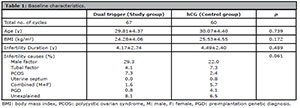
Table 1. Baseline characteristics.
The women age distribution shows that the higher age category among women ranged from 25-30 year (43%), followed by the age group 31-35 years (33.6%). Most women in the sample group (64.1%) had primary infertility, while the rest of the sample had secondary infertility causes. The results showed that the percentage of smoking women in the sample was very low, indicating that the effect of smoking on fertility will be ignored to some extent. The percentage of smoking women did not exceed 14.4% of the sample. About 50% of the sample group were either overweight (28.9%) or obese (17.8%).
Results showed that there were no differences concerning the infertility duration for both groups in both protocols. The infertility duration for the dual trigger group was 4.17y compared to 4.49y for the hCG group.
Table 2 depicts the ovarian stimulation response and IVF-ISCI outcome for each group. We found no statistically significant difference in days of stimulation, total dose of gonadotropins, and antagonist duration between the two groups. The mean number of total oocytes and MII oocytes were significantly higher in the dual trigger group (12.51 vs. 10.58) and (9.52 vs. 8.33), respectively at p=0.019, p<0.01. Moreover, the number of fertilized oocytes in the dual trigger protocol was significantly higher, 7.63 compared to 6.60 in the HCG trigger protocol (p<0.01). The mean numbers of embryos and grade one embryos obtained were similar between the two groups.
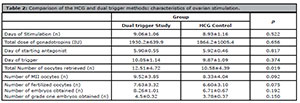
Table 2. Comparison of the HCG and dual trigger methods: characteristics of ovarian stimulation.
In terms of IVF-ICSI outcome, there was no significant difference in positive pregnancy test rate and clinical pregnancy rate between the two groups, as shown in Table 3 (p>0.05). In addition to similar OHSS (ovarian hyper-stimulation syndrome) rate, there were three mild cases in the dual trigger group and two mild and one moderate in the HCG trigger group. None of them required hospitalization. Mild OHSS was defined as OHSS with mild abdominal pain, bloating and ovarian size <8cm3, according to the proposed RCOG (Royal College of Obstetrician and Gynecologist) classification of OHSS severity, shown in Table 3.
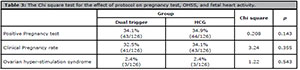
Table 3. The Chi square test for the effect of protocol on pregnancy test, OHSS, and fetal heart activity.
DISCUSSION
According to the results from this study, dual triggering with GnRH-agonist and half dose (5000IU) HCG can be an effective alternative to HCG trigger alone, as it results in better cycle outcome for normal responders in GnRH-antagonist cycles. The dual trigger group showed a statistically significant higher number of total oocytes retrieved, MII oocytes, and number of fertilized oocytes compared with the control group who received the standard HCG (10000IU) trigger. Choosing normal responders as the target population for this study should be considered important. Although normal responders are expected to have good numbers of good-quality oocytes; however, improving the oocyte outcome can improve the overall outcome for patients by increasing the chances of having the option of freezing oocytes or embryos; having enough numbers available for freezing, which will avoid repeating the full cycle of IVF in the future if needed. In addition to exploring further whether or not using dual trigger has any beneficial effect on clinical pregnancy rate.
Many studies demonstrated the effectiveness of using GnRHa to induce ovulation in the antagonist protocol of IVF treatment cycles by inducing an LH surge (Felberbaum et al., 1995; Beckers et al., 2003; Fauser et al., 2002). However, only a few studies investigated the effects of dual triggering in normal responders. Results varied among different studies. A previous retrospective cohort study by Lin et al. included 376 normal responders. This study found that the number of MII oocytes, the total number of oocytes, implantation rate, clinical pregnancy rate, and live birth rate were significantly higher in the dual trigger group compared with the HCG-only group (Lin et al., 2013).
Moreover, a prospective randomized controlled trial performed by Decleer et al. (2014) with 120 patients reported better outcomes in the dual triggering group in terms of the number of MII oocytes, number of morphologically normal embryos, number of cryopreserved embryos, but there were no statistically significant difference in the number of cumulus oocyte complexes (COC), and implantation rates between both groups, although the dual trigger group had lower pregnancy rates. They explained the discrepancy in the results, higher good quality embryos, but lower pregnancy rates in the dual trigger group could be due the higher LH levels and the additional FSH surge observed in the dual trigger group (Decleer et al., 2014). On the other hand, Kim et al. (2014), in their RCT, which included 120 patients, they reported no differences in the number of oocytes retrieved, MII oocytes, fertilized oocytes or good quality embryos between the dual trigger group and the HCG group, but a higher implantation rate, clinical pregnancy rate and live birth rate in the dual trigger group.
Furthermore, Mahajan et al. (2016) performed a prospective RCT study including 76 patients; they came up with similar results as the previous study from Kim et al. (2014). Ding et al. (2017) conducted a systemic review and meta-analysis, which included four RCT studies involving 527 women. They concluded that there was no significant difference in the total number of oocytes retrieved, number of MII oocytes, number of fertilized oocytes and implantation rate between the two methods of oocytes triggering, but a higher pregnancy rate in the dual trigger group (Ding et al., 2017). Lately, a controlled trial was performed by Eftekhar et al. (2017), including 192 normal responders. They found that the number of MII oocytes and the number of embryos were higher in the dual trigger group than in the standard single HCG trigger group (Eftekhar et al., 2017).
In a recent retrospective study, Zhou et al. (2018) compared the outcomes from 325 normal responders; 224 in the dual group versus 101 in the HCG group. They found that there was no difference in the mean number of retrieved oocytes, implantation rates, clinical pregnancy rates, and live birth rates; however, the numbers of two- pronuclear embryos and high-quality embryos were higher in the dual trigger group. Nevertheless, this result was not reflected on the live birth rate - which was the primary outcome (Zhou et al., 2018). Moreover, an RCT conducted by Alleyassin et al. (2018), among 126 normal responders, had 63 patients receiving the HCG trigger and 63 patients receiving the dual trigger, they found that good quality embryos were significantly higher in the dual trigger group, but there was no significant difference in the number of MII oocytes and clinical pregnancy rate. Ali et al. (2020) conducted the most recent RCT with 160 participants, having one group receiving recombinant HCG, and a group receiving dual trigger recombinant HCG and GnRH agonist (1 mg leuprolide acetate). They found a statistically significant higher number of retrieved oocytes, MII oocytes and number of grade one embryos (Ali et al., 2020).
Accordingly, our results are comparable to some from previous studies. As GnRHa trigger induces LH and FSH surge, mimicking the natural cycle, and this might offer an advantage for oocyte maturation (Casper, 2015; Lin et al., 2013). It is essential for the maturing follicle to have an increase in LH receptors in preparation for the events of ovulation and the following luteinization of the granulosa cell that follows the LH surge (Strickland & Beers, 1976; Eppig, 1979; Zelinski-Wooten et al., 1995; Yding Andersen et al., 1999).
FSH is crucial for the formation of LH receptor sites in granulosa cells; and this has been confirmed in animal studies (Zeleznik et al., 1974; Richards et al., 1976). FSH also supports the resumption of meiosis and cumulus expansion (Strickland & Beers, 1976; Eppig, 1979; Zelinski-Wooten et al., 1995; Yding Andersen et al., 1999). This might explain the observed beneficial effects of adding GnRHa to trigger on oocyte outcome. However, the variation in the results of oocyte outcomes might be due to inconsistencies in the protocol used, participants included, or due to the small sample size in most of the studies. Most of the previous studies showed similar pregnancy rates when using dual trigger, which coincides with our results. Although two studies demonstrated a higher pregnancy rate in the dual trigger group. This could be explained by the stronger binding affinity of GnRH agonist to receptors, thus displacing the GnRH antagonist from the endometrial GnRH receptors, enabling proper post-receptor actions for implantation (Lin et al., 2013; Kim et al., 2014). Different luteal phase support could explain the controversy in the results in relation to pregnancy rate.
The limitation of our study was its relatively small sample size, in addition to the lack of live birth rate, which would clinically reflect the real effects of any possible benefit. In spite of this, the positive trend we observed in the number of mature and fertilized oocytes should encourage further well-structured prospective studies to confirm these findings clinically, and to investigate the exact mechanism behind. Moreover, we still need further studies to explore the effects on reproductive outcomes reflected by clinical pregnancy rate and live birth rate.
We conclude that, the use of dual trigger (GnRHa and HCG) could result in significantly higher numbers of total oocytes retrieved, MII oocytes and fertilized oocytes in comparison to HCG trigger in normal responders. In conclusion, we find that dual triggering could be a good alternative to the standard single HCG triggering in normoresponsive patients, undergoing an antagonist IVF-treatment cycle.
REFERENCES
Ali SS, Elsenosy E, Sayed GH, Farghaly TA, Youssef AA, Badran E, Abbas AM, Abdelaleem AA. Dual trigger using recombinant HCG and gonadotropin-releasing hormone agonist improve oocyte maturity and embryo grading for normal responders in GnRH antagonist cycles: Randomized controlled trial. J Gynecol Obstet Hum Reprod. 2020;49:101728. PMID: 32173633 DOI: 10.1016/j.jogoh.2020.101728
Medline Crossref
Alleyassin A, Ghasemi M, Aghahosseini M, Safdarian L, Sarvi F, Almasi-Hashiani A, Hosseinimousa S, Najafian A, Esmailzadeh A. Final oocyte maturation with a dual trigger compared to human chorionic gonadotropin trigger in antagonist co-treated cycles: A randomized clinical trial. Middle East Fertil Soc J. 2018;23:199-204. DOI: 10.1016/j.mefs.2018.01.001
Crossref
Beckers NG, Macklon NS, Eijkemans MJ, Ludwig M, Felberbaum RE, Diedrich K, Bustion S, Loumaye E, Fauser BC. Nonsupplemented luteal phase characteristics after the administration of recombinant human chorionic gonadotropin, recombinant luteinizing hormone, or gonadotropin-releasing hormone (GnRH) agonist to induce final oocyte maturation in in vitro fertilization patients after ovarian stimulation with recombinant follicle-stimulating hormone and GnRH antagonist cotreatment. J Clin Endocrinol Metab. 2003;88:4186-92. PMID: 12970285 DOI: 10.1210/jc.2002-021953
Medline Crossref
Casper RF. Basic understanding of gonadotropin-releasing hormone-agonist triggering. Fertil Steril. 2015;103:867-9. PMID: 25712575 DOI: 10.1016/j.fertnstert.2014.12.129
Medline Crossref
Decleer W, Osmanagaoglu K, Seynhave B, Kolibianakis S, Tarlatzis B, Devroey P. Comparison of hCG triggering versus hCG in combination with a GnRH agonist: a prospective randomized controlled trial. Facts Views Vis Obgyn. 2014;6:203-9. PMID: 25593695
Medline
Ding N, Liu X, Jian Q, Liang Z, Wang F. Dual trigger of final oocyte maturation with a combination of GnRH agonist and hCG versus a hCG alone trigger in GnRH antagonist cycle for in vitro fertilization: A Systematic Review and Meta-analysis. Eur J Obstet Gynecol Reprod Biol. 2017;218:92-8. PMID: 28957685 DOI: 10.1016/j.ejogrb.2017.09.004
Medline Crossref
Eftekhar M, Mojtahedi MF, Miraj S, Omid M. Final follicular maturation by administration of GnRH agonist plus HCG versus HCG in normal responders in ART cycles: An RCT. Int J Reprod Biomed. 2017;15:429-34. PMID: 29177244 DOI: 10.29252/ijrm.15.7.429
Medline Crossref
Eppig JJ. FSH stimulates hyaluronic acid synthesis by oocyte-cumulus cell complexes from mouse preovulatory follicles. Nature. 1979;281:483-4. PMID: 492307 DOI: 10.1038/281483a0
Medline Crossref
Fauser BC, de Jong D, Olivennes F, Wramsby H, Tay C, Itskovitz-Eldor J, van Hooren HG. Endocrine profiles after triggering of final oocyte maturation with GnRH agonist after cotreatment with the GnRH antagonist ganirelix during ovarian hyperstimulation for in vitro fertilization. J Clin Endocrinol Metab. 2002;87:709-15. PMID: 11836309 DOI: 10.1210/jcem.87.2.8197
Medline Crossref
Felberbaum RE, Reissmann T, Küpker W, Bauer O, al Hasani S, Diedrich C, Diedrich K. Preserved pituitary response under ovarian stimulation with HMG and GnRH antagonists (Cetrorelix) in women with tubal infertility. Eur J Obstet Gynecol Reprod Biol. 1995;61:151-5. PMID: 7556837 DOI: 10.1016/0301-2115(95)02138-W
Medline Crossref
Griffin D, Feinn R, Engmann L, Nulsen J, Budinetz T, Benadiva C. Dual trigger with gonadotropin-releasing hormone agonist and standard dose human chorionic gonadotropin to improve oocyte maturity rates. Fertil Steril. 2014;102:405-9. PMID: 24842671 DOI: 10.1016/j.fertnstert.2014.04.028
Medline Crossref
Hoff JD, Quigley ME, Yen SS. Hormonal dynamics at midcycle: a reevaluation. J Clin Endocrinol Metab. 1983;57:792-6. PMID: 6411753 DOI: 10.1210/jcem-57-4-792
Medline Crossref
Kim CH, Ahn JW, You RM, Kim SH, Chae HD, Kang BM. Combined administration of gonadotropin-releasing hormone agonist with human chorionic gonadotropin for final oocyte maturation in GnRH antagonist cycles for in vitro fertilization. J Reprod Med. 2014;59:63-8. PMID: 24597289
Medline
Lin MH, Wu FS, Lee RKK, Li SH, Lin SY, Hwu YM. Dual trigger with combination of gonadotropin-releasing hormone agonist and human chorionic gonadotropin significantly improves the live-birth rate for normal responders in GnRH-antagonist cycles. Fertil Steril. 2013;100:1296-302. PMID: 23993928 DOI: 10.1016/j.fertnstert.2013.07.1976
Medline Crossref
Mahajan N, Sharma S, Arora PR, Gupta S, Rani K, Naidu P. Evaluation of dual trigger with gonadotropin-releasing hormone agonist and human chorionic gonadotropin in improving oocyte maturity rates: A prospective randomized study. J Hum Reprod Sci. 2016;9:101-6. PMID: 27382235 DOI: 10.4103/0974-1208.183506
Medline Crossref
Martinez MC, Ruiz FJ, García-Velasco JA. GnRH-agonist triggering to avoid ovarian hyperstimulation syndrome: a review of the evidence. Curr Drug Targets. 2013;14:843-9. PMID: 23614678 DOI: 10.2174/13894501113149990163
Medline Crossref
Richards JS, Ireland JJ, Rao MC, Bernath GA, Midgley AR, Reichert LE Jr. Ovarian follicular development in the rat: hormone receptor regulation by estradiol, follicle stimulating hormone and luteinizing hormone. Endocrinology. 1976;99:1562-70. PMID: 187412 DOI: 10.1210/endo-99-6-1562
Medline Crossref
Schachter M, Friedler S, Ron-El R, Zimmerman AL, Strassburger D, Bern O, Raziel A. Can pregnancy rate be improved in gonadotropin-releasing hormone (GnRH) antagonist cycles by administering GnRH agonist before oocyte retrieval? A prospective, randomized study. Fertil Steril. 2008;90:1087-93. PMID: 18023439 DOI: 10.1016/j.fertnstert.2007.07.1316
Medline Crossref
Strickland S, Beers WH. Studies on the role of plasminogen activator in ovulation. In vitro response of granulosa cells to gonadotropins, cyclic nucleotides, and prostaglandins. J Biol Chem. 1976;251:5694-702. PMID: 965386 DOI: 10.1016/S0021-9258(17)33113-7
Medline Crossref
Yding Andersen C, Leonardsen L, Ulloa-Aguirre A, Barrios-De-Tomasi J, Moore L, Byskov AG. FSH-induced resumption of meiosis in mouse oocytes: effect of different isoforms. Mol Hum Reprod. 1999;5:726-31. PMID: 10421799 DOI: 10.1093/molehr/5.8.726
Medline Crossref
Zeleznik AJ, Midgley AR, Reichert LE Jr. Granulosa cell maturation in the rat: increased binding of human chorionic gonadotropin following treatment with follicle-stimulating hormone in vivo. Endocrinology. 1974;95:818-25. PMID: 4368756 DOI: 10.1210/endo-95-3-818
Medline Crossref
Zelinski-Wooten MB, Hutchison JS, Hess DL, Wolf DP, Stouffer RL. Follicle stimulating hormone alone supports follicle growth and oocyte development in gonadotrophin-releasing hormone antagonist-treated monkeys. Hum Reprod. 1995;10:1658-66. PMID: 8582957 DOI: 10.1093/oxfordjournals.humrep.a136151
Medline Crossref
Zhou X, Guo P, Chen X, Ye D, Liu Y, Chen S. Comparison of dual trigger with combination GnRH agonist and hCG versus hCG alone trigger of oocyte maturation for normal ovarian responders. Int J Gynaecol Obstet. 2018;141:327-31. PMID: 29388691 DOI: 10.1002/ijgo.12457
Medline Crossref