JBRA Assist. Reprod. 2023;27(4):709-716
REVIEW
doi: 10.5935/1518-0557.20230024
The impact of thyroid disorders on the clinical outcome of assisted reproductive techniques: a systematic approach over the last 10 years
1Christus University Center (UNICHRISTUS), Fortaleza-CE, Brazil
2Laboratory of Manipulation of Oocytes and Preantral Follicles, Post-Graduate Program in Physiological Sciences (PPGCF), State University of Ceará (UECE), Fortaleza-CE, Brazil
3Oswaldo Cruz Foundation (FIOCRUZ), Eusébio-CE, Brazil
CONFLICTS OF INTEREST
The authors declare that there are no conflicts of interest
ABSTRACT
Objective: To verify from a systematic literature review the possible effects of thyroid diseases on assisted reproduction techniques.
Data sources: The studies were analyzed from the PubMed, Cochrane Library, LILACS databases.
Selection of studies: The articles selected for the review included: cross-sectional studies, cohort studies, and clinical trials that addressed the proposed theme and which were published within the period stipulated from January 1, 2012, to March 5, 2022, in English, Portuguese and Spanish. These would later have to go through stages of inclusion as a framework of the type of study and exclusion criteria that were review articles, case reports, abstracts, articles with animal models, and duplicate articles and letters to the editor.
Data collection: Author’s name; Number of patients; Clinical outcome; Use of drugs; Control group (in case it had); Clinical outcome.
Data synthesis: In in vitro fertilization and intracytoplasmic sperm injection it was verified that thyroid diseases can lead to effects such as a reduction in the rate of recovered oocytes, a decrease in the number of embryos, lower pregnancy rates, and increased chances of congenital anomalies in these patients and a reduction in the rate of implantation. Levothyroxine can increase the number of cycle cancellations.
Conclusions: Thyroid diseases may have deleterious effects on the clinical outcome of in vitro fertilization and intracytoplasmic sperm injection.
Keywords: autoimmune disease, hypothyroidism, cancer, fertility
INTRODUCTION
Infertility has always been considered a primary challenge for reproductive medicine, which is defined as a flaw in conception after regular unprotected sexual relations for 2 years in the absence of known pathologies (Szamatowicz & Szamatowicz, 2020). Estimates from the World Health Organization (WHO) suggest that infertility is present among about 48 million couples and 186 million individuals worldwide (WHO, 2020). Another worrisome factor is that infertility is a relatively common problem that affects about 15-20% of couples of reproductive age (Sihag et al., 2018).
Currently, even though there is a substantial increase in Assisted Reproduction Techniques (ART) such as In Vitro Fertilization (IVF), Intracytoplasmic Sperm Injection (ICSI), and Intrauterine Insemination (IUI), there are large amounts of both physiological and environmental influences that can lead to failures in these procedures (Ricci et al., 2020). A fine example of this, Di Mario et al. (2019) observed in a study with 86 women of reproductive age with Systemic Lupus Erythematosus a reduction in ovarian reserve associated with the severity of the disease and sequential therapy with cyclophosphamide and conventional disease-modifying anti-rheumatic drugs such as methotrexate, azathioprine, mycophenolate mofetil and cyclosporine. It is noteworthy that there is an increase in studies aiming at verifying whether metabolic disorders are negatively associated with clinical outcomes of ARTs amid these disorders are Thyroid Diseases (TD) (Heber & Ptak, 2021).
TDs comprise a set of functional, inflammatory, autoimmune, and neoplastic benign pathologies, characterized by a wide range of physical and mental symptoms (Leso et al., 2020). In most cases, these symptoms are associated with two main thyroid hormones: thyroxine (T4) and triiodothyronine (T3), that affect various physiological processes such as maintaining body temperature, digestion, and vital functions such as heart and respiratory rate (Green et al., 2021). These thyroid hormones have as their main regulator the glycolipid called pituitary hormone thyrotropin (TSH), produced by the anterior pituitary gland, which will also present changes in its serum level in cases of pathology (Mullur et al., 2014). Literature also infers a direct activity of thyroid dysfunction in the reproductive system, since sex gametes (especially oocytes) have thyroid hormone receptors on their cell surface. In addition, there is an indirect activity of thyroid hormones in the interruption of the Gonadotrophin release Hormone (GnRH) essential to produce these gametes (Öztürk Ünsal et al., 2021).
Given the above, there is a need to verify the possible effects of TD on the clinical outcomes of ARTs to establishing protocols that will improve the clinical management of patients with TDs to increase the success rates of these techniques (Unuane & Velkeniers, 2020). In addition, there is a shortage of studies that recommend or contraindicate the use of routine therapies specific to women with TD who have impaired fertility and are seeking to become pregnant with the aid of ARTs (Wadhwa et al., 2020). Therefore, the present study aims to evaluate from a systematic literature review the deleterious activity of TDs in the clinical outcome of ARTs, in addition to investigating the influence of the most used drugs for treatment in the protocols of ART.
MATERIALS AND METHODS
Type of study
The present study is a systematic literature review. The Preferred Reporting Items for Systematic Reviews and Meta-Analyses (PRISMA) rules guide was used for its Fulfillment. The entire protocol was submitted and registered at the National Institute for Health Research (PROSPERO) under protocol number (CRD42022320836).
Search strategy
In order to search the articles in the present study, descriptors were initially checked by medical subject headings (MESH). After selection, the descriptors were allocated in combination with Booleans in three different studies: (1) autoimmune thyroiditis OR thyroid diseases AND In vitro fertilization, (2) autoimmune thyroiditis OR thyroid diseases AND intracytoplasmic sperm injection, (3) autoimmune thyroiditis OR thyroid diseases AND artificial insemination. This search strategy was performed in three distinct databases: PubMed, Cochrane Library, and LILACS.
Eligibility criteria for studies
For the selection of studies, the following eligibility criteria were adopted:
1. Studies: Clinical trials, cohort studies and cross-sectional studies that addressed the theme proposed by the authors;
2. Publication period: The studies evaluated in this review were published between January 1, 2012 and March 5, 2022;
3. Language of the studies: Articles were selected in the following languages: English, Portuguese and Spanish;
4. Intervention performed: Studies that addressed the rate of oocyte uptake and maturation, fertilization, clinical pregnancy, live birth rate and hormonal level;
5. Outcome: Obtaining the effects of TD on the clinical outcome of ARTs.
Criteria for selection of studies
a Inclusion criteria• Cohort studies;
• Cross-sectional studies;
• Clinical trials.
b Exclusion criteria• Out-of-scope studies;
• Review articles;
• Letters to the editor;
• Abstracts;
• Animal studies;
• Case reports;
• Duplicate articles.
Assessment of methodological quality
To reduce the chance of bias among the articles, the methodological quality assessment of the studies was performed from the Newcastle Ottawa analysis tool that allows evaluating the methodological quality of observational studies (table 1).
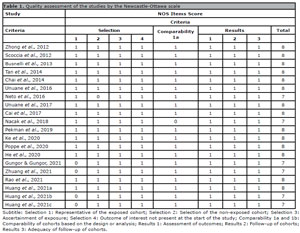
Table 1. Quality assessment of the studies by the Newcastle-Ottawa scale
Data collection
After searching, the articles were assessed through title and abstract. Excluding those that did not fit as mentioned above. When the articles met the criteria established in the review, they were evaluated by seven authors (TCA, MGA, MANP, GIA, SVS, DMOM and LABRL). If they agreed on the clinical outcome, data would be tabled. If a divergence occurred, data would be re-analyzed by a fourth author specialist in the area (MPB).
Data extraction
Soon after collection, these articles were read to obtain the following data:
• Name of the author;
• Number of patients;
• Clinical outcome;
• BMI;
• Use of drugs;
• Control group (in case it had)
• Clinical outcome.
RESULTS
Study characteristics
In total, 1006 articles were found using the aforementioned methodology, selecting 20 articles among them for the preparation of this review, as shown in Figure 1. The number of patients inserted in the articles used in the present review totaled 5,653, where the mean age varies from 20 to 38 years and with body mass index (BMI) from 20.5 to 25 kg/m2. Data is presented in Table 2.
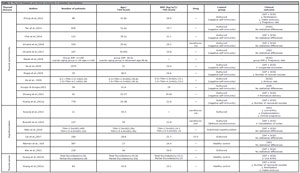
Table 2. Thyroid diseases and clinical outcomes in assisted reproduction
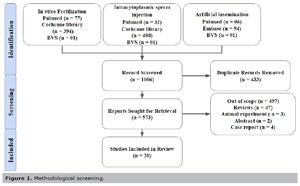
Figure 1. Methodological screening.
Thyroid autoimmunity and clinical outcome of ARTs
Most studies analyzed the harmful effects of antithyroid antibodies on the clinical outcome of ARTs when compared to euthyroid patients with the absence of antibodies. In methodologies such as IVF and ICSI, it was verified a reduction in the rate of oocytes recovered in patients, a decrease in the number of viable embryos produced in vitro, lower pregnancy rates, and an increased chance of congenital anomalies in these patients (Zhong et al., 2012; Beydilli Nacak et al., 2018; Ke et al., 2020; Poppe et al., 2020; He et al., 2020; Zhuang et al., 2021; Huang et al., 2021a). In studies without the use of IUI, significant differences were found in the clinical outcome of patients with anti-thyroid antibody positivity. In addition, in five studies, significant activity of thyroid autoimmunity in ARTs was not verified. (Tan et al., 2014; Chai et al., 2014; Unuane et al., 2016; 2017; Gungor & Gungor, 2021).
Hypothyroidism and its impacts on ARTs
Our review found that this pathology can trigger problems in the clinical outcome of these patients. From the selected studies, as the main effects of this pathology, there was a reduction in the rate of implantation, clinical pregnancy and live births in patients undergoing in vitro fertilization and an increase in the cancellation of cycles in patients with combinatorial treatment of IVF and ICSI (Scoccia et al., 2012; Busnelli et al., 2013). However, In the other studies, the presence of hypothyroidism was not associated with the clinical outcome of ARTs (Coelho Neto et al., 2016; Cai et al., 2017; Pekcan et al., 2019; Rao et al., 2021).
Thyroid cancer in ARTs
In this review, we verified only two studies that addressed the use of post-therapy ARTs for patients with thyroid cancer. In both studies, IVF and ICSI methodologies were cited, with a lower rate of oocyte uptake, fertilization, viable embryos, and live births rates in patients reported. (Huang et al., 2021b; 2021c).
Pharmacological use and its association with clinical outcome
We identified in our review that only four studies reported the use of drugs for treatment in thyroid comorbidity. One of the main drugs used was levothyroxine in three studies (Scoccia et al., 2012; Busnelli et al., 2013; Unuane et al., 2016). Lt-4 was used in a single study to treat hypothyroidism (Cai et al., 2017). In only one of these, an association was reported between the use of levothyroxine and a higher rate of cancellation of cycles (Busnelli et al., 2013).
DISCUSSION
Thyroid dysfunctions comprise a set of diseases that can act directly on hormonal secretion and consequently on the physiological metabolism of the organism (Piantanida et al., 2020). The current literature infers that there are distinct thyroid hormone effects on ovarian function that may be correlated with the development of oocytes and embryos, however, there is still a great gap when these hormones are decompensated in thyroid dysfunctions (Myneni et al., 2021). Therefore, it is necessary to identify the effects of these diseases on reproduction, both for the provision of adequate immediate treatment and the improvement of the clinical results of patients with ongoing treatment (Song et al., 2019).
Three studies found in our review addressed the clinical outcome of thyroid autoimmunity and thyroid cancer in ARTs and a reduction in the number of oocytes captured was observed (Poppe et al., 2020; Huang et al., 2021a; 2021c). This fact is supported by Huang et al. (2021d), who verified the follicular fluid of patients positive for thyroglobulin antibody (TgAB) and thyroid peroxidase antibody (TPO) that had a higher rate of inflammatory cytokines that inhibit vessel angiogenesis, leading to the arrest of the tecal development and follicular atresia. In addition, recent evidence from the literature infers that thyroid stimulating hormone receptors (TSHr) are present in the granulosa and ovarian cells, and endometrium and, may act directly in the development and stages of oocyte maturation during folliculogenesis (Mintziori et al., 2016).
Our review also verified in three articles that thyroid diseases can lead to a reduction in the rate of fertilization and viable embryos in IVF and ICSI (Zhong et al., 2012; He et al., 2020; Huang et al., 2021c). These findings were experimentally obtained by Lee et al. (2009) who immunized mice to stimulate TPO production and verify their effect on gestational and embryonic development and verified that mice that had TPO in serum had a lower rate of preimplantation embryos in a stage of 3/4 cells, in addition, an increase in embryonic absorption of antibodies. Another experimental study conducted by Tonyushikina et al. (2014) found that increased exposure to thyroid hormones can impair embryonic development in zebrafish, however, with their adjustment these embryos could continue in their development, leading to the hypothesis that the regulation of thyroid hormones is of utmost importance both for the development of oocytes embryos in patients submitted to ARTs with TDs.
Another result that drew a lot of attention was the reduction in implantation rates, pregnancy, and increase in the rates of congenital anomalies in patients with TDs (Zhong et al., 2012; Scoccia et al., 2012; Beydilli Nacak et al., 2018; Ke et al., 2020; Huang et al., 2021c). These findings are also in agreement with the study conducted by Matalon et al. (2003), which verified the stimulation of TGA and TPO antibodies in BALB/c mice that in the stimulated group there was a significant increase in placental reabsorption. In addition, a high concentration of autoantibodies was found in the diluted placental supernatant indicating an antibody absorption rate that could explain gestational loss. Furthermore, as mentioned earlier in the study by Lee et al. (2009) a direct action of antithyroid antibodies was verified in the embryonic development of hyperstimulated mice, which would possibly justify the increase of congenital anomalies.
We also reviewed the activity of drugs used in TD therapies in the clinical outcome of ARTs. With this, a single study found that the use of levothyroxine is directly associated with cancellations in ART cycles (Busnelli et al., 2013). This finding is still widely discussed and divergent in the literature as in the study by Revelli et al. (2009), which found that patients with euthyroidism treated with levothyroxine exhibited a better response to in vitro fertilization. Another study previously conducted by Negro et al. (2006) confirmed these findings, verifying a possible improvement in the clinical outcome of patients using levothyroxine requiring further studies to prove this correlation.
As the main limitations of this review, we need to show that in most studies there was no comparison between patients with thyroid disorders concerning healthy control groups, which did not allow us to draw an accurate correlation as to the real impact on the clinical outcome of ARTs. In addition, the absence of studies that specifically focus on or do not consider the Nine articles showed no direct activity against thyroid diseases and the control groups (Tan et al., 2014; Chai et al., 2014; Unuane et al., 2016; 2017; Gungor & Gungor, 2021; Coelho Neto et al., 2016; Cai et al., 2017; Pekcan et al., 2019; Rao et al., 2021). These findings are in line with the study carried out by Reh et al. (2011) which verified both the prevalence of autoimmune thyroid diseases in patients with advanced age and their clinical outcome in ARTs, which did not significantly impact the outcome. a clinical trial of ARTs in patients, however, age was a limiting factor. Given this, the maintenance of a euthyroid state in the setting of desired fertility is already well recognized in terms of conception, pregnancy, and fetal development, although it is still unclear in the literature to what extent these thyroid comorbidities may cause adverse effects on fertility and TRAs (Stuckey et al., 2010).
Our data also showed that the authors were concerned about filtering for BMI in patients with thyroid dysfunction. It is already well described in the literature that TSH levels may be correlated with the BMI of these patients, as reviewed by Babić Leko et al. (2021). TSH and thyroid hormones. In addition, previous studies have already shown that BMI is also associated with clinical outcomes in a successful pregnancy, such as the one by Mitha et al. (2020) who found from a cohort containing live births that maternal BMI may be associated with seizures neonatal and gestational asphyxia. In another study, carried out by Qu et al. (2021), it was seen that gestational obesity is associated with higher risks of early and spontaneous abortion in the population undergoing ARTs. Use of drugs in the activity of possible adverse or beneficial effects for ARTs may have been a determining factor for the outcome of some studies. Given the above, TDs may have negative effects on the clinical outcomes of ARTs. Regarding IVF and ICSI, it was verified that TDs can lead to effects such as a reduction in the rate of oocytes recovered in patients, a decrease in the number of viable embryos produced in vitro, lower pregnancy rates, and an increased chance of congenital anomalies and, reduction in the rate of implantation. In the IUI, no activity was verified in the clinical outcomes of ARTs. The correlation between the use of drugs for thyroid diseases remains unknown in the literature, so further studies are needed to verify their potential impact.
List of abbreviations:
• thyroid antibody peroxidase (TPOb)
• Thyroglobulin antibody (TGAb)
• Thyroid Diseases (TD)
• In vitro fertilization (IVF)
• Gonadotrofine Releasing Hormone (GnRH)
• Incytoplasmic sperm injection ( ICSI)
• Intrauterine Insemination (IIU)
• World Health Organization (WHO)
• Preferred Reporting Items for Systematic Reviews and Meta-Analyses (PRISMA)
• thyroid stimulating hormone receptors (rTSH)
• Assisted Reproduction Techniques (ART)
• Thyroxine (T4)
• Triiodine (T3)
REFERENCES
Babić Leko M, Gunjača I, Pleić N, Zemunik T. Environmental Factors Affecting Thyroid-Stimulating Hormone and Thyroid Hormone Levels. Int J Mol Sci. 2021;22:6521. PMID: 34204586 DOI: 10.3390/ijms22126521 Medline
Beydilli Nacak G, Ozkaya E, Yayla Abide C, Bilgic BE, Devranoglu B, Gokcen Iscan R. The impact of autoimmunity-related early ovarian aging on ICSI cycle outcome. Gynecol Endocrinol. 2018;34:940-3. PMID: 29727207 DOI: 10.1080/09513590.2018.1469612 Medline
Busnelli A, Somigliana E, Benaglia L, Leonard M, Ragni G, Fedeli L. In vitro fertilization outcomes in treated hypothyroidism. Thyroid. 2013;23:1319-25. PMID: 23544891 DOI: 10.1089/thy.2013.0044 Medline
Cai Y, Zhong L, Guan J, Guo R, Niu B, Ma Y, Su H. Outcome of in vitro fertilization in women with subclinical hypothyroidism. Reprod Biol Endocrinol. 2017;15:39. DOI: PMID: 28545515 DOI: 10.1186/s12958-017-0257-2 Medline
Chai J, Yeung WY, Lee CY, Li HW, Ho PC, Ng HY. Live birth rates following in vitro fertilization in women with thyroid autoimmunity and/or subclinical hypothyroidism. Clin Endocrinol (Oxf). 2014;80:122-7. PMID: 23566068 DOI: 10.1111/cen.12220 Medline
Coelho Neto MA, Martins WP, Melo AS, Ferriani RA, Navarro PA. Subclinical Hypothyroidism and Intracytoplasmic Sperm Injection Outcomes. Rev Bras Ginecol Obstet. 2016;38:552-8. PMID: 27852097 DOI: 10.1055/s-0036-1593986 Medline
Di Mario C, Petricca L, Gigante MR, Barini A, Barini A, Varriano V, Paglionico A, Cattani P, Ferraccioli G, Tolusso B, Gremese E. Anti-Müllerian hormone serum levels in systemic lupus erythematosus patients: Influence of the disease severity and therapy on the ovarian reserve. Endocrine. 2019;63:369-75. PMID: 30324323 DOI: 10.1007/s12020-018-1783-1 Medline
Green ME, Bernet V, Cheung J. Thyroid Dysfunction and Sleep Disorders. Front Endocrinol (Lausanne). 2021;12:725829. PMID: 34504473 DOI: 10.3389/fendo.2021.725829 Medline
Gungor K, Gungor ND. Antithyroid antibodies may predict serum beta HCG levels and biochemical pregnancy losses in euthyroid women with IVF single embryo transfer. Gynecol Endocrinol. 2021;37:702-5. PMID: 33047637 DOI: 10.1080/09513590.2020.1830968 Medline
Heber MF, Ptak GE. The effects of assisted reproduction technologies on metabolic health and disease. Biol Reprod. 2021;104:734-44. PMID: 33330924 DOI: 10.1093/biolre/ioaa224 Medline
Huang N, Chen L, Lian Y, Wang H, Li R, Qiao J, Chi H. Impact of Thyroid Autoimmunity on In Vitro Fertilization/Intracytoplasmic Sperm Injection Outcomes and Fetal Weight. Front Endocrinol (Lausanne). 2021a;12:698579. DOI: PMID: 34305818 DOI: 10.3389/fendo.2021.698579 Medline
Huang N, Zeng L, Yan J, Chi H, Qiao J. Analysis of in vitro fertilization/ intracytoplasmic sperm injection outcomes in infertile women with a history of thyroid cancer: a retrospective study. Reprod Biol Endocrinol. 2021b;19:82. PMID: 34088310 DOI: 10.1186/s12958-021-00763-8 Medline
Huang N, Zeng L, Yan J, Chi H, Qiao J. Impact of thyroid cancer treatment on assisted reproductive technology outcomes in women with infertility. J Assist Reprod Genet. 2021c;38:2121-8. PMID: 33900508 DOI: 10.1007/s10815-021-02204-2 Medline
Huang N, Liu D, Liu Y, Chi H, Quiao J. Immunological Microenvironment Alterations in Follicles of Patients With Autoimmune Thyroiditis. Front Immunol. 2021d;12:770852. PMID: 34868029 DOI: 10.3389/fimmu.2021.770852 Medline
Ke H, Hu J, Zhao L, Ding L, Jiao X, Qin Y. Impact of Thyroid Autoimmunity on Ovarian Reserve, Pregnancy Outcomes, and Offspring Health in Euthyroid Women Following In Vitro Fertilization/Intracytoplasmic Sperm Injection. Thyroid. 2020;30:588-97. PMID: 31928166 DOI: 10.1089/thy.2018.0657 Medline
Lee YL, Ng HP, Lau KS, Liu WM, O WS, Yeung WS, Kung AW. Increased fetal abortion rate in autoimmune thyroid disease is related to circulating TPO autoantibodies in an autoimmune thyroiditis animal model. Fertil Steril. 2009;91:2104-9. PMID: 18774556 DOI: 10.1016/j.fertnstert.2008.07.1704 Medline
Leso V, Vetrani I, Cicco L, Cardelia A, Fontana L, Buonocore G, Iavicoli I. The Impact of Thyroid Diseases on the Working Life of Patients: A Systematic Review. Int J Environ Res Public Health. 2020;17:4295. PMID: 32560169 DOI: 10.3390/ijerph17124295 Medline
Matalon ST, Blank M, Carp HJ, Arad A, Burek L, Grunebaum E, Sherer Y, Ornoy A, Refetoff S, Weiss RE, Rose NR, Shoenfeld Y. The pathogenic role of anti-thyroglobulin antibody on pregnancy: evidence from an active immunization model in mice. Hum Reprod. 2003;18:1094-9. PMID: 12721190 DOI: 10.1093/humrep/deg210 Medline
Mintziori G, Goulis DG, Kolibianakis EM. Thyroid function and IVF outcome: when to investigate and when to intervene? Curr Opin Obstet Gynecol. 2016;28:191-7. PMID: 26967594 DOI: 10.1097/GCO.0000000000000263 Medline
Mitha A, Chen R, Johansson S, Razaz N, Cnattingius S. Maternal body mass index in early pregnancy and severe asphyxia-related complications in preterm infants. Int J Epidemiol. 2020;49:1647-60. PMID: 32588048 DOI: 10.1093/ije/dyaa088 Medline
Mullur R, Liu YY, Brent GA. Thyroid hormone regulation of metabolism. Physiol Rev. 2014;94:355-82. PMID: 24692351 DOI: 10.1152/physrev.00030.2013 Medline
Myneni R, Chawla HV, Grewal AS, Vivekanandan G, Ndakotsu A, Abubaker AP, Iqbal A, Khan S. Thyroxine Replacement for Subfertile Females With Subclinical Hypothyroidism and Autoimmune Thyroiditis: A Systematic Review. Cureus. 2021;13:e16872. PMID: 34513447 DOI: 10.7759/cureus.16872 Medline
Negro R, Formoso G, Mangiere T, Pezzarossa A, Dazzi D, Hassan H. Levothyroxine treatment in euthyroid pregnant women with autoimmune thyroid disease: effects on obstetrical complications. J Clin Endocrinol Metab. 2006;91:2587-91. PMID: 16621910 DOI: 10.1210/jc.2005-1603 Medline
Öztürk Ünsal İ, Hepşen S, Akhanlı P, Çalapkulu M, Sencar ME, Yalçındağ A, Çakal E. Evaluation of serum anti-Müllerian hormone levels in women with Hashimoto thyroiditis in the reproductive age. Turk J Med Sci. 2021;51:716-21. PMID: 33705640 DOI: 10.3906/sag-2012-177 Medline
Pekcan MK, Ozgun-Erdick AS, Yilmaz N. Impact of subclinical hypothyroidism and thyroid autoimmunity on clinical pregnancy rate after intrauterine insemination in euthyroid women. JBRA Assist Reprod. 2019;23:137-42. PMID: 30951274 DOI: 10.5935/1518-0557.20190027 Medline
Piantanida E, Ippolito S, Gallo D, Masiello E, Premoli P, Cusini C, Rosetti S, Sabatino J, Segato S, Trimarchi F, Bartalena L, Tanda ML. The interplay between thyroid and liver: implications for clinical practice. J Endocrinol Invest. 2020;43:885-99. PMID: 32166702 DOI: 10.1007/s40618-020-01208-6 Medline
Poppe K, Autin C, Veltri F, Sitoris G, Kleynen P, Praet JP, Rozenberg S. Thyroid Disorders and In Vitro Outcomes of Assisted Reproductive Technology: An Unfortunate Combination? Thyroid. 2020;30:1177-85. PMID: 31950889 DOI: 10.1089/thy.2019.0567 Medline
PRISMA statement (2022). Available at: http://www.prisma-statement.org/. Accessed: 2022 Jul 23.
PROSPERO (2022). Available at: https://www.crd.york.ac.uk/prospero/. Accessed: 2022 Jul 23.
Qu P, Yan M, Zhao D, Wang D, Dang S, Shi W, Shi J, Zhang C. Association Between Pre-Pregnancy Body Mass Index and Miscarriage in an Assisted Reproductive Technology Population: A 10-Year Cohort Study. Front Endocrinol (Lausanne). 2021;12:646162. PMID: 34220704 DOI: 10.3389/fendo.2021.646162 Medline
Reh A, Chaudry S, Mendelsohn F, Im S, Rolnitzky L, Amorosa A, Lebitz M, Srinivasa S, Krey L, Berkeley AS, Grifo JA, Danoff A. Effect of autoimmune thyroid disease in older euthyroid infertile woman during the first 35 days of an IVF cycle. Fertil Steril. 2011;95:1178-81. PMID: 21047632 DOI: 10.1016/j.fertnstert.2010.09.053 Medline
Revelli A, Casano S, Piane LD, Grassi G, Gennarelli G, Guitti D, Massobrio M. A retrospective study on IVF outcome in euthyroid patients with anti-thyroid antibodies: effects of levothyroxine, acetyl-salicylic acid and prednisolone adjuvant treatments. Reprod Biol Endocrinol. 2009;7:137 PMID: 19941670 DOI: 10.1186/1477-7827-7-137 Medline
Ricci E, Noli S, Ferrari S, La Vecchia I, De Cosmi V, Castiglioni M, Somigliana E, Agostini C, Cipriani S, Mauri PA, Parazzini F. Pretreatment maternal lifestyle and outcomes of assisted reproduction: an Italian cohort study. BMJ Open. 2020;10:e038837. PMID: 33243794 DOI: 10.1136/bmjopen-2020-038837 Medline
Rao M, Yang Z, Su C, Zhao Z, Wan R, Liu J, Yao Y, Su Z, Wang K, Tang L, Zhao S. Paternal Subclinical Hypothyroidism Affects the Clinical Outcomes of In VitroFertilization/Intracytoplasmic Sperm Injection. Thyroid. 2021;31:12-22. PMID: 32600220 DOI: 10.1089/thy.2020.0154 Medline
Scoccia B, Demir H, Kang Y, Fierro MA, Winston NJ. In vitro fertilization pregnancy rates in levothyroxine-treated women with hypothyroidism compared to women without thyroid dysfunction disorders. Thyroid. 2012;22:631-6. PMID: 22540326 DOI: 10.1089/thy.2011.0343 Medline
Sihag P, Tandon A, Pal R, Jain BK, Bhatt S, Kaur S, Sinha A. Sonography in male infertility: a look beyond the obvious. J Ultrasound. 2018;21:265-76. PMID: 29594932 DOI: 10.1007/s40477-018-0294-5 Medline
Song RH, Wang B, Yao QM, Li Q, Jia X, Zhang JA. The Impact of Obesity on Thyroid Autoimmunity and Dysfunction: A Systematic Review and Meta-Analysis. Front Immunol. 2019;10:2349. PMID: 31681268 DOI: 10.3389/fimmu.2019.02349 Medline
Stuckey BG, Yeap D, Turner SR. Thyroxine replacement during super-ovulation for in vitro fertilization: a potential gap in management? Fertil Steril. 2010;93:2414.e1-3. PMID: 20079900 DOI: 10.1016/j.fertnstert.2009.11.051 Medline
Szamatowicz M, Szamatowicz J. Proven and unproven methods for diagnosis and treatment of infertility. Adv Med Sci. 2020;65:93-6. PMID: 31923772 DOI: 10.1016/j.advms.2019.12.008 Medline
Tan S, Dieterle S, Pechlivanis S, Janssen OE, Fuhrer D. Thyroid autoantibodies per se do not impair intracytoplasmic sperm injection outcome in euthyroid healthy women. Eur J Endocrinol. 2014;170:495-500. PMID: 24394727 DOI: 10.1530/EJE-13-0790 Medline
Tonyushikina KN, Shen MC, Ortiz-Toro T, Karlstrom RO. Embryonic exposure to excess thyroid hormone causes thyrotrope cell death. J Clin Invest. 2014;124:321-7. PMID: 24316972 DOI: 10.1172/JCI70038 Medline
Unuane D, Valkeniers B, Deridder S, Bravenboer B, Tournaye H, De Brucker M. Impact of thyroid autoimmunity on cumulative delivery rates in in vitro fertilization/intracytoplasmic sperm injection patients. Fertil Steril. 2016;106:144-50. PMID: 27036234 DOI: 10.1016/j.fertnstert.2016.03.011 Medline
Unuane D, Valkeniers B, Bravenboer B, Drakopoulos P, Tournaye H, Parra J, De Brucker M. Impact of thyroid autoimmunity in euthyroid women on live birth rate after IUI. Hum Reprod. 2017;32:915-22. PMID: 28333271 DOI: 10.1093/humrep/dex033 Medline
Unuane D, Velkeniers B. Impact of thyroid disease on fertility and assisted conception. Best Pract Res Clin Endocrinol Metab. 2020;34:101378. PMID: 32037280 DOI: 10.1016/j.beem.2020.101378 Medline
Wadhwa L, Marghret KM, Arora S. Evaluation of Reproductive Outcome in Infertile Hypothyroid Women on Thyroxine Therapy. J Hum Reprod Sci. 2020;13:272-6. PMID: 33627975 DOI: 10.4103/jhrs.JHRS_14_20 Medline
WHO - World Health Organization. Infertility. Geneva: WHO; 2020. Available at: https://www.who.int/news-room/fact-sheets/detail/infertility. Accessed: 2022 Jul 23.
Zhong YP, Ying Y, Wu HT, Zhou CQ, Xu YW, Wang Q, Li J, Shen XT, Li J. Relationship between antithyroid antibody and pregnancy outcome following in vitro fertilization and embryo transfer. Int J Med Sci. 2012;9:121-5. PMID: 22253557 DOI: 10.7150/ijms.3467 Medline
Zhuang L, Liu X, Cong J, Zhang N, Qu Q, Hao C. The effect of thyroid autoantibody on assisted reproduction technology outcome in euthyroid women: One center experience. Pak J Pharm Sci. 2021;34:15-9. PMID: 34247998 Medline