JBRA Assist. Reprod. 2024;28(3):483-488
REVIEW
doi: 10.5935/1518-0557.20240028
The impact of COVID-19 on male reproductive health: a Systematic Review
1Christus University Center (UNICHRISTUS), Biomedicine Department. Fortaleza, Ceará, Brazil
CONFLICTS OF INTEREST
The authors declare no conflicts of interest.
ABSTRACT
Objective: This systematic literature review aims to assess the impact of COVID-19 on male fertility
Data Sources: The study draws upon data extracted from PubMed, SciELO, and LILACS databases.
Study Selection: The review incorporates cross-sectional studies, cohort studies, and clinical trials, encompassing investigations related to the subject matter. The studies included were published between June 2020 and March 2023, and encompassed content in English, Portuguese, and Spanish. Exclusion criteria encompassed review articles, case reports, abstracts, studies involving animal models, duplicate articles, and letters to the editor.
Data Collection: Data extracted included the author’s name and publication year, the number of patients studied, patient age, the presence of COVID-19 in semen, observed hormonal changes, and alterations in seminal quality.
Conclusions: While hormonal changes and a decline in seminal quality were observed in COVID-19 patients, the virus itself was not detected in semen in the analyzed articles, which contradicts certain findings in the existing literature. It is essential to note that methodologies in the studies were diverse, and, due to the novelty of this infection, it is premature to definitively ascertain its long-term effects on male fertility or whether fertility can recover after a period of convalescence. This underscores the necessity for further research, utilizing more robust methodologies such as cohort studies.
Keywords: infertility, pandemic, assisted reproduction, COVID-19
INTRODUCTION
Infertility is a significant global health concern, with estimates from the World Health Organization (WHO) indicating that around one in six individuals of reproductive age grapple with infertility during their lifetime. In the context of male reproductive health, infertility primarily arises from issues related to semen ejection, the presence or low concentrations of sperm, deviations in sperm morphology, or reduced sperm motility (WHO, 2023).
Beyond these common factors, male infertility can also be influenced by a variety of other contributors, including environmental influences, mechanical factors, genetic disorders, failures in spermatogenesis, and infections. Notably, the emergence of the severe acute respiratory syndrome coronavirus 2 (SARS-CoV-2) and the ensuing global pandemic, Coronavirus Disease 2019 (COVID-19), spanning from 2019 to 2023, brought forth new considerations in the realm of male reproductive health (Lima & Lourenço, 2016).
The COVID-19 pandemic, which emanates from the SARS-CoV-2 virus, has had a profound impact on public health, resulting in millions of confirmed cases and fatalities across the world (Safiabadi Tali et al., 2021). Initially regarded as primarily a respiratory virus, SARS-CoV-2 demonstrated a strong affinity for the angiotensin-converting enzyme 2 (ACE2) receptor, which is highly expressed in pulmonary tissues and serves as the portal for viral entry into human cells (Rodrigues & Dantas, 2022).
Nevertheless, emerging research has expanded our understanding of the distribution of ACE2 receptors, revealing their presence not only in the lungs but also in other vital organs, including the heart, liver, and notably, the male reproductive system. Studies have underscored the elevated expression of ACE2 in the testes, particularly in spermatogonia, Leydig cells, and Sertoli cells, indicating a heightened susceptibility of the testes to SARS-CoV-2 infection, which could have implications for male fertility (Fernandes et al., 2022; Rodrigues & Dantas, 2022). Consequently, this study seeks to undertake a comprehensive literature review to evaluate the impact of COVID-19 on male fertility.
MATERIALS AND METHODS
Study design
This study constitutes a systematic literature review, conducted in accordance with the guidelines outlined in the Preferred Reporting Items for Systematic Reviews and Meta-Analyses (PRISMA) framework.
Search strategy
In order to initiate our search, we initially identified relevant Medical Subject Headings (MeSH) descriptors. Subsequently, these descriptors were integrated with Boolean operators to create three distinct search strategies: (1) “spermatogenesis AND male infertility AND pandemic COVID-19”; (2) “spermatogenesis AND COVID-19 pandemic”; and (3) “male infertility AND pandemic COVID-19”. These search strategies were executed across three comprehensive databases: PubMed, SciELO, and LILACS.
Study eligibility criteria
To select relevant studies for our review, we implemented the following eligibility criteria: clinical trials, cohort studies, and cross-sectional studies that addressed the specific theme proposed by the authors. The selected studies included in this review were limited to those published within the timeframe of June 2020 to March 2023, and encompassed content published in English, Portuguese, and Spanish.
Inclusion criteria
• Cohort studies
• Cross-sectional studies
• Clinical trials
Exclusion criteria
• Review articles
• Letters to the editor
• Abstracts
• Studies conducted on animals
• Duplicated articles
Screening and selection process
Following the completion of our searches, initial screening was conducted based on the titles and abstracts of retrieved articles. Any studies failing to meet the aforementioned criteria were excluded. When an article met the defined criteria for inclusion, it underwent assessment by two independent authors (BMA and MFC). In cases where both authors reached a consensus regarding the clinical relevance of a study, the corresponding data were subsequently tabulated. In instances of dissent, a third author, a specialist in the relevant field (PMB), was consulted for a final resolution.
Data extraction
From the articles that passed through the screening process, the following data were systematically extracted:
• Author’s name
• Number of patients
• Patient age
• Timing of semen sample collection and analysis
• Presence of COVID-19 in semen
• Hormonal alterations
• Changes in seminal quality
RESULTS
Characteristics of the included studies
Our data search yielded a total of 160 records across PubMed (n=159), SciELO (n=0), and LILACS (n=1). After careful screening and selection, six articles met the criteria for inclusion in this review, as illustrated in Figure 1. The age range of the patients in these selected studies varied from 26 to 42 years. The extracted data have been systematically organized in Table 1.
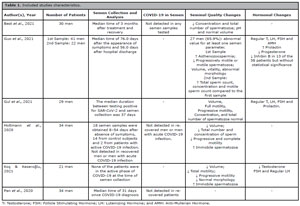
Table 1. Included studies characteristics.
T: Testosterone; FSH: Follicle Stimulating Hormone; LH: Luteinizing Hormone; and AMH: Anti-Mullerian Hormone.
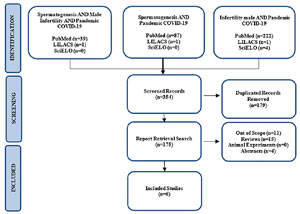
Figure 1. Methodological flowchart.
Presence of COVID-19 in semen
Within the scope of this review, we identified that only three studies examined the presence of viral RNA in the semen of men who had contracted SARS-CoV-2. Remarkably, across these three studies, the median duration between a positive SARS-CoV-2 test and semen collection was strikingly similar, with intervals of 31 days, 37 days, and 32 days. Notably, the virus was not detected in the semen of any of the men who had recovered from COVID-19 (Best et al., 2021; Holtmann et al., 2020; Pan et al., 2020).
Changes in seminal quality
Seven studies were scrutinized in our quest to assess whether there were alterations in seminal quality among men who experienced COVID-19 during the pandemic period. Among these studies, a single investigation reported no significant variations in spermogram results (Gul et al., 2021). However, the remaining studies revealed abnormal values for at least one semen parameter, emphasizing a potential impact on seminal quality (Best et al., 2021; Guo et al., 2021; Holtmann et al., 2020; Koç & Keseroğlu, 2021).
Hormonal changes in men with SARS-CoV-2 infection
Our analysis disclosed that only three studies provided insights into potential changes in serum levels of sex hormones among men diagnosed with COVID-19. Notably, one of these studies reported no hormonal alterations (Gul et al., 2021). In contrast, the remaining studies revealed varied hormonal changes, with one reporting a low testosterone level (Guo et al., 2021) and another noting an increased prolactin level and decreased progesterone (Koç & Keseroğlu, 2021).
DISCUSSION
The infection caused by COVID-19 is known to trigger an excessive and unregulated release of early response pro-inflammatory cytokines while also elevating oxidative stress through an augmented production of reactive oxygen species (ROS). The interplay between elevated ROS and pro-inflammatory cytokines, as discerned from an analysis of five articles examined in this study, appears to exhibit a potential negative correlation with seminal quality parameters.
Moreover, observations within the male patient cohort convalescing from COVID-19 reveal a distinctive trajectory. Initial impairment in seminal parameters at the onset of infection progressively trends toward normal values over time, as observed by Hajizadeh Maleki & Tartibian (2021).
However, within the extant literature, two studies, methodologically inclined toward assessing the broader repercussions of the pandemic as opposed to specifically investigating the impact of COVID-19 infection, were identified. Notably, neither the study by Sarier et al. (2022) nor the study by Kumar et al. (2023) diagnosed any patients with COVID-19, and both revealed no significant disparities in spermogram results. Curiously, Kumar et al. (2023) further demonstrated that in their pandemic group, the median sperm concentration, total sperm count, and total motility surpassed the pre-pandemic cohort.
Conversely, the preponderance of studies encompassed in this review concentrated on patients confirmed to have contracted COVID-19 and, in contrast, yielded conflicting outcomes. Two studies, led by Best et al. (2021) and Guo et al. (2021), disclosed significantly reduced sperm concentration and total sperm count in SARS-CoV-2 positive individuals when compared to their SARS-CoV-2 negative counterparts.
Another investigation underscored a reduction in semen volume, total motility percentage, progressive motility percentage, and normal sperm morphology in COVID-19-afflicted patients when contrasted with non-infected individuals (Koç & Keseroğlu, 2021). In the analysis by Holtmann et al. (2020), recovered COVID-19 patients were categorized as having experienced mild or moderate infections. Results illuminated that patients with moderate infections exhibited lower sperm volume, sperm concentration, total sperm count per ejaculate, total progressive motility, and total complete motility, alongside a higher prevalence of immobile sperm, when juxtaposed against their mild infection counterparts and the control group. These findings suggest a direct relationship between COVID-19’s effects on seminal quality parameters and the severity of the disease.
Furthermore, as elucidated in existing literature, testosterone, the principal androgen regulating spermatogenesis in the testes, is predominantly synthesized by Leydig cells in response to luteinizing hormone (LH) stimulation (Smith & Walker, 2014). This prompts the assertion that SARS-CoV-2 may exert an impact on Leydig cells via ACE2 receptors, potentially leading to diminished testosterone levels (T) and consequent repercussions on spermatogenesis, ultimately culminating in alterations in seminal parameters.
In alignment with the literature, the study conducted by Koç & Keseroğlu (2021) substantiated a significant decline in T levels following COVID-19 diagnosis. Despite limitations in participant numbers assessed for hormone levels, these findings are invaluable for presenting group analysis results contingent on a hormone, such as T, known for its considerable population-level variations. On the other hand, Gul et al. (2021) employed a distinct methodology, scrutinizing the prolonged effects of COVID-19 treatment on the male reproductive system. Their investigation, conducted within a timeframe spanning three to eight months post COVID-19 symptom resolution, unveiled that COVID-19 and its therapeutic interventions did not exert enduring impacts on serum androgen levels. Nevertheless, further extensive clinical studies are imperative to corroborate and reinforce our findings.
Guo et al. (2021) assessed hormone levels in patients who had tested positive for COVID-19, with an average of 76 days elapsing after the onset of symptoms and 56 days following hospital discharge. In their analysis, testosterone levels, luteinizing hormone (LH), and follicle-stimulating hormone (FSH) exhibited predominantly normal ranges. However, elevated prolactin levels were observed, which could potentially give rise to various physiological conditions, or these heightened levels may have been pre-existing in the patients, as no discernible evidence of recovery was observed in the subsequent sample collection.
Conversely, the findings from the study by Ma et al. (2020) present a divergence, wherein the authors reported increased LH levels and a notable decrease in the ratio of testosterone (T) to LH in men who had been infected with SARS-CoV-2. Collectively, these outcomes suggest a plausible impairment of Leydig cells. Acute inflammation, often accompanied by elevated C-reactive protein (CRP) and aberrant cytokine profiles, could potentially influence testicular function and spermatogenesis.
These divergent outcomes might be attributed to variations in the time elapsed between the cessation of COVID-19 symptoms and the collection of the samples. Ma et al. (2020) samples were collected from patients actively infected with SARS-CoV-2, whereas the studies examined within this review gathered samples post-recovery from the disease. Consequently, further investigations are warranted, particularly to examine the same individuals at distinct time intervals following SARS-CoV-2 infection (Gul et al., 2021; Guo et al., 2021; Koç & Keseroğlu, 2021).
It is recognized that certain viruses can negatively impact male fertility, albeit the precise mechanisms remain incompletely understood (Lins et al., 2022). An array of microorganisms, spanning bacteria, viruses, and protozoa, may infiltrate the male reproductive tract, leading to seminal quality deterioration. Furthermore, a diverse spectrum of virus families, including mumps, human immunodeficiency virus, human herpes virus, Ebola, and Zika, have been detected in human semen subsequent to infection (Liu et al., 2018).
In the context of SARS-CoV-2 infection, the heightened expression of angiotensin-converting enzyme 2 (ACE2) in Leydig cells, Sertoli cells, and germ cells renders the testes highly susceptible to SARS-CoV-2 infection and resultant damage (Lins et al., 2022). While two studies within the existing literature detected viral RNA in the semen of patients, the prevalence of such instances remained limited. Gacci et al. (2021) reported the presence of SARS-CoV-2 in the semen of a solitary patient (2.3%), observed 21 days after a second negative reverse transcription-polymerase chain reaction (RT-PCR) test, while Li et al. (2020) identified SARS-CoV-2 in the semen of 4 out of 15 patients (26.7%) in the acute stage of the infection and 2 out of 23 patients (8.7%) who were in the recovery phase.
Nonetheless, the data presented in this review reveals an alternative perspective, as the majority of the studies reported no detectable RNA through RT-PCR in semen, even within samples collected during acute COVID-19 infection (Best et al., 2021; Holtmann et al., 2020; Pan et al., 2020). The paucity of results derived from a broader sampling scope precludes definitive assertions regarding the presence of SARS-CoV-2 in semen and its potential for sexual transmission. As of the present moment, scientific evidence substantiating such transmission remains absent (Silva et al., 2021).
CONCLUSION
This study has explored potential connections between SARS-CoV-2 infection, diminished seminal quality, and hormonal fluctuations, though it’s crucial to underscore the lack of uniformity in these correlations. Varied research methodologies employed, and the relatively recent emergence of this infection collectively underscore the need for continued investigation.
As a novel health threat, the precise and comprehensive consequences of COVID-19 remain indeterminate. Consequently, the imperative for further research persists, aiming to comprehensively evaluate both the extent and the specific populations potentially impacted by COVID-19. This ongoing inquiry will be instrumental in advancing our understanding of the implications of this global health crisis.
LIST OF ABBREVIATIONS
Coronavirus 2019 (COVID-19)
Follicle stimulating hormone (FSH)
Luteinizing Hormone (LH)
Testosterone (T)
Angiotensin-Converting Enzyme 2 (ACE2)
Reactive Oxygen Species (ROS)
Ribonucleic acid (RNA)
REFERENCES
Best JC, Kuchakulla M, Khodamoradi K, Lima TFN, Frech FS, Achua J, Rosete O, Mora B, Arora H, Ibrahim E, Ramasamy R. Evaluation of SARS-CoV-2 in Human Semen and Effect on Total Sperm Number: A Prospective Observational Study. World J Mens Health. 2021;39:489-95. PMID: 33663031 DOI: 10.5534/wjmh.200192 Medline
Fernandes Q, Inchakalody VP, Merhi M, Mestiri S, Taib N, Moustafa Abo El-Ella D, Bedhiafi T, Raza A, Al-Zaidan L, Mohsen MO, Yousuf Al-Nesf MA, Hssain AA, Yassine HM, Bachmann MF, Uddin S, Dermime S. Emerging COVID-19 variants and their impact on SARS-CoV-2 diagnosis, therapeutics and vaccines. Ann Med. 2022;54:524-40. PMID: 35132910 DOI: 10.1080/07853890.2022.2031274 Medline
Gacci M, Coppi M, Baldi E, Sebastianelli A, Zaccaro C, Morselli S, Pecoraro A, Manera A, Nicoletti R, Liaci A, Bisegna C, Gemma L, Giancane S, Pollini S, Antonelli A, Lagi F, Marchiani S, Dabizzi S, Degl’Innocenti S, Annunziato F, et al. Semen impairment and occurrence of SARS-CoV-2 virus in semen after recovery from COVID-19. Hum Reprod. 2021;36:1520-9. PMID: 33522572 DOI: 10.1093/humrep/deab026 Medline
Gul A, Zengin S, Dundar G, Ozturk M. Do SARS-CoV-2 Infection (COVID-19) and the Medications Administered for Its Treatment Impair Testicular Functions? Urol Int. 2021;105:944-8. PMID: 34433173 DOI: 10.1159/000517925 Medline
Guo TH, Sang MY, Bai S, Ma H, Wan YY, Jiang XH, Zhang YW, Xu B, Chen H, Zheng XY, Luo SH, Xie XF, Gong CJ, Weng JP, Shi QH. Semen parameters in men recovered from COVID-19. Asian J Androl. 2021;23:479-83. PMID: 33975987 DOI: 10.4103/aja.aja_31_21 Medline
Hajizadeh Maleki B, Tartibian B. COVID-19 and male reproductive function: a prospective, longitudinal cohort study. Reproduction. 2021;161:319-31. PMID: 33522983 DOI: 10.1530/REP-20-0382 Medline
Holtmann N, Edimiris P, Andree M, Doehmen C, Baston-Buest D, Adams O, Kruessel JS, Bielfeld AP. Assessment of SARS-CoV-2 in human semen-a cohort study. Fertil Steril. 2020;114:233-8. PMID: 32650948 DOI: 10.1016/j.fertnstert.2020.05.028 Medline
Koç E, Keseroğlu BB. Does COVID-19 Worsen the Semen Parameters? Early Results of a Tertiary Healthcare Center. Urol Int. 2021;105:743-8. DOI: 10.1159/000517276 PMID: 34265771 DOI: 10.1159/000517276 Medline
Kumar T, Jha K, Zabihullah M, Neelu K, Kumar Y, Siddharth K. Effects of the COVID-19 pandemic on semen quality in male partners of infertile couples: a hospital-based observational study. Asian J Androl. 2023;25:240-4. PMID: 36348579 DOI: 10.4103/aja202278 Medline
Liu W, Han R, Wu H, Han D. Viral threat to male fertility. Andrologia. 2018;50:e13140. PMID: 30569651 DOI: 10.1111/and.13140 Medline
Ma H, Zhu J, Liu J, Zhang X, Liu Y, Yang Q. Hospital biosecurity capacitation: Analysis and recommendations for the prevention and control of COVID-19. J Biosaf Biosecur. 2020;2:5-9. PMID: 32835179 DOI: 10.1016/j.jobb.2020.05.001 Medline
Pan F, Xiao X, Guo J, Song Y, Li H, Patel DP, Spivak AM, Alukal JP, Zhang X, Xiong C, Li PS, Hotaling JM. No evidence of severe acute respiratory syndrome-coronavirus 2 in semen of males recovering from coronavirus disease 2019. Fertil Steril. 2020;113:1135-9. PMID: 32482249 DOI: 10.1016/j.fertnstert.2020.04.024 Medline
Safiabadi Tali SH, LeBlanc JJ, Sadiq Z, Oyewunmi OD, Camargo C, Nikpour B, Armanfard N, Sagan SM, Jahanshahi-Anbuhi S. Tools and Techniques for Severe Acute Respiratory Syndrome Coronavirus 2 (SARS-CoV-2)/COVID-19 Detection. Clin Microbiol Rev. 2021;34:e00228-20. PMID: 33980687 DOI: 10.1128/CMR.00228-20 Medline
Sarier M, Demir M, Emek M, Usta SS, Soylu A, Konuk EY, Turgut H. Comparison of spermiograms of infertile men before and during the COVID-19 pandemic. Rev Assoc Med Bras (1992). 2022;68:191-5. PMID: 35239880 DOI: 10.1590/1806-9282.20210935 Medline
Smith LB, Walker WH. The regulation of spermatogenesis by androgens. Semin Cell Dev Biol. 2014;30:2-13. PMID: 24598768 DOI: 10.1016/j.semcdb.2014.02.012 Medline
WHO-World Health Organization. Infertility. Geneva: WHO; 2023. Available at: https://www.who.int/news-room/fact-sheets/detail/infertility