JBRA Assist. Reprod. 2025;29(1):53-60
ORIGINAL ARTICLE
doi: 10.5935/1518-0557.20240089
Protective Effects of Adipose Mesenchymal Stem Cell Secretome On Oxidative Stress-Induced Bisphenol-A in Isolated Rat Testes Mitochondria and Sperm Quality
1Student Research Committee, Ahvaz Jundishapur University of Medical Sciences, Ahvaz, Iran
2Department of Anatomical Sciences, Faculty of Medicine, Ahvaz Jundishapur University of Medical Sciences, Ahvaz, Iran
3Cellular and Molecular Research Center, Medical Basic Sciences Research Institute, Ahvaz Jundishapur University of Medical Sciences, Ahvaz, Iran
4Department of Anatomy, School of Medicine, Arak University of Medical Sciences, Arak, Iran
5Department of Anatomy, School of Medicine, Fasa University of Medical Sciences, Fasa, Iran
CONFLICT OF INTEREST
The authors have no conflict of interest.
ABSTRACT
Objective: This study aimed to explore the potential protective effects of adipose-derived mesenchymal stem cell secretome (ASE) on oxidative stress triggered by Bisphenol-A (BisA) exposure in testicular mitochondria and sperm quality of rats.
Methods: Testicular tissue mitochondria and sperms were exposed to BisA (8 μM) and ASE (50 or 100 μg). ΔΨm (mitochondrial membrane potential), reactive oxygen species (ROS) levels, antioxidant biomarkers, and sperm parameters were measured.
Results: BisA elevated biomarkers of oxidative stress in mitochondria, while the levels of antioxidant activity and ΔΨm decreased significantly. BisA harmed the morphology, survival rate, and mobility of the spermatozoids. ASE lowered malondialdehyde contents and ROS generation in the mitochondria, increased ΔΨm, and reversed sperm quality.
Conclusions: These data indicated that ASE effectively reduced BisA-induced damage to mitochondria and enhanced sperm quality by averting oxidative stress.
Keywords: adipose-derived mesenchymal stem cell, secretome, Bisphenol-A, sperm, mitochondria
INTRODUCTION
Infertility affects approximately 12% of the global population. The increased prevalence of infertility has been attributed to various factors such as a sedentary lifestyle, nutritional behavior, and environmental pollution (Bader et al., 2019). Bisphenol-A (BisA) is a prominent plasticizer known for its exceptional cross-linking properties. Human exposure to BisA can occur through inhalation, dermal contact, and consumption of water and foods stored in plastic packaging (Liu et al., 2022). Exposure to BisA has been associated with a range of health issues, particularly disorders affecting reproductive function.
BisA causes male reproductive toxicity, resulting in decreased sperm quality, reduced testosterone synthesis, and impaired supporting cell functions (Singh et al., 2015; Tao et al., 2019; Li et al., 2021; Qi et al., 2024). Different doses of BisA reduce sperm motility in fish, bovines, mice, and chickens (Hulak et al., 2013; Lukacova et al., 2015; Singh et al., 2015). Chronic exposure to BisA decreased mouse sperm motility and impaired germ cell proliferation (Liu et al., 2020). Furthermore, paternal exposure to BisA in CD-1 mice decreased total sperm counts and sperm motility among the offspring (Rahman et al., 2015).
BisA induces cellular toxicity by interfering with the function and structure of mitochondria. Exposure to BisA results in oxidative stress and alterations in mitochondrial biogenesis, mitochondrial membrane potential (ΔΨm), and mitochondrial DNA (Wang et al., 2019; Nayak et al., 2022; Meng et al., 2024; Qi et al., 2024). BisA impairs the function of mitochondria by reducing ATP and lowering mitochondrial mass (Kaur et al., 2018), which harms sperm motility. BisA reduces ΔΨm in chicken sperms (Singh et al., 2015) and elevates reactive oxygen species (ROS) levels in bovine and fish spermatozoa (Hulak et al., 2013; Lukacova et al., 2015). Accumulation of ROS may be responsible for causing BisA-induced germ cell toxicity (Wang et al., 2019; Nayak et al., 2022; Qi et al., 2024). The physiological amount of ROS regulates normal spermatogenesis, while disruption of the oxidant-antioxidant system damages spermatogenesis and induces male infertility (Zhang et al., 2023a). In the study of Khazaeel et al. (2022), BisA significantly declined normal sperm morphology, sperm count, motility, count, well as testosterone levels, CAT (catalase), and SOD (superoxide dismutase) activity. Also, BisA significantly increased the sperm anomalies, and MDA amount (Khazaeel et al., 2022).
Mesenchymal stem cells (MSCs) for treating reproductive disorders have attracted the attention of recent researchers (Ahmed et al., 2021; Zhang et al., 2023b). MSCs derived from human amniotic membranes, bone marrow, and umbilical cords can improve chemical-induced testicular injuries (Qian et al., 2020). Nafchi et al. (2024) reported that adipose-derived MSCs (ASCs) conditioned media improves human sperm count and motility. Adipose tissue, commonly known as fat, is abundant in the human body and can be easily harvested through minimally invasive procedures such as liposuction. This makes it a convenient and accessible source of stem cells for regenerative medicine and tissue engineering applications (Schneider et al., 2017).
ASCs release hormones and growth factors into the surrounding environment, known as secretome (SE). SE derived from ASCs (ASE) has been reported to repair some degenerative disorders (Mehrabani et al., 2015). SE has various advantages compared to cell-based therapies, such as being easily obtained, freeze-dried, packed, and transported (Khodayar et al., 2022). ASE improved dog sperm quality after freezing and thawing (Qamar et al., 2020). The co-culture of ASE improved human sperm vacuolization and DNA fragmentation (Bader et al., 2019). Moreover, the antioxidant properties of ASCs and ASE have been reported (Kim et al., 2008; Tofiño-Vian et al., 2018; Alonso-Alonso et al., 2020). Microvesicles from ASCs suppress oxidative stress in Osteoarthritic chondrocytes (Tofiño-Vian et al., 2018). Another study reported the antioxidant property of ASCs in damaged alveolar epithelial cells (Peñuelas et al., 2013).
Since the accumulation of ROS is the main mechanism of BisA-mediated mitochondrial dysfunction (Gassman, 2017; Nayak et al., 2022), targeting the oxidative stress pathway may reverse the toxic effects of BisA on male germ cells. Due to the antioxidant and other beneficial impacts of ASE, this study aimed to investigate the protective effect of ASE against BSA-induced mitochondrial oxidative stress and sperm quality in rats.
MATERIALS AND METHODS
Study design (Figure 1)
Fifteen male Wistar rats (200-250 g) contributed their sperm and mitochondria to the study. The current study was approved by the Animal Research Ethics Committee (IR.AJUMS.ABHC.REC.1399.018).
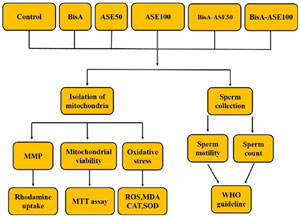
Figure 1. Schematic illustration detailing the experimental design of the study.
The epididymis sperm were separated and classified into the groups listed below:
Control. Given only Ham’s F-10 media for four hours.
BisA. Received BisA (0.8 μM) for two hours
ASE50+ BisA. Received 50 μg of ASE, respectively, for two hours before BisA.
ASE100+ BisA. Received 100 μg of ASE, respectively, for two hours before BisA.
ASE100. Received 100 μg ASE for four hours
ASE or BisA treatment was applied to 5×10⁶ sperm/mL within each group. Because the untreated sperm expired after 4 hours, treatment with ASE or BisA was limited to a total of 4 hours. BisA (Sigma) was dissolved in 0.1% DMSO and mixed with Ham’s F-10 media. Concentration levels of BisA were determined using the results from the MTT test (Table 1).
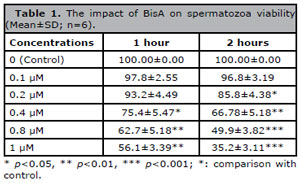
Table 1. The impact of BisA on spermatozoa viability (Mean±SD; n=6).
Secretome Preparation
The characterized ASCs were obtained from the Royan Institute in Tehran, Iran. In short, the ASCs (1 × 10⁵ cells/well) were seeded onto 6-well plates and incubated in complete media. When reaching 80% confluence, the cells were washed with Hanks’ solution and cultured in serum-free media containing low glucose DMEM (Gibco, USA), 100 U/ml penicillin/streptomycin (Sigma, USA), 2mM L-glutamine (Sigma, USA), and 10% AdvanceSTEM Stem Cell Growth (GE Life Sciences, USA) for three days. After collection, the conditioned media was subjected to centrifugation at 800. g for ten minutes to remove cell debris. The conditioned medium underwent a second round of centrifugation using an Amicon Ultra-15 centrifugal filter (Sigma, USA) for two hours. The protein concentrations in the supernatants were quantified using a Bradford assay and stored at -70°C.
Mitochondria Isolation
The testicular tissues were chopped up and placed in a liquid mixture containing fat-free BSA (0.1%), sucrose (250mM), HEPES-KOH (5mM), EGTA (0.2mM), and EDTA (0.1mM). The sample, after the homogenization process, underwent four rounds of centrifugation in an isolating buffer containing 1.0 M sucrose, 0.5 M MgCl2, 0.1 M KCl, 0.1 M EGTA, 0.1 M K2HPO4, 1.0 M mannitol, 0.1 M MOPS, 0.5 M HEPES, 10% BSA, 0.5 M glutamate, and 1.0 M succinate at a temperature of 4°C to separate the mitochondrial fractions: once at 3,000· g (for 10 min) and three times at 10,000·g (for 7 min each). The protein concentrations in the supernatants were quantified using a Bradford assay and stored at -70°C.
Sperm Parameters
The epididymis was dissected and placed in a 1% trisodium citrate solution (1 mL) for eight minutes. Eight mL of the trisodium citrate solution were added and mixed for one minute. The spermatozoa suspension was diluted in 10% formalin at a 1:1 ratio. Spermatozoa were counted using a Neubauer hemocytometer. A 100 µL sperm suspension was placed on a glass slide for morphological observation. Morphological evaluation was performed on 100 spermatozoa in each mouse. Sperm mobility was assessed according to the protocols established by the World Health Organization. Suspended sperm (10 μL) was poured into the semen analysis chamber. Six fields were evaluated for the motility rate of at least 200 sperm for each specimen.
Determining antioxidant levels, MDA content, and ROS formation
The mitochondria were incubated in DCFH-DA (10 μM; Sigma) along with Hanks buffered salt solution (100 μL) for 25 minutes. The ROS levels were determined using a spectrofluorometer with an excitation wavelength of 490 nm and an emission wavelength of 570 nm. Levels of superoxide dismutase (SOD), catalase (CAT), as well as malondialdehyde (MDA) were examined using commercially available kits from ZellBio Company.
Mitochondrial membrane potential (ΔΨm) evaluation
The mixture of Rhodamine 123 (10 μM) and mitochondrial fractions was prepared. The fluorescence was recorded using a spectrophotometer (LS50B, USA) with an excitation wavelength of 490 nm and an emission wavelength of 535 nm.
Statistical Analysis
In this study, the data were analyzed using a one-way analysis of variance in SPSS (version 21.0), with post-hoc pairwise comparisons. Statistical significance was determined for the p-values less than 0.05.
RESULTS
Sperm Quality
ASE (100 µg) had no significant impact on the number, motility, and typical morphology of the sperms. In the treatment with BisA, a noticeable reduction in sperm motility and numbers (p<0.01) was observed compared to the control. Bis-A significantly increased the percentage of immotile sperms compared to the control (p<0.01). ASE pretreatment, concentration-dependently, caused a significant reduction in the number of immotile sperm while enhancing overall sperm motility in the BisA treatment (Figure 2).
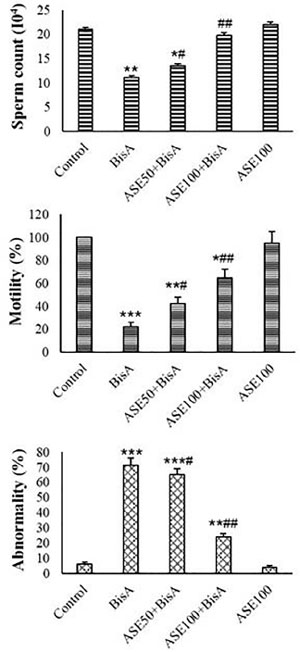
Figure 2. Total rat sperm motility (%), abnormality (%), and count in the various groups (mean±SD, n=5). * and # indicate comparisons against control and BisA-treated groups, respectively.
The level of abnormality in sperm exposed to BisA was significantly more than the control (p<0.01). Pre-exposure to ASE resulted in a dose-dependent decrease in sperm abnormalities compared to the BisA group. ASE at the concentration of 100 µg had a more positive impact on sperm quality than the 50 µg (Figure 2).
Antioxidant levels, MDA content, and ROS formation
No significantly lower levels of MDA and ROS were observed in the groups that received ASE (100 µg) compared to the control. Levels of ROS and MDA showed a significant increase in the BisA group compared to the control (p<0.01). ASE concentration-dependently reduced MDA and ROS levels in the BisA-exposed mitochondria (Figure 3). The mitochondria exposed to only ASE (100 µg) exhibited no significantly higher levels of CAT and SOD activity than the untreated groups. Treatment with BisA resulted in decreased activity of CAT and SOD enzymes in the isolated mitochondria compared to the control (p<0.001). In a concentration-dependent way, ASE reversed the CAT and SOD activity of the mitochondria. ASE at the concentration of 100 µg had more effect on the reducing MDA and ROS levels and increased activity of CAT and SOD enzymes compared to the 50 µg (Figure 4).
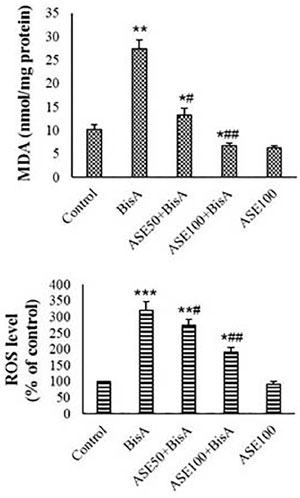
Figure 3. ROS and MDA levels in the mitochondrial fractions (mean±SD, n=5). * and # indicate comparisons with untreated control and BisA-treated groups, respectively.
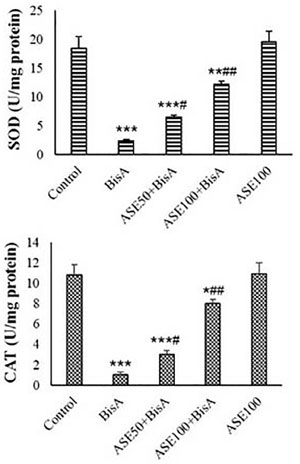
Figure 4. CAT and SOD levels in the mitochondrial fractions (mean±SD, n=5). * and # indicate comparisons with untreated control and BisA-treated groups, respectively.
ΔΨm Assay
ΔΨm was not significantly changed in ASE (100 µg)-treated cells compared to the control. There was a significant decrease in ??m within the BisA group compared to the control group (p<0.01) (Figure 5). ASE could dose-dependently reverse the ΔΨm of BisA-exposed mitochondria. 100 µg of ASE showed more impact on the ΔΨm than 50 µg (p<0.01).
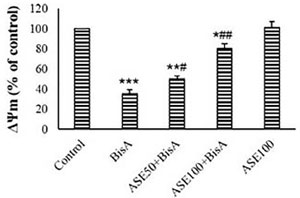
Figure 5. ΔΨm measurement in different groups (mean±SD, n=5). * and # indicate comparisons against untreated control and BisA-treated groups, respectively.
DISCUSSION
In this study, ASE could improve sperm quality, attenuate oxidative stress, and increase ΔΨm of BisA-exposed sperm and testicular tissue mitochondria. BisA significantly decreased sperm motility, normal morphology, and sperm count. In parallel with our results, previous studies conducted in humans and animals revealed the negative impacts of BisA on sperm parameters (Knez et al., 2014; Kotwicka et al., 2016; Cariati et al., 2019; Liu et al., 2020; Khazaeel et al., 2022; Lü et al., 2024). An increased number of abnormal spermatozoa after 4 hours of BisA exposure was reported by Nguyen et al. (2022). A meta-analysis study revealed that BisA impairs sperm quality (Lü et al., 2024).
In our study, the decreased sperm quality caused by Bisphenol A (BisA) was associated with increased MDA and ROS levels within the isolated testicular tissue mitochondria. The overproduction of ROS hurts spermatozoa, resulting in elevated MDA production and subsequent lipid peroxidation (Hsieh et al., 2006; Wagner et al., 2017).
Due to low cytoplasm, spermatozoa lack mechanisms for relieving oxidative damage (Agarwal et al., 2014). Additionally, the rich polyunsaturated fatty acids of sperm membranes make them susceptible to oxidative damage through lipid peroxidation (de Lamirande & Gagnon, 1995; Alahmar, 2019; Rahman & Pang, 2019). Other studies have also demonstrated enhanced lipid peroxidation and ROS levels following exposure to BisA in spermatozoa (Rahman et al., 2016; Gassman, 2017).
The ROS elevation levels were along with a decrease in ΔΨm in the BisA group. Exposure to BisA can cause a reduction in ΔΨm for human sperm, even at very low doses (Grami et al., 2020). The regulation role of the ΔΨm is crucial for maintaining mitochondrial function, structure, and metabolism. Additionally, ΔΨm regulates ROS generation and removes damaged mitochondria (Zorov et al., 2014). BisA alters ΔΨm to promote mitochondrial dysfunction and negatively affects ATP levels in mouse spermatozoa (Kaur et al., 2014; Jiang et al., 2015; Rahman et al., 2016; Shirani et al., 2019).
The decreased sperm quality in the BisA group was along with a reduction in ΔΨm. ΔΨm has a direct positive impact on both the mobility and quantity of sperm cells (Madeja et al., 2021). BisA-mediated mitochondrial dysfunction may stimulate the mitophagy pathway (Meng et al., 2024), thus interfering with mitochondrial mass.
Moreover, Bisphenol A (BisA) may induce germ cell apoptosis leading to decreased sperm quality. The decreased ΔΨm by BisA supports this hypothesis (Zhang et al., 2019). The apoptotic impact of BisA on testicular cells has been reported in many studies (Zhang et al., 2017, 2023a; Chen et al., 2022). Increased germ cell apoptosis was observed during sperm development following postnatal exposure to BisA (Shaha et al., 2010; Xie et al., 2016).
Our research revealed that ASE improved sperm count, normal morphology rate, and motility of the rats treated with BisA, corroborating findings from previous studies (Bader et al., 2019; Qamar et al., 2020). Bader et al. (2019) demonstrated that ASE improves sperm motility and viability. ASE may enhance sperm quality by suppressing apoptosis. In addition, ASE might reduce levels of ROS by enhancing ΔΨm, which could subsequently decrease germ cell apoptosis. The antiapoptotic impact of ASE has been reported in previous studies (Jiao et al., 2021; Seo et al., 2022). ASCs inhibited apoptosis caused by ionizing radiation in the testicular tissue (Cetinkaya-Un et al., 2022). Jiao et al. (2021) reported that ASE reversed the ischemia-reperfusion-induced by decreasing the P53, Bax, Fas, FasL, and Bcl-2 expression.
In our study, the enhanced SOD and CAT levels indicate the antioxidant properties of ASE against BisA. The antioxidant effects of ASCs have also been demonstrated in dermal fibroblasts, degenerative diseases of the retina, and osteoarthritic chondrocytes (Kim et al., 2008; Tofiño-Vian et al., 2018; Alonso-Alonso et al., 2020). Based on our findings, ASE exhibited a concentration-dependent reversal of ΔΨm and ROS production. Therefore, ASE may protect testicular mitochondria by minimizing oxidative stress. This data aligns with existing research that shows the positive effects of ASE on mitochondrial function (Ma et al., 2022).
The secretome derived from other sources of the MSCs has also been shown to have positive impacts on sperm parameters. Cai et al. (2021) reported that bone marrow-derived secretome improves spermatogenesis in mice with busulfan-induced azoospermia. Canine amniotic membrane-derived MSCs protected dog sperm in the freezing and thawing processes (Mahiddine et al., 2020).
CONCLUSION
In summary, ASE improved ΔΨm and declined mitochondrial oxidative damages. ASE also enhanced rat sperm quality. It is suggested that ASE might ameliorate Bis-A-induced mitochondrial injury and rat sperm quality impairment by inhibiting oxidative stress. Future studies are required to clarify the mechanism of ASE on spermatozoa and mitochondrial-related pathways such as mitophagy and apoptosis. This primary study stimulates the research to explore ASE’s benefits on male infertility disorders.
ACKNOWLEDGMENT
Student Research Committee of Ahvaz Jundishapur University granted this study (Grant No: 99s33).
Ethical Approval
The Animal Research Ethics Committee (IR.AJUMS.ABHC.REC.1399.018) approved the current study of Ahvaz Jundishapur University of Medical Sciences.
REFERENCES
Agarwal A, Virk G, Ong C, du Plessis SS. Effect of oxidative stress on male reproduction. World J Mens Health. 2014;32:1-7. PMID: 24872947 DOI: 10.5534/wjmh.2014.32.1.1 Medline
Ahmed EA, Ahmed OM, Fahim HI, Mahdi EA, Ali TM, Elesawy BH, Ashour MB. Combinatory Effects of Bone Marrow-Derived Mesenchymal Stem Cells and Indomethacin on Adjuvant-Induced Arthritis in Wistar Rats: Roles of IL-1β, IL-4, Nrf-2, and Oxidative Stress. Evid Based Complement Alternat Med. 2021;2021:8899143. PMID: 33488761 DOI: 10.1155/2021/8899143 Medline
Alahmar AT. Role of Oxidative Stress in Male Infertility: An Updated Review. J Hum Reprod Sci. 2019;12:4-18. PMID: 31007461 DOI: 10.4103/jhrs.JHRS_150_18 Medline
Alonso-Alonso ML, Srivastava GK, Usategui-Martín R, García-Gutierrez MT, Pastor JC, Fernandez-Bueno I. Mesenchymal Stem Cell Secretome Enhancement by Nicotinamide and Vasoactive Intestinal Peptide: A New Therapeutic Approach for Retinal Degenerative Diseases. Stem Cells Int. 2020;2020:9463548. PMID: 32676122 DOI: 10.1155/2020/9463548 Medline
Bader R, Ibrahim JN, Mourad A, Moussa M, Azoury J, Azoury J, Alaaeddine N. Improvement of Human Sperm Vacuolization and DNA Fragmentation Co-Cultured with Adipose-Derived Mesenchymal Stem Cell Secretome: In Vitro Effect. Int J Stem Cells. 2019;12:388-99. PMID: 31474028 DOI: 10.15283/ijsc19047 Medline
Cai YT, Xiong CL, Liu TS, Shen SL, Rao JP, Qiu F. Secretions released from mesenchymal stem cells improve spermatogenesis restoration of cytotoxic treatment with busulfan in azoospermia mice. Andrologia. 2021;53:e14144. PMID: 34143903 DOI: 10.1111/and.14144 Medline
Cariati F, D’Uonno N, Borrillo F, Iervolino S, Galdiero G, Tomaiuolo R. “Bisphenol a: an emerging threat to male fertility”. Reprod Biol Endocrinol. 2019;17:6. PMID: 30660193 DOI: 10.1186/s12958-018-0447-6 Medline
Cetinkaya-Un B, Un B, Akpolat M, Andic F, Yazir Y. Human Amnion Membrane-Derived Mesenchymal Stem Cells and Conditioned Medium Can Ameliorate X-Irradiation-Induced Testicular Injury by Reducing Endoplasmic Reticulum Stress and Apoptosis. Reprod Sci. 2022;29:944-54. PMID: 34642916 DOI: 10.1007/s43032-021-00753-6 Medline
Chen H, Chen J, Shi X, Li L, Xu S. Naringenin protects swine testis cells from bisphenol A-induced apoptosis via Keap1/Nrf2 signaling pathway. Biofactors. 2022;48:190-203. PMID: 34914851 DOI: 10.1002/biof.1814 Medline
de Lamirande E, Gagnon C. Impact of reactive oxygen species on spermatozoa: a balancing act between beneficial and detrimental effects. Hum Reprod. 1995;10:15-21. PMID: 8592032 DOI: 10.1093/humrep/10.suppl_1.15 Medline
Gassman NR. Induction of oxidative stress by bisphenol A and its pleiotropic effects. Environ Mol Mutagen. 2017;58:60-71. PMID: 28181297 DOI: 10.1002/em.22072 Medline
Grami D, Rtibi K, Hammami I, Selmi S, De Toni L, Foresta C, Marzouki L, Sebai H. Protective Action of Eruca sativa Leaves Aqueous Extracts Against Bisphenol A-Caused In Vivo Testicular Damages. J Med Food. 2020;23:600-10. PMID: 31859581 DOI: 10.1089/jmf.2019.0170 Medline
Hsieh YY, Chang CC, Lin CS. Seminal malondialdehyde concentration but not glutathione peroxidase activity is negatively correlated with seminal concentration and motility. Int J Biol Sci. 2006;2:23-9. PMID: 16680200 DOI: 10.7150/ijbs.2.23 Medline
Hulak M, Gazo I, Shaliutina A, Linhartova P. In vitro effects of bisphenol A on the quality parameters, oxidative stress, DNA integrity and adenosine triphosphate content in sterlet (Acipenser ruthenus) spermatozoa. Comp Biochem Physiol C Toxicol Pharmacol. 2013;158:64-71. PMID: 23680852 DOI: 10.1016/j.cbpc.2013.05.002 Medline
Jiang Y, Xia W, Yang J, Zhu Y, Chang H, Liu J, Huo W, Xu B, Chen X, Li Y, Xu S. BPA-induced DNA hypermethylation of the master mitochondrial gene PGC-1α contributes to cardiomyopathy in male rats. Toxicology. 2015;329:21-31. PMID: 25572651 DOI: 10.1016/j.tox.2015.01.001 Medline
Jiao Z, Ma Y, Wang Y, Liu T, Zhang Q, Liu X, Piao C, Liu B, Wang H. Protective Effect of Adipose-Derived Mesenchymal Stem Cell Secretome against Hepatocyte Apoptosis Induced by Liver Ischemia-Reperfusion with Partial Hepatectomy Injury. Stem Cells Int. 2021;2021:9969372. PMID: 34457008 DOI: 10.1155/2021/9969372 Medline
Kaur K, Chauhan V, Gu F, Chauhan A. Bisphenol A induces oxidative stress and mitochondrial dysfunction in lymphoblasts from children with autism and unaffected siblings. Free Radic Biol Med. 2014;76:25-33. PMID: 25101517 DOI: 10.1016/j.freeradbiomed.2014.07.030 Medline
Kaur S, Saluja M, Bansal MP. Bisphenol A induced oxidative stress and apoptosis in mice testes: Modulation by selenium. Andrologia. 2018;50. PMID: 28719015 DOI: 10.1111/and.12834 Medline
Khazaeel K, Rad OR, Jamshidian J, Tabandeh MR, Mohammadi G, Atashfaraz A. Effect of bromelain on sperm quality, testicular oxidative stress and expression of oestrogen receptors in bisphenol-A treated male mice. Andrologia. 2022;54:e14584. PMID: 36068179 DOI: 10.1111/and.14584 Medline
Kim WS, Park BS, Kim HK, Park JS, Kim KJ, Choi JS, Chung SJ, Kim DD, Sung JH. Evidence supporting antioxidant action of adipose-derived stem cells: protection of human dermal fibroblasts from oxidative stress. J Dermatol Sci. 2008;49:133-42. PMID: 17870415 DOI: 10.1016/j.jdermsci.2007.08.004 Medline
Knez J, Kranvogl R, Breznik BP, Vončina E, Vlaisavljević V. Are urinary bisphenol A levels in men related to semen quality and embryo development after medically assisted reproduction? Fertil Steril. 2014;101:215-221.e5. PMID: 24182411 DOI: 10.1016/j.fertnstert.2013.09.030 Medline
Li C, Zhang L, Ma T, Gao L, Yang L, Wu M, Pang Z, Wang X, Yao Q, Xiao Y, Zhao L, Liu W, Zhao H, Wang C, Wang A, Jin Y, Chen H. Bisphenol A attenuates testosterone production in Leydig cells via the inhibition of NR1D1 signaling. Chemosphere. 2021;263:128020. PMID: 33297044 DOI: 10.1016/j.chemosphere.2020.128020 Medline
Liu F, Whitley J, Ng NL, Lu H. Time-Resolved Single-Cell Assay for Measuring Intracellular Reactive Oxygen Species upon Exposure to Ambient Particulate Matter. Environ Sci Technol. 2020; 54:13121-130. PMID: 32914962. DOI: 10.1021/acs.est.0c02889 Medline
Liu R, Cai D, Li X, Liu B, Chen J, Jiang X, Li H, Li Z, Teerds K, Sun J, Bai W, Jin Y. Effects of Bisphenol A on reproductive toxicity and gut microbiota dysbiosis in male rats. Ecotoxicol Environ Saf. 2022;239:113623. PMID: 35567931 DOI: 10.1016/j.ecoenv.2022.113623 Medline
Lü L, Liu Y, Yang Y, He J, Luo L, Chen S, Xing H. Bisphenol A Exposure Interferes with Reproductive Hormones and Decreases Sperm Counts: A Systematic Review and Meta-Analysis of Epidemiological Studies. Toxics. 2024;12:294. PMID: 38668517 DOI: 10.3390/toxics12040294 Medline
Lukacova J, Jambor T, Knazicka Z, Tvrda E, Kolesarova A, Lukac N. Doseand time-dependent effects of bisphenol A on bovine spermatozoa in vitro. J Environ Sci Health A Tox Hazard Subst Environ Eng. 2015;50:669-76. PMID: 25901847 DOI: 10.1080/10934529.2015.1011963 Medline
Ma Y, Jiao Z, Liu X, Zhang Q, Piao C, Xu J, Wang H. Protective effect of adipose-derived stromal cell-secretome attenuate autophagy induced by liver ischemia-reperfusion and partial hepatectomy. Stem Cell Res Ther. 2022;13:427. PMID: 35987696 DOI: 10.1186/s13287-022-03109-2 Medline
Madeja ZE, Podralska M, Nadel A, Pszczola M, Pawlak P, Rozwadowska N. Mitochondria Content and Activity Are Crucial Parameters for Bull Sperm Quality Evaluation. Antioxidants (Basel). 2021;10:1204. PMID: 34439451 DOI: 10.3390/antiox10081204 Medline
Mahiddine FY, Kim JW, Qamar AY, Ra JC, Kim SH, Jung EJ, Kim MJ. Conditioned Medium from Canine Amniotic Membrane-Derived Mesenchymal Stem Cells Improved Dog Sperm Post-Thaw Quality-Related Parameters. Animals (Basel). 2020;10:1899. PMID: 33081332 DOI: 10.3390/ani10101899 Medline
Mehrabani D, Hassanshahi MA, Tamadon A, Zare S, Keshavarz S, Rahmanifar F, Dianatpour M, Khodabandeh Z, Jahromi I, Tanideh N, Ramzi M, Aqababa H, Kuhi-Hoseinabadi O. Adipose tissue-derived mesenchymal stem cells repair germinal cells of seminiferous tubules of busulfan-induced azoospermic rats. J Hum Reprod Sci. 2015;8:103-10. PMID: 26157302 DOI: 10.4103/0974-1208.158618 Medline
Meng L, Ouyang Z, Chen Y, Huang C, Yu Y, Fan R. Low-dose BPA-induced neuronal energy metabolism dysfunction and apoptosis mediated by PINK1/parkin mitophagy pathway in juvenile rats. Sci Total Environ. 2024;929:172655. PMID: 38653419 DOI: 10.1016/j.scitotenv.2024.172655 Medline
Nafchi HG, Azizi Y, Halvaei I. Effect of Conditioned Medium from Human Adipose-Derived Mesenchymal Stem Cells on Human Sperm Quality During Cryopreservation. Reprod Sci. 2024;31:1586-92. PMID: 38448740 DOI: 10.1007/s43032-024-01505-y Medline
Nguyen HTT, Dang HNT, Nguyen TTT, Nguyen TV, Dang TC, Nguyen QHV, Le MT. Correlations between abnormalities of morphological details and DNA fragmentation in human sperm. Clin Exp Reprod Med. 2022;49:40-8. PMID: 35255657 DOI: 10.5653/cerm.2021.04777 Medline
Peñuelas O, Melo E, Sánchez C, Sánchez I, Quinn K, Ferruelo A, Pérez-Vizcaíno F, Esteban A, Navajas D, Nin N, Lorente JA, Farré R. Antioxidant effect of human adult adipose-derived stromal stem cells in alveolar epithelial cells undergoing stretch. Respir Physiol Neurobiol. 2013;188:1-8. PMID: 23643709 DOI: 10.1016/j.resp.2013.04.007 Medline
Qamar AY, Fang X, Kim MJ, Cho J. Improved viability and fertility of frozen-thawed dog sperm using adipose-derived mesenchymal stem cells. Sci Rep. 2020;10:7034. PMID: 32341452 DOI: 10.1038/s41598-020-61803-8 Medline
Qi Q, Yang J, Li S, Liu J, Xu D, Wang G, Feng L, Pan X. Melatonin alleviates oxidative stress damage in mouse testes induced by bisphenol A. Front Cell Dev Biol. 2024;12:1338828. PMID: 38440074 DOI: 10.3389/fcell.2024.1338828 Medline
Qian C, Meng Q, Lu J, Zhang L, Li H, Huang B. Human amnion mesenchymal stem cells restore spermatogenesis in mice with busulfan-induced testis toxicity by inhibiting apoptosis and oxidative stress. Stem Cell Res Ther. 2020;11:290. PMID: 32678012 DOI: 10.1186/s13287-020-01803-7 Medline
Rahman MS, Kwon WS, Lee JS, Yoon SJ, Ryu BY, Pang MG. Bisphenol-A affects male fertility via fertility-related proteins in spermatozoa. Sci Rep. 2015;5:9169. PMID: 25772901 DOI: 10.1038/srep09169 Medline
Rahman MS, Kwon WS, Yoon SJ, Park YJ, Ryu BY, Pang MG. A novel approach to assessing bisphenol-A hazards using an in vitro model system. BMC Genomics. 2016;17:577. PMID: 27507061 DOI: 10.1186/s12864-016-2979-5 Medline
Rahman MS, Pang MG. Understanding the molecular mechanisms of bisphenol A action in spermatozoa. Clin Exp Reprod Med. 2019;46:99-106. PMID: 31484226 DOI: 10.5653/cerm.2019.00276 Medline
Schneider S, Unger M, van Griensven M, Balmayor ER. Adipose-derived mesenchymal stem cells from liposuction and resected fat are feasible sources for regenerative medicine. Eur J Med Res. 2017;22:17. PMID: 28526089 DOI: 10.1186/s40001-017-0258-9 Medline
Seo H, Choi HJ, Kim OH, Park JH, Hong HE, Kim SJ. The secretome obtained under hypoxic preconditioning from human adipose-derived stem cells exerts promoted anti-apoptotic potentials through upregulated autophagic process. Mol Biol Rep. 2022;49:8859-70. PMID: 35941418 DOI: 10.1007/s11033-022-07736-z Medline
Shaha C, Tripathi R, Mishra DP. Male germ cell apoptosis: regulation and biology. Philos Trans R Soc Lond B Biol Sci. 2010;365:1501-15. PMID: 20403866 DOI: 10.1098/rstb.2009.0124 Medline
Shirani M, Alizadeh S, Mahdavinia M, Dehghani MA. The ameliorative effect of quercetin on bisphenol A-induced toxicity in mitochondria isolated from rats. Environ Sci Pollut Res. 2019;26:7688-96. PMID: 30666577 DOI: 10.1007/s11356-018-04119-5 Medline
Singh RP, Shafeeque CM, Sharma SK, Pandey NK, Singh R, Mohan J, Kolluri G, Saxena M, Sharma B, Sastry KV, Kataria JM, Azeez PA. Bisphenol A reduces fertilizing ability and motility by compromising mitochondrial function of sperm. Environ Toxicol Chem. 2015;34:1617-22. PMID: 25728985 DOI: 10.1002/etc.2957 Medline
Tao S, Wang L, Zhu Z, Liu Y, Wu L, Yuan C, Zhang G, Wang Z. Adverse effects of bisphenol A on Sertoli cell blood-testis barrier in rare minnow Gobiocypris rarus. Ecotoxicol Environ Saf. 2019;171:475-83. PMID: 30639874 DOI: 10.1016/j.ecoenv.2019.01.007 Medline
Tofiño-Vian M, Guillén MI, Pérez Del Caz MD, Silvestre A, Alcaraz MJ. Microvesicles from Human Adipose Tissue-Derived Mesenchymal Stem Cells as a New Protective Strategy in Osteoarthritic Chondrocytes. Cell Physiol Biochem. 2018;47:11-25. PMID: 29763932 DOI: 10.1159/000489739 Medline
Wagner H, Cheng JW, Ko EY. Role of reactive oxygen species in male infertility: An updated review of literature. Arab J Urol. 2017;16:35-43. PMID: 29713534 DOI: https://doi.org/10.1016/j.aju.2017.11.001 Medline
Wang K, Zhao Z, Ji W. Bisphenol A induces apoptosis, oxidative stress and inflammatory response in colon and liver of mice in a mitochondria-dependent manner. Biomed Pharmacother. 2019;117:109182. PMID: 31387175 DOI: 10.1016/j.biopha.2019.109182 Medline
Xie M, Bu P, Li F, Lan S, Wu H, Yuan L, Wang Y. Neonatal bisphenol A exposure induces meiotic arrest and apoptosis of spermatogenic cells. Oncotarget. 2016;7:10606-15. PMID: 26863571 DOI: 10.18632/oncotarget.7218 Medline
Zhang Y, Han L, Yang H, Pang J, Li P, Zhang G, Li F, Wang F. Bisphenol A affects cell viability involved in autophagy and apoptosis in goat testis sertoli cell. Environ Toxicol Pharmacol. 2017;55:137-47. PMID: 28846990 DOI: 10.1016/j.etap.2017.07.014 Medline
Zhang L, Zhang SN, Li L, Zhang XB, Wu RC, Liu JH, Huang ZY, Li W, Ran JH. Prolonged warm ischemia aggravates hepatic mitochondria damage and apoptosis in DCD liver by regulating Ca2+/CaM/CaMKII signaling pathway. Int J Clin Exp Pathol. 2019;12:217-28. PMID: 31933737 Medline
Zhang M, Ma B, Yang S, Wang J, Chen J. Bisphenol A (BPA) induces apoptosis of mouse Leydig cells via oxidative stress. Environ Toxicol. 2023a;38:312-21. PMID: 36315628 DOI: 10.1002/tox.23690 Medline
Zhang Y, Liu Y, Teng Z, Wang Z, Zhu P, Wang Z, Liu F, Liu X. Human umbilical cord mesenchymal stem cells (hUCMSCs)alleviate paclitaxel-induced spermatogenesis defects and maintain male fertility. Biol Res. 2023b;56:47. PMID: 37574561 DOI: 10.1186/s40659-023-00459-w Medline
Zorov DB, Juhaszova M, Sollott SJ. Mitochondrial reactive oxygen species (ROS) and ROS-induced ROS release. Physiol Rev. 2014;94:909-50. PMID: 24987008 DOI: 10.1152/physrev.00026.2013 Medline