JBRA Assist. Reprod. 2026;30(1):142-145
ORIGINAL ARTICLE
doi: 10.5935/1518-0557.20250170
PGT-A in Advanced Maternal Age: The probability of pregnancy is increased?
1Servicio de Medicina Reproductiva, Instituto Gamma - Catamarca, Rosario, Argentina
CONFLICT OF INTERESTS
The authors declare no conflict of interest.
ABSTRACT
Objective: To determine the probability of achieving a successful pregnancy transferring a euploid embryo per follicular aspiration in women of advanced reproductive age and based on these results to provide an additional clinical tool to support patient counseling in assisted reproductive treatments.
Methods: All patients undergoing follicular aspiration and requiring PGT-A from January 2016 to March 2023 were included. Patients were divided into 4 groups based on age: <35, 35-37, 38-40, and 41 or older. It was calculated for each group the percentage of aspirated cycles with at least one blastocyst for biopsy and the percentage of these cycles with at least one euploid embryo. Ongoing pregnancy rate was calculated for the first euploid embryo transfer. The probability of achieving a successful pregnancy per aspirated cycle was finally determined and it was compared between age groups with Chi-square analysis (significance level of 5%).
Results: There were no significant differences in pregnancy rate per transfer across age groups when euploids embryos were transferred (p=0.61). As patient age increases, the chance of obtaining a blastocyst suitable for biopsy per PGT-A aspirated cycle, and the chance of this embryo being euploid and transferred decrease. Finally, the probability of achieving a successful pregnancy per PGT-A aspirated cycle decreases from 29% in patients younger than 35 years old, to 5% in patients over 40 years old.
Conclusions: Only 5% of women aged 41 or older would achieve pregnancy by transferring a euploid embryo per follicular aspiration. Providing accurate counseling that aligns with the perspective and expectations of these patients will be a challenge for healthcare professionals, even when utilizing the PGT-A technique.
Keywords: preimplantation genetic testing, aneuploidies, embryo biopsy, advanced maternal age
INTRODUCTION
Maternal age is the strongest predictor of embryo chromosomal abnormalities. As a woman’s age increases, blastocyst euploidy decreases rapidly. Aneuploidy was found to significantly increase with maternal age from 30% in embryos from young women to 70% in women older than 40 years old. The association seems mainly due to chromosomal abnormalities occurring in the oocyte (La Marca et al., 2021). Therefore, preimplantation genetic testing for aneuploidies (PGT-A) is considered an essential tool in the selection of euploid embryos for transfer in women of advanced maternal age (AMA) (Practice Committees of the American Society for Reproductive Medicine & the Society for Assisted Reproductive Technology, 2018).
Harton et al. (2013) demonstrated, in a multicenter study, that pregnancy and implantation rates when transferring a euploid blastocyst in women of advanced age are comparable to those of younger women, but that the number of cycles without transfers due to the absence of euploids embryos increases in the elderly. In this sense, in that study, the pregnancy rate per biopsied cycle decreased significantly in patients over 40 years old.
To achieve the transfer of a euploid embryo, AMA patients must not only deal with their potentially low ovarian reserve but also with obtaining at least one blastocyst suitable for biopsy. Not to mention that, in order to achieve an embryo transfer, this blastocyst should be chromosomally normal.
The path ahead is not as simple as it seems, given the high expectations of PGT-A in AMA patients. This test does not correct or improve the embryo; it is an additional tool to better select the embryo for transfer. To estimate the real chances of an over-40-year-old woman for achieving a pregnancy by follicular aspiration and based on these results to provide an additional clinical tool to support patient counseling, we conducted this retrospective study at our center.
MATERIAL AND METHODS
Study design
Analytical cross-sectional.
Patients and procedures
This study included all patients, regardless of age, who underwent a follicular aspiration cycle and planned to have chromosomal screening of their embryos from January 2016 to March 2023 at the Servicio de Medicina Reproductiva of the Instituto Gamma. Laboratory procedures, embryo culture, and embryo classification protocols were performed following previously published protocols (Sepúlveda et al., 2009; Ebner et al., 2001; Paz et al., 2017). A single-step individual culture protocol was consistently used, without medium renewal (LifeGlobal or Vitrolife). Embryo biopsies were performed at the blastocyst stage using laser pulses (Lykos, Hamilton Thorne Inc., USA) (Paz et al., 2020), and genetic analysis was performed by NGS utilizing Illumina platform.
Groups of patients and Outcome parameters
Patients were divided into 4 groups according to age: <35, 35-37, 38-40, and 41 years or older.In each group, the following were calculated: 1) total number of cycles aspirated, 2) percentage of cycles with at least one blastocyst suitable for biopsy (A), 3) percentage of these cycles that had at least one euploid embryo (B), and 4) ongoing pregnancy rate per first euploid embryo transfer (C). The probability of achieving a pregnancy per cycle aspirated (probability of cycles with embryo biopsy (A) x probability of euploid cycles (B) x probability of pregnancy cycles (C) x 100) was estimated.
Statistical analysis
Clinical outcomes were compared by age group, using the Chi-square test as a statistical analysis, with a significance level of 5%. Aspirations in which the embryos for transfer had less than 60% survival, biopsies and/or very difficult transfers that could have affected the clinical outcome were excluded from the analysis.
RESULTS
A total of 588 aspirated cycles with a PGT-A indication were analyzed. We found no significant differences in ongoing pregnancy rate after transferring a euploid embryo according to patient age (p=0.61). However, a decreasing trend with increasing age was observed (Table 1).
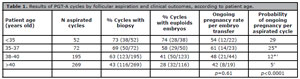
Table 1. Results of PGT-A cycles by follicular aspiration and clinical outcomes, according to patient age.
Values with equal superscripts show significant differences. p*=0.004 p†=0.003.
When analyzing the results per PGT-A aspiration cycle according to age groups, the final probability of achieving an ongoing pregnancy from aspiration decreases from 29%, in the <35-year-old group, to 5% in patients over 40 years old. As the treatment process advances, the elderly group had 30% fewer chances of obtaining a blastocyst suitable for biopsy compared to the youngest group of patients (43% vs. 73%), 45% fewer chances that those biopsied blastocysts were euploid, and approximately 10% fewer chances that the transferred euploid blastocyst would result in an ongoing pregnancy (Figure 1).
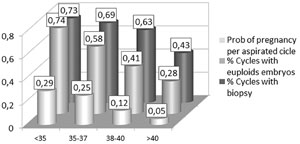
Figure 1. Probability of clinical outcomes per aspirated cycle, according to age group.
DISCUSSION
Trophectoderm biopsy at the blastocyst stage combined with PGT-A has been gaining widespread acceptance since several studies have shown that PGT-A decreases miscarriage rates, increases implantation rates (Scott et al., 2013; Dahdouh et al., 2015), and shortens time to pregnancy (Neal et al., 2018). However, these authors report pregnancy outcomes based on embryo transfers performed rather than on initiated or aspirated cycles. Munné et al. (2019) found no differences in these outcomes for women under 35 years of age, not even when analyzing by initiated cycle.
In women of advanced age, oocyte aneuploidy -and consequently, embryonic aneuploidy- begins to play a significant role. This is why PGT-A is recommended for AMA patients, as an additional tool for embryo selection. In this work, we tried to determine the real chances of an elderly woman for achieving a pregnancy by follicular aspiration. Although the transfer of a euploid embryo in women over 40 years of age results in ongoing pregnancy rates comparable to those in younger women, a non-significant downward trend with increasing maternal age was observed in this study-a 10% difference between the <35 group and those aged 41 or older. Similar results were recently reported by Vitagliano et al. (2023), highlighting the importance of continuing to investigate additional age-related factors aside from aneuploidy.
An older woman is also more likely to have a low ovarian reserve, resulting in fewer retrieved oocytes and consequently a lower probability of obtaining a blastocyst suitable for biopsy (Zhu et al., 2022). However, the number of usable oocytes is just the first challenge that elderly patients have to face. While the treatment process advances, many other barriers have to be overcome, such as, getting to blastocyst stage, embryo quality suitable for biopsy, embryo euploidy, and these others additional age-related factors mentioned by Vitagliano et al. (2023).
From our results we observe that patients over 40 years have 30% less biopsied cycles than <35. Moreover, they have 50% fewer euploid embryos. Thus, the reality faced by these older patients presents a high cost-benefit ratio, challenging the statement that ‘PGT-A shortens time to pregnancy’ as they may have to undergo several cycles of follicular aspiration to obtain a euploid embryo -which must then successfully implant and result in an ongoing pregnancy. Despite the passage of time and scientific evidence, specialists continue to debate how to interpret such findings and how to advise patients in their decision-making regarding PGT-A, taking into account the cost-benefit ratio of the technique.
CONCLUSION
More prospective studies about this analysis are been necessary for robust conclusion. Nevertheless this restrospective study emphasizes the difficulty faced by patients over 40 years of age in achieving the transfer of a single euploid embryo, concluding that only 5% of women in this age group would achieve pregnancy through follicular aspiration. It remains a challenge for healthcare professionals to provide appropriate counseling from the perspective and expectations of patients of this age, even when utilizing the PGT-A technique.
This work was presented in III Congreso de SAEC 2023, Buenos Aires, Argentina, and it was entitled PGT-A EN EDAD REPRODUCTIVA AVANZADA: AUMENTA LA PROBABILIDAD DE LOGRAR UN EMBARAZO?
ACKNOWLEDGMENTS
We thank the collaborations of PhD Cecilia Carnovale in the revision of the manuscript.
REFERENCES
Dahdouh EM, Balayla J, García-Velasco JA. Comprehensive chromosome screening improves embryo selection; a meta-analysis. Fert Steril. 2015;104:1503-12. PMID: 26385405 DOI: 10.1016/j.fertnstert.2015.08.038 Medline
Ebner T, Yaman C, Moser M, Sommergruber M, Jesacher K, Tews G. A prospective study on oocyte survival rate after ICSI: influence of injection technique and morphological features. J Assist Reprod Genet. 2001;18:623-8. PMID: 11808841 DOI: 10.1023/A:1013171505702 Medline
Harton GL, Munné S, Surrey M, Grifo J, Kaplan B, McCulloh DH, Griffin DK, Wells D; PGD Practitioners Group. Diminished effect of maternal age on implantation after preimplantation genetic diagnosis with array comparative genomic hybridization. Fertil Steril. 2013;100:1695-703. PMID: 24034939 DOI: 10.1016/j.fertnstert.2013.07.2002 Medline
La Marca A, Capuzzo M, Imbrogno MG, Donno V, Spedicato GA, Sacchi S, Minasi MG, Spinella F, Greco P, Fiorentino F, Greco E. The complex relationship between female age and embryo euploidy. Minerva Obstet Gynecol. 2021;73:103-10. PMID: 33306288 DOI: 10.23736/S2724-606X.20.04740-1 Medline
Munné S, Kaplan B, Frattarelli JL, Child T, Nakhuda G, Shamma FN, Silverberg K, Kalista T, Handyside AH, Katz-Jaffe M, Wells D, Gordon T, Stock-Myer S, Willman S; STAR Study Group. Preimplantation genetic testing for aneuploidy versus morphology as selection criteria for single frozen-thawed embryo transfer in good-prognosis patients: a multicenter randomized clinical trial. Fertil Steril. 2019;112:1071-9.e7. PMID: 31551155 DOI: 10.1016/j.fertnstert.2019.07.1346 Medline
Neal SA, Morin SJ, Franasiak JM, Goodman LR, Juneau CR, Forman EJ, Werner MD, Scott RT Jr. Preimplantation genetic testing for aneuploidy is cost-effective, shortens treatment time, and reduces the risk of failed embryo transfer and clinical miscarriage. Fertil Steril. 2018;110:896-904. PMID: 30316435 DOI: 10.1016/j.fertnstert.2018.06.021 Medline
Paz MV, Chiera M, Hovanyecz P, Cicaré J, Perfumo P, Domenech L, Ventura V. Blastocysts Derived From 0PN Oocytes: Genetic And Clinical Results. JBRA Assist Reprod. 2020;24:143-6. PMID: 32202747 DOI: 10.5935/1518-0557.20190084 Medline
Practice Committees of the American Society for Reproductive Medicine and the Society for Assisted Reproductive Technology. Electronic address: ASRM@asrm.org Practice Committees of the American Society for Reproductive Medicine and the Society for Assisted Reproductive Technology. The use of preimplantation genetic testing for aneuploidy (PGT-A): a committee opinion. Fertil Steril. 2018;109:429-36. PMID: 29566854 DOI: 10.1016/j.fertnstert.2018.01.002 Medline
Scott RT Jr, Upham KM, Forman EJ, Hong KH, Scott KL, Taylor D, Tao X, Treff NR. Blastocyst biopsy with comprehensive chromosome screening and fresh embryo transfer significantly increases in vitro fertilization implantation and delivery rates: a randomized controlled trial. Fertil Steril. 2013;100:697-703. PMID: 23731996 DOI: 10.1016/j.fertnstert.2013.04.035 Medline
Sepúlveda S, Garcia J, Arriaga E, Diaz J, Noriega-Portella L, Noriega-Hoces L. In vitro development and pregnancy outcomes for human embryos cultured in either a single medium or in a sequential media system. Fertil Steril. 2009;91:1765-70. PMID: 18439587 DOI: 10.1016/j.fertnstert.2008.02.169 Medline
Vitagliano A, Paffoni A, Viganò P. Does maternal age affect assisted reproduction technology success rates after euploid embryo transfer? A systematic review and meta-analysis. Fertil Steril. 2023;120:251-65. PMID: 36878347 DOI: 10.1016/j.fertnstert.2023.02.036 Medline
Zhu Z, Xu W, Liu L. Ovarian aging: mechanisms and intervention strategies. Med Rev (2021). 2022;2:590-610. PMID: 37724254 DOI: 10.1515/mr-2022-0031 Medline