JBRA Assist. Reprod. 2026;30(1):219-224
REVIEW
doi: 10.5935/1518-0557.20250176
Chronic Endometritis and Recurrent Pregnancy Loss: A review of evidence and underlying mechanisms
1Division of Human Reproduction, Hospital das Clínicas, Federal University of Minas Gerais, Belo Horizonte, Minas Gerais, Brazil
CONFLICT OF INTERESTS
This article and its content are the sole responsibility of the authors.
ABSTRACT
This narrative review aims to evaluate the relationship between chronic endometritis (CE) and recurrent pregnancy loss (RPL). A comprehensive, non-systematic search on the association between RPL and CE was conducted in the PubMed, Cochrane, and SciELO databases, considering its pathophysiological mechanisms, diagnosis and pregnancy outcomes after treatment. The following terms were used as keywords: (“chronic endometritis” OR “endometrial inflammation” OR “subclinical endometritis”) AND (“recurrent pregnancy loss” OR “recurrent miscarriage” OR “pregnancy outcomes”). Diagnostic hysteroscopy can be useful for identifying CE based on visual findings (e.g., edema and endometrial micropolyps). However, specificity and sensitivity vary, and it is ideally complemented by biopsy. The identification of plasma cells using the CD-138 marker is the most accurate method for diagnosing CE. Standardization is still needed for the number of plasma cells considered diagnostic and for the quality of CD-138. Tests such as next-generation sequencing and real-time PCR can identify microorganisms and aid in the development of appropriate treatments. Antibiotic regimens have shown efficacy in reducing CE and have a positive impact on pregnancy outcomes in women with RPL. In conclusion, CE appears to be a significant but often underdiagnosed contributor to RPL. Advancements in diagnostic techniques have improved the accuracy of CE identification. Evidence suggests that effective antibiotic treatment not only resolves CE but also enhances pregnancy outcomes in affected women.
Keywords: clinical protocols, chronic endometritis, hysteroscopy, recurrent pregnancy loss, treatment
INTRODUCTION
Recurrent pregnancy loss (RPL) is classically defined as the loss of three consecutive pregnancies before 20 weeks of gestation (Rai & Regan, 2006). The guidelines for definition, diagnostic testing, and treatment vary among different societies, with investigation of causal factors currently recommended from the second abortion onwards. (Practice Committee of the ASRM, 2012; Ferriani et al., 2018; ESHRE Guideline Group on RPL et al., 2023; Regan et al., 2023). The American Society for Reproductive Medicine (ASRM) considers only clinical pregnancies (those diagnosed by ultrasound or histopathological examination) for diagnosis, excluding molar and ectopic pregnancies (Practice Committee of the ASRM, 2012). Meanwhile, the Royal College of Obstetricians and Gynaecologists (RCOG) and the European Society of Human Reproduction and Embryology (ESHRE) include biochemical pregnancies as a pregnancy criterion (ESHRE Guideline Group on RPL et al., 2023; Regan et al., 2023). The most recent definition encompasses both spontaneous pregnancies and those following assisted reproductive technologies (ART), excluding molar and ectopic pregnancies as well as implantation failures (Tulandi & Al-Fozan, 2024).
The prevalence of RPL varies depending on the early recognition of pregnancy and the criteria used for its definition (Practice Committee of the ASRM, 2012; Ferriani et al., 2018; ESHRE Guideline Group on RPL et al., 2023; Regan et al., 2023; Dimitriadis et al., 2020). It affects approximately 3% of couples attempting to conceive, considering at least two losses, and about 1% when there are three or more losses (Rai & Regan, 2006). The prevalence of abnormal test results for RPL does not differ between couples with two or three losses, and it is currently recommended to investigate causal factors after two miscarriages (van Dijk et al., 2020).
Known causes of (RPL) include genetic or chromosomal abnormalities in the parents or embryo, maternal immunological disorders, endocrine disorders, acquired thrombophilias, environmental factors, infectious causes (endometritis), and uterine anatomical abnormalities (Christiansen et al., 2005; Practice Committee of the ASRM, 2012; Carp, 2014; Ferriani et al., 2018; ESHRE Guideline Group on RPL et al., 2023; Homer, 2019; Regan et al., 2023; Dimitriadis et al., 2020).
Chronic endometritis (CE) is defined as chronic inflammation of the endometrial lining. Patients with CE are often asymptomatic, though they may present with symptoms such as pelvic pain, dyspareunia, abnormal vaginal bleeding, or vaginal discharge (Romero et al., 2004). Studies report a prevalence of CE among RPL patients ranging from 13% to 56% (Bouet et al., 2016; Zargar et al., 2020; Oliveira et al., 2023). Although the gold standard for diagnosing CE is the histological identification of plasma cells in the endometrial stroma through immunohistochemical evaluation, hysteroscopic diagnosis also has reasonable sensitivity and specificity when endometrial biopsy is not readily available (Liu et al., 2020).
The pathophysiology of CE is not fully understood, but its relationship with the endometrial microbiome is widely accepted, as evidenced by the effectiveness of antibiotic treatment in reducing stromal infiltration (Kitaya et al., 2018; Kimura et al., 2019; Pirtea et al., 2021). It is believed that plasma cell infiltration of the endometrium may affect endometrial receptivity and result in RPL (Bouet et al., 2016). Several studies have evaluated the efficacy of antibiotic regimens in treating CE and their impact on pregnancy outcomes in women with RPL (Liu et al., 2022; Strug et al., 2024).
The aim of this review article is to evaluate the relationship between CE and RPL, considering its pathophysiological mechanisms, diagnosis and pregnancy outcomes after treatment.
METHODS
A comprehensive, non-systematic search on the association between RPL and CE was conducted in the PubMed, Cochrane, and SciELO databases, considering its pathophysiological mechanisms, diagnosis and pregnancy outcomes after treatment. The following terms were used as keywords: (“chronic endometritis” OR “endometrial inflammation” OR “subclinical endometritis”) AND (“recurrent pregnancy loss” OR “recurrent miscarriage” OR “pregnancy outcomes”).
The electronic search was conducted in August 2024, and only articles published in English were included. Due to the limited data available in the literature, various types of studies were accepted (cohort studies, cross-sectional studies, clinical trials, and meta-analyses) with no restriction on publication date. Additionally, the reference lists of the identified articles were reviewed to expand the selection of relevant studies.
Two independent reviewers (ECFO and FCCA) read and analyzed the selected articles.
RESULTS
Initially, 132 studies were identified in PubMed, 16 in Cochrane and none in SciELO, After screening by titles and abstracts, followed by reading the potentially eligible articles in full, 15 studies were included in this review. Observational cohort and cross-sectional studies were prioritized. No randomized clinical trials were found. The main reasons for exclusion of articles were: duplication, lack of data on the outcomes of interest and type of publication (such as narrative reviews without quantitative data and case reports).
To facilitate the discussion, the results were categorized in pathophysiological mechanisms, diagnosis and treatment and pregnancy outcomes.
Pathophysiological mechanisms
The correlation between the endometrial microbiome and CE is well established in the literature. The bacteria most frequently associated with CE are those that colonize the female urogenital tract, such as Streptococcus spp., Escherichia coli, Enterococcus faecalis, Klebsiella pneumoniae, Staphylococcus spp., Corynebacterium, and Mycoplasma/Ureaplasma spp. However, not all women who have these bacteria in their endometrial flora develop the disease, suggesting that the interaction with the local immune system is crucial (Kimura et al., 2019; Puente et al., 2020). This imbalance can increase the production of pro-inflammatory cytokines, altering processes such as cell migration, proliferation, and apoptosis, thus impairing embryonic implantation and pregnancy maintenance (Kimura et al., 2019; Puente et al., 2020).
CE also affects endometrial genomic expression. During the secretory phase, there is an overexpression of anti-apoptotic genes, as well as nuclear markers associated with proliferation (Ki-67) and ovarian steroid receptors. On the other hand, the expression of genes associated with embryonic receptivity and decidualization is reduced (Kitaya et al., 2018). The overexpression of estrogen and progesterone receptors may lead to a loss of the endometrial implantation window, hindering the synchronization between the endometrial cycle and the embryo’s arrival in the uterine cavity (Kitaya et al., 2018).
Diagnosis
CE can be suspected during hysteroscopy by identifying at least one of the following criteria: increased endometrial vascularization, stromal edema, a “strawberry-like” mucosa (hyperemia with scattered white spots), and the presence of endometrial micropolyps < 1 mm. The diagnostic specificity of outpatient hysteroscopy is 80%, while sensitivity is only 40% (Bouet et al., 2016). However, the accuracy of the exam depends on the examiner’s experience and the type of findings, with micropolyps being the criterion with the highest positive and negative predictive values (increased endometrial vascularization, stromal edema, a “strawberry-like” mucosa (hyperemia with scattered white spots), and the presence of endometrial micropolyps < 1 mm, respectively) (Kimura et al., 2019; Puente et al., 2020). Thus, hysteroscopy is extremely useful, especially when endometrial biopsy is not available. However, it should ideally be complemented with a histopathological sample (Bouet et al., 2016; Kimura et al., 2019).
The histopathological detection of plasma cells in the endometrial stroma using the CD-138 immunohistochemical marker is the most accurate method for diagnosing CE (Pirtea et al., 2019). However, the diagnosis of CE still lacks standardization in several aspects (Kitaya et al., 2018; Kimura et al., 2019; Pirtea et al., 2019). There is no consensus on the cutoff for the number of plasma cells required for diagnosis, nor on the dilution of CD-138 to be used (Pirtea et al., 2019). Some authors argue that the identification of even a single plasma cell is sufficient for diagnosis (Bouet et al., 2016; Kimura et al., 2019). However, monoclonal antibodies used to mark CD-138 in plasma cells can also react with endometrial epithelial cells, leading to false positives and overdiagnosis (Bouet et al., 2016). A meta-analysis of 13 studies, aimed at determining a cutoff point indicative of a worse prognosis in women with RPL, identified that a plasma cell count above 4-6 cells/hpf is associated with an increased risk of further miscarriages (Rimmer et al., 2021).
Regarding endometrial sample collection, there is also no consensus on the optimal phase of the menstrual cycle for biopsy, the macroscopic characteristics of the best site for biopsy, the number of samples required, or the depth of the biopsy (Kitaya et al., 2018; Kimura et al., 2019; Rimmer et al., 2021).
The method of obtaining the endometrial sample, quality control of the CD-138 used, and the definition of the minimum number of plasma cells required are parameters that need to be standardized to establish guidelines for the diagnosis, treatment, and monitoring of CE (Bouet et al., 2016; Kitaya et al., 2018). The use of next-generation sequencing of the 16S ribosomal subunit and/or real-time polymerase chain reaction are viable tests that can identify microorganisms in the uterine cavity, aiding in elucidating the causal relationship with chronic endometritis and in developing appropriate treatments (Kitaya et al., 2018). Additionally, metagenomics may help not only to eliminate pathogenic flora but also, in the future, to develop methods for colonizing the uterine cavity with flora that promotes reproductive success (Puente et al., 2020). The diagnostic criteria for CE are summarized in Table 1.
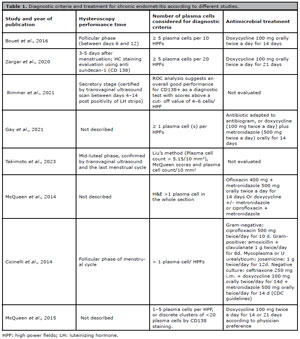
Table 1. Diagnostic criteria and treatment for chronic endometritis according to different studies.
Antibiotic choice for chronic endometritis and pregnancy outcomes after treatment
CE is a condition frequently associated with RPL and recurrent implantation failures, necessitating the exploration of effective treatment regimens. Several studies have investigated different therapeutic approaches, focusing mainly on antibiotic use, and have evaluated the efficacy of each regimen in terms of resolving the condition and impacts on reproductive outcomes.
A study conducted by McQueen et al. focused on women with early RPL and/or fetal demise. A total of 395 women were analyzed, including 285 with a history of RPL, 57 with fetal demise, and 53 with both conditions. The prevalence of chronic endometritis in the overall sample was 9% (35/395). Treatment was carried out with ofloxacin 400 mg and metronidazole 500 mg twice a day for two weeks. Nine women were treated with a different regimen: doxycycline, doxycycline plus metronidazole, or ciprofloxacin plus metronidazole. All 35 women received treatment, and 31 underwent follow-up endometrial biopsy to assess cure. Of these, 23% (7/31) still showed infection (all previously treated with ofloxacin and metronidazole). Two of these underwent another course of antibiotics and had documented resolution. The remaining five did not take another antibiotic course but had a repeat hysteroscopy 10 weeks later, which confirmed resolution. Therefore, cure with a single antibiotic course was achieved in 94% of those who had follow-up (29/31). Considering two antibiotic courses, 100% of the follow-up tests showed resolution of chronic endometritis. There was no statistically significant difference in live birth rates between women with treated CE and those without CE (88% vs. 74%, p=0.215). During the follow-up period, both groups showed a significant increase in live birth rate per pregnancy; however, in the treated CE group, the improvement was more pronounced (from 7% to 56% vs. from 15% to 59%, respectively; p=0.04) (McQueen et al., 2014).
A retrospective cohort study by Cicinelli et al. involved 360 women with RPL, of whom 208 were diagnosed with CE through hysteroscopy. Cultures of endometrial samples were also performed, and antibiotic treatment was tailored based on antibiogram results: ciprofloxacin was used for gram-negative bacteria, amoxicillin plus clavulanate for gram-positive bacteria, josamycin for mycoplasma and Ureaplasma urealyticum, and a combination of ceftriaxone, doxycycline, and metronidazole for negative cultures, in accordance with CDC guidelines. Treatment normalized hysteroscopy and culture in 71.8% of women who had abnormalities in both tests. One year after treatment, the live birth rate was significantly higher in groups with normalized hysteroscopy (78.4% in the previously culture-positive group [n=80] and 50% in the culture-negative group [n=8]), compared to those with persistent CE on hysteroscopy (30% in previously culture-negative [n=15] and 17.5% in culture-positive [n=7]) (Cicinelli et al., 2014).
In a retrospective study by Gay et al., 42 women with RPL were analyzed, with 22 diagnosed with CE by immunohistochemistry. Treatment was based on antibiogram results or doxycycline and metronidazole for 14 days. There was a significant increase in live birth rates in treated women (85%), compared to untreated women (44%) or those without a CE diagnosis (40%) (p=0.032). Additionally, there was a significant reduction in miscarriage rates in the treated group (Gay et al., 2021).
Lastly, HogenEsch et al. evaluated women undergoing infertility treatment who had endometrial sampling. Doxycycline was the first-line antibiotic in over 75% of cases, followed by regimens such as ciprofloxacin plus metronidazole or ofloxacin plus metronidazole in persistent cases. CE was resolved in 68.5% of cases after the first treatment, increasing to 88.3% after up to two cycles of antibiotics. The live birth rate was significantly lower in untreated CE cases compared to those with resolved CE (HogenEsch et al., 2023).
In summary, antibiotic regimens vary in their efficacy but show considerable success in resolving chronic endometritis, which is reflected in improved reproductive outcomes. Treatment choice should consider individual microbial response and the persistence of inflammation, with adaptation based on antibiograms when possible. Diagnostic criteria and treatment for chronic endometritis according to different studies are described in Table 1.
Limitations
This narrative review included a range of studies, from meta-analyses to other narrative reviews and case series. Several limitations were identified, including small sample sizes and significant methodological and outcome heterogeneity, which hinder direct comparisons across studies. The lack of standardized diagnostic criteria for CE contributes to substantial variations in its reported prevalence and poses challenges in assessing treatment success.
In studies evaluating treatment efficacy, distinguishing true resolution of the condition from false-negative findings during post-treatment follow-up remains problematic (Liu et al., 2022). This issue highlights the need for more robust diagnostic tools and standardized protocols to improve the accuracy and comparability of research findings.
The absence of randomized controlled trials further limits the evidence base, leaving room for potential biases in assessing the relationship between CE and RPL. These challenges underscore the importance of future studies designed with larger cohorts, rigorous methodology, and consistent diagnostic and treatment criteria to advance understanding and clinical management of CE (El Hachem et al., 2017).
SUMMARY AND CONCLUSIONS
CE appears to be a significant but often underdiagnosed contributor to RPL. However, the absence of randomized controlled trials represents a major limitation in establishing causal inferences between CE treatment and improved reproductive outcomes. Therefore this narrative review highlights significant methodological variability across studies investigating CE in the context of RPL. Advancements in diagnostic techniques, including the use of CD-138 markers and molecular tests, have improved the accuracy of CE identification, although standardization remains a challenge. Evidence suggests that effective antibiotic treatment not only resolves CE but also enhances pregnancy outcomes in affected women. Further research, particularly randomized controlled trials, is needed to refine diagnostic criteria and optimize treatment protocols. Addressing these gaps will be critical to improving care for women with RPL associated with CE.
Key points:
• Diagnostic hysteroscopy can be useful for identifying CE based on visual findings (e.g., edema and endometrial micropolyps). However, specificity and sensitivity vary, and it is ideally complemented by biopsy.
• The identification of plasma cells using the CD-138 marker is the most accurate method for diagnosing CE. Standardization is still needed for the number of plasma cells considered diagnostic and for the quality of CD-138.
• Tests such as next-generation sequencing and real-time PCR can identify microorganisms and aid in the development of appropriate treatments.
• Antibiotic regimens have shown efficacy in reducing CE and have a positive impact on pregnancy outcomes in women with RPL.
REFERENCES
Bouet PE, El Hachem H, Monceau E, Gariépy G, Kadoch IJ, Sylvestre C. Chronic endometritis in women with recurrent pregnancy loss and recurrent implantation failure: prevalence and role of office hysteroscopy and immunohistochemistry in diagnosis. Fertil Steril. 2016;105:106-10. PMID: 26456229 DOI: 10.1016/j.fertnstert.2015.09.025 Medline
Christiansen OB, Nybo Andersen AM, Bosch E, Daya S, Delves PJ, Hviid TV, Kutteh WH, Laird SM, Li TC, van der Ven K. Evidence-based investigations and treatments of recurrent pregnancy loss. Fertil Steril. 2005;83:821-39. PMID: 15820784 DOI: 10.1016/j.fertnstert.2004.12.018 Medline
Cicinelli E, Matteo M, Tinelli R, Pinto V, Marinaccio M, Indraccolo U, De Ziegler D, Resta L. Chronic endometritis due to common bacteria is prevalent in women with recurrent miscarriage as confirmed by improved pregnancy outcome after antibiotic treatment. Reprod Sci. 2014;21:640-7. PMID: 24177713 DOI: 10.1177/1933719113508817 Medline
Dimitriadis E, Menkhorst E, Saito S, Kutteh WH, Brosens JJ. Recurrent pregnancy loss. Nat Rev Dis Primers. 2020;6:98. PMID: 33303732 DOI: 10.1038/s41572-020-00228-z Medline
El Hachem H, Crepaux V, May-Panloup P, Descamps P, Legendre G, Bouet PE. Recurrent pregnancy loss: current perspectives. Int J Womens Health. 2017;9:331-45. PMID: 28553146 DOI: 10.2147/IJWH.S100817 Medline
Gay C, Hamdaoui N, Pauly V, Rojat Habib MC, Djemli A, Carmassi M, Chau C, Bretelle F. Impact of antibiotic treatment for chronic endometritis on unexplained recurrent pregnancy loss. J Gynecol Obstet Hum Reprod. 2021;50:102034. PMID: 33307243 DOI: 10.1016/j.jogoh.2020.102034 Medline
HogenEsch E, Hojjati R, Komorowski A, Maniar K, Pavone ME, Bakkensen J, Bernardi L. Chronic endometritis: screening, treatment, and pregnancy outcomes in an academic fertility center. J Assist Reprod Genet. 2023;40:2463-71. PMID: 37558906 DOI: 10.1007/s10815-023-02902-z Medline
Homer HA. Modern management of recurrent miscarriage. Aust N Z J Obstet Gynaecol. 2019;59:36-44. PMID: 30393965 DOI: 10.1111/ajo.12920 Medline
Kimura F, Takebayashi A, Ishida M, Nakamura A, Kitazawa J, Morimune A, Hirata K, Takahashi A, Tsuji S, Takashima A, Amano T, Tsuji S, Ono T, Kaku S, Kasahara K, Moritani S, Kushima R, Murakami T. Chronic endometritis and its effect on reproduction. J Obstet Gynaecol Res. 2019;45:951-60. PMID: 30843321 DOI: 10.1111/jog.13937 Medline
Kitaya K, Takeuchi T, Mizuta S, Matsubayashi H, Ishikawa T. Endometritis: new time, new concepts. Fertil Steril. 2018;110:344-50. PMID: 29960704 DOI: 10.1016/j.fertnstert.2018.04.012 Medline
Liu H, Song J, Zhang F, Li J, Kong W, Lv S, Zhang L, Yan L. A new hysteroscopic scoring system for diagnosing chronic endometritis. J Minim Invasive Gynecol. 2020;27:1127-32. PMID: 32240839 DOI: 10.1016/j.jmig.2019.08.035 Medline
Liu J, Liu ZA, Liu Y, Cheng L, Yan L. Impact of antibiotic treatment for chronic endometritis on pregnancy outcomes in women with reproductive failures (RIF and RPL): a systematic review and meta-analysis. Front Med. 2022;9:980511. PMID: 36405621 DOI: 10.3389/fmed.2022.980511 Medline
McQueen DB, Perfetto CO, Hazard FK, Lathi RB. Pregnancy outcomes in women with chronic endometritis and recurrent pregnancy loss. Fertil Steril. 2015;104:927-31. PMID: 26207958 DOI: 10.1016/j.fertnstert.2015.06.038 Medline
McQueen DB, Bernardi LA, Stephenson MD. Chronic endometritis in women with recurrent early pregnancy loss and/or fetal demise. Fertil Steril. 2014;101:1026-30. PMID: 24462055 DOI: 10.1016/j.fertnstert.2013.12.031 Medline
Pirtea P, Cicinelli E, De Nola R, de Ziegler D, Ayoubi JM. Endometrial causes of recurrent pregnancy losses: endometriosis, adenomyosis, and chronic endometritis. Fertil Steril. 2021;115:546-60. PMID: 33581856 DOI: 10.1016/j.fertnstert.2020.12.010 Medline
Practice Committee of the American Society for Reproductive Medicine. Evaluation and treatment of recurrent pregnancy loss: a committee opinion. Fertil Steril. 2012;98:1103-11. PMID: 22835448 DOI: 10.1016/j.fertnstert.2012.06.048 Medline
Puente E, Alonso L, Laganà AS, Ghezzi F, Casarin J, Carugno J. Chronic Endometritis: Old Problem, Novel Insights and Future Challenges. Int J Fertil Steril. 2020;13:250-6. PMID: 31710184 DOI: 10.22074/ijfs.2020.5779 Medline
Rai R, Regan L. Recurrent miscarriage. Lancet.2006;368:601-11. PMID: 16905025 DOI: 10.1016/S0140-6736(06)69204-0 Medline
Regan L, Rai R, Saravelos S, Li TC; Royal College of Obstetricians and Gynaecologists. Recurrent MiscarriageGreen-top Guideline No. 17. BJOG. 2023;130:e9-e39. PMID: 37334488 DOI: 10.1111/1471-0528.17515 Medline
Rimmer MP, Fishwick K, Henderson I, Chinn D, Al Wattar BH, Quenby S. Quantifying CD138+ cells in the endometrium to assess chronic endometritis in women at risk of recurrent pregnancy loss: A prospective cohort study and rapid review. J Obstet Gynaecol Res. 2021;47:689-97. PMID: 33274569 DOI: 10.1111/jog.14585 Medline
Romero R, Espinoza J, Mazor M. Can endometrial infection/inflammation explain implantation failure, spontaneous abortion, and preterm birth after in vitro fertilization? Fertil Steril. 2004;82:799-804. PMID: 15482749 DOI: 10.1016/j.fertnstert.2004.05.076 Medline
Takimoto K, Yamada H, Shimada S, Fukushi Y, Wada S. Chronic Endometritis and Uterine Endometrium Microbiota in Recurrent Implantation Failure and Recurrent Pregnancy Loss. Biomedicines. 2023;11:2391. PMID: 37760832 DOI: 10.3390/biomedicines11092391 Medline
van Dijk MM, Kolte AM, Limpens J, Kirk E, Quenby S, van Wely M, Goddijn M. Recurrent pregnancy loss: diagnostic workup after two or three pregnancy losses? A systematic review of the literature and meta-analysis. Hum Reprod Update. 2020;26:356-67. PMID: 32103270 DOI: 10.1093/humupd/dmz048 Medline
Zargar M, Ghafourian M, Nikbakht R, Mir Hosseini V, Moradi Choghakabodi P. Evaluating Chronic Endometritis in Women with Recurrent Implantation Failure and Recurrent Pregnancy Loss by Hysteroscopy and Immunohistochemistry. J Minim Invasive Gynecol. 2020;27:116-21. PMID: 30851430 DOI: 10.1016/j.jmig.2019.02.016 Medline