JBRA Assist. Reprod. 2026 2026;00(0):00-00
REVIEW
doi: 10.5935/1518-0557.20260053
The Effect of Ceratonia siliqua (Carob) on Male Infertility: A Systematic Review and Meta-analysis of invitro and randomized controlled trials
1Infertility and Reproductive Health Research Center, Health Research Institute, Babol University of Medical Sciences, Babol, Iran
2School of Epidemiology and Public Health, University of Ottawa, Ottawa, Canada
3Student Research Committee, Babol University of Medical Sciences, Babol, Iran
CONFLICT OF INTEREST
The authors declare no conflict of interest.
ABSTRACT
Oxidative stress is a key contributor to impaired se-men quality in male infertility. Ceratonia siliqua L. (car-ob), a polyphenol-rich plant traditionally used to improve male fertility, has been investigated as a potential in-tervention for improving semen parameters and repro-ductive hormonal profiles. This systematic review and meta-analysis evaluated the effects of carob supplemen-tation on semen parameters and reproductive hormones in randomized controlled trials (RCTs) and in vitro studies. PubMed, Scopus, Web of Science, ClinicalTrials.gov, and the WHO International Clinical Trials Registry Platform were searched up to December 2024. Risk of bias was assessed using the Cochrane Collaboration risk-of-bias tool for RCTs and QUIN for in vitro studies. Random-ef-fects meta-analyses with Knapp-Hartung adjustment were performed. Ten studies were included, comprising five RCTs and five in vitro studies. Four RCTs involving 206 participants were eligible for meta-analysis; one RCT was excluded because data were reported as percentages without extractable means. Carob supplementation sig-nificantly increased sperm count (3 RCTs; n=166; WMD: 11.58 × 10⁶/ml; 95% CI: 9.79-13.38; I2=38%) and total sperm motility (4 RCTs; n=206; WMD: 10.93%; 95% CI: 2.97-18.89; I2=69.9%), but had no significant effect on sperm morphology. Testosterone levels increased signifi-cantly (3 RCTs; n=157; WMD: 1.30; 95% CI: 0.93-1.67; I2=37.6%), whereas FSH and LH remained unchanged. In vitro studies showed improvements in progressive mo-tility (5 studies; n=180; SMD=4.37; 95% CI: 1.46-7.28; I2=98.6%) and viability (4 studies; n=140; SMD=3.97; 95% CI: 1.30-6.64; I2=98.0%), although the effect on viability lost statistical significance after Knapp-Hartung correction. The most favorable in vitro effects were ob-served at concentrations of 10-20µg/ml. Overall, carob supplementation may improve sperm count and motility, which are relevant parameters in male fertility and as-sisted reproductive settings, and in vitro findings suggest a potential role as a cryoprotectant additive. However, because of moderate-to-high heterogeneity and variable study quality, larger, well-designed randomized controlled trials are required to confirm these effects.
Keywords: Ceratonia siliqua, carob, male infertility, sperm parameters, antioxidant, systematic review
INTRODUCTION
Male infertility, estimated to account for 30-50% of infertility cases worldwide, poses a significant challenge for couples seeking to conceive. While conventional medical treatments have met with mixed success, advancements in technology and treatment approaches have expanded the spectrum of options available to address this issue. Antioxidants have emerged as a promising potential treatment for male infertility (Kaltsas et al., 2024). Oxidative stress is a key contributor to male infertility. Excessive reactive oxygen species (ROS) can damage sperm DNA, disrupt membrane integrity, impair mitochondrial function, and reduce motility, ultimately compromising fertilization capacity. Although low physiological ROS levels are necessary for processes such as sperm capacitation, hyperactivation, and the acrosome reaction, excess ROS consistently links to poor semen quality (Aitken et al., 2022). Antioxidants neutralize excess ROS and may enhance sperm motility, morphology, and DNA integrity (Aghajani et al., 2019; Nowicka-Bauer & Nixon, 2020). Given the limited antioxidant capacity of seminal plasma, natural compounds have received growing attention.
Studies have reported beneficial effects of antioxidants on sperm parameters (Kowalczyk, 2022). However, findings remain inconsistent (Moretti et al., 2023), underscoring the need for targeted evaluation of specific agents. Ceratonia siliqua (Carob), a polyphenol-rich plant with antioxidant and potential androgenic properties, has attracted interest for its effects on semen quality and spermatogenesis. It reduces lipid peroxidation, improves sperm motility and count, and may modulate luteinizing hormone (LH) and follicle-stimulating hormone (FSH) levels (Firouzabadi, 2024). Despite traditional and empirical use, high-quality clinical evidence from randomized controlled trials (RCTs) is limited. Studies on mice have demonstrated its potential in promoting spermatogenesis in male rats (Oztekin et al., 2020) and enhancing reproductive function (Soleimanzadeh et al., 2020). Based on our knowledge, two previous systematic reviews have evaluated the effects of carob on male infertility, but important limitations persist. The first review provided only a qualitative synthesis (Asghari et al., 2024). The second performed a meta-analysis on the same four RCTs; however, potential methodological concerns (e.g., search completeness, risk-of-bias assessment, and data handling) have been noted (Karaahmet et al., 2024). Moreover, no previous review quantitatively integrated in vitro evidence, which provides complementary insights into mechanisms (e.g., cryoprotective effects) and optimal dosing. Therefore, the present systematic review and meta-analysis provide an updated evaluation of carob’s effects on semen parameters and reproductive hormones in infertile men, incorporating both RCTs and in vitro studies on sperm quality. This approach addresses existing gaps and offers a more comprehensive assessment of carob’s potential in male fertility and assisted reproduction.
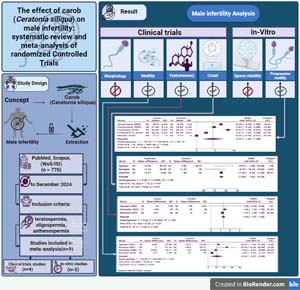
METHODS
Study Design and Registration
This systematic review and meta-analysis was conducted in accordance with the Preferred Reporting Items for Systematic Reviews and Meta-Analyses (PRISMA, 2020) guidelines. The study protocol was prospectively registered in the PROSPERO international prospective register of systematic reviews (CRD42024496488).
Search Strategy
Three investigators performed an extensive electronic search across PubMed/MEDLINE, Scopus, Web of Science (WoS/ISI), WHO clinical trials registry systems, and ClinicalTrials.gov from January 1, 2000, to December 31, 2024, utilizing specific search terms customized for each database. Reference lists of eligible articles and relevant journals in herbal and reproductive medicine were manually screened to identify additional studies, including gray literature such as conference proceedings and theses. including a wide range of gray literature sources, there were no language restrictions placed on the publications. The search strategy was formulated by utilizing a mix of MESH indexing terms, Emtree database, and free-text methods. The search keywords used included “Ceratonia Siliqua” OR “Carob” AND “semen quality” OR “semen” OR “male infertility” OR “Seminal Plasma” OR “sperm count” OR “sperm motility” OR “sperm morphology”. The study selection process is summarized in a PRISMA 2020 flow diagram (Figure 1).
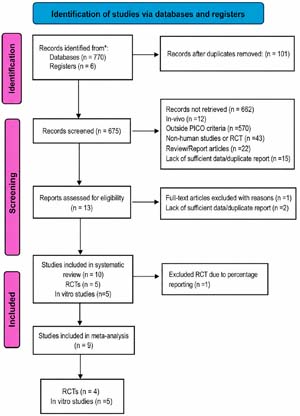
Figure 1. PRISMA flow diagram of study selection
Eligibility criteria
Inclusion criteria
Randomized controlled trials (RCTs; parallel or crossover design) were eligible. Studies enrolling infertile men with oligospermia, asthenospermia, and/or teratospermia, as defined by World Health Organization criteria, were included. Interventions involved Ceratonia siliqua administered as capsules, syrup, or plant extracts.Additionally, in vitro studies evaluating the effects of carob extract on human sperm parameters such as in culture media or cryopreservation extenders were included to provide complementary mechanistic and translational insights that cannot be obtained from clinical trials alone. These studies allowed assessment of direct effects on sperm motility, viability, oxidative stress, and cryopreservation outcomes under controlled conditions. In vitro findings were not pooled with clinical trial data and were analyzed separately to avoid conflating laboratory effects with clinical efficacy. This parallel synthesis approach was used to contextualize clinical associations within biologically plausible mechanisms and to generate hypotheses regarding dose ranges and laboratory applications relevant to assisted reproduction.
Exclusion Criteria
Studies were excluded if they were non-randomized, animal experiments, reviews, observational designs (cross-sectional, case-control, cohort), or did not report usable semen/hormone data. No restrictions were placed on dosage, formulation, or treatment duration.
Data Extraction and Risk of Bias Assessment
The search in the specified databases was conducted by three independent reviewers (FA, PM.AZ) in accordance with the inclusion and exclusion criteria. Screening was performed by two individuals. Any differences in opinions were resolved through consultation and discussion with a third person who is experienced in this field (MAD). Full-text articles of studies that met the study selection criteria were assessed for eligibility for the systematic review and meta-analysis. A standardized data extraction form was developed and used, encompassing study details such as author’s name, year of article publication, BMI, age of participants, number of samples, type of control, semen analysis, and reproductive hormones. In instances where necessary data were missing from published reports, we contacted study authors via email. Studies for which exact means and standard deviations could not be obtained were excluded from the meta-analysis but were included in the narrative synthesis
Risk of bias assessment
The methodological quality of each selected RCTs was assessed using the Cochrane Collaboration risk of bias tool. Visualizations (traffic-light plots and summary figures) were created using robvis. Two primary reviewers (PM and FA) independently evaluated the risk of bias in the chosen articles across six bias domains: (1) Random sequence generation, (2) Allocation concealment, (3) Participant and personnel blinding, (4) Outcome assessment blinding, (5) Handling of incomplete outcome data, and (6) Reporting of selective outcomes. The risk of bias for each domain was classified as “High risk of bias,” “Low risk of bias,” or “Some concerns.The QUIN tool was employed to assess the risk of bias in the included in vitro studies (Sheth et al., 2024). This tool consists of 12 evaluation criteria designed to systematically evaluate the quality of in vitro research. Each criterion addresses key aspects of study design and reporting, including the clarity of objectives, sample size calculations, sampling techniques, methodology, randomization, outcome measurements, and statistical analysis. The scoring system of the QUIN tool allows for categorization of the studies into different quality levels, such as “low risk,” “unknown risk,” and “high risk.” This structured approach provides clinicians and researchers with a clear framework to assess the methodological rigor and reliability of in vitro studies.
Data synthesis
All statistical analyses were conducted using Stata Version 17 (StataCorp, College Station, TX, USA). To evaluate sperm quality in RCTs, we compared the weighted mean differences (WMD) with 95% confidence intervals (CIs) between the intervention and control groups. A forest plot was generated to illustrate the combined effect size using a random-effects model, with the corresponding 95% CIs calculated for each individual study. The I2 statistic was employed to assess statistical heterogeneity across the included studies, where an I2 value of 50% or greater was considered indicative of substantial heterogeneity. For in vitro studies, standardized mean differences (SMD) were computed, applying Hedges’ correction to account for small sample sizes. A random-effects model was also utilized in this context due to the expected variability in methodologies and study populations This approach allowed us to account for the heterogeneity among studies and provide a more conservative estimate of the effect sizes.
Sensitivity analysis
To ensure the robustness of the findings, various sensitivity analyses were conducted. The Knapp-Hartung small-sample correction was applied to adjust for possible bias in studies with smaller sample sizes. Additionally, the fill-and-trim method was utilized to further assess the stability of the results. The quality of the studies was evaluated in terms of risk of bias, which included assessments of randomization, blinding, and dropout rates to ascertain the reliability of the included trials.
Assessment of Publication Bias
Due to the limited number of included studies, visual inspection of funnel plots was not considered reliable. Therefore, publication bias was assessed using Egger’s linear regression test, applying a two-tailed significance threshold of p<0.1, as recommended for meta-analyses with a small number of studies to increase sensitivity for detecting potential asymmetry. Following the confirmation of publication bias through Egger’s test, we applied the non-parametric random-effects trim-and-fill method, specifically the Duval and Tweedie “trim and fill” approach, to adjust for the identified biases in the dataset.
RESULTS
A comprehensive literature search identified 776 records from PubMed (n=67), Scopus (n=443), Web of Science (n=260), ClinicalTrials.gov, and WHO trial registries (n=6). After removal of 101 duplicates, 675 records were screened. A total of 662 records were excluded based on title and abstract screening. Full-text articles were assessed for 13 records. Three full-text articles were excluded (1 with reasons, 2 lacked sufficient data). Ten studies met eligibility criteria for the systematic review, comprising five randomized controlled trials (Mahdiani et al., 2018; Aghajani et al., 2021; Sanagoo et al., 2021; Ahmadian et al., 2023; Pilehvari et al., 2023) and five in vitro studies (Faramarzi et al., 2019a;b; Farazmand et al., 2023; Heidari et al., 2023; Javanmard et al., 2023) all ten studies were assessed for methodological quality and risk of bias (Figures 2 and 3). Of the five RCTs, one (Pilehvari et al., 2023) was excluded from the quantitative meta-analysis because semen parameters were reported only as percentages, without extractable mean and standard deviation values for sperm count, motility, or morphology. Despite two attempts to contact the corresponding author, no additional data were obtained. Accordingly, four RCTs with a total of 206 participants were included in the meta-analysis of clinical outcomes.
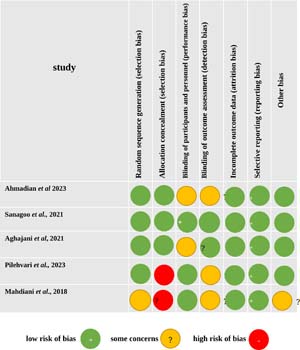
Figure 2. Risk of Bias assessment of the included studies using the Cochrane RoB tool for RCTs
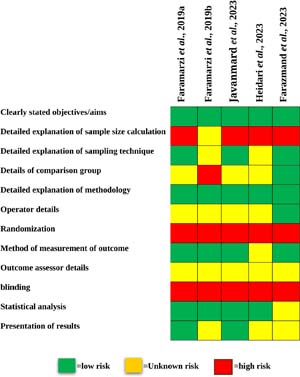
Figure 3. Results of Quality assessment (QUIN tool) of in vitro studies
Of the five in vitro studies, all five reported progressive motility outcomes and were included in the progressive motility meta-analysis (n=180 samples). However, one study (Heidari et al., 2023) did not report sperm viability outcomes and was therefore excluded from the viability meta-analysis. Thus, four in vitro studies contributed to the sperm viability meta-analysis (n=140 samples) (Figure S1). The full electronic search strategies for are provided in Supplementary File.
Characteristics of included studies
Table 1 presents the participant and study characteristics of the RCTs included in this systematic review and meta-analysis. The included RCTs were all conducted in Iran, employing single-blind, double-blind, and triple-blind designs. Participants’ mean ages ranged from 31 to 36 years, with sample sizes typically between 21 and 30 per arm. Interventions were administered as capsules or syrups, with dosages from 500 to 2400mg/day. Control groups received either placebo or active comparators like pentoxifylline or vitamin E, with intervention durations of 12 weeks or 90 days.
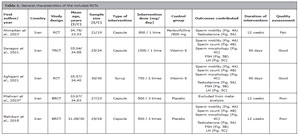
Table 1. General characteristics of the included RCT
a RCT: Randomized controlled trial; b BRCT: double-blind randomized controlled trial; c TRCT: triple-blind randomized controlled trial.
*Pilehvari et al. (2023) was included in the systematic review but excluded from all quantitative meta-analyses due to reporting of sperm parameters as percentages without extractable mean and standard deviation values.
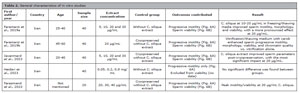
Table 2. General characteristics of in vitro studies
Risk of bias assessment of included RCTs
Each RCT was assessed using the Cochrane risk of bias tool. All studies were randomized; 80% had a “low risk” of bias in random allocation and one study had “some concern” (Mahdiani et al., 2018) while two (Mahdiani et al., 2018; Pilehvari et al., 2023) were high risk for selection bias due to insufficient allocation concealment. Three studies (Aghajani et al., 2021; Sanagoo et al., 2021; Ahmadian et al., 2023) were low risk for selection bias. In terms of blinding, two trials (Aghajani et al., 2021; Ahmadian et al., 2023) had unclear risk ratings, while the others were low risk. All studies showed even distribution of drop-outs and minimal attrition bias. Four studies had low reporting bias; one study (Mahdiani et al., 2018) had unclear risk due to unreported conflicts of interest. Overall, the majority of the included studies exhibited low risks of bias in various domains, such as randomization, selection, blinding, attrition, and reporting, with only a few instances of concerns or uncertainties identified across the different studies (Fig. 2).
Risk of bias assessment of in-vitro studies
The quality assessment of in vitro studies using the QUIN tool revealed considerable variability in methodological quality. Faramarzi et al. (2019a,b) had clearly stated objectives but lacked sufficient detail in sample size calculation and methodology, raising concerns about the reliability of their results. Javanmard et al. (2023) and Heidari et al. (2023) demonstrated methodological strengths but presented unclear risks in randomization and outcome measurements. In contrast, Farazmand et al. (2023) offered robust statistical analysis and low risk across several domains, yet some critical elements like sampling technique were inadequately reported. Overall, these findings underscore the need for improved transparency and adherence to methodological standards in future in vitro research to enhance the reliability and applicability of study outcomes (Fig. 3).
Meta-analysis of Randomized controlled trials (RCTs)
Effect of Ceratonia siliqua (Carob) on Male Infertility: Motility Analysis
Random-effects meta-analysis of four RCTs with 225 participants showed an increase in sperm motility associated with carob supplementation (WMD=10.93; 95% CI: 2.97-18.89; p<0.001). However, substantial heterogeneity was observed across studies (I2=69.9%), indicating variability in effect sizes (Fig. 4 A). The quality of evidence for this outcome is moderate due to substantial heterogeneity and the small number of included trials. The effect did not remain statistically significant after Knapp-Hartung correction for small sample sizes (95% CI: -1.58 to 23.44), indicating uncertainty regarding the true effect magnitude. This suggests that while initial results showed a positive effect of carob supplementation, the correction for small sample bias highlighted uncertainty regarding its efficacy, emphasizing the need for caution in interpreting these findings (S1).
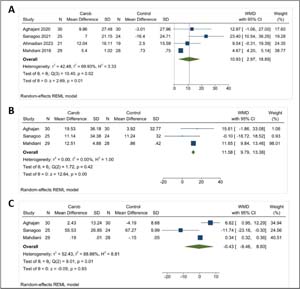
Figure 4. Forest plot depicting WMD and the 95% CI for the impact of carob administration on sperm motility (A) and sperm count (B) and sperm morphology (C)
Subgroup analysis restricted to trials with a low risk of bias showed a larger pooled effect (WMD=14.66; 95% CI: 6.23-23.09) with reduced heterogeneity (I2=31.8%). This pattern highlights the influence of study quality on effect size estimates.
Effect of Ceratonia siliqua (Carob) on Male Infer-tility: Count Analysis
Three RCTs with 166 participants showed a significant increase in sperm count (WMD: 11.58 × 10⁶/ml; 95% CI: 9.79-13.38; p<0.001; I2=38.0%) (Fig. 4B). The evidence for this outcome is considered moderate-to-high certainty, as the effect remained significant after Knapp-Hartung correction (p=0.01) with low heterogeneity (I2=0%), and sensitivity analysis confirmed the robustness of the finding (Fig. 4B). The stability of the effect estimate after correction supports the robustness of the association between carob supplementation and increased sperm count across the included studies (S2).
Effect of Ceratonia siliqua (Carob) on Male Infer-tility: Morphology Analysis
A meta-analysis was conducted to evaluate the effect of Carob supplementation on sperm morphology, incorporating data from three RCTs, with a total of 166 participants. The analysis employed a random-effects model, utilizing the REML method. The pooled analysis showed no statistically significant difference between the carob and control groups (WMD=-0.43; 95% CI: -9.46 to 8.60), with substantial heterogeneity across studies (I2=88.7%) (Fig. 4C). The evidence for this outcome is of low certainty due to substantial heterogeneity and wide confidence intervals that include both benefit and harm.
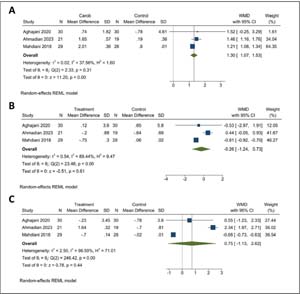
Figure 5. Forest plot depicting WMD and the 95% CI for the impact of carob administration on testosterone level (A), FSH level (B) and LH level (C)
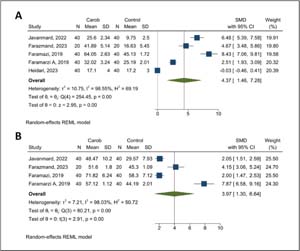
Figure 6. Forest plot depicting WMD and the 95% CI for the impact of carob administration on Progressive motility (A) and viability (B) among in vitro studies
After application of the Knapp-Hartung correction for small sample sizes, the pooled effect remained non-significant (WMD=-0.43; 95% CI: -21.73 to 20.87; p=0.10), while heterogeneity was reduced (I2=0%). The consistency of the null effect after statistical adjustment supports the stability of the finding despite variability observed in the primary analysis (S3).
Secondary outcomes
Effect of Carob on Male Infertility: Hormonal Analysis
To assess the effect of Carob on reproductive hormones, a meta-analysis was conducted across RCTs. First, the analysis focused on the effect of Carob supplementation on follicle-stimulating hormone (FSH) levels. The overall WMD for FSH levels was found to be -0.26 (95% CI: -1.24 to 0.73). Substantial heterogeneity was observed, with an I2 statistic of 89.44%. These findings suggest that Carob supplementation does not significantly impact FSH levels, highlighting the need for further research to explore these findings and address the observed heterogeneity. The evidence is of low certainty due to substantial heterogeneity and imprecision in the effect estimate.Next, the effect of Carob on testosterone levels was assessed across three RCTs. Using a random-effects model with the Knapp-Hartung correction, the analysis revealed a significant WMD of 1.30 (95% CI: 0.93 to 1.67, p<0.0001), indicating a positive effect of Carob supplementation on testosterone levels. Furthermore, the analysis showed no significant heterogeneity among the studies, as evidenced by a tau2 of 0.016 and an I2 statistic of 37.56%. These results suggest that Carob supplementation effectively enhances testosterone levels without considerable variability across the included trials (Fig. 5 A). The evidence for this outcome is considered moderate certainty, with consistent effects across studies and low heterogeneity, though the small number of trials limits confidence in the precise effect size.Finally, this meta-analysis evaluated the effects of interventions on luteinizing hormone (LH) levels across three RCTs. The overall WMD for LH levels was 0.75 (95% CI: -1.13 to 2.62), with no statistically significant effect (z=0.78, p=0.4354). Heterogeneity was high, indicated by an I2 of 98.59%, with a significant Q statistic of 246.42 (p<0.0001). The contributions of individual studies varied, with Ahmadian et al. (2023) and Mahdiani et al. (2018) providing the most weight. The evidence is of very low certainty due to extreme heterogeneity and wide confidence intervals.While Carob supplementation did not significantly affect FSH and LH levels, it was associated with a significant increase in testosterone levels. The substantial heterogeneity observed in FSH and LH analyses suggests variability in study outcomes and underscores the necessity for further research to clarify these findings and explore the potential mechanisms underlying the effects of Carob on reproductive hormones
Publication bias
The results of the Egger’s linear regression test indicate a statistically significant small-study effect for sperm motility (p<0.0001), suggesting publication bias in the included studies. However, the trim-and-fill method showed no imputed studies, implying the dataset may not exhibit significant publication bias, as no additional studies could alter the overall effect size. In contrast, the analysis for sperm count revealed no significant small-study effects (p=0.45), indicating that these studies do not exhibit asymmetry that could distort conclusions about sperm count and its implications for male fertility. The consistent standardized mean difference (SMD) across observed analyses, with no imputed studies (0), supports the robustness of our findings. This highlights the importance of considering both sperm count and motility in evaluating male fertility, as these factors are generally associated with improved fertility outcomes.
Meta-analysis of in vitro studies
This meta-analysis aimed to evaluate the effects of Carob on progressive sperm motility and sperm viability using data from in vitro studies. Given the anticipated differences in methodologies and study populations, a random-effects model was employed to account for heterogeneity among the studies.
Progressive sperm motility
Five in vitro studies (n=180 samples) investigated the effect of carob extract on progressive sperm motility under controlled laboratory conditions. The analysis revealed a statistically significant effect (SMD=4.37; 95% CI: 1.46-7.28; p<0.001), though with substantial heterogeneity (I2=98.6%) (Fig. 6A). These findings should be considered hypothesis-generating and provide mechanistic insights into potential direct effects of carob on sperm function. They do not constitute evidence of clinical efficacy and require confirmation in clinical settings.
Sperm viability
Four in vitro studies (n=140 samples) examined the effect of carob extract on sperm viability. Heidari et al. (2023) study was excluded from this analysis as it did not report viability outcomes. A statistically significant effect was observed in the primary analysis (SMD=3.97; 95% CI: 1.30-6.64; p=0.00; I2=98.0%) (Fig. 6B). However, after applying the Knapp-Hartung correction for small sample sizes, the effect lost statistical significance (95% CI: -0.39 to 8.33; p=0.06) (S4). This finding highlights the preliminary nature of in vitro evidence and the need for cautious interpretation. The optimal concentration range of 10-20µg/ml observed in these studies may inform future clinical trial design but does not directly translate to clinical recommendations.
Publication bias
To evaluate publication bias among the in vitro studies assessing the effects of Carob on sperm motility and viability, nonparametric trim-and-fill analyses were conducted. Trim-and-fill analysis, REML, indicated no publication bias for either sperm motility (SMD 4.371, 95% CI [1.464, 7.279]) or viability (SMD 2.651, 95% CI [2.306, 2.996]).
DISCUSSION
The findings of this systematic review and meta-analysis indicate that carob supplementation is associated with favorable changes in selected male reproductive parameters in clinical trials, particularly sperm count and testosterone levels, with more limited evidence for sperm motility. It is essential to distinguish between the clinical evidence derived from RCTs and the mechanistic, hypothesis-generating evidence from in vitro studies. The clinical findings, while promising, should be interpreted cautiously due to the limited number of RCTs, small sample sizes, and methodological variability. The in vitro findings provide biological plausibility and insights into potential mechanisms of action but do not constitute evidence of clinical efficacy.
Pregnancy outcomes were reported in only two trials, with rates of 23% and 12.5%, respectively. While these results suggest potential clinical relevance, the small study populations and lack of standardized reproductive endpoints preclude firm conclusions regarding fertility outcomes. No adverse effects were reported across the included studies, indicating that carob supplementation appears to be well tolerated within the investigated doses and treatment durations.
The inclusion of both randomized controlled trials and in vitro studies reflects a complementary rather than equivalent evidence framework. Clinical trials provide associative evidence regarding reproductive outcomes in infertile men, whereas in vitro studies offer controlled experimental insights into sperm-level mechanisms and dose-response relationships relevant to assisted reproductive technologies. Accordingly, in vitro findings were interpreted as mechanistic and hypothesis-generating and were not used to infer clinical efficacy independently.
The World Health Organization (WHO) guidelines on semen analysis emphasizes that sperm concentration and total sperm count are critical predictors of conception and pregnancy rates, whereas sperm morphology is considered to have limited prognostic value for natural. Additionally, carob enhances endogenous antioxidant defenses by increasing levels of glutathione and total antioxidant capacity (TAC), further protecting sperm from oxidative damage. The antioxidant properties of carob may contribute to its potential benefits for male fertility. Aghajani et al. (2021) demonstrated that carob supplementation was associated with increased TAC and reduced malondialdehyde (MDA) levels in semen. This is particularly relevant given the established inverse relationship between MDA concentrations and sperm adhesion capacity during fertilization, a critical parameter linked to assisted reproductive technology (ART) outcomes (Hsieh et al., 2006).
While these findings align with preclinical work showing carob’s ability to mitigate lipid peroxidation (Vafaei et al., 2018) clinical evidence regarding oxidative stress modulation remains inconsistent. Mahdiani et al. (2018) reported improvements in antioxidant indices without significant changes in oxidative stress markers, while Abolghasemi et al. (2022) observed increased selenium levels a cofactor for glutathione peroxidase without corresponding changes in zinc or superoxide dismutase activity. This variability suggests that the antioxidant-related effects of carob may depend on baseline micronutrient status, formulation bioavailability, or interindividual differences in oxidative stress pathways, rather than a uniform biological response.
This variability highlights that carob’s effects on oxidative stress may vary based on baseline deficiencies, formulation, bioavailability, or specific pathways, such as Nrf2 signaling (Firouzabadi, 2024). Preclinical and emerging mechanistic data suggest that carob polyphenols (e.g., gallic acid and tannins) could influence the Nrf2 pathway, a regulator of antioxidant defenses, leading to induction of enzymes like glutathione S-transferase and NAD(P)H quinone oxidoreductase 1. This might help mitigate oxidative damage in the reproductive system while maintaining physiological ROS levels needed for sperm capacitation and fertilization (Soleimanzadeh et al., 2020; Firouzabadi, 2024). Importantly, recent reviews highlight the dual role of ROS in male reproduction. While excessive ROS causes oxidative damage to sperm membranes and DNA contributing to infertility physiological ROS levels are indispensable for critical processes such as sperm capacitation, hyperactivation, and the acrosome reaction, all of which are essential for successful fertilization (Saleh et al., 2025). This supports the value of interventions that modulate, rather than fully suppress, ROS to preserve reproductive functions.
Hormonal balance is critical for male fertility, and carob supplementation shows potential to influence testosterone levels, a key hormone for spermatogenesis. However, its effects on LH and FSH remain inconclusive, with high heterogeneity observed across studies. The significant increase in testosterone levels, characterized by low heterogeneity in meta-analyses, suggests a relatively consistent effect across studies. While this could reflect carob’s bioactive compounds modulating hormonal pathways, the limited number of studies and methodological variability prevent definitive conclusions about specific mechanisms, such as direct testicular action or indirect pituitary feedback. Overall, carob supplementation is associated with improvements in sperm count and motility, potentially related to antioxidant and mitochondrial effects (Mahdiani et al., 2018; Aghajani et al., 2021). While some studies suggest modest benefits for sperm morphology (Aghajani et al., 2021; Pilehvari et al., 2023), our systematic review, alongside others (Sanagoo et al., 2021; Ahmadian et al., 2023), found no considerable effects, reflecting substantial heterogeneity in study design and outcome measures. Notably, the moderate-to-high heterogeneity observed across several outcomes particularly sperm motility, sperm morphology, hormonal parameters, and all in vitro analyses has important implications for interpretation and clinical translation.
Elevated I2 values suggest that pooled effect estimates may not reflect a uniform biological response to carob supplementation but rather context-dependent effects influenced by study design, formulation, dosing regimens, treatment duration, baseline fertility status, and laboratory assessment methods. This heterogeneity limits the precision and generalizability of the summary estimates and indicates that the magnitude of benefit may vary substantially across populations and settings. Although subgroup analyses restricted to high-quality trials demonstrated reduced heterogeneity and more consistent effects for sperm count and motility, these findings should be interpreted as hypothesis-generating rather than definitive. Consequently, current evidence does not support a one-size-fits-all clinical recommendation, underscoring the need for standardized intervention protocols and harmonized outcome measures in future trials.
The in vitro studies included in this review offer valuable mechanistic insights, suggesting that carob extract may exert direct protective effects on sperm during cryopreservation. However, these findings must be interpreted within their proper context as hypothesis-generating laboratory observations rather than evidence of clinical benefit. The substantial heterogeneity across in vitro studies, variability in experimental conditions, and sensitivity to statistical adjustments limit the generalizability of these findings. The observed optimal concentration range of 10-20µg/ml may inform the design of future clinical trials or the development of sperm processing media for assisted reproduction, but direct translation to clinical recommendations is not warranted based on the current evidence.
Strengths and limitations
This meta-analysis, synthesizing data from RCTs and five in vitro trials, offers several strengths, including rigorous methodology with systematic searches across six databases, application of small-study bias adjustments, and subgroup analyses confirming stronger effects in high-quality randomized controlled trials. The findings suggest carob’s potential to improve sperm count, motility, and testosterone levels, with in vitro studies identifying effective concentrations of 10 to 20 micrograms per milliliter for sperm viability. However, limitations such as high heterogeneity, in in vitro analyses, small sample sizes of 21 to 30 participants per trial arm, geographical bias with all included RCTs conducted in Iran (potentially limiting generalizability to diverse populations), and inconsistent data reporting due to exclusion of studies with percentage-only metrics necessitate cautious interpretation. Additionally, the applicability of the QUIN tool, developed in dentistry, for assessing the in vitro studies here may be a limitation, as there are few critical appraisal tools specifically designed for assessing in vitro studies. Furthermore, unresolved questions about carob’s effects on FSH, LH, and sperm morphology, coupled with variability in formulations and measurement protocols, highlight the need for standardized, multicenter randomized controlled trials with extended follow-ups to establish clinical relevance
CONCLUSION
This systematic review and meta-analysis suggest that carob supplementation may be associated with improvements in sperm count and testosterone levels in men with infertility, based on evidence from four RCTs. Evidence for improved sperm motility was less robust and sensitive to statistical adjustment. These clinical findings should be considered preliminary due to the small number of trials, moderate-to-high heterogeneity, and geographical concentration of studies.
In vitro evidence provides biological plausibility and suggests potential cryoprotective applications, but these findings are hypothesis-generating only and do not imply clinical efficacy. Future research should prioritize large, multicenter RCTs with standardized formulations, objective outcome assessment, and extended follow-up to establish definitive clinical recommendations.
Ethical Approval
Ethics committee approval was obtained from Institutional Review Board at Babol University of Medical Sciences (BMU, Babol, Iran) with the approval number IR.MUBABOL.REC.1404.066 and as it was a systematic review in which the participants were not directly involved, their consent was not needed.
Funding
Aghajani MMR, Mahdinezhad Gorji N, Mirabi P, Mojab F. Effect of Ceratonia siliqua (Carob) syrup and vitamin E on sperm parameters, oxidative stress index and sex hormones in infertile men: Protocol for a randomized controlled trial. Caspian J Intern Med. 2019;10:452-7. PMID: 31814945 DOI: 10.22088/cjim.10.4.452
Medline
Aghajani MMR, Mahjoub S, Mojab F, Namdari M, Gorji NM, Dashtaki A, Mirabi P. Comparison of the Effect of Ceratonia siliqua L. (Carob) Syrup and Vitamin E on Sperm Parameters, Oxidative Stress Index, and Sex Hormones in Infertile Men: a Randomized Controlled Trial. Reprod Sci. 2021;28:766-74. PMID: 32959223 DOI: 10.1007/s43032-020-00314-3
Medline
Aitken RJ, Drevet JR, Moazamian A, Gharagozloo P. Male Infertility and Oxidative Stress: A Focus on the Underlying Mechanisms. Antioxidants (Basel). 2022;11:306. PMID: 35204189 DOI: 10.3390/antiox11020306
Medline
Faramarzi A, Aghaz F, Golestan Jahromi M, Bakhtiari M, Khazaei M. Does supplementation of sperm freezing/ thawing media with Ceratonia siliqua improve detrimental effect of cryopreservation on sperm parameters and chromatin quality in normozoospermic specimens? Cell Tissue Bank. 2019b;20:403-9. PMID: 31313030. DOI: 10.1007/s10561-019-09779-2
Medline
Farazmand T, Mansouri F, Koohestanidehaghi Y, Shahandeh E. Human sperm parameter improvement associated with Ceratonia siliqua extract as a cryopreservation supplement after vitrification. Clin Exp Reprod Med. 2023;50:86-93. PMID: 37258101 DOI: 10.5653/cerm.2022.05554
Medline
Firouzabadi AM. Ceratonia Siliqua L: A Natural Compound with Big Impact on Male Reproductive System. Am J Mens Health. 2024;18:15579883241290835. PMID: 39434540 DOI: 10.1177/15579883241290835
Medline
Hsieh YY, Chang CC, Lin CS. Seminal malondialdehyde concentration but not glutathione peroxidase activity is negatively correlated with seminal concentration and motility. Int J Biol Sci. 2006;2:23-9. PMID: 16680200 DOI: 10.7150/ijbs.2.23
Medline
Javanmard F, Bidmeshkipour A, Ghasemian Yadegari J. Ceratonia siliqua L improved cryodamage of asthenozoospermic specimens: An experimental study. Int J Reprod Biomed. 2023;20:1029-38. PMID: 36819209 DOI: 10.18502/ijrm.v20i12.12564
Medline
Kaltsas A, Zachariou A, Dimitriadis F, Chrisofos M, Sofikitis N. Empirical Treatments for Male Infertility: A Focus on Lifestyle Modifications and Medicines. Diseases. 2024;12:209. PMID: 39329878 DOI: 10.3390/diseases12090209
Medline
Karaahmet AY, Gençtürk N, Kınık E. The Effect of Carob (Ceratonia Siliqua) on Sperm Parameters of Infertile Men: Systematic Review and Meta-Analysis of Randomized Controlled Trials. Reprod Sci. 2024;31:2481-92. PMID: 38637477 DOI: 10.1007/s43032-024-01534-7
Medline
Kowalczyk A. The Role of the Natural Antioxidant Mechanism in Sperm Cells. Reprod Sci. 2022;29:1387-94. PMID: 34845666 DOI: 10.1007/s43032-021-00795-w
Medline
Moretti E, Signorini C, Corsaro R, Giamalidi M, Collodel G. Human Sperm as an In Vitro Model to Assess the Efficacy of Antioxidant Supplements during Sperm Handling: A Narrative Review. Antioxidants (Basel). 2023;12:1098. PMID: 37237965 DOI: 10.3390/antiox12051098
Medline
Nowicka-Bauer K, Nixon B. Molecular Changes Induced by Oxidative Stress that Impair Human Sperm Motility. Antioxidants (Basel). 2020;9:134. PMID: 32033035 DOI: 10.3390/antiox9020134
Medline
Oztekin U, Caniklioglu M, Firat F, Atac F, Doganyigit Z, Gocmen AY, Yilmaz S, Tokpinar A. Carob attenuates nicotine-induced oxidative stress and intratesticular damage in male rats. Andrologia. 2020;52:e13670. PMID: 32453459 DOI: 10.1111/and.13670
Medline
Pilehvari S, Gharakhani Bahar T, Masoumi SZ, Kazemi F, Moradkhani S, Rastgoo Haghi A, Maleki P. Effect of Carob Supplement on Spermogram Parameters and Sexual Function of Infertile Men Referred to the Infertility Center, Hamadan, Iran, 2019: A Randomized Controlled Trial. J Family Reprod Health. 2023;17:142-50. PMID: 38716296 DOI: 10.18502/jfrh.v17i3.13537
Medline
Saleh R, Sallam H, Elsuity MA, Dutta S, Sengupta P, Nasr A. Antioxidant therapy for infertile couples: a comprehensive review of the current status and consideration of future prospects. Front Endocrinol (Lausanne). 2025;15:1503905. PMID: 39850484 DOI: 10.3389/fendo.2024.1503905
Medline
Sanagoo S, Farshbaf-Khalili A, Asgharian P, Hazhir S, Oskouei BS. Comparison of the effect of Ceratonia siliqua L. fruit oral capsule and vitamin E on semen parameters in men with idiopathic infertility: a triple-blind randomized controlled clinical trial. J Complement Integr Med. 2021;18:791-6. PMID: 34704430 DOI: 10.1515/jcim-2020-0095
Medline
Sheth VH, Shah NP, Jain R, Bhanushali N, Bhatnagar V. Development and validation of a risk-of-bias tool for assessing in vitro studies conducted in dentistry: The QUIN. J Prosthet Dent. 2024;131:1038-42. PMID: 35752496 DOI: 10.1016/j.prosdent.2022.05.019
Medline
Soleimanzadeh A, Kian M, Moradi S, Mahmoudi S. Carob (Ceratonia siliqua L.) fruit hydro-alcoholic extract alleviates reproductive toxicity of lead in male mice: Evidence on sperm parameters, sex hormones, oxidative stress biomarkers and expression of Nrf2 and iNOS. Avicenna J Phytomed. 2020;10:35-49. PMID: 31921606
Medline