JBRA Assist. Reprod. 2026 2026;00(0):00-00
ORIGINAL ARTICLE
doi: 10.5935/1518-0557.20260067
The predictive value of post-warming morphometric changes parameters for embryo implantation
1Sapientiae Institute - Centro de Estudos e Pesquisa em Reprodução Humana Assistida, São Paulo - SP, Brazil, Zip: 04503-040
2Science for Everymind, São Paulo - SP, Brazil
3Fertility/FertGroup, São Paulo - SP, Brazil
4Clínica Hope, São Paulo - SP, Brazil
CONFLICT OF INTERESTS
ABSTRACT
Objective: To investigate whether post-warming blastocyst morphometric dynamics assessed by time-lapse imaging (TLI) are associated with implantation in intracytoplasmic sperm injection cycles with deferred embryo transfer.
Methods: This observational cohort study included 822 vitrified-warmed high-quality blastocysts with known implantation outcomes, evaluated between January and October 2024 at a private university-affiliated in vitro fertilization centre. Post-warming morphometric parameters were recorded during a 4-hour incubation period, including initial blastocyst area, maximum blastocyst area (MXBA), initial zona pellucida thickness, minimum zona pellucida thickness (MZP), and blastocyst re-expansion. Associations with implantation were assessed using multivariable logistic regression. A composite weighted score incorporating MXBA, MZP, and blastocyst re-expansion was developed from the regression coefficients and analysed as a continuous variable. Restricted cubic spline modelling was used to assess potential non-linear associations.
Results: MXBA (OR=1.078; 95% CI 1.029-1.198; p=0.048), MZP (OR=0.923; 95% CI 0.856-0.995; p=0.038), and blastocyst re-expansion (OR=1.183; 95% CI 1.010-1.386; p=0.036) were independently associated with implantation. Each one-standard-deviation increase in the composite weighted score was associated with a 21.6% increase in the odds of implantation (OR=1.216; 95% CI 1.055-1.403; p=0.007). Spline analysis showed a progressive increase in implantation probability across the score range, without strong evidence of non-linearity.
Conclusion: Quantitative post-warming morphometric assessment provides clinically relevant information on blastocyst implantation potential. A composite score integrating MXBA, MZP, and blastocyst re-expansion may support embryo selection in frozen-thawed embryo transfer cycles.
Keywords: embryo development, vitrification, warming, post-warming morphological parameters, intracytoplasmic sperm injection, timelapse
INTRODUCTION
Currently, the most common approach to treat infertility is using in vitro fertilization (IVF) and intracytoplasmic sperm injection (ICSI). The process entails utilizing exogenous gonadotropins to collect a sufficient number of oocytes, resulting in the production of the optimal number of embryos. This ultimately contributes to substantial success cumulative live birth rates (Conforti et al., 2017; La Marca & Sunkara, 2014).
As a result of advancements in controlled ovarian stimulation (COS) and enhanced culture conditions, there has been an increase in the number of high-quality and transferrable embryos, leading to the need to preserve surplus embryos through cryopreservation for future transfers (Gerris et al., 2003; Pandian et al., 2005). Since then, cryopreservation of surplus embryos has become a pivotal component of IVF (Wong et al., 2014).
Currently, a common strategy entails freezing all viable blastocysts for transfer in subsequent cycles (Braga et al., 2016; Shapiro et al., 2011). This approach offers the advantage of transferring embryos in a more viable environment and preventing the occurrence of ovarian hyperstimulation syndrome (Roque, 2015).
During the vitrification procedure, blastocysts undergo dehydration by various stages of cryoprotectant addition (Cohen et al., 1985; Fehilly et al., 1985). During warming, cryoprotectants are removed, and it is expected that the blastocysts will become rehydrated and re-expand over a specific period of time (Taborin & Kovačič, 2019). Therefore, throughout vitrification and warming processes, embryos face considerable challenges, as they may experience cellular damage due to dehydration and rehydration. The blastocoel cavity, which contains a notable volume of fluid, is particularly vulnerable to the formation of ice crystals and subsequent structural damage (Cobo et al., 2012; Rienzi et al., 2017).
Historically, the evaluation of fresh blastocysts has relied on the examination of morphological features and the assessment of blastocoel expansion, trophectoderm (TE), and inner cell mass (ICM) (Gardner & Schoolcraft, 1999). However, regarding vitrified and warmed blastocysts, traditional static morphological assessment, such as evaluating expansion grade, inner cell mass, and trophectoderm appearance at a single timepoint, may not be sufficient to predict implantation outcomes. Cryopreservation and subsequent warming can induce cellular and structural stress that alters post-thaw behavior, including re-expansion dynamics and zona pellucida (ZP) characteristics, which are not captured by conventional grading. Several studies have identified key parameters associated with implantation and live birth outcomes in vitrified blastocysts. Among these, (i) the extent of blastocoel re-expansion after warming is a strong predictor of success, with fully re-expanded blastocysts showing significantly higher live birth rates than partially re-expanded or collapsed ones; (ii) the post-warming cell survival rate, typically assessed on a scale from 50% to 100%, has been positively correlated with clinical outcomes and (iii) the hatching status, as hatched blastocysts tend to exhibit greater implantation potential (Ahlström et al., 2013; Allen et al., 2022; Barblett, 2019; Coello et al., 2017; Ebner et al., 2017; Han et al., 2024; Hershko-Klement et al., 2022).
Even though the initial blastocyst survival rate after vitrification and warming surpasses 90% and the clinical outcome after the transfer of vitrified and warmed blastocysts into the uterine cavity is tantamount to the pregnancy outcome, vitrified human blastocysts show varied re-expansion capacities after warming (Kovačič et al., 2018).
Little is known about the effect of embryo behaviour after warming on implantation potential. Scientists typically focus their attention on the ability of blastocysts to re-expand to discover new biomarkers that can more accurately forecast implantation outcomes (Coello et al., 2017; Ebner et al., 2017).
The emergence of a time-lapse imaging (TLI) incubation system has facilitated comprehensive examination of embryo development. Cryopreserved blastocysts typically exhibit collapse upon thawing, rendering them unsuitable for precise evaluation. Hence, post-warmed culture enables more precise assessment of vitrified and warmed blastocyst behaviour.
Therefore, the objective of the present study was to investigate whether frozen-thawed blastocyst morphokinetics observed using TLI, including blastocyst area and ZP thickness measurements before and after incubation, may provide an indicator for implantation in ICSI cycles with deferred embryo transfers.
MATERIALS AND METHODS
From January to October 2024, an observational cohort study was conducted at a private, university-affiliated IVF centre. The study included 822 vitrified-warmed high-quality blastocysts with known implantation outcomes (implantation vs. no implantation), all assessed using TLI. All blastocysts originated from stimulated oocyte retrieval cycles followed by deferred embryo transfer (freeze-all cycles).
Embryos were cultured in a time-lapse incubator equipped with a high-definition camera programmed to capture images every 10 minutes across 11 focal planes. Following warming, blastocyst morphometric changes were continuously recorded during a 4-hour post-warming incubation period, and their association with implantation outcomes was investigated.
The recorded post-warming variables included initial blastocyst area (IBA) and initial ZP thickness (IZP), measured immediately after warming, as well as maximum blastocyst area (MXBA) and minimal ZP thickness (MZP), defined as the highest and lowest values reached, respectively, during the 4-hour time-lapse observation period. These measurements were intended to capture dynamic aspects of blastocyst recovery after warming.
Initial blastocyst area was calculated as the two-dimensional cross-sectional area of the embryo in the focal plane showing the largest diameter in the first image acquired immediately after warming. Maximum blastocyst area was defined as the largest area recorded across all time-lapse frames during the post-warming incubation period. Initial ZP thickness was measured at the same initial time point as IBA, based on the optical distance between the inner and outer margins of the ZP in the best-focused plane. Minimal ZP thickness was defined as the thinnest measurement observed during the 4-hour post-warming incubation. Blastocyst re-expansion status during the post-warming incubation period was also recorded as a binary variable (re-expanded vs. not re-expanded).
In the primary analysis, post-warming morphometric parameters and re-expansion status were evaluated using multivariable regression models to assess their independent associations with implantation. To further summarise the combined contribution of the most informative post-warming features, a composite weighted score was subsequently developed, integrating MXBA, MZP thickness, and blastocyst re-expansion, with weights derived from regression coefficients. The association between this score and implantation was analysed as a continuous variable and further explored using restricted cubic spline modelling.
For descriptive and complementary analyses, continuous post-warming parameters were additionally categorised into tertiles (≤33rd, 34th-66th, and ≥67th percentiles) to facilitate comparison of implantation rates across increasing parameter values.
Implantation rate was defined as the number of gestational sacs observed per embryo transferred. Implantation was therefore analysed as a binary outcome at the embryo level (implantation vs. no implantation).
All patients provided written informed consent for the use of their clinical data for research purposes, and the study protocol was approved by the local institutional review board.
Controlled ovarian stimulation and laboratory procedures
Controlled ovarian stimulation started on day three of the cycle by the daily injection of r-FSH (Gonal-F®, Serono, Geneva, Switzerland; or Rekovelle®, Ferring, Saint-Prex, Switzerland). A gonadotropin-releasing hormone (GnRH) antagonist (GnRHa, Cetrotide®; Merck KGaA, Darmstadt, Germany) was used to prevent premature LH surge when the largest follicle in the cohort reached 14 mm.When three or more follicles were ≥17 mm, r-hCG (Ovidrel®, Merck KGaA, Darmstadt, Germany) was used to trigger final follicular maturation. Whenever the patient was at risk of developing OHSS, a GnRH agonist (0.2 mg triptorelin acetate, Gonapeptyl daily®, Ferring GmbH, Kiel, Germany) was administered SC instead of r-hCG. Oocyte pick-up was accomplished in 35 hours. Oocytes in metaphase II were selected for ICSI.
Intracytoplasmic sperm injection, Embryo Culture, Vitrification and warming procedures
Intracytoplasmic sperm injection was performed according to Palermo et al. (1992). Injected oocytes were individually cultured in a 16-well culture dish (Embryoslide, Unisense Fertilitech, Aarhus, Denmark) in 360 μl of continuous single-culture media (Global® total®, LifeGlobal) overlaid with 1.8 ml of mineral oil (Paraffin oil P.G., LifeGlobal) in a TL-monitored incubator (EmbryoScope+, Unisense Fertilitech, Aarhus, Denmark) set at 37°C with an atmosphere of 6% O2 and 7.2% CO2 until day five of embryo development. On day five, all embryos were vitrified.Both vitrification and warming procedures were performed using the Cryotop method (Kuwayama et al., 2005). Blastocysts were routinely incubated in EmbryoScope+ (Vitrolife, Denmark) for 4 hours immediately after warming until transfer.
Statistical Analysis
Primary inferential analyses were performed using regression models with continuous post-warming morphometric parameters as independent variables and implantation (yes/no) as the outcome. This strategy preserved the full variability of the data and avoided information loss associated with arbitrary categorisation of continuous predictors.Multivariable associations between implantation and post-warming parameters were evaluated using generalized linear models (GLMs) with a binomial distribution and logit link function. Initial and final blastocyst area, initial and MZP thickness, and blastocyst expansion status were included simultaneously in the models, allowing estimation of the independent effect of each parameter while adjusting for the others. Maternal and oocyte age were evaluated as potential covariates but were not retained in the final models, as they did not show independent associations with implantation.To integrate the most informative post-warming parameters into a single clinically interpretable metric, a composite weighted score was subsequently developed. The score incorporated MXBA, MZP thickness, and blastocyst expansion, with each component first standardised (z-scores) and then weighted according to its regression coefficient derived from a multivariable logistic model. Higher score values therefore reflected a more favourable combined morphometric and developmental profile.The association between the composite score and implantation was first evaluated by logistic regression, with results expressed as odds ratios (ORs) per one standard deviation (SD) increase in the score, together with 95% confidence intervals (CIs). To assess potential non-linear relationships, the score was further modelled using a restricted cubic spline with four knots, and likelihood ratio tests were used to evaluate the overall association of the score with implantation as well as departures from linearity. Predicted implantation probabilities across the score range were visualised graphically.For descriptive and complementary analyses, continuous parameters and the composite score were also categorised into tertiles (low, medium, high) based on the 33rd and 66th percentiles, and implantation rates were compared across categories using chi-square tests for trend.Results are presented as means±standard deviations (SD) or percentages, and regression results are reported as ORs with 95% CIs and p values. All tests were two-sided, and a p value < 0.05 was considered statistically significant. Statistical analyses were performed using R software (R Foundation for Statistical Computing, Vienna, Austria).
RESULTS
In this study, oocyte age was defined as the age of the patient at the time of oocyte retrieval and embryo vitrification, while maternal age referred to the age at the time of frozen embryo transfer. The average oocyte and maternal ages were 34.23±4.63 and 37.46±5.04 years, respectively.
The multivariable model evaluating implantation odds with blastocyst morphometric parameters and ZP thickness, adjusted for maternal and oocyte age, is described in Table 1. The IBA showed no association with implantation, however, an independent effect of MXBA on implantation was observed, whereby increasing initial blastocyst area and and blastocyst re-expansion were independently associated with higher. Regarding ZP thickness, IZP was not associated with implantation, whereas thinner MZP showed an independent association with higher implantation odds after multivariable adjustment. Neither maternal age nor oocyte age demonstrated an independent effect on implantation.
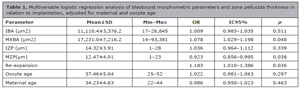
Table 1. Multivariable logistic regression analysis of blastocyst morphometric parameters and zona pellucida thickness in relation to implantation, adjusted for maternal and oocyte age
Initial blastocyst area (IBA); maximum blastocyst area (MXBA); delta blastocyst area (DBA); initial zona pellucida thickness (IZP); minimum zona pellucida thickness (MZP); delta zona pellucida thickness (DZP)
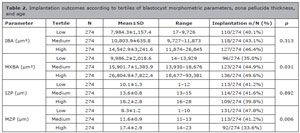
Table 2. Implantation outcomes according to tertiles of blastocyst morphometric parameters, zona pellucida thickness, and age
Initial blastocyst area (IBA); maximum blastocyst area (MXBA); delta blastocyst area (DBA); initial zona pellucida thickness (IZP); minimum zona pellucida thickness (MZP); delta zona pellucida thickness (DZP). Data are presented as mean±SD (range) within each tertile. Implantation is expressed as n/N (%). P values refer to chi-square tests across tertiles for each parameter. a≠b
When analysed as a continuous variable, the weighted score showed a significant positive association with implantation. Each +1 SD increase in the score was associated with a 21.6% increase in implantation odds (OR per +1 SD = 1.216; 95% CI 1.055-1.403; p=0.007), indicating that the combined score captured meaningful information related to implantation potential.
To explore potential non-linear effects, the association between the weighted score and implantation was further modelled using a restricted cubic spline with four knots. The spline model demonstrated a significant overall association between the score and implantation probability (p for overall association = 0.006), while the test for non-linearity did not reach conventional statistical significance (p for non-linearity = 0.065), suggesting an approximately linear relationship across the observed score range.
As illustrated in Figure 1, implantation probability increased progressively with higher score values, with no evidence of abrupt threshold effects.
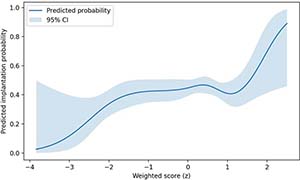
Figure 1. Association between the weighted composite score and predicted implantation probability. Predicted implantation probability according to the weighted composite score, modelled using a restricted cubic spline with four knots. The solid line represents the estimated implantation probability, and the shaded area indicates the 95% confidence interval. The score was constructed from standardised final blastocyst area, minimal ZP thickness, and blastocyst expansion, weighted by regression coefficients. Increasing score values reflect a more favourable blastocyst profile and are associated with higher implantation probability.
DISCUSSION
Few technological advancements have had such an important impact on assisted reproduction as vitrification, which exerts a profound influence on the practice of IVF. Once the efficiency of oocyte vitrification was proven in numerous publications (Chang et al., 2008; Cobo et al., 2008; Kuwayama et al., 2005), the adoption of vitrification extended to embryo cryopreservation, eventually establishing it as the universally recognized gold standard technique. Indeed, vitrification led to a substantial rise in the number of freeze-all cycles involving embryos and/or oocytes. In 2007, the count stood at 2,020 freeze-all cycles, whereas by 2016, this number had escalated to 65,840 cycles, an impressive thirty-threefold increase within a decade (Nagy et al., 2020).
A clear measure of efficiency for any cryopreservation technique is the survival rate for cryopreserved embryos after warming. However, the capacity of the embryo to undergo successive development, embryo viability, is a more reliable parameter of cryopreservation efficiency (Van Landuyt et al., 2013). Indeed, improved viability results are directly correlated with increased rates of successful implantation (Cobo et al., 2012; Shapiro et al., 2014). Therefore, an incubation period following the warming process is a valuable tool to evaluate vitrified-warmed blastocyst quality more precisely.
Here, we evaluated whether post-warming morphometric parameters and their combined effects could be used to characterise implantation potential in frozen-thawed blastocysts. In the multivariable analysis, MXBA and MZP thickness showed independent associations with implantation, whereas other post-warming measurements did not retain independent effects. These findings indicate that specific morphometric features assessed after warming provide relevant information regarding implantation competence.
To integrate the contribution of individual post-warming parameters into a clinically interpretable framework, we developed a composite weighted score incorporating final MXBA, MZP thickness, and blastocyst expansion, with weights derived from regression coefficients. This approach avoids arbitrary categorisation and reflects the relative contribution of each parameter to implantation likelihood. When analysed as a continuous variable, increasing score values were associated with higher implantation odds. Modelling the score using restricted cubic splines demonstrated a progressive increase in implantation probability across the score range, with no strong evidence of non-linearity, supporting its use as a continuous metric.
With regard to embryo assessment, the evaluation of post-warming morphometric changes represents a shift beyond traditional static morphological grading, particularly in the context of vitrified-warmed blastocysts. Time-lapse imaging offers a valuable tool to capture the early dynamic events occurring after warming, which cannot be fully appreciated through single-time-point assessment. As previously reported, the application of TLI to vitrified and warmed blastocysts has enabled detailed characterisation of post-warming dynamics (Maezawa et al., 2014), and the present study builds upon this concept by demonstrating that selected post-warming morphometric parameters are independently associated with implantation.
The parameters included in the composite score reflect complementary aspects of blastocyst recovery. Blastocyst re-expansion reflects the restoration of osmotic regulation and cellular metabolism following warming (Biggers et al., 1988), although the timing and extent of re-expansion may vary considerably between embryos (Yin et al., 2016). Accordingly, a single qualitative assessment of re-expansion may be insufficient to fully capture blastocyst competence. In this context, quantitative measures of blastocyst area and ZP thinning, particularly the MZP thickness achieved after warming, appear to provide additional discriminatory value. The independent association between thinner MZP thickness and higher implantation odds suggests that effective zona remodelling after warming is a relevant marker of implantation potential.
Earlier studies have shown that after warming, re-expansion is an indicator of increased viability, and early re-expansion, which is defined as the initial indication of a growing blastocoel cavity, holds significant predictive value in terms of successful live birth (Ebner et al., 2017). According to previous reports, blastocysts that exhibit quick re-expansion after warming should be prioritized for transfer (Berin et al., 2011; Yin et al., 2016). Ebner et al. (2009) indicated that a post-warming culture period of 2 h is sufficient to complete blastocyst re-expansion. In contrast, Coello et al. (2017) found no difference between blastocysts that initiated re-expansion immediately after thawing and those that initiated re-expansion within a 2-hour window.
According to earlier findings, extended culture following warming could enhance blastocoel expansion and improve the likelihood of selecting embryos with a higher implantation potential (Herbemont et al., 2018; Rato et al., 2012). In a study by Du et al. (2016), an increased percentage of blastocysts showed re-expansion in long-term warming culture (20 hours) compared to short-term culture (4 hours) (80% vs. 36%). Recently, Hershko-Klement et al. (2022) used the blastocyte diameter and blastocyst re-expansion speed to evaluate the clinical usability of blastocysts and concluded that the speed of re-expansion is a significant post-warming morphological predictor of clinical pregnancy.
In the present study, parameters related to blastocyst size, ZP dynamics, and blastocyst expansion were integrated into a post-warming blastocyst quality score. Although blastocyst expansion and morphometric measures may appear partially overlapping, our findings support the notion that blastocyst expansion alone is insufficient to fully characterise implantation potential, reinforcing the value of a composite approach.
Previous work has investigated post-warming blastocyst morphometric changes by defining quantitative measures of blastocyst area and ZP thickness and relating them to implantation outcomes. In this context, analyses of frozen-thawed blastocysts have shown that blastocyst area measurements, including initial and maximal blastocyst area, are among the strongest predictors of implantation, and that blastocyst re-expansion itself is associated with improved pregnancy outcomes (Coello et al., 2017). Consistent with these observations, re-expansion has been associated with markedly higher clinical pregnancy rates compared with embryos that fail to re-expand after warming.
Several studies have highlighted an association between blastocyst diameter and clinical outcomes (Huang et al., 2019; Sciorio et al., 2021; Ueno et al., 2020), although conflicting findings have also been reported (Almagor et al., 2016; Sciorio et al., 2021), suggesting that blastocyst size alone may not fully capture implantation competence. Park et al. (2022) further demonstrated that not only blastocyst diameter, but also the dynamics of expansion, are related to implantation.
Although the present study did not evaluate the speed of blastocyst re-expansion, our findings indicate that failure to achieve re-expansion within the early post-warming incubation period is associated with reduced implantation potential, supporting the biological relevance of expansion status as part of a composite assessment.
Regarding ZP dynamics, although IZP thickness did not show an independent association with implantation, MZP thickness after warming emerged as an independent predictor, with thinner MZP associated with higher implantation odds. These results underscore the biological importance of ZP remodelling after warming. Successful implantation requires ZP thinning and rupture during hatching, a process driven by coordinated blastocyst expansion-contraction cycles and the secretion of lysins by trophectoderm cells (Schiewe et al., 1995). In cryopreserved embryos, ZP hardening has been described (Gabrielsen et al., 2004; Schiewe et al., 1995); reinforcing the relevance of evaluating post-warming ZP behaviour rather than relying solely on static measurements.
This study presents some limitations. Although all embryos included were high-quality blastocysts selected for vitrification based on internal morphological criteria, we did not adjust our analysis for pre-vitrification morphological characteristics such as expansion grade or trophectoderm and inner cell mass scores. We acknowledge that subtle variations in these features may influence both blastocyst area and ZP thickness. However, low-quality embryos were not included in this study, which helped reduce baseline variability in embryo developmental potential. Additionally, the scoring system we proposed was developed specifically for this exploratory analysis and has not yet been validated in an independent dataset. In the absence of established thresholds for the evaluated parameters, percentile-based classification was used as a statistically neutral and reproducible strategy to examine post-warming embryo behavior. While the model demonstrated a consistent association between higher scores and increased implantation rates, future prospective studies are needed to validate its predictive performance and clinical utility.
In conclusion, our findings demonstrate that post-warming morphometric features of frozen-thawed blastocysts convey clinically relevant information on implantation potential. Maximum blastocyst area, MZP thickness, and blastocyst re-expansion showed independent associations with implantation in multivariable analysis, whereas initial measurements and age-related variables did not. Integrating these parameters into a weighted composite score resulted in a robust association with implantation, with higher score values corresponding to increased implantation odds. Modelling the score as a continuous variable further supported an approximately linear relationship with implantation probability. Together, these results support the incorporation of quantitative post-warming morphometric assessment into embryo evaluation strategies and highlight the value of composite, data-driven scores to summarise post-warming blastocyst competence, while acknowledging that external validation is warranted before routine clinical implementation.
REFERENCES
Ahlström A, Westin C, Wikland M, Hardarson T. Prediction of live birth in frozen-thawed single blastocyst transfer cycles by pre-freeze and post-thaw morphology. Hum Reprod. 2013;28:1199-209. PMID: 23477908 DOI: 10.1093/humrep/det054
Medline
Allen M, Hale L, Lantsberg D, Kieu V, Stevens J, Stern C, Gardner DK, Mizrachi Y. Post-warming embryo morphology is associated with live birth: a cohort study of single vitrified-warmed blastocyst transfer cycles. J Assist Reprod Genet. 2022;39:417-25. PMID: 35043277 DOI: 10.1007/s10815-021-02390-z
Medline
Almagor M, Harir Y, Fieldust S, Or Y, Shoham Z. Ratio between inner cell mass diameter and blastocyst diameter is correlated with successful pregnancy outcomes of single blastocyst transfers. Fertil Steril. 2016;106:1386-91. PMID: 27567431 DOI: 10.1016/j.fertnstert.2016.08.009
Medline
Berin I, McLellan ST, Macklin EA, Toth TL, Wright DL. Frozen-thawed embryo transfer cycles: clinical outcomes of single and double blastocyst transfers. J Assist Reprod Genet. 2011;28:575-81. PMID: 21373800 DOI: 10.1007/s10815-011-9551-7
Medline
Biggers J, Bell JE, Benos DJ. Mammalian blastocyst: transport functions in a developing epithelium. Am J Physiol Cell Physiol. 1988;255:C419-32. PMID: 3052100 DOI: 10.1152/ajpcell.1988.255.4.C419
Medline
Braga DP, Setti AS, Figueira RC, Azevedo Mde C, Iaconelli A Jr, Lo Turco EG, Borges E Jr. Freeze-all, oocyte vitrification, or fresh embryo transfer? Lessons from an egg-sharing donation program. Fertil Steril. 2016;106:615-22. PMID: 27262501 DOI: 10.1016/j.fertnstert.2016.05.004
Medline
Chang CC, Shapiro DB, Bernal DP, Wright G, Kort HI, Nagy ZP. Human oocyte vitrification: in-vivo and in-vitro maturation outcomes. Reprod Biomed Online. 2008;17:684-8. PMID: 18983753 DOI: 10.1016/S1472-6483(10)60316-1
Medline
Cobo A, de los Santos MJ, Castellò D, Gámiz P, Campos P, Remohí J. Outcomes of vitrified early cleavage-stage and blastocyst-stage embryos in a cryopreservation program: evaluation of 3,150 warming cycles. Fertil Steril. 2012;98:1138-46.e1. PMID: 22862909 DOI: 10.1016/j.fertnstert.2012.07.1107
Medline
Cobo A, Kuwayama M, Pérez S, Ruiz A, Pellicer A, Remohí J. Comparison of concomitant outcome achieved with fresh and cryopreserved donor oocytes vitrified by the Cryotop method. Fertil Steril. 2008;89:1657-64. PMID: 17889865 DOI: 10.1016/j.fertnstert.2007.05.050
Medline
Coello A, Meseguer M, Galán A, Alegre L, Remohí J, Cobo A. Analysis of the morphological dynamics of blastocysts after vitrification/warming: defining new predictive variables of implantation. Fertil Steril. 2017;108:659-66.e4. PMID: 28863936 DOI: 10.1016/j.fertnstert.2017.07.1157
Medline
Cohen J, Simons RF, Edwards RG, Fehilly CB, Fishel SB. Pregnancies following the frozen storage of expanding human blastocysts. J In Vitro Fert Embryo Transf. 1985;2:59-64. PMID: 4020239 DOI: 10.1007/BF01139337
Medline
Du QY, Wang EY, Huang Y, Guo XY, Xiong YJ, Yu YP, Yao GD, Shi SL, Sun YP. Blastocoele expansion degree predicts live birth after single blastocyst transfer for fresh and vitrified/warmed single blastocyst transfer cycles. Fertil Steril. 2016;105:910-9.e1. PMID: 26776910 DOI: 10.1016/j.fertnstert.2015.12.014
Medline
Ebner T, Oppelt P, Radler E, Allerstorfer C, Habelsberger A, Mayer R, Shebl O. Morphokinetics of vitrified and warmed blastocysts predicts implantation potential. J Assist Reprod Genet. 2017;34:239-44. PMID: 27943109 DOI: 10.1007/s10815-016-0855-5
Medline
Ebner T, Vanderzwalmen P, Shebl O, Urdl W, Moser M, Zech NH, Tews G. Morphology of vitrified/warmed day-5 embryos predicts rates of implantation, pregnancy and live birth. Reprod Biomed Online. 2009;19:72-8. PMID: 19573294 DOI: 10.1016/s1472-6483(10)60049-1
Medline
Fehilly CB, Cohen J, Simons RF, Fishel SB, Edwards RG. Cryopreservation of cleaving embryos and expanded blastocysts in the human: a comparative study. Fertil Steril. 1985;44:638-44. PMID: 4054342 DOI: 10.1016/s0015-0282(16)48980-6
Medline
Gabrielsen A, Agerholm I, Toft B, Hald F, Petersen K, Aagaard J, Feldinger B, Lindenberg S, Fedder J. Assisted hatching improves implantation rates on cryopreserved-thawed embryos. A randomized prospective study. Hum Reprod. 2004;19:2258-62. PMID: 15319388 DOI: 10.1093/humrep/deh434
Medline
Gardner DK, Schoolcraft WB. Culture and transfer of human blastocysts. Curr Opin Obstet Gynecol. 1999;11:307-11. PMID: 10369209 DOI: 10.1097/00001703-199906000-00013.
Medline
Gerris J, De Neubourg D, De Sutter P, Van Royen E, Mangelschots K, Vercruyssen M. Cryopreservation as a tool to reduce multiple birth. Reprod Biomed Online. 2003;7:286-94. PMID: 14653884 DOI: 10.1016/S1472-6483(10)61866-4
Medline
Han EJ, Park JK, Eum JH, Bang S, Kim JW, Lee WS. Spontaneously hatching human blastocyst is associated with high development potential and live birth rate in vitrified-warmed single blastocyst transfer. A retrospective cohort study. Int J Gynaecol Obstet. 2024;164:315-23. PMID: 37728025 DOI: 10.1002/ijgo.15084
Medline
Herbemont C, Chekroune S, Bonan S, Cedrin-Durnerin I, Vivot A, Sonigo C, Boujenah J, Grynberg M, Sifer C. Impact of post-warming culture duration on clinical outcomes of vitrified good-quality blastocyst transfers: a prospective randomized study. Fertil Steril. 2018;110:1290-7. PMID: 30503128 DOI: 10.1016/j.fertnstert.2018.07.1153
Medline
Hershko-Klement A, Raviv S, Nemerovsky L, Rom T, Itskovich A, Bakhshi D, Shulman A, Ghetler Y. Standardization of post-vitrification human blastocyst expansion as a tool for implantation prediction. J Clin Med. 2022;11:2673. PMID: 35566799 DOI: 10.3390/jcm11092673
Medline
Huang TT, Huang DH, Ahn HJ, Arnett C, Huang CT. Early blastocyst expansion in euploid and aneuploid human embryos: evidence for a non-invasive and quantitative marker for embryo selection. Reprod Biomed Online. 2019;39:27-39. PMID: 31130402 DOI: 10.1016/j.rbmo.2019.01.010
Medline
Kovačič B, Taborin M, Vlaisavljević V. Artificial blastocoel collapse of human blastocysts before vitrification and its effect on re-expansion after warming - a prospective observational study using time-lapse microscopy. Reprod Biomed Online. 2018;36:121-9. PMID: 29212605 DOI: 10.1016/j.rbmo.2017.10.111
Medline
Kuwayama M, Vajta G, Kato O, Leibo SP. Highly efficient vitrification method for cryopreservation of human oocytes. Reprod Biomed Online. 2005;11:300-8. PMID: 16176668 DOI: 10.1016/S1472-6483(10)60837-1
Medline
La Marca A, Sunkara SK. Individualization of controlled ovarian stimulation in IVF using ovarian reserve markers: from theory to practice. Hum Reprod Update. 2014;20:124-40. PMID: 24077980 DOI: 10.1093/humupd/dmt037
Medline
Maezawa T, Yamanaka M, Hashimoto S, Amo A, Ohgaki A, Nakaoka Y, Fukuda A, Ikeda T, Inoue M, Morimoto Y. Possible selection of viable human blastocysts after vitrification by monitoring morphological changes. J Assist Reprod Genet. 2014;31:1099-104. PMID: 24859171 DOI: 10.1007/s10815-014-0260-x
Medline
Nagy ZP, Shapiro D, Chang CC. Vitrification of the human embryo: a more efficient and safer in vitro fertilization treatment. Fertil Steril. 2020;113:241-7. PMID: 32106970 DOI: 10.1016/j.fertnstert.2019.12.009
Medline
Palermo G, Joris H, Devroey P, Van Steirteghem AC. Pregnancies after intracytoplasmic injection of single spermatozoon into an oocyte. Lancet. 1992;340:17-8. PMID: 1351601 DOI: 10.1016/0140-6736(92)92425-F
Medline
Pandian Z, Templeton A, Serour G, Bhattacharya S. Number of embryos for transfer after IVF and ICSI: a Cochrane review. Hum Reprod. 2005;20:2681-7. PMID: 16183994 DOI: 10.1093/humrep/dei153
Medline
Park JK, Ahn SY, Seok SH, Park SY, Bang S, Eum JH, Kwak IP, Kim JW, Lee WS. Clinical Usability of Embryo Development Using a Combined Qualitative and Quantitative Approach in a Single Vitrified-Warmed Blastocyst Transfer: Assessment of Pre-Vitrified Blastocyst Diameter and Post-Warmed Blastocyst Re-Expansion Speed. J Clin Med. 2022;11:7085. PMID: 36498659 DOI: 10.3390/jcm11237085
Medline
Rato ML, Gouveia-Oliveira A, Plancha CE. Influence of post-thaw culture on the developmental potential of human frozen embryos. J Assist Reprod Genet. 2012;29:789-95. PMID: 22614160 DOI: 10.1007/s10815-012-9793-z
Medline
Rienzi L, Gracia C, Maggiulli R, LaBarbera AR, Kaser DJ, Ubaldi FM, Vanderpoel S, Racowsky C. Oocyte, embryo and blastocyst cryopreservation in ART: systematic review and meta-analysis comparing slow-freezing versus vitrification to produce evidence for the development of global guidance. Hum Reprod Update. 2017;23:139-55. PMID: 27827818 DOI: 10.1093/humupd/dmw038
Medline
Roque M. Freeze-all policy: is it time for that? J Assist Reprod Genet. 2015;32:171-6. PMID: 25428436 DOI: 10.1007/s10815-014-0391-0
Medline
Schiewe MC, Hazeleger NL, Sclimenti C, Balmaceda JP. Physiological characterization of blastocyst hatching mechanisms by use of a mouse antihatching model. Fertil Steril. 1995;63:288-94. PMID: 7843433. DOI: 10.1016/S0015-0282(16)57357-9.
Medline
Sciorio R, Thong D, Thong K, Pickering SJ. Clinical pregnancy is significantly associated with the blastocyst width and area: a time-lapse study. J Assist Reprod Genet. 2021;38:847-55. PMID: 33471232 DOI: 10.1007/s10815-021-02071-x
Medline
Shapiro BS, Daneshmand ST, Garner FC, Aguirre M, Hudson C, Thomas S. Evidence of impaired endometrial receptivity after ovarian stimulation for in vitro fertilization: a prospective randomized trial comparing fresh and frozen-thawed embryo transfer in normal responders. Fertil Steril. 2011;96:344-8. PMID: 21737072 DOI: 10.1016/j.fertnstert.2011.05.050
Medline
Shapiro BS, Daneshmand ST, Garner FC, Aguirre M, Hudson C. Clinical rationale for cryopreservation of entire embryo cohorts in lieu of fresh transfer. Fertil Steril. 2014;102:3-9. PMID: 24842675 DOI: 10.1016/j.fertnstert.2014.04.018
Medline
Taborin M, Kovačič B. Morphometric Protocol for the Objective Assessment of Blastocyst Behavior During Vitrification and Warming Steps. J Vis Exp. 2019;(144). PMID: 30882776 DOI: 10.3791/58540
Medline
Ueno S, Uchiyama K, Kuroda T, Okimura T, Yabuuchi A, Kobayashi T, Kato K. Establishment of day 7 blastocyst freezing criteria using blastocyst diameter for single vitrified-warmed blastocyst transfer from live birth outcomes: a single-center, large cohort, retrospectively matched study. J Assist Reprod Genet. 2020;37:2327-35. PMID: 32691193 DOI: 10.1007/s10815-020-01882-8
Medline
Van Landuyt L, Van de Velde H, De Vos A, Haentjens P, Blockeel C, Tournaye H, Verheyen G. Influence of cell loss after vitrification or slow-freezing on further in vitro development and implantation of human day 3 embryos. Hum Reprod. 2013;28:2943-9. PMID: 24014599 DOI: 10.1093/humrep/det356
Medline
Wong KM, Mastenbroek S, Repping S. Cryopreservation of human embryos and its contribution to in vitro fertilization success rates. Fertil Steril. 2014;102:19-26. PMID: 24890275 DOI: 10.1016/j.fertnstert.2014.05.027
Medline
Yin H, Jiang H, He R, Wang C, Zhu J, Li Y. The effects of blastocyst morphological score and blastocoele re-expansion speed after warming on pregnancy outcomes. Clin Exp Reprod Med. 2016;43:31-7. PMID: 27104155 DOI: 10.5653/cerm.2016.43.1.31
Medline