JBRA Assist. Reprod. 2026 2026;00(0):00-00
ORIGINAL ARTICLE
doi: 10.5935/1518-0557.20260073
Integrating Artificial Intelligence into Reproductive Medicine: A Predictive Algorithm for Noninvasive Live Birth Assessment
1Artvimed - Infertility Diagnosis and Treatment, Krakow, Poland
CONFLICT OF INTEREST
ABSTRACT
Objective: To develop and evaluate a machine learning model integrating clinical, embryological, morphokinetic, and semen-related variables to estimate the probability of live birth after in vitro fertilization (IVF).
Methods: This retrospective study included data from 375 IVF cycles performed between 2013 and 2022. Morphokinetic, clinical, and semen-related parameters were analyzed using four machine learning algorithms: logistic regression, support vector machine, neural network, and extreme gradient boosting (XGBoost). Model performance was assessed using the area under the receiver operating characteristic curve (AUC). The best-performing model underwent Bayesian hyperparameter optimization and synthetic data augmentation. Feature importance was evaluated to identify the variables contributing most strongly to live birth prediction.
Results: Among the initial models, XGBoost demonstrated the best and most stable predictive performance, with an AUC above 0.60. Following hyperparameter optimization and data augmentation, the final XGBoost model achieved an AUC of 0.927. The most relevant predictive variables were transferred embryo class, timing of second polar body extrusion, anti-Müllerian hormone concentration, female age, and body mass index. These findings supported the development of an application designed to estimate individualized probabilities of live birth after IVF treatment.
Conclusion: An artificial intelligence-based model integrating clinical, embryological, morphokinetic, and semen-related variables may provide a useful noninvasive approach to individualized live birth prediction after IVF. Prospective external validation is required to confirm its clinical applicability, assess calibration, and reduce the risk of overestimating treatment success.
Keywords: artificial intelligence, IVF personalization, noninvasive live birth assessment, clinical pregnancy
INTRODUCTION
The selection of the most viable embryo for uterine transfer remains one of the most important steps in in vitro fertilization (IVF), directly affecting treatment outcomes and time to pregnancy (TTP). Despite significant technological advances in assisted reproductive technology, the cumulative live birth rate per embryo transfer remains relatively modest, averaging approximately 30% worldwide according to registry data (Pribenszky et al., 2017; Adolfsson & Andershed, 2018). This finding highlights the continuing limitations of current embryo selection methods and underscores the need for more refined, evidence-based approaches to improve IVF success rates and reduce the emotional, physical, and financial burden on patients.
Embryo quality is widely recognized as a major determinant of implantation potential and pregnancy success. Traditionally, morphological assessment based on the Gardner grading system has served as the standard method for evaluating embryo viability. More recently, time-lapse imaging systems have provided new opportunities for the dynamic assessment of embryo development by capturing morphokinetic parameters such as cleavage timing, blastomere symmetry, and abnormal cleavage events (Jiang et al., 2024a,b; Desai et al., 2014). These tools have improved the objectivity and reproducibility of embryo evaluation, although their predictive value remains limited when they are used alone.
A growing body of evidence suggests that IVF outcomes are influenced by a complex interplay of embryonic and extraembryonic factors. These include clinical variables such as patient age, ovarian response, endometrial receptivity, stimulation protocols, and hormonal profiles, as well as semen quality parameters, including sperm morphology and the DNA fragmentation index (Villani et al., 2022; Ye et al., 2023). Integrating these heterogeneous data into predictive models may significantly improve the precision of embryo selection and, consequently, clinical outcomes.
Machine learning and artificial intelligence (AI)-based approaches have recently emerged as powerful tools in reproductive medicine. They can analyze large, multidimensional datasets to identify subtle patterns and interactions that may not be apparent through conventional statistical analysis (Goyal et al., 2020; Qiu et al., 2019; Borji et al., 2025). Several predictive models have been proposed to estimate the probability of embryo implantation or live birth; however, many are invasive, limited in scope, or trained on datasets that exclude important clinical and semen-related parameters.
Therefore, this study aimed to develop a novel, noninvasive predictive algorithm to estimate the probability of live birth among infertile couples undergoing IVF, using an integrated set of clinical, embryological, and semen-related variables. By applying a multifactorial approach, the model was designed to optimize embryo selection, improve treatment outcomes, and contribute to personalized strategies in assisted reproduction.
MATERIALS AND METHODS
Data from 375 IVF cycles performed between 2013 and 2022 were included in this study. The primary data used in the analysis comprised morphokinetic parameters recorded with a time-lapse system (EmbryoScope, Vitrolife, Sweden), clinical parameters related to ovarian stimulation, and indicators of semen quality.
The morphokinetic variables included the following:
Thirteen parameters related to embryo development:
• time to second polar body extrusion;
• time to pronuclear formation;
• time to first cytokinesis (first embryonic division);
• time to formation of the four-cell embryo;
• time to formation of the eight-cell embryo;
• time to initiation of blastomere compaction;
• time to completion of blastomere compaction;
• time to initiation of blastocoel formation;
• time to expansion of the trophectoderm beneath the zona pellucida (formation of a class 4 blastocyst);
• time to zona pellucida rupture (hatching);
• class of the transferred embryo;
• embryo fragmentation during the first cleavage;
• oocyte quality (cytoplasmic abnormalities, polar body abnormalities, perivitelline space abnormalities, and zona pellucida abnormalities).
Twelve clinical parameters:
• patient age;
• patient BMI (calculated from height and weight);
• number of previous treatment cycles;
• number of previous embryo transfers;
• total number of embryos transferred;
• cause of infertility;
• AMH concentration;
• antral follicle count (AFC);
• FSH concentration on cycle day 2 or 3;
• progesterone concentration on the day of hCG administration;
• endometrial thickness on the day of hCG administration;
• characteristics of the embryo transfer procedure.
Three semen quality parameters:
• sperm DNA fragmentation;To evaluate performance in predicting clinical pregnancy outcomes, the analysis was restricted to patients who underwent single embryo transfer of a day-5 blastocyst. To assess the correlation between AI scores and the Gardner grading system, the analysis was limited to embryo images with a corresponding grade assigned by an embryologist.The following algorithms were analyzed during the construction and validation of the predictive models:
• sperm morphology;
• sperm hyaluronan-binding assay (HBA).
• logistic regression;Each algorithm was evaluated using the following metrics:
• support vector machine;
• XGBoost;
• neural network.
• AUC;The model with the highest AUC, precision, and recall values was considered to have the best classification performance for the problem under investigation.Clinical data from 375 IVF cycles were used to construct predictive models of treatment outcomes. Four machine learning approaches were considered during the exploratory stage: logistic regression (Hosmer & Lemeshow, 2000), support vector machines (SVM) (Cortes & Vapnik, 1995), artificial neural networks (Tadeusiewicz, 1993), and extreme gradient boosting (XGBoost) (Chen & Guestrin, 2016). Among these approaches, XGBoost showed the most stable performance, with an area under the receiver operating characteristic (ROC) curve (AUC) greater than 0.6 (Figure 1), and was therefore selected as the primary algorithm for subsequent development.
• precision and recall.
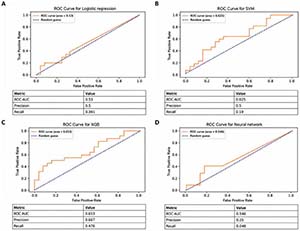
Figure 1. Receiver operating characteristic (ROC) curves and corresponding performance metrics for logistic regression, support vector machines (SVM), artificial neural networks (ANN), and extreme gradient boosting (XGBoost). Each ROC curve illustrates the trade-off between sensitivity (true-positive rate) and 1 - specificity (false-positive rate) across different decision thresholds, providing an overall assessment of model discrimination.
The modeling process followed an iterative design. During the first two iterations, baseline models were trained without hyperparameter tuning, allowing comparison of algorithm performance. These preliminary experiments indicated that systematic optimization could improve predictive performance. Based on these findings, the third iteration focused on a comparative assessment of support vector machines (SVM) and extreme gradient boosting (XGBoost). To support model selection, the AUC was calculated during training using 10-fold cross-validation (k = 10) (Figure 2).
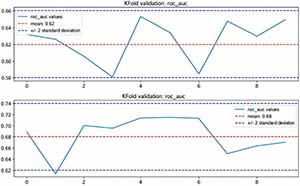
Figure 2. AUC values for the SVM (A) and XGBoost (B) algorithms.
RESULTS
The XGBoost algorithm demonstrated greater stability, with a higher proportion of AUC values above 0.6 and a higher mean AUC across the 10-fold cross-validation runs. Consequently, subsequent analyses focused on refining this model. XGBoost was then used to develop a prototype predictive model that estimated the probability of live birth after IVF treatment.
At this stage, the dataset was augmented with 144 synthetic records generated using domain expertise to ensure medical plausibility. These synthetic data simulated characteristics of IVF procedures and corresponding probability ranges for live birth, thereby increasing the variability of the training set and reducing the risk that the model would encounter previously unseen patterns.
The combined dataset was divided into training (70%), testing (20%), and validation (10%) subsets. Several prototype models with different internal hyperparameter configurations were then created and evaluated using the validation and test datasets. To maintain data consistency, parameter-specific limits were defined: numerical variables were constrained by minimum and maximum values, categorical variables by permitted categories, and variable types were explicitly specified. Records that violated these limits were classified as anomalies; in total, 29 procedures were excluded from training and testing.
Hyperparameter optimization was performed using the HyperOpt library (Bergstra et al., 2013), with Bayesian optimization (Shahriari et al., 2016) as the search strategy. The optimization process targeted a predefined set of XGBoost parameters and generated approximately 80,000 candidate models. Each model was evaluated against observed IVF outcomes using AUC, precision, and recall as performance metrics.
After optimization, the final model achieved an AUC of 0.927, representing a substantial improvement over the initial baseline models (Figure 3). The resulting ROC curve and associated performance metrics supported the robustness and predictive reliability of the optimized prototype.
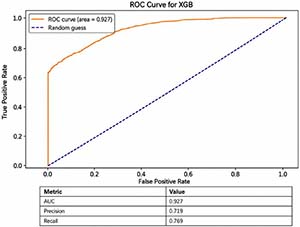
Figure 3. Receiver operating characteristic (ROC) curve and performance metrics for the XGBoost algorithm.
The relative importance of model features was evaluated using three complementary approaches:
• the embedded feature-importance metric of the random forest algorithm (Breiman, 2001);For comparability, the resulting values were normalized to a range of 0 to 1. The categorical variable “#14: Transferred embryo class” appeared multiple times in the rankings because it was transformed using one-hot encoding (Bishop, 2006). This technique converts a categorical variable into N binary numerical variables, where N is the number of categories. Consequently, multiple new features were generated, each named using a fixed prefix (“embryo_incubation_embryo_class-ohe-”) followed by the category label (e.g., 411 or kl.3). Examples included “embryo_incubation_embryo_class-ohe-411” and “embryo_incubation_embryo_class-ohe-kl.3.” These features were represented as binary values of either 0 or 1.
• Local Interpretable Model-Agnostic Explanations (LIME) (Ribeiro et al., 2016);
• SHapley Additive exPlanations (SHAP) (Lundberg & Lee, 2017).
The five features with the highest random forest importance were: #14, transferred embryo class (age_embryo_incubation_embryo_class-ohe-411), derived from transformation of the maximum value of quantitative embryo-development parameters (see Feature Engineering); #6, tPB2-second polar body extrusion (embryo_incubation_tPB2); #14, transferred embryo class (age_embryo_incubation_embryo_class-ohe-333), derived from the same transformation; #5, AMH concentration (amh); and #7, tPNa-pronuclear appearance (embryo_incubation_tPNa).
The five most influential features identified by LIME were: #14, transferred embryo class (age_embryo_incubation_embryo_class-ohe-411), derived from transformation of embryo-development parameters; #14, transferred embryo class (age_embryo_incubation_embryo_class-ohe-kl.3), derived from the same transformation; #14, transferred embryo class (age_embryo_incubation_embryo_class-ohe-333), also derived from this transformation; #6, tPB2-second polar body extrusion (embryo_incubation_tPB2); and #14, transferred embryo class (age_embryo_incubation_embryo_class-ohe-M3), derived from transformation of embryo-development parameters.
According to the SHAP values, the five most important features were: #14, transferred embryo class (age_embryo_incubation_embryo_class-ohe-411), derived from transformation of embryo-development parameters; #6, tPB2-second polar body extrusion (embryo_incubation_tPB2); #5, AMH concentration (amh); #2, BMI and female body weight (weight_in_kg); and #1, female age (age_in_years).
All three feature-importance methods consistently identified #14, transferred embryo class, as a highly influential variable. In addition, #6, tPB2-second polar body extrusion (embryo_incubation_tPB2), ranked among the most important features across all approaches. Other relevant predictors included #5, AMH concentration (amh); #7, tPNa-pronuclear appearance (embryo_incubation_tPNa); #2, BMI and female body weight (weight_in_kg); #1, female age (age_in_years); and #15, degree of embryo fragmentation at the two-cell stage (three-level scale; embryo_incubation_fragmentation).
The prototype model was subsequently deployed for operational use through the development of a dedicated application. The application accepts input parameters from an IVF procedure and generates embryo-specific predictions of live birth probability. These predictions integrate clinical variables and morphokinetic parameters of embryo development. The output is expressed as a value between 0 and 1 and can therefore be interpreted as a percentage probability of success.
DISCUSSION
Although assisted reproductive technology (ART) has improved substantially in recent decades, implantation rates per embryo transfer remain suboptimal. In addition, the transfer of multiple embryos continues to contribute to a higher incidence of multiple gestations, which are associated with increased maternal and neonatal risks (Alegre et al., 2019).
Embryo selection in IVF involves the systematic evaluation of fertilized oocytes to identify those with the greatest developmental potential and to select the most viable embryo or embryos for uterine transfer or cryopreservation within a given patient cohort (Kragh & Karstoft, 2021). AI models are evaluated according to their ability to identify the embryo or embryos with the highest probability of resulting in a successful pregnancy.
Morphological assessment remains the standard method for embryo evaluation in clinical IVF practice, despite its inherent subjectivity and substantial interobserver variability (Baxter Bendus et al., 2006). The blastocyst stage is now widely recognized as the optimal developmental stage for evaluating embryo quality before transfer (Glujovsky et al., 2022). Traditional embryo assessment relies heavily on static morphological criteria and, more recently, on time-lapse imaging systems that incorporate morphokinetic parameters. Time-lapse systems allow continuous, noninvasive monitoring of embryo development and facilitate the incorporation of morphokinetic parameters into embryo assessment (Gardner & Balaban, 2016). However, embryo morphology alone does not reliably predict transfer success, and embryo quality is not the only factor that influences treatment effectiveness. Although these tools provide valuable information, they remain limited by interobserver variability and cannot fully integrate the broader clinical context. In contrast, predictive algorithms can simultaneously process large, heterogeneous datasets-including patient characteristics (e.g., age, BMI, and hormone concentrations), semen parameters, stimulation protocols, and embryo-development metrics-thereby enabling a more comprehensive evaluation of each IVF cycle.
Despite promising performance indicators, the clinical use of predictive algorithms in IVF remains limited. One major limitation is the lack of standardization among clinics in data collection and embryo classification systems, which hinders model generalizability. Furthermore, many studies rely on retrospective data, which may introduce bias and limit practical applicability. The “black-box” nature of some deep-learning models also raises concerns about transparency and interpretability in clinical decision-making.
Although current algorithms can predict implantation or clinical pregnancy, few have demonstrated high accuracy in predicting live birth. Factors such as endometrial receptivity and immunologic characteristics, which substantially influence pregnancy outcomes, are often difficult to incorporate into predictive systems because the necessary assessments may be unavailable or invasive.
For these tools to be meaningfully integrated into routine IVF practice, prospective validation and randomized controlled trials will be essential. Clinician adoption will require evidence not only of predictive accuracy but also of clinical utility, such as improved outcomes, shorter time to pregnancy, or more efficient use of resources.
In summary, algorithm-based predictive models represent a promising decision-support framework in assisted reproduction. When implemented thoughtfully, they can complement clinical and embryological expertise, facilitate personalized treatment planning, and contribute to more data-driven, transparent, and consistent IVF care.
CONCLUSION
The analysis of three iterations of the IVF predictive model yielded encouraging results. A prototype model was developed with an AUC greater than 0.9. Feature-importance analyses performed using three different methods produced similar findings and identified several variables that contributed to models with strong predictive performance. In addition, incorporation of expert domain knowledge substantially improved the AUC of the XGBoost model. This integration enabled the model to learn clinically meaningful patterns and enhanced its potential value as a decision-support tool in IVF practice. Such an approach may help clinicians synthesize complex information objectively and support embryo-selection strategies and individualized treatment planning. However, because the model relies partly on expert-generated data, it should be tested regularly using new, real-world IVF data. Ongoing evaluation is necessary to determine whether the model continues to reflect clinical reality and whether substantial or recurrent deviations from the expert-generated data occur.
Funding and competing interests:
Acknowledgments:
The authors sincerely thank Szymon Lechwar for assistance with data collection and analysis.
REFERENCES
Adolfsson E, Andershed AN. Morphology vs morphokinetics: a retrospective comparison of inter-observer and intra-observer agreement between embryologists on blastocysts with known implantation outcome. JBRA Assist Reprod. 2018;22:228-37. PMID: 29912521 DOI: 10.5935/1518-0557.20180042
Medline
Alegre L, Del Gallego R, Arrones S, Hernández P, Muñoz M, Meseguer M. Novel noninvasive embryo selection algorithm combining time-lapse morphokinetics and oxidative status of the spent embryo culture medium. Fertil Steril. 2019;111:918-27.e3. PMID: 30922642 DOI: 10.1016/j.fertnstert.2019.01.022
Medline
Baxter Bendus AE, Mayer JF, Shipley SK, Catherino WH. Interobserver and intraobserver variation in day 3 embryo grading. Fertil Steril. 2006;86:1608-15. PMID: 17074349 DOI: 10.1016/j.fertnstert.2006.05.037
Medline
Bishop CM. Pattern recognition and machine learning. New York: Springer; 2006.
Borji A, Haick H, Pohn B, Graf A, Zakall J, Islam SMRS, Kronreif G, Kovatchki D, Strohmer H, Hatamikia S. An integrated optimization and deep learning pipeline for predicting live birth success in IVF using feature optimization and transformer-based models. Comput Methods Programs Biomed. 2025;271:108979. PMID: 40737998 DOI: 10.1016/j.cmpb.2025.108979
Medline
Breiman L. Random forests. Mach Learn. 2001;45:5-32. DOI: 10.1023/A:1010933404324
Cortes C, Vapnik V. Support-vector networks. Mach Learn. 1995;20:273-97. DOI: 10.1007/BF00994018
Desai N, Ploskonka S, Goodman LR, Austin C, Goldberg J, Falcone T. Analysis of embryo morphokinetics, multinucleation and cleavage anomalies using continuous time-lapse monitoring in blastocyst transfer cycles. Reprod Biol Endocrinol. 2014;12:54. PMID: 24951056 DOI: 10.1186/1477-7827-12-54
Medline
Gardner DK, Balaban B. Assessment of human embryo development using morphological criteria in an era of time-lapse, algorithms and ‘OMICS’: is looking good still important? Mol Hum Reprod. 2016;22:704-18. PMID: 27578774 DOI: 10.1093/molehr/gaw057
Medline
Glujovsky D, Quinteiro Retamar AM, Alvarez Sedo CR, Ciapponi A, Cornelisse S, Blake D. Cleavage-stage versus blastocyst-stage embryo transfer in assisted reproductive technology. Cochrane Database Syst Rev. 2022;5:CD002118. PMID: 35588094 DOI: 10.1002/14651858.CD002118.pub7
Medline
Goyal A, Kuchana M, Ayyagari KPR. Machine learning predicts live-birth occurrence before in vitro fertilization treatment. Sci Rep. 2020;10:20925. PMID: 33262383 DOI: 10.1038/s41598-020-76928-z
Medline
Hosmer DW, Lemeshow S. Applied logistic regression. 2nd ed. New York: Wiley; 2000.
Jiang C, Geng M, Zhang C, She H, Wang D, Wang J, Liu J, Diao F, Cai L, Hu Y. The synergy of morphokinetic parameters and sHLA-G in cleavage embryo enhancing implantation rates. Front Cell Dev Biol. 2024a;12:1417375. PMID: 39081861 DOI: 10.3389/fcell.2024.1417375
Medline
Jiang R, Yang G, Wang H, Fang J, Hu J, Zhang T, Kong Y, Wu Z, Huang X, Qi L, Song N, Song W, Jin H, Yao G. Exploring key embryonic developmental morphokinetic parameters that affect clinical outcomes during the PGT cycle using time-lapse monitoring systems. BMC Pregnancy Childbirth. 2024b;24:870. PMID: 39732641 DOI: 10.1186/s12884-024-07080-z
Medline
Kragh MF, Karstoft H. Embryo selection with artificial intelligence: how to evaluate and compare methods? J Assist Reprod Genet. 2021;38:1675-89. PMID: 34173914 DOI: 10.1007/s10815-021-02254-6
Medline
Pribenszky C, Nilselid AM, Montag M. Time-lapse culture with morphokinetic embryo selection improves pregnancy and live birth chances and reduces early pregnancy loss: a meta-analysis. Reprod Biomed Online. 2017;35:511-20. PMID: 28736152 DOI: 10.1016/j.rbmo.2017.06.022
Medline
Qiu J, Li P, Dong M, Xin X, Tan J. Personalized prediction of live birth prior to the first in vitro fertilization treatment: a machine learning method. J Transl Med. 2019;17:317. PMID: 31547822 DOI: 10.1186/s12967-019-2062-5
Medline
Tadeusiewicz R. Sieci neuronowe. Warszawa: Akademicka Oficyna Wydawnicza RM; 1993.
Villani MT, Morini D, Spaggiari G, Falbo AI, Melli B, La Sala GB, Romeo M, Simoni M, Aguzzoli L, Santi D. Are sperm parameters able to predict the success of assisted reproductive technology? A retrospective analysis of over 22,000 assisted reproductive technology cycles. Andrology. 2022;10:310-21. PMID: 34723422 DOI: 10.1111/andr.13123
Medline
Ye X, Peng T, Chen Z, Liao C, Li X, Lan Y, Fu X, An G. Semen parameters’ mediation effect on the association between advanced paternal age and IVF clinical outcomes: A 10-year retrospective cohort study. Maturitas. 2023;173:20-7. PMID: 37182387 DOI: 10.1016/j.maturitas.2023.04.011
Medline