JBRA Assisted Reproduction 2025;29(Suppl.2 SBRA 2025):23
29th Annual Congress of the SBRA. São Paulo/SP - Brazil, 2025
doi: 10.5935/1518-0557.20263544
P-11. Antioxidant Therapies in the Improvement of Sperm Quality: Recent Evidence
JBRA Assisted Reproduction 2025;29(Suppl.2 SBRA 2025):23
Poster Presentation
29th Annual Congress of the SBRA. São Paulo/SP - Brazil, 2025
doi: 10.5935/1518-0557.20263544
P-11. Antioxidant Therapies in the Improvement of Sperm Quality: Recent Evidence
1Fertibaby Ceará - Fortaleza - CE - Brasil
Objective: This study reviews recent evidence on the use of antioxidant therapies to improve sperm quality, particularly in men with infertility associated with oxidative stress. It evaluates the impact of antioxidant supplementation on traditional semen parameters — concentration, motility, and morphology — as well as sperm DNA fragmentation, and reproductive outcomes in assisted reproduction.
Methods: A systematic review was conducted using the PubMed, Scopus, and Web of Science databases, covering studies from 2022 to 2025. Included were randomized clinical trials, meta-analyses, and systematic reviews investigating isolated or combined antioxidants — vitamin C, vitamin E, coenzyme Q10, selenium, zinc, and L-carnitine — in men with idiopathic infertility or seminal oxidative stress. Outcomes assessed included sperm concentration, progressive and total motility, morphology, DNA fragmentation, and clinical endpoints such as fertilization, pregnancy, and live births.
Results: Antioxidant supplementation demonstrated significant improvement in progressive motility and sperm concentration — parameters closely linked to male fertility. Sperm DNA fragmentation, a key factor for genetic integrity, was consistently reduced, especially with combined antioxidant therapies, suggesting a synergistic effect. Some studies also reported increased fertilization and pregnancy rates in techniques such as in vitro fertilization (IVF) and intrauterine insemination (IUI). However, heterogeneity in protocols — including dosage, duration, and formulations — limited direct comparisons and clinical standardization. Effectiveness may vary according to patient profiles, including the degree of oxidative stress and existing comorbidities.
Conclusion: Antioxidant therapies represent a promising and safe approach to improving sperm quality in men with infertility associated with oxidative stress. Current evidence supports the use of combined antioxidant supplementation to reduce sperm DNA damage and improve motility and concentration, potentially enhancing reproductive outcomes. However, the heterogeneity of study protocols and the lack of standardized guidelines call for caution in broad clinical application. The evaluation of specific biomarkers related to oxidative stress and DNA fragmentation may enable the development of more effective, personalized, and evidence-based therapeutic protocols.
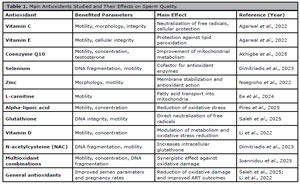
Table 1. Main Antioxidants Studied and Their Effects on Sperm Quality.