JBRA Assist. Reprod. 2026 2026;00(0):00-00
ORIGINAL ARTICLE
doi: 10.5935/1518-0557.20260091
Comparison of Clinical Pregnancy Rates Between Difficult and Easy Embryo Transfers: A Comprehensive Retrospective Study and Multi-Regional Meta-Analysis
1Department of Obstetrics and Gynecology, King Faisal Specialist Hospital and Research Center, Jeddah, Saudi Arabia
2Department of Pathology and Laboratory Medicine, King Faisal Specialist Hospital and Research Centre, Jeddah, Saudi Arabia
3College of Medicine, Al-Faisal University, Riyadh, Saudi Arabia
CONFLICT OF INTEREST
The authors declare no conflicts of interest.
ABSTRACT
Objective: The impact of difficult embryo transfer (ET) on clinical pregnancy rate (CPR) remains uncertain, with prior studies reporting inconsistent findings. This study aimed to evaluate the association between difficult versus easy ET and CPR in patients undergoing in vitro fertilization (IVF).
Methods: This retrospective cohort study was conducted at King Faisal Specialist Hospital and Research Center, Jeddah, Saudi Arabia, between January 2022 and November 2024. Difficult ET was defined by procedural challenges such as resistance, need for force, or use of additional instruments. The primary outcome was CPR, defined as the presence of a gestational sac or fetal heartbeat on ultrasound following a positive β-hCG test. Multivariable logistic regression was performed to adjust for potential confounders.
Results: A total of 481 cycles were included, of which 442 (91.9%) involved easy ET and 39 (8.1%) difficult ET. Baseline characteristics were comparable between groups. The overall CPR was 31.6%, with no statistically significant difference between the difficult and easy ET groups (23.08% vs. 32.35%, p=0.282). In unadjusted analysis, difficult ET was associated with lower odds of CPR (OR 0.63, 95% CI: 0.29-1.36). After adjustment for confound¬ers, difficult ET remained associated with reduced odds of CPR (adjusted OR 0.49, 95% CI:0.22-1.11), although this did not reach statistical significance (p=0.087).
Conclusion: Difficult ET was associated with a nonsignificant trend toward lower CPR. These findings suggest a potential negative effect; however, larger studies are needed to confirm this association.
Keywords: in vitro fertilization, infertility, embryo transfer, clinical pregnancy, cervical stenosis
INTRODUCTION
The success of an in vitro fertilization (IVF) cycle is influenced by multiple factors, including the woman’s age, the stimulation protocol, basal follicle-stimulating hormone (FSH) levels, the number and quality of embryos, endometrial receptivity, and the method of embryo transfer (ET) (van Loendersloot et al., 2010; Shingshetty et al., 2024; Tyler et al., 2022). Among these, the ET procedure is widely regarded as a critical determinant of IVF success (Tyler et al., 2022). It is essential that embryo transfer be performed as atraumatically as possible, as procedural trauma may stimulate oxytocin release, increase uterine contractility, and potentially impair embryo implantation (Fanchin & Ayoubi, 2009).
Although most embryo transfer procedures are straightforward and do not require excessive force, manipulation, or instrumentation, difficult transfers can occur in up to 10% of IVF cases (Galati et al., 2023). The most common causes include marked uterine anteversion or retroversion and cervical stenosis (Arora & Mishra, 2018). There is no universally accepted definition of a difficult ET; however, any deviation from a smooth and uncomplicated procedure is generally considered difficult (Galati et al., 2023; Arora & Mishra, 2018). Common features of difficult ET include the need for rigid catheters, resistance during catheter advancement requiring cervical traction, the need for cervical sounding or dilation, and the presence of blood on the catheter or its sheath (Galati et al., 2023; Arora & Mishra, 2018).
Multiple research investigations have examined the influence of difficult ET on clinical pregnancy rates (CPR), but the findings have been contradictory, with some revealing either a negative or no association. However, a contemporary meta-analysis of 16 investigations depicted that difficult ET substantially reduced the CPR by 30% with statistical significance compared to easy ET (Galati et al., 2023). Despite this, there is a significant gap in research from Saudi Arabia, with no studies currently reported. Our study aims to fill this gap by comparing the roles of difficult versus easy ET on CPR among a Saudi Arabian population, providing valuable insights from a different geographical region with a large sample size.
MATERIALS AND METHODS
Study design and setting
This retrospective cohort research was carried out at the Department of Obstetrics and Gynecology, King Faisal Specialist Hospital and Research Center in Jeddah, Saudi Arabia, from January 1st, 2022, to November 30th, 2024. The study was approved by the Ethics Committee of the Institutional Review Board of our institution (IRB approval number: 2024-101). No formal sampling calculation was performed, as all subjects who satisfied the inclusion criteria were considered in the research.
Study sample
A total of 481 ET procedures were analyzed during the study period. All ET procedures were performed by three fertility specialists, each with over seven years of experience. The eligibility criteria were: women undergoing IVF cycles with fresh ET within the specified period. Additionally, patients had to meet the following criteria: maternal age ≤42 years, maternal body mass index <30 kg/m2, a diagnosis of primary infertility for at least two years, early follicular phase (day 3) FSH level ≤12 IU/L, and the availability of ≥1 good-quality embryo. Cleavage-stage embryos were assessed according to the morphological criteria of the Istanbul consensus, whereas blastocysts were graded using the Gardner scoring system (Alpha Scientists in Reproductive Medicine & ESHRE Special Interest Group of Embryology, 2011; Gardner et al., 2000). The exclusion criteria included patients with hydrosalpinx, uterine cavity anomalies, and endometrial thickness <7 mm at the period of human chorionic gonadotropin (hCG) administration, which was used as the oocyte maturation trigger.
Ovarian stimulation and ET
All women were administered controlled ovarian stimulation using either a gonadotropin-releasing hormone (GnRH) long agonist or short antagonist protocol, as deemed appropriate by the fertility specialist. For transfers performed on days 2 or 3, cleavagestage embryos were evaluated based on blastomere number and symmetry, degree of fragmentation, and multinucleation according to the Istanbul consensus criteria. Day-5 blastocysts were graded according to the Gardner system, considering the degree of blastocoel expansion and the morphology of the inner cell mass and trophectoderm. Only embryos classified as good quality according to the stage-specific criteria were selected for transfer (Alpha Scientists in Reproductive Medicine & ESHRE Special Interest Group of Embryology, 2011; Gardner et al., 2000). ET was performed on day 2 or 3 (cleavage stage) or day 5 (blastocyst stage), with one to three embryos being transferred. Progesterone supplementation (400 mg twice daily) was started on oocyte retrieval day and continued until the β-hCG test.All ET procedures were achieved using a soft ET catheter with ultrasound guidance. Patients were positioned in lithotomy with either an empty/full bladder, and a sterile speculum was employed to expose the cervix. The procedure was performed without anesthesia, and neither a mock transfer nor a trial embryo transfer was conducted prior to the IVF cycle. The cervix was cleaned with saline. The outer sheath was gently inserted through the external os to the internal os. Afterward, the fertility specialist loaded the embryos into the ET catheter, positioning it 6-6.5 cm from the external os and placing the embryos 1-2 cm from the uterine fundus. After the ET catheter was removed, the patient stayed in the supine position for 20 minutes. ET procedures were categorized as easy or difficult ET. Easy ETs were smooth, while difficult ETs involved issues like multiple failed attempts to unload embryo into uterine cavity (i.e., retained embryo), resistance, force, instrumentation (e.g., tenaculum or hysterometer), cervical canal sounding and dilatation, or blood on the catheter (Galati et al., 2023; Arora & Mishra, 2018).Variables related to the ET were collected, including patient age, infertility cause, stimulation protocol, stimulation duration, day-3 FSH and luteinizing hormone (LH) levels, largest follicle diameter, number of retrieved oocytes, formed embryos, number good quality embryos (grades A and B), and number of transferred embryos. Additionally, the use of instrumentation (e.g., outer catheter sheath, stylet, tenaculum, or hysterometer), as well as any resistance, blood/mucus in the catheter, or repeated ET due to embryo retention, were noted as signs of difficult ET.
Parameters and outcomes
The primary outcome was the CPR, characterized by the observation of a fetal heartbeat or gestational sac on ultrasound after a positive pregnancy test (i.e., β-hCG).
Statistical analysis
For statistical analysis, patients were divided into easy and difficult ET groups. Descriptive outcomes were summarized as numbers and percentages. The Shapiro-Wilk test was utilized to assess the normality of numerical outcomes. Non-normally distributed data were presented as medians with interquartile ranges. The Mann-Whitney U test (nonparametric) was utilized for univariate examination of numerical data. The Fisher’s exact test or Chi-square test, as appropriate, was used for the univariate examination of categorical data. The direction and strength of association between CPR and difficult versus easy ET were assessed using an odds ratio (OR) with a 95% confidence interval (CI).A multivariable logistic regression model was constructed to evaluate the independent association between ET difficulty and CPR. The model adjusted for clinically relevant covariates, including age, day-3 FSH level, day-3 LH level, embryo stage, good embryo quality, number of embryos transferred, estradiol level (as a surrogate for endometrial receptivity), and stimulation protocol. These variables were selected a priori based on their known clinical relevance and potential to confound the relationship between ET difficulty and pregnancy outcomes. Adjusted OR (aORs) with 95% CI were reported.Regarding missing data, all extracted variables were reviewed for completeness prior to analysis. Patients with any missing data in key exposure or outcome variables were excluded before conducting the analysis (complete-case analysis).Two-tailed p value <0.05 established statistical significance for all outcomes. Data were analyzed using STATA, version 19 for Windows.
RESULTS
Patient distribution and baseline characteristics
Overall, 481 cycles were analyzed, with 442 (91.89%) undergoing easy ET and 39 (8.11%) having difficult ET. There were no significant differences in the baseline demographic and clinical characteristics between the two groups (Table 1).
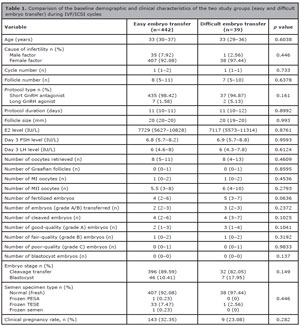
Table 1. Comparison of the baseline demographic and clinical characteristics of the two study groups (easy and difficult embryo transfer) during IVF/ICSI cycles
E2: Estradiol; FSH: Follicle Stimulating Hormone; GnRH: Gonadotropin-Releasing Hormone; ICSI: Intracytoplasmic Sperm Injection; IVF: In Vitro Fertilization; LH: Luteinizing Hormone; PESA: Percutaneous Epididymal Sperm Aspiration; TESE: Testicular Sperm Aspiration
The numerical data are not normally distributed, as indicated by the Shapiro-Wilk test, and are presented as the median (first quartile-third quartile)
CPR and multivariable logistic analysis
For the primary outcome, the CPR for all patients was 31.6%. The CPR did not significantly differ between the difficult and easy ET groups (23.08% vs. 32.35%, respectively; p=0.282). Moreover, a multivariable logistic regression, adjusting for potential confounders, was conducted. The aOR for CPR in the difficult group was 0.49 (95% CI: 0.22 to 1.11), suggesting that the difficult ET group had approximately 51% lower odds of CPR compared to the easy ET group (Table 2).
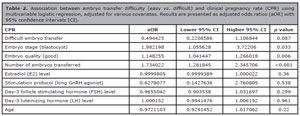
Table 2. Association between embryo transfer difficulty (easy vs. difficult) and clinical pregnancy rate (CPR) using multivariable logistic regression, adjusted for various covariates. Results are presented as adjusted odds ratios (aOR) with 95% confidence intervals (CI).
Meta-analysis results of CPR across regions
To explore this further, we re-ran the meta-analysis results of clinical pregnancy rates across regions: difficult vs. easy ET. Re-analysis of the study by Galati et al. (2023), incorporating our data from Saudi Arabia (Table 3). This subgroup analysis compared CPR between difficult and easy ET across various geographical regions. The overall OR remained closely similar and was 0.708 (95% CI: 0.644 to 0.778, p<0.001), indicating a significantly lower CPR with difficult ET.
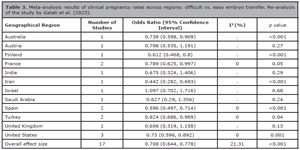
Table 3. Meta-analysis results of clinical pregnancy rates across regions: difficult vs. easy embryo transfer. Re-analysis of the study by Galati et al. (2023).
DISCUSSION
Summary of principal findings
This retrospective Saudi Arabian study (n=481) demonstrated a non-statistically significant association between difficult ET and lower CPR (aOR=0.49). Although the estimate was imprecise, the magnitude of the observed effect suggests a potentially clinically meaningful reduction in CPR, warranting further investigation in larger, adequately powered studies.
Interpretation of findings
The primary purpose of ET is to carefully place the embryos in the uterine cavity in the correct site to enhance the likelihood of successful implantation (Galati et al., 2023). Hence, the ET procedure must be completed as softly as possible, as any physical trauma can stimulate the secretion of oxytocin, which amplifies uterine contractility and may interfere with embryo implantation (Fanchin & Ayoubi, 2009). The American Society for Reproductive Medicine (ASRM) guidelines suggest that CPRs improve with practices such as utilizing abdominal ultrasound during the procedure, removing cervical mucus, and employing a soft catheter (Practice Committee of the American Society for Reproductive Medicine, 2017). During a difficult ET, trauma to the endocervical canal is frequent, leading to contamination of the ET catheter with blood or mucus. In such cases, the embryo may be drawn back into the catheter during the procedure, or blood may enter the endometrial cavity, potentially affecting embryo implantation (Schoolcraft et al., 2001). Additionally, during a difficult ET, such as in cases of severe uterine anteversion or cervical stenosis, the fertility specialist may need to use instruments (e.g., hysterometer or tenaculum) or a rigid catheter. These interventions can increase the risk of trauma to the endocervical canal, potentially affecting embryo implantation (Schoolcraft et al., 2001).In the case of difficult ET, we completely acknowledge the difference in difficulty between minor complications, such as a small amount of blood on the catheter, and more complex challenges, such as the need for a tenaculum.However, the goal of our study was to classify ET into two broad categories: "easy" and "difficult," without further specification of the varying degrees of difficulty. This classification was designed to provide a simplified overview for the purposes of our analysis. A more granular classification could provide additional insights and should be considered in future studies to better capture the spectrum of difficulties encountered during ET.
Comparison with previous literature
A recent meta-analysis of 16 retrospective and prospective studies, involving 29,947 ET cases, reported that difficult ET occurred in 11.8% of cases and was associated with a significant 30% reduction in the CPR (Galati et al., 2023). In comparison, our study, though based on a smaller sample, found a comparable difficult ET rate of 8.11%, but no significant difference in CPR between easy and difficult ET groups. This discrepancy is likely due to the smaller sample size in our study, which may have reduced the statistical power to detect a meaningful difference.To further investigate this, we re-conducted the metaanalysis, incorporating our data from Saudi Arabia (Table 3). This subgroup analysis compared CPR between difficult and easy ET across various geographical regions. The overall OR remained closely similar, indicating a significantly lower CPR with difficult ET. Most regions (e.g., Australia, Finland, Iran, Spain, and the United States) showed a similar trend, with ORs < 1 and statistically significant results, suggesting consistent findings across diverse settings. In Saudi Arabia, the OR was 0.627 (95% CI: 0.29 to1.356, p=0.24), indicating a trend toward lower CPR with difficult ET, although this result was not statistically significant- likely due to limited data. Similarly, some other countries (e.g., Israel and India) also showed non-significant results, possibly due to small sample sizes or study variability.
Clinical Implications
Various strategies have been proposed to overcome challenging ET, for example, performing a dummy ET to determine the deepness and direction of the uterus (Mansour et al., 1990), using ultrasound guidance for precise embryo placement (Prapas et al., 1995), and advising the patient to have a full bladder to flatten the uterocervical angle (Lewin et al., 1997). Notwithstanding these recommendations, a small subset of women still experience difficult ET, which may require manipulation that can increase uterine contractions and potentially hinder embryo implantation (Fanchin & Ayoubi, 2009; Fanchin et al., 1998). In our study, mock ET was not performed. During a mock ET, cervical stenosis can be identified and addressed through cervical dilation. Although mock ET prior to IVF cycles has been depicted to enhance CPR (Mansour et al., 1990), some patients still experience difficult ET due to unresolved cervical stenosis or the development of new stenosis at the period of the procedure. One could consider oxytocin receptor antagonists, which could stop uterine contractions. A meta-analysis of 11 randomized controlled trials revealed that oxytocin receptor antagonists (e.g., atosiban) in IVF treatment was favorably linked to increased IVF efficacy, although the observed treatment effects were small and had not been sufficiently corroborated. Moreover, during difficult ET, one plausible option could be to cease the transfer, freeze the embryos, and postpone the procedure to a later time. While this may be more challenging for women and may necessitate refreezing thawed embryos, it allows for better preparation with skilled fertility specialists, advanced knowledge of potential difficulties, and a planned approach regarding catheter choice and trajectory (Galati et al., 2023).We acknowledge that transferring multiple embryos does not align with current international best-practice guidelines-such as those from ASRM (Practice Committee of the American Society for Reproductive Medicine, 2017) and the European Society of Human Reproduction and Embryology (ESHRE) (ESHRE Guideline Group on the Number of Embryos to Transfer, 2024)-which advocate for elective single ET in most patients to minimize the risk of multiple pregnancies. However, in our cohort, patients who underwent difficult ETs were often considered to have a poorer prognosis due to the technical challenges of the procedure and the associated risk of reduced implantation rates. Consistent with local clinical practice at the time, the decision to transfer a higher number of embryos (up to three) in such cases was made to compensate for the anticipated lower success rates, particularly in patients of advanced maternal age, with diminished ovarian reserve, or with repeated IVF failures.
Strengths and limitations
A key strength of this study is that it is the first to explore the role of difficult versus easy ET during an IVF cycle in Saudi Arabia. Evaluating this association in a Saudi population adds important regional value, as patient characteristics, clinical practices, and IVF protocols may differ from those reported in Western or other international settings. Factors such as variations in population demographics, prevalence of comorbidities, and institutional approaches to ET techniques may influence clinical outcomes, potentially limiting the generalizability of existing evidence. Therefore, generating data from this region contributes to a more comprehensive and globally representative understanding of the impact of ET difficulty on CPR.However, several limitations must be acknowledged. First, the inability to control for all potential confounding factors could influence the CPR. Moreover, due to the retrospective design, this study is subject to potential selection bias, as only patients with complete and available records were included, which may not fully represent the broader IVF population. Additionally, the reliance on historical data from a single institution means the findings may not be applicable to all populations or settings. The study also did not report the implantation rate and live birth rate, which the latter is considered the gold standard in IVF research. Clinical data on live births were unavailable, as ETs were performed at our specialized center, and patients were subsequently discharged to continue their pregnancy follow-up at local hospitals. Besides, the use of retrospective clinical records introduces the possibility of information bias, including inaccuracies or inconsistencies in documentation. Furthermore, due to the observational nature of the study, only associations or correlations can be drawn, not causal relationships. The small number of cases in the "difficult ET" group was beyond the authors’ control and reflects the real-world incidence observed. The relatively small number of difficult ET cases reflects real-world clinical practice but limits the statistical power to detect modest differences in CPRs. Although additional post hoc subgroup analyses (e.g., stratified by maternal age, embryo stage, or number of embryos transferred) could have provided further insight into potential effect modification, such analyses were not performed due to the small sample size-particularly in the difficult ET group-which would likely result in underpowered and unreliable estimates. Consequently, this study should be interpreted as exploratory and hypothesis-generating rather than definitive. In addition, the classification of ET as "easy" or "difficult" may be subject to operator variability and subjective judgment, which could introduce misclassification bias. Therefore, although our findings are directionally consistent with existing literature, the current data are insufficient to draw firm conclusions regarding the independent effect of difficult ET on CPR.
Future research directions
Future studies should aim to clarify the independent impact of difficult ET on CPR using larger, multicenter, and prospective study designs. Such studies would allow for adequately powered analyses and the possibility of conducting subgroup evaluations based on maternal age, embryo stage, number of embryos transferred, and other clinically relevant factors. Additionally, more granular classification systems for ET difficulty, capturing minor versus major procedural challenges, could provide deeper insights into how specific technical factors influence IVF success. Incorporating standardized reporting of outcomes, including implantation rates and live birth rates, would strengthen the evidence base and facilitate comparisons across regions. Finally, research into optimized strategies to prevent or manage difficult ET, such as mock transfers, ultrasound guidance, or pharmacologic interventions to reduce uterine contractility, is warranted to inform best practices and improve patient outcomes.
CONCLUSIONS
In this single-center retrospective cohort, difficult ET was associated with a numerically lower CPR compared with easy ET; however, this difference did not reach statistical significance. Given the limited number of difficult ET cases, the findings should be interpreted with caution. While the observed effect size is consistent with previous reports suggesting a negative impact of difficult ET, larger, adequately powered studies are required to confirm this association and to clarify its clinical relevance. At present, these results do not support definitive conclusions regarding causality.
Acknowledgments:
The authors thank the patients and staff of the Obstetrics and Gynecology Department at King Faisal Specialist Hospital and Research Center for their cooperation and support.
REFERENCES
Alpha Scientists in Reproductive Medicine and ESHRE Special Interest Group of Embryology. The Istanbul consensus workshop on embryo assessment: proceedings of an expert meeting. Hum Reprod. 2011;26:1270-83. PMID: 21502182 DOI: 10.1093/humrep/der037
Medline
Arora P, Mishra V. Difficult embryo transfer: A systematic review. J Hum Reprod Sci. 2018;11:229-35. PMID: 30568351 DOI: 10.4103/jhrs.JHRS_59_18
Medline
ESHRE Guideline Group on the Number of Embryos to Transfer; Alteri A, Arroyo G, Baccino G, Craciunas L, De Geyter C, Ebner T, Koleva M, Kordic K, Mcheik S, Mertes H, Pavicic Baldani D, Rodriguez-Wallberg KA, Rugescu I, Santos-Ribeiro S, Tilleman K, Woodward B, Vermeulen N, Veleva Z. ESHRE guideline: number of embryos to transfer during IVF/ICSI. Hum Reprod. 2024;39:647-57. PMID: 38364208 DOI: 10.1093/humrep/deae010
Medline
Fanchin R, Righini C, Olivennes F, Taylor S, de Ziegler D, Frydman R. Uterine contractions at the time of embryo transfer alter pregnancy rates after in-vitro fertilization. Hum Reprod. 1998;13:1968-74. PMID: 9740459 DOI: 10.1093/humrep/13.7.1968
Medline
Fanchin R, Ayoubi JM. Uterine dynamics: impact on the human reproduction process. Reprod Biomed Online. 2009;18:57-62. PMID: 19406033 DOI: 10.1016/S14726483(10)60450-6
Medline
Galati G, Reschini M, Mensi L, Di Dio C, Somigliana E, Muzii L. The impact of difficult embryo transfer on the success of IVF: a systematic review and meta-analysis. Sci Rep. 2023;13:22188. PMID: 38092864 DOI: 10.1038/s41598023-49141-x
Medline
Gardner DK, Lane M, Stevens J, Schlenker T, Schoolcraft WB. Blastocyst score affects implantation and pregnancy outcome: towards a single blastocyst transfer. Fertil Steril. 2000;73:1155-8. PMID: 10856474 DOI: 10.1016/S00150282(00)00518-5
Medline
Lewin A, Schenker JG, Avrech O, Shapira S, Safran A, Friedler S. The role of uterine straightening by passive bladder distension before embryo transfer in IVF cycles. J Assist Reprod Genet. 1997;14:32-4. PMID: 9013308 DOI: 10.1007/BF02765749
Medline
Mansour R, Aboulghar M, Serour G. Dummy embryo transfer: a technique that minimizes the problems of embryo transfer and improves the pregnancy rate in human in vitro fertilization. Fertil Steril. 1990;54:678-81. PMID: 2209889 DOI: 10.1016/S0015-0282(16)53829-1
Medline
Practice Committee of the American Society for Reproductive Medicine. Electronic address: ASRM@asrm. org; Practice Committee of the American Society for Reproductive Medicine. Performing the embryo transfer: a guideline. Fertil Steril. 2017;107:882-96. PMID: 28366416 DOI: 10.1016/j.fertnstert.2017.01.025
Medline
Prapas Y, Prapas N, Hatziparasidou A, Prapa S, Nijs M, Vanderzwalmen P, Vlassis G, Jones EE. The echoguide embryo transfer maximizes the IVF results. Acta Eur Fertil. 1995;26:113-5. PMID: 9098471
Medline
Schoolcraft WB, Surrey ES, Gardner DK. Embryo transfer: techniques and variables affecting success. Fertil Steril. 2001;76:863-70. PMID: 11704102 DOI: 10.1016/S00150282(01)02731-5
Medline
Shingshetty L, Cameron NJ, McLernon DJ, Bhattacharya S. Predictors of success after in vitro fertilization. Fertil Steril. 2024;121:742-51. PMID: 38492930 DOI: 10.1016/j.fertnstert.2024.03.003
Medline
Tyler B, Walford H, Tamblyn J, Keay SD, Mavrelos D, Yasmin E, Al Wattar BH. Interventions to optimize embryo transfer in women undergoing assisted conception: a comprehensive systematic review and meta-analyses. Hum Reprod Update. 2022;28:480-500. PMID: 35325124 DOI: 10.1093/humupd/dmac009
Medline
van Loendersloot LL, van Wely M, Limpens J, Bossuyt PM, Repping S, van der Veen F. Predictive factors in in vitro fertilization (IVF): a systematic review and meta-analysis. Hum Reprod Update. 2010;16:577-89. PMID: 20581128 DOI: 10.1093/humupd/dmq015
Medline