JBRA Assist. Reprod. 2026 2026;00(0):00-00
ORIGINAL ARTICLE
doi: 10.5935/1518-0557.20260099
Reproducibility of "chaotic" embryo calls by non-invasive PGT-A: a prospective pilot study and implications for diagnostic validity
1Paulista Centre for Diagnosis Research and Training, Ribeirão Preto, Brazil
2Department of Gynecology and Obstetrics, São José do Rio Preto School of Medicine (FAMERP), São José do Rio Preto, Brazil
3Centre for Human Reproduction Prof Franco Jr, Ribeirão Preto, Brazil
4University of Beira Interior - Faculty of Health Sciences, Covilhã, Portugal
5Reproductive Medicine Unit - University Hospital Centre Cova da Beira, Covilhã, Portugal
CONFLICTS OF INTEREST
The authors declare no conflict of interest
ABSTRACT
Objective: To evaluate the test-retest reproducibility of "chaotic" embryo calls (≥ 6 whole-chromosome abnormalities) by non-invasive preimplantation genetic testing for aneuploidy (niPGT-A) using cell-free DNA (cfDNA) from spent culture medium (SCM), by repeating niPGT-A after embryo warming and short-term reculture, and to discuss implications for diagnostic validity.
Methods: This prospective pilot study included seven vitrified blastocysts previously classified as "chaotic" by niPGT-A. After warming, embryos underwent 4 to 8 hours of individual reculture to enable additional cfDNA release. SCM was collected and processed for repeat niPGT-A using the same whole-genome amplification method (MALBAC), sequencing platform (Illumina MiSeq), and bioinformatic pipeline (ChromGo) employed in the initial test.Laboratory staff were blinded to the original results. An embryo-free negative media control was processed in parallel to monitor environmental contamination. Agreement between the initial and repeat classifications was assessed descriptively.
Results: All cfDNA samples were successfully amplified and generated high-quality sequencing libraries. On repeat analysis, 3/7 embryos (43%) yielded a euploid call. The remaining 4/7 embryos (57%) showed abnormal findings; however, their chromosomal profiles differed from the initial reports, indicating limited agreement for the "chaotic" designation and for individual chromosomal calls.
Conclusions: In this pilot cohort, embryos initially classified as "chaotic" by SCM-based niPGT-A showed substantial discordance upon retesting after warming and short-term reculture. These findings raise concerns about end-to-end reproducibility and support a cautious interpretation of "chaotic" results until larger studies clarify technical from biological sources of discordance and validate SCM calls against embryo tissue and clinical outcomes.
Keywords: non-invasive PGT-A, "chaotic", embryos, cellfree DNA, spent culture medium, assisted reproduction
INTRODUCTION
Preimplantation genetic testing for aneuploidy (PGT-A) is widely used in assisted reproductive technologies (ART) to support embryo selection, most commonly via trophectoderm (TE) biopsy followed by genomewide copy-number assessment using next-generation sequencing (NGS). However, TE biopsy is invasive and evaluates only a small number of cells. Furthermore, intermediate copy-number signals (often reported as putative mosaicism) may reflect true embryonic mosaicism, sampling variation, amplification bias, or contamination, contributing to diagnostic uncertainty, particularly for complex or borderline chromosomal profiles (Practice Committee and Genetic Counseling Professional Group (GCPG) of the American Society for Reproductive Medicine, 2020; Practice Committees of the American Society for Reproductive Medicine and the Genetic Counseling Professional Group, 2023). PGT-A results are typically reported as euploid, aneuploid, mosaic (often stratified by lowor high-level), or noninformative (e.g., amplification failure or no result), with some laboratories also using classifications such as "chaotic" for highly complex abnormal profiles. Although biopsy-based PGT-A is well established, key limitations remain, including technical complexity, inter-laboratory variability in thresholds and reporting practices (especially for mosaicism), and uncertainty regarding how well a TE biopsy represents the chromosomal constitution of the entire embryo (Practice Committees of the American Society for Reproductive Medicine and the Society for Assisted Reproductive Technology, 2024).
Non-invasive PGT-A (niPGT-A) has emerged as a potential alternative based on analysis of cell-free DNA (cfDNA) released into spent culture medium (SCM). Proofof-concept studies demonstrated technical feasibility of generating genome-wide copy-number profiles from SCM cfDNA after whole-genome amplification (WGA) and lowdepth sequencing. In a pioneering MALBAC-based study, Xu et al. (2016) compared SCM-based results against whole-embryo analysis in 42 embryos, reporting a ploidy concordance rate of 85.7%. Nevertheless, subsequent studies described substantial variability in amplification success and concordance with TE biopsy, and identified mixed DNA sources in SCM, particularly maternal contamination as a major contributor to discordant results (Vera-Rodriguez et al., 2018). In line with these observations, methylome-based profiling demonstrated that SCM cfDNA can originate from a mixture of embryonic and maternal sources, including cumulus cells and polar bodies, reinforcing contamination as a key biological and analytical limitation (Chen et al., 2021). In addition, the biological origin and release mechanisms of embryo-associated cfDNA in SCM remain incompletely understood; several mechanisms have been proposed include apoptosis-related DNA fragmentation, cellular debris, and active secretion via extracellular vesicles, all of which may influence how well SCM cfDNA represents the viable embryo (Handayani et al., 2023).
Given the centrality of contamination, computational methylation-based approaches have been proposed to mitigate maternal DNA contributions, underscoring both the magnitude of the problem and the methodological effort required before clinical implementation (Chen et al., 2025). Beyond contamination, however, the biological representativeness of extracellular DNA remains uncertain and may reflect DNA released from apoptotic cells and cellular debris rather than proportional sampling of the viable embryo. This could inflate the apparent burden of chromosomal abnormalities and challenge the stability of complex niPGT-A profiles across sampling windows (Leaver & Wells, 2020). Large clinical studies further suggest that performance is highly protocol-dependent. For example, in a multicentre prospective study of 1,301 blastocysts, concordance between SCM cfDNA and TE biopsy was 78.2% overall and exceeded 86% only when defined pre-analytical and laboratory steps were tightly controlled, highlighting the importance of workflow standardization for any diagnostic use (Rubio et al., 2020). Finally, systematic reviews similarly emphasize heterogeneity in protocols and contamination control as major barriers to consistent diagnostic performance (Brouillet et al., 2020).
These limitations are especially relevant for highimpact categories such as "chaotic" aneuploidy, used to denote highly complex multi-chromosome abnormal profiles (often operationalized as ≥ 6 whole-chromosome abnormalities, depending on laboratory criteria), because embryos assigned this label are often deprioritized or excluded from transfer (Rubio et al., 2019). Furthermore, the repeatability of a "chaotic" designation derived from low-input cfDNA may be vulnerable to WGA bias, read-depth noise, exogenous DNA contamination, and sampling-dependent artifacts. While much of the niPGT-A literature has focused on concordance with TE biopsy or embryo-derived reference standards, comparatively less attention has been paid to end-to-end repeatability and reproducibility, particularly for complex classifications, under controlled, clinically relevant conditions. Recent critical appraisals emphasize that clinical implementation of niPGT-A requires evidence across analytical validity (including repeatability and reproducibility), clinical validity, and clinical utility, especially for result categories that may influence irreversible embryo disposition decisions (Volovsky et al., 2024).
Therefore, this prospective pilot study evaluated the end-to-end test-retest reproducibility of embryos previously reported as "chaotic" by niPGT-A by repeating SCM collection after warming and short-term reculture and reanalysing cfDNA using the same WGA method (MALBAC), sequencing platform (Illumina MiSeq), and bioinformatic pipeline (ChromGo). By comparing concordance between the initial and repeat results, we aimed to assess the analytical robustness of SCM-derived "chaotic" calls and their implications for diagnostic validity in niPGT-A.
MATERIALS AND METHODS
Study Design, Setting and Ethical Approval
This single-centre prospective pilot study was conducted over 12 months at a private IVF centre to evaluate the endto-end repeatability of the "chaotic" niPGT-A classification across sequential SCM collections from the same embryos (initial niPGT-A performed during the original IVF cycle and repeat niPGT-A performed after thaw and short reculture). The study was approved by the Committee for Ethics in Research involving Humans of Faculdade de Medicina de São Jose do Rio Preto (FAMERP) (approval number/CAAE: 95595026.6.0000.5415).All participants provided written informed consent authorizing research use of their own previously vitrified embryos exclusively for investigational reanalysis, with no impact on clinical decision making, embryo disposition, or ongoing treatment. All procedures were performed in accordance with standard IVF laboratory protocols. The same laboratory platform, whole-genome amplification protocol (MALBAC), sequencing system (Illumina MiSeq), and bioinformatic pipeline (ChromGo software) were used for both initial and repeat analyses to minimize interrun variability.
Embryo Selection
Seven vitrified blastocysts (one per patient) were consecutively included if they had been previously reported as "chaotic" by niPGT-A. For this study, "chaotic" was defined operationally as ≥ 6 whole-chromosome copy-number abnormalities detected from SCM cfDNA. No selection was performed based on embryo morphology, expansion grade, or day of development.
Thawing, individual reculture, SCM collection and contamination controls
Blastocysts were warmed according to the clinic’s standard vitrification-warming protocol and cultured individually in 15 µL microdrops of fresh, pre-equilibrated culture medium under oil for 4 to 8 hours to allow additional cfDNA release into the SCM while minimizing extended culture time. At the end of reculture, the entire spent microdrop was aspirated using DNA-free sterile consumables, transferred to DNase/RNase-free PCR tubes, and stored at -80°C until processing.To monitor environmental/reagent contamination, an embryo-free negative media control (a microdrop handled and incubated under identical conditions in the same dish) was collected and co-processed in parallel through wholegenome amplification, library preparation, sequencing, and analysis. Preand post-amplification steps were performed in physically separated areas using unidirectional workflow. Maternal contamination within embryo-containing SCM samples was not directly quantified using SNPs (Single Nucleotide Polymorphisms), which is a recognized limitation in SCM-based niPGT-A.
Whole-genome amplification (WGA) and DNA quantification
SCM samples were subjected to WGA using MALBAC (Yikon Genomics) according to the manufacturer’s instructions. DNA concentration was quantified by fluorometry using a Qubit dsDNA High Sensitivity (HS) Assay Kit (Thermo Fisher Scientific) and recorded in ng/ μL for both the initial and repeat niPGT-A runs. Qubit measurements reflected total double-stranded DNA after amplification, without distinguishing embryonic from maternal DNA.
Library preparation, sequencing, alignment, and run-level QC
Sequencing libraries were prepared according to the manufacturer’s protocols (Yikon Genomics) and sequenced on an Illumina MiSeq platform. Reads were aligned to the human reference genome (GRCh37/ hg19), and copy-number analysis was performed using ChromGo (Yikon Genomics) under the laboratory’s validated settings. Run performance was monitored using Illumina Sequencing Analysis Viewer (SAV). Because the initial niPGT-A results were generated across multiple sequencing runs, run-level QC metrics were prospectively recorded for the single-run reanalysis. Cluster passing filter (PF) was 89.88%, yielding 29,912,064 total reads with 26,891,312 reads PF; base-call quality was high, with an overall proportion of bases ≥ Q30 of 97.56% for Read 1 and 95.78% for Read 2 (Fig. 1); and the corresponding per-read Q-score distributions are shown in Fig. 2A-B. These run-level metrics were recorded to document assay performance and support interpretation of readdepth-based copy-number analyses.

Figure 1. Run-level sequencing quality summary for the single-run reanalysis
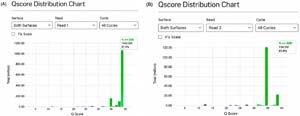
Figure 2. Per-read Q-score distributions for the single-run reanalysis. (A) Q-score distribution for Read 1 across all cycles. (B) Q-score distribution for Read 2 across all cycles.
Blinding
All repeat genomic analyses and categorical calls were performed by trained laboratory personnel blinded to the initial niPGT-A results.
Classification Criteria
Embryos were categorized based on whole-chromosome CNV calls as:
• Euploid: no whole-chromosome abnormalities detectedSegmental CNVs were not used to define these categories, and mosaicism thresholds were those in the laboratory’s validated ChromGo configuration.
• Aneuploid: 1 to 5 whole-chromosome abnormalities detected
• "Chaotic": ≥ 6 whole-chromosome abnormalities detected
Statistical Analysis
Given the pilot design and limited sample size, analyses were primarily restricted to descriptive statistics (counts, proportions, medians, and interquartile ranges). To evaluate differences in DNA concentrations between the first and second niPGT-A collections within the same patients, the Wilcoxon signed-rank test was performed. Statistical significance was set at α=0.05. All statistical analyses were conducted using StatsDirect software (version 3).
RESULTS
All seven cfDNA samples were successfully amplified and yielded interpretable sequencing data. Upon reanalysis, 3/7 embryos (43%, 95% CI: 9.9 to 81.6%) previously classified as "chaotic" yielded a euploid call (46,XX), while 4/7 (57%, 95% CI: 18.4 to 90.1%) remained abnormal. Although abnormalities persisted in these remaining four embryos, their chromosomal profiles differed from the initial report, indicating discordant CNV profiles between sequential SCM samples from the same embryo. The median DNA concentration was 14.7ng/µL (IQR: 5.94-17.1) in the initial collections and 15.3ng/ µL (IQR: 10.4-28.0) in the repeat collections. The Wilcoxon signed-rank test demonstrated no statistically significant difference in DNA concentrations between the two collection periods (median difference: -4.22ng/µL, 95% CI: -12.66 to 4.60, p=0.2969). Negative controls showed no amplification. These findings are summarized in Table 1.
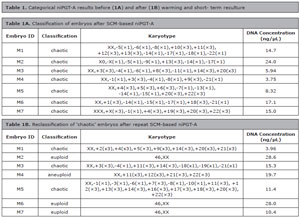
Table 1. Categorical niPGT-A results before (1A) and after (1B) warming and shortterm reculture
DISCUSSION
In this prospective pilot study, embryos previously classified as "chaotic" by SCM-based niPGT-A showed substantial discordance when niPGT-A was repeated after warming and 4 to 8 hours of short term reculture using the same WGA method, sequencing platform, and bioinformatic pipeline. On retesting, 3/7 embryos (43%) yielded a euploid call, whereas the remaining embryos still showed abnormal findings but with discordant chromosomal profiles compared with the initial reports. Overall, these findings suggest limited end-to-end reproducibility of the "chaotic" designation under the study conditions.
An important interpretive consideration is that our design assesses end-to-end repeatability across two time-separated SCM collections rather than technical repeatability from an identical SCM aliquot. Discordance may therefore reflect temporal variations in cfDNA yield and composition, analytical variability intrinsic to low-input WGA and read-depth-based CNV calling, and/or biological heterogeneity in the cellular sources contributing DNA to the culture medium. In our study, run-level sequencing QC suggested robust run performance (repeat run: PF~89.9% and >95% of bases ≥Q30), making gross run failure an unlikely explanation for the observed discordance. More broadly, distinguishing technical from biological sources of variability is central to establishing analytical validity in niPGT-A and to designing clinically meaningful validation studies (Volovsky et al., 2024).
The euploid calls observed upon retesting should not be interpreted as confirmation of true embryo euploidy, given that embryo tissue was not directly analysed and maternal contamination was not quantified. Maternal DNA contamination remains a recognized limitation of SCM-based niPGT-A that can bias both ploidy and sex determination. In this context, Vera-Rodriguez et al. (2018) highlighted maternal contamination as a major contributor to SCM-TE discordance in niPGT-A, extending beyond the confounding effects of TE mosaicism. Methylomebased studies further demonstrated that cfDNA in SCM can originate from a mixture of embryonic and maternal sources, including cumulus cells and polar bodies. This persistent contamination is associated with clinically relevant diagnostic errors, such as sex discordance and false-negative aneuploidy calls (Chen et al., 2021). Recognizing the centrality of this limitation, novel computational approaches have recently been proposed to decontaminate nonembryonic DNA using bioinformatics. These advances underscore both the magnitude of the problem and the critical need for interpretive frameworks that account for baseline contamination in SCM-based assays (Chen et al., 2025).
Beyond contamination, complex chromosomal patterns may be particularly vulnerable to reclassification because categorical calls depend on specific thresholds, noise characteristics, and sampling variations. This limitation is recognized across PGT-A platforms more generally, contributing to ongoing clinical uncertainty regarding how complex and borderline profiles should be managed (Practice Committees of the American Society for Reproductive Medicine and the Society for Assisted Reproductive Technology, 2024). Notably, even with invasive PGT-A, embryos labeled as "chaotic" may be reclassified upon re-biopsy, particularly within the "mosaic chaotic" subgroup. These findings suggest that some complex aneuploid profiles may reflect a combination of biological heterogeneity and assay-level noise rather than a stable, embryo-wide genomic state (Calull et al., 2025). Similarly, in a large multicentre niPGT-A study analysing 2,539 blastocysts, the concordance between SCM cfDNA and TE biopsy was 79.1% (increasing to 87.0% against the ICM in a subset), underscoring a persistent residual discordance and reinforcing the need for cautious interpretation when SCM profiles are complex (NavarroSánchez et al., 2026). Taken together, these literature observations are directionally consistent with our finding that complex SCM-derived profiles resulting in a "chaotic" classification may exhibit pronounced instability across repeat sampling.
From a biological perspective, SCM cfDNA represents a variable mixture of embryonic and nonembryonic (predominantly maternal) DNA. These fluctuations in the embryonic fraction mean that SCM cfDNA may not proportionally reflect the chromosomal constitution of the viable embryo (Vera-Rodriguez et al., 2018). In this context, even in embryos with predominantly uniform aneuploidies, differences in cfDNA release into the culture medium and mixture effects could contribute to apparently complex multi-chromosome profiles in SCM-derived niPGT-A.
Technically, SCM-based niPGT-A relies on the analysis of extremely low-input DNA, meaning that the interpretation of chromosome copy-number profiles can be easily confounded by statistical variation ("noise"), amplification bias, and contamination. These variables can generate intermediate, unstable patterns that alter categorical calls, especially for complex profiles. Clinically, this instability carries significant consequences, as embryos assigned to abnormal categories may be deprioritized or excluded from transfer; indeed, the ASRM emphasizes that false-positive aneuploidy and mosaicism can lead to the inappropriate discarding of embryos with true reproductive potential (Practice Committees of the American Society for Reproductive Medicine and the Society for Assisted Reproductive Technology, 2024). In our study, SCM-derived "chaotic" results demonstrated a distinct discordance across repeat sampling. Given that recent critical appraisals emphasize the need for a phased approach establishing analytical validity (repeatability and reproducibility), clinical validity, and clinical utility prior to widespread implementation, these "chaotic" calls must be interpreted cautiously until their technical reproducibility, underlying sources of discordance, and ultimate clinical significance are established in robust validation cohorts (Volovsky et al., 2024).
This study has certain limitations. First, the sample size was relatively small, reflecting the exploratory and preliminary nature of this pilot study. Furthermore, SCM results were not benchmarked against embryo tissue (such as TE, ICM, or whole blastocysts), and maternal contamination was not quantified. These factors preclude the determination of true embryonic ploidy and prevent the definitive attribution of discordance to specific biological versus technical causes. Importantly, our retesting approach reflects a real-world, clinical repeat-sampling scenario after warming and short-term reculture, rather than a technical replicate from an identical SCM aliquot. Consequently, it captures the comprehensive end-to-end variability arising from both pre-analytical and analytical factors. Nevertheless, the prospective design, blinded analysis, rigorous negative-media controls, and repeated testing using an identical platform and bioinformatics pipeline underscore the consistency of our findings, specifically that SCM-derived "chaotic" calls can exhibit pronounced instability upon repeat sampling.
Future studies should aim to distinguish between technical repeatability (such as replicate WGA and library preparation from the same SCM sample) and end-to-end biological repeatability (involving repeat SCM collection). Additionally, incorporating methods to robustly quantify maternal DNA contamination and benchmarking SCM findings against both embryo tissue reference testing and clinical outcomes are critical steps toward firmly establishing the analytical and clinical validity of this approach.
CONCLUSION
In conclusion, this prospective pilot study identified substantial test-retest discordance among embryos initially classified as "chaotic" by SCM-based niPGT-A following warming and short-term reculture, highlighting the limited end-to-end reproducibility of this category. Given the potential contribution of maternal DNA contamination, low-input amplification noise, and the uncertain biological representativeness of SCM cfDNA, "chaotic" profiles should be interpreted with caution and should not be relied upon in isolation to guide irreversible clinical decisions. Ultimately, larger trials are needed to clarify technical from biological sources of discordance, robustly quantify maternal DNA contamination, and validate SCM profiles against embryo tissue reference testing and clinical outcomes before SCMbased niPGT-A can be safely implemented for routine embryo selection.
Acknowledgments:
We are grateful to the patients who consented to participate in this study.
REFERENCES
Brouillet S, Martinez G, Coutton C, Hamamah S. Is cellfree DNA in spent embryo culture medium an alternative to embryo biopsy for preimplantation genetic testing? A systematic review. Reprod Biomed Online. 2020;40:77996. PMID: 32417199 DOI: 10.1016/j.rbmo.2020.02.002
Medline
Calull A, Victores-Monroy A, González-Ortega C, MartínezRobles I, Ramírez-Macías AA, Gutiérrez-Gutiérrez AM. Chaotic blastocysts in preimplantation genetic testing for aneuploidy: prevalence, characterization, and re-biopsy results. Fertil Steril. 2025;124:319-26. PMID: 40332063 DOI: 10.1016/j.fertnstert.2025.04.001
Medline
Chen Y, Gao Y, Jia J, Chang L, Liu P, Qiao J, Tang F, Wen L, Huang J. DNA methylome reveals cellular origin of cell-free DNA in spent medium of human preimplantation embryos. J Clin Invest. 2021;131:e146051. PMID: 34128477 DOI: 10.1172/JCI146051
Medline
Chen Y, Huang J, Tang F, Wen L, Qiao J. A computational DNA methylation method to remove contaminated DNA from spent embryo culture medium for noninvasive preimplantation genetic testing. EBioMedicine. 2025;114:105669. PMID: 40158389 DOI: 10.1016/j.ebiom.2025.105669
Medline
Handayani N, Aubry D, Boediono A, Wiweko B, Sirait B, Sini I, Polim AA, Dwiranti A, Bowolaksono A. The origin and possible mechanism of embryonic cell-free DNA release in spent embryo culture media: a review. J Assist Reprod Genet. 2023;40:1231-42. PMID: 37129724 DOI: 10.1007/s10815-023-02813-z
Medline
Leaver M, Wells D. Non-invasive preimplantation genetic testing (niPGT): the next revolution in reproductive genetics? Hum Reprod Update. 2020;26:16-42. PMID: 31774124 DOI: 10.1093/humupd/dmz033
Medline
Navarro-Sánchez L, Sakkas D, Frantz N, Lucena EF, Venier W, Soscia DM, Barroso G, Bisioli C, DiMattina M, Teke B, Escudero LE, Rubio C. Can cell-free DNA in the culture medium predict the chromosomal constitution of preimplantation embryos? Final results from a multicenter study with 2539 blastocysts. Genes (Basel). 2026;17:416. PMID: 42074534 DOI: 10.3390/genes17040416
Medline
Practice Committee and Genetic Counseling Professional Group (GCPG) of the American Society for Reproductive Medicine. Electronic address: asrm@asrm.org. Clinical management of mosaic results from preimplantation genetic testing for aneuploidy (PGT-A) of blastocysts: a committee opinion. Fertil Steril. 2020;114:246-54. PMID: 32741460 DOI: 10.1016/j.fertnstert.2020.05.014
Medline
Practice Committees of the American Society for Reproductive Medicine and the Genetic Counseling Professional Group. Clinical management of mosaic results from preimplantation genetic testing for aneuploidy of blastocysts: a committee opinion. Fertil Steril. 2023;120:973-82. PMID: 37678731 DOI: 10.1016/j.fertnstert.2023.08.969. Erratum in: Fertil Steril. 2026:S0015-0282(26)00485-1. PMID: 37678731 DOI: 10.1016/j.fertnstert.2026.06.006
Medline
Practice Committees of the American Society for Reproductive Medicine and the Society for Assisted Reproductive Technology. Electronic address: asrm@ asrm.org. The use of preimplantation genetic testing for aneuploidy: a committee opinion. Fertil Steril. 2024;122:421-34. PMID: 38762806 DOI: 10.1016/j.fertnstert.2024.04.013
Medline
Rubio C, Rienzi L, Navarro-Sánchez L, Cimadomo D, GarcíaPascual CM, Albricci L, Soscia D, Valbuena D, Capalbo A, Ubaldi F, Simón C. Embryonic cell-free DNA versus trophectoderm biopsy for aneuploidy testing: concordance rate and clinical implications. Fertil Steril. 2019;112:510-9. PMID: 31200971 DOI: 10.1016/j.fertnstert.2019.04.038
Medline
Rubio C, Navarro-Sánchez L, García-Pascual CM, Ocali O, Cimadomo D, Venier W, Barroso G, Kopcow L, Bahçeci M, Kulmann MIR, López L, de la Fuente E, Navarro R, Valbuena D, Sakkas D, Rienzi L, Simón C. Multicenter prospective study of concordance between embryonic cell-free DNA and trophectoderm biopsies from 1301 human blastocysts. Am J Obstet Gynecol. 2020;223:751.e1-751.e13. PMID: 32470458 DOI: 10.1016/j.ajog.2020.04.035
Medline
Vera-Rodriguez M, Diez-Juan A, Jimenez-Almazan J, Martinez S, Navarro R, Peinado V, Mercader A, Meseguer M, Blesa D, Moreno I, Valbuena D, Rubio C, Simon C. Origin and composition of cell-free DNA in spent medium from human embryo culture during preimplantation development. Hum Reprod. 2018;33:745-56. PMID: 29471395 DOI: 10.1093/humrep/dey028
Medline
Volovsky M, Scott RT Jr, Seli E. Non-invasive preimplantation genetic testing for aneuploidy: is the promise real? Hum Reprod. 2024;39:1899-908. PMID: 38970367 DOI: 10.1093/humrep/deae151
Medline
Xu J, Fang R, Chen L, Chen D, Xiao JP, Yang W, Wang H, Song X, Ma T, Bo S, Shi C, Ren J, Huang L, Cai LY, Yao B, Xie XS, Lu S. Noninvasive chromosome screening of human embryos by genome sequencing of embryo culture medium for in vitro fertilization. Proc Natl Acad Sci U S A. 2016;113:11907-12. PMID: 27688762 DOI: 10.1073/pnas.1613294113
Medline