JBRA Assist. Reprod. 2026 2026;00(0):00-00
ORIGINAL ARTICLE
doi: 10.5935/1518-0557.20260074
Stressors and Preventive Factors Associated with Burnout in Embryologists Working in assisted reproduction: Data from a Cross-Sectional Worldwide Study
1Faculty of Psychology, University of Valencia, Valencia, Spain
CONFLICT OF INTEREST
The authors have nothing to disclose.
ABSTRACT
Objectives: Recent studies of assisted reproduction (AR) teams have shown that embryologists experience the highest levels of burnout among team members. Therefore, this study aimed to identify the stressors experienced by embryologists and the preventive and mitigating strategies they consider useful.
Methods: This cross-sectional study used a worldwide online survey to assess workplace stressors and preventive and mitigating strategies associated with burnout among 759 respondents. Comparisons were made among embryologists working in Europe, Latin America, North America, and the Western Pacific region.
Results: More than 90% of embryologists in the four regions identified stressors inherent to the profession, as well as organizational and relational stressors. European and North American embryologists reported significantly more environmental and physical stressors than those in the Western Pacific region. Physical, organizational, and relational preventive and mitigating strategies were considered the most useful, with many endorsed by more than 90% of embryologists. Latin American embryologists considered psychological strategies significantly more appropriate and useful than did embryologists in other regions.
Conclusions: This study identified the stressors that most affect embryologists worldwide and the strategies they consider useful for addressing burnout. Future interventions should incorporate these strategies to reduce or eliminate the identified stressors, improve working conditions, and positively influence the mental health of these professionals.
Keywords: embryologists working in AR, stressors, preventive factors, worldwide study, burnout
INTRODUCTION
In assisted reproduction (AR), the mental health of patients has historically received far more attention than that of the professionals working in this field. Recent research has highlighted the stressful working conditions experienced by these professionals and the high levels of burnout, particularly among embryologists. Burnout is recognized by the World Health Organization as an occupational syndrome (WHO, 2019) caused by unmanaged workplace stress and characterized by exhaustion, depersonalization, and reduced professional efficacy (Maslach, 1976). Recent data from Spain (Urteaga & Díaz, 2024), the United States (Murphy et al., 2023), France (Delaroche et al., 2025), Brazil (Carneiro et al., 2025), and the Asia-Pacific region (Mittal et al., 2025) indicate that a substantial proportion of embryologists experience high levels of emotional exhaustion, depersonalization, and reduced personal accomplishment. Because emotional distress among AR team members may negatively affect patient outcomes, evaluating and protecting the occupational well-being of these professionals has become an important research priority.
Several stressors have been associated with stress and burnout in the work of embryologists. An international study by Japanese researchers highlighted substantial international differences in embryologist certification, duties, and staffing recommendations. These disparities, together with the integration of advanced AR technologies and regulatory requirements, are likely to affect future staffing needs in AR laboratories (Shirasawa & Terada, 2025). In their review of staffing requirements for modern AR laboratories, Sciorio et al. (2023) emphasized the importance of adequate staffing because the roles of embryologists are rapidly evolving and becoming increasingly demanding, both technically and emotionally. Because embryologists work in a “zero-error” environment, emotional exhaustion and pressure may lead to decreased concentration, loss of interest, and reduced productivity (Sciorio et al., 2023). When Gerrits et al. (2025) interviewed embryologists in sub-Saharan Africa, they found that geographic context fundamentally shaped professional practice, with embryologists assuming roles far beyond conventional laboratory functions. Interviewees described performing multiple duties in addition to laboratory work, including business management, advocacy, training, regulatory development, mentoring, and patient counseling. These demands, coupled with low job satisfaction, were closely linked to regional conditions.
Regarding the cognitive consequences of burnout, Basar & Duzcu (2025), in their review of burnout in AR laboratories, identified three areas of impairment when burnout overwhelms embryologists: (i) cognitive impairment, including reduced sustained attention, working memory, cognitive flexibility, and decision-making; (ii) physical impairment, including fatigue, tremors, muscle tension, and reduced visual endurance; and (iii) behavioral impairment, including reduced adherence to protocols, documentation lapses, inadequate communication, and reduced engagement in quality improvement.
Several recent studies have identified major stressors that may trigger burnout, including workload, long working hours, and irregular shifts (Mittal et al., 2025); high responsibility and high-stakes outcomes; cognitive demands and precision fatigue during repetitive tasks requiring fine motor skills (Basar, 2023); the emotional burden of clinical outcomes and proximity to patient suffering (Murphy et al., 2024); ethical dilemmas and moral distress; lack of professional recognition and limited career opportunities (Gerrits et al., 2025); small teams, understaffing, and high turnover; organizational problems involving leadership and communication; lack of institutional support; administrative burden and bureaucracy (Urteaga & Díaz, 2024); safety concerns related to cryobanks and storage errors (Murphy et al., 2023); and external factors related to the impact of COVID-19 and changes in clinical practice (Alteri et al., 2024). More comprehensive reviews of stressors associated with burnout among embryologists are available in Basar & Duzcu (2025) and Astro et al. (2025).
Although the number of studies addressing stressors among embryologists working in AR has increased substantially in recent years, studies designed to identify strategies to prevent and address burnout in these professionals remain scarce. Several interventions have been proposed to reduce and prevent burnout among healthcare professionals, including psychoeducation about burnout, resilience training, mindfulness-based programs, brief cognitive behavioral therapy interventions targeting workplace stress, and acceptance and commitment therapy. These approaches have reduced burnout and depressive symptoms and improved well-being among healthcare staff (Adam et al., 2023; Cohen et al., 2023; Sharin et al., 2025). From organizational and relational perspectives, proposed interventions include tailoring staffing levels to specific needs in Australia and New Zealand (Lee et al., 2023), as well as supervision, mentoring, peer-support structures, team-building, and “teaming” activities to maintain positive relationships among team members (Campbell et al., 2022).
The studies by Basar & Duzcu (2025) and Urteaga & Díaz (2026a) are two exceptions because they specifically addressed strategies to prevent or mitigate burnout among embryologists. Basar & Duzcu (2025) described organizational and individual strategies. Before implementing these strategies, however, the authors emphasized the need to analyze the underlying causes of burnout and to adapt each intervention to the characteristics of the AR clinic. Organizational strategies included ensuring adequate staffing and appropriate rotation systems to prevent excessive workloads and long working hours, thereby allowing professionals sufficient time both at and away from work. Additional organizational strategies focused on leadership development and training, mental health resources, and psychological safety. Many workplace conflicts involving embryologists arise from inadequate leadership skills, excessive criticism, and passive-aggressive communication. Training both leaders and team members, particularly those in leadership positions, could therefore contribute to a fairer and more supportive work environment. Mental health resources and analyses of the causes of burnout should be priorities in every workplace and should address both organizational and individual factors. The individual-level interventions proposed in that study focused on four areas: resilience and stress-management training, professional development, professional recognition related to accreditation and regulatory requirements, and physical aspects of the workplace, such as ergonomic workstations, noise reduction, adequate lighting, and designated respite areas.
The study by Urteaga & Díaz (2026a), which preceded the present study, used a qualitative design based on semistructured interviews with 12 expert embryologists from eight countries across five world regions: Europe, North America, South America, Asia, and Africa. Analysis of the responses enabled the authors to identify specific tools that could be used to prevent or mitigate burnout among embryologists. These included organizational measures, such as improved management and planning, effective communication, recognition of employees’ work, work-life balance, and time off; psychological measures, such as reducing stress and burnout, increasing professional recognition and appreciation, and improving communication skills; and physical and environmental measures, such as ergonomic chairs and furniture, natural lighting, noise-reduction measures, adequate space, and designated break or rest rooms.
Based on the study design and on the stressors and preventive and mitigating strategies identified in the previous study, the next step-and the aim of the present study-was to ask embryologists from different world regions which stressors they most frequently experience and which preventive or mitigating strategies they consider most useful. The responses may support the future development of burnout-prevention protocols for embryologists that are specifically adapted to their geographic regions.
MATERIALS AND METHODS
Participants
A total of 759 responses were received from 74 countries. According to the inclusion criterion requiring participants to be embryologists working in AR, 17 respondents who were not embryologists were excluded, leaving a final sample of 742 participants. Of these, 598 (80.1%) were women, 146 (19.7%) were men, and 2 (0.3%) identified as another gender. Participants ranged in age from 22 to 68 years (mean=40.59; SD=9.78; median=39). Data were collected using a survey specifically designed for this study. The survey incorporated information obtained during the first phase of the project, which consisted of a qualitative study based on semistructured interviews with an international panel of expert embryologists from five world regions: Europe, North America, Latin America, Asia, and Africa (Urteaga & Díaz, 2026a).
Procedure
The survey was created using the Survio® platform and remained open from November 5 to December 13, 2025. It was distributed through members of national and international scientific societies worldwide to reach as many embryologists as possible. Participants were shown an information page describing the study’s ethics committee approval, anonymity, voluntary participation, objectives, and informed-consent requirements. Approval was obtained from the Ethics Committee for Scientific Research of the authors’ university (approval code 3468621), and the study was conducted in accordance with the 1975 Declaration of Helsinki of 1975, as revised in 2013.The survey included demographic questions, including gender and age, as well as questions about stressors and preventive factors. Stressors were classified into four groups: stressors inherent to the embryology profession, organizational and relational stressors, emotional stressors, and environmental or physical stressors commonly present in the workplace. Participants rated the frequency of each stressor from 0 (never) to 3 (always). The survey also assessed the perceived usefulness of different tools for preventing burnout, grouped into four categories: organizational, relational, psychological, and physical or environmental. These items were rated from 0 (not useful) to 3 (very useful). Additional questions addressed characteristics of the embryology profession in participants’ countries, including whether salary was commensurate with job demands, whether embryologists were officially recognized as healthcare professionals, whether collective agreements formally recognized and regulated their responsibilities, years of experience in AR, annual number of cycles initiated at their clinics, number of embryologists employed in their laboratories, hours worked per day, and days off per month and per year. Finally, participants were asked (1) which AR departments generated the most stressful interactions and (2) whether their work caused physical discomfort in the head, neck, back, upper limbs, or lower limbs.
Statistical Analysis
Because few participants were from Africa, the Eastern Mediterranean, and Southeast Asia (8, 9, and 8 participants, respectively), these regions were excluded from comparative analyses because of insufficient representation. Descriptive statistics were first calculated for years of experience, annual number of cycles initiated, daily working hours, days off per month, vacation days per year, number of embryologists per laboratory, salary adequacy, recognition as a healthcare profession, professional regulation, stressful interactions with AR departments, and physical discomfort in four regions: Europe (n=499), Latin America (n=94), North America (n=54), and the Western Pacific region (n=70). Internal consistency was then assessed for the groups of stressors and preventive and mitigating strategies. For both sets of variables, frequencies and percentages were first reported for the four response options (never, rarely, often, and always). Frequencies and percentages for the two highest-frequency categories (often and always) were then presented by region. Finally, means and standard deviations for each category of stressors and preventive and mitigating strategies were calculated for the total sample and the four regions, and regional differences were assessed using analysis of variance followed by Bonferroni post hoc tests.
RESULTS
Characteristics of Embryologists’ Work in Europe, Latin America, North America, and the Western Pacific Region
Before analyzing stressors and preventive and mitigating strategies, it is important to understand the specific contexts in which embryologists work in the four regions. Table 1 presents means and percentages for work-related variables, including experience, working hours, days off, number of embryologists per laboratory, perceptions of salary adequacy, professional recognition and regulation, AR departments associated with the most stressful interactions, and body regions most affected by work-related discomfort.
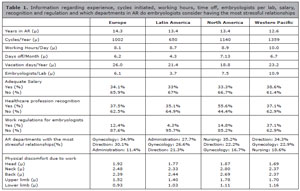
Table 1. Information regarding experience, cycles initiated, working hours, time off, embryologists per lab, salary, recognition and regulation and which departments in AR do embryologists consider having the most stressful relationships
µ=Mean
Stressors
Table 2 presents the frequencies and percentages of stressors identified through interviews with experienced embryologists from four world regions. Stressors were divided into four groups: those specific to the embryology profession, organizational and relational stressors, emotional stressors, and environmental or physical stressors.
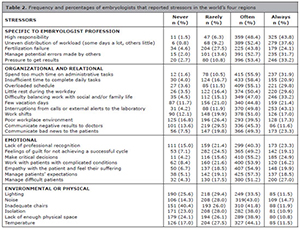
Table 2. Frequency and percentages of embryologists that reported stressors in the world’s four regions
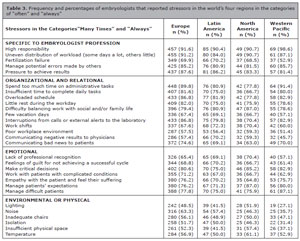
Table 3. Frequency and percentages of embryologists that reported stressors in the world’s four regions in the categories of “often” and “always”
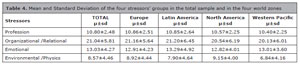
Table 4. Mean and Standard Deviation of the four stressors’ groups in the total sample and in the four world zones
µ=Mean sd =Standard Deviation
Preventive and Mitigating Strategies
As with the stressors proposed by the panel of expert embryologists from different world regions, Table 5 presents the preventive factors identified by the same panel. These factors were grouped as organizational and relational, psychological, and physical or environmental strategies. Consistent with the analysis of stressors, the following description focuses on strategies rated as “often” or “always” useful.
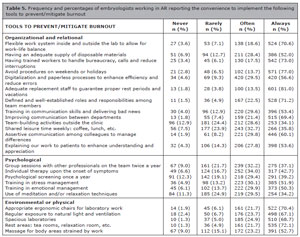
Table 5. Frequency and percentages of embryologists working in AR reporting the convenience to implement the following tools to prevent/mitigate burnout
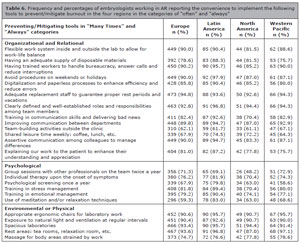
Table 6. Frequency and percentages of embryologists working in AR reporting the convenience to implement the following tools to prevent/mitigate burnout in the four regions in the categories of “often” and “always”
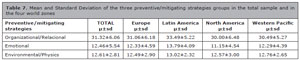
Table 7. Mean and Standard Deviation of the three preventive/mitigating strategies groups in the total sample and in the four world zones
µ=Mean sd =Standard Deviation
DISCUSSION
As a preparatory step for the present study, the authors conducted a qualitative study using individual semistructured interviews with a panel of 12 expert embryologists from eight countries across five world regions: Europe, Latin America, North America, Africa, and Asia (Urteaga & Díaz, 2026a). The stressors and preventive and mitigating strategies included in the present survey were derived from the responses of this expert panel. The high frequency of the selected stressors and the high perceived usefulness of the proposed strategies indicate that both sets of items were appropriately selected for a quantitative assessment. The findings therefore contribute to understanding the stressors associated with burnout among embryologists worldwide and to identifying strategies that may prevent or mitigate burnout.
Although the results were discussed primarily in relation to the two highest response categories, “often” and “always,” the lower categories, “never” and “rarely,” also provided relevant information. Few embryologists selected the lower categories for most stressors, whereas most reported experiencing these stressors in the higher categories. A similar pattern was observed for the perceived usefulness of preventive and mitigating strategies.
The stressors most commonly affecting embryologists worldwide were high responsibility and pressure to achieve results, the need to make critical decisions, overloaded schedules and uneven workload distribution, excessive time spent on administrative tasks, work interruptions caused by external telephone calls, interactions with difficult patients, and difficulty balancing work with social or family life. Most of these stressors have previously been reported in qualitative studies or reviews. Basar (2023) focused particularly on high responsibility and the cognitive demands and precision required for repetitive tasks involving fine motor skills, because errors may have serious consequences. Murphy et al. (2023) highlighted emotional factors, including proximity to patient suffering and the emotional burden this creates for embryologists. Mittal et al. (2025) emphasized excessive workload, long working hours, and irregular shifts. Urteaga & Díaz (2024) identified understaffing and organizational problems associated with ineffective leadership and communication deficits, both among AR team members and in interactions with difficult patients. The present study also examined interdepartmental friction in AR clinics and identified administration and gynecology as the departments associated with the most stressful interactions across regions. Administrative or management departments were particularly prominent in Europe and Latin America, whereas nursing departments were more frequently identified in North America and the Western Pacific region. Most previously reported stressors were confirmed across the regions examined. Few regional differences were observed; physical and environmental stressors were reported significantly more often by embryologists in Europe and North America than by those in the Western Pacific region, whereas Latin American embryologists did not differ significantly from other regions in any group of stressors. This finding for the Western Pacific region is difficult to explain because respondents from that region reported the highest annual number of cycles, the longest working hours, and the largest number of embryologists per laboratory. Their apparent greater resilience to physical and environmental stressors may be partly explained by cultural factors. Dollard et al. (2014), for example, described traditions of long working hours, masculine workplace attitudes, and strongly hierarchical cultures in parts of Asia.
Two findings deserve emphasis. First, although the only significant regional difference involved physical and environmental stressors, these were the least frequently reported stressors and affected approximately half of the embryologists. Second, lack of professional recognition, which was strongly emphasized by the expert panel (Urteaga & Díaz, 2026a) as a cross-cutting issue affecting many aspects of embryologists’ work, was reported by 63.6% of respondents. Nevertheless, it was less prevalent than organizational, relational, and profession-specific stressors. Lack of recognition as a healthcare professional was more common in Europe and Latin America than in North America and the Western Pacific region. Lack of professional regulation was common in all regions, particularly Europe, Latin America, and North America, where it affected 85% to 95% of respondents, compared with 62.9% in the Western Pacific region. Lack of professional recognition and regulation are important stressors because, as Gerrits et al. (2025) noted, they hinder career advancement and limit professional opportunities.
The study also provides relevant information about other potential stressors. Most embryologists considered their salaries low and not commensurate with the work performed. Respondents reported working more than 8 hours per day, having fewer than 8 days off per month, and receiving fewer than 30 vacation days per year. Given the intensity and importance of their work and their demanding schedules, it is understandable that many considered their salaries inadequate and experienced difficulty balancing work with family and personal life.
In summary, workplace stressors have a substantial impact on embryologists working in AR and affect a high proportion of these professionals. Physical and environmental stressors were the least frequently reported group, yet they still affected approximately one in two embryologists. Stressors reported by more than 90% of respondents-including high responsibility, uneven workload distribution, management of errors made by others, and pressure to achieve results-require immediate attention.
The complementary component of this study examined preventive and mitigating strategies that embryologists considered appropriate and useful. Many strategies received high ratings. Particularly noteworthy was the high percentage of respondents who endorsed physical and environmental improvements, such as ergonomic chairs, exposure to natural light, spacious laboratories, and break rooms. More than 90% considered these strategies useful. This finding was somewhat unexpected because physical and environmental stressors were the least frequently reported. However, because these measures may be among the easiest to implement, embryologists may readily recognize their potential usefulness. Previous studies support this view. Jimena et al. (2016) emphasized the importance of ergonomic equipment, and Johnson & Rosenfield (2023) highlighted the need for ergonomics training when using microscopes.
Organizational and relational strategies for preventing or mitigating burnout were also widely considered useful. More than 90% of respondents endorsed adequate replacement staffing to ensure rest periods and vacations, clearly defined roles and responsibilities, improved communication among departments, and assertive communication among colleagues. Basar & Duzcu (2025) also emphasized the relevance of many of these strategies. Psychological strategies generally received lower ratings, although important exceptions were observed. Stress-management and emotional-management training were considered useful by 89.4% and 90.4% of Latin American embryologists, respectively, the highest percentages observed for psychological strategies. Latin American embryologists attributed significantly greater usefulness to psychological strategies than did European and North American embryologists. They also considered organizational and relational strategies significantly more useful than did respondents in the other regions. Although participants were asked about the perceived usefulness of these strategies rather than their actual use, the slightly lower burnout levels previously observed among Latin American embryologists (Urteaga & Díaz, 2026b) may reflect greater use of psychological or organizational strategies that prevent or mitigate burnout.
In summary, just as workplace stressors were reported by high proportions of embryologists worldwide, preventive and mitigating strategies were considered useful by high proportions of respondents across regions. Substantial efforts are needed to improve the mental health of these professionals by reducing workplace stressors and implementing the strategies that embryologists themselves consider most necessary and appropriate.
This study has several limitations. First, a larger sample would have strengthened the findings. Although responses were obtained from 74 countries, some regions were represented by few participants, which limited more detailed regional analyses. Second, the cross-sectional design precludes conclusions regarding causality. Third, reliance on self-reported measures may introduce biases, including acquiescence and social desirability bias. Future studies should use longitudinal designs to examine causal relationships more clearly. Gender and cultural factors may also influence the observed outcomes and should be systematically evaluated in future research.
CONCLUSION
This worldwide survey of embryologists from 74 countries identified workplace stressors that most respondents considered highly prevalent, particularly stressors inherent to the profession. Participants also identified preventive and mitigating strategies that could help prevent, reduce, or address burnout. The most highly rated strategies included physical and environmental measures, such as ergonomic chairs and natural lighting; organizational and relational measures; adequate staffing; and training in assertive communication. The principal conclusion is that many embryologists worldwide experience workplace stressors associated with burnout and that this situation may be alleviated by implementing the preventive and mitigating strategies proposed by the professionals themselves.
ACKNOWLEDGMENTS
Authors thank those societies that helped with the dissemination of the survey: Sociedad Española de Fertilidad (SEF), Asociación para el estudio de la biología de la Reproducción (ASEBIR), Canadian Fertility and Andrology Society (CFAS), Fertility Society of Australia and New Zealand (FSANZ), Sociedade Portuguesa de Medicina da Reprodução (SPMR), European Society of Human Reproduction and Embryology (ESHRE), Società Italiana Embriologia Riproduzione e Ricerca (SIERR), Société de Médecine de la Reproduction (SMR), Fédération Française d’Étude de la Reproduction (FFER), Red Latinoamericana de Reproducción Asistida (REDLARA) and Sociedad Argentina de Medicina Reproductiva (SAMER)
REFERENCES
Adam D, Berschick J, Schiele JK, Bogdanski M, Schröter M, Steinmetz M, Koch AK, Sehouli J, Reschke S, Stritter W, Kessler CS, Seifert G. Interventions to reduce stress and prevent burnout in healthcare professionals supported by digital applications: a scoping review. Front Public Health. 2023;11:1231266. PMID: 38026413 DOI: 10.3389/fpubh.2023.1231266
Medline
Astro G, Gatti M, Costa M, Cosmelli A, Alteri A, Anastasi A, Cimadomo D, De Santis L, Klinger FG, Licata E, Fernandez LS, Tomasi G, Vegni E, Sáiz IC, Prados N, Pisaturo V. Perceived workplace stressors and professional experiences of clinical embryologists working in Italy and Spain: a pilot qualitative study. Front Public Health. 2025;13:1550715. PMID: 40756390 DOI: 10.3389/fpubh.2025.1550715
Medline
Basar M, Duzcu T. The burnout: a silent saboteur in in vitro fertilization laboratories. J Assist Reprod Genet. 2025;42:2497-513. PMID: 40495039 DOI: 10.1007/s10815-025-03537-y
Medline
Campbell A, Cohen J, Ivani K, Morbeck D, Palmer G, Mortimer S. The in vitro fertilization laboratory: teamwork and teaming. Fertil Steril. 2022;117:27-32. PMID: 34763833 DOI: 10.1016/j.fertnstert.2021.09.031
Medline
Cohen C, Pignata S, Bezak E, Tie M, Childs J. Workplace interventions to improve well-being and reduce burnout for nurses, physicians and allied healthcare professionals: a systematic review. BMJ Open. 2023;13:e071203. PMID: 37385740 DOI: 10.1136/bmjopen-2022-071203
Medline
Delaroche L, Bazin F, Sermondade N. Over one-third of professionals in French ART centers experience job strain. Sci Rep. 2025;15:19703. PMID: 40467845 DOI: 10.1038/s41598-025-04299-4
Medline
Gerrits T, Whittaker A, Manderson L. Fertility care in low and middle income countries: embryologists’ practices of care in IVF clinics in sub-Saharan Africa. Reprod Fertil. 2025;6:e240025. PMID: 39570776 DOI: 10.1530/RAF-24-0025
Medline
Johnson S, Rosenfield M. 20-20-20 rule: Are these numbers justified? Optom Vis Sci. 2023;100:52-6. PMID: 36473088 DOI: 10.1097/OPX.0000000000001971
Medline
Maslach C. Burned-out. Hum Behav. 1976;5:16-22.
Murphy A, Lapczynski MS, Proctor G, Glynn TR, Domar AD, Gameiro S, Palmer GA, Collins MG. Comparison of embryologist stress, somatization, and burnout reported by embryologists working in UK HFEA-licensed ART/IVF clinics and USA ART/IVF clinics. Hum Reprod. 2024;39:2297-304. PMID: 39198005 DOI: 10.1093/humrep/deae191
Medline
Sciorio R, Aiello R, Janssens R. Considerations on staffing levels for a modern assisted reproductive laboratory. JBRA Assist Reprod. 2023;27:120-30. PMID: 36515254 DOI: 10.5935/1518-0557.20220048
Medline
Sharin IBA, Jinah NB, Bakit PA, Adnan IKB, Zakaria NHB, Ahmad Subki SZB, Zakaria N, Lee KY. Person-directed burnout intervention for nurses: a systematic review of psychoeducational approaches. PLoS One. 2025;20:e0322282. PMID: 40343910 DOI: 10.1371/journal.pone.0322282
Medline
Shirasawa H, Terada Y. Embryologist staffing in assisted reproductive technology laboratories: an international comparative review. Reprod Med Biol. 2025;24:e12628. PMID: 39845477 DOI: 10.1002/rmb2.12628
Medline
Urteaga R, Díaz A. Burnout in assisted reproduction professionals: the influence of workplace stressors. Healthcare (Basel). 2024;12:2136. PMID: 39517348 DOI: 10.3390/healthcare12212136
Medline
Urteaga R, Díaz A. Burnout in embryologists from the perspective of an international expert panel: a qualitative study. Behav Sci (Basel). 2026a;16:861. PMID: 42352695 DOI: 10.3390/bs16060861
Medline