JBRA Assist. Reprod. 2025;29(Suppl 1):34-34
POSTER PRESENTATION
doi: 10.5935/1518-0557.20250088
P-020. Clinical application of PGT-M for HLA-typing in Latin America
1Igenomix, Buenos Aires, Argentina
2Igenomix, Sao Paulo, Brazil
3Igenomix, Valencia, España
Objective: Preimplantation genetic testing for a monogenic disease (PGT-M) for Human Leukocyte Antigen (HLA)-typing enables the selection of healthy and HLA-compatible embryos with affected siblings. This approach supports life-saving procedures like hematopoietic stem cell transplantation, offering a unique therapeutic option. This study aimed to review all HLA-typing cases from Latin America, focusing on the clinical success concerning the number of embryos available for transfer.
Methods: This retrospective study included PGT-M/HLA-typing cases performed in Latin America between the years 2017 and 2024, that were referred to the same genetic laboratory. PGT-M was performed only for HLA-typing or combined with the exclusion of a monogenic diseases. HLA haplotyping was performed with an indirect approach (by STR markers). PGT for chromosomal abnormalities (PGT-A) was also added.
Results: A total of 1150 PGT-M cases were performed in Latin America. From Brazil, 66 PGT-M for HLA-typing cases from a total of 815 PGT-M cases (8.1%). From Argentina, 2 from 129 PGT-M cases (1.6%). Interestingly, no cases for HLA-typing were registered from the rest of the countries of this region. Considering the cases from Brazil and Argentina, a total of 44 couples performed 68 PGT-M/HLA-typing cycles with PGT-A (469 blastocysts). Main maternal age was 34.9 years. For only HLA-typing procedures there were only 6 PGT-M cycles, mainly for Leukemia. Regarding HLA-typing cases with the exclusion of monogenic diseases, cases were performed mainly for autosomal recessive diseases (94% for HBB gene). Results about the number of HLA-matched embryos and embryos available for transfer are shown in table 1. Overall, the mean of embryos analyzed per couple was 10.6, and 53 embryos (11,3%) were available for transfer: 30 couples (68.2%) had at least one embryo for transfer, and 14 couples (31.8%) did not achieve an embryo transfer, and gave up treatment or assisted reproduction.
Conclusion: PGT-M could be valuable for achieving an HLA-matched pregnancy with an affected offspring. More than half of the couples had an embryo for transfer. The first PGT-M case for HLA-typing was reported in 2001 (Verlinsky et al., 2021). However, its use remains limited in Latin America, possibly due to a lack of awareness about its availability, high costs of IVF treatments and genetic tests, the need for many embryos to ensure a suitable match, and the ethical issues concerning the embryo selection.
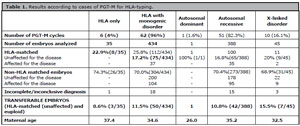
Table 1. Results according to cases of PGT-M for HLA-typing.