JBRA Assist. Reprod. 2025;29(Suppl 1):44-44
POSTER PRESENTATION
doi: 10.5935/1518-0557.20250098
P-030. Impact of Paternal Age on Semen Quality: A Retrospective Study
1Inmater Fertility Clinic, Lima, Peru
Objective: This study aimed to evaluate the impact of paternal age on semen parameters and sperm DNA fragmentation index (DFI) by comparing different age groups.
Methods: A retrospective analysis was carried out with data collected from Inmater fertility clinic between January 2023 and March 2025. Inclusion criteria required the presence of a semen culture, while exclusion criteria included positive culture results and abstinence periods outside the range of 2 to 7 days. Patients were stratified into age groups: 20-25 (reference group), 25-30, 30-35, 35-40, 40-45, 45-50, 50-55, 55-60, and ≥60 years. The following semen parameters were analyzed: concentration, total sperm number, progressive motility, morphology, vitality, and sperm DNA fragmentation index (DFI). Normality was assessed using the Kolmogorov Smirnov test. Pairwise comparisons between each age group and the reference group were performed using the Mann-Whitney U test, and Holm correction was applied to adjust for multiple comparisons. A Holm-adjusted p-value < 0.05 was considered statistically significant. Box plots were used for data visualization.
Results: A total of 648 patients met the inclusion criteria (Table 1). No significant differences were found in sperm concentration and morphology compared to the reference group. However, morphology showed a consistent median of 3% from age 35 onward, suggesting an age-related effect. Progressive motility and vitality showed significant differences from the reference group starting at age 30, with a clear decreasing trend as age increased. A significant reduction in total sperm count was observed only in the 50-55 and ≥60 age groups when compared to the reference group. DFI showed significant differences from the reference group starting at age 40, with a notable proportion of patients exceeding the threshold (DFI ≥ 23) from age 50 onward (Table 2).
Conclusion: This study highlights that paternal age has a significant impact on multiple semen quality parameters. While sperm concentration and morphology showed minimal changes, progressive motility, vitality, and total sperm count declined with increasing age. Notably, sperm DNA fragmentation became significantly elevated from age 40, with a substantial proportion of individuals surpassing the critical threshold from age 50. These findings emphasize the importance of considering paternal age in fertility assessments and assisted reproductive strategies.
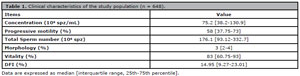
Table 1. Clinical characteristics of the study population (n = 648).
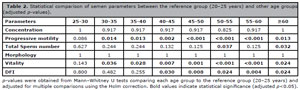
Table 2. Statistical comparison of semen parameters between the reference group (20-25 years) and other age groups (adjusted p-values).