JBRA Assist. Reprod. 2015; 19 (2):99-108
POSTER PRESENTATIONS
doi: 10.5935/1518-0557.20150023
Abstracts of the 12th RedLara Taller General, Lima, Peru, 26-29 March 2015
P-01. Twin birth from re-vitrified embryos. Case report
1Halitus Instituto Médico, Buenos Aires, Argentine
INTRODUCTION: Few cases of re-vitrification or double embryo vitrification are known. In this case report we present our first live birth resulting from transfer of re-vitrified embryos.
CASE REPORT: The 30 years old patient with primary infertility and tubal factor had three failed cryopreserved embryo transfers. In her forth attempt, two embryos which had been re-vitrified in a previous cycle were thawed and transferred. Vitrification and re-vitrification were performed according to the Kuwayama method. After thawing, embryos were cultured during 14 to 16 hours until the time of embryo transfer, performed under ultrasound monitoring. Twelve days later, serum ß-human chorionic gonadotrophin was 795 IU/L, and two weeks later two intrauterine gestational sacs with positive fetal heart tone were detected. A caesarean section was performed and two boys weighing 1800 and 2100 g were born at 33.4 weeks of gestation in January 2015. Both newborns were healthy with no detected abnormalities.
COMMENTS: This case report supports the feasibility of obtaining clinical pregnancies and live births from re- vitrified embryos. Initially, a greater number of embryos were cryopreserved per straw while the current trend is to transfer fewer embryos per cycle. In this way, the double cryopreservation is an alternative that becomes important if remaining embryos after thawing, increasing the cumulative pregnancy rate and reducing the multiple pregnancy risk. Nevertheless, more reports are necessary to establish its safety.
P-02. Experience using vitrified oocytes in Assisted Human Reproduction
1Fertilitat - Centro de Medicina Reprodutiva. Porto Alegre, RS, Brasil
OBJECTIVE: The oocyte survival rate has dramatically improved with advances in cryopreservation techniques in recent years. Thus, the number of oocyte storage has increased, according to various indications, from the postponement of motherhood, to avoid ethical and religious issues. The objective was to report the vitrification technique experience.
MATERIAL AND METHODS: A total of 184 cycles with vitrified oocytes was carried out from 2009 to 2014. It was thawed 1389 oocytes in total (7.5 per patient); the survival rate was 73.6%. The oocytes were frozen and thawed according to the protocol of Kuwayama et al. (1998). Two hours after thawing, ICSI was performed on the survived oocytes. The embryos were maintained in an incubator at 5% CO2, the 37ºC to the date of transfer. For the transfer, the endometrium was prepared three days before using 90mg/day progesterone gel form and also estradiol orally with a starting dose of 2 mg/day from the third day of the menstrual cycle. The maximum dose used was 6 mg/day when the endometrial thickness reached 8 mm under echographic control. Survival, fertilization and pregnancy rates were compared between age groups (≤35, 36-39 and ≥40 years). All transfers were performed by ultrasound control.
RESULTS:
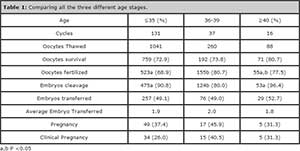
Table 1: Comparing all the three different age stages.
CONCLUSIONS: The results show that oocyte vitrification technique is effective at any age, and can be offered to all patients who do not want to freeze embryos. Although there was significant difference in fertilization and cleavage rates between the groups, the pregnancy rate observed was similar.
P-03. Determining the viral load in the semen, in patients submitted to ICSI
1Fertilitat - Centro de Medicina Reprodutiva. Porto Alegre, RS, Brasil
OBJECTIVE: Nowadays the number of soropositive couples with different viral diseases have been increasing. The literature shows that there is a possibility for the different virals presence in the ejaculated sample from the men, therefore possibly transmitting the disease to the partner. However using discontinuous gradient concentration in soropositive couples could diminish the possibility of viral transmission to the child. The objective was to verify the virus presence in the seminal sample in soropositive patients, following sperm capacitation with continuous gradient concentration, as well as determine the pregnancies rates observed.
MATERIAL AND METHODS: Between the years of 2011 to 2015, twenty seven samples from soropositives men were analyzed using PCR (Polymerase Chain Reaction). Fourteen were soropositives for HIV, six for HCV, four for HBV, and 3 for HTLV. All samples were analyzed for detection of that specific virus. Following motility and concentration observations, the sperm capacitation were performed using a des continuous concentration gradient. After centrifugation, half of the sample were frozen utilizing Test Yolk Buffer medium (Irvine), and the other half sent to be studied the presence of virus in the sample. From the 27 samples tested and frozen, 20 were utilized for Assisted Reproduction procedures (AR) in the 27 cycles of ICSI, all with embryo transfer.
RESULTS: All 27 samples tested were classified as negative, and therefore used in assisted reproduction procedures. It was observed a pregnancy rate of 40.74% (11/27), and clinical pregnancy rate of 29.63% (8/27). There were 3 abortions, 1 pregnancy ongoing and 4 babies born.
CONCLUSIONS: Preliminary data suggest that the semen preparation might be effective for eliminating de viral load in the sample. Therefore the utilization of this sample in Assisted Reproduction becomes safer, with no viral transmission. However new studies are necessaries to withdraw better conclusions about the pregnancy rates.
P-04. Vitrification and devitrification temperature effect on fertility capacity and DNA fragmentation in human spermatozoa
1Biología de la Reproducción, Escuela de Biología, BUAP, Puebla, Pue. México
2Clinica de Fertilidad Santa Teresa, Puebla, Pue. México
OBJECTIVE: This report assess if the process of vitrification and devitrification temperature (37 and 60°C) affects the fertilizing capacity and DNA integrity of human sperm.
MATERIAL AND METHODS: Semen samples from 30 donors (18-32 years) with normozoospermia diagnostic were vitrified in liquid N2 (15 days). Later they were devitrificated at 37 and 60°C and total motility, viability and degree of DNA fragmentation by “comet assay” was evaluated.
The fragmentation fluorescent images were analyzed with Comet Score software and data by the Manova statistical test.
RESULTS: The total sperm motility (control: 81%) presented a statistically significant decrease after devitrification process at 37 and 60°C (27% and 19%, respectively; P≤0.05). Viability shows a statistically significant decrease after devitrification at 37°C (control: 72% vs 56%, P≤0.05) in contrast to 60°C (67%) there were no significant difference from control.
In the comet assay, no significant differences in levels of sperm DNA fragmentation were observed between control group and devitrified cells at 37 and 60°C. Mobility and viability of sperm is affected by the process of vitrification and devitrification, however, is not affected viability when thawed at 60°C.
CONCLUSIONS: The process of vitrification and devitrification temperature not induces DNA fragmentation in human sperm. It will be necessary to conduct a study with a larger number of sperm samples to confirm these findings.
P-05. Pre-conception genetic diagnosis by means of NGS. Future and perspectives of PGS for aneuploidy detection and PGD for monogenic disorders
1Bioarray S.L., Elche, Alicante, Spain
2 Fertility & DNA, SAC, Lima, Peru
3 IVFSPAIN, Alicante, Spain
4Pablo de Olavide University, Seville, Spain
OBJECTIVE: In this study, we evaluated in terms of PGS for aneuploidy detection how the NGS (next-generation sequencing) platform Ion-Torrent™ along with low-pass whole genome sequencing provides the ability to evaluate many embryo samples through DNA barcoding and multiplexing with approximately 0.01X depth of coverage. Even, diagnosis of single-gene disorders, as Neurofibromatosis 1 and 2 (NF1; NF2), were assumed by means of NGS.
MATERIAL AND METHODS: Double-blinded genetic testing with both NGS and aCGH (microarray-based comparative genomic hybridization) methods of 100 WGA samples amplified by PicoPlex® technique from trophectoderm cells. A total of 35 female patients were recruited in 36 clinical IVF (in vitro fertilization) cycles. The ovocytes were inseminated using ICSI following an in vitro procedure. Resulting embryos were cultured until day 5 and trophectoderm biopsy was carried out on 100 blastocysts.
RESULTS: The comparison of PGS results by NGS to well-established aCGH concluded with 98% (95% Confidence Interval [CI] 94.75-100) diagnosis correspondence by both techniques. Both aneuploidy detection and a precise identification of balanced translocations were assessed. The discordance in two embryos was due to a more accurate and reliable screening solution by NGS.
CONCLUSIONS: This validation study provided high consistency for aneuploidy screening in PGS cycles by NGS in contrast to aCGH, and the subsequent good prognosis for pregnancy from IVF. Although reliability of this strategy, further data in a randomized controlled trial are required in order to achieve a broad-based clinical application. Also, this NGS strategy was totally consistent with PGD for monogenic disorders as NF1 and NF2.
P-06. The kinetics of embryo cleavage is an important tool to predict embryo implantation potential: a time-lapse imaging analysis
1Clínica GERA, Instituto de Ensino e Pesquisa em Medicina Reprodutiva de São Paulo, São Paulo, Brazil
OBJECTIVE: The use of time-lapse monitoring has proven to be a powerful tool to identify embryos with higher pregnancy potential. In the present study we evaluated how the kinetics of embryo cleavage is influencing implantation potential and whether it is affected according to different variables.
MATERIAL AND METHODS: Fifty patients underwent controlled ovarian stimulation. A digital inverted microscope assessed embryo cleavage and the time embryos needed to reach 2, 3, 4 and 8 cells. One hundred-seventy three embryos were analyzed: IVF outcome, woman’s age, type of sperm, infertility factor and ovarian stimulation were analyzed. We compared the mean time that embryos take to reach each development landmark in positive (PP) vs negative pregnancy outcome (NG).
RESULTS: The time the embryo takes to reach 8 cells seems to be relevant for a positive outcome. On the other hand, kinetics of embryo cleavage is not affected by woman’s age, type of ovarian stimulation, type of semen (fresh or thawed) nor infertility factor. Embryos in the PP group took significantly longer to reach T8 (63.02 ± 0.52vs 59.7 ± 0.72 hours, P<0.01). No significant differences among PP and NP were found between T2, T3 and T4. Multivariate analysis showed that woman’s age, type of stimulus (agonist or antagonist), type of semen and origins of infertility (uterine, male factor, immunological, POS, endometriosis) had no effect on pregnancy outcome.
CONCLUSIONS: Our data indicates that no matter how external factors vary, intrinsic embryo aspects may play the bigger role on determining the embryo with greatest implantation potential.
P-07. The value of hyperemia as indication of chronic endometritis
1Clínica GERA, Instituto de Ensino e Pesquisa em Medicina Reprodutiva de São Paulo, São Paulo, Brazil
2UNIFESP, Departamento de Tocoginecologia - Disciplina de Ginecologia, São Paulo, Brazil
OBJECTIVE: To evaluate whether diffuse red spots on the surface of the uterus, which characterize hyperemia, were a potential indicative of chronic endometritis.
MATERIAL AND METHODS: This is an observational retrospective study of a population drawn from patients treated in an infertility clinic between March 2009 and July 2013.Three hundred sixty eight infertile patients underwent office hysteroscopy in our center. All hysteroscopies were performed by the same investigator followed by endometrial biopsy with Novak curettage or uretral catheter. All specimens were analyzed by the same pathologist.
RESULTS: Office hysteroscopies were abnormal in 63.6% (234/368) and normal in 36.4% (134/368) of the cases. In abnormal exams the main findings were endometrial or endocervical polyps in 61.1% (143/234), hyperemia in 42.3% (99/234), submucosal myoma 4.3% (10/234) and cervical canal estenosis 2.1% (5/234). In 31 women, hyperemia was associated with other findings but in 68 patients it was the sole outcome of hysteroscopy, representing 18.5% of all hysteroscopies. In the 68 patients with only hyperemia at hysteroscopy, 30.9% were diagnosed with chronic endometritis at biopsy, although no significant correlation was found.
CONCLUSIONS: According to our findings a considerable number of patients that go through office hysteroscopy present only endometrial hyperemia. However, this result was not indicative of any other alterations assessed by concurrent endometrial biopsy. In our study, uterine hyperemia was present in almost one fifth of hysteroscopies but the correlation with chronic endometritis was not statistically significant in the present investigation.
P-08. Previous IVF cycle failure as predictive of lower chances of pregnancy in consecutive vitrified-thawed embryo transfers
1Clínica GERA, Instituto de Ensino e Pesquisa em Medicina Reprodutiva de São Paulo, Sao Paulo, Brazil
OBJECTIVE: To know if the number of oocytes retrieved, number of mature oocytes and woman’s age, or a previous unsuccessful embryo transfer, influence pregnancy rates.
MATERIAL AND METHODS: One hundred and fifty two cycles from which embryos were thawed were analyzed, according to the number of oocytes retrieved, number of mature oocytes and number of previous embryo transfers. Good quality cleavage embryos (6 to 8 cells on day 3, n=88) and good quality blastocysts (expanded, visible inner cell mass, n=64) were vitrified using the Cryotop method (Kitazato BioPharma, Japan).
RESULTS: Among the 152 studied cycles, there was no difference in success rates (positive vs negative pregnancy) after thawing, when comparing the number of oocytes retrieved (15.24 ± 1.43 vs 14.04 ± 0.93), the number of mature oocytes (11.29 ± 1.05 vs 9.93 ± 0.58) or the patient´s age at the oocyte retrieval (33.84 ± 0.69 vs 34.43 ± 0.40). The pregnancy rates were similar in transfers of good quality cleavage embryos (CE) (29,5%) and good quality blastocysts (B) (29,7%) (P= 0,562). However, when comparing the chances of achieving pregnancy for both CE and B transfers (fresh or thawed good quality embryos), the pregnancy rate is significantly higher for first time transferees (OR 1.467 IC95%: 1.082-1.990, P=0.032).
CONCLUSIONS: The number of oocytes retrieved and number of mature oocytes in the fresh cycle, do not influence the pregnancy rate in the thawing cycle. However, a previous unsuccessful embryo transfer seems to be an indicative of a lower chance of pregnancy.
P-09. Comparisons between different human incubator in rate of human embryos implantation
1Clinica Reproferty-São José dos Campos, SP, Brasil
OBJECTIVE: It was reported in previous studies that either use of a low oxygen gas atmosphere or addition of antioxidants to the culture media is effective in supporting bovine embryo development in vitro. The promoting effect of a low oxygen culture environment on embryo development has also been reported for the mouse, rabbit and human. In other study were observed whether changes in gas atmosphere promotes better results in development of in vitro derived bovino embryos.
MATERIAL AND METHODS: From January 2011 at December 2014, 2280 embryos were obtained by IVF from 456 cycles. Group I - January/2011 at December/2012- 221 cycles in Thermo Scientific series 8000 Water-Jacketed CO2 Incubators. Group II - January/2013 at December/2014 - 221 cycles in trigas incubator. We analyzed 456 cycles where 4 or more oocytes were retrieved. After fertilization, the embryos were cultured to the blastocyst stage in different incubators at day 5 in different groups (I or II).
RESULTS: The rate implantation of embryos cultured in trigas incubator (K-Systems, G185) was significantly higher than of embryos were cultured in Thermo Scientific series 8000 Water-Jacketed CO2 Incubators. The rate of blastocyst implantation in Group I was 31.25%, in in Group II was 19.95%. The rate of blastocyst formation was significantly higher in Group II compared to Group II (P < 0.01), where Group I (38.39%- 451/1175) and Group II 26.88% - 297/ 1105).
CONCLUSIONS: The study found statistics significant differences with P<0.01. These data suggest that the N2 in embryo culture atmosphere promotes an improved development of the embryo at blastocyst.
P-10. Sperm oxidative DNA damage is induced by cryopreservation
1Centro de Estudios en Genética y Reproducción (CEGyR) Buenos Aires, Argentina
OBJECTIVE: To compare levels of apoptosis, DNA damage and oxidative stress in semen samples before-after cryopreservation in order to identify the principal pathway of sperm damage. Compare the effect of male age over DNA damage and oxidative stress.
MATERIAL AND METHODS: Sixty semen samples from men who performed in vitro fertilization and 20 normozoospermic men (control group-sperm bank) were included. Semen analysis was performed as established by WHO-2010. An aliquot (500uL) of semen was cryopreserved. Motile sperm (fresh and post-thawed) were selected by swim-up.
Before-after cryopreservation and post swim-up procedure it was assessed the following variables: lipid peroxidation-BODIPY, phosphatidylserine externalization-Annexin-V, DNA fragmentation-TUNEL, DNA oxidative damage-8OHDG and vitality-Eosin.
Patients were grouped according to their age: <40, 40-45 and >45 y/o.
RESULTS: Levels of Annexin-V, TUNEL, BODIPY and 8OH-DG increased after cryopreservation in patients and donors samples. However, it was observed that BODIPY and 8OH-DG prevail over Annexin-V. All variables were lower in donors group in compare to patient samples. After swim-up (fresh and post-thawed), variable values decreased, but swim-up samples after thawed had higher values in compare to swim-up (fresh). Vitality decreased after cryopreservation, contrary the control group samples presented more tolerance to cryoinjury. It was determined that these parameters significantly increase in men >45 y/o. All the comparisons performed on these analysis were statistically significant (P<0.05).
CONCLUSIONS: Cryopreservation generates sperm damage affecting mainly vitality, DNA damage and oxidative stress. Cryoinjury is positively influenced by male age. Swim-up after thawing reduces damage levels, but are not similar to swim-up of fresh samples.
P-11. State of chromatin compaction and its impact on sperm DNA damage under oxidative stress conditions
1Centro de Estudios en Genética y Reproducción (CEGyR) Buenos Aires, Argentina
OBJECTIVE: To establish a relation between quantity and size of nuclear vacuoles with the following markers: vitality, state of chromatin compaction, DNA damage and lipid peroxidation in before-after induction of oxidative stress in semen samples from men who underwent to assisted reproduction technology. Assess the protective effect of seminal plasma against oxidative stress.
MATERIAL AND METHODS: Thirty samples (15 each group) were recruited for the present study. Chromatin compaction (CC) was assessed by Acridine Orange and MSOME. Two groups: normal CC and altered CC. Incubated with hydrogen peroxide (15min) (with (A) and without (B) seminal plasma) and incubated without hydrogen peroxide (with (C) and without (D) seminal plasma). An aliquot was obtained to assess DNA damage and lipid peroxidation at 0h-2h-4h-22h.
RESULTS: Seminal parameters of abnormal CC group: concentration 63.2±24.2, motility 47.5±14.3, vitality 76.8±15.1, morphology 4.6±1.5, DNA-fragmentation 17.2±5.1, lipid peroxidation 11.3±5.2. Seminal parameters of normal CC group: concentration 20.2±72, motility 45.1±10.8, vitality 79.2±8.8, morphology 5.8±2.5, DNA-fragmentation 13.1±2.9, lipid peroxidation 9.5±2.4. After incubation with peroxide, lipid peroxidation levels progressively increased over time, being statistically significant after 4h (both groups). DNA fragmentation significantly increased at 22h in normal CC group and from 4h in abnormal CC group. In both groups after 22h, samples A vs. C showed greater resistance (statistically significant) to peroxidation (31% vs. 42%) and DNA fragmentation (44% vs. 65%).
CONCLUSIONS: The induction of oxidative stress significantly increases the levels of sperm DNA fragmentation in sperm with impaired chromatin compaction. The presence of seminal plasma has a protective function at initial incubation periods. Altered chromatin compaction could be associated to DNA fragmentation in infertile patients.
P-12. Monozigotic twin pregnancy associated to in vitro fertilization: report and revision of three cases presentes at 10,925 feet above sea level
1Centro de Fertilidad y Ginecología del Sur, Cusco, Peru
INTRODUCTION: This report describes the three cases of Monozygotic twin pregnancy (MZT) associated with IVF which were observed in the Centro de Fertilidad y Ginecología del Sur (CFGS), in Cusco, located at 10,925 feet above sea level, their evolution and possible factors related to the development of MZT are revised.
CASE REPORT
CASE 1: A woman aged 37, with a history of 12 years primary infertility.
On the third day of culture an embryo of 8 cell stage and grade II is transferred and luteal support with 800 mg of micronized progesterone is recommended. 16 days after the follicle aspiration, we obtain a result of β-CG of 189 mIU/ml. An ultrasound showed a twin monochorionic diamniotic pregnancy with both embryos active.
CASE 2: A 46 years old woman with 6 years of primary infertility with tubal bilateral obstruction due to hydrosalpinx. On the fifth day of culture, 2 blastocyst grade AA were transferred. 18 days later of ICSI we got the β-hCG which resulted in 339 mIU/ml. The ultrasound shows a triplet dichorionic diamniotic pregnancy, with one of the sacs constituted by a twin monochorionic monoamniotic pregnancy.
CASE 3: 37 years old woman with 5 years of secondary infertility. Five months ICSI cycle, devitrification and transfer of the 3 embryos took place, The luteal support got started on the 14th day of the cycle and then the devitrification and transfer of the embryos on the 18th of the cycle were done. 20 days after the beginning of the luteal support it resulted in β-hCG in 391 mIU/ml. The ultrasound shows the presence of a monochorionic monoamniotic twin pregnancy.
COMMENTS: The evaluation of the 3 cases presented in the CFGS reaffirms MZT like a high risk condition. The revision of literature in contrast with our observation in the CFGS, allows us to take in consideration the age and the manipulation of the zona pellucida as the most related factors for MZT in asscociation with IVF.
P-13. ICSI-INVO: culture intravaginal oocytes injected versus ICSI-IVF assisted reproduction center
1Clínica de Fertilidad PROCREAR, Lima-Perú
2Laboratorio de Reproducción Asistida FERTILAB, Lima-Perú
OBJECTIVE: To know the clinical pregnancy rate of INVO-ICSI compared with ICSI-IVF at an assisted reproduction facility.
MATERIAL AND METHODS: A comparative retrospective study of assisted reproduction treatments from 2012 to 2014 was conducted at the PROCREAR fertility clinic. Twenty-one cases of ICSI-INVO were included and compared to 36 controls of ICSI-IVF, for which a randomized sample was taken out of the 162 procedures performed during that period. We used the IBM SPSS 21 program, database and statistical analyses.
RESULTS: The average age, FSH at day 3, as well as follicular counts were comparable in both groups: 34.3 (23-40) years; 8.5 UI; 9.6 follicles for ICSI-INVO, versus 34,1 (27-41) years; 7.6 UI and 9.9 follicles for ICSI-IVF respectively. There was no difference in the total dose of FSH used for ovarian stimulation, the number of injected oocytes or in endometrial thickness in both groups. The number of embryos transferred was 2,62±0,59 (1-3) for ICSI-INVO on day 3 and 1,94±0,33 (1-3) for ICSI-IVF on day 5 or 6. In the cycles of ICSI-INVO 38.1% and 36.1% of ICSI-IVF cycles there was freezing of embryos. The clinical pregnancy rate was 11/21 (52.4%) for ICSI-INVO and 14/36 (38.9%) for ICSI-IVF, statistically non-significant. The miscarriage rate was 1/11 (9.1%) for INVO-ICSI and 4/14 (28.6%) for ICSI-IVF. There were 45.5% for the INVO-ICSI and 28.6% for IVF twin pregnancy, and one case of triplets in INVO-ICSI. Additionally, in 38% and 50% of the cases and controls respectively, columns of annexin, IMSI or both were utilized for the selection of sperm for injection of oocytes.
CONCLUSIONS: The ICSI-INVO using the INVOcell for intravaginal growing for injected oocytes offers good rates of clinical pregnancy comparable to those obtained by In Vitro Fertilization. The implementation of INVO centers, as well as the realization of ICSI-INVO in assisted reproduction centers, could increase the accessibility of our population to affordable assisted reproduction treatments. Reporting to the Red Lara is recommended for its monitoring.
P14. Embryo development and aneuploidy rate in monopronucleus human zygotes generated after in vitro fertilization
1PRANOR San Isidro. Lima-Perú. Accredited Redlara center
2Hospital Almayor Aguinaga Asenjo. Chiclayo
3Reprogenetics Latinoamérica. Santiago de Surco. Lima-Perú
OBJECTIVE: To compare the intracycle embryo development and chromosomal constitution in normo-fertilized zygotes and monopronocleus zygotes observed after in vitro fertilization.
MATERIAL AND METHODS: This retrospective study analyzed data from January 2008 to March 2014. Pronuclear evaluation was performed 18±2 hours after in vitro fertilization. Preimplantation genetic screening (PGS) analysis was done on day 3 embryos where a single blastomere was biopsied and fixed. PGS analysis was done for 5, 9 or 12 chromosomes. PGS was performed by Reprogenetics Latinoamérica. Only cycles with single pronucleus human zygotes and PGS by FISH were included.
RESULTS: The incidence of monopronucleus after in vitro fertilization was 14.4% (317/2193). However, only 49 cycles have embryos biopsied with monopronucleus zygotes. Sixteen percent (58/356) of the zygotes were monopronucleus zygotes. Regarding embryo development, normo-fertilized embryos have a significantly higher good quality embryos on day 3 (65%; 208/318) and blastulation rate (47%; 148/318) compared to monopronucleus zygotes (48%; 28/58 – 17%; 10/58) respectively (P<0.05).
The euploid rate in normo-fertilized zygotes was 37% (107/289) compared to 23% (13/57) in monopronucleus cycles (P<0.05). However, the euploid embryos that were able to reach blastocyst stage was similar between the groups (66.4 (71/107) vs 53.8 (7/13)).
CONCLUSIONS: Monopronucleus zygotes have a significantly lower embryo development. Nevertheless, blastocyst formation rate in euploid embryos was similar between the groups which could suggest they can be used for elective embryo transfer.
P-15. Frozen-thawed embryo transfer has a lower risk of ectopic pregnancy than fresh embryo transfer
1PRANOR San Isidro. Lima-Perú
OBJECTIVE: To determine the likelihood of ectopic pregnancy after fresh embryo transfer (ET) and frozen-thawed embryo transfer (FRET).
METHODS: This retrospective study included 622 ongoing pregnancies from fresh ET and 385 ongoing pregnancies from FRET. The main outcome was ectopic pregnancy rate. The secondary outcome was spontaneous abortion rate. All patients received oestradiol and progesterone supplements.
RESULTS: The age was significantly lower in fresh ET compared to FRET (34.58±3.94 vs 37.96±5.86; P<0.05). Similar results were observed for the number of embryo transferred (1.83±0.38 vs 1.69±0.47; P<0.05). However, none ectopic pregnancy was observed in the FRET group (0/385) compared to the fresh ET (1.1%; 7/622), P<0.05). No significant differences were observed in spontaneous abortion rate between the groups.
CONCLUSIONS: Frozen-thawed embryo transfer has a significantly lower likelihood of ectopic pregnancy compared to fresh ET. These results are in favor to defer the embryo transfer instead of fresh embryo transfer in ovarian stimulated cycles.
P-16. Artificial collapse of human blastocysts before vitrification using a laser pulse improves the outcomes in frozen blastocysts transfer
1PRANOR San Isidro. Lima-Perú
OBJECTIVE: To determine differences in pregnancy and implantation rates by using a laser pulse to blastocoele collapse before blastocyst vitrification.
MATERIALS AND METHODS: Retrospective study including 189 frozen embryo transfer (FRET). Cycles from oocyte donor or with blastocysts and trophectoderm biopsy were excluded. Patients were classified in two groups according the use of a laser pulse for blastocyst collapsing procedure. Group A (n=135), blastocysts were vitrified without collapsing; Group B (n=54), blastocysts were laser collapsed before vitrification. Briefly, the laser collapsing procedure consist in a one or two laser shot to the junction between two trophectoderm cells by using 100% power with a 180 µs pulse (Lykos, Hamilton Thorne). The vitrification procedure was performed following Cryotech instruction. Statistical significance was evaluated by Chi-Square and Student T–test.
RESULTS: The survival rate in group B was superior to group A (95.2% vs. 99.42%; P<0.05). However, the mean number of embryos transferred in group A was significantly higher compared to group B (1.76±0.43 vs. 1.63±0.48; P<0.05). Finally, clinical pregnancy (62.50% vs. 46.67%; P<0.05) and implantation (47.06% vs. 33.19%; P<0.05) rates were higher in Group B in contrast to group A. The miscarriage rate has no differences.
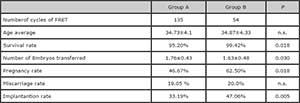
CONCLUSIONS: This study suggest that day 5/6 blastocysts collapsing using a laser pulse before vitrification is beneficial for pregnancy and implantation rates. A randomized trial is required.
P-17. Body mass index does not affect the implantation of euploid blastocyst in deferred elective single blastocyst transfer
1PRANOR San Isidro. Lima-Perú
2Reprogenetics Latinoamérica. Santiago de Surco. Lima-Perú
OBJECTIVE: To determine if patient’s body mass index (BMI) at the moment of embryo transfer affects the implantation of euploid blastocyst analyzed by trophectoderm biopsy and array comparative genomic hybridization (aCGH) in deferred elective single blastocyst transfer.
MATERIALS AND METHODS: This retrospective study included 102 cycles with deferred elective single euploid blastocyst transfer where the blastocyst was biopsed and analyzed by 24-chromosome in preimplantation genetic screening (PGS) cycles. Patients were grouped by World Health Organization (WHO) BMI class: underweight (<18.5, n=3), normal weight (18.5–24.9, n=63), overweight (25–29.9, n=31), and obese (>30, n=5). Underweight group was not included in the analysis because the low number of cases. Primary outcome was implantation rate. Data were analyzed by ANOVA and chi-square test.
RESULTS: The recipient’s age (36.75±4.62 vs. 37.87±5.69 vs. 35.4±1.95), clinical pregnancy rate (61.9% vs. 64.5% vs. 80%), implantation rate (61.9% vs. 67.7% vs. 80%), abortion rate (7.7% vs. 15% vs. 25%), and ongoing clinical pregnancy rate (57.1% vs. 54.84% vs. 60%) were not statistically different either normal weight, overweight, and obese group, respectively. Two gestational sacs were observed in one patient with single blastocyst transfer in an overweight group.
CONCLUSIONS: The BMI class does not affect the implantation of single euploid blastocyst transfer.
P-18. Comparison of clinical outcomes following vitrified-warmed blastocyst tranfers using high protein culture media and conventional culture media: a prospective randomized controlled trial
1PRANOR San Isidro. Lima-Perú
OBJECTIVE: to compare the clinical outcomes in vitrified-warmed blastocyst cultured and transfer with two different media, high protein culture media Global Rehab (Life Global®) and conventional culture media Global Total (Life Global®).
MATERIALS AND METHODS: A total of 276 women who underwent vitrified-warmed blastocyst transfer cycles were prospectively randomized to either the Global Total culture media group (144 patients), or the Global Rehab culture media group (132 patients). Clinical pregnancy rate, miscarriage rate and blastocoel expansion recovery rate were compared. All blastocysts were vitrified and warmed following Cryotech protocol and cultured for 1 to 3 hrs before embryo transfer. Statistical significance was evaluated by T-student and Chi-Square test.
RESULTS: The average recipient´s age and the number of embryos transferred were the same for both groups. No significant difference was found in the clinical pregnancy rate (58.3% vs. 54.5%), miscarriage rate (11.9% vs. 6.9%) and blastocoel expansion recovery rate (73.6% vs. 80.3%) between the Global Total group and the Global Rehab group.
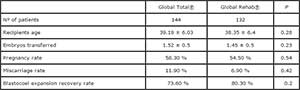
CONCLUSIONS: The same clinical outcomes were obtained using global total or global rehab media.
P-19. Semen parameters and sperm DNA fragmentation are not affected by semen bacterial contamination
1PRANOR San Isidro. Lima-Perú. Accredited Redlara center
2Reprogenetics Latinoamérica. Santiago de Surco. Lima-Perú
OBJECTIVE: To analyze the influence of semen bacterial contamination on semen parameters and sperm DNA fragmentation.
MATERIALS AND METHODS: A total of 326 men were evaluated. This study analyzed the results from a single semen sample that were emitted for semen analysis, bacterial culture and sperm DNA fragmentation. The data was extracted from our database from January 2013 to June 2014. The semen parameters analyzed were semen volume, sperm concentration, sperm vitality, progressive sperm motility, sperm morphology, round cells count. Sperm DNA fragmentation was evaluated by TUNEL. The data are presented as mean ± standard error of the mean (SEM).
RESULTS: Bacterial contamination was positive in 35.58 % (n=116) of the semen samples analyzed. From those, 62.93% had Enterococcus sp., 31.9% had Escherichia coli, and 5.17% had other bacterias. Any statistically differences was observed between the groups for the analyzed parameters: semen volume (2.49±0.12 ml vs. 2.72±0.1 ml), sperm concentration (105.36±5.52 million/ml vs. 116.64±4.15 million/ml), sperm vitality (74.17±1.27% vs. 74.16±0.92%), progressive sperm motility (48.43±1.22% vs. 50.23±0.81%), sperm normal morphology (13.28±0.87% vs. 12.9±0.3%), round cells count (0.88±0.09 million/ml vs. 10.96±0.06 million/ml) and sperm DNA fragmentation (12.26±0.64% vs. 11.80±0.46%).
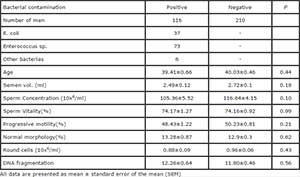
CONCLUSIONS: Bacterial semen contamination does not affect the semen parameters evaluated in the present study.
P-20. In vitro maturation of oocytes (IVM): a good treatment for selected patients
1Center of Human Reproduction Nilo Frantz, Porto Alegre, RS, Brasil
2Federal University of Rio Grande do Sul, Porto Alegre, RS, Brasil
OBJECTIVE: The aim of this study is to compare the outcome of unstimulated IVM and routine IVF/ICSI for women with ultrasonographic polycystic ovaries (PCO).
MATERIAL AND METHODS: The study included 50 women with PCO undergoing IVM (n =22) or conventional IVF (n=28) cycle, matched for age and infertility diagnosis, from 2011 to 2014. IVM cycles were unstimulated and hCG was administered 35-40h before immature oocyte retrieval. Oocytes were matured in-vitro for 29h before insemination by ICSI. Endometrial priming with estradiol and progesterone was commenced following oocyte retrieval and 1-3 embryos transferred on day 3 of embryo development. Standard antagonist protocol was used in the control group. Data was compared using Chi-square test and Mann-Whitney U Test.
RESULTS: The mean age was 31.6 years. The mean number of oocytes retrieved was greater for IVM (16.5 v 12.1), but the number of mature eggs (11.0 v 9.9) and embryos (7.8 v 7.7) was comparable between IVM and control. The number of embryos transferred was significantly higher in IVM (2.4 v 1.8). The implantation rate was significantly lower in the IVM group (18.8%) when compared to the IVF group (40%). Pregnancy rates per transfer (45% v 50%), and live birth rates (35% v 45.5%) were not significantly different between groups.
CONCLUSIONS: IVM is a safe and simple alternative to conventional IVF for women with PCO or PCOS. Even though IVM has lower implantation rates, comparable pregnancy and live birth rates may be obtained.
P-21. Cyclooxygenase-2 and vascular endothelial growth fator Genetic polymorphisms in recurrent miscarriage
1Post-Graduation Program in Genetics and Molecular Biology, Department of Genetics, Biosciences Institute, Universidade Federal do Rio Grande do Sul, Porto Alegre, Brasil
2Medical Genetics Service, Hospital de Clínicas de Porto Alegre, Porto Alegre, Brasil
3Department of Gynecology and Obstetrics, Federal University of Bahia, Salvador, Brazil
OBJECTIVE: Recurrent miscarriage (RM) affects approximately 5% of couples. Cyclooxygenase-2 (COX-2) and prostaglandins are suggested to modulate vascular endothelial growth factor (VEGFA) expression during angiogenesis and implantation. The aim of this study was to investigate if genetic variants in the human COX-2 and VEGFA are associated with RM.
MATERIAL AND METHODS: This case control study recruited 149 cases and 208 fertile women with at least one living child and no history of pregnancy loss. Molecular analysis was performed real-time polymerase chain reaction (RT-PCR). Subjects were genotyped for single nucleotide polymorphisms (SNPs) on PTGS2 promoter -1290T/C and -1195T/C; and VEGFA -2578C/A, -1154G/A, -634G/C and +936C/T SNPs. Haplotype estimation was performed in PHASE software. Chi-square test, Student’s t-test and Mann–Whitney U test were used compare the evaluated characteristics between groups.
RESULTS: Allele, genotype and haplotype frequencies did not differ among RM patients and controls. Deviation from Hardy-Weinberg Equilibrium was detected in RM cases for -2578C/A VEGF promoter polymorphism. The total number of pregnancies (P= 0.027) and the history of alcohol use (OR 2.075, IC 1.32-3.27, P=0.002) were significantly higher in RM cases.
CONCLUSIONS: The concomitant investigation of lifestyle aspects in genetic association studies is vital, mainly because a proportion of miscarriages may be preventable by the modification risk factors. Further studies to investigate the influence VEGFA and COX-2 polymorphisms in the risk of RM would benefit from the simultaneous evaluation of gene expression.
P-22. Serum Anti-Müllerian Hormone as a potential indicator of ovarian response in IVF
1NEOLIFE – Medicina y Cirugía Reproductiva, Asunción, Paraguay
OBJECTIVE: Anti-Müllerian hormone is a useful parameter for assessing ovarian reserve and response to ovulation induction in assisted reproduction. The aim of the present study was evaluated the relationship between serum anti-Müllerian hormone (AMH) levels with number of oocytes retrieved, number of mature oocytes and women’ age who underwent ovarian stimulation for fertility preservation or IVF.
MATERIAL AND METHODS: A total of 51 patients were subdivided into three groups according to the serum AMH concentrations: below the 33th percentile (low group, AMH < 13.9 pM), between the 33th and the 67th percentile (intermediate group, AMH = 13.9 - 26.4 pM), or above the 67th percentile (high group, AMH > 26.4 pM). The correlation between the AMH´s concentration with age, number of oocytes retrieved and number of mature oocytes was determined by Spearman’s rank correlation coefficient. The groups results were expressed as medians and analyzed by Kruskal-Wallis test.
RESULTS: When all samples were analyzed, the AMH concentration correlated positively with the number of oocytes retrieved (r = 0.362; P=0.005) and the number of mature oocytes (r = 0.353; P=0.006); and negatively correlated with the age of the patients (r = -0.269; P=0.028). Comparing the values between groups of low, intermediate and high concentration of AMH, significant differences were observed in the number of oocytes retrieved (P=0.025) and the number of mature oocytes (P=0.033); but did not reach statistical significance with ages of patients (P=0.206).
CONCLUSIONS: Serum Anti-Müllerian Hormone concentration is a potential indicator of mature oocyte quantity in stimulated cycles regardless of women age.
P-23. Telemedicine’s role in infertiles patient management
1Centro de Estudios Reproductivos (CER), Santiago, Chile
OBJECTIVE: Chile, like many Latin American countries, lacks an adequate number of specialists in reproductive medicine that can meet the requirements of patients with infertility. Furthermore, most specialists are located in the largest cities of their respective countries.
With the development of the Internet, patients from different localities could potentially have access to an expert’s opinion without having to travel to large cities, if evaluated through a WEB platform. The objective of this research was to evaluate patient satisfaction using this WEB platform, through which patients underwent an online consultation with an infertility specialist.
MATERIAL AND METHODS: The WEB platform used in this study, has the following characteristics: online appointment scheduling with specialists, direct patient-professional interaction through videoconferencing, online review of test results uploaded by patient, and the ability for the professional to send requests for further testing or other indications to a patient via email.
Between August and December 2014, 21 patients agreed to an online consultation with specialists from CER, four of which required a treatment of High Complexity Assisted Reproduction.
After the videoconference consultation, patients answered 4 questions:
1. Was it easy to use the platform?
2. How would you evaluate the care delivered by the health professional?
3. Would you use the platform again?
4. Would you recommend the use of the platform?
RESULTS: For questions 1, 3, and 4; all patients surveyed provided an affirmative answer. On question 2, all patients rated the care delivered by the health professional as good or excellent.
CONCLUSIONS: In this pilot project, it is concluded that the use of this WEB platform had a positive evaluation from patients. This tool also allowed patients to get a consultation with a specialist in reproductive medicine despite living far from treatment facilities. This service gave patients the possibility to bypass the need to leave their hometowns to get an expert’s evaluation of their disease.
P-24. Aneuploidy rate in blastocyst generated from embryos with acelerated cleavage
1Centro de Estudios en Genética y Reproducción (CEGYR) Buenos Aires, Argentina
LIMA SOLEDAD SEPULVEDA AWARD
Best Poster Presentation.
12º REDLARA General Congress - Lima - Peru 2015
OBJECTIVE: This work aims to establish a difference in aneuploidy rate in blastocysts generated from embryos with accelerated cleavage at day 3 compared to normally developed embryos.
MATERIAL AND METHODS: Fifty-seven PGS cycles (50 patients) that were performed at CEGYR from June 2013 to December 2014 were considered. The average women and men age was 37.9±3.8 and 39.9±4.1 y/o, respectively. A total of 578 MII oocytes were obtained, with a 77.9% fertilization rate. From 450 fertilized oocytes, 446 (99.1%) cleaved at 48 hours, at 72 hours the cleavage rate was 100% (450). Of total cleaved embryos (72 hs), 52% (234) reached the blastocyst stage. For the analysis-interpretation of the results, 3 groups were considered according to the number of cells at day 3: (A) ≥10 cells (accelerated-cleavage), (B) =8 cells embryos from a cohort with accelerated embryos, and (C) =8 cells embryos from a cohort without accelerated embryos. Embryos that reached the blastocyst stage, either at day 5 or 6, were classified in: good, regular and low quality (degree of expansion, inner cell mass-trophectoderm and blastocoel). Blastocysts biopsies were analyzed by aCGH.
RESULTS: In group A, the amount of embryos that reached the blastocyst stage was significantly higher (84.1%) compared than Group B (58.8%) and C (67.6%). Between groups B and C there were no significant differences. The rate of euploid blastocysts in group A was 64.9%, significantly higher than groups B (43.3%) and C (43.0%). No difference in aneuploidy rate was evidenced between day 5 or 6 blastocysts. In group A, there were no differences in blastocyst-quality and aneuploidy rate. However, in group B and C, blastocysts with better morphology correlated with lower aneuploidy rates.
CONCLUSIONS: In our preliminary experience, we can conclude that the number of cells on day 3 could help to understand the prognosis of blastocysts aneuploidy rate on day 5 or 6. The embryos at day 3 with accelerated behavior, which usually are not preferably chosen to transfer, have lower aneuploidy rates than embryos with normal cleavage.
P-25. Maternal morbidity and perinatal outcome in multiple pregnancies after in vitro fertilization
1UNIFERTES, Caracas, Venezuela
OBJECTIVE: In order to establish the incidence, maternal morbidity and perinatal outcomes associated with multiple pregnancies products of in vitro fertilization (IVF) at Unifertes clinic during the period: January 2008 to December 2012.
MATERIAL AND METHODS: A retrospective study was performed. Study population consisted of patients who warranted such proceedings and their products, using singleton pregnancy as a control group. Data from variables in the study (maternal morbidity – perinatal outcomes) was collected from clinical registries.
RESULTS: multiple pregnancy rate has risen steadily in recent years, corresponding to 31.6% of clinical pregnancies. The main obstetric complications were hypertensive disorders and possible abortion. When compared with singleton pregnancies, multiples were resolved under emergency mode in 66.7% of cases and an average of 2.3 weeks before. Cesarean section surgery prevailed in both groups. Hypertension was the main maternal morbidity reported in the postpartum period. Preterm labor was significantly higher in multiple pregnancies. The neonatal intensive care admission was due to prematurity-related complications.
CONCLUSIONS: multiple pregnancy is an unwanted risk that must be considered in IVF programs.
P-26. Elective single vs double blastocyst transfer
1UNIFERTES, Caracas, Venezuela
OBJECTIVE: To prospectively compare rates of Clinical Pregnancy (CPR), Live Birth (LBR), Multiple Pregnancy (MPR) and Multiple Live Birth (MLRB) in a program of Elective Single Blastocyst Transfer (eSBT) versus Elective Double Blastocyst Transfer (eDBT).
MATERIAL AND METHODS: Sixty two eSBT and 125 eDBT were performed at UNIFERTES from 2011 to 2014. Inclusion criteria consisted of women under 35 years old (including egg donors); having two or more good quality blastocysts (≥3BB according to Gardner and Schoolcraft´s grading system) by the time of transfer. Test variables were compared for eSBT and eDBT groups. Fisher Exact Test was used for statistical analysis.
RESULTS: Clinical Pregnancy Rates per transfer were similar between the eSBT (72.6 %) and eDBT (75.2 %) groups (P> 0.05 Fisher Exact Test). While, as expected, MPR and MLBR among pregnant women were significantly higher in the eDBT group, LBR was similar between the two groups. Percent of Clinical Pregnancies
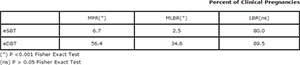
CONCLUSIONS: Our results support that Elective Single Blastocyst Transfer minimizes multiple pregnancies without compromising Pregnancy and Live Birth Rates.
P-27. Attitud and Opinion of Young People about Gamete Donation
1EMBRIOS. Centro de Fertilidad y Reproducción Humana. Hospital de Clínicas Caracas
OBJECTIVE: To evaluate the attitude of young people regarding gamete donation.
MATERIALS AND METHODS: Prospective study. 179 young adults were interviewed in order to know their opinions concerning: disposition to donate, number of kids per donor, motivation for donation and restrictions or preferences about the receptors profile.
RESULTS: The mean age of the interviewed was 26.26±5.11 years old and 69% would be willing to donate. 72.6% are aware that a donation would offer the possibility to another person to become a parent, 18.5% consider they would be donating genes, 8.9% believe they would be donating a child. 65% of young people agree on the fact that donation should be remunerated. However, this result is quite altruist, as 94% feel motivated by altruist-economical reasons, and only 6% would do it under a strictly economical motivation. Moreover, 93% believe that the number of children per donor should be ≤ 10. Concerning the restrictions about the receptors profile, 74% of the interviewed would accept that their gametes would be received by single-mothers, compared to 50.2% that would donate to a homosexual couple. All the above results were gender-independent (P>0.05), unless the preference of men (67%) and women (50%) to donate to strangers (P=0.03). In the case of requiring a donor 49.7% would seek one, 43% would prefer to adopt, 5.6% would not have children and 1.7% did not answer.
CONCLUSIONS: This is the first study in Latin America of its kind. It would be interesting to perform similar studies in other countries of the region to expand the knowledge on the field.
P-28. Relationship between Seminal Parameters, Age and Body Mass Index
1EMBRIOS. Centro de Fertilidad y Reproducción Humana. Hospital de Clínicas Caracas
OBJECTIVE: To study the relationship between male fertility, age and body mass index (BMI).
MATERIALS AND METHODS: Prospective. Spermiogram was performed to 1112 men, registering age, weight and height. BMI was calculated. Two categories were defined: Category Age: (A) 21-30 years old; (B) 31-40 years old; (C) 41-50 years old; (D) >51 years old and Category BMI: thin BMI<18,5 kg/m2; normal BMI 18.5-24.9 kg/m2; overweight BMI 25-29.9 kg/m2; obesity I BMI 30-34.9 kg/m2; obesity II BMI 35-39.9 kg/m2; extreme obesity BMI>40 kg/m2. Data was analyzed by ANOVA and Tukey.
RESULTS: Groups A, B and C presented higher seminal volume than D (P=0.0001; P=0.002; P=0.004). Vitality was highest for group A compared to C and D (P=0.008; P=0.004). Vitality and volume were not impacted by BMI, and neither was sperm concentration by age. Men with obesity II presented less sperm concentration than the thin, overweight and extreme obese. There were differences between the total count of motile sperm and motility between group A vs. C and D (P=0.007; P=0.0002) and B vs. D (P=0.004). Concerning BMI, differences in the total motile sperm were observed between patients with obesity II and the rest. Moreover, neither age nor BMI affected sperm morphology.
CONCLUSIONS: Volume and sperm vitality decrease with age and sperm concentration decreases with BMI. The total number of motile sperm decreases in elderly and for high level of BMI.